VANKE(000002)

Search documents
国泰海通|固收:地产债韬晦待时——万科寻求债务展期事件点评
国泰海通证券研究· 2025-11-28 08:56
Core Viewpoint - The real estate bond market has potential for yield exploration in the current low interest rate environment, but the fundamentals of the sector still require further improvement, and bond valuations may experience increased volatility due to event impacts, with an overall strategy recommendation leaning towards cautious defense [1][4]. Group 1: Company Debt Situation - Vanke announced a creditor meeting on December 10 to discuss the extension of "22 Vanke MTN004," which has a total issuance of 2 billion yuan and a coupon rate of 3%, maturing on December 15, 2025 [1]. - As of November 13, Vanke has repaid 19.571 billion yuan of domestic public debt in 2025, with a remaining balance of 20.316 billion yuan in domestic bonds and 1.3 billion USD in offshore bonds [2]. - Vanke's major shareholder, Shenzhen Metro Group, has provided substantial financial support, totaling nearly 30 billion yuan from February to November 2025, primarily for repaying Vanke's publicly issued bond principal and interest [2]. Group 2: Industry Policy and Market Conditions - The real estate sector is experiencing simultaneous policy support and industry adjustment, with 2025 policies focusing on stabilizing the market and promoting recovery, including easing purchase restrictions and optimizing housing credit [3]. - In October, the sales area and sales revenue of commercial housing decreased year-on-year by 18.8% and 24.3%, respectively, due to a high base effect from last year's policy changes [3]. - New construction, construction, and completion areas in October saw year-on-year declines of 29.5%, 9.4%, and 28.2%, respectively, as developers prioritize ongoing projects amid significant financial pressure [3]. Group 3: Real Estate Bond Market Overview - From January to November 2025, a total of 593.681 billion yuan in real estate bonds were issued, while 624.609 billion yuan were repaid, resulting in a net financing of -30.928 billion yuan [4]. - The current non-default real estate bond scale is approximately 1.15 trillion yuan, with a high overall valuation level; about 442.7 billion yuan, or 38.4%, has a yield to maturity of over 2.3% [4]. - The investment strategy suggests that while there is some yield exploration potential in the current low interest rate environment, the sector's fundamentals need improvement, and a cautious defensive approach is recommended, focusing on high-quality central and state-owned enterprise real estate bonds with short durations [4].


亮相!万科临春项目入市,我拿回了一线情报
Sou Hu Cai Jing· 2025-11-28 08:14
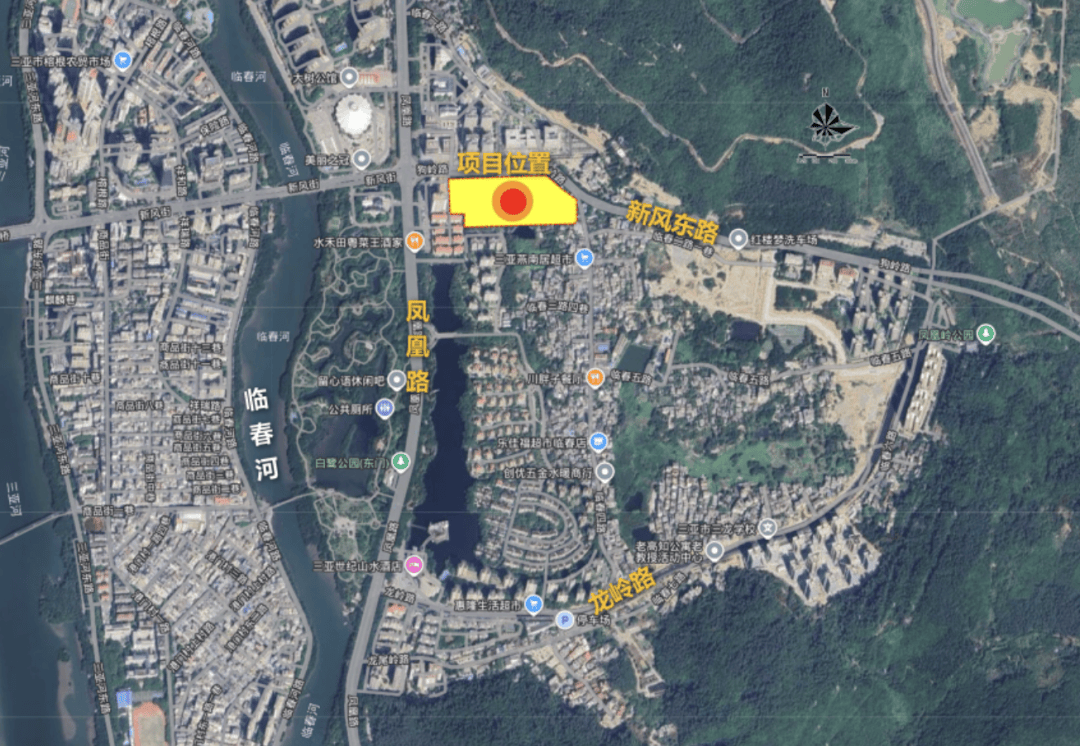
昨晚,万科在临春的C-03地块项城市更新项目,案名首发——万科·三亚·嘉澜地。 王女士火速做了全网独家的案名解读,评论区非常热闹,大家对这个案名的初印象分化很明显。 喜欢的人,认为优雅得不得了,非常惊艳。 不喜欢的人,表示看不懂、读不懂,啥玩意。 但是都在了解完嘉澜地背后的取名内涵之后,品出味来。 嘉:是嘉奖、嘉许; 澜:是人生波澜; 地:则是美好之地; 合起来就是安放人生波澜的美好之地。 不得不说,嘉澜地这个名字算是打破常规,人们对于超出预期的事情,会本能的抗拒。 先看位置,万科·嘉澜地在三亚的临春片区,紧邻着三亚市中医院、市图书馆和临春岭、白鹭公园,项目的生活氛围相当浓厚。 航拍图来一张,视觉效果更震撼。 再看产品布局,排列式布局,整体空间还比较开阔。 比如王女士就说过:万科临春项目会不会叫做「万科·临春岭」呢? 有了这样的预设,再看嘉澜地,第一时间的确会有「陌生感」。 接下来,就看万科如何营销、宣传、推广,让这个名字深入人心咯。 在案名发布之前,官方也公示了万科嘉澜地的设计方案,我们今天也来管中窥豹,看看这个「应许之地」究竟啥模样。 1、360度伸出来的阳台,未来可能是全景舱; 2、更大面宽的花池空间, ...
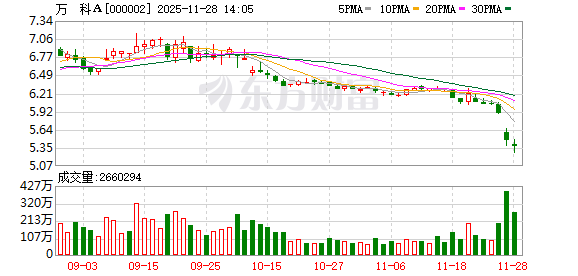
万科股价跌至近10年新低
Xin Lang Cai Jing· 2025-11-28 08:01
Core Viewpoint - Vanke's stock and bond ratings have been downgraded significantly, leading to a sharp decline in its stock price and raising concerns about its financial stability and ability to manage debt obligations [2][3][4][5] Group 1: Stock Performance - On November 28, Vanke A's stock price fell by 1.65% to 5.38 yuan, marking the lowest level since December 18, 2015, after a continuous decline since November 21 [2] - The stock experienced a drop of 3.66% during intraday trading on the same day [2] Group 2: Credit Ratings - Standard & Poor's downgraded Vanke's long-term issuer credit rating from "CCC" to "CCC-" and placed it on a negative watch list [2] - The downgrade also affected Vanke's subsidiary, Vanke Hong Kong, with similar rating reductions [2] Group 3: Debt Management - Vanke announced a bond extension for "22 Vanke MTN004," with a principal repayment date set for December 15, 2025, and a remaining balance of 2 billion yuan at an interest rate of 3% [3] - The company faces a total domestic debt of 21.798 billion yuan, with a repayment peak occurring in December 2023 [3] Group 4: Financial Performance - For the first three quarters of 2025, Vanke reported a revenue of 161.39 billion yuan, a year-on-year decrease of 26.61%, and a net loss of 28.02 billion yuan [4] - In Q3, the company recorded a revenue of 56.07 billion yuan, down 27.30% year-on-year, with a net loss attributable to shareholders of 16.07 billion yuan [4] Group 5: Future Outlook - Vanke anticipates continued sales decline and a worsening operational environment, exacerbating its cash flow issues and debt repayment pressures [5] - Despite challenges, some new projects have performed well, with an average sales absorption rate of nearly 70% for 11 newly launched projects [5]
超4100只个股上涨
第一财经· 2025-11-28 07:33
Market Overview - The A-share market saw a low opening but closed higher, with the Shanghai Composite Index rising by 0.34%, the Shenzhen Component Index increasing by 0.85%, and the ChiNext Index up by 0.7% [3] - For November, the Shanghai Composite Index has decreased by 1.67%, the Shenzhen Component Index by 2.95%, and the ChiNext Index by 4.23% [3] Sector Performance - The Fujian sector showed significant gains in the afternoon, with the lithium battery industry chain rebounding across the board, and the commercial aerospace concept also recovering [4] - The commercial aerospace concept stocks collectively surged, with companies like Aerospace Development and Sichuan Jinding hitting the daily limit [5] Notable Stocks - Key stocks in the commercial aerospace sector included: - Qian Zhao Guangdian (+20.01% to 19.07) - Aerospace Huan Yu (+20.00% to 38.04) - Li Gong Navigation (+15.82% to 55.13) [6] - In the Hainan Free Trade Zone, Hainan Ruize reached the daily limit, while other stocks like Shennong Seed and Jindan Technology rose over 8% [7] Market Activity - The total market turnover was below 1.6 trillion yuan, marking the lowest since August 4, with over 4,100 stocks rising [8] - Major capital inflows were observed in sectors such as energy metals, automotive, and photovoltaic equipment, while real estate, computing, and banking sectors experienced net outflows [10] Institutional Insights - Everbright Securities noted that the market is in the mid-term of a bull market, with potential for short-term volatility but no change in long-term trends [14] - Wanlian Securities indicated that while short-term liquidity is under pressure, there are still expectations for medium to long-term capital inflows [15] - Zhongtai Securities mentioned that there are no conditions for a major style switch in the market, and the overall crowding in the A-share technology style has improved since October [16]



X @Bloomberg
Bloomberg· 2025-11-28 07:14
Debt Crisis & Contagion Risk - Vanke's worsening debt crisis has heightened vigilance among sovereign bond traders regarding potential contagion [1]
资讯日报:普京释放和谈意愿-20251128
Guoxin Securities Hongkong· 2025-11-28 07:02
Market Overview - The Hang Seng Index closed at 25,946, up 0.07% for the day and 29.34% year-to-date[4] - The Nikkei 225 index rose 1.23%, driven by strong performance in technology stocks, with a year-to-date increase of 25.75%[11] - The S&P 500 remained unchanged, with a year-to-date gain of 15.83%[4] Sector Performance - Toy and leisure products led the gains in Hong Kong, with companies like Brio and Pop Mart rising over 6%[10] - Consumer electronics stocks also performed well, with TCL Electronics increasing by over 6%[10] - New energy vehicle stocks saw significant gains, with companies like Leap Motor and Chery Auto rising over 4%[10] Economic Indicators - China's industrial enterprises reported a total profit of 59,502.9 billion yuan, a year-on-year increase of 1.9%[15] - The automotive industry produced 27.33 million vehicles from January to October, reflecting an 11% year-on-year growth[15] - The profit margin in the automotive sector was reported at 4.4%, lower than the average of 6% for downstream industrial enterprises[16] Global Developments - President Putin expressed a willingness to negotiate peace regarding the Ukraine conflict, indicating potential future agreements[15] - The European Central Bank's October meeting revealed a consensus on maintaining the current 2% interest rate, though there were differing opinions on the need for further cuts[15] - Morgan Stanley forecasts that emerging markets will continue to rise, with expected returns of around 8% by mid-2026[15]

固收专题报告:信用万科展期影响再思考
CAITONG SECURITIES· 2025-11-28 06:28
Report Industry Investment Rating No information provided in the content. Core Viewpoints - The reasons for Vanke's debt extension include high debt pressure, poor debt structure, heavy short - term repayment pressure, unfavorable asset disposal, significant sales decline, and limited external support due to its "no actual controller" equity structure [4][49]. - The impact of Vanke's debt extension is analyzed from four aspects: whether it is unexpected, the scope and degree of impact determined by debt volume and investor participation, the representativeness of Vanke, and policy responses. Overall, the short - term impact is controllable, mainly affecting weakly - qualified private and state - owned real estate enterprises, and it may be the starting point of market credit risk preference differentiation [2][5][50]. Summary by Relevant Catalog 1. How did Vanke reach the debt extension? - Since 2025, Vanke has experienced a series of events such as the departure of the original management, the arrest of the chairman, borrowing support from Shenzhen Metro, and the failure of Shenzhen Metro's consolidation plan. These events foreshadowed the debt extension [11]. 2. Why did the debt extension happen? 2.1 High debt pressure remains the core - As of the end of September 2025, Vanke's interest - bearing debt reached 362.9 billion yuan, a record high. The proportion of interest - bearing debt due within one year was 42.7%, and the cash - to - short - term debt ratio was only 0.48. After excluding restricted funds, the debt pressure is even greater [4][15]. - Despite Shenzhen Metro's cumulative borrowing of 30.796 billion yuan to Vanke, Vanke still faces prominent liquidity pressure. The asset disposal and sales situation are not optimistic, and there is still a certain bond repayment pressure [17][19][21]. 2.2 Vanke is not a pure state - owned enterprise - From the equity structure, Shenzhen Metro is the major shareholder but not the actual controller. Vanke is recognized as "no actual controller", which is different from pure state - owned enterprises [25]. 3. How to view the impact of the debt extension? 3.1 Lessons, development, and enlightenment from Yongmei's default - In 2020, Yongmei's default had a huge impact on the market, triggering concerns about Henan coal enterprises and "debt evasion", and shaking the foundation of credit analysis. It also led to an impact on the entire urban investment bond market, with a significant widening of credit spreads and a differentiation in credit risk preferences [28][31]. 3.2 Was Vanke's debt extension unexpected? - Before the debt extension, the market was optimistic about Vanke due to expectations of policy and external support. Therefore, Vanke's debt extension was unexpected, but it also seemed reasonable [39]. 3.3 How to assess the scope and degree of impact? - Vanke's total interest - bearing debt is large, but the remaining domestic bond scale is less than 20 billion yuan. Public funds hold a relatively small amount of Vanke's bonds, while large - scale and volatility - resistant wealth management and banks are the main holders, so the market impact is relatively small [40][42]. 3.4 What is Vanke's representativeness? - Vanke has labels such as real estate enterprise, mixed - ownership, and high debt pressure. Its debt extension may affect weakly - qualified private real estate enterprises (including mixed - ownership), weakly - qualified state - owned real estate enterprises, weakly - qualified state - owned industrial entities, and weakly - qualified urban investment entities. The short - term impact is controllable, mainly affecting weakly - qualified private and state - owned real estate enterprises [5][43][51]. 4. Summary - The reasons for Vanke's debt extension are high debt pressure, poor debt structure, heavy short - term repayment pressure, unfavorable asset disposal, significant sales decline, and limited external support [49]. - The analysis of the impact of credit risk events can be summarized into four aspects: whether the event is unexpected, the scope and degree of impact determined by debt volume and investor participation, the representativeness of the subject, and policy responses [50]. - Vanke's debt extension may be the starting point of market credit risk preference differentiation, indicating that credit risk still exists [52].
万科股债连跌三天
Di Yi Cai Jing· 2025-11-28 06:24
Core Viewpoint - Vanke is facing significant market pressure following its announcement to seek an extension on a maturing medium-term note, leading to a sharp decline in both its stock and bond prices [2][3][5] Group 1: Market Reaction - On November 28, Vanke A shares dropped over 3.6%, reaching a price of 5.39 yuan, the lowest since 2014 [2] - The broader A-share real estate sector also suffered, with companies like China Fortune Land Development and China Merchants Shekou falling over 3% [2] - Multiple Vanke bonds experienced drastic declines, with "21 Vanke 04" dropping over 43% and "21 Vanke 06" over 38%, leading to temporary suspensions [2] Group 2: Debt Situation - Vanke announced a meeting regarding the extension of the "22 Vanke MTN004" bond, which has a principal repayment date of December 15, 2025, and a remaining balance of 2 billion yuan [3] - The company has been under pressure to repay 5.7 billion yuan in debts due in December, and attempts to secure short-term loans from banks were reportedly rejected [3] - Since 2025, Vanke has received over 30 billion yuan in loans, primarily supported by its major shareholder, Shenzhen Metro Group, but this external support may be coming to an end [3] Group 3: Financial Health - As of June 30, 2025, Vanke's interest-bearing liabilities totaled 364.26 billion yuan, accounting for 30.5% of total assets, with 42.7% of these liabilities due within one year [4] - Vanke has 15 outstanding bonds, with a total balance of 20.316 billion yuan, and a significant portion of these bonds is maturing before 2026 [4] - The company reported a loss of 28 billion yuan in the first three quarters of the year, making it the largest loss-maker among A-share real estate firms, with cumulative losses of approximately 77 billion yuan since 2024 [5]

万科股债连跌三天
第一财经· 2025-11-28 06:19
Core Viewpoint - The capital market reaction to Vanke's (万科) announcement of seeking an extension for a maturing medium-term note has been significant, leading to a sharp decline in both its stock and bond prices, raising concerns about its future debt repayment capabilities [3][4][8]. Group 1: Stock and Bond Market Reaction - Vanke A's stock price fell over 3.6%, reaching a level not seen since 2014, with a closing price of 5.39 yuan [3]. - The A-share real estate sector also experienced declines, with companies like China Fortune Land Development and China Merchants Shekou dropping over 3% [4]. - Multiple Vanke bonds saw significant drops, with "21 Vanke 04" down over 43% and "21 Vanke 06" down over 38%, leading to temporary suspensions [4]. Group 2: Debt Extension and Financial Pressure - Vanke announced a meeting regarding the extension of the "22 Vanke MTN 004" bond, which has a principal repayment date of December 15, 2025, with a remaining balance of 2 billion yuan [5]. - The company attempted to secure short-term loans from banks to alleviate a 5.7 billion yuan debt repayment pressure but was denied [5]. - Since 2025, Vanke has received over 30 billion yuan in loans from its major shareholder, Shenzhen Metro Group, to manage its debt obligations [5]. Group 3: Future Debt Challenges - Analysts suggest that the request for an extension indicates that Shenzhen Metro may cease providing liquidity support, forcing Vanke to rely on market-based solutions for debt resolution [6]. - Vanke's total interest-bearing liabilities reached 364.26 billion yuan, constituting 30.5% of its total assets, with 42.7% of these liabilities due within one year [6]. - The company reported a loss of 28 billion yuan in the first three quarters of the year, making it the largest loss-maker among A-share real estate firms [7]. Group 4: Creditworthiness Concerns - The extension of the bond is not classified as a strict default, but it significantly damages Vanke's creditworthiness, leading to decreased trust from investors regarding its debt repayment ability [8]. - Industry insiders believe that a debt restructuring process is likely following the bond extension [8].

债务展期冲击市场信心,万科股债连跌三天
Di Yi Cai Jing· 2025-11-28 06:05
Core Viewpoint - The capital market reaction to Vanke's (万科) announcement of seeking an extension for a maturing bond has been severe, with significant declines in both stock and bond prices, raising concerns about the company's future debt repayment capabilities [2][4][6]. Group 1: Stock Market Reaction - On November 28, Vanke A shares fell over 3.6%, closing at 5.42 yuan, marking a drop back to 2014 levels [2]. - The broader A-share real estate sector also suffered, with companies like China Fortune Land Development and China Merchants Shekou dropping over 3% [2]. Group 2: Bond Market Reaction - Multiple Vanke bonds experienced sharp declines, triggering temporary suspensions, with "21 Vanke 04" dropping over 43% and "21 Vanke 06" over 38% [3]. - The bond extension announcement has led to a significant loss of investor confidence, with expectations of potential debt restructuring [6]. Group 3: Debt Situation - Vanke is seeking to extend the maturity of the "22 Vanke MTN004" bond, which has a principal repayment date of December 15, 2025, and a remaining balance of 2 billion yuan [4]. - The company has faced a repayment pressure of 5.7 billion yuan due in December, and attempts to secure short-term loans from banks were reportedly rejected [4]. Group 4: Financial Health - As of June 30, 2025, Vanke's interest-bearing liabilities totaled 364.26 billion yuan, accounting for 30.5% of total assets, with 42.7% maturing within one year [5]. - Vanke reported a loss of 28 billion yuan in the first three quarters of the year, making it the largest loss-maker among A-share real estate companies [5]. Group 5: Future Outlook - The loss of external financial support and ongoing operational difficulties have heightened market concerns regarding Vanke's future debt repayment capabilities [6]. - Analysts suggest that the bond extension may not constitute a formal default, but it could severely damage the company's creditworthiness and trust among investors [6].