ZTE(000063)

Search documents
【午报】三大指数全线飘红,AI端侧方向迎集体爆发,龙头股中兴通讯涨停
Xin Lang Cai Jing· 2025-12-01 04:24
Market Overview - The market experienced a strong upward trend in early trading, with the Shenzhen Composite Index and ChiNext Index both rising over 1%, while the Shanghai Composite Index returned above 3900 points. The total trading volume in the Shanghai and Shenzhen markets reached 1.23 trillion yuan, an increase of 250.4 billion yuan compared to the previous trading day [1]. - Over 3600 stocks in the market saw gains, with significant increases in the consumer electronics sector, including companies like ZTE Corporation and Tianyin Holdings, which hit the daily limit [1]. - The non-ferrous metals sector was also active, with stocks like Baiyin Nonferrous Metals and Minfa Aluminum reaching their daily limits. The commercial aerospace concept continued to show strength, with Aerospace Development achieving 8 consecutive daily limits in 12 days [1]. Company Highlights - ZTE Corporation announced the limited release of the Nubia M153, which features the Doubao mobile assistant technology preview version, aimed at developers and tech enthusiasts [30]. - The company specializes in precision electronic components and integrated solutions, primarily used in smartphone camera components [3]. - Baiyin Nonferrous Metals, a major player in the non-ferrous metals sector, has seen its stock price rise significantly due to the recent surge in silver prices, which reached historical highs [19]. Sector Performance - The AI sector saw a comprehensive surge, with stocks like Haosheng Electronics and Yunzhu Technology hitting their daily limits, reflecting strong investor interest in AI-related technologies [1]. - The commercial aerospace sector is benefiting from the establishment of a dedicated regulatory body by the National Space Administration, which is expected to support high-quality development in the industry [15]. - The non-ferrous metals sector is experiencing a favorable supply-demand dynamic, with copper and aluminum prices showing upward momentum due to global monetary easing [19].



全线爆发!通讯巨头,强势涨停!
证券时报· 2025-12-01 04:20
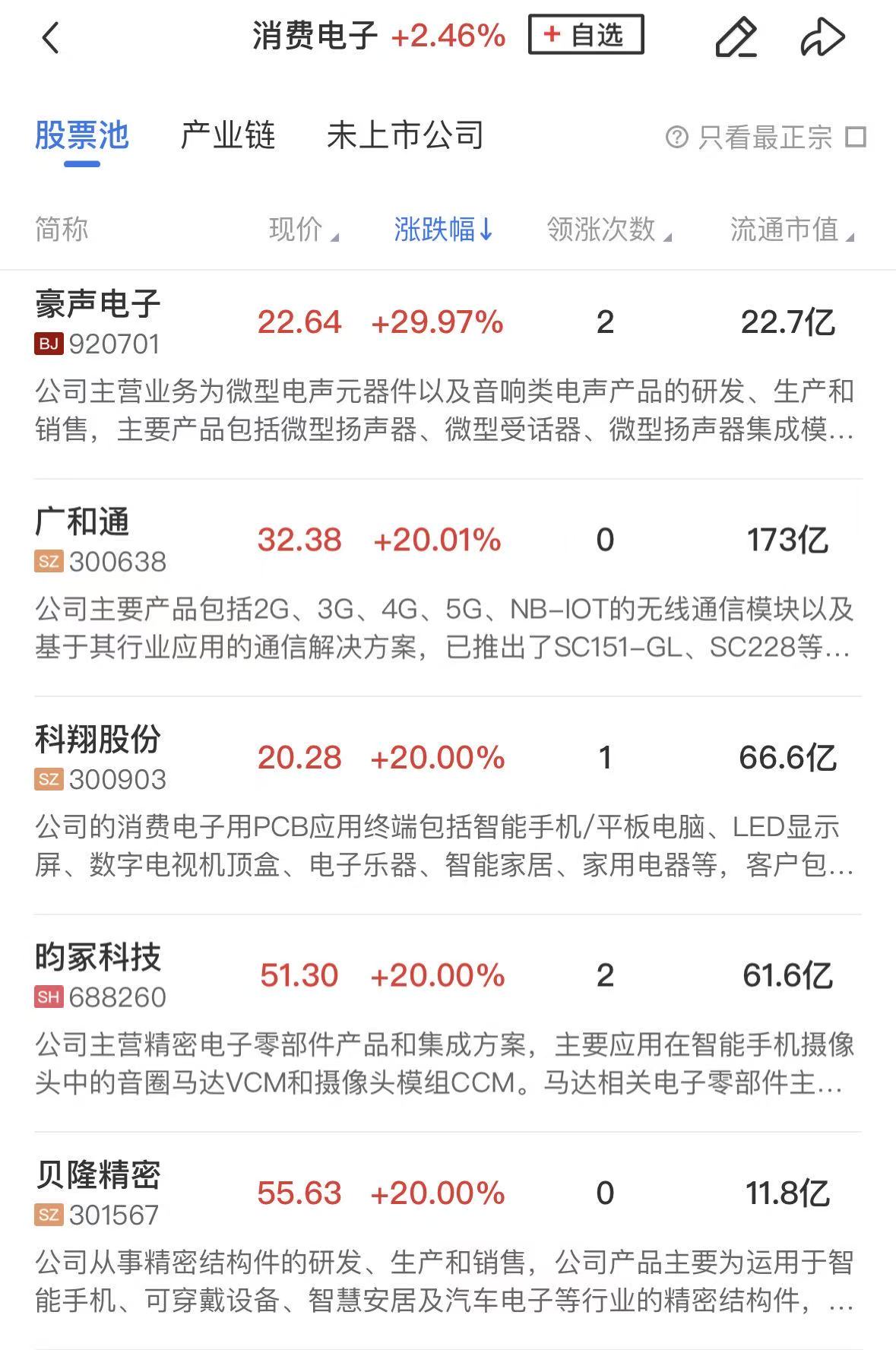
Market Overview - A-shares and Hong Kong stocks experienced a strong upward trend, with major indices rising over 1% [1][2] - By midday, the Shanghai Composite Index rose 0.42% to 3904.9 points, while the Shenzhen Component and ChiNext Index increased nearly 1%, and the North Star 50 Index surged approximately 2% [2] Sector Performance Non-ferrous Metals - The non-ferrous metals sector showed strong performance, with significant gains in copper and aluminum stocks. Notable stocks included Jiangxi Copper, which saw a peak increase of over 7% [4][5] - According to Huaxi Securities, copper is viewed as a strategic asset due to its role in energy transition, with a projected supply reduction of 20,000 tons by Q4 2025, leading to a quarterly production decrease of about 3%-4% [5] - The macroeconomic environment, including potential interest rate cuts by the Federal Reserve, is expected to support copper prices, with a forecast of continued dollar depreciation [5] Commercial Aerospace - The commercial aerospace sector experienced a collective surge, with stocks like Yujie Co. rising nearly 16% and several others exceeding 10% gains [7] - The establishment of a dedicated Commercial Aerospace Department by the National Space Administration signifies a regulatory framework aimed at promoting high-quality development in the sector [8] - The action plan for 2025-2027 aims for significant growth in the commercial aerospace industry, with expectations for a well-coordinated ecosystem and enhanced innovation capabilities [8][9] Consumer Electronics - The consumer electronics sector was notably active, with stocks such as Haosheng Electronics hitting a 30% limit up, and several others achieving 20% gains [11] - The recent launch of AI-powered products, such as Huawei's "Smart Companion" toy, has generated significant market interest, leading to immediate sellouts [12] - The global smart glasses market is projected to see a shipment volume of 4.065 million units in the first half of 2025, reflecting a year-on-year growth of 64.2%, with expectations for the market to exceed 40 million units by 2029 [13]




A股超3600股上涨,中兴通讯强势涨停,航天发展12天8板
2 1 Shi Ji Jing Ji Bao Dao· 2025-12-01 04:09
Market Overview - The market experienced a strong upward movement on December 1, with the Shenzhen Component Index and ChiNext Index both rising over 1%, while the Shanghai Composite Index returned above 3900 points [1] - The total trading volume in the Shanghai and Shenzhen markets reached 1.23 trillion yuan, an increase of 250.4 billion yuan compared to the previous trading day [1] - Over 3600 stocks in the market saw gains, indicating broad market strength [1] Sector Performance - The consumer electronics sector saw significant gains, with companies like ZTE Corporation, Tianyin Holdings, and Daoming Optics hitting the daily limit [1] - The non-ferrous metals sector was also active, with stocks such as Silver Nonferrous and Minfa Aluminum reaching the daily limit [1] - The commercial aerospace concept continued its strong performance, with Aerospace Development achieving 8 limit-ups in 12 days [1] - Conversely, the wind power sector showed weakness, with Sany Renewable Energy dropping over 6% [1] ZTE Corporation Developments - ZTE Corporation's A-shares and H-shares both experienced substantial increases, with the A-share price reaching 46.3 yuan and the H-share price exceeding 10% growth to 34.62 HKD [2] - The company announced the limited release of the Nubia M153, which features the Doubao mobile assistant technology preview version, aimed at developers and interested users [4][5] - The Nubia M153 is priced at 3499 yuan and is equipped with a Snapdragon 8 Gen 2 processor and a 6000mAh battery [6] Doubao Mobile Assistant - The Doubao mobile assistant, developed in collaboration with smartphone manufacturers, aims to enhance user interaction and experience based on Doubao's large model capabilities [7] - Doubao clarified that the Nubia M153 is merely an engineering sample for user experience and that there are no plans to develop a smartphone [9] Tianfeng Securities Situation - Tianfeng Securities' stock price fell nearly 9% at the opening, with a current decline of 6.63%, following the receipt of a notice from the China Securities Regulatory Commission regarding an investigation for alleged information disclosure violations [9] - The company has over 513,600 shareholders, with an average holding amount of 89,600 yuan, indicating a significant impact on investors due to the stock price drop [9] A-Share Market Outlook - UBS Securities' analyst Meng Lei predicts that the overall A-share profit growth rate could rise from 6% this year to 8% in 2026 [10] - Factors contributing to this positive outlook include macro policy adjustments, accelerated A-share profit growth, declining risk-free interest rates, and sustained inflows of long-term capital into the stock market [10] - Investment themes to watch include technology self-sufficiency, "anti-involution" concepts, and Chinese companies expanding overseas, with a recommendation to consider consumer recovery in the second half of the year [10]

港股午评:恒指涨0.81%,有色板块大涨,中兴通讯劲升超11%
Ge Long Hui· 2025-12-01 04:09
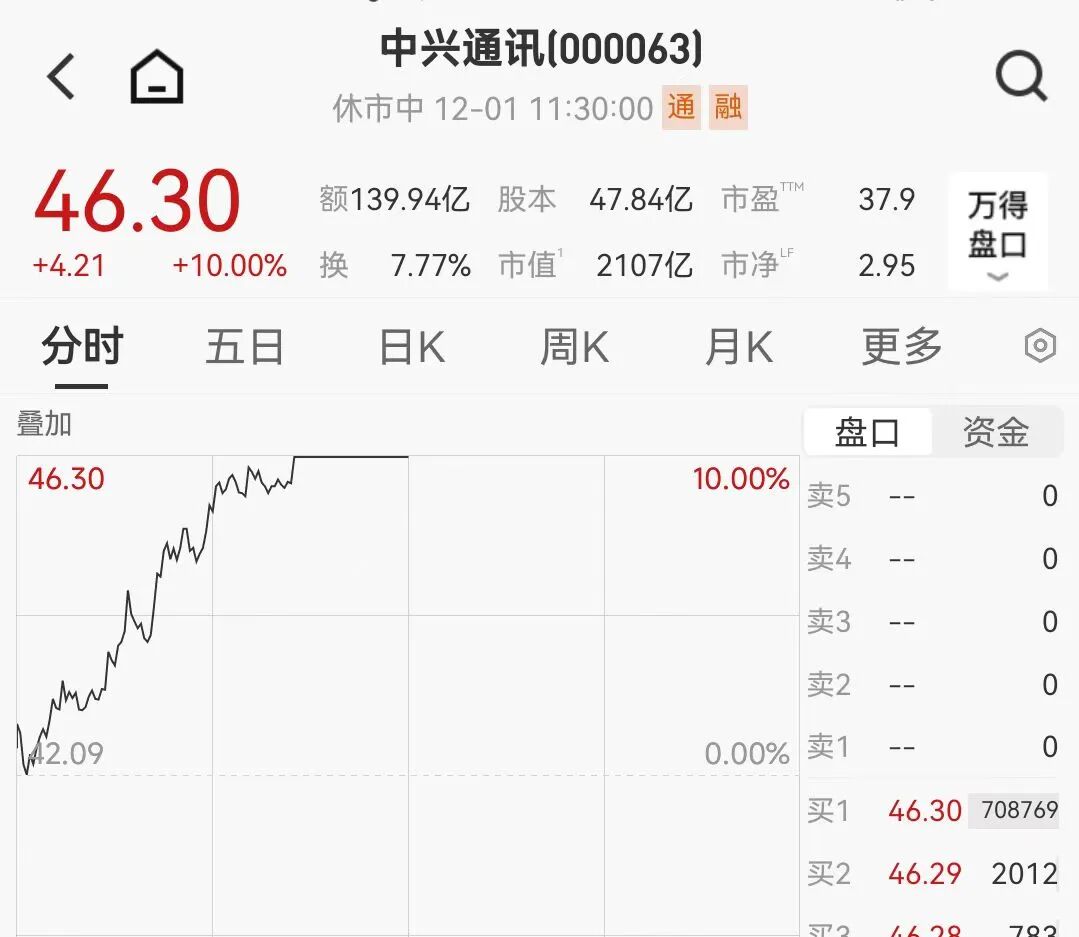
港股上午盘三大指数集体上涨,恒生指数盘中一度冲高至1.24%,午间收涨0.81%重回26000点上方,国 企指数、恒生科技指数分别上涨0.64%及0.99%。大型科技股多数表现活跃,尤其是阿里巴巴涨超3%表 现相对强势;铜价新高,金价持续上涨,有色板块大爆发,五矿资源、中国黄金国际涨幅领先,苹果概 念股、半导体芯片股、港口及海运股普遍上涨。豆包手机助手已搭载在中兴的样机上,中兴通讯大涨超 11%表现抢眼。另外,中国央行首次重磅定调稳定币,加密货币概念股多数走低,泡泡玛特、蜜雪集 团、沪上阿姨等新消费概念股走低。(格隆汇) ...
突发!字节跳动否认自研AI手机,中兴通讯强势涨停
2 1 Shi Ji Jing Ji Bao Dao· 2025-12-01 04:08
Core Insights - ByteDance's Doubao team has officially released a technical preview of the Doubao Phone Assistant, which is based on the Doubao large model and aims to enhance user interaction and functionality through deep collaboration with smartphone manufacturers [1] - There are market rumors suggesting that ByteDance is developing an AI phone named "Doubao Phone," with ZTE as the ODM manufacturer, expected to launch by the end of this year or early next year [1] - ByteDance clarified that the Doubao Phone Assistant is an AI assistant software developed in collaboration with smartphone manufacturers and that there are no plans to develop a phone independently [1] Company Developments - The Doubao Phone Assistant is currently available for developers and tech enthusiasts on the Nubia M153, a prototype developed in collaboration with ZTE, priced at 3499 yuan [1] - ZTE's stock experienced significant fluctuations following the announcement, with its A-shares hitting the daily limit up and trading volume exceeding 14 billion yuan, while its Hong Kong shares rose over 10% during intraday trading [1][2]
A股超3600股上涨,中兴通讯强势涨停,航天发展12天8板
21世纪经济报道· 2025-12-01 04:05
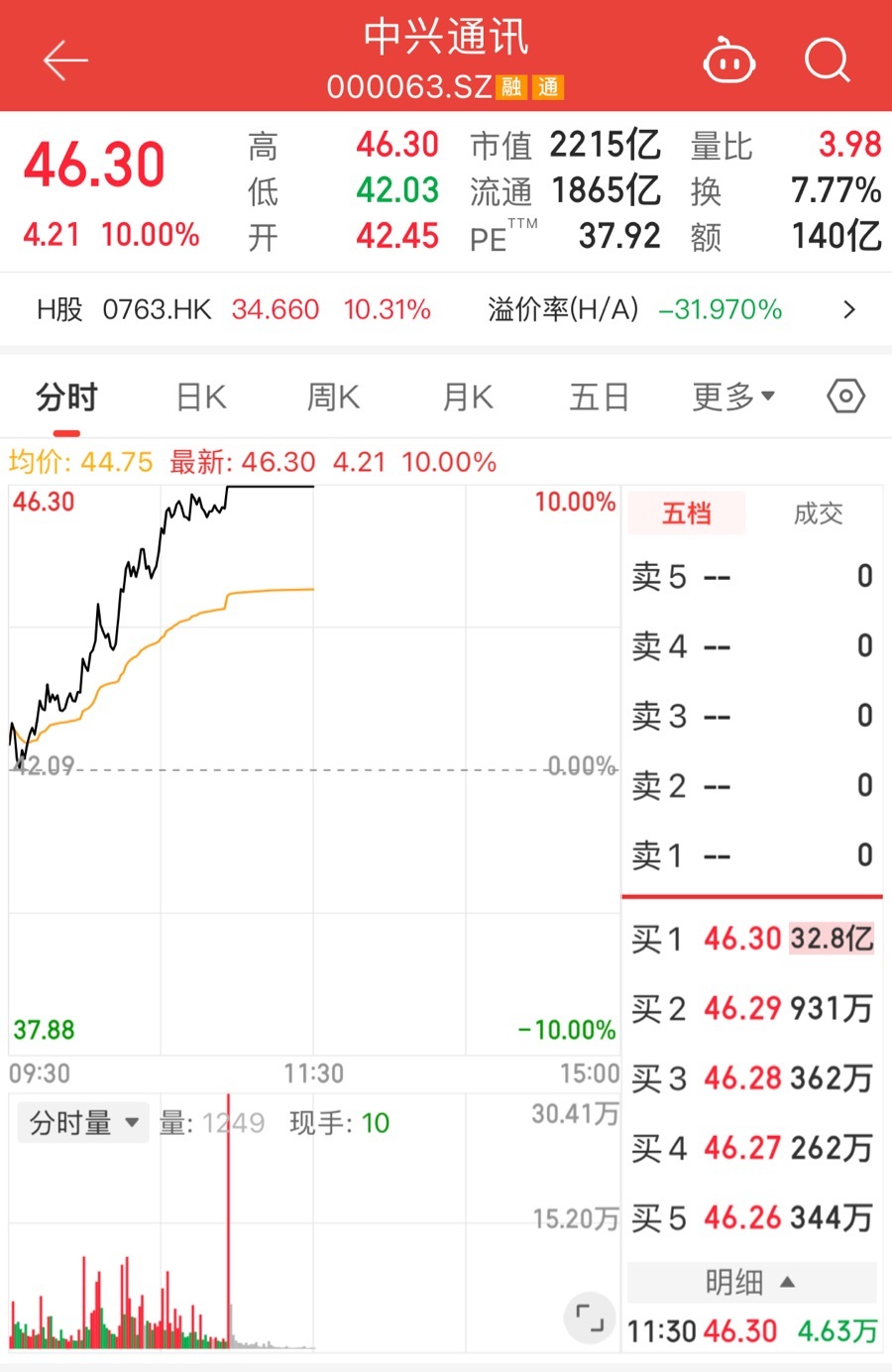
Market Overview - The market experienced a strong upward trend on December 1, with the Shenzhen Component Index and ChiNext Index both rising over 1%, and the Shanghai Composite Index returning above 3900 points. The total trading volume in the Shanghai and Shenzhen markets reached 1.23 trillion yuan, an increase of 250.4 billion yuan compared to the previous trading day. Over 3600 stocks in the market saw gains [1]. Sector Performance - The consumer electronics sector saw significant gains, with companies like ZTE Corporation, Tianyin Holdings, and Daoming Optics hitting the daily limit. The non-ferrous metals sector was also active, with Silver Nonferrous and Minfa Aluminum reaching the daily limit. The commercial aerospace concept continued its strong performance, with Aerospace Development achieving 8 limit-up days in 12 days. Conversely, the wind power sector showed weakness, with Sany Renewable Energy dropping over 6% [1]. ZTE Corporation - ZTE Corporation's stock surged, reaching the daily limit in both A-shares and Hong Kong stocks. The A-share price hit 46.3 yuan per share, while the Hong Kong stock price reached 34.62 HKD, an increase of over 10% [3]. Beanbag Mobile Assistant - ZTE announced the limited release of the Nubia M153, which features the Beanbag Mobile Assistant technology preview version. The device is priced at 3499 yuan and includes a Snapdragon 8 Gen 2 processor, a 6.78-inch screen, and a 6000mAh battery. The Beanbag Mobile Assistant aims to enhance user interaction and experience through collaboration with mobile manufacturers [5][7]. Tianfeng Securities - Tianfeng Securities experienced a significant drop of nearly 7%, with over 500,000 shareholders affected. The decline followed the company's receipt of a notice from the China Securities Regulatory Commission regarding an investigation into alleged information disclosure violations. The stock price fell by 6.63% as of the latest report [10][11]. A-Share Earnings Growth Forecast - UBS Securities' analyst Meng Lei projected that the overall A-share earnings growth rate could rise from 6% this year to 8% by 2026. Factors contributing to this outlook include macro policy support, accelerated earnings growth, declining risk-free interest rates, and sustained inflows of long-term capital into the stock market [12]. Investment Themes - Investment themes suggested include focusing on technology self-sufficiency, the "anti-involution" concept, and Chinese companies expanding overseas. The growth style is expected to outperform the value style in the medium term, while the cyclical style may outperform defensive styles due to ongoing "anti-involution" policies [13].

超3600只个股上涨
第一财经· 2025-12-01 03:52
2025.12. 01 本文字数:1158,阅读时长大约2分钟 作者 | 一财 阿驴 11:31 A股午盘丨沪指重返3900点上方 截至午盘,沪指涨0.42%,重返3900点上方;深成指涨0.95%,创业板指涨0.9%。 盘面上,6G题材活跃,中兴通讯涨停;消费电子、GPU、卫星导航、宇树机器人指数走强。电商、 新能源概念股表现不振。 | 板块名称 | 深幅 | · 添求 | 涨停数 | | --- | --- | --- | --- | | 智能音箱 | | +3.75% +0.14% | 17 | | 消费电子 | +3.66% | +0.11% | 5 | | Al手机 | +3.35% | +0.10% | A | | 金属锌 | +2.78% | -0.03% | ম | | 无线耳机 | +2.76% | +0.10% | પ્ | | 工业务属 | +2.72% | -0.03% | র্ম | | 金属铅 | +2.72% | -0.05% | A | | AI眼镜 | +2.71% | +0.11% | T | | WiFi 6 | +2.63% | +0.07% | म | | 智能穿戴 ...

A股午评 | 指数放量上涨,沪指收复3900点 AI手机股爆发 中兴通讯涨停
智通财经网· 2025-12-01 03:50
A股三大指数早盘震荡拉升,放量上涨。截至午间收盘,上证指数涨0.42%,深证成指涨0.95%,创业板 指涨0.9%。沪指重返3900点上方, 盘面上,消费电子板块集体爆发,AI手机方向纷纷大涨,中兴通讯、天音控股、道明光学等10余股涨 停;有色金属、贵金属概念持续走强,白银有色涨停,江西铜业一度触及涨停;商业航天概念延续强 势,航天发展、航天环宇涨停或涨超10%;影视板块开盘活跃,中国电影涨停;银行股震荡走强,张家 港行涨超5%;锂电池产业链反复活跃,金富科技、天华新能涨停或涨超10%。此外,稀土、光模块、 PCB等方向盘中均有所表现。 跌幅方面,钛白粉概念震荡下挫,安纳达跌超4%;消费股局部陷入调整;光伏板块走势较弱,阿特斯 跌逾7%。 焦点个股方面,中兴通讯持续走强封板涨停,成交额超131亿元。据报道,字节跳动和中兴通讯合作的 AI手机即将在12月初发布。其中,字节主导豆包大模型的植入与AI交互功能定义,中兴则主导硬件定 义、产品设计和生产制造。 展望后市,中信证券认为,市场呈现出低波慢牛的特征,未来需要内需的重大变化打开市场高度,在超 预期的变化出现前,配置上建议延续资源/传统制造业定价权的重估以及企业 ...
消费电子板块,大爆发
财联社· 2025-12-01 03:48
Market Overview - A-shares experienced a volatile rise in early trading, with the Shenzhen Composite Index and ChiNext Index both increasing by over 1%, while the Shanghai Composite Index returned above 3900 points [1] - The total trading volume in the Shanghai and Shenzhen markets reached 1.23 trillion yuan, an increase of 250.4 billion yuan compared to the previous trading day [1] Sector Performance - The consumer electronics sector saw a collective surge, with companies like ZTE Corporation, Tianyin Holdings, and Daoming Optics hitting the daily limit [2] - The non-ferrous metals sector was active, with Silver Nonferrous and Minfa Aluminum also reaching the daily limit [2] - The commercial aerospace concept continued its strong performance, with Aerospace Development achieving 8 limit-ups in 12 days [2] - Conversely, the wind power sector showed weak performance, with Sany Renewable Energy dropping over 6% [2] - Overall, the Shanghai Composite Index rose by 0.42%, the Shenzhen Composite Index increased by 0.95%, and the ChiNext Index gained 0.9% [2]



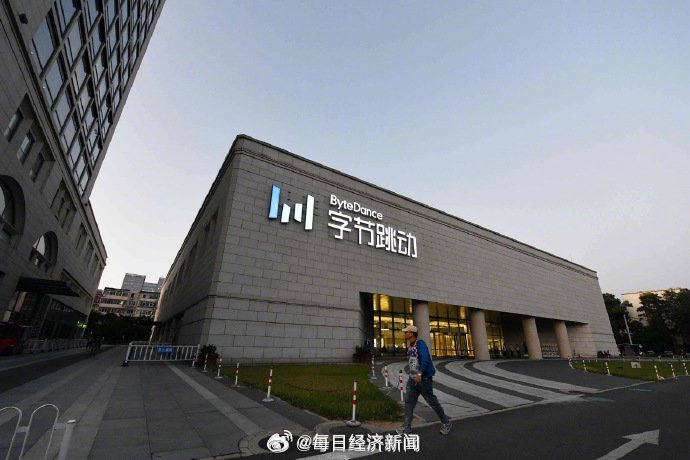
字节否认自研手机计划,发布豆包手机助手技术预览版
Mei Ri Jing Ji Xin Wen· 2025-12-01 03:43
Core Viewpoint - ByteDance has no plans to develop its own smartphones, focusing instead on AI assistant software in collaboration with mobile manufacturers [1] Group 1: Company Developments - ByteDance's Doubao team has released a technical preview version of the Doubao mobile assistant, which is an AI assistant software developed in collaboration with mobile manufacturers at the operating system level [1] - The only officially disclosed mobile partner currently is ZTE, with whom ByteDance is negotiating assistant cooperation [1] Group 2: Product Information - The Doubao mobile assistant is currently available on a limited number of engineering samples, specifically the nubia M153, which is intended for user experience testing [1] - ByteDance emphasizes that it is not developing smartphones but is working with multiple mobile manufacturers to implement the mobile assistant cooperation plan [1] Group 3: Market Reaction - Following the announcement, ZTE's stock price increased by 6.84% [1]