Midea Group(000333)

Search documents
家电行业2025年年报前瞻:黎明前夕,沉潜以待
Guolian Minsheng Securities· 2026-01-14 08:22
Investment Rating - The report maintains a "Recommend" rating for the home appliance industry [1] Core Insights - The industry is at a turning point, with expectations for improved performance in 2026 as domestic demand stabilizes and export orders recover [35] - The report highlights the resilience of leading companies in the white goods sector, with a focus on their ability to navigate through challenging market conditions [7][10] - The overall market dynamics indicate a potential for growth in emerging markets, alongside innovation and product expansion in domestic markets [35] Summary by Sections 1. White Goods - External sales are recovering steadily, while internal sales are expected to remain stable in Q4 2025. Leading companies are well-positioned to benefit from favorable demand and cost environments [7][10] - Q4 2025 internal sales for air conditioners, refrigerators, and washing machines are projected to decline by 31%, 11%, and 6% respectively, due to high base effects from the previous year [10] - External sales for refrigerators and washing machines are expected to show modest growth, with a 3% increase for refrigerators and a 9% increase for washing machines [10] 2. Black Goods - The report indicates that the color TV market is under pressure, with internal sales declining significantly due to high base effects from previous subsidies [15] - External sales remain relatively stable, with a slight decline of 2% expected in Q4 2025 [15][16] - Leading brands are expected to improve their profitability through product innovation and market share gains [15] 3. Cleaning Appliances - External sales continue to grow, while internal sales face challenges due to high base effects from previous subsidies [19] - The report notes a decline in retail sales for floor cleaning machines and washing machines, with internal sales dropping by 25% and 8% respectively [20] - The external market shows strong growth, particularly in Europe and Asia-Pacific, although competition remains intense [21] 4. Small Appliances - Domestic prices are rising, but external demand remains weak, with overall growth in retail sales expected to be between 0-10% [30] - The report highlights structural improvements in pricing and product upgrades, which may support profit margins in the domestic market [30] - External sales are under pressure due to overall weak demand in international markets [30] 5. Post-Cycle - The report indicates a downturn in demand for major kitchen appliances, with significant declines in retail sales across various categories [33] - The real estate market remains sluggish, impacting demand for kitchen appliances, and the report anticipates continued pressure on sales [33] - The upcoming subsidy policies are expected to have limited coverage, which may further affect market dynamics [33] 6. Industry Views and Investment Recommendations - The report suggests that the home appliance sector is poised for recovery in 2026, with expectations for improved fundamentals and potential surprises in export performance [35] - Recommended stocks include leading white goods manufacturers such as Midea Group, Haier Smart Home, Gree Electric, and Hisense Home Appliances, as well as TV manufacturers like Hisense Visual and TCL Electronics [35]





中国耐用消费品:2026 年展望-以旧换新托底国内需求,海外扩张驱动增长;买入:美的;上调石头科技至买入-China Consumer Durables_ 2026 Outlook_ Trade-in to lend domestic support, growth driven by overseas expansion; Buy Midea, Roborock up to Buy
2026-01-14 05:05
Summary of Conference Call on China Consumer Durables Industry Overview - **Industry**: China Consumer Durables - **Outlook for 2026**: Weaker growth in the domestic market is anticipated, while overseas demand is expected to remain resilient. The forecast includes a -1% growth in consumer appliances, supported by a Rmb75 billion trade-in subsidy assumption for 2026E [1][8][38]. Key Points and Arguments Domestic Market Dynamics - **Trade-in Policy**: The trade-in policy for 2026 is expected to be smaller in scale, covering only 6 categories compared to 12 in 2025, with reduced subsidy amounts [8][34]. The anticipated total subsidy is around Rmb250 billion, which is lower than previous expectations [9][38]. - **Consumer Spending**: Despite concerns over a slowdown, healthy consumer spending growth is expected in key overseas markets, particularly the US, which is forecasted to grow by 2.2% in 2026 [12][52]. - **Pricing Competition**: Competition is expected to ease slightly in 2026 due to a focus on profitability and rising material costs, which may support margins [10][39]. Company-Specific Insights - **Midea**: - Rated as a "Buy" due to its resilience and limited downside risk. Expected revenue/profit growth of 7%/8% in 2026E, with a target price of Rmb98 [6][18]. - Anticipated to benefit from overseas market growth and emerging business opportunities [6][16]. - **Roborock**: - Upgraded to "Buy" as it is expected to enter a phase of fast profit growth starting Q1 2026, with a forecast of 17% revenue growth and 59% profit growth in 2026E. Target price set at Rmb210 [3][19]. - Focus on new product expansion and market share gain, particularly in Europe and less penetrated markets [7][19]. - **Jason Furniture**: - Downgraded to "Neutral" due to balanced risk-reward in valuation. Expected revenue/profit growth of 4%/6% in 2026E, with a target price of Rmb32 [3][20]. Market Trends and Risks - **Consumer Appliances**: The overall consumer appliances market is expected to see a mild decline in demand, with specific categories like split ACs facing the most significant impact from reduced trade-in support [30][36]. - **Material Costs**: Rising copper prices pose a risk to margins, particularly for HVAC products, which are significantly affected by material costs [14][70]. However, companies are exploring alternatives like "Aluminum for Copper" to mitigate these risks [73]. - **Overseas Demand**: Despite moderated growth, overseas markets remain critical for revenue, with expectations for continued resource allocation towards international expansion [46][51]. Emerging Opportunities - **New Product Development**: Companies are actively developing new products in robotics and AI, which may serve as mid/long-term growth drivers [65][66]. Innovations in robotic vacuum cleaners and humanoid robots are highlighted as potential future revenue contributors [68][69]. Conclusion The China consumer durables market is navigating a complex landscape with a mix of challenges and opportunities. Companies like Midea and Roborock are positioned favorably for growth, particularly in overseas markets, while the domestic market faces headwinds from reduced trade-in subsidies and pricing competition. The focus on innovation and new product development may provide additional avenues for growth in the coming years.

美的集团、郑州国资成立美寓美家制造公司
Zheng Quan Shi Bao Wang· 2026-01-14 03:04
Group 1 - The core point of the article is the establishment of Henan Meiyu Meijia Manufacturing Co., Ltd., which is involved in various sectors including sales and manufacturing of refrigeration and air conditioning equipment, as well as solar thermal utilization equipment [1] - The legal representative of the newly established company is Ren Zejian [1] - The company is jointly owned by Zhengzhou Chengfa Anju Technology Co., Ltd., Midea Group (000333) through Hainan Midea Building Technology Co., Ltd., and Guangdong Midea Smart Home Technology Co., Ltd. [1]
展十八般武艺!“广货行天下”春季行动明天启动
2 1 Shi Ji Jing Ji Bao Dao· 2026-01-14 01:45
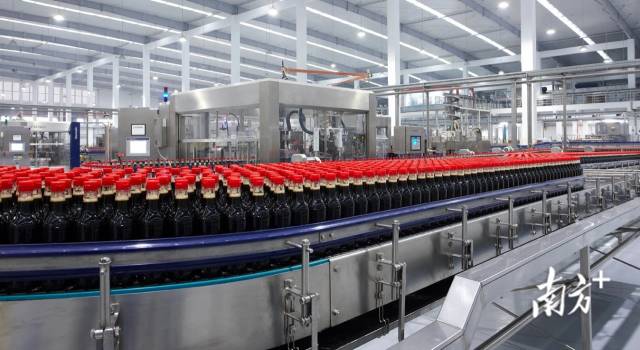
Core Insights - Guangdong's manufacturing sector is showcasing its diverse capabilities, from smart home appliances to high-end mobile phones, fashion apparel, gourmet food, and modern agriculture, emphasizing innovation and quality development [1][2][6][9][21] Group 1: Food Industry - Guangdong's food industry is projected to achieve a revenue of 896.87 billion yuan in 2024, with soy sauce production accounting for over 60% of the national output and mooncake exports representing 90% of the total [2] - The food sector is characterized by a "smart brewing" approach, integrating traditional flavors with modern technology, leading to a "delicious revolution" driven by digitalization and biotechnology [2][3] - The province has established several billion-yuan sub-clusters in various food categories, including sauces, health foods, and traditional snacks, showcasing its strong industrial foundation [2] Group 2: Home Appliances - Guangdong's home appliance exports account for nearly 50% of the national total, with the Greater Bay Area's smart appliance industry representing about 30% of the global market [6][8] - The industry employs a "combination of strengths" strategy, integrating research, manufacturing, and branding while localizing production to penetrate global markets [6][8] - Major companies like Midea and Hisense are expanding their global footprint with numerous R&D centers and manufacturing bases, enhancing their competitiveness [6][8] Group 3: Agriculture - Guangdong's agricultural output is robust, with grain production capacity increasing from 12.38 million tons in 2021 to 12.98 million tons in 2025, achieving a record high in yield per unit area [9][10] - The province leads the nation in the production of lychees and pomelos, with the lychee industry alone generating over 9 billion yuan in value [12] - The agricultural sector is supported by a modernized marine ranching initiative, positioning Guangdong as a leader in fishery production and output [10][12] Group 4: Textile and Apparel - Guangdong's textile and apparel industry boasts the highest number of enterprises in the country, with 4,240 registered companies and a production output of 3.44 billion garments in 2024 [21][23] - The industry employs a "fast response and flexible attack" strategy, utilizing data-driven customization and intelligent production to enhance efficiency [21][23] - Significant advancements in digital transformation are evident, with companies adopting AI and big data to streamline operations and reduce production times [23][24] Group 5: Cultural and Tourism - Guangdong's cultural tourism sector is leveraging traditional customs and modern marketing strategies to attract visitors, particularly during the Spring Festival [17][19] - The "Please Come to Guangdong for the New Year" campaign aims to enhance the province's appeal as a travel destination through various cultural events and activities [19][20] - The integration of local culture, food, and entertainment is designed to create immersive experiences for tourists, showcasing Guangdong's rich heritage [17][21]



广东家电全链布局 构建产业生态体系
Nan Fang Du Shi Bao· 2026-01-13 23:12
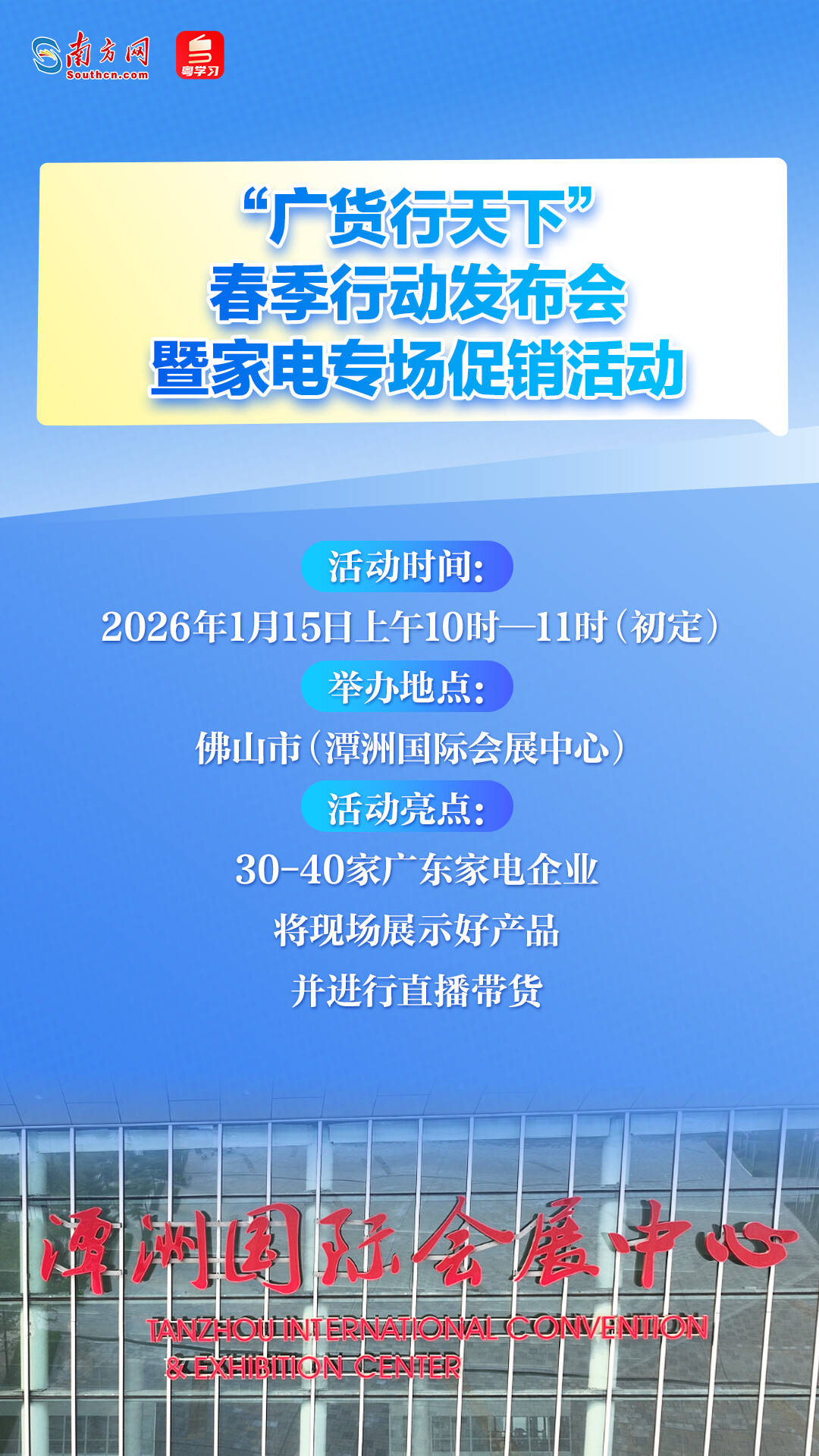
Core Viewpoint - Guangdong's manufacturing sector is actively promoting its products through the "Guangdong Goods Go Global" spring campaign, aiming to enhance market presence and sales, particularly in the home appliance industry, showcasing its innovation and quality [2][3][4]. Group 1: Event Overview - The "Guangdong Goods Go Global" spring campaign will kick off on January 15, marking the beginning of the 2026 online promotional activities for Guangdong products, with 12 promotional events planned for the first quarter [2][4]. - The first event focuses on home appliances, highlighting Guangdong's significant contributions to the national market, including leading production figures in various categories [3][9]. Group 2: Industry Significance - Guangdong's home appliance industry has achieved over ten national firsts in various metrics, including production scale and patent numbers, reinforcing its status as a manufacturing powerhouse [3][9]. - The Guangdong-Hong Kong-Macao Greater Bay Area accounts for nearly 30% of the global smart home appliance market, emphasizing Guangdong's critical role in the global home appliance industry [3][9]. Group 3: Marketing Strategy - The promotional activities will utilize a dual online and offline approach, creating immersive experiences that combine live events with e-commerce platforms, enhancing consumer engagement [4][6]. - The campaign aims to not only sell products but also to create a narrative around "manufacturing aesthetics," appealing to consumers' desires for quality and innovation [4][7]. Group 4: Industry Transformation - Guangdong's manufacturing is transitioning from traditional production to intelligent manufacturing, with a focus on innovation and quality, which is evident in the home appliance sector [5][7]. - The industry has developed a robust ecosystem with a diverse range of companies, including large enterprises and SMEs, fostering continuous innovation and market vitality [5][6]. Group 5: Global Expansion - Major companies like Midea and Gree have established extensive global operations, enhancing the international influence of Guangdong products and their ability to adapt to market changes [6][8]. - The home appliance sector has created a comprehensive supply chain, from raw material production to assembly and distribution, which strengthens its resilience and competitiveness in the global market [6][8].

12场促销+18场配套活动!“硬核”广货何以能行天下?
Sou Hu Cai Jing· 2026-01-13 19:44
Group 1 - The core initiative "Guangdong Products Going Global" aims to boost market expansion and sales for local enterprises, with a series of promotional activities scheduled for the first quarter of 2026 [1] - A total of 12 promotional events will be held, including 10 offline and 2 online, with a focus on various product categories such as home appliances, mobile phones, and food [16][20] - The Guangdong home appliance industry has a significant impact, accounting for nearly 50% of the national export share, with the Guangdong-Hong Kong-Macao Greater Bay Area's smart home appliance industry representing about 30% of the global market [12][16] Group 2 - Guangdong's manufacturing sector is characterized by a diverse industrial ecosystem, encompassing all 31 manufacturing categories, with 15 of them leading nationally [27] - The region's manufacturing capabilities include a complete supply chain in sectors like textiles and home appliances, enhancing responsiveness and reducing costs [27] - The transition from traditional manufacturing to intelligent manufacturing is evident, with automation and AI technologies significantly improving production efficiency across various industries [28][29]

1月15日全球圈粉!广货何以行天下?
Sou Hu Cai Jing· 2026-01-13 15:29
Core Viewpoint - Guangdong products, known as "Guanghuo," have evolved from traditional goods to modern high-tech products like smartphones, drones, and electric vehicles, showcasing the region's manufacturing prowess and global reach [2][12]. Group 1: Market Expansion and Product Popularity - The cross-border e-commerce import and export scale has expanded 66 times over nine years, accounting for over one-third of the national total, making Guangdong the leader in this sector [6]. - Guangdong produces one out of every four express deliveries in China, indicating its significant role in the logistics and e-commerce landscape [6]. - Notable collaborations, such as Guangshi Pineapple Beer with trendy brands and LIGOMIN's youth-oriented clothing line, demonstrate how traditional brands are adapting to modern consumer preferences [6][8]. Group 2: Comprehensive Industrial Ecosystem - Guangdong's manufacturing ecosystem is characterized by a diverse range of products, from clothing to electronics, creating a robust industrial "full family bucket" that supports various consumer needs [12][13]. - The province boasts all 31 major manufacturing categories, with 15 of them ranking first nationally, and has established nine trillion-yuan industrial clusters in sectors like electronics, smart appliances, and new energy [12][13]. - The integration of upstream and downstream enterprises enhances efficiency, reduces costs, and accelerates response times, contributing to Guangdong's competitive edge [12][13]. Group 3: Intelligent Manufacturing and Innovation - Guangdong is transitioning from traditional manufacturing to intelligent manufacturing, with significant improvements in production efficiency, such as a 200% increase in automation at Gree's smart factory [15]. - The adoption of AI and biotechnology in food production has led to stable flavors, reduced energy consumption, and upgraded quality, showcasing the region's commitment to innovation [15]. - Government policies and market dynamics are aligned to support technological advancements, with initiatives aimed at fostering key technology breakthroughs and promoting local standards to international levels [15].


AI应用催化密集,AI+家电落地加速
Orient Securities· 2026-01-13 12:57
Investment Rating - The report maintains a "Positive" investment rating for the home appliance industry, indicating an expectation of returns exceeding the market benchmark by more than 5% [4][11]. Core Insights - The report highlights that the domestic market's consumption potential is expected to be activated by the continuation of national subsidies, despite a marginal slowdown in their impact. The "Two New" policies are anticipated to further stimulate demand in the home appliance sector [3]. - The report emphasizes the acceleration of AI applications in the home appliance industry, with significant developments expected from AI models and smart hardware products [2][6]. Summary by Sections Domestic Market Outlook - The report notes that the leading companies in the white goods sector have a higher proportion of first-level energy-efficient products and more mature management processes for trade-in programs, positioning them to benefit more significantly from the evolving market dynamics [3]. - The first quarter of 2026 is projected to see stable production schedules for white goods, aligning with domestic market expectations [5]. International Expansion - The report identifies international expansion as a long-term strategy, with companies that diversify their production capacity being favored. A valuation shift is anticipated by 2026 [3]. AI Integration - The report discusses the rapid iteration of AI models and their broad application in the home appliance sector, suggesting that smart hardware products integrated with AI services are becoming a key trend. Companies like Yingzi Network are highlighted for their deep engagement in smart home segments [6].



中国消费家电板块:家电中铝代铜的进展与潜在影响-China Consumer Appliances Sector _Aluminum replacing copper in ACs_ Progress and potential impact
2026-01-13 11:56
Summary of Conference Call on China Consumer Appliances Sector Industry Overview - **Sector**: China Consumer Appliances - **Focus**: Transition from copper to aluminum in air conditioning (AC) units, particularly in heat exchangers [2][8] Key Points and Arguments Technological Shift to Aluminum - **Popularity**: The use of aluminum in ACs has gained traction due to a recent rally in copper prices [2] - **Standardization**: In December 2025, the Chinese Association of Refrigeration issued a standard for aluminum heat exchangers, and major manufacturers signed a convention to promote consumer acceptance [2][8] Cost Savings Potential - **Copper Content Breakdown**: A typical 1.5HP household AC contains approximately 6-7 kg of copper, with the heat exchanger accounting for 53% of this [3][10] - **Replacement Potential**: It is estimated that 50-60% of copper in ACs can be replaced by aluminum, primarily in heat exchangers [3][12] - **Cost of Goods Sold (COGS)**: Copper constitutes 25-29% of an AC's COGS, and switching to aluminum could reduce COGS by 40%, leading to overall savings of 5-7% [3][12] Adoption Challenges in China - **Efficiency Concerns**: Aluminum has lower heat conductivity than copper, which may lead to increased electricity consumption [4][14] - **Corrosion Resistance**: Aluminum is less resistant to corrosion, posing a higher risk of leakage, especially in humid regions [4][14] - **Welding Difficulties**: The complexity of welding aluminum increases post-sales costs [4][14] - **Consumer Education**: There is a need for consumer education regarding the reliability of aluminum compared to copper [4][14] Gross Margin (GM) Impact - **Projected COGS Growth**: Blended AC COGS is expected to grow by 4% in 4Q25 and 1Q26, and by 5% in 2Q26, which could lower GM by 3-4% YoY [5][15] - **Mitigation Strategies**: Recent price hikes in ACs may help mitigate the cost pressures if raw material prices remain stable [5][15] Sector Implications - **Long-term Outlook**: While the shift to aluminum could benefit the industry's GM in the long run, immediate adoption is not expected due to existing challenges [6] - **Investment Recommendations**: Favorable outlook on industry leaders like Midea and Haier due to their ability to manage cost pressures and optimize operations [6] Additional Insights - **Product Launches**: Wanbao launched an AC made from a zinc-aluminum alloy, priced at Rmb999, which is over 20% cheaper than copper-based models [8] - **Market Dynamics**: The shift to aluminum has been more successful in countries like Japan and the US, where consumer acceptance is higher [11] Conclusion The transition from copper to aluminum in the Chinese AC market presents both opportunities for cost savings and challenges related to efficiency and consumer acceptance. The industry's leaders are well-positioned to navigate these changes, but significant hurdles remain before widespread adoption can occur.
“广货行天下”底气何来?全链布局与创新生态的广东家电样本
Nan Fang Du Shi Bao· 2026-01-13 11:44
Core Viewpoint - Guangdong is launching the "Guangdong Goods Go Global" spring action to boost market expansion and sales for its manufacturing sector, particularly in the home appliance industry, marking a strong start to the year 2026 [1][3]. Group 1: Event Overview - The "Guangdong Goods Go Global" spring action will commence on January 15, featuring 12 promotional events, including 10 offline and 2 online, along with 18 supporting activities [3][4]. - The event aims to showcase Guangdong's home appliance industry, emphasizing its innovation and quality, and is seen as a significant commercial event for the region [3][4]. Group 2: Industry Significance - Guangdong's home appliance sector has achieved over 10 national firsts in various categories, including production volume and patent numbers, highlighting its leading position in China's manufacturing landscape [4][6]. - The Guangdong-Hong Kong-Macao Greater Bay Area accounts for nearly 30% of the global smart home appliance market, underscoring Guangdong's critical role in the global home appliance industry [4][8]. Group 3: Marketing Strategy - The promotional activities will utilize a dual approach of online and offline engagement, creating an immersive experience for consumers while adapting to digital consumption trends [5][6]. - The event will not only focus on selling products but also on experiential consumption and showcasing the aesthetic of manufacturing, aiming to reshape consumer perceptions and stimulate new demand [5][10]. Group 4: Industrial Ecosystem - Guangdong's manufacturing sector is transitioning from "Made in Guangdong" to "Intelligent Manufacturing in Guangdong," reflecting advancements in technology, design, and quality [6][8]. - The home appliance industry has established a comprehensive ecosystem, integrating production, assembly, distribution, and recycling, which enhances resilience and efficiency [9][10]. Group 5: Innovation and Quality - Companies like Midea and Gree are leading innovations in product design and functionality, catering to specific market needs and enhancing their competitive edge [10]. - The shift towards high-quality living standards is driving the demand for innovative home appliances, with products designed to meet diverse consumer preferences [10].