
GREE(000651)

Search documents
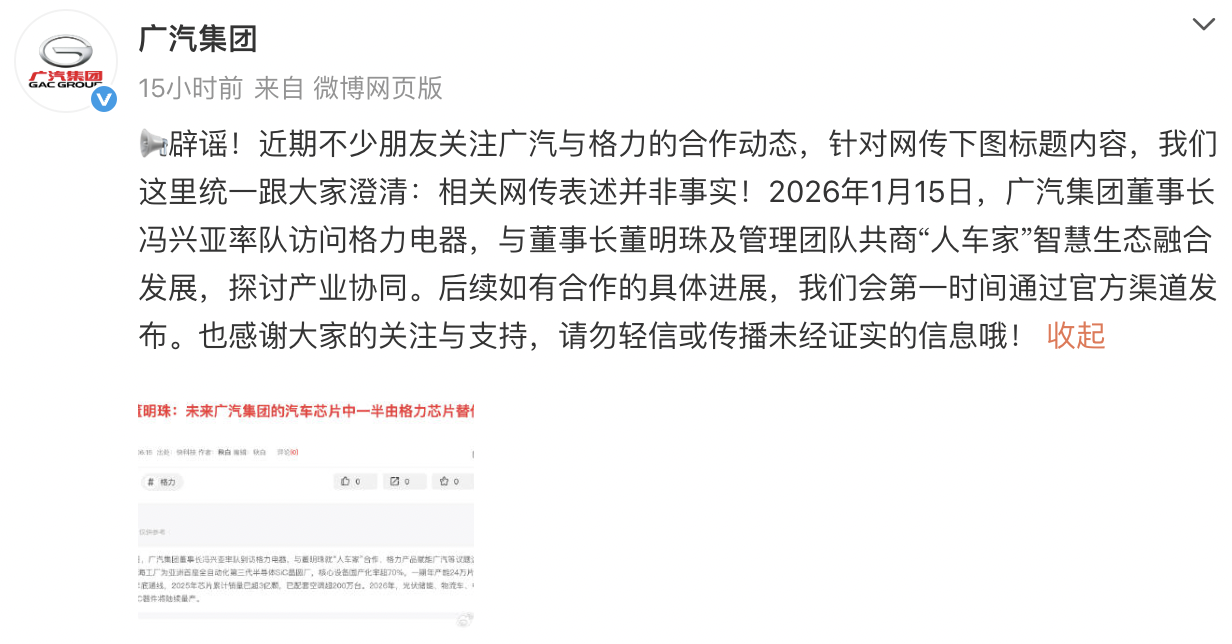
广汽集团发文澄清
Nan Fang Du Shi Bao· 2026-01-21 03:41
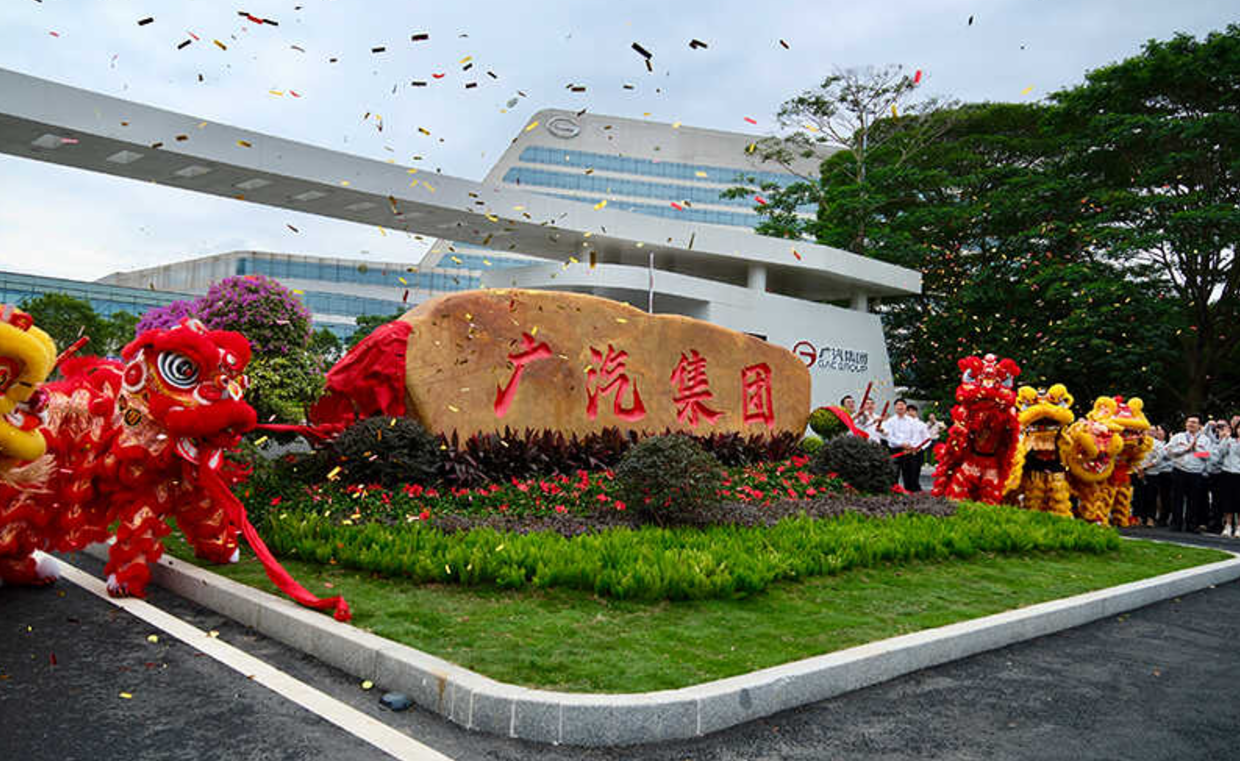
Group 1 - GAC Group issued a clarification regarding rumors about a partnership with Gree Electric [1] - On January 15, 2026, GAC Group's chairman, Feng Xingya, visited Gree Electric to discuss the integration of "people, vehicles, and home" smart ecosystem [1] - GAC Group emphasized that any future cooperation details will be announced through official channels [1]




广汽集团辟谣格力替代半数汽车芯片传闻,双方聚焦生态协同与产业合作
Ju Chao Zi Xun· 2026-01-21 02:45
Core Viewpoint - GAC Group issued an official statement denying rumors that Gree Electric would replace half of its automotive chips, clarifying that the discussions between the two companies focused on collaborative development in the "smart ecosystem" of "people, vehicles, and homes" [2] Group 1: Company Collaboration - The rumors originated from a high-level meeting on January 15, where GAC Group's chairman introduced the Hyper GT model, emphasizing its 1004 chips with independent Chinese intellectual property [2] - Gree Electric has been involved in the chip sector since 2015, with a team of nearly 1,000 people and over 60% being technical staff, achieving cumulative sales of over 300 million chips by 2025 [4] - Gree's silicon carbide (SiC) chip business is accelerating, with a factory capable of producing 240,000 six-inch SiC wafers annually, and plans to launch SiC power devices for various markets by 2026 [4] Group 2: Investment and Product Development - In 2025, GAC Capital completed an investment in Chongqing Pingwei Industrial Co., which focuses on chip design and has established deep cooperation with GAC Group across its core brands [5] - The GAC Hyper GT model, featuring 100% domestically designed chips, successfully rolled off the production line in November 2025, marking a significant breakthrough in chip localization [5] - GAC Group launched 12 automotive-grade chips in April 2025, developed in collaboration with various companies, covering critical areas such as power management and safety [6] Group 3: Ecosystem Development - GAC Group initiated the "Automotive Chip Application Ecosystem Co-construction Plan" to enhance collaboration and innovation across the industry, ensuring supply chain stability and promoting technological self-reliance in the automotive sector [7]
未知机构:格力电器车用碳化硅芯片将量产董明珠称未来供广汽半数芯片格力-20260121
未知机构· 2026-01-21 02:20
【格力电器车用碳化硅芯片将量产,董明珠称未来供广汽半数芯片】 (第一财经) 【格力电器车用碳化硅芯片将量产,董明珠称未来供广汽半数芯片】 格力电器总裁助理、珠海格力电子元器件有限公司总经理冯尹在大湾区化合物半导体生态应用大会上透露,格力 电器碳化硅芯片工厂在量产家电用碳化硅芯片后,今年光伏储能用、物流车用碳化硅芯片也将量产。 格力电器董事长董明珠几天前接待广汽集团董事长冯兴亚时笑言,未来广汽的汽车芯片中一半由格力产品替代。 格力电器总裁助理、珠海格力电子元器件有限公司总经理冯尹在大湾区化合物半导体生态应用大会上透露,格力 电器碳化硅芯片工厂在量产家电用碳化硅芯片后,今年光伏储能用、物流车用碳化硅芯片也将量产。 格力电器董事长董明珠几天前接待广汽集团董事长冯兴亚时笑言,未来广汽的汽车芯片中一半由格力产品替代。 ...
广汽集团否认未来汽车芯片半数将由格力替代
Xin Lang Cai Jing· 2026-01-21 01:36
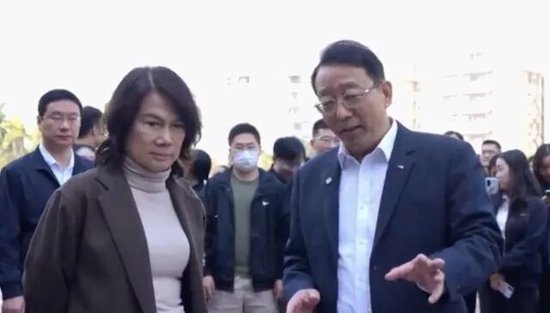
Core Viewpoint - GAC Group denies rumors that half of its automotive chips will be replaced by Gree products, emphasizing that such statements are not factual [2][9] Group 1: Company Statements - GAC Group issued a statement on January 20, clarifying that the claim regarding Gree's products replacing half of its automotive chips is untrue [2][9] - The rumors originated from a corporate exchange event on January 15, where GAC's chairman, Feng Xingya, visited Gree Electric and discussed industry collaboration [3][11] - GAC highlighted that the main topics of discussion were the integration of "people, vehicles, and homes" and exploring industrial synergy, with any future collaboration details to be announced officially [5][13] Group 2: Industry Context - Gree Electric has been developing its silicon carbide (SiC) chip technology since 2018, establishing a dedicated electronic components company in 2023 [6][14] - Gree's factory in Zhuhai has a production capacity of 240,000 pieces per year for 6-inch SiC wafers, with an 85% yield rate [6][14] - By 2025, Gree aims to achieve cumulative sales of over 300 million chips, with semiconductor business revenue expected to exceed 10 billion yuan in 2024 [6][14] Group 3: Technology Insights - Silicon carbide chips are considered essential components for electric vehicles, significantly reducing switching losses by over 70% and improving overall efficiency by 5%-8% [7][15] - These chips can enhance electric vehicle range by 5%-10% and support 800V high-voltage fast charging, enabling a charging efficiency of "150 kilometers in 5 minutes" [7][15] - The market for SiC chips is competitive, with international leaders like Infineon and ON Semiconductor dominating the high-end segment, while domestic players include Gree, Huawei, BYD, and Chipone [7][15]
未来汽车芯片半数将由格力替代?广汽集团辟谣
半导体行业观察· 2026-01-21 01:23
Group 1 - The core point of the article is the collaboration between GAC Group and Gree Electric, focusing on the potential integration of Gree's products into GAC's automotive chips, although GAC later denied the claim that half of its chips would be replaced by Gree products [1] - Gree Electric's semiconductor factory is the first fully automated third-generation semiconductor chip factory in Asia, with over 70% localization rate in core equipment, achieving full-process autonomy from materials to packaging and testing [3] - Gree Electric's silicon carbide (SiC) chip factory is set to produce chips for household appliances, photovoltaic energy storage, and logistics vehicles, with advantages such as high voltage, high frequency, and high temperature resistance [3][4] Group 2 - Gree Electric established its IPM power module production line in 2010 and set up a chip design company in 2018, followed by the establishment of an electronic components company in 2023 focused on SiC chip design and testing [4] - The SiC chip factory's first phase is planned to produce 240,000 pieces of 6-inch SiC wafers annually, with a target of exceeding 300 million chip sales by 2025 [4] - Gree's SiC devices have already been installed in over 2 million air conditioning units, contributing to temperature reduction and energy efficiency improvements, with further production planned for 2026 in various applications [4]

广汽集团否认未来汽车芯片半数将由格力替代:相关表述并非事实
Xin Lang Cai Jing· 2026-01-21 00:58
Group 1 - GAC Group officially denied the rumor that "half of the automotive chips in the future will be replaced by Gree products," emphasizing that the statement is not factual [1] - The rumor originated from a corporate exchange event on January 15, where GAC's chairman, Feng Xingya, visited Gree Electric and discussed industry collaboration with Gree's chairman, Dong Mingzhu [3][5] - Feng Xingya mentioned that GAC developed a climbing version of its high-end brand, Haobo, which uses 1004 chips, all of which have Chinese intellectual property rights [3] Group 2 - GAC clarified that the core topic of the meeting was the integration of "people, vehicles, and home" in a smart ecosystem, and any future collaboration details will be announced through official channels [5] - GAC aims to deepen cross-industry cooperation to enhance the automotive ecosystem and meet user demands more effectively [6] - Gree Electric has established a foundation in silicon carbide chip technology since 2018, with a production capacity of 240,000 pieces per year and a yield rate of 85% for its 6-inch silicon carbide wafer production line [6] Group 3 - Gree's silicon carbide chips are expected to be mass-produced for various applications, including household appliances, photovoltaic energy storage, and logistics vehicles [8] - Silicon carbide chips are considered essential components for electric vehicles, offering over 70% reduction in switching losses and improving overall efficiency by 5%-8%, which can increase the driving range of electric vehicles by 5%-10% [8] - The competitive landscape in the silicon carbide chip market includes both international leaders like Infineon and On Semiconductor, as well as domestic players such as Huawei and BYD [8]
一天两起车辆起火事件!小米回应:动力电池均处于正常状态;俞敏洪宣布聘请陈行甲,年薪150万;日本电视荣光不再!TCL拟控股索尼电视业务
雷峰网· 2026-01-21 00:26
Key Points - Sony officially announced the spin-off of its television business, forming a joint venture with TCL, where TCL will hold 51% and Sony 49% [4][5] - The new company will manage the entire global operations of television and home audio equipment, with plans to start operations by April 2027, pending regulatory approvals [4][5] - Sony's market share in China has significantly declined, with foreign brands collectively holding less than 5% of the market share in 2024, averaging around 1.25% each [4][5] - The overall shipment of televisions in China is projected to drop by 8.5% in 2025, reaching a new low since 2010, with the top eight brands dominating 94.1% of the market [5] - Xiaomi responded to two vehicle fire incidents, stating that the power batteries were functioning normally at the time of the incidents [10][11] - MiHoYo announced the closure of the Genshin Impact server operated in partnership with Xiaomi, effective January 20, 2025, due to strategic adjustments [12] - New Oriental's founder, Yu Minhong, announced the hiring of Chen Xingjia as a consultant with an annual salary of 1.5 million RMB, amidst controversy over high salaries in the nonprofit sector [7][8] - The mobile phone market in China for 2025 shows Vivo, Xiaomi, and Apple as the top three brands by activation volume, with Xiaomi's growth attributed to the success of its 17 series [21][22] - Hikvision reported a slight increase in revenue for 2025, achieving 92.517 billion RMB, with a net profit of 14.188 billion RMB, reflecting a growth of 18.46% year-on-year [30]



俞敏洪聘请陈行甲为新东方总顾问,年薪150万元;马斯克称推动特斯拉转型为机器人公司,估值25万亿美元;SK海力士发放巨额年终奖丨邦早报
创业邦· 2026-01-21 00:08
Group 1 - New Oriental Education Technology Group has appointed Chen Xingjia as a senior consultant with an annual salary of 1.5 million RMB, following public scrutiny over his previous salary exceeding 700,000 RMB [2][3] - New Oriental commits to donating no less than 1 million RMB annually to the Henghui Foundation, which focuses on the health and growth of Chinese youth [2][3] Group 2 - SK Hynix announced a record performance bonus of over 1.36 million KRW (approximately 640,000 RMB) per employee, marking the highest in the company's history, with a stock option plan for employees [4] - The stock option plan allows employees to receive up to 50% of their bonuses in company stock, with additional cash rewards for holding the stock for a year [4] Group 3 - Gree Electric Appliances is set to mass-produce silicon carbide chips for various applications, including photovoltaic storage and logistics vehicles, with plans to supply half of the chips for GAC Group's vehicles [7] - The company aims to enhance its semiconductor capabilities in the growing electric vehicle market [7] Group 4 - iQIYI announced the resignation of CFO Wang Jun for personal reasons, with senior vice president Zeng Ying taking over as acting CFO [11] - iQIYI is in the process of selecting a suitable candidate for the CFO position [11] Group 5 - The AI companionship company Nature Select has raised over 30 million USD in a recent funding round, with investments from Alibaba and Ant Group among others [13] - The funding will support the development of AI companionship products [13] Group 6 - Tesla's CEO Elon Musk is pushing for the company to transition into a robotics firm, with the Optimus humanoid robot as a key focus, despite production challenges [9] - The company aims for a valuation of 25 trillion USD based on its robotics division, which is expected to surpass its current automotive business [9]


8点1氪:小米通报两起汽车起火事件;嫣然基金会已筹款超2300万;信用卡分期还款能享受财政贴息
36氪· 2026-01-21 00:05
Group 1 - Xiaomi reported two incidents of vehicle fires, emphasizing that the battery status was normal during both events [3][5] - In the first incident on January 19, a vehicle in Haikou experienced a fire shortly after being parked, but no injuries were reported [3] - The second incident involved a collision on a highway in Henan, where the vehicle caught fire after the accident, with no casualties [5] Group 2 - Gree Electric plans to mass-produce silicon carbide chips for automotive use, with expectations that half of the chips used by GAC Group will come from Gree [4] - The company is expanding its production capabilities to include chips for photovoltaic storage and logistics vehicles [4] Group 3 - OpenAI's CFO announced that the company's annual revenue for 2025 is projected to exceed $20 billion, a significant increase from $6 billion in 2024 [16] - The growth is attributed to the expansion of computing capabilities and the introduction of advertising in ChatGPT [16] Group 4 - Hikvision reported a net profit of 14.188 billion yuan for 2025, representing an 18.46% year-on-year increase [22] - The company's total revenue reached 92.518 billion yuan, with a slight growth of 0.02% [22] Group 5 - Zhaoyan New Drug expects a significant increase in net profit for 2025, projecting a rise of approximately 214% to 371% [23] - The company anticipates a decrease in revenue, estimating between 1.573 billion to 1.738 billion yuan, a decline of about 13.90% to 22.10% [23] Group 6 - Hongyuan Green Energy forecasts a turnaround in net profit for 2025, estimating between 180 million to 250 million yuan [24] - The improvement is attributed to a vertically integrated supply chain and the sale of equity in a subsidiary, contributing approximately 291 million yuan to profits [24] Group 7 - Bright Dairy expects a net loss of 120 million to 180 million yuan for 2025, a significant decline from a profit of 722 million yuan in the previous year [25] - The loss is primarily due to production issues at its overseas subsidiary, leading to increased costs and inventory write-offs [25]




8点1氪丨小米通报两起汽车起火事件;嫣然基金会已筹款超2300万;信用卡分期还款能享受财政贴息
3 6 Ke· 2026-01-21 00:03
Group 1 - Xiaomi reported two incidents of car fires involving its vehicles, with no injuries reported. The first incident occurred in Haikou, where a vehicle caught fire shortly after being parked, and the second incident involved a collision in Henan, which also resulted in a fire after the vehicle was safely pulled over [1][2][3] - Gree Electric plans to mass-produce silicon carbide chips for automotive applications, with the CEO stating that half of the chips used by GAC Group in the future will be supplied by Gree [5][6] - The Renminbi cash payment regulations will take effect on February 1, 2026, prohibiting the refusal of cash payments and allowing the public to report discriminatory practices against cash [8][9] Group 2 - The personal consumption loan subsidy policy has been extended until the end of 2026, with credit card installment payments now included in the subsidy program [2][3] - The charity organization, Yanyuan Foundation, has raised over 23 million yuan for medical assistance to patients, with funds being allocated based on donor specifications [2] - HSBC's market value is approaching 300 billion pounds, with expectations of significant stock price increases [11]

