
BOE(000725)

Search documents
12月2日内地消费电子(983105)指数跌0.04%,成份股美图公司(01357)领跌
Sou Hu Cai Jing· 2025-12-02 16:15
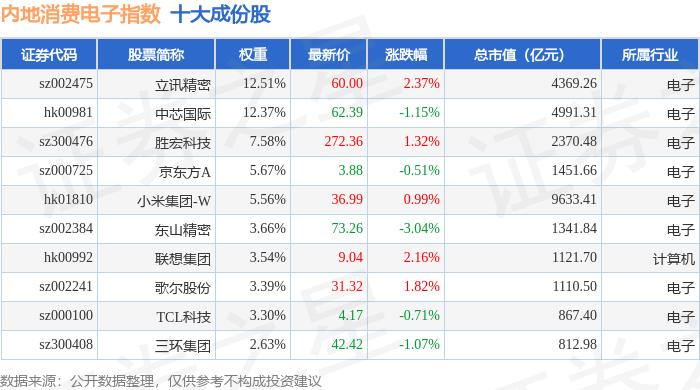
Core Points - The mainland consumer electronics index (983105) closed at 4679.66 points, down 0.04%, with a trading volume of 75.462 billion yuan and a turnover rate of 1.56% [1] - Among the index constituents, 20 stocks rose while 29 fell, with AAC Technologies leading the gainers at 3.95% and Meitu leading the decliners at 6.0% [1] Index Constituents Summary - The top ten constituents of the mainland consumer electronics index are as follows: - Luxshare Precision (sz002475) holds a weight of 12.51%, latest price at 60.00 yuan, with a market cap of 436.926 billion yuan and a rise of 2.37% [1] - SMIC (hk00981) has a weight of 12.37%, latest price at 62.39 yuan, with a market cap of 499.131 billion yuan and a decline of 1.15% [1] - Other notable constituents include BOE Technology (sz000725) with a weight of 5.67% and a market cap of 145.166 billion yuan, and Xiaomi (hk01810) with a weight of 5.56% and a market cap of 963.341 billion yuan [1] Capital Flow Analysis - The net inflow of main funds into the index constituents totaled 775 million yuan, while retail funds saw a net outflow of 347 million yuan [3] - Key stocks with significant fund flows include: - Luxshare Precision with a net inflow of 604 million yuan, accounting for 5.53% of the main funds [3] - Other stocks like GoerTek (sz002241) and Shenghong Technology (300476) also experienced notable fund movements [3]




12月2日深证国企股东回报R(470064)指数跌0.36%,成份股洋河股份(002304)领跌
Sou Hu Cai Jing· 2025-12-02 11:00
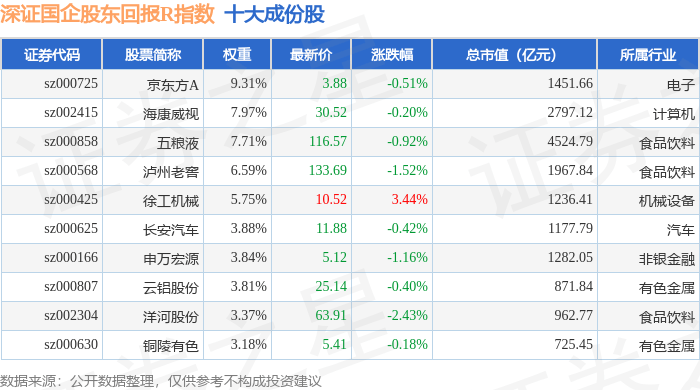
Core Points - The Shenzhen State-Owned Enterprises Shareholder Return Index (470064) closed at 2227.58 points, down 0.36%, with a trading volume of 18.448 billion yuan and a turnover rate of 0.74% [1] - Among the index constituents, 18 stocks rose while 31 stocks fell, with XCMG Machinery leading the gainers at 3.44% and Yanghe Brewery leading the decliners at 2.43% [1] Group 1: Index Performance - The Shenzhen State-Owned Enterprises Shareholder Return Index reported a decline of 0.36% on the trading day [1] - The total trading volume for the index was 18.448 billion yuan, indicating a relatively low turnover rate of 0.74% [1] Group 2: Stock Performance - The top-performing stock was XCMG Machinery, which increased by 3.44% [1] - The worst-performing stock was Yanghe Brewery, which decreased by 2.43% [1] - The index's top ten constituents included major companies such as BOE Technology Group, Hikvision, and Wuliangye, with varying weightings and market capitalizations [1] Group 3: Capital Flow - The index constituents experienced a net outflow of 769 million yuan from institutional investors, while retail investors saw a net inflow of 701 million yuan [3] - XCMG Machinery had a net inflow of 118 million yuan from institutional investors, despite overall negative trends in capital flow for many stocks [3] Group 4: Index Adjustments - Recent adjustments to the index included the addition of 10 new stocks and the removal of 10 existing stocks, reflecting changes in market dynamics [4] - Notable additions included companies from various sectors such as machinery, transportation, and food and beverage [4]





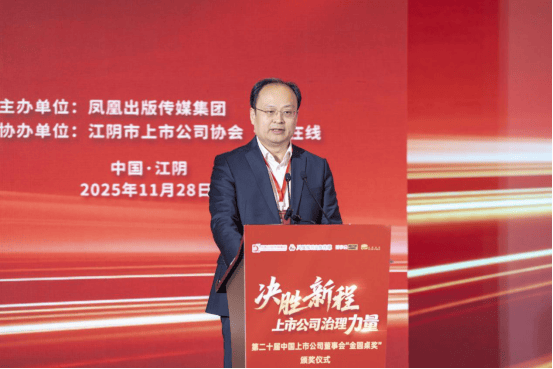
决胜新程——第二十届中国上市公司董事会“金圆桌奖”颁奖仪式在江阴成功举办
Sou Hu Cai Jing· 2025-12-02 06:29
Core Points - The 20th "Golden Roundtable Award" ceremony for Chinese listed companies was held in Jiangyin, attended by over 200 guests including executives, scholars, and media representatives, highlighting achievements in corporate governance [1][2][3] - The event recognized over 100 listed companies with a total market value exceeding 10 trillion, including 16 companies with market values over 100 billion [1][2] Group 1 - The opening speech by Li Zhenqiang emphasized the importance of the "Golden Roundtable Award" as a platform for consensus and wisdom, aiming to support the transformation and upgrading of Chinese listed companies [2][3] - Jiangyin's Vice Mayor Ji Zhen highlighted the city's achievements as a manufacturing hub, with 66 listed companies and a total market value exceeding 300 billion, positioning Jiangyin as a leader among county-level cities [5][6] Group 2 - Liu Yunhong, a professor, discussed the development of corporate governance rules in China, identifying six key issues in current practices and advocating for a shift from "formal compliance" to "substantive effectiveness" [12] - Zhu Zhengyi shared insights from Longji Technology's acquisition of Xingke Jinpeng, emphasizing the strategic role of corporate secretaries in governance [12][13] - Su Mei analyzed the trends in the A-share market under the registration system, stressing the importance of value management for high-quality development [15] Group 3 - The award ceremony recognized outstanding companies and individuals in various categories, including "Most Influential Independent Director" and "Excellent Board of Directors," showcasing achievements in governance and value creation [18][20][33] - The "Best Board of Directors" award was presented to leading companies such as Weichai Power and China Ping An, reflecting their exemplary governance practices and strategic foresight [33][36]





国盛证券:钙钛矿产业化进展加速 面板企业跨界带来新动能
Zhi Tong Cai Jing· 2025-12-02 02:00
Core Insights - The Chinese perovskite photovoltaic industry is entering a critical phase of technological scaling, marked by significant breakthroughs since 2025 [1][2] - BOE Technology Group (京东方) is leading the charge in perovskite solar technology, becoming one of the first companies to achieve large-scale production [1][3] Industry Developments - The perovskite photovoltaic industry in China has seen rapid advancements, with the first GW-level perovskite production line launched by GCL-Poly Energy on October 29, 2023 [2] - The year 2025 is projected to be a milestone for the commercialization of GW-level perovskite production lines, with several companies, including GCL-Poly and Xina Solar, set to commence production [2] Company Strategies - BOE has diversified into the perovskite sector as part of its "Screen IoT" strategy, establishing a dedicated subsidiary for perovskite technology development [3] - The company has leveraged its existing capabilities in glass processing and large-scale manufacturing to accelerate the commercialization of perovskite solar cells [3][5] Technological Advancements - Various technological routes, including rigid, flexible, and tandem components, are being developed concurrently, with efficiency breakthroughs reported [4] - Rigid components have achieved a certified efficiency of 27.3%, while flexible components reached 20.11% efficiency [4] - Tandem components have set new records, with experimental line efficiencies reaching 28.42% [4] Production Capacity - BOE has invested 871 million yuan in a 500MW perovskite production line, which is expected to produce 912,500 modules [5] - The production line is set to commence operations in December 2024, positioning BOE as a pioneer in large-scale perovskite production [5]

京东方A(000725):半导体显示行业龙头,多点开花构筑平台化公司
ZHONGTAI SECURITIES· 2025-12-01 13:18
Investment Rating - The report assigns an "Accumulate" rating for the company for the first time [5]. Core Insights - BOE Technology Group is a leading player in the semiconductor display industry, establishing a "1+4+N ecosystem" for diversified growth [7][11]. - The LCD panel industry is experiencing reduced cyclicality due to dynamic production control and increasing demand for larger screens, which is expected to drive industry growth [7][28]. - The OLED market is expanding rapidly, with a projected compound annual growth rate of 8.91% from 2022 to 2024, indicating significant market potential [7][52]. Summary by Sections 1. Semiconductor Display Industry Leader - BOE has been deeply involved in the panel industry for 30 years, focusing on semiconductor displays and related innovations, forming a comprehensive business structure [11][13]. - The company operates multiple manufacturing bases across China and has subsidiaries in various countries, ensuring a global service network [11][13]. 2. Dynamic Production Control and LCD Demand - The LCD panel industry has historically shown strong cyclicality, but current dynamics suggest a significant reduction in this cyclicality due to production control measures and recovering demand [28][49]. - The average size of televisions is increasing, from 44 inches in 2017 to an expected 53 inches in 2024, which will further consume panel capacity [49][45]. 3. OLED Market Growth - The global OLED display panel market is projected to reach $50 billion by 2027, with significant growth in both small and medium-sized applications [52][58]. - BOE holds the second-largest global market share in OLED, with a focus on high-end touch displays for laptops and tablets [7][62]. 4. Business Development and Future Prospects - The company is expected to achieve revenues of 225.83 billion yuan in 2025, with a net profit of 7.29 billion yuan, reflecting strong growth potential [5][7]. - BOE's diverse product offerings and strategic positioning in the semiconductor display market provide a solid foundation for future growth [7][73].
电子纸板块年内涨幅超50%“无纸化浪潮”何时来袭?
Zhong Guo Jing Ying Bao· 2025-12-01 12:21
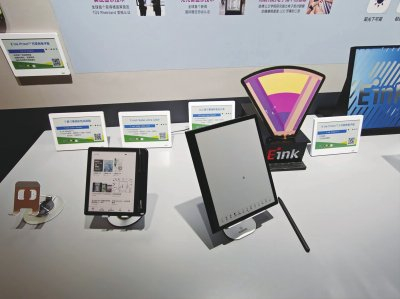
Core Insights - The electronic paper industry is experiencing significant growth, transitioning from niche applications to becoming a core component in IoT display terminals, driven by increasing demand in retail and other sectors [1][2] - The A-share electronic paper index saw a daily increase of 3.36% on November 25, and a year-to-date increase of 56.58% as of November 28 [1] - Major manufacturers are consolidating their market positions, with the top five companies expected to hold approximately 86% of the global market share by 2024 [2][8] Industry Trends - The "dual carbon" goals in China are providing implicit support for low-power electronic products, creating long-term certainty for electronic paper companies [2] - The demand for electronic price tags and other applications is accelerating, with the industry entering a phase of synchronized acceleration in technology, market, and application [2][7] - The electronic paper technology has advanced with breakthroughs in color and flexibility, expanding applications from black-and-white static displays to full-color dynamic displays [5][6] Market Dynamics - The global electronic paper market is projected to exceed $14.2 billion, with significant growth expected in the e-book segment, which is anticipated to reach 18.8 million units by 2025 [8][9] - The domestic electronic paper industry has formed a complete layout, with strong downstream demand driving the expansion of upstream materials and midstream module production capacity [7] - The industry is characterized by a high growth rate and low base, with a compound annual growth rate of over 20% expected for global electronic paper terminals [9][10] Competitive Landscape - Major players in the electronic paper market include E Ink Holdings, HeLiTai, and Yasi Optoelectronics, with E Ink holding over 90% of the electronic ink film market [5][6] - The domestic market is seeing increased competition, with companies like Hanwang Technology and others capturing significant market shares [6][7] - The industry is facing challenges in scaling up production and reducing costs, particularly in high-end color electronic paper, which still relies on imported core materials [10]




A股公告精选 | 比亚迪(002594.SZ)1-11月汽车销量418.2万辆 同比增长11.3%
智通财经网· 2025-12-01 12:13
Group 1: BYD Performance - BYD announced a production of 474,200 new energy vehicles (NEVs) and sales of 480,200 NEVs in November 2025 [1] - Cumulative production for the year reached 4,117,600 units, representing a year-on-year increase of 7.29% [1] - Cumulative sales for the year totaled 4,182,000 units, with a year-on-year growth of 11.30% [1] - In November, BYD exported 131,900 NEVs and installed approximately 27.669 GWh of power batteries and energy storage batteries [1] Group 2: Investment Initiatives - Lushin Venture Capital plans to establish a 400 million yuan investment fund focusing on life sciences, advanced manufacturing, and AI [2] - Chint Electric's wholly-owned subsidiary intends to invest up to 201 million yuan in a green private equity investment fund with a total scale of 700 million yuan [8] Group 3: Corporate Actions - Qianwei Central Kitchen will conduct a shareholder reward activity, offering a product package worth 200 yuan to individual shareholders holding 100 shares or more [3] - Huaxia Happiness plans to use trust beneficiary rights to offset financial debts totaling up to 24 billion yuan as part of its debt restructuring plan [4] - Tailong Pharmaceutical's controlling shareholder is planning a share transfer, leading to a temporary suspension of the company's stock [5] - ST Xianhe has applied to revoke other risk warnings, pending approval from the Shenzhen Stock Exchange [6] - *ST Yuancheng's stock will be delisted due to a market value below 500 million yuan for 20 consecutive trading days [7] Group 4: Sales and Contracts - SAIC Group reported sales of 4,108,000 vehicles from January to November 2025, a year-on-year increase of 16.4% [10] - Geely Automobile's total sales in November reached 310,428 units, marking a 24% increase year-on-year [11] - Far East Holdings' subsidiaries secured contracts worth 2.383 billion yuan in November, positively impacting future earnings [18] - Samsung Medical's subsidiary signed a contract for an annual bidding project in Indonesia worth approximately 160 million yuan [19] - Zhongchao Holdings' subsidiaries recently won contracts totaling 1.318 billion yuan [20] - Changhua Group received a project development notice from a domestic automaker, with an expected total sales amount of approximately 732 million yuan [21]



同花顺果指数概念涨2.45%,主力资金净流入15股
Zheng Quan Shi Bao Wang· 2025-12-01 09:07
Core Insights - The Tonghuashun Fruit Index concept rose by 2.45%, ranking 10th among concept sectors, with 16 stocks increasing in value, including Desay Battery and Pengding Holdings reaching their daily limit [1] - The leading gainers in the sector included Lens Technology, Linyu Intelligent Manufacturing, and Crystal Optoelectronics, with increases of 4.22%, 4.17%, and 3.93% respectively [1] - The stocks with the largest declines were Changying Precision, Industrial Fulian, and Zhongshi Technology, which fell by 2.24%, 1.50%, and 0.49% respectively [1] Market Performance - The top-performing concept sectors today included Smart Speakers with a rise of 3.71%, AI Phones at 3.39%, and Zinc Metals at 2.86%, while the worst performers included the Horse Racing concept down by 0.92% and Digital Watermark down by 0.75% [2] - The Tonghuashun Fruit Index concept saw a net inflow of 321 million yuan, with 15 stocks receiving net inflows, and 8 stocks exceeding 100 million yuan in net inflow [2] - Pengding Holdings led the net inflow with 734 million yuan, followed by Linyu Intelligent Manufacturing, Lens Technology, and Desay Battery with net inflows of 344 million yuan, 283 million yuan, and 280 million yuan respectively [2] Fund Flow Ratios - The stocks with the highest net inflow ratios included Pengding Holdings at 23.80%, Desay Battery at 22.87%, and Crystal Optoelectronics at 10.65% [3] - The detailed fund flow for the top stocks showed Pengding Holdings with a daily increase of 9.99% and a turnover rate of 2.77%, while Desay Battery increased by 10.00% with a turnover rate of 10.88% [3][4] - Other notable stocks included Linyu Intelligent Manufacturing with a 4.17% increase and a turnover rate of 3.19%, and Lens Technology with a 4.22% increase and a turnover rate of 2.12% [3][4]





京东方A:累计回购约2.44亿股
Mei Ri Jing Ji Xin Wen· 2025-12-01 08:55
每经头条(nbdtoutiao)——5年期大面积下线,3年期利率低至1.5%仍一单难求:要么"售罄"要么"额度 紧张"!中长期大额存单为何在消失? (记者 曾健辉) 2025年1至6月份,京东方A的营业收入构成为:显示器件业务占比83.27%,物联网创新业务占比 17.96%,MLED事业占比4.29%,智慧健康服务占比0.91%,传感器及解决方案事业占比0.22%。 截至发稿,京东方A市值为1459亿元。 每经AI快讯,京东方A12月1日晚间发布公告称,截至2025年11月30日,公司通过回购专用证券账户, 以集中竞价方式实施回购公司股份,累计回购A股数量约为2.44亿股,占公司A股的比例约为0.6642%, 占公司总股本的比例约为0.6519%,本次回购最高成交价为4.25元/股,最低成交价为3.83元/股,支付总 金额约为9.75亿元。 ...
京东方A(000725) - 关于回购部分社会公众股份事项的进展公告
2025-12-01 08:15
| 证券代码:000725 | 证券简称:京东方 | A | 公告编号:2025-090 | | --- | --- | --- | --- | | 证券代码:200725 | 证券简称:京东方 | B | 公告编号:2025-090 | 京东方科技集团股份有限公司 关于回购部分社会公众股份事项的进展公告 本公司及董事会全体成员保证信息披露的内容真实、准确、 完整,没有虚假记载、误导性陈述或重大遗漏。 京东方科技集团股份有限公司(以下简称"公司")分别于 2025 年 4 月 18 日、2025 年 5 月 23 日召开第十一届董事会第四次会议和 2024 年度股东大会,审议通过了《关于回购公司部分社会公众股份 的议案》(内容详见公司于 2025 年 4 月 22 日披露的《关于回购公司 部分社会公众股份方案的公告》,公告编号:2025-029)。并于 2025 年 6 月 10 日披露了《关于回购公司部分社会公众股份的报告书》(公 告编号:2025-045)。 根据《京东方科技集团股份有限公司关于回购公司部分社会公众 股份方案的公告》,若公司在回购期内实施派息、送股、资本公积金 转增股本、股票拆细、缩股、配 ...