FAW Jiefang(000800)

Search documents
四中全会精神在基层|中国一汽书写田埂上的“红色答卷”
Zhong Guo Jing Ying Bao· 2026-01-09 12:57
进入冬季,北方多地已是冰封雪飘,但在吉林延边的人们却感到暖意融融。 不久前,中国一汽、中粮集团、中储粮集团联合主办的"吉聚振兴之力共绘富民图景"央企消费帮扶聚力 行动,在延边工人文化宫开幕。中国一汽线下邀请26家央企和8个中央部委帮扶的117家商户共同参与, 并在现场专门布设了吉林省特色农产品展台;线上22家中央企业的24个电商平台与"和美乡品"央企消费 帮扶电商平台互联互通,同步举办活动,旨在汇聚合力,帮助脱贫地区拓宽农产品销售渠道,扩大销售 规模,提升市场竞争力。 消费帮扶是促进脱贫地区特色产业提质增效和持续发展的重要途径,是巩固拓展脱贫攻坚成果、推进乡 村全面振兴的重要举措。 党的二十届四中全会通过的《中共中央关于制定国民经济和社会发展第十五个五年规划的建议》提出, 坚持把解决好"三农"问题作为全党工作重中之重,促进城乡融合发展,持续巩固拓展脱贫攻坚成果,推 动农村基本具备现代生活条件,加快建设农业强国;统筹建立常态化防止返贫致贫机制,坚持精准帮 扶,完善兜底式保障,强化开发式帮扶,增强内生动力,分层分类帮扶欠发达地区,健全乡村振兴重点 帮扶县支持政策,确保不发生规模性返贫致贫。 中国一汽的这一举动,说 ...

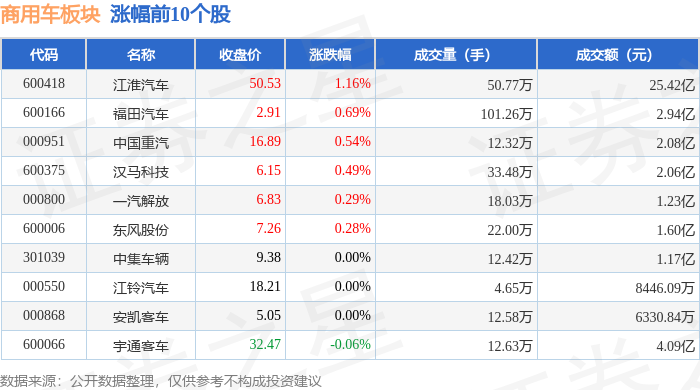
商用车板块1月9日涨0.41%,江淮汽车领涨,主力资金净流出8050.68万元
Zheng Xing Xing Ye Ri Bao· 2026-01-09 08:54
Core Viewpoint - The commercial vehicle sector experienced a slight increase of 0.41% on January 9, with Jianghuai Automobile leading the gains. The Shanghai Composite Index rose by 0.92%, while the Shenzhen Component Index increased by 1.15% [1]. Group 1: Market Performance - Jianghuai Automobile closed at 50.53, up by 1.16% with a trading volume of 507,700 shares [1]. - Foton Motor and China National Heavy Duty Truck both saw increases of 0.69% and 0.54%, closing at 2.91 and 16.89 respectively [1]. - The overall trading volume for the commercial vehicle sector was significant, with Foton Motor achieving a transaction value of 294 million [1]. Group 2: Fund Flow Analysis - The commercial vehicle sector saw a net outflow of 80.51 million from institutional investors, while retail investors contributed a net inflow of 31.18 million [2]. - Among individual stocks, Zhongshun Vehicle had a net inflow of 12.14 million from institutional investors, while it faced a net outflow of 1.44 million from speculative funds [3]. - China National Heavy Duty Truck experienced a net inflow of 2.94 million from speculative funds, despite a net outflow of 3.27 million from retail investors [3].


从“卖全球”到“链全球”:谁将赢得下一个十年?
Xin Lang Cai Jing· 2026-01-09 01:21
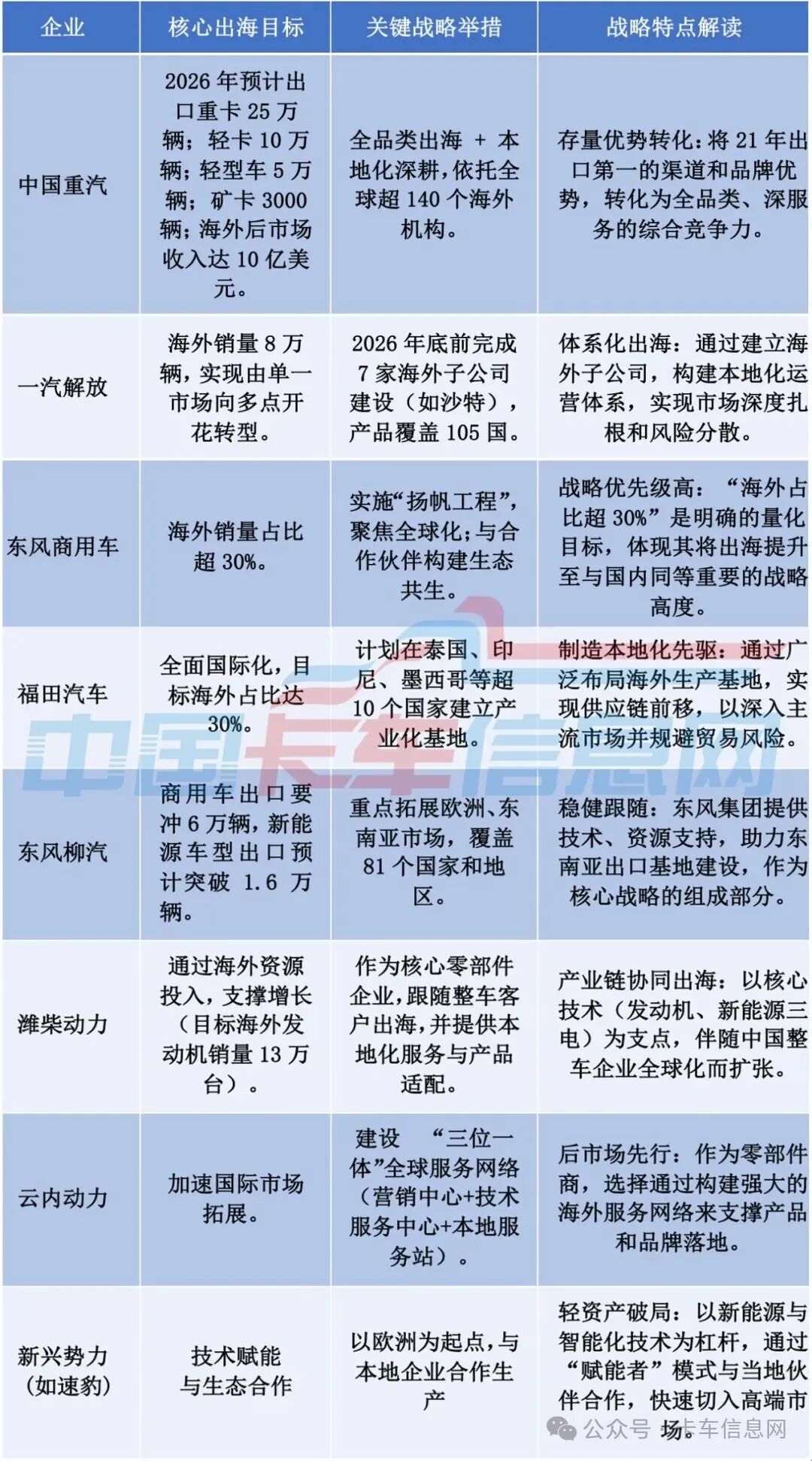
Core Insights - The evolution of Chinese truck exports has transitioned from "product trade" to "ecosystem layout," marking a significant shift towards global operations and local value chain integration [1][16][17] Group 1: Evolution of Export Strategies - Chinese truck exports have progressed through three stages: 1.0 Product output era focused on cost-effectiveness and trade with developing countries [18] 2.0 Market deepening era with established distribution networks and brand awareness while maintaining centralized decision-making [19] 3.0 Chain-rooted era by 2026, emphasizing local integration of R&D, manufacturing, supply chain, finance, and services [19][20] Group 2: Diverse Strategic Paths for 2026 - China National Heavy Duty Truck Corporation aims to export 250,000 heavy trucks and achieve $1 billion in overseas market revenue by leveraging its extensive global network [20] - FAW Jiefang plans to sell 80,000 units overseas and establish seven subsidiaries to diversify its market presence [20] - Dongfeng Commercial Vehicle targets over 30% of its sales from overseas, focusing on building an ecosystem through partnerships [20] - Foton Motor's strategy includes establishing production bases in over 10 countries to enhance local manufacturing and mitigate trade risks [20] - Weichai Power aims for 130,000 overseas engine sales, supporting mainstream vehicle manufacturers with diverse energy solutions [20][27] Group 3: Strategic Models - China National Heavy Duty Truck and FAW Jiefang are replicating successful domestic systems internationally, focusing on comprehensive operational frameworks [22][23] - Foton Motor adopts a "anchor" model with aggressive global production layout to ensure local integration [24] - Dongfeng Commercial Vehicle emphasizes an "integrator" model, shifting from transactional relationships to ecosystem collaboration [25] - Weichai Power and Yunnei Power are pursuing a "guardian" model, enhancing supply chain collaboration to support vehicle manufacturers [26][28] Group 4: Necessity of Localization by 2026 - Companies are increasingly localizing production to overcome traditional tariff and non-tariff barriers, ensuring sustainable market access [29] - Local operations allow firms to capture lifecycle value through financial services, data, and after-sales support, enhancing profitability [30] Group 5: Challenges Ahead - The path to global integration is fraught with complexities, including compliance costs and political risks associated with deep localization [31] - Effective management of overseas subsidiaries and diverse teams poses significant challenges for Chinese companies [32] - Large-scale investments in overseas facilities require substantial capital and a skilled workforce familiar with international operations [33] Group 6: Future Competitive Landscape - The competition in the global truck market by 2026 will hinge on the robustness of localized value chains and ecosystem-building capabilities [34] - Companies that can leverage China's technological advantages in new energy and smart solutions will be better positioned against global competitors [34][35]

【快讯】每日快讯(2026年1月7日)
乘联分会· 2026-01-07 08:41
Domestic News - The Ministry of Commerce announced that China aims to achieve 18.3 million vehicle trade-ins from 2024 to 2025, with nearly 60% being new energy vehicles, contributing to a consumer sales increase of 3.92 trillion yuan, benefiting 494 million consumers [3] - Shanghai has issued measures to encourage foreign investment enterprises to reinvest domestically, allowing various methods for reinvestment, including using undistributed profits [4] - Beijing plans to implement a "no-cost first aid" policy for traffic accident victims, ensuring they receive immediate medical care without upfront costs [5] - Guangdong is optimizing insurance services for new energy vehicles and exploring the development of smart driving liability insurance products to support the growth of the new energy vehicle industry [6] - NIO has officially rolled out its one millionth production vehicle, a new ES8, and has signed a five-year strategic cooperation agreement with CATL to enhance technology and market collaboration [8] - Qianli Zhijia and Geely have jointly launched a new smart driving brand, G-ASD, which covers intelligent driving capabilities from L2 to L4 levels, with the first version already installed in 16 models [9] - Chery Group has set a sales target of 3.2 million vehicles for 2026, representing a year-on-year increase of 14.03% [10] - Hesai Technology announced plans to double its lidar production capacity to 4 million units by 2026 to meet the growing demand in ADAS and robotics [11] International News - Canadian automotive sales are projected to rebound to pre-pandemic levels by 2025, with an estimated 1.9 million light vehicle sales, a 2% increase from 2024 [12] - NVIDIA plans to test its L4 autonomous taxi service in 2027, following initial road tests in 2026 [13] - Sony and Honda's joint venture will launch its first electric vehicle, "AFEELA1," in Japan in the first half of 2027 [14] - Hyundai Motor Group intends to deploy Boston Dynamics' humanoid robots in its U.S. factories starting in 2028 [15] Commercial Vehicles - Proton Motors aims to sell 13,000 vehicles in 2026, following a successful year where it sold over 8,000 vehicles [16][17] - FAW Jiefang has initiated public road demonstrations for its liquid hydrogen heavy truck, marking a significant step in commercializing hydrogen technology [18] - BYD's T4 electric truck has received a recommendation award from industry opinion leaders for its performance and customer recognition [19] - Shaanxi Automobile's X6000 tractor has received EU certification, allowing it to enter the European market, showcasing its compliance with stringent safety and emissions standards [20]





一汽解放:液氢重卡启动公开道路示范运营 驶入商业化验证新阶段
Zhong Guo Zheng Quan Bao· 2026-01-07 05:01
Core Viewpoint - The successful demonstration operation of the liquid hydrogen heavy-duty truck marks a significant advancement in China's hydrogen energy technology, transitioning from laboratory testing to real-world commercial validation [1][3]. Group 1: Technical Achievements - The liquid hydrogen heavy-duty truck, developed by a collaboration between FAW Jiefang, the Aerospace Propulsion Technology Research Institute, and Dongfang Electric (Chengdu) Hydrogen Energy Technology Co., has completed over 8,000 kilometers of operational testing, achieving a range exceeding 1,000 kilometers [1][2]. - This vehicle's performance significantly surpasses the current mainstream hydrogen fuel trucks, which have a range of 400-500 kilometers, thus addressing the mileage anxiety that has hindered the large-scale adoption of electric heavy-duty trucks [1][3]. Group 2: Infrastructure Development - The demonstration operation is supported by the first nationwide liquid hydrogen refueling station, which implements a complete "production, storage, and refueling" closed-loop system, ensuring safe and efficient refueling at -253°C [2][3]. - The successful operation in the challenging terrain of Panzhihua provides a reliable test of the vehicle's performance and the compatibility of the heavy-duty truck chassis with advanced liquid hydrogen storage and supply systems [2][3]. Group 3: Collaborative Innovation - The project represents a deep collaboration across the industry chain, involving leading enterprises, research institutions, and local government, creating an efficient model for innovation that integrates technology development, equipment manufacturing, and application scenarios [3]. - The successful demonstration in Panzhihua establishes a comprehensive pathway from technology research and development to commercial validation, paving the way for the deep decarbonization of the transportation sector in China [3][4]. Group 4: Future Directions - The company plans to continue enhancing the full chain of liquid hydrogen applications and technology upgrades, while also expanding the demonstration effects to various sectors such as green hydrogen metallurgy and hydrogen vehicle manufacturing [4]. - The focus will be on building a mature hydrogen energy industry ecosystem guided by the "Blue Road" new energy technology brand, promoting industry transformation [4].
地通工业:20 亿加码车谷!武汉新能源汽车零部件基地签约落地
Zhong Guo Qi Che Bao Wang· 2026-01-07 02:52
Group 1 - The core viewpoint of the news is the collaboration between Wuhan Economic Development Zone and DITONG Industrial Holdings to establish an automotive parts production and R&D base, focusing on lightweight components for new energy vehicles [1][2] - DITONG Industrial is a leading player in the domestic passenger vehicle parts sector, specializing in stamping, welding, and mold development, with a robust R&D capability and a comprehensive supply chain [1] - The total investment for the DITONG Wuhan base project is approximately 2 billion yuan, located in the intelligent connected and electric vehicle industrial park, aiming to produce key components such as body covers and battery boxes for new energy vehicles [1] Group 2 - The project will adopt a flexible model of "leasing first, then self-building, and phased production" to quickly respond to market demands, with the welding production line already operational through leased facilities [2] - Once fully operational, the project is expected to achieve an annual output value of 1.2 billion yuan, addressing critical gaps in the local automotive supply chain for lightweight body and chassis modules [2] - The Wuhan Economic Development Zone has improved its automotive industry collaboration, with the local automotive supply ratio increasing from 0.68:1 to 0.8:1, highlighting the ongoing synergy in the industry [3]
2026头部企业,要在这三个战场“定”胜负!
Xin Lang Cai Jing· 2026-01-07 01:29
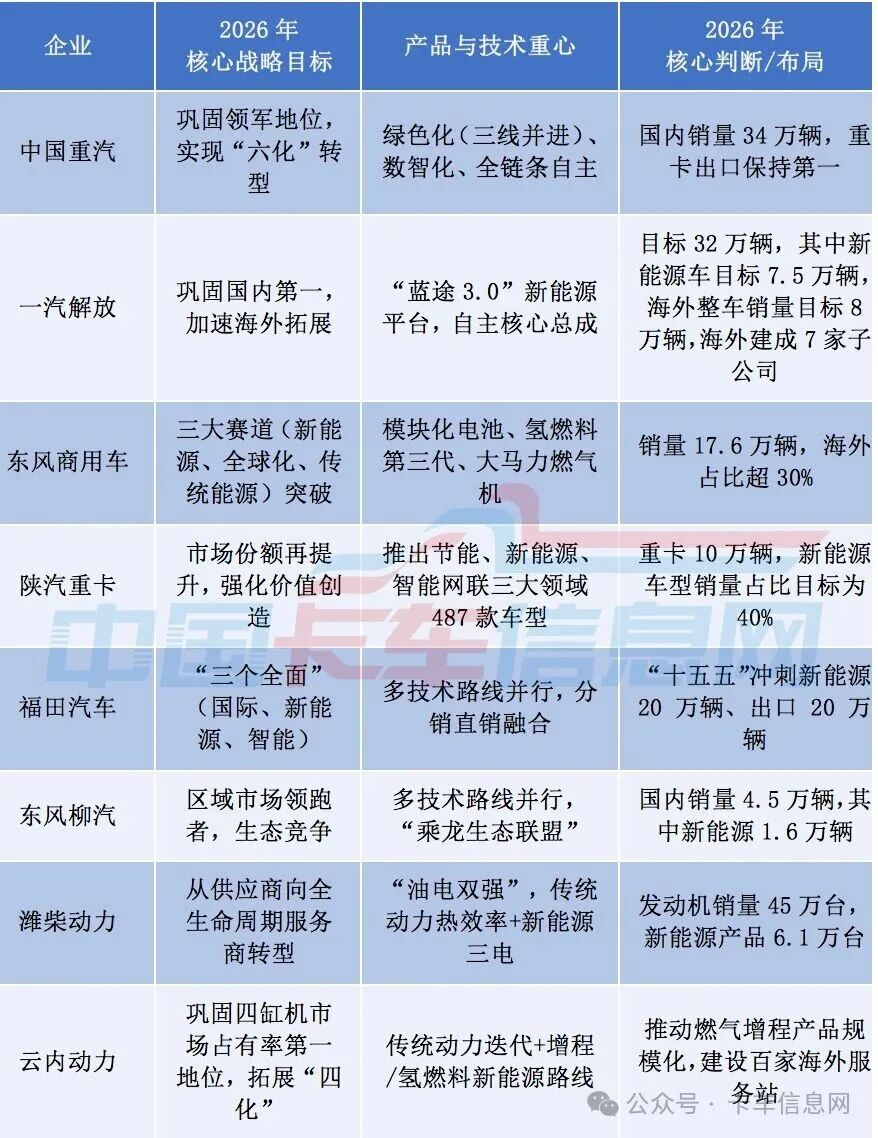
Core Insights - The industry consensus indicates a shift from an incremental expansion phase to a new cycle focused on deepening the value of existing assets, with competition evolving from price-based to providing comprehensive lifecycle value (TCO) [1][9] Industry Consensus: Three Deterministic Trends - The market is expected to enter a phase of "high-level consolidation and structural differentiation," with the medium and heavy truck market projected to remain stable at 1.1 to 1.25 million units, similar to 2025, as the driving force shifts from policy stimulus to optimizing existing resources [2][10] - Three major trends have emerged as strategic anchors for all companies: 1. Accelerated penetration of new energy vehicles (NEVs), with a consensus that the penetration rate will exceed 30% and potentially reach 35% or higher by 2026, driven by market demand rather than policy [3][11] 2. Value competition is replacing price wars, with a focus on service and ecosystem as key differentiators, emphasizing the importance of a comprehensive ecosystem that includes finance, used vehicles, and connectivity [3][11] 3. Globalization is becoming a core growth driver, with exports viewed as a crucial growth engine, as companies shift from simple trade to a more integrated approach involving products, technology, services, and finance [3][11] Strategic Differentiation: Paths of Eight Major Companies - Companies are adopting different strategic focuses based on their resources and capabilities: - China National Heavy Duty Truck Corporation aims to consolidate its leading position through a comprehensive transformation strategy [4][13] - FAW Jiefang focuses on accelerating overseas expansion and enhancing its core components [4][13] - Dongfeng Commercial Vehicle targets breakthroughs in new energy, globalization, and traditional energy markets [4][13] - Shaanxi Heavy Duty Truck emphasizes value creation through a diversified product lineup [4][13] - Foton Motor is pursuing a multi-faceted strategy focusing on internationalization and new energy [4][13] - Dongfeng Liuzhou Motor is leading in regional markets through ecosystem competition [4][13] - Weichai Power and Yunnei Power are adopting a pragmatic approach by diversifying their energy technology routes [6][14] Technology Routes: Diverse Approaches Based on Application Scenarios - The commercial vehicle power technology landscape is expected to be diverse, with choices heavily influenced by application scenarios: - Traditional power is evolving towards high-end and specialized applications, focusing on improving thermal efficiency and reducing fuel consumption [7][15] - Pure electric technology is becoming the preferred choice for short-distance fixed routes, with competition centered on battery energy density and lifecycle costs [7][15] - Hybrid and range-extended technologies are seen as key solutions for long-distance logistics, with significant R&D efforts underway [7][15] - Hydrogen fuel technology is being explored as a future strategic reserve, with ongoing commercial exploration [7][15] Ecosystem Construction: From Chain Leaders to Symbiosis - Leading companies are actively reshaping the industry ecosystem, moving beyond simple supplier relationships to create a community that shares risks and values: - China National Heavy Duty Truck Corporation leverages its capabilities for strong collaboration [8][16] - Dongfeng Liuzhou Motor is integrating upstream and downstream through the "Chenglong Ecosystem Alliance" [8][16] - Weichai Power is collaborating with multiple strategic partners to create a comprehensive service system [8][16] Observations: Coexistence of Consensus and Differentiation - The 2026 Chinese commercial vehicle market is characterized by both consensus on the shift to value-based competition and differentiation in strategic paths chosen by companies [9][17] - The upcoming competition will focus on technological depth, ecosystem breadth, and precision in user operations, with companies that effectively reduce operational costs and enhance efficiency poised to lead in this transformative phase [9][17]
5分钟充满电!全球首款可量产全固态电池来了
2 1 Shi Ji Jing Ji Bao Dao· 2026-01-06 14:25
Group 1 - The solid-state battery sector continues to rise, with companies like HaiXi Communications and DaoShi Technology seeing gains of over 10% [1] - Donut Lab announced the launch of the world's first mass-producible all-solid-state battery at the CES in Las Vegas, boasting an energy density of 400Wh/kg, enabling longer range and lighter structure [1][2] - The all-solid-state battery can be fully charged in just 5 minutes and supports safe, reliable full discharge without significant capacity degradation over its lifespan, which can reach up to 100,000 cycles [1] Group 2 - The battery is designed without flammable liquid electrolytes, eliminating the risk of thermal runaway and dendrite formation, and has been rigorously tested under extreme conditions [2] - Donut Lab claims that the materials used for the solid-state battery are abundant, low-cost, and geopolitically secure, avoiding reliance on rare or sensitive elements [2] - Verge Motorcycles will be the first to use Donut Lab's solid-state battery, allowing for a 10-minute charge that provides up to 60 kilometers of range per minute of charging, with a long-range version capable of 600 kilometers on a single charge [3] Group 3 - Traditional lithium-ion batteries are nearing their theoretical energy density limit of 300Wh/kg, making it difficult to meet the demands for higher energy density and safety in electric vehicles and other applications [3] - Solid-state batteries are recognized as a disruptive technology that can achieve higher energy density and safety, prompting global companies and research teams to innovate to avoid falling behind [3] - The year 2026 is identified as a critical period for equipment localization in the solid-state battery industry [3]





5分钟充满电!全球首款可量产全固态电池来了 概念股一览
2 1 Shi Ji Jing Ji Bao Dao· 2026-01-06 10:17
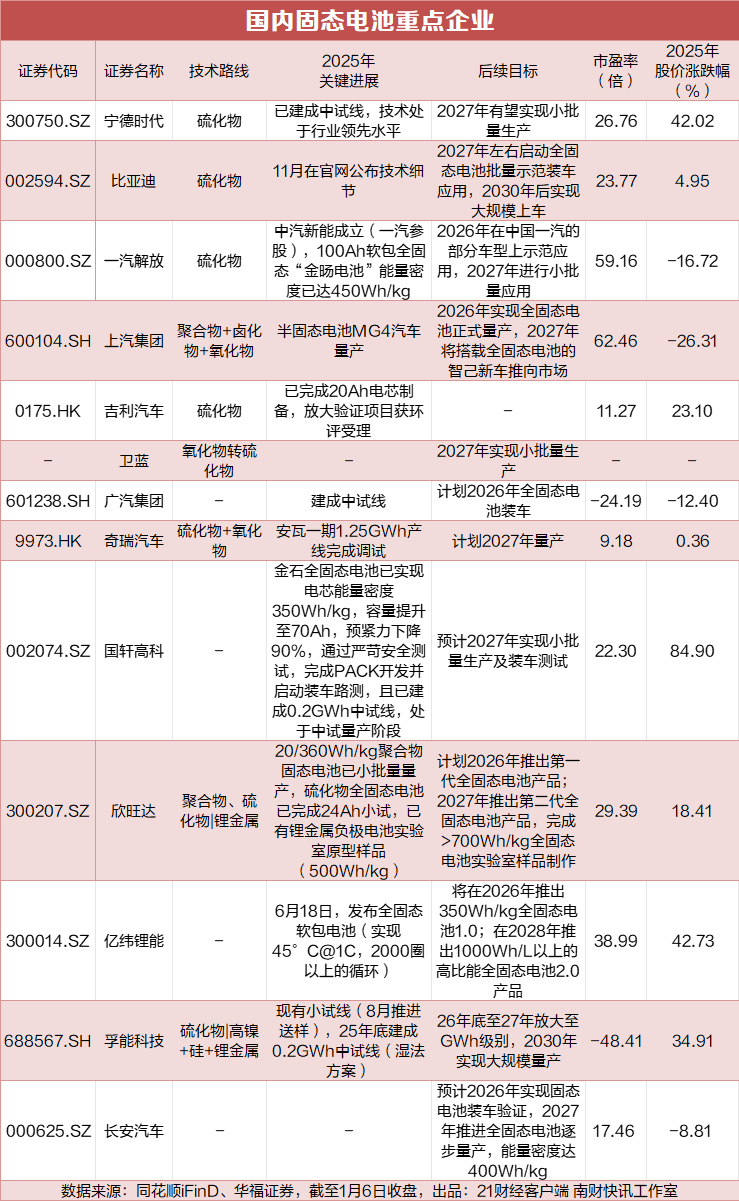
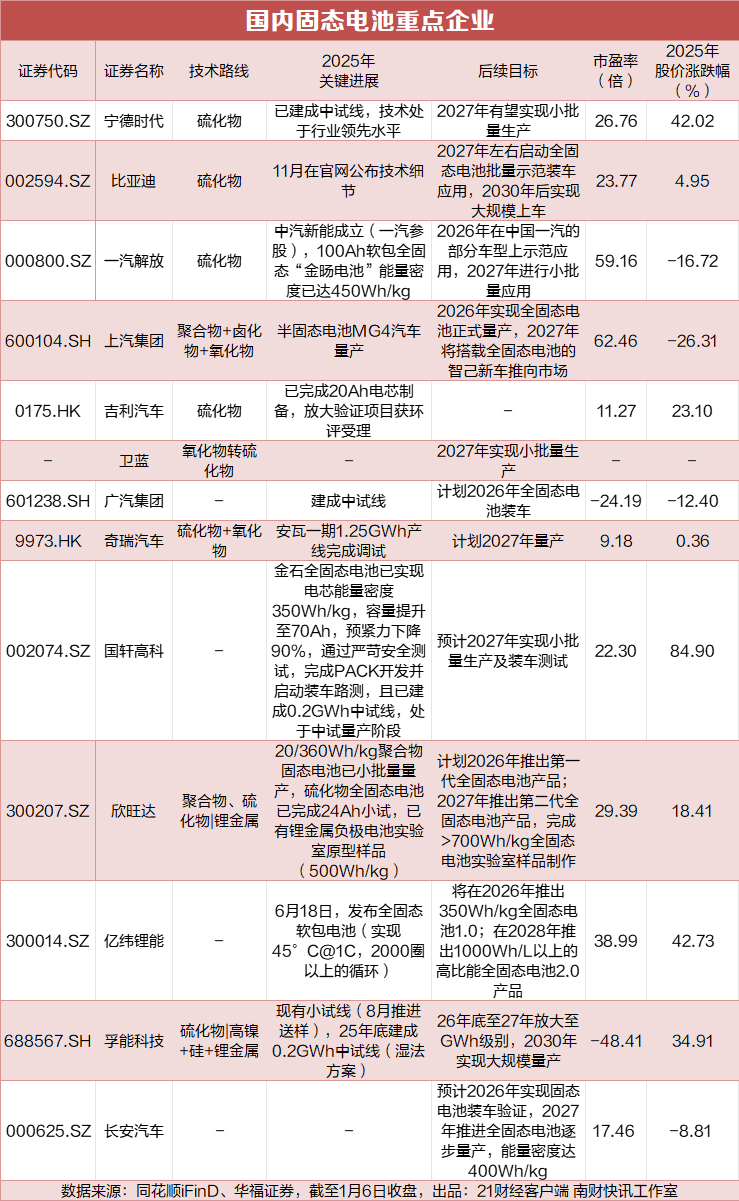
Core Insights - The solid-state battery sector continues to rise, with companies like HaiXi Communications and DaoShi Technology seeing gains of over 10% [1] - Donut Lab announced the launch of the world's first mass-producible all-solid-state battery at CES 2023, boasting an energy density of 400Wh/kg and a design life of up to 100,000 cycles [1][2] - The all-solid-state battery is claimed to be safer than traditional lithium-ion batteries, with no flammable liquid electrolytes and minimal capacity degradation under extreme conditions [1][2] Industry Developments - Donut Lab's solid-state battery is made from abundant, low-cost materials, avoiding reliance on rare or sensitive elements, and is expected to be cheaper than lithium-ion batteries [2] - Verge Motorcycles will be the first to use Donut Lab's solid-state battery, allowing for a 10-minute charge time and a range of up to 600 kilometers on a single charge [2] - The solid-state battery technology is recognized as disruptive, prompting global companies and research teams to innovate to avoid falling behind [3] Company Progress - Companies like CATL and BYD are advancing in solid-state battery technology, with CATL expected to achieve small-scale production by 2027 and BYD planning to start mass demonstration applications around the same time [5] - Various automotive manufacturers, including SAIC and Changan, are also working on solid-state battery integration, with targets for production and vehicle testing set for 2026 and 2027 [6]


2025年全球冷藏车行业区域市场分析 北美市场占比最高【组图】
Qian Zhan Wang· 2026-01-06 08:13
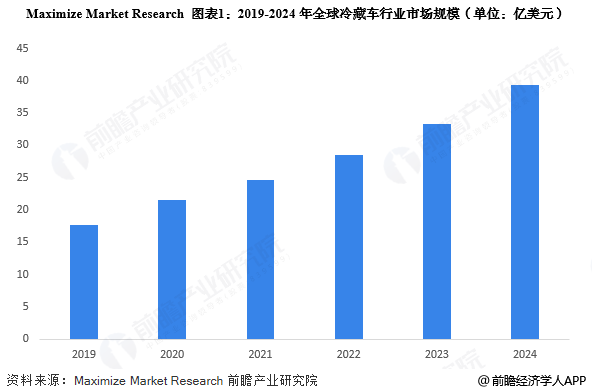
Group 1 - The global refrigerated truck market is projected to grow steadily, reaching a size of $3.93 billion by 2024, with a year-on-year increase of 17.66% from previous years [1] - North America is the largest market for refrigerated trucks, accounting for approximately 40% of the global market share in 2024, followed by the Asia-Pacific region at 26.5% [3] - The light truck segment dominates the global refrigerated truck market, making up nearly 40% of the market share in 2024, while heavy trucks account for 31.7% and medium trucks for 29.2% [5] Group 2 - In 2024, global sales of new energy refrigerated transport vehicles are expected to reach 37,000 units, with Asia leading the market at approximately 25,000 units, representing 68% of the total [7] - The global refrigerated truck industry has a promising development outlook, with emerging markets in the Asia-Pacific region (especially China and India), Latin America, and the Middle East driving demand for fresh food and pharmaceutical cold chains, projected to reach $5.7 billion by 2030 [9]