
SANQI HUYU(002555)

Search documents
三七互娱(002555) - 关于2025年第一季度利润分配预案的公告
2025-05-12 12:15
三七互娱网络科技集团股份有限公司 关于 2025 年第一季度利润分配预案的公告 证券代码:002555 证券简称:三七互娱 公告编号:2025-028 本公司及董事会全体成员保证信息披露的内容真实、准确、完整,没有虚假记载、误 导性陈述或重大遗漏。 一、审议程序 三七互娱网络科技集团股份有限公司(下称"公司"或"本公司")于 2025 年 5 月 12 日召开第六届董事会第二十五次会议和第六届监事会第二十一次会议,审议通过了《2025 年第一季度利润分配预案》。该议案无需提交公司股东大会审议。现将有关情况公告如下: 二、2025 年第一季度利润分配预案情况 根据公司 2025 年第一季度报告,公司 2025 年第一季度实现归属于母公司所有者的净利 润为 549,180,610.69 元,截至 2025 年 3 月 31 日公司未分配利润为 8,427,549,692.03 元,母 公司未分配利润为 3,749,796,944.80 元。 为推动上市公司高质量发展,结合公司发展的实际情况,按照《国务院关于加强监管防 范风险推动资本市场高质量发展的若干意见》文件精神和相关要求,积极落实分红实施,加 大投资者回报力 ...

2025游戏公司「破产」模拟器:大家挣的钱,还够活多久?
创业邦· 2025-05-12 10:06
Core Insights - The article highlights that 80% of listed gaming companies have a "safety month" of less than 9 months, indicating a precarious financial situation for many firms in the industry [4][7][9] - The "safety month" metric measures how long a company can survive without revenue, relying solely on cash reserves [5][6] - The gaming industry is characterized by high cash flow but low cash conversion rates, leading to significant financial vulnerabilities [9][40] Financial Health of Companies - Approximately 32% of the surveyed companies have a safety month of less than 3 months, and none can sustain operations for over 3 years without income [7] - The company with the longest safety month is掌趣科技, which can last 34 months with its cash reserves [12] - The shortest safety months are reported for中手游, 深海软件, and 极致互动, all under one month, although中手游's situation is somewhat atypical due to its reliance on IP and agency games [16] Revenue and Profitability - Despite cash flow pressures, many companies maintain robust profitability. For instance, Tencent's gaming revenue reached RMB 197.7 billion, a 9.9% increase, while its net profit grew by 64.4% [20] - In 2024, 46% of companies reported revenue growth, up from 39% in 2023, with the highest growth seen in儒意控股, which achieved a 346% increase [24] - The overall profit situation improved, with the proportion of loss-making companies decreasing from 48% to 44% [27] Cost Structure and Financial Management - Marketing, R&D, and salary costs are significant factors affecting financial health, with三七互娱 reporting the highest sales expenses at RMB 97 billion, constituting 55.7% of its gaming revenue [32] - R&D expenses are generally stable, with祖龙娱乐 having the highest R&D intensity at 46.6% of its gaming revenue [34] - Salary costs are also substantial, with Tencent leading at RMB 1.02 million per employee, reflecting the competitive nature of talent acquisition in the industry [36] Industry Characteristics - The gaming industry's cost structure is heavily weighted towards non-fixed costs, with R&D, sales, and management expenses often exceeding 50% of total costs [40] - Companies frequently face high accounts receivable and deferred revenue, which can obscure their actual financial health [44] - The article notes that several companies have exited the gaming industry or reported zero revenue, highlighting the volatility and risks inherent in the sector [56][57]





中国游戏大厂,打开出海“黄金路”
Sou Hu Cai Jing· 2025-05-12 08:15
Core Insights - The consensus in the gaming industry is that "going global" is essential for survival, with 33 Chinese companies entering the global mobile game publisher revenue top 100 in April, generating a total of $2 billion, accounting for 38.4% of the top 100's revenue [1][3] - Tencent's "Honor of Kings" saw a 71% revenue increase, reclaiming the top spot in global mobile game revenue, contributing to a 10% rise in Tencent's mobile gaming revenue [1] - The trend of Chinese gaming companies focusing on overseas markets is evident, with companies like Century Huatong and 37 Interactive Entertainment leading in revenue growth, while many A-share companies experienced revenue declines [3][5] Industry Performance - The actual sales revenue of China's self-developed games in the domestic market for 2024 is projected to be 260.736 billion yuan, a year-on-year growth of 1.7%, indicating a slowdown [5] - The overseas market for self-developed games reached $18.557 billion in 2024, with a year-on-year growth of 13.39%, marking a continuous five-year trend of exceeding 100 billion yuan [5] - Century Huatong's overseas business revenue reached 11.367 billion yuan in 2024, accounting for 50.26% of its total revenue, highlighting the importance of international markets for revenue growth [5] Market Trends - The gaming industry is witnessing a shift towards high-quality game exports, with major players like Tencent and NetEase leading the charge to enhance China's global gaming influence [7] - A significant number of A-share gaming companies are experiencing revenue declines, but those heavily invested in overseas markets, such as 37 Interactive Entertainment and Century Huatong, are performing well [3][7] - The current landscape for Chinese games going global is characterized by a focus on mobile and casual games, capital investments, and breakthroughs in higher-end gaming technologies like VR and AI [9][10]

「游戏风云」《折螺丝》频刷朋友圈,小游戏催生大生意,上市公司借势大赚
Hua Xia Shi Bao· 2025-05-10 07:12
Core Insights - The mini-game "Screw Tightening" has gained significant popularity through social media, with users engaging in playful banter about its difficulty, leading to viral growth [2][3] - Major gaming companies like 37 Interactive Entertainment and Giant Network have benefited from the mini-game trend, contributing positively to their financial reports in 2024 [2][5] Industry Trends - The mini-game market has expanded significantly, with both large and small developers exploring new gameplay mechanics, resulting in a diverse range of offerings [2][4] - The rise of mini-games is attributed to their easy accessibility and low development costs, appealing particularly to middle-aged players with limited gaming time but strong spending power [4][5] Company Performance - Giant Network's mini-game "King's Journey" attracted over 25 million new users and generated 600 million yuan in revenue since its launch in February 2024 [5][6] - Century Huachuang's subsidiary, Point Interactive, reported approximately 2.245 billion yuan in revenue from mini-games like "Endless Winter" in 2024 [6] Monetization Strategies - Mini-games primarily monetize through IAA (In-App Advertising), IAP (In-App Purchases), and mixed models, with advertising being a key revenue source due to regulatory constraints on direct charging [6][7] - The potential for overseas expansion is highlighted as a significant opportunity for mini-games, with domestic companies poised to fill gaps in the international market [6][7] Future Outlook - The mini-game sector is expected to continue growing, with established IPs being adapted into mini-games, enhancing user engagement and retention [7][8] - Analysts predict that the convenience and social sharing aspects of mini-games will attract a broader audience, including non-gamers, contributing to market growth [8]


“游戏小年”A股放榜:过半营收下滑,世纪华通三七断层领先
Nan Fang Du Shi Bao· 2025-05-10 06:33
Core Viewpoint - The overall performance of A-share listed gaming companies in 2024 showed a decline, with over half experiencing revenue downturns, while a few companies achieved significant growth [1][5][11]. Group 1: Company Performance - More than half of the 23 A-share listed gaming companies reported a decline in total revenue in 2024, with 13 companies experiencing a year-on-year decrease compared to 9 in 2023 [5][9]. - Perfect World, once a leading company, saw its gaming revenue drop from 66.69 billion yuan in 2023 to 51.81 billion yuan in 2024, marking a decline of nearly 15 billion yuan [5][11]. - Century Huatong and 37 Interactive Entertainment remained the top gaming companies, with Century Huatong's gaming revenue reaching 208.75 billion yuan, a year-on-year increase of 86.57% [11][12]. - 37 Interactive Entertainment's gaming revenue was 172.93 billion yuan, up 5.47% year-on-year, maintaining its position as a profitable leader with a net profit of 26.73 billion yuan [10][12]. Group 2: Revenue and Profit Trends - The gaming revenue of companies like Jibite and Icefire Network declined significantly, with Jibite's revenue falling to 36.49 billion yuan, a decrease of 11.52% [8][10]. - Icefire Network reported a net profit drop of 190% due to high marketing costs, leading to a net loss of 2.47 billion yuan [14][10]. - Perfect World was the only major A-share gaming company to report a loss, with a net loss of 12.88 billion yuan in 2024 [9][10]. Group 3: Market Dynamics and Strategies - Many companies increased their sales expenses significantly, with Century Huatong's sales expenses rising by 129.47% to 77.42 billion yuan, while 37 Interactive Entertainment's sales expenses reached 97.12 billion yuan, an increase of 6.84% [15][14]. - The trend of "de-gaming" was noted, with companies like Zhongqingbao seeing their gaming revenue contribution drop from 49.59% in 2020 to 22.29% in 2024 [7][9]. - The gaming industry faced challenges with aging main products and a lack of new releases, impacting revenue for companies like Jibite and Electric Soul Network [8][9]. Group 4: International Performance and Employee Trends - Century Huatong achieved overseas revenue of 113.68 billion yuan, accounting for 50.26% of its total revenue, driven by successful titles like "Whiteout Survival" [17][18]. - Perfect World experienced a significant reduction in its workforce, with employee numbers dropping from 5,754 to 3,905, a decrease of 32.13% [19][20]. - Overall, 14 out of 23 companies reduced their workforce, indicating a trend of downsizing in the industry [19][20]. Group 5: Future Outlook - The first quarter of 2025 showed better-than-expected performance for several companies, with Century Huatong reporting a revenue increase of 91.12% year-on-year [22][23]. - Analysts predict continued improvement in the gaming sector as new products are launched and the market adapts to changing consumer preferences [25][22].



三七互娱海外运营总监周志豪:从“用户数据洞察”到“文化价值传递共情”构建全球化生态竞争力
Xin Hua Wang· 2025-05-10 00:21
Group 1 - The core viewpoint of the article emphasizes the opportunities and challenges of Chinese gaming companies expanding their brands overseas, particularly through the experience of 37 Interactive Entertainment [2][3] - 37 Interactive Entertainment has been involved in overseas business since 2012, launching over 120 games in more than 200 countries and regions, showcasing significant growth in its international operations [2][3] - The company aims to allow overseas players to experience Chinese games, reflecting the founders' original entrepreneurial vision [2] Group 2 - Challenges in the gaming industry include the vast differences in user preferences across different markets, necessitating a tailored approach rather than a one-size-fits-all product strategy [3] - The company has developed a digital decision-making system based on AI technology and big data analysis to capture regional market preferences, including customized content review mechanisms for different cultural contexts [3] - To enhance user trust and engagement, the company employs a strategy of "premiumization, diversification, and globalization," which includes establishing user feedback channels and forming international teams [3] Group 3 - The digital cultural industry is highlighted as a significant advantage in the global landscape, with gaming serving as a medium for cultural dissemination [4] - The company aims to leverage gaming as a channel to promote Chinese culture globally, thereby increasing brand influence [4] - The "2025 Brand High-Quality Outbound Forum" is part of the World Brand Moganshan Conference, focusing on exploring diverse development paths for brands going overseas [4]

游戏年报|小游戏赛道竞争日趋激烈 营销投入趋向两极化 冰川网络销售费用率超过80%
Xin Lang Zheng Quan· 2025-05-09 10:11
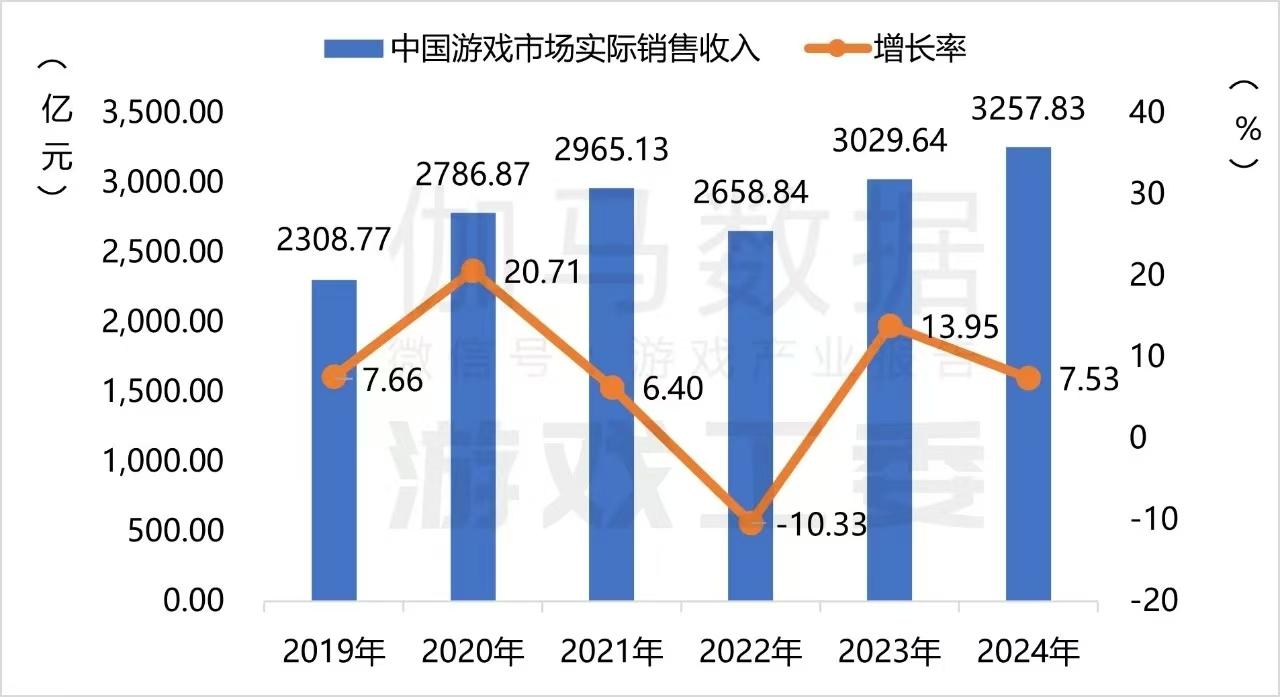
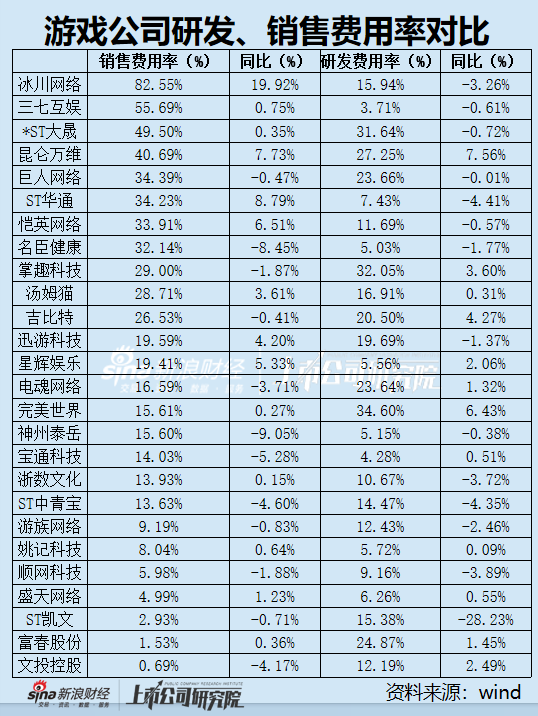
Core Insights - The Chinese gaming industry has entered a phase of stock competition, with the user base reaching 674 million in 2024, a year-on-year growth of 0.94% [1] - The actual sales revenue of the Chinese gaming market is 325.783 billion, reflecting a year-on-year increase of 7.53%, driven by the release of new games and the performance of popular titles [1] - A total of 26 A-share gaming companies reported a combined revenue of 93.434 billion, up 7.74% year-on-year, but the net profit halved, indicating a trend of "increased revenue without increased profit" [1] Industry Performance - Mobile games continue to dominate the market, accounting for 73.12% of actual sales revenue [1] - Approximately 88.46% of 23 gaming companies experienced a decline in gross profit margin, with six companies seeing a drop of over 10 percentage points [2] - Sales expenses for the gaming industry increased by 20.05% to 30.671 billion, with the sales expense ratio rising from 29.46% to 32.83% [4] Marketing Expenditure Trends - About 40% of gaming companies saw a year-on-year increase in sales expenses, with ST Huatuo experiencing the highest growth at 129.14% [3] - The marketing investment is becoming polarized, with over 50% of major gaming companies reporting a decline in net profit due to rising customer acquisition costs [4] - Companies like Iceberg Network have a sales expense ratio exceeding 80%, with marketing costs significantly impacting profitability [6][8] Company-Specific Insights - Iceberg Network's sales expenses reached 2.302 billion, a 32.04% increase, with marketing costs accounting for a substantial portion of total expenses [6] - Despite high marketing investments, Iceberg Network's revenue growth stagnated, resulting in a net loss of 223 million, indicating inefficiencies in their customer acquisition strategy [8] - Sanqi Interactive, focusing on mini-games, reported a sales expense ratio of over 50%, with total sales expenses of 9.712 billion, reflecting a 6.84% increase [8]

金十图示:2025年05月09日(周五)中国科技互联网公司市值排名TOP 50一览
news flash· 2025-05-09 02:53
Core Insights - The article presents the market capitalization rankings of the top 50 Chinese technology and internet companies as of May 9, 2025, highlighting significant players in the industry [1]. Group 1: Market Capitalization Rankings - The top three companies by market capitalization are Alibaba Group with 3003.74 billion, Xiaomi Group with 1693.44 billion, and Pinduoduo with 1560.19 billion [3][4]. - Other notable companies in the top 10 include Meituan at 1104.71 billion, JD.com at 495.86 billion, and Baidu at 301.32 billion [4][5]. - The rankings reflect a diverse range of companies, including those in e-commerce, food delivery, and automotive sectors, indicating a broad technological landscape [5][6]. Group 2: Emerging Players - Companies like Li Auto and Kuaishou are also featured in the rankings, with market capitalizations of 291.48 billion and 286.48 billion respectively, showcasing the growth of electric vehicles and social media platforms [4][5]. - The presence of companies such as Xpeng Motors and NIO, with market caps of 186.55 billion and 89.68 billion respectively, highlights the increasing importance of the electric vehicle sector in the technology landscape [5][6]. Group 3: Overall Trends - The data indicates a strong performance of technology companies in China, with significant market capitalizations reflecting investor confidence and growth potential in the sector [1][3]. - The rankings are calculated based on the latest exchange rates, emphasizing the importance of currency fluctuations in assessing market value [6].




游戏还有哪些产品值得期待?
2025-05-08 15:31
Summary of Key Points from the Conference Call Industry Overview - The gaming industry is experiencing performance divergence in 2024, with Kaiying Network achieving impressive revenue of 1.35 billion and turning a profit, while 37 Interactive Entertainment and Taiyue Information fell short of expectations due to marketing expenses and product competition, indicating intensified industry competition [1][2][3] Core Companies and Their Performance - Kaiying Network and Huatuo are expected to have a higher success rate in the future. Jibite is anticipated to grow due to its reserve products like "Warship Legend" and "Nine Woods in the Wild," maintaining a relatively stable market position [3][1] - In Q1 2025, Kaiying's revenue was approximately 510 to 520 million, Perfect World reported 300 million, and Jibite achieved 283 million. ST Huadong performed exceptionally well at 1.35 billion, while Youzu managed to turn a profit [2] Emerging Technologies and Trends - The integration of AI and gaming shows promising prospects. Successful cases include 1V1 games that utilize AI models and VR/XR technologies, enhancing user experience through 3D AR scene construction. For instance, "Love and Deep Space" helped increase Zhe Paper's revenue from 1.4 billion to 7 billion [4][5] - The combination of AI, AR, and virtual human technologies is expected to further enhance immersion and user experience in gaming [4][5] Notable Game Genres - MMORPG, SLG, and casual gaming are highlighted as important areas to watch. MMORPG and SLG have long lifecycles and can integrate various gameplay styles, while casual games are performing well in the Western markets, with increased fragmented time in China providing opportunities [6][7] - The lifecycle of successful JSR games can reach 8 to 10 years, attracting high ARPU users and forming stable player communities [6] Upcoming Game Releases - A significant number of new games are set to launch in 2025, with Kaiying Network having the most reserves, including "Douluo Dalu: The Legend of the Exorcist" and "Tomb Raider: The Journey." Other companies like 37 Interactive Entertainment, Tencent, and NetEase also have substantial reserves [8][9] - Key products from Kaiying Network include "Douluo Dalu: The Legend of the Exorcist," which features deep design for combo attacks, and "Tomb Raider: The Journey," which combines Dungeons & Dragons and ARPG elements [10] Company-Specific Highlights - Jibite is launching "Sword Legend," a JRPG that incorporates a pet-catching system, and "Nine Woods in the Wild," which enhances real-time strategy gameplay [13] - Giant Network's new titles include "Supernatural Action Group," a Chinese horror-themed game, and "5000 Years," a historical strategy game [12] - Mingchen Health's core product is "Realm of the Blade," an ARPG featuring a death god IP, designed for cooperative play [11] Market Dynamics - The casual gaming sector is thriving in Western markets, with titles like "Candy Crush Saga" maintaining a long presence in the top sales charts. The increasing fragmented time in China due to longer working hours also benefits casual games [7] - The market may polarize into heavy games like MMORPG and SLG, and lighter casual games [7] Conclusion - The gaming industry is poised for significant developments in 2025, with numerous new titles and innovative technologies shaping the landscape. Companies like Kaiying Network, Jibite, and Giant Network are at the forefront of these changes, leveraging their unique products and market strategies to capture growth opportunities.
三七互娱(002555):25Q1业绩承压,关注后续新游表现
Great Wall Securities· 2025-05-08 07:03
Investment Rating - The report maintains a "Buy" rating for the company, expecting the stock price to outperform the industry index by more than 15% in the next six months [4]. Core Views - The company experienced pressure on its performance in Q1 2025, with a year-on-year revenue decline of 10.67% to 4.243 billion yuan, and a net profit decrease of 10.87% to 549 million yuan. This was attributed to the early promotional phase of several new games and the natural decline in revenue from mature products [2][3]. - The company has a rich product pipeline, with new games like "Time Grocery Store" and "Heroes No Flash" showing strong market performance, indicating potential for future growth [3]. - The company is expected to achieve revenues of 19.033 billion yuan, 20.533 billion yuan, and 21.769 billion yuan for the years 2025, 2026, and 2027 respectively, with corresponding net profits of 2.839 billion yuan, 3.156 billion yuan, and 3.482 billion yuan [3][4]. Financial Summary - For 2023, the company reported a revenue of 16.547 billion yuan, with a projected growth rate of 0.9% year-on-year. The net profit for the same year was 2.659 billion yuan, reflecting a year-on-year decline of 10% [1][2]. - The company's return on equity (ROE) is projected to be 20.6% in 2023, gradually decreasing to 17.4% by 2027 [1][3]. - The price-to-earnings (P/E) ratio is expected to decrease from 13.0 in 2023 to 9.9 by 2027, indicating a potentially more attractive valuation over time [1][3].