BYD(002594)

Search documents
比亚迪:针对新车发布事宜,公司正按既定节奏推进多款车型的筹备与发布工作
Zheng Quan Ri Bao Zhi Sheng· 2026-03-10 13:39
Core Viewpoint - BYD is progressing with the preparation and release of multiple new vehicle models according to its established schedule, while also introducing its second-generation blade battery and fast-charging technology to enhance product appeal and performance [1]. Group 1 - The company is actively responding to investor inquiries regarding new vehicle releases [1]. - Specific details about the new vehicles, including design, specifications, launch dates, and pricing, will be officially announced through the company's channels such as press conferences, official website, and social media [1].
X @Bloomberg
Bloomberg· 2026-03-10 13:31
BYD exploring options to enter competitive motorsport including Formula One and endurance racing, sources say https://t.co/zOuNifQCFS ...
比亚迪二代刀片电池发布,汽车“闪充”时代可期
Datong Securities· 2026-03-10 13:29
Market Review - The equity market experienced a collective decline last week, with the North Stock 50 Index dropping the most at 7.14% [4] - The bond market saw a decrease in both short and long-term interest rates, with the 10-year government bond yield falling by 0.67 basis points to 1.781% [8] - The commodity market showed mixed results, with the South China Commodity Index rising by 6.43% while COMEX gold decreased by 1.27% [12] Equity Product Allocation Strategy - Event-driven strategies include the launch of BYD's second-generation blade battery, which may benefit related funds such as Jiashi Smart Car and Huaxia New Energy Vehicle Leader [14] - The government report's mention of "building a new form of intelligent economy" suggests potential investment opportunities in AI-related sectors, with funds like Jiashi Hong Kong Internet Core Assets and Boshi Semiconductor Theme being highlighted [15] - The release of guidelines for promoting the comprehensive utilization of photovoltaic components indicates potential benefits for funds focused on renewable energy [16] Asset Allocation Strategy - The overall strategy emphasizes a balanced core with a barbell approach, focusing on high dividends and technology sectors, while recommending funds like Anxin Dividend Select and Jiashi Frontier Innovation [17] - The bond market strategy suggests a focus on short-term bond funds and "fixed income plus" funds to enhance yield while managing volatility [19] - Gold is recommended as a strategic asset for hedging against macroeconomic fluctuations and currency risks, with a suggested approach of dollar-cost averaging [19] Stable Product Allocation Strategy - The central bank's recent operations indicate a net withdrawal of 15,634 billion yuan, maintaining a balanced and loose funding environment [22] - The manufacturing PMI for February showed a slight decline to 49.0%, indicating a decrease in manufacturing activity [22] - The economic growth target for 2026 is set at 4.5%-5%, with efforts aimed at achieving better results [23]
比亚迪:截至2025年10月31日,公司普通股股东总数为642600户,其中A股股东为642496户
Zheng Quan Ri Bao Wang· 2026-03-10 13:09
Group 1 - The core point of the article is that BYD (002594) reported a total of 642,600 common stock shareholders as of October 31, 2025, with 642,496 being A-share shareholders and 104 being H-share shareholders [1]
比亚迪:公司将持续以技术创新为牵引,打造安全、高效、共赢的供应链生态
Zheng Quan Ri Bao· 2026-03-10 12:36
Group 1 - The company, BYD, stated that it will introduce suppliers based on the actual needs of technological development, emphasizing a commitment to continuous technological innovation [1] - The company aims to create a safe, efficient, and win-win supply chain ecosystem, indicating a strategic focus on collaboration and sustainability [1] - Official announcements will provide the relevant information, highlighting the importance of relying on verified sources for updates [1]
比亚迪:坚持技术创新并以开放心态与客户合作共赢
Zheng Quan Ri Bao Wang· 2026-03-10 12:13
Core Viewpoint - BYD emphasizes its commitment to technological innovation and collaboration with customers to drive industry development [1] Group 1: Technological Innovation - The company insists on technological innovation as a core strategy [1] - BYD aims to enhance the competitiveness of the entire industry chain through transparent and market-oriented mechanisms [1] Group 2: Supply Chain Strategy - The company maintains a dual approach of self-control and open collaboration in its supply chain strategy [1] - Internally, BYD focuses on stimulating vitality, while externally, it promotes cooperative partnerships [1]
比亚迪:截至2025年10月31日公司普通股股东总数为642600户
Zheng Quan Ri Bao Wang· 2026-03-10 12:13
Core Viewpoint - BYD (002594) reported that as of October 31, 2025, the total number of common stock shareholders will be 642,600 [1] Group 1 - The company is actively engaging with investors through interactive platforms [1] - The projected number of shareholders indicates a growing interest in the company's stock [1]
比亚迪:公司高度重视股东与车主这一核心用户群体,已上线比亚迪股东星球小程序
Zheng Quan Ri Bao Wang· 2026-03-10 12:12
证券日报网讯3月10日,比亚迪(002594)在互动平台回答投资者提问时表示,公司高度重视股东与车 主这一核心用户群体,已上线比亚迪股东星球小程序,持续完善股东与车主专属生态。公司将积极探索 股东与车主专属优惠、高效转化与低成本营销机制,不断挖掘生态价值,提升用户体验与长期回报。 ...
从油价狂飙到闪充破局:比亚迪用技术作答国家能源安全的“必答题”
Jing Ji Guan Cha Bao· 2026-03-10 11:58
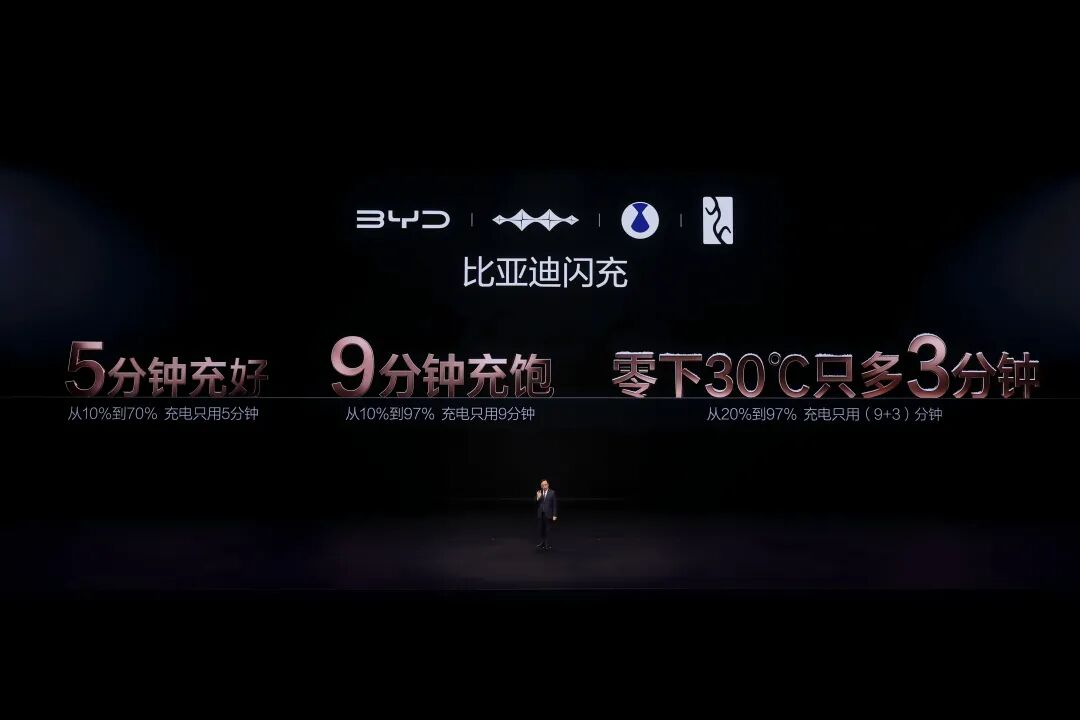
Core Viewpoint - The geopolitical tensions in the Middle East, particularly the closure of the Strait of Hormuz, have led to a significant disruption in global oil supply, causing international oil prices to surge above $100 per barrel. In response, BYD has introduced its second-generation blade battery and fast-charging technology as part of a "light-storage-charging integration" solution to enhance national energy security and promote energy independence [1][2]. Group 1: Impact of Geopolitical Events - The closure of the Strait of Hormuz has interrupted over one-third of global maritime oil supply, leading to a spike in oil prices, with predictions suggesting prices could reach $150 per barrel if the closure persists [1]. - The energy supply shortage has triggered systemic risks in the global energy market, causing stock market declines in Asia-Pacific countries and prompting emergency measures in nations like Turkey and France to manage fuel costs [1]. Group 2: China's Energy Strategy - China relies on imports for over 70% of its oil, with more than 60% passing through critical maritime routes, highlighting the urgency for the country to develop its electric vehicle (EV) sector to achieve energy independence [2]. - The push for EV development in China is rooted in a long-term strategy aimed at securing energy autonomy, with significant historical milestones marking the commitment to this goal [2]. Group 3: Technological Advancements by BYD - BYD's new technology addresses key consumer pain points related to charging experiences, significantly reducing charging times even in extreme cold conditions, thus alleviating "range anxiety" among potential EV users [5]. - The introduction of a comprehensive "light-storage-charging integration" solution by BYD includes a super-fast energy storage system, creating a closed-loop from solar energy acquisition to vehicle application, aligning with China's carbon neutrality goals [5][6]. Group 4: Resource Efficiency and Infrastructure - BYD's fast-charging technology aims to enhance the efficiency of energy supply infrastructure, addressing the current low utilization rates of public charging stations and reducing resource wastage [6]. - The innovative "station-in-station" model allows for the rapid deployment of charging stations without the need for extensive new infrastructure, thereby minimizing investment in land and materials [6]. Group 5: BYD's Commitment and Vision - BYD's approach reflects a deep commitment to national interests, showcasing a history of rapid technological responses to crises and a long-term vision for sustainable energy solutions [7]. - Despite the high costs associated with building fast-charging stations, BYD remains resolute in its strategic direction, having previously faced skepticism regarding its ambitious goals, which are now becoming integral to China's economic growth [7][8].