
Desay SV(002920)

Search documents
无人配送车半年吸金 35 亿,智驾内卷的受益者
晚点LatePost· 2025-09-28 15:25
Core Viewpoint - The article discusses the rapid growth and commercialization of the unmanned delivery vehicle industry, highlighting the increasing demand, technological advancements, and competitive landscape that are shaping this sector [4][5][6]. Group 1: Market Demand and Growth - The unmanned delivery vehicle industry is becoming one of the most lucrative segments within autonomous driving, driven by real user needs, as evidenced by significant financing of over 3.5 billion yuan for leading companies this year [4][6]. - As of mid-2023, the total number of unmanned delivery vehicles in China exceeded 6,000, with companies like New Stone and Nine Senses targeting the delivery of 10,000 vehicles this year [6][7]. - The market is expected to see an increase of nearly 100,000 units in the unmanned delivery vehicle sector next year [6]. Group 2: Product Development and Standardization - The product forms of unmanned delivery vehicles are stabilizing, with a shift towards larger vehicles capable of carrying over 5 cubic meters, as companies focus on fixed routes between delivery points [7][8]. - The industry is moving towards standardization, with companies like Desay SV and Youjia Innovation entering the market, offering vehicles with capacities of 5 to 8.5 cubic meters [8][10]. Group 3: Cost Reduction and Technology - Continuous cost reduction is essential for large-scale commercialization, with companies adopting automotive-grade quality standards to extend product lifespans and reduce costs [10][11]. - The competition in the passenger vehicle market has driven down the costs of advanced driving technologies, benefiting unmanned delivery vehicles by making components like LiDAR more affordable [11][12]. - Companies are innovating to reduce the number of sensors and computing power required for unmanned vehicles, which helps in lowering overall costs [12]. Group 4: Operational Efficiency and Business Models - The profitability of unmanned delivery vehicle companies hinges on operational efficiency, with a focus on scaling operations and reducing costs through city-specific deployments [15][16]. - Companies are exploring various business models, including vehicle sales, leasing, and subscription services, to lower the entry barrier for customers [13][14]. - The industry is currently engaged in a price war to cultivate the market, with some vehicles priced below 200,000 yuan, including maintenance for five years [14]. Group 5: Regulatory Environment and Future Challenges - The regulatory environment is becoming more favorable, with national policies encouraging the testing and commercial use of unmanned delivery vehicles [17]. - Despite the optimistic policy landscape, the industry faces challenges related to road rights and the need for further legal recognition of unmanned vehicles [17][18]. - The transition from technology trials to real-world applications presents complexities in supply chain management, operations, and regulatory compliance that companies must navigate to achieve scalability [18].


奇瑞汽车港股上市,理想i6、尚界H5、全新问界M7发售:汽车行业周报-20250928
Guohai Securities· 2025-09-28 14:32
Investment Rating - The report maintains a "Recommended" rating for the automotive industry [1] Core Views - The automotive industry is expected to benefit from the continuation of the vehicle replacement policy in 2025, supporting upward consumption trends. The industry is also experiencing a structural shift towards high-end and intelligent upgrades, which presents investment opportunities [18] Summary by Sections Recent Developments - Chery Automobile has successfully listed on the Hong Kong Stock Exchange, raising HKD 9.14 billion with a record oversubscription of 238 times. The company's revenue is projected to grow from CNY 92.618 billion in 2022 to CNY 269.899 billion by 2024, with a compound annual growth rate (CAGR) of 70.7% [5][13] - The Ideal i6 was launched at a price of CNY 249,800, featuring advanced technology and performance specifications [14] - The Shangjie H5 was launched with a starting price of CNY 159,800, offering both electric and range-extended versions [15] - The all-new Wanjie M7 was launched with a price range of CNY 279,800 to CNY 379,800, providing multiple powertrain options [17] Market Performance - From September 22 to September 26, the automotive sector underperformed compared to the Shanghai Composite Index, with the automotive index remaining flat while the overall index rose by 0.2% [19] - The automotive sector's weekly trading volume decreased, indicating a potential decline in investor interest [19] Investment Opportunities - The report highlights several companies poised to benefit from the industry's transition to high-end and intelligent vehicles, including Ideal Auto, Jianghuai Automobile, Geely, BYD, and Great Wall Motors [18] - The report also identifies opportunities in high-level intelligent driving technologies, recommending companies like XPeng Motors and Huayang Group [18] - In the commercial vehicle sector, it anticipates a recovery in heavy truck demand in 2025, recommending leading companies such as Foton Motor and China National Heavy Duty Truck Group [18] Key Company and Earnings Forecasts - The report provides earnings per share (EPS) and price-to-earnings (PE) ratios for several key companies, indicating a bullish outlook for firms like Yiyuan Co., Baolong Technology, and Xinyu Co. [8]



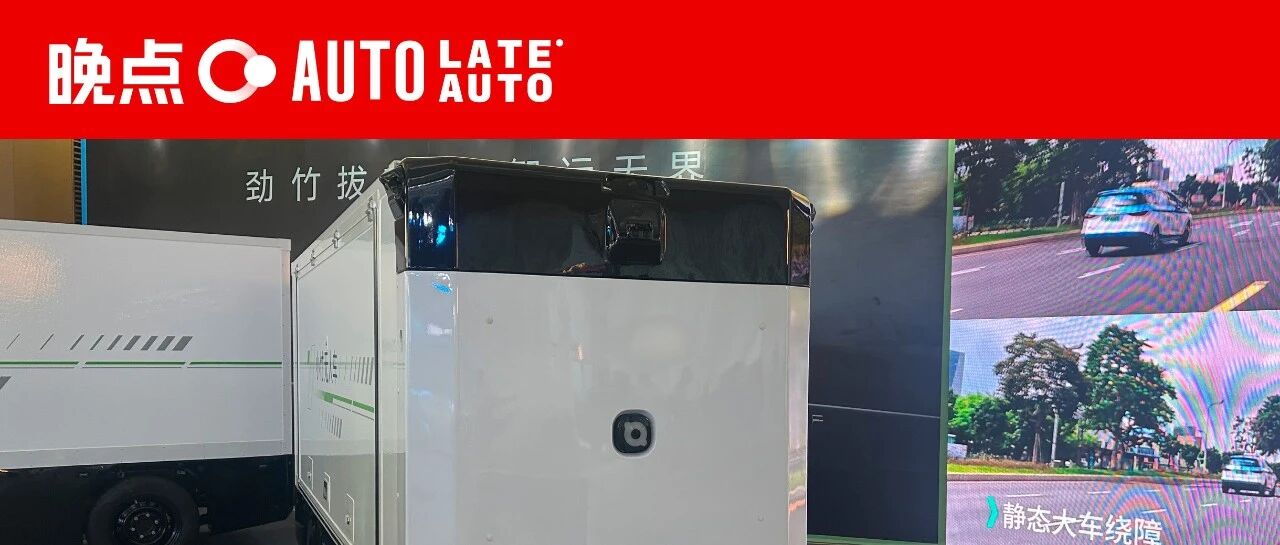
无人配送车半年吸金 35 亿,智驾内卷的受益者
晚点Auto· 2025-09-28 14:31
Core Viewpoint - The unmanned delivery vehicle industry is experiencing significant growth driven by user demand, technological advancements, and a shift towards commercial viability, with major companies securing substantial funding and setting ambitious delivery targets [3][4][5]. Group 1: Industry Growth and Funding - The unmanned delivery vehicle sector has attracted over 3.5 billion yuan in funding this year, with companies like New Stone, Nine Senses, and White Rhino leading the charge [4]. - The number of unmanned delivery vehicles in China has just surpassed 6,000 units, with companies aiming to deliver 10,000 units by the end of the year [4][5]. - New Stone has announced the delivery of its 10,000th vehicle, establishing the world's first fleet of this scale [4]. Group 2: Product Development and Market Expansion - Unmanned delivery vehicles are evolving from small models to larger ones with capacities exceeding 5 cubic meters, suitable for fixed-route transportation [5][6]. - The market is expanding beyond the express delivery sector to include instant logistics and urban delivery for fresh produce and pharmaceuticals [6]. - Companies are focusing on standardizing products and defining clear market segments, which is essential for large-scale commercial deployment [6][8]. Group 3: Cost Reduction and Quality Improvement - Companies are adopting automotive-grade quality standards to enhance product durability and reduce operational costs [8][9]. - The cost of unmanned delivery vehicles is decreasing due to advancements in passenger vehicle technology, with high-level driving assistance systems becoming more affordable [9][10]. - New Stone has reduced the number of sensors in its vehicles to cut costs, while other companies are also optimizing their technology to improve efficiency [10]. Group 4: Business Models and Market Strategy - The industry is exploring two primary business models: vehicle sales or leasing and customized development for large clients [11]. - Companies are targeting small and scattered clients to diversify their customer base and reduce dependency on large clients [11][12]. - Competitive pricing strategies are being implemented to lower entry barriers for customers, with some vehicles priced below 150,000 yuan including maintenance [12]. Group 5: Operational Efficiency and Challenges - Operational efficiency is critical for profitability, with companies needing to optimize deployment and maintenance processes [13]. - The cost of operating unmanned delivery vehicles can be significantly reduced through economies of scale, with costs increasing only slightly when scaling from 10 to 100 vehicles in a city [13]. - Regulatory challenges remain, as the legal status of unmanned delivery vehicles is still being defined, impacting their ability to operate at scale [15][16].
组合辅助驾驶迎来强监管新阶段,从L2规范向L3前瞻:——汽车行业专题研究
Guohai Securities· 2025-09-28 14:01
Investment Rating - The report maintains a "Recommended" rating for the automotive auxiliary driving industry [1]. Core Insights - The report analyzes the recent policies aimed at stabilizing growth and enhancing safety in the automotive industry, particularly focusing on the transition from L2 to L3 autonomous driving standards [4][5]. - The automotive industry is entering a new phase characterized by strong regulatory measures and a focus on safety and growth, with specific targets set for vehicle sales and the promotion of intelligent connected vehicles [10][12]. - The implementation of the "Safety Requirements for Intelligent Connected Vehicle Combination Driving Assistance Systems" standard marks a significant step towards the standardization and regulation of L2/L2+ auxiliary driving systems [16][18]. Summary by Sections 1. Automotive Industry New Policies - The "Automotive Industry Stabilization and Growth Work Plan (2025-2026)" aims to address complex economic conditions and set targets for 2025, including approximately 32.3 million total vehicle sales and 15.5 million new energy vehicle sales, reflecting a growth of about 3% and 20% respectively [10][12]. - The plan emphasizes expanding domestic consumption, improving supply quality, optimizing the industry environment, and enhancing international cooperation [15][16]. 2. Smart Driving Policy Overview - National policies focus on guiding and regulating the development of intelligent driving, establishing a comprehensive regulatory framework that includes safety standards and ethical guidelines [27][28]. - Local policies emphasize pilot projects and differentiated exploration, with cities like Guangzhou and Beijing implementing unique strategies to promote smart driving technologies [31][32]. 3. Accelerating Standardization in the Industry - The report outlines a three-phase path for the implementation of standards, with the formal approval of L3 autonomous driving expected post-2026 [5][42]. - Investment opportunities are identified in compliance-driven market demands and technological upgrades, particularly in areas such as driver monitoring systems, data recording systems, and core components like domain controllers and automotive-grade chips [5][42]. 4. Investment Opportunities - The report suggests focusing on companies with strong R&D capabilities and compliance with safety requirements, including leading automotive manufacturers and intelligent driving solution providers [5][46]. - The implementation of the new standards is expected to create a clear safety baseline and enhance market confidence in higher-level autonomous driving systems [44][49].


汽车行业周报:理想i6正式发布,尚界H51小时大定突破1万台-20250928
KAIYUAN SECURITIES· 2025-09-28 02:54
Investment Rating - The industry investment rating is maintained as "Positive" [7] Core Insights - The launch of the Shangjie H5 model has seen significant pre-order success, with over 10,000 orders within the first hour and a total of 160,000 pre-orders, indicating strong market demand [3][12] - The U.S. has implemented a 15% tariff on EU automobiles, which may impact pricing and competitiveness in the market [13] - Chery Automobile has successfully listed on the Hong Kong Stock Exchange, raising approximately 9.14 billion HKD (around 8.38 billion RMB), marking it as the largest IPO in the Hong Kong market for the year [13] - Leap Motor has achieved a milestone of producing its 1 millionth vehicle in just 343 days, with revised sales targets for 2025 set between 580,000 to 650,000 units [14] - GAC Group is accelerating its European expansion, entering markets in Switzerland, Austria, Hungary, Slovenia, and Croatia [16] - The new brand "Qijing" by GAC and Huawei targets young consumers, focusing on smart driving and high-quality electric vehicles [15] Market Performance - The Shanghai and Shenzhen 300 Index increased by 1.07%, while the automotive sector saw a modest gain of 0.11%, ranking 6th among A-share industries [4][23] - The passenger vehicle index decreased by 1.18%, with companies like Seres and Changan leading the gains [4][26] - The commercial vehicle index fell by 2.15%, with Shuguang and Hanma Technology showing strong performance [4][30] - The automotive parts index rose by 1.10%, with New Coordinates and Kebo Da leading the sector [4][30] Investment Recommendations - For passenger vehicles, the demand for domestic high-end luxury cars is exceeding expectations, with recommendations for Jianghuai Automobile and Seres, while Geely is identified as a beneficiary [4] - In the automotive parts sector, profitability is expected to improve, with recommendations for Desay SV and Zhejiang Xiantong, and beneficiaries including Kebo Da, Huayu Automotive, and Fuyao Glass [4]





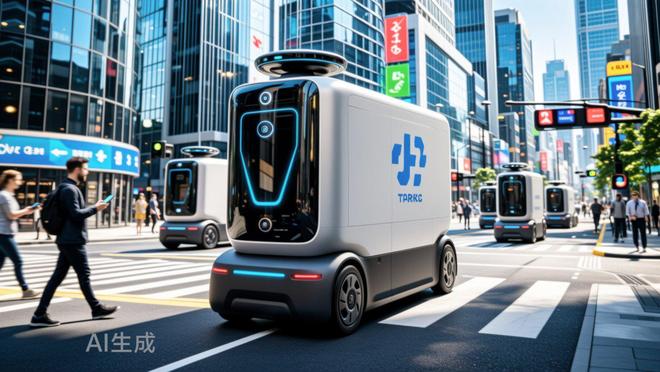
无人配送车市场刚爆发,就卷成了红海?
Tai Mei Ti A P P· 2025-09-28 00:53
Core Insights - The low-speed unmanned delivery vehicle market is experiencing a surge in demand, with sales expected to exceed 10,000 units this year, indicating a potential for industry scale and profitability [2][4] - The market is becoming increasingly competitive with new entrants, including Desay SV and Youjia Innovation, which are expanding their operations into the unmanned delivery vehicle sector [3][4] - Desay SV is positioning unmanned delivery vehicles as a key growth area, leveraging its 40 years of experience in smart cockpit and driving technology [4][6] Market Potential - The market for unmanned delivery vehicles is estimated to be around 4.68 trillion yuan based on the number of logistics points in China, and between 5.46 trillion to 7.28 trillion yuan based on the number of residential communities [4] - The potential for growth is significant, with estimates suggesting a tenfold increase in the development speed of unmanned delivery vehicles [5] Competitive Landscape - The entry of new players is intensifying competition, leading to a "red ocean" market scenario where differentiation and cost management are critical [3][9] - Desay SV and Youjia Innovation are adopting automotive-grade quality standards in their unmanned delivery vehicles, raising the bar for industry competition [7][9] Financial Performance - Youjia Innovation reported a revenue of 346 million yuan for the first half of 2025, a 32% year-on-year increase, but also saw its losses widen to 162 million yuan [5] - Desay SV achieved a revenue of 14.644 billion yuan in the first half of 2025, a 25.25% increase, with a net profit of 1.223 billion yuan, reflecting a 45.82% growth [6] Industry Trends - The unmanned delivery vehicle sector is witnessing a shift towards "vehicle-grade" standards, which is expected to enhance product quality and increase competition barriers [7] - The market is projected to see significant growth, with estimates of over 30,000 units sold in 2025, driven by major logistics companies ramping up their deployment of unmanned vehicles [8][12] Business Models - The current business models in the unmanned delivery vehicle sector primarily focus on vehicle sales and low-cost hardware, with a lack of innovation leading to increased price competition [9][10] - The emphasis is shifting towards providing operational services that enhance customer experience and reduce costs, rather than merely selling vehicles [10][11] Future Outlook - The demand for unmanned delivery vehicles is expected to grow significantly, with major logistics companies planning to deploy thousands of units in the near future [12] - The industry is on the brink of a turning point, with advancements in technology and supportive policies paving the way for rapid growth [12]
调研速递|德赛西威接受高盛等80家机构调研,智能汽车业务亮点多
Xin Lang Cai Jing· 2025-09-26 13:30
Core Insights - The company has successfully developed its fourth-generation smart cockpit, which is now in mass production for major automotive clients such as Li Auto, Xiaomi, and Geely, and has secured new project orders from clients like GAC Passenger Vehicle and GAC Aion [1] - The new national standards for assisted driving will significantly increase the requirements for system perception, processing capabilities, algorithms, and sensors, which the company plans to address through cost reduction, high performance, and safety systems [2] - The company is enhancing its global presence and local services, having established branches in key countries and regions, with a smart factory in Spain expected to start production in 2026 [3] - The company has made breakthroughs in its autonomous vehicle business, with its "Chuanxing Zhiyuan" vehicle gaining market attention and customer orders, featuring a robust design and advanced L4 autonomous driving algorithms [4] - The company has launched a comprehensive assisted driving solution that integrates hardware, system, and core algorithms, enhancing development efficiency and system stability [5] Group 1 - The smart cockpit and assisted driving business are performing well, with significant orders from major automotive manufacturers [1] - The company is prepared to meet new regulatory standards for assisted driving by improving system capabilities and safety measures [2] - The company is expanding its global footprint with strategic overseas branches and a planned smart factory in Spain [3] Group 2 - The autonomous vehicle segment has gained traction, with notable advancements in design and technology [4] - The company has developed a full-stack assisted driving solution that emphasizes hardware integration and algorithm efficiency [5]
国产算力迎来密集利好三箭齐发打开万亿赛道投资机遇
Xin Lang Cai Jing· 2025-09-26 13:17
Group 1 - The core viewpoint of the article highlights the significant opportunities for the domestic computing power industry chain due to favorable policies and technological advancements, particularly with the successful listing of Moore Threads, marking a milestone for domestic GPU development [1][2] - The Chinese government has released multiple policies to accelerate the construction of computing power infrastructure, emphasizing the urgency and commitment to developing domestic computing capabilities [2][3] - The "East Data West Computing" initiative aims to strengthen the supply of computing resources and build a national integrated computing network, which will drive demand for hardware across the entire computing infrastructure industry chain [3][4] Group 2 - The investment logic in the domestic computing power industry chain is evolving, with a shift from single-function chips to full-function GPUs, expanding application scenarios and market space [3][4] - The integration of AI with various industries, such as transportation, is expected to create diverse and customized demands for computing resources, providing opportunities for companies with industry-specific solutions [4][5] - Key companies benefiting from the recent developments include Cambrian (寒武纪), Haiguang Information (海光信息), and Zhongke Shuguang (中科曙光), which are positioned to capitalize on the growing demand for AI chips and computing infrastructure [7][8][9]


德赛西威:接受长城基金等投资者调研
Mei Ri Jing Ji Xin Wen· 2025-09-26 13:14
Group 1 - The core viewpoint of the news is that Desay SV (SZ 002920) is actively engaging with investors and has reported a significant focus on automotive electronics, which constitutes 100% of its revenue for the first half of 2025 [1] - Desay SV will hold an investor meeting on September 25-26, 2025, with participation from its securities representative, Lin Xunpei, to address investor inquiries [1] - As of the latest report, Desay SV has a market capitalization of 79.6 billion yuan [2]
德赛西威(002920) - 2025年9月25日-26日投资者关系活动记录表
2025-09-26 12:54
Group 1: Company Overview - The company is Huizhou Desay SV Automotive Electronics Co., Ltd. [3] - Stock code is 002920, and the stock abbreviation is Desay SV [1]. Group 2: Investor Relations Activity - The investor relations activity was conducted as a targeted research meeting on September 25-26, 2025 [5]. - Participants included representatives from various funds and investment firms, such as Longview Fund and Goldman Sachs [2][4]. Group 3: Business Progress and Developments - The company’s smart cockpit and intelligent driving domain control business are experiencing positive growth, with the fourth-generation smart cockpit in mass production for clients like Li Auto and Xiaomi [5]. - The company has secured new project orders from major clients, including Geely and GAC Aion, for its fourth-generation flagship smart cockpit domain control products [5]. Group 4: Regulatory Impact - New regulations are expected to enhance the safety and reliability of assisted driving systems, requiring manufacturers to avoid misleading advertising and improve system capabilities [6]. - The company supports stricter standards to ensure user safety and aims to enhance system performance in response to these regulations [6]. Group 5: Global Expansion Strategy - The company is enhancing its global presence with strategic branches in countries like Germany, France, and Japan, and plans to start production in a smart factory in Spain by 2026 [7]. - It aims to become an indispensable partner in the global supply chain for Chinese automotive brands, focusing on localized service capabilities [7]. Group 6: Autonomous Vehicle Development - The company has launched its brand "Chuanxing Zhiyuan" for autonomous vehicles, achieving significant market interest and securing customer orders [8]. - The autonomous vehicle features a robust design and has improved its climbing capability from 20% to 25%, ensuring adaptability across various terrains [8]. Group 7: Comprehensive Intelligent Solutions - The company has introduced a full-stack assisted driving solution that integrates hardware, system, and core algorithms to meet diverse market needs [8]. - This solution allows for efficient resource utilization and customization based on regional regulations and requirements [8].