EVE(300014)

Search documents
创业板新增5条主题指数 特色投资标的提质扩容
Zheng Quan Shi Bao· 2025-06-23 18:42
Group 1 - The Shenzhen Stock Exchange's subsidiary will launch five new thematic indices focused on the ChiNext market, including battery, medical, computing infrastructure, media, and fintech indices on June 27 [1][2] - The ChiNext market has shown significant industrial clustering characteristics in sectors like batteries and healthcare, with listed companies having substantial market capitalizations of 1.8 trillion yuan and 1.0 trillion yuan respectively [1][2] - The new indices will consist of 50 stocks with large market capitalizations and good liquidity, reflecting the diversified and innovative characteristics of the ChiNext market [2] Group 2 - The battery index will include companies involved in core areas of the battery industry, such as production, materials, and manufacturing equipment, featuring leading firms like CATL and EVE Energy [2] - The launch of these indices signifies an enhancement and expansion of investment targets in the "Chuang" series, providing a better platform for investors to capture the benefits of transformation and upgrading [2]





电池厂账期255天反超整车,头部供应商压账痼疾待纠治
Di Yi Cai Jing· 2025-06-23 13:30
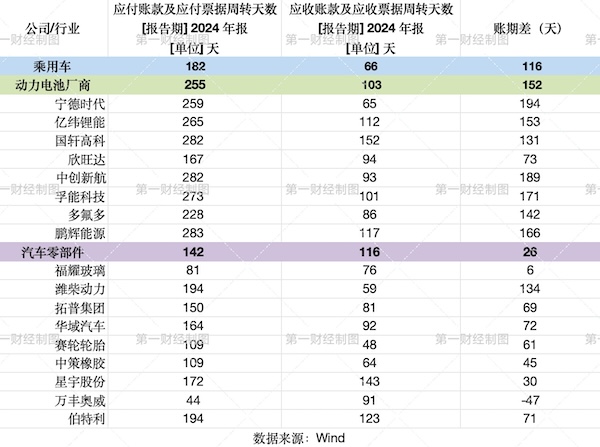
超长账期是整个汽车产业链的问题,并不单单只是整车。 汽车行业"内卷"态势下,超长账期拖垮中小供应商成为了市场关注重点,而问题矛头直指整车企业。整 车企业的账期问题也成为了监管重点,6月中旬,17家头部车企纷纷出来表态,将支付账期统一至60天 内。 而事实上,超长账期是整个汽车产业链的问题,并不单单只是整车。 传统汽车供应链具备明显的层级结构,分为一级供应商(Tier1)、二级供应商(Tier2)和三级供应商 (Tier3),一级供应商是与整车厂商直接签订供货合同的供应商,而二级供应商是为一级供应商提供 零部件或组件的供应商,三级供应商则位于供应链的底端。 因为产业链中大量中小企业在谈判中处于弱势地位,话语权较大的头部供应商"压榨"供应链底端企业、 供应商之间超长账期从上到下层层传导的现象并不少见。 很长一段时间以来,整车被认为在整个汽车产业链中占据了较强话语权,这体现在应付账款和应收账款 周转天数上,便呈现出前者远大于后者的现象,账期差也表明整车占用供应商资金较多,将财务压力往 上游传导。 值得注意的是,动力电池厂商亿纬锂能(265天)、孚能科技(273天)、国轩高科(282天)、中创新 航(282天)、鹏辉 ...


亿纬锂能第二届电池大会:“创新”与“共生”双轮驱动,让锂电池点亮更美好生活
高工锂电· 2025-06-23 11:31
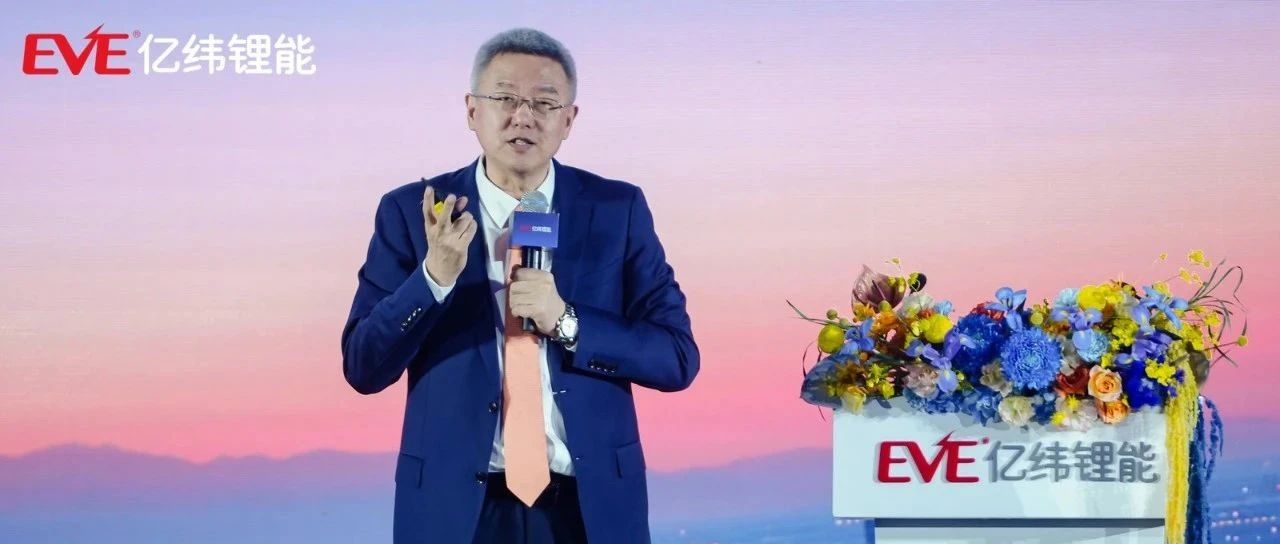
Core Viewpoint - The article emphasizes the transformative impact of lithium battery technology in the context of the energy revolution and artificial intelligence, highlighting the strategic vision of EVE Energy as a leader in the industry, focusing on innovation and collaborative growth [1][31]. Group 1: Strategic Vision - EVE Energy's chairman, Dr. Liu Jincheng, articulated a multi-dimensional strategy centered on "innovation development and symbiotic growth," aiming to contribute positively to humanity through technology [1]. - The company adopts a dual strategy of continuous technological innovation as a spear to break through technical bottlenecks and an open cooperation philosophy as a shield to address challenges [2][31]. Group 2: Technological Innovations - EVE Energy has diversified its technological portfolio, including mainstream square lithium iron phosphate batteries, sodium-ion batteries, cylindrical batteries, solid-state batteries, and hydrogen fuel cells with commercialized AEM proton membranes [1][2]. - The company employs a dual-line strategy in cell manufacturing, ensuring optimal solutions across various application scenarios [2]. Group 3: Market Performance - EVE Energy's large cell strategy has gained industry consensus, with 300,000 large square batteries successfully launched this year [4]. - The cylindrical battery has been integrated into luxury European car models and is set to compete in the F1 racing circuit, showcasing its performance and reliability [4][9]. - The company is on track to achieve a revenue target of over $10 billion, supported by strong performance across energy storage, power, commercial, and consumer sectors [4]. Group 4: Medical Applications - EVE Energy is extending its reliability standards to the medical field, developing rechargeable batteries with a lifespan exceeding 20 years for implantable medical devices [14]. - The company has established the first domestic medical battery standards to promote industry regulation [16]. Group 5: Future Energy Solutions - EVE Energy is focusing on high energy density solutions for AI and future mobility applications, achieving significant advancements in lithium metal battery technology [20][21]. - The company is developing a solid-state battery with a target energy density of over 1000Wh/L by 2028, aiming to address the needs of emerging technologies [22]. Group 6: Sustainability Initiatives - EVE Energy has launched the "Cradle to Cradle" recycling initiative to create a closed-loop battery value chain, with plans to establish a global recycling network covering over 30 countries [26][28]. - The company aims to achieve a lithium recovery rate of over 96% and nickel-cobalt-manganese recovery rates exceeding 98%, positioning itself as a leader in sustainable practices [28].
【锂电新观察】掀出海热潮!多家锂电材料公司出手
证券时报· 2025-06-23 07:48
Core Viewpoint - The lithium battery industry is increasingly focusing on overseas expansion as domestic competition intensifies and local market demands rise, with major players like CATL and EVE Energy accelerating their overseas production capacity [1][4]. Group 1: Industry Trends - The enthusiasm for overseas expansion in the lithium battery industry remains high despite ongoing market challenges, with numerous announcements of new factory projects [4]. - By June 2025, Zhongke Electric plans to invest up to 8 billion yuan in Oman for a lithium-ion battery anode materials integrated base with an annual capacity of 200,000 tons [4]. - Tianqi Materials announced an investment in Morocco for a project with an annual output of 150,000 tons of electrolyte products and key raw materials, with an estimated total investment of approximately 280 million USD [4]. - The penetration rate of new energy vehicles in China reached 38.9% in 2024, significantly higher than that of major automotive producing countries, indicating substantial overseas market potential [5]. Group 2: Profitability and Market Dynamics - The overseas market is still in a "blue ocean" phase, characterized by high demand and limited local supply, prompting companies to rapidly establish production bases [5]. - CATL's overseas gross profit margin is projected to be 29.45% in 2024, significantly higher than its domestic margin of 7.2% [5]. - EVE Energy and Guoxuan High-Tech also report higher overseas gross profit margins compared to their domestic operations, indicating a favorable trend for international business [5]. Group 3: Capacity Expansion and Operational Challenges - CATL's first overseas factory in Germany has achieved profitability and serves as a benchmark for the industry, encouraging more companies to pursue international expansion [8]. - EVE Energy's first overseas battery base in Malaysia commenced production in February 2024, while Envision AESC's super factory in France began operations in June 2024 [9]. - Dragon Power Technology's first phase of a lithium iron phosphate production project in Indonesia is set to start production in early 2025, with plans for a second phase already underway [10]. Group 4: Localization and Strategic Considerations - Despite positive signals for overseas expansion, the overall progress remains slow due to higher costs and longer return periods compared to domestic operations [15]. - Companies are increasingly seeking to understand local markets and establish stable customer relationships to support their overseas ventures [15]. - The challenges of local environmental regulations, labor policies, and talent acquisition are significant hurdles for companies establishing overseas operations [16].


锂电二季度业绩前瞻
2025-06-23 02:09
Summary of Lithium Battery Industry Conference Call Industry Overview - The lithium battery sector is experiencing moderate production levels, with a quarter-over-quarter growth of 10%-20% and a year-over-year growth of 30%-40% expected for Q2 2025. The industry is anticipated to maintain stable growth in the medium term [1][2] Key Companies and Performance CATL (宁德时代) - Q2 production is expected to be around 157 GWh, with confirmed revenue exceeding 140 GWh, representing a year-over-year growth of approximately 30%. The profit per watt-hour is about 0.09 CNY, with overall performance expectations between 15 billion to 16 billion CNY, maintaining an annual profit level of around 65 billion CNY [1][5] BYD (比亚迪) - Q2 sales are projected to be close to 1.2 million vehicles, with an export ratio exceeding 20%. The profit per vehicle is expected to exceed 9,000 CNY, with overall performance expectations between 11 billion to 12 billion CNY, reflecting a year-over-year and quarter-over-quarter growth of about 40%. The overseas sales target has been raised to 900,000 to 1 million vehicles, with monthly export volumes nearing 90,000 units [1][5] EVE Energy (亿纬锂能) - Q2 production is estimated at over 30 GWh, with confirmed revenue between 28 GWh and 30 GWh, showing a year-over-year growth of over 30%. The average profit per watt-hour is above 0.02 CNY, with operational profit expectations between 1 billion to 1.1 billion CNY, leading to total performance expectations of 1.3 billion to 1.4 billion CNY [1][5] Zhuhai Coslight (珠海冠宇) - Q2 profit contribution from consumer batteries is expected to exceed 200 million CNY, while losses in the power segment are around 60 million CNY, leading to overall profit expectations between 150 million to 200 million CNY [1][6] Keda (科达利) - Q2 revenue from structural components is expected to be between 3.5 billion to 3.6 billion CNY, with a year-over-year growth of 20% and a quarter-over-quarter growth close to 20% [1][6] Material Segment Performance - The battery segment is performing significantly better than the materials segment. The price increase expectations for materials have not been as strong as initially anticipated, leading to weaker price trends. However, companies with cobalt resources are benefiting from rising cobalt prices, with Huayou Cobalt (华友钴业) expected to achieve profits between 1.4 billion to 1.6 billion CNY in Q2 [3][4][9] Negative Material Companies - Negative material companies are performing well, with Putailai (璞泰来) expected to achieve profits exceeding 550 million CNY in Q2, while Zhongke Electric (中科电气) anticipates profits between 130 million to 150 million CNY [3][12] Future Outlook - The demand for lithium batteries is expected to grow between 25% to 30% in 2025, with leading companies' shipment targets slightly exceeding industry growth rates. Despite high market expectations, monthly production growth has been modest, with only single-digit increases observed in May and June [2] Additional Insights - The performance of ternary industry chain companies is strong, particularly for lithium cobalt oxide and metal cobalt-related enterprises. For instance, Huayou Cobalt's profits are bolstered by inventory gains from cobalt purchases [9] - The lithium carbonate segment is facing profitability challenges due to price declines, prompting companies to implement cost-reduction measures [13]

系统化“作战”渐成锂电循环标配,亿纬锂能(300014.SZ)发布全球锂电回收网络平台
智通财经网· 2025-06-23 01:01
Core Viewpoint - EVE Energy has launched a "Global Lithium Battery Recycling Network Platform" to reshape the lithium battery circular economy ecosystem, aiming for a recovery capacity of 120,000 tons per year by 2030 [1][2] Group 1: Company Initiatives - EVE Energy, in collaboration with companies like Greeenme and Huayou Cobalt, initiated the platform to establish a global recycling network covering four continents [1] - The "Cradle Plan" aims to create 1,000 recycling points globally, with 246 already established, including 159 in China and 87 overseas [1] - The company announced its intention to use funds from its upcoming Hong Kong IPO for global expansion, indicating a strong push towards international growth [2] Group 2: Industry Trends - The industry is facing an imminent wave of retired batteries, with projections indicating that by 2030, 300 GWh of batteries will be retired in China alone, reflecting a compound annual growth rate of 45% over the next five years [2] - Regulatory pressures, such as the EU's new battery law, are compelling battery manufacturers to accelerate the establishment of recycling networks, with specific targets for recycled materials set for 2031 and 2036 [2] Group 3: Challenges in the Recycling Industry - The lithium battery recycling industry currently faces challenges such as dispersed collection points, high logistics costs, and information asymmetry, with cross-border transport costs reaching 25% [3] - EVE Energy's platform aims to address these issues through a model of "technology sharing, resource collaboration, and global channels" [3] Group 4: Technological and Resource Collaboration - EVE Energy's subsidiary has achieved nickel and cobalt recovery rates of over 98% and lithium recovery rates of over 92%, with the goal of raising industry average recovery rates to over 95% through shared technology [3][4] - The platform will also facilitate a shared database for recycled material composition and a battery passport tracing system to streamline the recycling process [3] Group 5: Global Channel Development - Jin Jing New Energy has established a global battery recycling service system with over 70 service points across 28 countries, enhancing the platform's ability to recover retired batteries [4] - The collaboration among the companies involved is expected to create a competitive service system through the integration of their networks, technologies, and resources [4] Group 6: Industry Evolution - The establishment of the "Global Lithium Battery Recycling Network Platform" marks a significant shift from isolated competition to systematic collaboration within the recycling industry [5] - The trend towards systematic collaboration is evident as other companies in the industry also engage in partnerships to enhance their recycling capabilities and network [5]
三大维度拆解中国锂电上市军团谁最具周期穿越力|独家
24潮· 2025-06-22 14:49
Core Viewpoint - The Chinese lithium battery industry, particularly in power and energy storage, is undergoing intense competition and financial decline, with significant drops in net profits projected for 2023 and 2024 [1][2]. Financial Indicators - The "deducted non-recurring net profit" for 100 lithium battery listed companies is projected to decline from 189.4 billion yuan in 2022 to 53.8 billion yuan in 2024, representing a decrease of 51.67% and 41.21% in 2023 and 2024 respectively [1][2]. - Excluding CATL, the decline in "deducted non-recurring net profit" is even more severe, with reductions of 68.08% and 82.84% for the same periods [1]. - The "cash-debt difference" for these companies worsened significantly, showing -34.4 billion yuan in 2022 and -120.6 billion yuan in 2023 [2]. - The "fixed asset acquisition depreciation difference" is still positive but shows signs of shrinkage, decreasing from 171.4 billion yuan in 2022 to 87.6 billion yuan in 2024, with a notable decline of 18.09% and 37.62% in 2023 and 2024 respectively [2]. Company Analysis - In 2024, only 11 lithium battery listed companies maintained positive values across all three key indicators, indicating their potential for sustainable development [3]. - Conversely, 10 companies showed negative values across all three indicators, suggesting significant challenges to their sustainability [4]. Performance Rankings - The top companies by "deducted non-recurring net profit" in 2024 include CATL (449.93 million yuan), Salt Lake Co. (44.01 million yuan), and Huayou Cobalt (37.95 million yuan) [13]. - Companies with negative "deducted non-recurring net profit" include Andar Technology (-6.85 million yuan) and Wumart New Energy (-5.57 million yuan) [8]. Industry Outlook - The severe internal competition and financial health of companies are critical factors for survival in the lithium battery industry, with maintaining a positive cycle in the three core dimensions being essential for sustainable growth [12].


国轩高科签重磅合作;8GWh大圆柱电池订单签订;字节跳动联手比亚迪进军锂电;50亿锂电项目落地天津;三大锂电企业加码回收
起点锂电· 2025-06-22 05:34
Group 1 - The fifth "Two-Wheeled Vehicle Battery Swap Conference" and "Light-Duty Power Battery Technology Summit Forum" will be held in Shenzhen on July 10-11, 2025, focusing on battery swapping technology [1] - Guoxuan High-Tech announced a strategic partnership with EHang to develop customized power battery systems for EHang's EH216 series aircraft, enhancing performance and safety [3] - LG Energy Solution signed an 8GWh supply contract with Chery for the new generation 4680 cylindrical battery, which offers five times the energy and output compared to existing models [4] Group 2 - ByteDance's Seed team and BYD are collaborating to establish a laboratory for lithium battery research, focusing on AI-driven scientific research [5][6] - Green Chip Times Technology in Sichuan has begun trial production of lithium batteries, with an expected annual output value of approximately 150 million yuan [7] - A 5 billion yuan lithium battery project has commenced in Tianjin, aiming for an annual production capacity of 96GWh [8] Group 3 - Xiamen's new energy battery industrial base is accelerating construction, with a total investment of about 10 billion yuan and a planned completion by the end of the year [9] - Envision AESC is ramping up supply of 46 series cylindrical batteries to BMW's global electric platform, with production efficiency improvements underway [10] - Jiangxi Xiangnan New Energy's lithium carbonate project has received environmental approval, with an annual production capacity of 15,000 tons [12][13] Group 4 - A 60,000-ton graphite anode material project has broken ground in Gansu, with an expected annual output value of nearly 600 million yuan [14] - Fulin Precision's registered capital has increased by 40% to support business expansion in lithium battery materials [15] - Hubei Ruipai New Energy is constructing a 50,000-ton lithium iron phosphate project, with the first production line expected to be operational by the end of the year [16][18] Group 5 - Dazhong Mining plans to invest 1 billion yuan in a new lithium battery materials project, with a phased construction approach [19] - Xianlead Intelligent has delivered core equipment for solid-state batteries to a leading global battery manufacturer, marking a significant milestone in the industry [21] - Winbond Technology has shipped solid-state battery equipment to a domestic client, indicating progress in solid-state battery manufacturing [22][23] Group 6 - LG Energy Solution is forming a joint venture with Toyota to focus on battery recycling, aiming for a processing capacity of 13,500 tons of waste materials annually [27][28] - EVE Energy has launched a global lithium battery recycling network, with plans to establish 1,000 recycling points worldwide [31] - A 50,000-ton lithium battery recycling project is set to be established in Chongqing, focusing on comprehensive utilization of retired batteries [32]
亿纬锂能敲响港股大门:锂电出海再加速
Zhong Guo Jing Ying Bao· 2025-06-21 20:54
Core Viewpoint - EVE Energy has announced its plan to launch an IPO in Hong Kong, signaling a strong push towards internationalization in the lithium battery industry, following the successful listing of CATL [2][4]. Group 1: Company Strategy - EVE Energy aims to use the funds raised from the IPO primarily for overseas factory construction and global capacity layout, with the core goal of enhancing international delivery capabilities and global customer service levels [2][4]. - The company plans to establish factories in Hungary and Malaysia, indicating a significant investment in international production capacity [2][5]. - EVE Energy's move to list in Hong Kong is seen as a critical step in its global strategy, enhancing its capital strength and competitive edge while improving its international brand image [4][6]. Group 2: Market Context - The lithium battery industry is currently facing overcapacity and intensified competition, prompting many domestic companies to seek international expansion as a key strategy [2][6]. - Despite a projected decline in overall revenue and profits for the lithium battery industry in 2024, the lithium battery segment remains highly profitable, accounting for nearly 60% of the industry's profits [6][8]. - The global average price of lithium battery packs has dropped significantly, leading to increased price competition among manufacturers [6][8]. Group 3: Regional Developments - Southeast Asia, particularly Thailand and Malaysia, is emerging as a new market for lithium battery companies, with both countries implementing supportive policies for electric vehicle development [7][8]. - EVE Energy has already begun construction of a cylindrical battery factory in Malaysia, with plans for significant production capacity aimed at the electric tools and two-wheeled vehicle markets [5][8]. - The company is also involved in a joint venture in Mississippi, USA, to build a large-scale lithium battery factory, further expanding its international footprint [5][9].
“2025中国两轮车及换电锂电池领导品牌”微信投票环节得票TOP10企业公布!
起点锂电· 2025-06-21 10:04
Core Viewpoint - The article highlights the upcoming "2025 Fifth Qidian Two-Wheeled Vehicle Battery Swap Conference and Lightweight Power Battery Technology Summit," focusing on the growth and innovation in the battery swap and electric two-wheeler industry, emphasizing the importance of technology and market trends in shaping the future of this sector [1][5]. Event Overview - The event will take place on July 10-11, 2025, at the Shenzhen Baoan Duxi Road International Hotel, featuring discussions on battery technology and the future of two-wheeled vehicles [1][3]. - The theme of the conference is "Swap City, Smart Two-Wheelers," aiming to address the advancements in battery swapping technology and its implications for the industry [5]. Award Announcement - The top 10 companies in the "2025 China Two-Wheeled Vehicle and Battery Swap Lithium Battery Leading Brands" were announced based on a WeChat voting segment, with companies like Dofluorine, Zhongbi New Energy, and BAK Battery leading the rankings [1][2]. - The final award winners will be revealed during the conference, and they will receive a trophy, brand tracking services, and VIP tickets for company executives [2]. Industry Insights - The conference will feature over 300 influential companies and more than 600 executives, indicating a strong interest and participation in the two-wheeled vehicle and battery swap market [5]. - The industry is experiencing rapid growth driven by policy support, demand for instant delivery, and technological upgrades, with a focus on high safety, high energy density, and cost optimization in battery products [5][6]. Forum Agenda - The agenda includes various specialized forums discussing topics such as the commercialization and intelligent networking of electric two-wheeled vehicles, battery safety, and the future of battery technology [6][7]. - Key discussions will involve industry leaders from companies like Yadi Technology, Cainiao Group, and others, focusing on the latest trends and challenges in the battery swap and electric vehicle sectors [6][7]. Participation and Registration - Registration packages are available, with options including accommodation and industry white papers, indicating a structured approach to participant engagement [9][10].