EVE(300014)

Search documents
亿纬锂能敲响港股大门:锂电出海再加速
Zhong Guo Jing Ying Bao· 2025-06-21 20:54
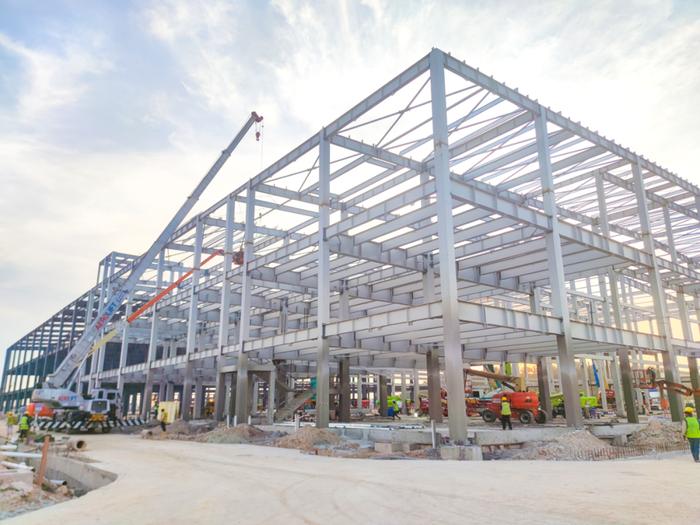
Core Viewpoint - EVE Energy has announced its plan to launch an IPO in Hong Kong, signaling a strong push towards internationalization in the lithium battery industry, following the successful listing of CATL [2][4]. Group 1: Company Strategy - EVE Energy aims to use the funds raised from the IPO primarily for overseas factory construction and global capacity layout, with the core goal of enhancing international delivery capabilities and global customer service levels [2][4]. - The company plans to establish factories in Hungary and Malaysia, indicating a significant investment in international production capacity [2][5]. - EVE Energy's move to list in Hong Kong is seen as a critical step in its global strategy, enhancing its capital strength and competitive edge while improving its international brand image [4][6]. Group 2: Market Context - The lithium battery industry is currently facing overcapacity and intensified competition, prompting many domestic companies to seek international expansion as a key strategy [2][6]. - Despite a projected decline in overall revenue and profits for the lithium battery industry in 2024, the lithium battery segment remains highly profitable, accounting for nearly 60% of the industry's profits [6][8]. - The global average price of lithium battery packs has dropped significantly, leading to increased price competition among manufacturers [6][8]. Group 3: Regional Developments - Southeast Asia, particularly Thailand and Malaysia, is emerging as a new market for lithium battery companies, with both countries implementing supportive policies for electric vehicle development [7][8]. - EVE Energy has already begun construction of a cylindrical battery factory in Malaysia, with plans for significant production capacity aimed at the electric tools and two-wheeled vehicle markets [5][8]. - The company is also involved in a joint venture in Mississippi, USA, to build a large-scale lithium battery factory, further expanding its international footprint [5][9].


“2025中国两轮车及换电锂电池领导品牌”微信投票环节得票TOP10企业公布!
起点锂电· 2025-06-21 10:04
Core Viewpoint - The article highlights the upcoming "2025 Fifth Qidian Two-Wheeled Vehicle Battery Swap Conference and Lightweight Power Battery Technology Summit," focusing on the growth and innovation in the battery swap and electric two-wheeler industry, emphasizing the importance of technology and market trends in shaping the future of this sector [1][5]. Event Overview - The event will take place on July 10-11, 2025, at the Shenzhen Baoan Duxi Road International Hotel, featuring discussions on battery technology and the future of two-wheeled vehicles [1][3]. - The theme of the conference is "Swap City, Smart Two-Wheelers," aiming to address the advancements in battery swapping technology and its implications for the industry [5]. Award Announcement - The top 10 companies in the "2025 China Two-Wheeled Vehicle and Battery Swap Lithium Battery Leading Brands" were announced based on a WeChat voting segment, with companies like Dofluorine, Zhongbi New Energy, and BAK Battery leading the rankings [1][2]. - The final award winners will be revealed during the conference, and they will receive a trophy, brand tracking services, and VIP tickets for company executives [2]. Industry Insights - The conference will feature over 300 influential companies and more than 600 executives, indicating a strong interest and participation in the two-wheeled vehicle and battery swap market [5]. - The industry is experiencing rapid growth driven by policy support, demand for instant delivery, and technological upgrades, with a focus on high safety, high energy density, and cost optimization in battery products [5][6]. Forum Agenda - The agenda includes various specialized forums discussing topics such as the commercialization and intelligent networking of electric two-wheeled vehicles, battery safety, and the future of battery technology [6][7]. - Key discussions will involve industry leaders from companies like Yadi Technology, Cainiao Group, and others, focusing on the latest trends and challenges in the battery swap and electric vehicle sectors [6][7]. Participation and Registration - Registration packages are available, with options including accommodation and industry white papers, indicating a structured approach to participant engagement [9][10].


三大电池企业布局锂电后市场
起点锂电· 2025-06-21 10:04
Core Viewpoint - The article highlights the rapid growth of the electric vehicle (EV) market in China and the impending boom in the battery recycling market as the first batch of power batteries reaches the "8-year warranty period" [2][3]. Group 1: Market Growth - In 2024, new registrations of electric vehicles in China reached 11.25 million, accounting for 41.83% of new car registrations, an increase of 3.82 million vehicles or 51.49% compared to 2023 [2]. - By the end of 2024, the total number of electric vehicles in China is expected to reach 31.4 million, representing 8.90% of the total vehicle population [3]. Group 2: Battery Recycling Market - The battery recycling market is anticipated to expand significantly due to the arrival of the "8-year warranty period" for power batteries and the implementation of various EV replacement subsidy policies [3]. - Major battery manufacturers, including CATL, EVE Energy, and LG Energy, are actively establishing battery recycling networks to prepare for the upcoming wave of battery retirements [4][8]. Group 3: CATL's Recycling Initiatives - CATL's recycling division, controlled by its subsidiary Bangpu Recycling, has invested up to 23.8 billion yuan in an integrated new materials project in Guangdong, capable of recycling 500,000 tons of used battery materials annually [6]. - As of September 2024, CATL has established over 240 battery recycling points in China and has formed partnerships with over 60 recycling companies globally, covering 26 countries and regions [10]. Group 4: EVE Energy's Global Recycling Network - EVE Energy launched a "Global Lithium Battery Recycling Network" during its 24th anniversary event, aiming to establish 1,000 recycling points worldwide, with 246 already set up [12][13]. - The company’s recycling technology has a nickel-cobalt recovery rate exceeding 98% and a lithium recovery rate of 92% [13]. Group 5: LG Energy's Collaborative Efforts - LG Energy has formed a joint venture with Toyota Tsusho in the U.S. to focus on battery recycling, planning to build a pre-treatment facility with an annual processing capacity of 13,500 tons of waste [15][16]. - The company is also collaborating with Derichebourg in France to establish a battery recycling plant, expected to begin operations in 2027 with a processing capacity of over 20,000 tons annually [18]. Group 6: Industry Trends - The global battery recycling business is expanding due to the upcoming peak in battery retirements and regulatory pressures, such as the EU's new battery law, which mandates producers to take responsibility for the entire lifecycle of batteries [19]. - The influx of battery manufacturers into the recycling sector is expected to intensify competition while promoting the standardization and sustainable development of the recycling industry [20].


专访亿纬锂能肖忠湘:ESG非独立选项,要与企业战略结合
2 1 Shi Ji Jing Ji Bao Dao· 2025-06-20 10:51
Core Viewpoint - The battery industry is at the forefront of the green revolution, driven by increasing demand for clean energy, pressure for greenhouse gas reduction, and breakthroughs in green technology. Companies are integrating ESG principles into their development strategies to enhance international competitiveness and ensure sustainable growth [1]. Group 1: ESG Strategy and Carbon Neutrality Goals - The company has set a "3040 carbon neutrality goal" and has made significant progress, including a nearly threefold increase in the use of green electricity and a 16% reduction in carbon emissions per product compared to the previous year [2]. - The company is developing a global digital network for battery recycling, covering over 30 countries, as part of its "Cradle Plan" [2]. - Despite challenges in the battery industry, the ESG strategy is a key focus for long-term development, linking sustainable development goals with daily operations and financial performance [4]. Group 2: Supply Chain and Carbon Management - The company is conducting carbon inventory and ESG due diligence in its supply chain, addressing the complexities of carbon emissions across multiple products and regions [3]. - The company is mapping supply chain data to ensure accurate tracking of carbon emissions at every stage [3]. Group 3: Technological Innovation for Low-Carbon Development - The company is developing new materials such as silicon-carbon anodes and high-nickel, low-cobalt cathodes to significantly reduce carbon emissions during production [5]. - A new lithium battery factory with a capacity of 60 GWh is being built, aiming for carbon neutrality and expected to replace 110 million tons of standard coal annually, resulting in a reduction of 200 million tons of emissions [5]. Group 4: Digitalization and Efficiency Improvements - The company has implemented a carbon management system that automates previously manual processes, improving personnel efficiency by approximately 80% and time efficiency by about 60% [8]. - A digital platform for battery recycling is being developed to track the lifecycle of batteries, which will support compliance with upcoming regulations requiring battery passports for exports [8].
每日速递 | 比亚迪与字节跳动深化合作
高工锂电· 2025-06-20 10:46
Group 1: Industry Developments - BYD and ByteDance are collaborating to establish an "AI + High-Throughput Joint Laboratory" to tackle key technical issues in power batteries such as fast charging, lifespan, and safety [1] - JinJing New Energy and EVE Energy have launched a global lithium battery recycling network platform to enhance the effective recovery and reuse of retired battery materials [3] - The green energy storage intelligent manufacturing project by Feimaotai has commenced in Tianjin, with an annual production capacity of 96GWh planned [5] Group 2: Technological Advancements - Envision AESC has received the Witness Laboratory Qualification Certificate from TÜV Rheinland, enabling independent testing according to international safety standards [7] - Formosa Plastics Group has initiated trial production of solid-state batteries, aiming for mass production by 2027 and focusing on applications in small electric vehicles and drones [9] - LG and Toyota are forming a joint venture in North Carolina to establish a battery recycling pre-treatment plant, with a planned annual capacity of 13,500 tons starting in 2026 [12] - Samsung plans to incorporate Tesla's dry electrode technology in its solid-state batteries set for release in 2027, targeting a specific energy density of 500Wh/kg and rapid charging capabilities [14]



亿纬锂能全球锂电回收网络平台启动,携手各能源行业巨头共建绿色通道
Ge Long Hui· 2025-06-20 10:27
Group 1 - The second Lithium Battery Conference and EVE Energy's 24th anniversary event highlighted the company's new product developments and 2026 revenue outlook, while also indicating a cautious approach towards a Hong Kong stock listing [1] - EVE Energy, in collaboration with global energy leaders, launched a "Global Lithium Battery Recycling Network Platform," marking a significant step in establishing a green channel throughout the battery lifecycle [1] - Recent strategic partnerships, including agreements with Haibos and JinJing New Energy, demonstrate the rapid transformation of industry strategies into concrete frameworks [1] Group 2 - The rapid growth of new energy vehicles in China, projected to reach 31.4 million by the end of 2024, is leading to a significant increase in retired power batteries, with a forecasted retirement volume of 820,000 tons by 2025 and over 4 million tons by 2028, creating a recycling market valued at over 280 billion yuan [3] - The EU's new battery regulations require producers to take responsibility for the entire battery lifecycle, pushing Chinese companies to accelerate their overseas recycling operations [3] - Major Chinese companies are establishing recycling operations abroad, with BYD and CATL leading initiatives in Europe, indicating a competitive landscape for global battery resource recovery [3] Group 3 - EVE Energy's "Cradle Plan" aims to establish a network of 1,000 global recycling points, with 246 already completed, including 159 in China and 87 overseas, extending to over 30 countries [5] - The company's advanced recycling technology, with a nickel-cobalt recovery rate exceeding 98% and lithium recovery rate of 92%, positions it competitively against industry leaders [5] - The combination of advanced recycling technology and extensive network coverage enhances EVE Energy's ability to streamline the battery material lifecycle, thereby increasing its influence in global battery recycling regulations [5] Group 4 - EVE Energy is leveraging a dual engine of "technology + ecology" to transition the Chinese lithium battery industry from "manufacturing dividends" to "regulatory dividends" [6] - The establishment of the first 1,000 recycling points under the "Cradle Plan" is accelerating the development of a circular economy in the global lithium battery industry [6] - This initiative represents a systemic approach to redefine the entire lifecycle value of lithium batteries, moving towards a cradle-to-cradle model [6]
中证新能源汽车指数下跌0.65%,前十大权重包含天齐锂业等
Jin Rong Jie· 2025-06-20 09:51
Group 1 - The core viewpoint of the news is that the China Securities New Energy Vehicle Index has experienced a decline, reflecting the overall performance of listed companies in the new energy vehicle sector [1][2]. - The China Securities New Energy Vehicle Index has decreased by 4.15% in the past month, 12.37% in the past three months, and 0.15% year-to-date [2]. - The index includes companies involved in lithium batteries, charging piles, and new energy vehicles, with a base date of December 31, 2011, set at 1000.0 points [2]. Group 2 - The top ten weighted companies in the index are: CATL (9.97%), BYD (9.96%), Huichuan Technology (9.81%), Changan Automobile (5.17%), Sanhua Intelligent Control (4.7%), Yiwei Lithium Energy (4.34%), Huayou Cobalt (4.07%), Ganfeng Lithium (2.91%), Greenmech (2.62%), and Tianqi Lithium (2.55%) [2]. - The index's holdings are primarily listed on the Shenzhen Stock Exchange (84.23%), followed by the Shanghai Stock Exchange (15.18%) and the Beijing Stock Exchange (0.59%) [2]. - The industry composition of the index holdings includes 58.87% in industrials, 24.47% in consumer discretionary, 15.49% in materials, and 1.16% in information technology [2]. Group 3 - The index samples are adjusted every six months, with adjustments implemented on the next trading day after the second Friday of June and December [3]. - Weight factors are generally fixed until the next scheduled adjustment, with special circumstances allowing for temporary adjustments [3]. - Companies that are delisted or undergo mergers, acquisitions, or splits are handled according to specific calculation and maintenance guidelines [3].


亿纬锂能近期交流
数说新能源· 2025-06-20 03:35
Core Viewpoints - EVE Energy is advancing its battery technology across various applications, including electric vehicles, medical devices, and energy storage, with a focus on enhancing performance, safety, and sustainability. Group 1: Battery Technology Advancements - EVE's LMX battery technology is set to accelerate the electrification of heavy-duty trucks, offering significant advantages in range (≥ 500 km), low-temperature performance (operational at ≤ -20 ℃), and safety [1] - The company has accumulated over 20 years of experience in cylindrical battery technology, with 2,702 patents and a projected shipment of 1.2 billion units of its flagship 18650 battery in 2024 [1] - EVE's cylindrical batteries boast three core competitive advantages: standardization, zero expansion, and high strength, with strength improved by 560% compared to traditional aluminum shell square batteries [1] Group 2: Performance Metrics - EVE's cylindrical batteries achieve a 6C fast charge capability, with power output increased to 100C, and can operate in a temperature range of -35 to 80 ℃, with a cycle life of 6,000 to 8,000 times [1] - The company is targeting a 300 GWh production capacity, with expectations for market share to continue increasing [2] - EVE's LMX2.0 cell has achieved an energy density of 215 Wh/kg, a 5% improvement over the first generation and a 13% improvement over LFP batteries [3] Group 3: Medical Device Applications - EVE's lithium batteries for medical devices have a lifespan of 5 years, reducing treatment costs by 50% for imported devices, and a new generation of batteries with titanium metal packaging can last up to 20 years [2] - The company's AED device batteries can achieve millisecond-level high energy discharge, with a standby life of over 10 years and a self-discharge rate of less than 1% at room temperature [2] Group 4: Solid-State Battery Development - EVE aims to launch its first generation of solid-state batteries in 2026, achieving 350 Wh/kg energy density and over 1,000 cycles, with a second generation targeting 1,000 Wh/L by 2028 [4] - The company is optimistic about solid-state battery technology, focusing on safety and performance improvements through innovative material designs [4] Group 5: Battery Recycling Initiatives - By 2030, an estimated 400 GWh of power batteries will be retired, with a compound annual growth rate (CAGR) of 45% from 2026 to 2030, allowing for the extraction of significant amounts of nickel sulfate, cobalt sulfate, and lithium carbonate [5] - EVE is developing a battery recycling platform with a recovery rate of over 96% and plans to integrate online and offline recycling methods [5] Group 6: Future Outlook - EVE anticipates significant developments in 2026, including the mass production of large square batteries exceeding 60 GWh and the delivery of over 10 GWh of large cylindrical batteries [6] - The company is also exploring opportunities for overseas projects and cautious about the potential for a Hong Kong listing to support funding needs [2]

亿纬锂能官宣将赴港上市
Nan Fang Du Shi Bao· 2025-06-19 23:12
Core Viewpoint - Huizhou EVE Energy Co., Ltd. is planning to launch an H-share issuance to list on the Hong Kong Stock Exchange, aiming to break the "duopoly" in the lithium battery industry and enhance its global presence [2][3] Group 1: Company Overview - EVE Energy ranks ninth globally in power battery installation volume and second in energy storage cell shipments [2] - The company has expanded its business into three major areas: consumer batteries, power batteries, and energy storage batteries, with production capacities established in Hungary, Malaysia, and the United States [2] Group 2: Financial Performance - In Q1 2025, EVE Energy reported a 37.34% year-on-year increase in revenue to 12.796 billion yuan, while net profit only grew by 3.32%, indicating pressure on profitability due to price wars and heavy asset expansion [3] - The company's operating costs increased by 37.45%, surpassing revenue growth, leading to a significant decline in core business profitability [3] - Total liabilities rose from 59.891 billion yuan at the end of 2024 to 67.249 billion yuan in Q1 2025, a 12.28% increase, with accounts receivable reaching 12.808 billion yuan, representing 314.26% of net profit [3] Group 3: Market Context and Strategic Implications - The upcoming H-share fundraising could potentially raise around 30 billion HKD, which would support the production of new facilities and help manage increased costs from EU regulations [4] - EVE Energy's A-share price-to-earnings ratio of 21.56 times may face pressure due to the lower average P/E ratios in the Hong Kong battery sector, raising concerns about valuation adjustments [4][5] - The company's strategy to diversify into multiple technology routes may lead to resource dilution, which will require time to evaluate its effectiveness [6] Group 4: Industry Dynamics - The lithium battery industry is experiencing intense price competition, with EVE Energy's energy storage battery shipments increasing by 80.54% and power battery shipments by 57.58% [3] - The trend of dual-platform financing (A+H shares) is becoming common among lithium battery companies, with several peers already listed in Hong Kong [4][5] - The global narrative surrounding the industry reflects collective anxiety among Chinese new energy companies, as they face challenges from international competitors and regulatory pressures [6][7]
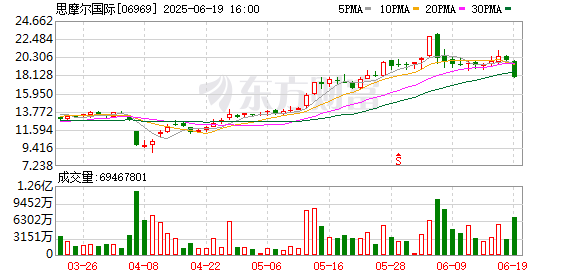
思摩尔国际今日大跌9.95% 大股东计划减持不超过3.5%
Zheng Quan Shi Bao Wang· 2025-06-19 11:19
Core Viewpoint - Smoore International (06969.HK) experienced a significant stock price drop of 9.95%, closing at HKD 17.92 per share, with a market capitalization of HKD 110.9 billion and a trading volume of HKD 1.28 billion on the same day [2] Group 1: Shareholder Actions - EVE Lithium Energy (300014) plans to reduce its stake in Smoore International by up to 3.5% within a year through block trades and centralized bidding, involving approximately 216 million shares [4] - EVE Lithium currently holds 30.73% of Smoore's total share capital, and after the reduction, it will no longer be the controlling shareholder [4] - The market value of EVE Lithium's stake in Smoore International is approximately HKD 34.08 billion, with the planned reduction valued at HKD 3.882 billion [4] Group 2: Historical Performance and Financials - EVE Lithium has invested in Smoore International for over ten years, acquiring 50.1% of its predecessor in 2014 for HKD 439 million [5] - Smoore International went public in July 2020 at an issue price of HKD 12.4 per share and has since distributed nine cash dividends, yielding EVE Lithium nearly HKD 2 billion [5] - Smoore's revenue has declined from HKD 137.55 billion in 2021 to an estimated HKD 117.99 billion in 2024, with net profits dropping from HKD 52.87 billion to HKD 13.03 billion over the same period [5] Group 3: Market Opportunities and Challenges - Smoore International has struggled to capitalize on the disposable e-cigarette market but may benefit from recent bans on disposable e-cigarettes in major sales countries [5] - The company has seen improvements in its ODM business for vaping products, with its own brand revenue increasing to 21% [6] - Smoore is collaborating with British American Tobacco on HNB products, with plans for a new product launch in mid-2025 [6] - The company is investing in the medical nebulization sector, with a 41.3% increase in R&D spending in this area, although current revenue from medical nebulization remains low at HKD 27 million [6]