EVE(300014)

Search documents
半年翻倍!固态电池指数狂飙背后,国际资本已悄然布局这些标的
Sou Hu Cai Jing· 2025-12-27 23:37
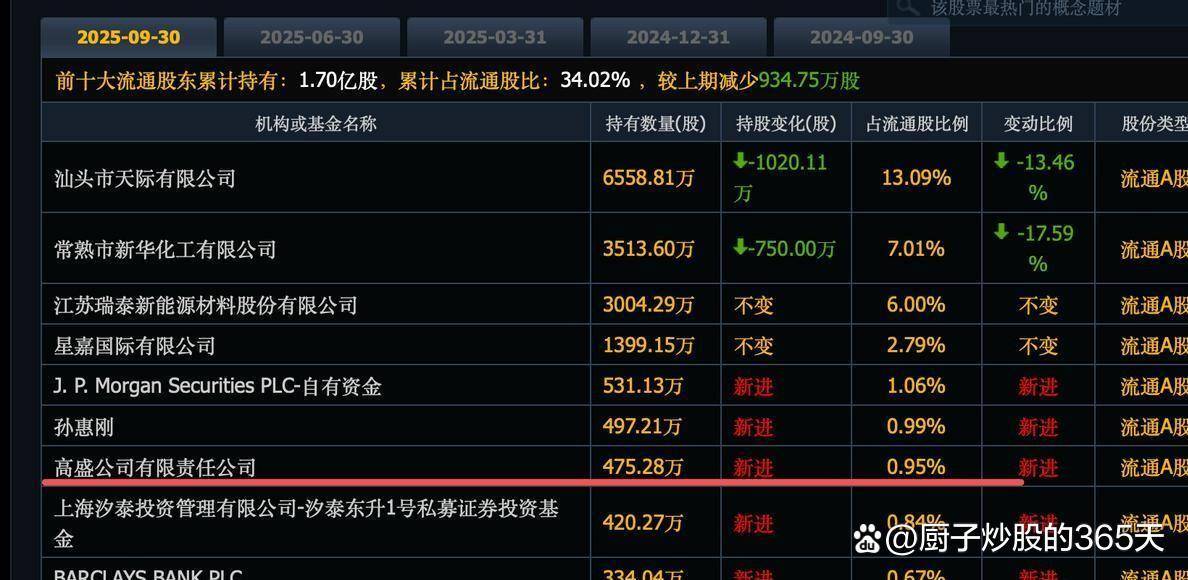
Core Viewpoint - The solid-state battery sector is experiencing significant growth driven by technological advancements and capital influx, with major companies and investors actively participating in this emerging market [2][11]. Group 1: Market Performance - The solid-state battery index surged from 1200 points to 2426 points between April and October, nearly doubling in value [2]. - Leading companies in the sector, such as Guoxuan High-Tech and Yiwei Lithium Energy, have seen market capitalizations increase by over 120% [2]. - On a single day, stocks like Hongyuan Pharmaceutical and Jujie Microfiber rose by 20%, showcasing the sector's strong performance [3]. Group 2: Institutional Investment - Goldman Sachs has made significant investments in companies like Haike New Source, Tianji Co., and Kosen Technology, which have all reached their daily price limits [2]. - The top ten shareholders of a specific stock hold 170 million shares, accounting for 34.02% of the circulating shares, indicating strong institutional interest [1]. Group 3: Technological Advancements - Recent breakthroughs in solid-state battery technology include Guoxuan High-Tech's first all-solid-state pilot line and Jinshi's high yield rate of 90% in trial production [2][4]. - Yiwei Lithium Energy has introduced the "Longquan No. 2" 10Ah all-solid-state battery, achieving an energy density of 300Wh/kg, targeting high-end applications [3]. Group 4: Industry Support and Policy - The Chinese government has issued policies supporting the development of solid-state batteries, including the "2025-2026 Action Plan for Stable Growth in the Electronic Information Manufacturing Industry" [4]. - The industry is expected to see a significant increase in production, with projections of 7GWh in 2024 and 30GWh by 2028 [10]. Group 5: Challenges and Future Outlook - Despite the promising outlook, challenges remain, including high production costs and the need for technological maturity [8]. - Industry experts predict that solid-state batteries will begin to see commercial applications in high-end consumer electronics and electric vehicles within the next 3 to 5 years [9].



2.6GWh、中标人9至10家!中国移动2026~2028年通信用锂电池集采
中关村储能产业技术联盟· 2025-12-27 11:54
Core Viewpoint - China Mobile has announced a centralized procurement project for lithium iron phosphate batteries for communication from 2026 to 2028, with a procurement scale of approximately 8.229 billion Ah (2.633 GWh) [2][4]. Group 1: Procurement Details - The number of winning bidders is set to be between 9 to 10, with share allocations varying based on the number of bidders. If 9 companies win, the shares will be 17.07%, 14.63%, 13.41%, 12.20%, 10.98%, 9.76%, 8.54%, 7.32%, and 6.09%. If 10 companies win, the shares will be 15.63%, 13.54%, 12.50%, 11.46%, 10.42%, 9.38%, 8.33%, 7.29%, 6.25%, and 5.20% [2][4][5]. - The highest bid limit is set based on the average market price of lithium iron phosphate and electrolyte as of the last pricing cycle before the bid submission deadline [5]. Group 2: Bidder Qualifications - Bidders must be legally established independent entities within the People's Republic of China and must be manufacturers, as agent bids and joint bids are not accepted [6][7]. - Bidders must provide a complete range of capacity specifications for the lithium iron phosphate battery products, with a sales performance of no less than 50 million RMB in the domestic market from July 1, 2022, to June 30, 2025 [6][7]. Group 3: Submission and Evaluation Process - Bids must be submitted electronically through China Mobile's procurement system, with a deadline set for February 9, 2026, at 10:00 AM [11]. - The evaluation of bids will include a qualification review, and any bids that do not pass this review will be rejected [10].



2025年国内锂电产业链投资超8200亿
高工锂电· 2025-12-27 07:41
Core Viewpoint - The lithium battery industry in China is experiencing significant growth, with total planned investments exceeding 820 billion yuan by 2025, marking a year-on-year increase of over 74% [2]. Investment Overview - A total of 282 investment projects across the entire lithium battery industry chain are expected by 2025, with over 80% of the investment focused on lithium batteries and key materials [2]. - The planned total investment for the year is projected to reach 348.5 billion yuan, reflecting a 92% year-on-year increase [3]. Lithium Battery Sector - Approximately 64 new lithium battery projects are planned in China for 2025, with a total planned capacity exceeding 1,100 GWh, representing a 105% year-on-year growth [2]. - Major companies such as CATL, EVE Energy, and others have announced new capacity expansion plans, indicating a positive industry expansion signal [4]. Lithium Battery Materials - The planned investment in lithium battery materials, including cathode materials, anode materials, electrolytes, separators, and copper foil, is expected to reach 308.5 billion yuan, a 127% increase year-on-year [4]. - The demand for high-density, long-cycle-life cathode materials is driving rapid capacity expansion, while the electrolyte sector is experiencing growth due to supply-demand adjustments and rising production costs [5]. Solid-State Battery Sector - About 60 new solid-state battery projects are planned for 2025, with a total planned capacity of 189 GWh and a total investment of approximately 67.7 billion yuan, which is a 9% decrease year-on-year [7]. - Despite the decrease in investment, capacity planning has increased by 23%, attributed to breakthroughs in key processes that lower equipment costs [8]. Sodium Battery Sector - The sodium battery sector is set to see 42 new projects with a planned capacity exceeding 290 GWh and total investment surpassing 100 billion yuan, with all three metrics showing significant year-on-year growth [11]. - Key drivers for the rapid development of sodium batteries include continuous technological breakthroughs, increased application penetration, and cost advantages due to the rising prices of lithium materials [11].

跨越“死亡之谷”:知识产权如何从“数量大国”迈向“价值强国”?
第一财经· 2025-12-27 01:38
Core Viewpoint - Innovation is the primary driving force for development, and intellectual property (IP) is the core institutional arrangement that guarantees and incentivizes continuous innovation. China is transitioning from a major IP importer to a strong IP creator, focusing on quality over quantity in IP development [3]. Group 1: Challenges in IP Transformation - There exists a "valley of death" between the vast number of patents and their successful commercialization, highlighting a critical pain point in the current IP landscape [5]. - Universities face challenges in translating research outcomes into practical applications, often lacking incentives for researchers to pursue commercialization [6]. Group 2: Strategies for Overcoming IP Challenges - A new approach is needed for IP transformation, emphasizing collaboration between academia and industry to align research with market needs [7]. - The National Intellectual Property Administration is promoting three key initiatives: deepening patent open licensing trials, building a comprehensive IP financial ecosystem, and enhancing data-driven matching of supply and demand [8]. Group 3: IP Management in Listed Companies - Listed companies face three main challenges: a large number of patents that lack quality and competitive barriers, potential disputes due to inadequate IP due diligence in mergers and acquisitions, and a focus on closed R&D rather than open innovation [9]. - Companies should adopt three strategic shifts: prioritize quality in patent development, integrate IP departments into strategic decision-making, and invest in early-stage technology projects through corporate venture capital [10]. Group 4: Case Studies of Effective IP Management - EVE Energy has established a comprehensive IP management system that supports its competitive advantage in the cylindrical battery sector, ensuring protection across the entire production and sales process [10]. - New Industries emphasizes proactive engagement of IP departments in the R&D process, providing insights that enhance innovation and mitigate risks [11]. - High-tech companies like Han's Laser focus on developing high-quality patents, discarding outdated ones to maximize the value of their IP [11]. Group 5: Evolving IP Dispute Resolution - The landscape of IP dispute resolution is becoming more complex, especially for companies expanding internationally, necessitating awareness of varying legal protections in different markets [12]. - Companies are encouraged to adopt arbitration clauses to manage disputes effectively while promoting their technologies abroad [12].

氢氨醇行业跟踪报告(一):绿色甲醇:从规划到量产,资源、技术、客户缺一不可
EBSCN· 2025-12-26 13:34
Investment Rating - The report does not explicitly state an investment rating for the green methanol industry, but it highlights significant growth potential and investment opportunities in the sector. Core Insights - The global scale of green and low-carbon methanol projects is rapidly increasing, with a total planned capacity of 56.3 million tons by November 2025. GENA Solutions estimates that actual global green methanol capacity could reach between 6 to 13 million tons by 2030, with securing purchase agreements and financing for construction being the main challenges for project realization [5][14][25]. - Biomass methanol technology's gasification stage is critical, as its technical level and operational stability directly impact project feasibility and economics. Balancing costs and carbon utilization rates based on raw material characteristics is essential for project success. Electrolytic methanol technology is mature and synergizes well with renewable energy, but high costs of water electrolysis and complex system integration hinder large-scale promotion, making the reduction of electricity costs a priority [5][31][49]. - A complete core loop of resources, technology, and customers is essential for green methanol projects from planning to production. In the context of high costs for green methanol, finding end customers willing to pay a green premium and signing long-term purchase agreements to secure future cash flows is crucial for stable commercial operations [5][64]. Summary by Sections 1. Green Methanol Capacity Scale Steadily Increases - The production methods for methanol include natural gas (dominant globally), coal (high domestic share in China), and green methanol (biomass or electrolytic, lower carbon emissions but higher costs). The future trend focuses on "carbon neutrality," with renewable electricity and biomass routes accelerating towards mainstream production after cost reductions [8][19]. 2. Biomass Methanol: Gasification is Key, Cost Reduction and Efficiency Improvement are Directions - Gasification is the core process for biomass methanol production, involving four key steps: pretreatment, gasification, gas purification and adjustment, and methanol synthesis and purification. The efficiency of gasification directly affects project production efficiency and unit costs [31][74]. 3. Electrolytic Methanol: Cost Reduction is the Top Priority - Electrolytic methanol technology typically captures CO2 from biomass power plant emissions and combines it with hydrogen produced from renewable energy through electrolysis. While the technology is mature and synergizes well with renewable energy, high costs associated with hydrogen production and carbon capture present significant challenges for large-scale promotion [49][58]. 4. From Planning to Production: Resources, Technology, and Customers are Indispensable - The Northeast region of China is a key area for green methanol projects, supported by abundant biomass, wind, and water resources. Local government policies further accelerate industry clustering, creating a dual policy dividend of "national subsidies + local matching" [64][79]. 5. Investment Recommendations - Companies that have preemptively laid out green methanol manufacturing and have products certified (e.g., RED, ISCC) are highlighted as key investment targets, including JinFeng Technology, China Tianying, Jilin Electric Power, and others [5][64].




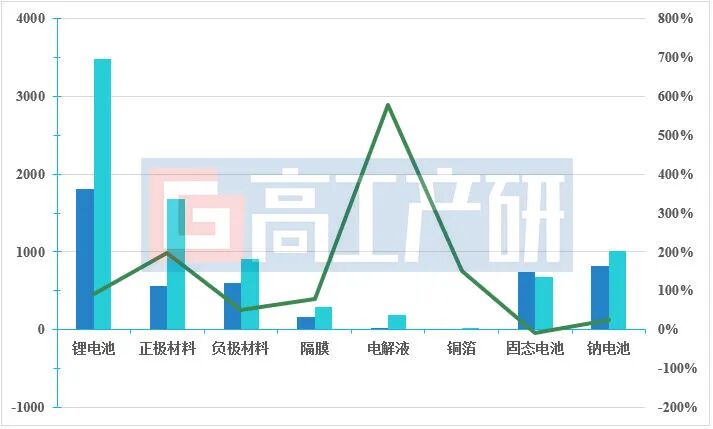
GGII:2025年我国锂电产业链全环节公开投资项目超282个 总投资额同比增长超74%
智通财经网· 2025-12-26 09:28
Group 1: Overall Investment Trends - In 2025, China's lithium battery industry chain is expected to have over 282 publicly announced investment projects with a total investment exceeding 820 billion yuan, representing a year-on-year growth of over 74% [1] - Lithium batteries and their main materials will remain the primary focus of investment, accounting for over 80% of the total investment [1] Group 2: Lithium Battery Sector - Approximately 64 new lithium battery projects are planned in China for 2025, with a total planned capacity exceeding 1100 GWh, marking a year-on-year increase of 105% [1] - The total planned investment for lithium batteries in 2025 is projected to reach 348.5 billion yuan, a year-on-year increase of 92% [1] - Major companies like CATL, EVE Energy, and others have announced new capacity expansion plans, signaling positive industry growth [1] Group 3: Lithium Battery Materials - Investment in lithium battery materials, including cathodes, anodes, electrolytes, separators, and copper foils, is expected to reach 308.5 billion yuan in 2025, a year-on-year increase of 127% [1] - The demand for high-pressure density and long-cycle life products in cathode materials is driving rapid capacity expansion [1] - The electrolyte sector is experiencing growth due to supply-demand adjustments and rising production costs from raw material price increases [1] Group 4: Solid-State Battery Sector - In 2025, around 60 new solid-state battery projects are planned, with a total capacity of 189 GWh and a total investment of approximately 67.7 billion yuan, reflecting a year-on-year decrease of 9% in investment [2] - Despite the decrease in investment, capacity planning has increased by 23% due to breakthroughs in key processes and cost reductions [2] Group 5: Sodium Battery Sector - The sodium battery sector is set to see 42 new projects in 2025, with a planned capacity exceeding 290 GWh and total investment exceeding 100 billion yuan, all showing significant year-on-year growth [3] - Key drivers for the rapid development of sodium batteries include continuous technological breakthroughs and cost advantages over lithium batteries [3] Group 6: Regional Investment Distribution - In 2025, lithium battery investment projects are primarily concentrated in East and Central China, with regions like Fujian, Shandong, and Jiangsu leading the way [6] - The Southwest region, particularly Sichuan, is becoming a hub for lithium battery materials, accounting for 59% of investment in cathode materials [7] - The overseas expansion of Chinese lithium battery companies is focused on regions like Thailand and Europe, driven by favorable local conditions and demand [6][8] Group 7: Future Outlook - The lithium battery industry is expected to emerge from a two-year period of supply-demand imbalance and price declines, with a healthy growth cycle anticipated starting in 2026 [13] - The demand for solid-state batteries and sodium batteries is expected to accelerate, with significant growth projected in their respective markets [13]
亿纬锂能涨2.05%,成交额18.18亿元,主力资金净流入8223.93万元
Xin Lang Cai Jing· 2025-12-26 03:05
Core Viewpoint - EVE Energy Co., Ltd. has seen a significant increase in stock price and trading activity, indicating strong market interest and potential growth in the battery sector [1][2]. Group 1: Stock Performance - EVE Energy's stock price increased by 57.20% year-to-date, with a recent 5-day increase of 5.47% and a 20-day increase of 1.26%, although it has decreased by 11.04% over the past 60 days [2]. - As of December 26, the stock was trading at 72.31 CNY per share, with a market capitalization of 149.98 billion CNY [1]. Group 2: Financial Performance - For the period from January to September 2025, EVE Energy reported a revenue of 45.002 billion CNY, representing a year-on-year growth of 32.17%, while the net profit attributable to shareholders was 2.816 billion CNY, a decrease of 11.70% year-on-year [2]. - The company has distributed a total of 3.643 billion CNY in dividends since its A-share listing, with 2.866 billion CNY distributed over the past three years [3]. Group 3: Shareholder Information - As of September 30, 2025, EVE Energy had 187,500 shareholders, an increase of 34.21% from the previous period, with an average of 9,929 circulating shares per shareholder, a decrease of 25.49% [2]. - Major shareholders include Hong Kong Central Clearing Limited, which holds 48.9094 million shares, and several ETFs, with notable reductions in holdings from previous periods [3].
电池龙头ETF(159767)近一年收益率达60%!新能源动力电池将迎来万亿级市场空间
Jin Rong Jie· 2025-12-26 02:54
Group 1 - The core viewpoint of the articles highlights the strong performance of the photovoltaic equipment and new energy battery sectors, with significant gains in related stocks such as BYD and Tianhua New Energy, reflecting a robust market for new energy vehicles and batteries [1] - The Xinyin Guozheng New Energy Vehicle Battery ETF (159767) has achieved a one-year return of 59.33%, indicating strong investor interest and market confidence in the sector [1] - The fund manager emphasizes the substantial market potential for power batteries, projected to reach trillions, driven by increasing penetration of new energy vehicles, clear policy support, accelerated technological iterations, and enhanced global competitiveness of Chinese companies [1] Group 2 - The battery leader ETF (159767) closely tracks the Guozheng New Energy Vehicle Battery Index, which reflects the market performance of listed companies in the new energy vehicle battery industry in the A-share market [2] - The ETF consists of 30 constituent stocks, with the top ten holdings including CATL, BYD, and Ganfeng Lithium, showcasing a diversified investment in leading companies within the sector [2] - The current management and custody fees for the battery leader ETF are 0.60% per year, which is lower than the industry average, making it suitable for both retail and professional investors [2]



储能与锂电2026年度策略:能源转型叠加AI驱动,周期反转步入繁荣期
2025-12-26 02:12
Summary of Key Points from the Conference Call Industry Overview - The conference call focuses on the energy storage and lithium battery industry, highlighting the expected growth and transformation driven by energy transition and AI demand [1][2][3]. Core Insights and Arguments - **AI and Energy Storage Demand**: The demand for energy storage in data centers is expected to surge due to the rapid increase in AI computing power and the slow expansion of the power grid in Europe and the US. By 2026, the AI-related energy storage demand in the US is projected to reach 59 GWh, with 46 GWh for front-of-the-meter and 13 GWh for behind-the-meter applications [1][2][11]. - **Shift in Data Center Energy Needs**: Data centers are transitioning from using energy storage primarily as backup power to utilizing it for peak shaving, frequency regulation, and grid support. Current requirements include at least 2 hours of storage, with some aggressive setups using lithium batteries for 6-8 hours of power [4]. - **Global Energy Storage Market Growth**: The global energy storage market is expected to reach 438 GWh by 2025, with China accounting for 250 GWh, reflecting a 67% year-on-year growth. The US market is projected to reach 70 GWh, and Europe 51 GWh [7][8]. - **Impact of US Trade Policies**: The US "Inflation Reduction Act" has introduced new standards that limit foreign ownership in companies participating in subsidy programs, pushing the US market to seek supply chains outside of China, although reliance on Chinese supply chains will remain high in 2026 [6][11]. Additional Important Insights - **European Net Zero Industrial Act**: This act encourages the use of local production capacities and scores non-EU supply chains, benefiting Chinese companies establishing factories in Europe. The cost of solar plus storage has fallen below that of gas turbines, leading to an expected installation growth rate of over 70% in 2026 [3][10]. - **Lithium Battery Industry Recovery**: The lithium battery industry is in a recovery phase, with expected shipment growth of 30-50% in 2026. The industry is projected to enter a prosperous phase, with a 25% overall growth rate, driven by a 15% increase in power demand and a 56% increase in storage demand [3][22]. - **Emerging Markets**: Regions such as Australia, the Middle East, and Latin America are showing strong growth potential in energy storage, with Australia increasing its capacity targets and significant projects underway in the Middle East and Chile [12][13]. - **Supply Chain Dynamics**: The supply chain for lithium battery materials is expected to see significant price increases, particularly in lithium hexafluorophosphate and separators, which are crucial for battery production. The current market conditions suggest a tight balance in supply and demand for these materials [27][29]. Recommendations for Investment - Companies to watch include CATL, EVE Energy, and Xinwangda, which are positioned well in the energy storage and lithium battery markets. The separator sector is also highlighted as a key area for investment due to its high profit margins and limited new capacity until 2028 [24][25]. This summary encapsulates the critical insights and projections discussed during the conference call, providing a comprehensive overview of the energy storage and lithium battery industry's current state and future outlook.
法国、意大利补贴落地后BEV高速增长 | 投研报告
Zhong Guo Neng Yuan Wang· 2025-12-26 02:05
Core Insights - The report highlights a sustained high growth in electric vehicle (EV) sales across nine European countries in November 2025, with a total of 281,000 new energy vehicles sold, representing a year-on-year increase of 38.6% and a penetration rate of 34.3%, up by 9.0 percentage points [1][2]. Group 1: Sales Performance - In November 2025, battery electric vehicle (BEV) sales reached 190,000 units, marking a year-on-year increase of 40.5%, while plug-in hybrid electric vehicle (PHEV) sales totaled 91,000 units, up by 35.0% [1][2]. - Germany's BEV sales were 56,000 units, a significant year-on-year increase of 58.5%, and PHEV sales were 32,000 units, up by 57.4% [2][3]. - France's BEV sales reached 34,000 units, reflecting a year-on-year growth of 47.5%, with a penetration rate of 25.8%, an increase of 8.4 percentage points [3]. Group 2: Market Drivers - The implementation of subsidies in France and Italy has led to a rapid increase in BEV sales, with Italy experiencing a remarkable year-on-year growth of 131.4% in BEV sales, totaling 15,000 units [3]. - The UK has restarted EV subsidies and is under pressure from zero-emission vehicle (ZEV) targets, which is expected to sustain growth in EV sales in the coming months [2][3]. - Norway is anticipated to see a surge in electric vehicle purchases as the year-end approaches, driven by consumer demand [1][2]. Group 3: Future Outlook - The European Commission's proposal to adjust the 2035 emission reduction targets is not expected to hinder the long-term trend of electrification in Europe; instead, it may promote sales of small electric vehicles [4]. - New generations of pure electric models are set to be launched by various automakers from late 2025 to the first half of 2026, which is likely to boost the European EV market [4]. Group 4: Investment Recommendations - Investment recommendations include companies involved in lithium batteries, lithium materials, battery structural components, power/electric drive systems, automotive safety components, and charging infrastructure [4]. - Specific companies recommended for investment in lithium batteries include CATL, EVE Energy, and Xinwangda, while lithium material companies include Hunan Youneng and Tianci Materials [4].