
CATL(300750)

Search documents
商用车电动化进入深水区:物流场景倒逼电池技术升级,补能网络建设同步加速
Zhong Guo Neng Yuan Wang· 2025-12-25 06:47
Core Viewpoint - The logistics sector is accelerating its transition to electric vehicles, driven by the need for green and low-carbon solutions, with significant involvement from leading battery manufacturers like CATL and EVE Energy [1][2]. Group 1: Strategic Collaborations - Multiple battery manufacturers have engaged in strategic partnerships within the logistics sector this year, such as the collaboration between Dola Haoyun and BYD's Fudi Battery to enhance electric commercial vehicle solutions [2]. - JD Group has signed a strategic cooperation agreement with CATL to explore high-quality development paths in the logistics industry, focusing on the electrification of urban distribution vehicles [2]. - EVE Energy and SF Express have also formed a strategic partnership to promote the integration of new energy technologies with modern logistics systems [3]. Group 2: Battery Performance Requirements - The demand for power batteries in logistics vehicles is increasing, driven by the need for zero emissions and lower operational costs [4]. - Logistics companies are increasingly incorporating electric vehicles into their fleets, with significant interest in electric heavy-duty trucks for high-energy, fixed-route transport scenarios [4]. - The logistics sector's unique operational demands require batteries with higher performance standards, including longer range, faster charging, and lighter weight [5][7]. Group 3: Charging Infrastructure Development - The development of a robust charging network is essential for the efficient operation of electric logistics vehicles, with calls for improved infrastructure at logistics parks and distribution centers [7][8]. - The National Development and Reform Commission has emphasized the need for planning and constructing high-power charging facilities for logistics and heavy-duty freight [8]. - Industry experts believe that the green transition in logistics will require collaborative efforts across the entire supply chain to address challenges such as charging convenience and range anxiety [8].


德铁买中国大巴德国财长这么说,中企如何“迎难而上”
Di Yi Cai Jing· 2025-12-25 06:41
Group 1 - The core viewpoint of the article highlights the growing interest of Chinese companies in investing in Germany, particularly in sectors like electric vehicles and digitalization, as evidenced by the recent agreement between Deutsche Bahn and BYD for 200 electric buses [1][2] - Deutsche Bahn's decision to partner with BYD is driven by cost-effectiveness and the aim to support Germany's green transition and carbon reduction goals, coinciding with the EU's relaxation of the "fuel vehicle ban" [1][2] - The German economy has shown signs of stagnation, with zero growth in Q3 compared to Q2, and a forecasted growth of only 0.1% for 2025, prompting discussions on economic restructuring [2][3] Group 2 - Foreign investment in Germany is primarily motivated by the need for supply chain integration and access to the EU market rather than short-term high returns, with 1,724 foreign investment projects recorded in 2024, a slight decrease of 2% year-on-year [2][3] - The German government is actively seeking to attract more foreign investment through tax incentives and structural reforms, as outlined in the "Growth Opportunities Act" [2][3] - Recent changes in investment patterns show a shift from mergers and acquisitions to greenfield investments by Chinese companies, with a notable example being CATL's factory investment in Thuringia [3][4] Group 3 - Chinese companies are increasingly focusing on rational investment strategies, moving away from opportunistic investments, with key areas of interest including digitalization (51%), energy (48%), and electric vehicles (35%) [4][5] - Challenges for Chinese enterprises in Germany include site selection for factories or stores, accessing local government subsidies, and finding suitable labor [5][6] - The tightening of foreign investment regulations in Germany has created uncertainties for Chinese companies, with increased scrutiny on foreign acquisitions and data protection [6][7] Group 4 - German companies emphasize the importance of the Chinese market, with a notable trend of relocating operations to China, as seen with major firms like Volkswagen and BMW [7] - The dependency of the German economy on China remains significant, with a lack of clear structural de-risking trends observed [7]

2026年锂电行业四大关注点
Minmetals Securities· 2025-12-25 06:34
Investment Rating - The report rates the electric equipment industry as "Positive" [3] Core Insights - The lithium battery sector is expected to experience a new demand cycle and material iteration upgrade in 2026, driven by the growth in new energy vehicle demand and advancements in battery technology [2] - Key focus areas for 2026 include the outlook for lithium battery demand, the potential intensification of supply-demand balance, supply-side expansion conditions, and the limits of price increases under tight supply-demand conditions [2] Summary by Sections 2025 Review: Industry Bottom Confirmed, Energy Storage Battery Demand Exceeds Expectations - The lithium battery industry confirmed its bottom in 2025, with energy storage demand driving global battery shipments to approximately 2.26 TWh, a year-on-year increase of about 49% [13][16] - The supply side experienced a negative feedback loop in both quantity and price, leading to a tightening of supply and price increases in certain lithium materials [13][15] 2026 Supply and Demand Outlook: Tight Balance Continues, Four Key Issues - Demand for lithium batteries is expected to grow, particularly in commercial vehicles, which will enhance battery capacity per vehicle [20][23] - The supply-demand balance is likely to tighten further, with a projected battery shipment of over 2.7 TWh in 2026, reflecting a year-on-year growth of 22% [25][26] - Supply-side expansion is constrained due to general profitability and cash flow issues within the lithium battery industry, limiting aggressive capacity increases [37][41] 2026 Material Iteration Outlook: New Technologies Gradually Realizing - High-pressure lithium iron phosphate (LiFePO4) is expected to see increased industrialization in 2026, driven by the demand for fast-charging capabilities in electric vehicles [55] - Silicon-based anodes are anticipated to gain market share, with production expected to rise significantly in consumer applications [58] Investment Recommendations - The report suggests focusing on solid-state batteries, high-pressure LiFePO4, silicon-based anodes, and sodium batteries as key areas for investment in the evolving lithium battery landscape [2]
12月25日证券之星午间消息汇总:宁德时代宜春枧下窝锂矿预计春节前后复产
Sou Hu Cai Jing· 2025-12-25 03:45
Macro News - The People's Bank of China will conduct a 400 billion MLF operation with a one-year term to maintain ample liquidity in the banking system [1] - The Ministry of Finance plans to issue 600 billion of 2025 book-entry discount treasury bonds, with a competitive bidding process set for December 24, 2025 [1] Industry News - Eight departments, including the People's Bank of China, released opinions to support the high-quality development of the Western Land-Sea New Corridor, proposing 21 key measures to enhance financial functions [3] - CATL's Yichun lithium mine is expected to resume production around the Spring Festival after a pause due to the expiration of its mining license [4] - NVIDIA is reportedly set to acquire AI chip startup Groq for approximately $20 billion, marking its largest acquisition to date [5][6] Sector Insights - CITIC Securities reports that fluctuations in raw material prices will have a limited impact on the profit margins of white goods, as rising copper and aluminum prices are offset by falling plastic prices [7] - Caixin Securities highlights the brain-computer interface industry as a high-growth sector, driven by strong policy support and technological breakthroughs, with domestic companies achieving competitive levels [7] - Guosen Securities anticipates that the domestic offshore wind power market will see new installations rise to 11-15 GW in 2026, with a year-on-year increase exceeding 40% [7]
3年50GWh!宁德时代与思源电气签署储能合作备忘录
Bei Jing Shang Bao· 2025-12-25 03:05
北京商报讯(记者 马换换 王蔓蕾)12月25日,据宁德时代官微消息,近日,公司与思源电气签署为期 三年的储能合作备忘录,目标合作电量50GWh。双方将基于各自传统优势领域,推广储能市场化双采 模式,共同提升产业链协同效率。 宁德时代表示,未来三年,双方将围绕储能系统、输配电等配套设备,实现产业链上下游的双向协同。 在此基础上,双方还将加强技术交流与项目合作,持续优化整体解决方案能力,提升项目交付效率与可 靠性,加速储能系统在新型电力网络中的规模化应用。 据了解,思源电气也系A股龙头公司,专注于电力领域的技术研发、设备制造及工程服务。 ...

3年50GWh!宁德时代与思源电气签署储能合作备忘录
中关村储能产业技术联盟· 2025-12-25 02:38
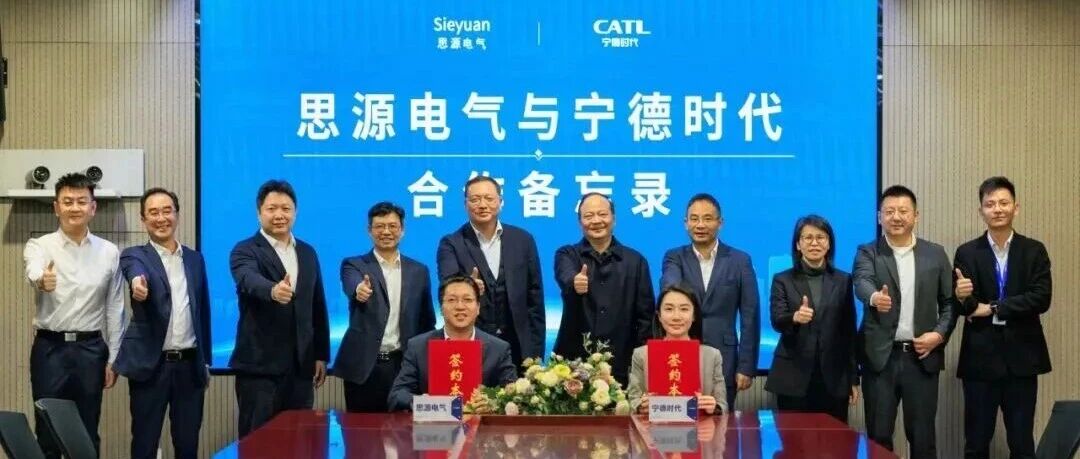
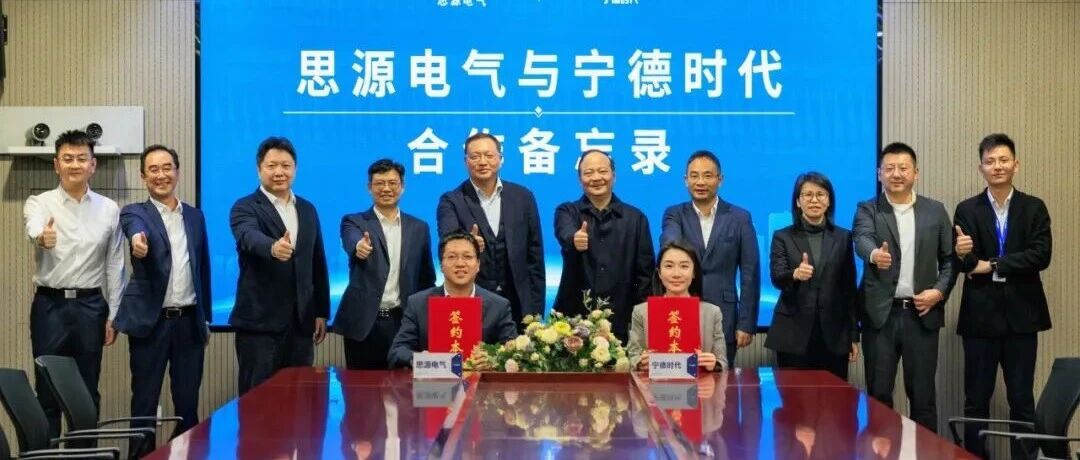
文 | 宁德时代 近日, 宁德时代与思源电气签署为期三年的储能合作备忘录,目标合作电量50GWh。 双方将基于各自传统优势领域,推广储能市场化双采模式,共同提升产业链协同效率,助 力储能行业高质量发展。宁德时代零碳能源事业部中国区副总经理李越、思源清能副总经 理李小兵代表双方签署协议,宁德时代董事长兼CEO曾毓群与思源电气董事长董增平共同 见证签约。 第十四届储能国际峰会暨展览会 ESIE 2026 时间: 202 6年3月3 1日- 4月3日 地点: 北京·首都国际会展中心 未来三年,双方将围绕储能系统、输配电等配套设备,实现产业链上下游的双向协同。 在此基础上,双方还将加强技术交流与项目合作,持续优化整体解决方案能力,提升项目 交付效率与可靠性,加速储能系统在新型电力网络中的规模化应用。 思源电气专注于电力领域的技术研发、设备制造及工程服务,积极推动能源行业的数字化 转型。此次宁德时代与思源电气签署合作备忘录,是双方继2022年建立合作以来的一次 战略性深化与全新探索,进一步强化了双方在储能产业链中的协同深度,同时也为行业探 索出一条更稳健、更高效、更可持续的生态合作新模式,以实际行动助力国家"双碳"目标 ...

3年50GWh,宁德时代与思源电气签署储能合作备忘录
鑫椤储能· 2025-12-25 02:36
未来三年,双方将围绕储能系统、输配电等配套设备,实现产业链上下游的双向协同。 在此基础上,双方还将加强技术交流与项目合作,持续优 化整体解决方案能力,提升项目交付效率与可靠性,加速储能系统在新型电力网络中的规模化应用。 关注公众号,点击公众号主页右上角" ··· ",设置星标 "⭐" ,关注 鑫椤储能 资讯~ 封面图 | 宁德时代 近日,宁德时代与思源电气签署为期三年的储能合作备忘录,目标合作电量50GWh。双方将基于各自传统优势领域,推广储能市场化双采模 式,共同提升产业链协同效率,助力储能行业高质量发展。宁德时代零碳能源事业部中国区副总经理李越、思源清能副总经理李小兵代表双方签 署协议,宁德时代董事长兼CEO曾毓群与思源电气董事长董增平共同见证签约。 预订电话:18964001371(微信同) 思源电气专注于电力领域的技术研发、设备制造及工程服务,积极推动能源行业的数字化转型。此次宁德时代与思源电气签署合作备忘录,是双 方继2022年建立合作以来的一次战略性深化与全新探索,进一步强化了双方在储能产业链中的协同深度,同时也为行业探索出一条更稳健、更 高效、更可持续的生态合作新模式,以实际行动助力国家"双碳" ...
3年50GWh 宁德时代与思源电气签署储能合作备忘录
Zheng Quan Shi Bao Wang· 2025-12-25 02:25
人民财讯12月25日电,据宁德时代(300750)消息,近日,宁德时代与思源电气(002028)签署为期三 年的储能合作备忘录,目标合作电量50GWh。双方将基于各自传统优势领域,推广储能市场化双采模 式,共同提升产业链协同效率,助力储能行业高质量发展。未来三年,双方将围绕储能系统、输配电等 配套设备,实现产业链上下游的双向协同。 ...
海内外全面开花,储能迈向市场化新阶段|2025中国经济年报
Hua Xia Shi Bao· 2025-12-25 02:20
Core Insights - The cancellation of mandatory energy storage requirements has not hindered the growth momentum of the energy storage industry, with both domestic and international markets experiencing unexpected growth in the second half of the year [2][4] - Energy storage is increasingly recognized for its economic value and importance in the consumption of green electricity, beyond just its role in energy transition [2] Industry Growth - The share of energy storage batteries in the lithium battery market has grown significantly, surpassing 25% in the first half of the year and reaching 28% in November [2] - Global lithium battery production reached 2058.44 GWh in the first 11 months of the year, a year-on-year increase of 48.59%, while cumulative production of energy storage batteries was 535.98 GWh, up 64.14% year-on-year [2] - The expected installed capacity of lithium energy storage in China for 2025 is projected to reach 157 GWh, representing an 82.9% year-on-year increase [2][4] Market Dynamics - The energy storage industry is transitioning from policy-driven growth to market-driven growth, with global lithium energy storage installations expected to reach 181 GWh in 2024, an 88% increase year-on-year [4] - China, Europe, and the United States account for approximately 90% of the energy storage market, with China holding a 50%-60% market share [4][5] - The European market is expected to see a significant increase in energy storage installations, with a projected growth rate of 92% and an addition of 48 GWh [4] Supply Chain and Production - Global energy storage cell shipments reached 410.45 GWh in the first three quarters of 2025, a year-on-year increase of 98.5%, with a record quarterly shipment of 170.24 GWh [5][6] - Chinese companies dominate the global energy storage cell market, with the top ten companies holding a market share of 89.9% [6] - The global energy storage battery market is expected to see a shipment volume of 746 GWh in 2026, with a year-on-year growth rate of 39% [6] International Expansion - Chinese companies are increasingly expanding into overseas markets, with significant growth in revenue from international operations, exemplified by CATL's overseas revenue rising from 0.59% to 30.48% of total revenue from 2015 to 2024 [7][8] - The overseas energy storage market is characterized by higher marketization and profitability due to significant price differentials between peak and off-peak electricity [8] - As of October 2025, 47 Chinese companies have signed or completed over 45 overseas strategic cooperation agreements, with a total scale of approximately 69 GWh [8]



海内外全面开花,储能迈向市场化新阶段
Zhong Guo Neng Yuan Wang· 2025-12-25 02:20
Core Insights - The cancellation of mandatory energy storage requirements has not hindered the growth momentum of the energy storage industry, with significant market expansion observed in both domestic and international markets in the second half of the year [1][2] - Energy storage is increasingly recognized for its economic value and importance in renewable energy consumption, with a notable rise in its share within the lithium battery market [1] Market Growth - The global lithium battery production reached 2058.44 GWh in the first 11 months of the year, marking a year-on-year increase of 48.59%, while the cumulative production of energy storage batteries was 535.98 GWh, up 64.14% year-on-year [1] - The energy storage battery's share of total lithium battery production exceeded 25% in the first half of the year and increased to 26% over the first 11 months, with November alone reaching 28% [1] - The expected installed capacity of lithium energy storage in China for 2025 is projected to reach 157 GWh, representing an 82.9% year-on-year growth [1] Regional Insights - China, Europe, and the United States account for approximately 90% of the energy storage market, with China holding a market share of 50%-60% [2] - The European market is expected to see a significant growth rate of 92%, with an anticipated addition of 48 GWh of installed capacity [2] - The U.S. market has experienced a slowdown in growth due to tariff fluctuations and lengthy project approval times, while the Middle East is emerging as a rapidly growing market driven by energy transition and decarbonization demands [3] Supply Chain Dynamics - In the first three quarters of 2025, global energy storage cell shipments reached 410.45 GWh, a year-on-year increase of 98.5%, with the third quarter setting a new record for quarterly shipments at 170.24 GWh [3] - Chinese companies dominate the global energy storage cell market, with the top ten companies holding a market share of 89.9% [4][5] Future Projections - The global energy storage battery shipment is expected to reach 746 GWh in 2026, with a year-on-year growth rate of 39% [5] - The global energy storage market is projected to have significant growth potential, with estimates suggesting that the peak annual installed capacity could exceed 1.5 TWh by 2035, indicating an 8.6 times growth potential from current levels [5] International Expansion - Chinese companies are increasingly expanding into overseas markets, with significant growth in international revenue observed, particularly for companies like CATL [6] - The overseas energy storage market is characterized by higher marketization levels and greater profit margins due to more pronounced peak-valley price differences [6] - As of October 2025, 47 Chinese companies have signed or completed overseas strategic collaborations and projects totaling approximately 69 GWh [6] Pricing Trends - The rising prices of energy storage cells reflect strong downstream demand, with major lithium battery material companies operating at full capacity [7] - Long-term contract negotiations for 2026 have already been completed, with price increases of 0.02-0.04 CNY per watt-hour compared to 2025 levels [7]