ASML Holding(ASML)

Search documents
ASML:如何应对贸易战
半导体芯闻· 2025-06-10 09:52
Core Viewpoint - ASML is facing significant challenges due to geopolitical tensions and trade policies, which could impact its market position and the global semiconductor supply chain [1][4][6]. Group 1: Geopolitical Challenges - The CEO of ASML, Christophe Fouquet, has expressed concerns about the uncertainty brought by U.S. trade policies, including tariffs that could increase the cost of ASML's essential lithography machines [1][2]. - The Dutch government has been involved in discussions regarding the export restrictions on ASML's equipment to China, which complicates trade negotiations [1][4]. - ASML's unique position as the sole manufacturer of complex lithography machines makes it a target in the ongoing tech trade war between the U.S. and China [1][4]. Group 2: Business Performance and Projections - ASML reported a record revenue of €28.3 billion (approximately $32.3 billion) last year and anticipates sales could reach between €44 billion to €60 billion by 2030 [6]. - Despite the growth in demand for AI chips, concerns remain about the sustainability of this demand and the high costs associated with ASML's machines, which are priced at around $400 million each [6][8]. - The company's stock has seen a decline of about 25% over the past year, reflecting market uncertainties [6]. Group 3: Supply Chain and Innovation - ASML's advanced lithography machines utilize extreme ultraviolet (EUV) technology, which is critical for manufacturing microchips, and require components from hundreds of international suppliers [5][8]. - The company is actively lobbying for more support from the EU and Dutch government to mitigate the impacts of U.S.-China trade tensions on the semiconductor industry [4][8]. - There are concerns that U.S. export bans could inadvertently strengthen China's domestic semiconductor capabilities, as Chinese companies are investing heavily in developing their own lithography technology [9][11].


颠覆性技术,让芯片制造速度提高15倍!
半导体行业观察· 2025-06-10 01:18
Core Viewpoint - Inversion Semiconductor aims to develop a compact, high-performance light source based on laser wakefield acceleration (LWFA) technology, claiming its power will be 10 times higher than ASML's current EUV sources, potentially revolutionizing semiconductor manufacturing [4][24]. Group 1: Company Overview - Inversion Semiconductor, founded in 2024 by Rohan Karthik and Daniel Vega, is backed by Y Combinator and focuses on creating a new type of light source for advanced lithography [7][24]. - The company plans to utilize a "tabletop" particle accelerator that is 1,000 times smaller than traditional accelerators but can output up to 10 kW of power [4][8]. Group 2: Technology and Innovation - The proposed technology can increase chip manufacturing speed by 15 times, allowing for the powering of multiple lithography tools simultaneously, thus reducing costs [4][25]. - Inversion's light source can generate wavelengths between 20 nm and 6.7 nm, including the 13.5 nm light currently used in ASML's EUV tools [8][24]. - The LWFA method used by Inversion is distinct from traditional methods, producing coherent and monochromatic radiation that is crucial for next-generation lithography systems [12][24]. Group 3: Challenges and Considerations - The development of such a light source requires petawatt-level laser systems, which are complex, expensive, and energy-intensive, posing significant challenges for Inversion [5][21]. - Inversion must either collaborate with ASML or develop its own lithography systems, which would require creating a new ecosystem and could be time-consuming and costly [5][25]. - The company lacks experience in building high-volume, reliable wafer fabrication equipment, which is critical for the semiconductor industry [5][22][25].
ASML称中国早已研发国产光刻机:中科院成功研发DUV光源技术,能生产3nm
是说芯语· 2025-06-09 07:53
Core Viewpoint - ASML's CEO acknowledges that China has developed domestic lithography equipment, indicating that while there is still a long way to go to catch up with ASML's technology, U.S. measures to suppress China may lead to increased efforts from China to succeed [1] Group 1: Chinese Technological Advancements - The Chinese Academy of Sciences has successfully developed a breakthrough solid-state DUV laser capable of emitting coherent light at 193nm, aligning with the mainstream DUV exposure wavelength, which can advance semiconductor processes to 3nm [1][2] - The developed technology achieves an average laser power of 70mW, a frequency of 6kHz, a linewidth of less than 880MHz, and a full width at half maximum (FWHM) of less than 0.11pm, with spectral purity comparable to existing commercial excimer laser systems [1] Group 2: Comparison with ASML Technology - The solid-state DUV light source technology has been published on the International Society for Optics and Photonics (SPIE) website, showing that while spectral purity is nearly on par with commercial standards, output power and frequency are still significantly lower [4] - Compared to ASML's technology, the frequency achieved is about 2/3, but the output power is only at 0.7% level, indicating that further iterations and improvements are necessary for practical application [4]
阿斯麦CEO:美国的打压措施只会适得其反,让中国“更努力取得成功”
Huan Qiu Wang Zi Xun· 2025-06-06 22:09
Core Insights - ASML's CEO Christophe Fouquet stated that despite China's efforts to catch up technologically, U.S. measures to suppress China will only motivate them to succeed more [1] - ASML is the only manufacturer of high-end lithography machines globally, with a product cost of up to $400 million and a record revenue of €28.3 billion last year [1] - ASML's sales to China are expected to drop from nearly 50% of its annual revenue to about 25% due to trade restrictions [1] Company Overview - ASML's projected sales could reach between €44 billion to €60 billion by 2030 [1] - The company is seen as a geopolitical pawn, with some products restricted from export to certain countries [1] - The CEO emphasized the importance of innovation over merely suppressing competitors like China [1] Industry Context - The semiconductor supply chain is described as global and interconnected, with U.S. export bans potentially slowing technological development and increasing costs for all countries [1] - The impact of tariffs from the Trump administration has created additional challenges and uncertainty, hindering U.S. efforts to build chip factories [2] - The CEO highlighted that tariffs lead to increased costs, making domestic chip production less viable [2]
ASML: Not Even The Geopolitical Storm Can Stop This Machine
Seeking Alpha· 2025-06-06 16:08
Group 1 - The article discusses the investment perspective of a German investor with a background in engineering and management, highlighting the ability to understand and interpret both economic and technological aspects of companies [1] Group 2 - The investor has a beneficial long position in ASML shares, indicating confidence in the company's future performance [2]

10 AI Stocks I'd Buy Without Hesitation
The Motley Fool· 2025-06-05 09:30
Core Insights - The AI sector is at a pivotal moment, with early leaders distinguishing themselves and presenting significant investment opportunities across the AI value chain [1][2] - Companies leveraging AI are experiencing substantial productivity gains, while those that do not adopt AI risk becoming obsolete [2] - The total addressable market for AI is in the trillions, but current adoption levels are still early, creating a unique investment window [2] Company Summaries - **Nvidia** dominates the data center GPU market with a share of 70% to 90%, reporting record revenue of $44.1 billion in Q1 fiscal 2026, with data center revenue up 73% year-over-year [5][6] - **ASML Holding** is the sole manufacturer of extreme ultraviolet lithography machines, ensuring a significant market share and multiyear revenue visibility due to a substantial backlog [7][8] - **Microsoft** is monetizing AI through its Copilot subscriptions, generating billions in revenue shortly after launch, leveraging its vast distribution network of 1.5 billion Office users [9] - **Lemonade** utilizes AI to enhance insurance operations, processing 70% of claims instantly, leading to improved loss ratios and lower operational expenses compared to traditional insurers [10][11] - **SoundHound AI** has seen over 80% annual revenue growth by providing voice AI technology, with a focus on edge-computing to address privacy and latency concerns [12] - **Palantir Technologies** is experiencing over 70% annual commercial revenue growth, driven by its AI platforms that address security concerns in corporate AI adoption [13] - **Applied Digital** operates specialized data centers for AI workloads, securing long-term contracts for its entire 400MW capacity, positioning itself for predictable revenue growth [14] - **Oklo** develops small modular reactors to meet the energy demands of AI data centers, with each reactor providing 15MW to 50MW of clean power [15] - **CoreWeave** focuses on GPU-accelerated cloud computing, projecting $5 billion in revenue for 2025, with expectations of doubling to $11.6 billion in 2026 [16] - **BigBear.ai** applies AI in defense and commercial analytics, reporting Q1 2025 revenue of $34.8 million and maintaining a $385 million backlog for long-term revenue visibility [17] Investment Strategy - The identified companies represent various layers of the AI ecosystem, from infrastructure to specialized applications, showcasing strong fundamentals and clear growth paths [18]






ASML vs. TXN: Which Semiconductor Stock Is the Better Buy Now?
ZACKS· 2025-06-04 13:15
Core Insights - ASML Holding and Texas Instruments are significant players in the semiconductor industry, with ASML focusing on advanced chip manufacturing equipment and Texas Instruments on analog and embedded chips [1][2] ASML Holding - ASML has a unique advantage in the chip equipment market as the only company capable of producing extreme ultraviolet (EUV) lithography machines at scale, essential for manufacturing chips at 5nm, 3nm, and soon 2nm levels [3][4] - The company is launching next-generation High-NA EUV machines, which will cater to the increasing demand for smaller and more efficient chips, particularly driven by AI growth [4] - In Q1 2025, ASML reported a revenue growth of 46% and a 93% increase in earnings per share, with an expected revenue increase of 15% for the full year [5] - ASML's exposure to China is a concern, as 41% of its shipments were to China in 2024, and U.S. export restrictions may limit future sales in that market [6] Texas Instruments - Texas Instruments focuses on analog and embedded chips, which are essential but exhibit slower growth compared to ASML's offerings [7] - The company derives 70% of its Q1 2025 revenues from industrial and automotive markets, with long-term growth opportunities in robotics, electric vehicles, and infrastructure automation [7][8] - In Q1 2025, Texas Instruments experienced an 11% revenue growth and a 6.7% rise in earnings per share, but these figures lag behind ASML's performance [10] - The personal electronics segment is underperforming, with revenues falling by mid-teens sequentially due to weak consumer demand and excess inventory [9] Financial Estimates and Valuation - ASML's 2025 sales and EPS estimates imply year-over-year growth of 21.5% and 30.5%, respectively, while Texas Instruments' estimates call for a 10.6% sales increase and a 6.7% EPS rise [13][16] - Year-to-date, ASML shares have increased by 7.7%, outperforming Texas Instruments' 0.5% rise [18] - ASML trades at a forward P/E multiple of 26.10X, lower than its three-year median, while Texas Instruments trades at a higher P/E of 32.14X, which is difficult to justify given its slower growth [20] Conclusion - ASML is positioned as the better investment option due to its unique technology, strong earnings growth, and favorable valuation, particularly in the context of increasing demand for AI and advanced chips [22]

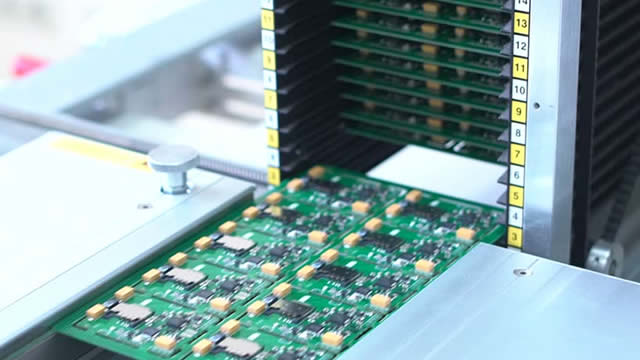
ASML Is The Greatest Of All Time In Manufacturing Equipment
Seeking Alpha· 2025-06-04 13:07
Core Insights - Invictus Origin is a high-alpha investment management firm founded by Oliver Rodzianko in May 2025, aiming to become a globally recognized actively managed fund [1] - The firm's flagship product, the Nasdaq High-Alpha Black Swan Portfolio, is designed to sustainably outperform the Nasdaq-100 while maintaining approximately 20% in strategic cash reserves for downside protection [1] - Oliver Rodzianko has extensive experience as a macro-focused investment analyst, emphasizing fundamental valuation and sector expertise in technology, semiconductors, artificial intelligence, and energy [1] Company Strategy - Invictus Origin is developing innovative portfolio strategies to capture asymmetric upside by navigating market dislocations and intrinsic value cycles [1] - The firm aims to establish resilience and performance through disciplined capital stewardship, supported by a complementary family office structure focused on lower-volatility capital preservation [1] Market Position - Oliver Rodzianko has built a strong reputation as an investment analyst, providing actionable insights to sophisticated investors and industry-leading public figures [1] - The investment process integrates U.S. market specialization with comprehensive international market awareness, positioning Invictus Origin for durable outperformance [1]

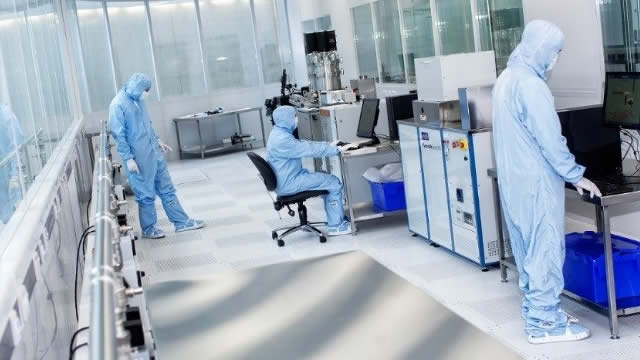
荷兰半导体,有了危机感
半导体行业观察· 2025-06-02 02:28
Core Viewpoint - The Netherlands must accelerate investments in the semiconductor industry to maintain its competitive edge amid increasing international competition and geopolitical tensions [1][2]. Group 1: Strategic Importance of Semiconductors - Semiconductors are essential for modern technologies, including electric vehicles, medical devices, artificial intelligence, and defense systems [2]. - The Netherlands plays a critical role in the semiconductor supply chain but is becoming overly dependent on other countries for key value chain components [2]. Group 2: Beethoven Plan - The "Beethoven Plan" involves a joint investment of €2.51 billion from the government, regional authorities, and industry to enhance the semiconductor business environment [2]. - The plan focuses on the Brainport region, which includes key players like ASML and aims to create 62,000 new housing units and improve infrastructure by 2030 [2]. - A talent development initiative aims to train 38,000 skilled professionals by 2030, with an investment of €450 million and ongoing annual funding of €80 million [2]. Group 3: European Semiconductor Coalition - The urgency for action extends beyond the Netherlands, as the European Semiconductor Coalition was formed with eight other EU member states to enhance Europe's position in the global semiconductor value chain [3]. - The coalition aims to increase local chip production, as Europe currently holds only about 10% of the global semiconductor sales market [3]. Group 4: International Cooperation and Security - The Netherlands is fostering collaborations with countries like South Korea, Japan, Taiwan, and the USA in areas such as innovation and talent exchange [5]. - Stricter export controls on advanced chip manufacturing equipment have been implemented to prevent misuse for military purposes [5]. Group 5: National Innovation Capability - A broad coalition of 64 semiconductor companies in the Netherlands has proposed the "ChipNL" innovation plan, focusing on chip design, advanced packaging, and production equipment [6]. - The plan seeks government co-funding to enhance the country's semiconductor capabilities and is closely aligned with national defense objectives [6]. Group 6: Semiconductor Industry Blueprint - The Netherlands will establish the "Semicon Board Netherlands" in early 2025 to create a development blueprint for the semiconductor industry aimed at 2035 [7]. - The Minister emphasizes the need for immediate action to maintain the country's creativity, strategic autonomy, and economic resilience [7].

欧洲芯片,不死心
半导体行业观察· 2025-06-01 00:46
如果您希望可以时常见面,欢迎标星收藏哦~ 2022年,欧盟推出《欧洲芯片法案》(EU Chips Act),提出到2030年将欧洲在全球半导体制造 市场的份额从当前的不足10%提升至20%。这是一个雄心勃勃的目标,象征着欧洲希望在数字经济 和技术主权方面摆脱对亚洲与美国的过度依赖。 当时欧盟委员会主席乌尔苏拉·冯德莱恩还表示,欧洲约占全球芯片产量的10%,实现市场份额的 翻倍并不算是遥不可及的事情。 然而,时间过去近三年,围绕该法案的争议和批评也愈发明显。项目推进迟缓、生态薄弱、战略目 标不切实际等问题,引发了多家欧洲主流媒体的质疑。 但与此同时,欧洲并没有停下脚步。在先进设备、功率器件、RISC-V架构以及吸引国际巨头方 面,欧洲半导体产业仍在努力构筑自己的价值链与战略纵深。 欧盟委员会表示,审计院已知共有29项潜在或正在进行的生产能力投资。其中包括13个"新型设 施"项目,其中4个已获批准,9个正在规划中,其中也包括英特尔尚未开工的马格德堡工厂。这13 个项目占据已知投资的最大份额:其中260亿欧元来自国家援助,600亿欧元来自制造商自身。 这也就是说,如果没有300亿欧元的英特尔工厂,就有超过三分之一的 ...