
BIDU(BIDU)

Search documents
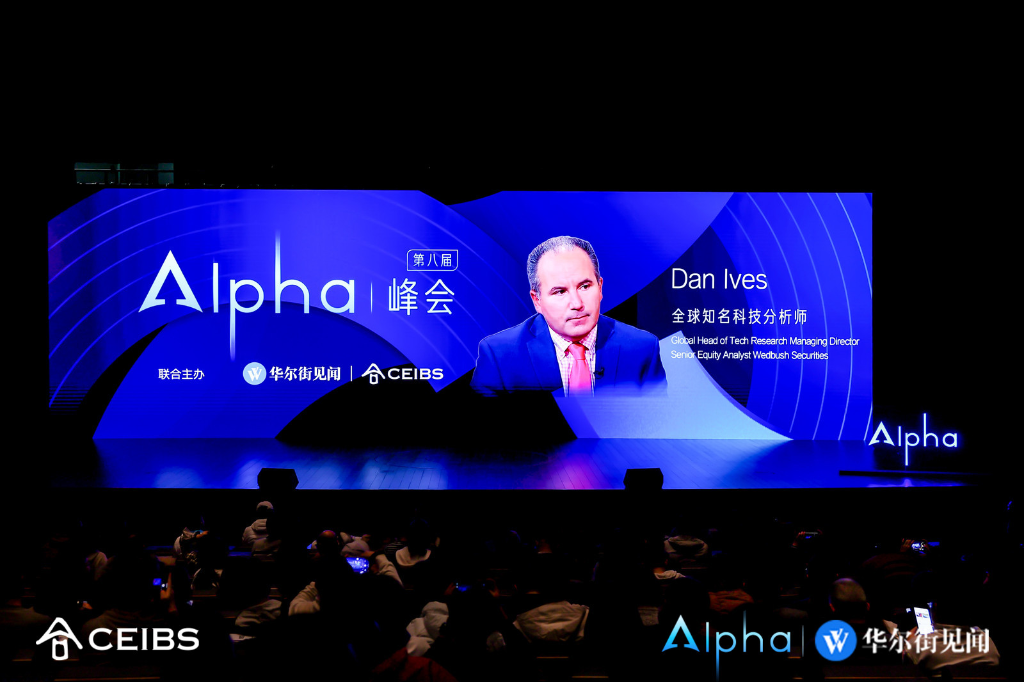
全球知名科技分析师Dan Ives:AI派对才刚开始,2026是“变现之年”,真正的消费者AI革命将由苹果开启|Alpha峰会
Hua Er Jie Jian Wen· 2025-12-20 01:27
Core Insights - The AI revolution is likened to a party that started at 9 PM and is currently at 10:30 PM, indicating that it is still in its early stages with significant growth potential ahead [4][5][13] - The current phase is compared to 1996, suggesting that it is not a bubble like 1999, as the leading companies are financially robust with substantial cash flows [4][5][21][22] - Nvidia's chips have a multiplier effect of 8 to 10 times across various sectors, indicating strong demand and a significant capital expenditure cycle [4][7][28] - The year 2026 is projected to be a critical moment for monetization in AI, distinguishing successful companies from those that fail to execute [10][36] AI Market Dynamics - The AI market is characterized by a supply-demand imbalance for Nvidia chips, with a ratio of 12:1, highlighting the robust demand for AI technologies [4][28] - The AI revolution is expected to create substantial opportunities in the second, third, and fourth layers of derivatives, particularly in software, cybersecurity, and infrastructure [4][7][35] - The consumer AI revolution is anticipated to be led by Apple, leveraging its 2.4 billion iOS devices to reach a broad audience [10][26] China and Global Competition - China has a significant advantage in power supply, particularly in nuclear energy, which is crucial for AI data centers [8][29] - The robotics sector in China is highlighted as a leading area of innovation, with human-like robots being a key focus [8][19] - The relationship between the US and China is viewed as one of interdependence rather than decoupling, with both countries needing to collaborate for the AI revolution to reach its full potential [8][24] Future Projections - By 2030, it is expected that 20% of cars will be autonomous, and one in every 10 to 15 households will have a humanoid robot [10][19] - The technology sector is projected to see a 25% increase in stock prices by next year, with growth expected to continue through 2027 [10][22] - The focus on AI applications is expected to expand significantly by 2026, with a shift from hype to tangible revenue generation [10][36]





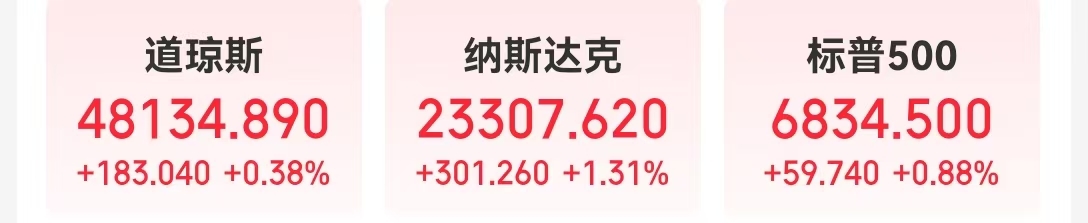
甲骨文涨近7% 博通涨超3% 英伟达市值增超万亿元!美联储官员发声 事关利率策略!俄罗斯央行降息50个基点
Mei Ri Jing Ji Xin Wen· 2025-12-19 23:16
Group 1: Major Tech Stocks Performance - Major tech stocks experienced a rally, with Nvidia rising nearly 4%, adding $166.5 billion (approximately 1172.3 billion RMB) to its market value [1] - Broadcom increased by over 3%, while Google saw an increase of over 1% [1] Group 2: Cryptocurrency and Semiconductor Companies - Cryptocurrency mining companies and semiconductor stocks led the gains, with U.S. Gold Corp rising over 11%, Hut 8 up over 14%, Century Aluminum up over 7%, and Micron Technology, AMD, and Circle each rising over 6% [3] - Other notable increases included Supermicro up over 5%, Americas Silver Corp nearly 4%, and Dell Technologies and Coinbase each up over 2% [3] Group 3: Chinese Stocks and Indices - The Nasdaq China Golden Dragon Index closed up 0.86%, with popular Chinese stocks mostly rising, including Xpeng Motors up over 6%, Li Auto up over 5%, and Pinduoduo up over 3% [6] - Baidu and Zhihu increased by over 2%, while iQIYI saw a decline of over 1% [6] Group 4: Commodity Prices - COMEX gold futures rose by 0.1% to $4368.7 per ounce, with a weekly increase of 0.9%; silver futures increased by 3.34% to $67.395 per ounce, with a weekly rise of 8.55% [6] - WTI crude oil futures rose by 0.91% to $56.66 per barrel, while Brent crude oil futures increased by 1.09% to $60.47 per barrel, both showing weekly declines [6] Group 5: Employment Trends and Economic Indicators - The U.S. employment trend index (ETI) for October and November was reported at 105.8, down from a revised 106.24 in September [7][8] - The University of Michigan's consumer confidence index for December was finalized at 52.9, lower than the initial value of 53.3 [6]




纳斯达克中国金龙指数收涨0.86% 热门中概股多数上涨
Mei Ri Jing Ji Xin Wen· 2025-12-19 22:22
Group 1 - The Nasdaq China Golden Dragon Index rose by 0.86% on December 20 [1] - Most popular Chinese concept stocks experienced gains, with Xpeng Motors increasing by over 6% [1] - Li Auto saw an increase of over 5%, while Pinduoduo rose by over 3% [1] Group 2 - Baidu and Zhihu both experienced gains of over 2% [1] - iQIYI, however, saw a decline of over 1% [1]


纳斯达克中国金龙指数收涨0.86%,热门中概股多数上涨
Mei Ri Jing Ji Xin Wen· 2025-12-19 22:13
Group 1 - The Nasdaq China Golden Dragon Index rose by 0.86% on December 20 [1] - Most popular Chinese concept stocks experienced gains, with Xpeng Motors increasing by over 6% [1] - Li Auto saw an increase of over 5%, while Pinduoduo rose by over 3% [1] Group 2 - Baidu and Zhihu both experienced gains of over 2% [1] - iQIYI, however, saw a decline of over 1% [1]
百度会下场做GEO吗?
Sou Hu Cai Jing· 2025-12-19 18:11
Group 1 - The core idea of the news is that Baidu has introduced a Generative Engine Optimization (GEO) solution aimed at enhancing brand visibility in AI-generated content, but there are concerns about the reliability of information generated by AI due to the presence of fabricated content [1][3] - The GEO solution is designed to optimize content structure, semantic matching, and authoritative sources to increase the likelihood of brand mentions in generative AI responses, thereby boosting brand exposure [3] - There are significant concerns regarding the quality of GEO services in the market, with reports of some providers flooding AI models with fake articles and misleading information, which could undermine the credibility of AI outputs [3] Group 2 - Baidu's Q3 2025 financial report indicates a revenue of 31.2 billion yuan and a net loss of 11.2 billion yuan, marking a decline in both revenue and profit, transitioning from profit to loss [4] - Traditional online marketing, which previously accounted for 80% of Baidu's revenue, has seen a continuous decline, with Q3 revenue dropping to 15.3 billion yuan, a year-on-year decrease of 18%, marking the sixth consecutive quarter of decline [4]

美股异动 | 热门中概股普涨 小马智行(PONY.US)涨近7%
智通财经网· 2025-12-19 15:05
Core Insights - The Nasdaq Golden Dragon Index increased by 0.9%, with popular Chinese concept stocks experiencing significant gains, including Pony.ai rising nearly 7%, Xpeng Motors up over 6%, and Pinduoduo increasing by nearly 6% [1] - The Ministry of Industry and Information Technology officially announced the first batch of L3 conditional autonomous driving vehicle permits on December 15, marking a critical step towards the commercialization of L3 autonomous driving in China [1] Company Performance - Pony.ai saw a nearly 7% increase in stock price [1] - Xpeng Motors experienced an increase of over 6% [1] - Pinduoduo's stock rose nearly 6% [1] - Li Auto and Hesai both saw stock increases of over 3% [1] - Baidu's stock rose by 2% [1] Industry Developments - The announcement of L3-level conditional autonomous driving vehicle permits indicates a transition from testing to commercial application in China [1] - Two models, designed for urban congestion and highway conditions, will be piloted in designated areas of Beijing and Chongqing [1]

热门中概股普涨 小马智行(PONY.US)涨近7%
Zhi Tong Cai Jing· 2025-12-19 15:02
Core Viewpoint - The Nasdaq Golden Dragon Index rose by 0.9%, with popular Chinese concept stocks experiencing significant gains, indicating a positive market sentiment towards these companies following the announcement of L3 autonomous driving vehicle approvals in China [1] Group 1: Market Performance - PONY.US (Pony.ai) increased by nearly 7% - XPEV.US (Xpeng Motors) rose over 6% - PDD.US (Pinduoduo) gained nearly 6% - LI.US (Li Auto) and HSAI.US (Hesai Technology) both increased by over 3% - BIDU.US (Baidu) saw a 2% rise [1] Group 2: Industry Development - The Ministry of Industry and Information Technology officially announced the first batch of L3 conditional autonomous driving vehicle approvals on December 15 - Two models, designed for urban congestion and highway scenarios, will conduct road trials in designated areas of Beijing and Chongqing - This marks a significant step from testing to commercial application for L3 autonomous driving in China [1]
盯上你的眼,苹果、谷歌也加入“百镜混战”
2 1 Shi Ji Jing Ji Bao Dao· 2025-12-19 12:39
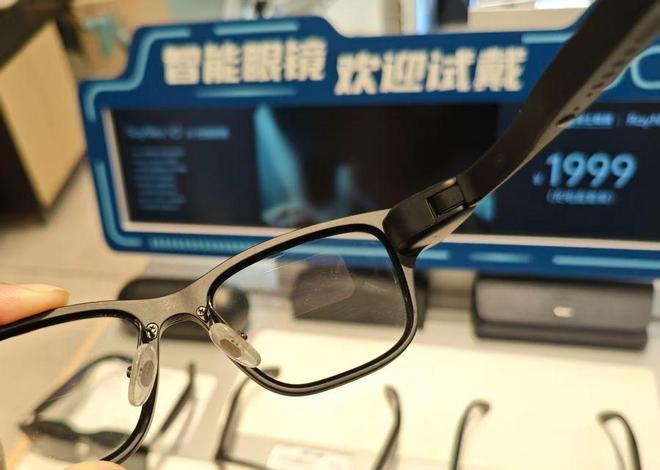
Group 1 - Apple has paused its Vision Pro upgrade plan to focus on developing AI smart glasses, with an entry-level model expected to debut in 2026 [2] - Google has officially announced its return to the smart glasses market, intensifying competition in the sector [2] - In the domestic market, companies like Li Auto, Alibaba, Baidu, Huawei, and Xiaomi are actively launching their own smart glasses, indicating a fierce competition among tech giants [2] Group 2 - The competition for smart glasses is driven by the desire to establish the next generation of human-computer interaction, with smart glasses seen as a key hardware component in the AI multimodal era [3] - Major companies view smart glasses as an extension of their ecosystems and a means to leverage AI capabilities, transforming brand power into market momentum [3] - Li Auto's AI glasses, Livis, have generated significant interest, with reports of high foot traffic and product shortages in stores [3] Group 3 - Consumers are attracted to smart glasses not only for compatibility with their vehicles but also for their aesthetics and quality, indicating that these products can enhance brand ecosystems and fan engagement [4] - Alibaba's Quark AI glasses have quickly gained orders due to their smooth integration with the Quark browser and AR functionalities, addressing previous limitations of traditional smart glasses [4] - The industry is in need of a new core hardware solution as smartphones reach physical innovation limits, with smart glasses positioned as a crucial interface for connecting the physical and digital worlds [4] Group 4 - The smart glasses market is expanding beyond major players, with smaller companies also seeking growth opportunities, particularly in industrial and health monitoring applications [5] - Companies like Huashengchang are focusing on developing AI glasses for industrial applications, enhancing efficiency and precision in operations [5] - Industry experts suggest that smaller firms should concentrate on core components, professional manufacturing, or niche markets to establish competitive advantages [6] Group 5 - The relationship between smart glasses and smartphones is expected to be complementary rather than one replacing the other, as both technologies will evolve together [7] - Current technological challenges such as weight, battery life, and display quality are still present, indicating that the industry is on the brink of significant growth [7] - Consumer expectations for smart glasses vary, with a significant portion believing they will be widely used, while others see limited applications [7] Group 6 - The smart glasses market is projected to grow significantly, with sales expected to reach 1.265 million units in 2024, a year-on-year increase of approximately 90.8%, and a market size of around 4.69 billion yuan [8] - By 2029, sales could reach 41.53 million units, with the market potentially exceeding 100 billion yuan, highlighting the substantial market potential driving competition [8] - The integration of AI models and user experience is seen as a critical factor in determining the future direction of the industry [8] Group 7 - As of December 19, key players in the smart glasses supply chain have shown active stock performance, with companies like Lens Technology and Doctor Glasses experiencing notable stock price increases [9]
盯上你的眼 苹果、谷歌也加入“百镜混战”
2 1 Shi Ji Jing Ji Bao Dao· 2025-12-19 12:38
Group 1 - Major tech companies like Apple and Google are intensifying their focus on the smart glasses market, with Apple pausing its Vision Pro upgrade plans to accelerate AI smart glasses development, expected to launch in 2026 [1] - The competition in the smart glasses sector is heating up in China, with companies like Li Auto, Alibaba, Baidu, Huawei, and Xiaomi launching their own AI glasses, indicating a cross-industry battle involving tech, internet, and new energy sectors [1][2] - The entry of established tech giants and new players into the smart glasses market signifies a strategic move to capture the next generation of human-computer interaction, positioning smart glasses as a key hardware in the AI multimodal era [2][4] Group 2 - The smart glasses are seen as an extension of existing ecosystems and a means to leverage AI capabilities, with Li Auto's Livis glasses gaining significant consumer interest and sales [4] - Alibaba's Quark AI glasses have also seen strong sales due to their practical features, indicating that major internet companies are finding viable paths in this new market [4] - The industry is at a critical juncture, with startups needing to focus on niche markets or technological breakthroughs to survive amidst competition from larger firms [5][6] Group 3 - The relationship between smart glasses and smartphones is expected to be complementary rather than one replacing the other, as both technologies evolve together [7] - Current technological limitations in smart glasses, such as weight and battery life, indicate that the industry is still in its early stages, with significant growth potential ahead [7][8] - The global market for smart glasses is projected to grow significantly, with sales expected to reach 41.53 million units by 2029, potentially exceeding 100 billion yuan in market size [8] Group 4 - The influx of major players into the smart glasses market is expected to accelerate technological advancements and reshape industry standards, while also creating challenges for smaller brands [9] - The competitive landscape is shifting from price wars to technology-driven competition, emphasizing the importance of AI integration and user experience [9][11] - Key supply chain companies in the smart glasses sector have shown active stock performance, reflecting investor interest and market optimism [11]



我们准备好让AI“看”世界了吗?
Xin Lang Cai Jing· 2025-12-19 12:14
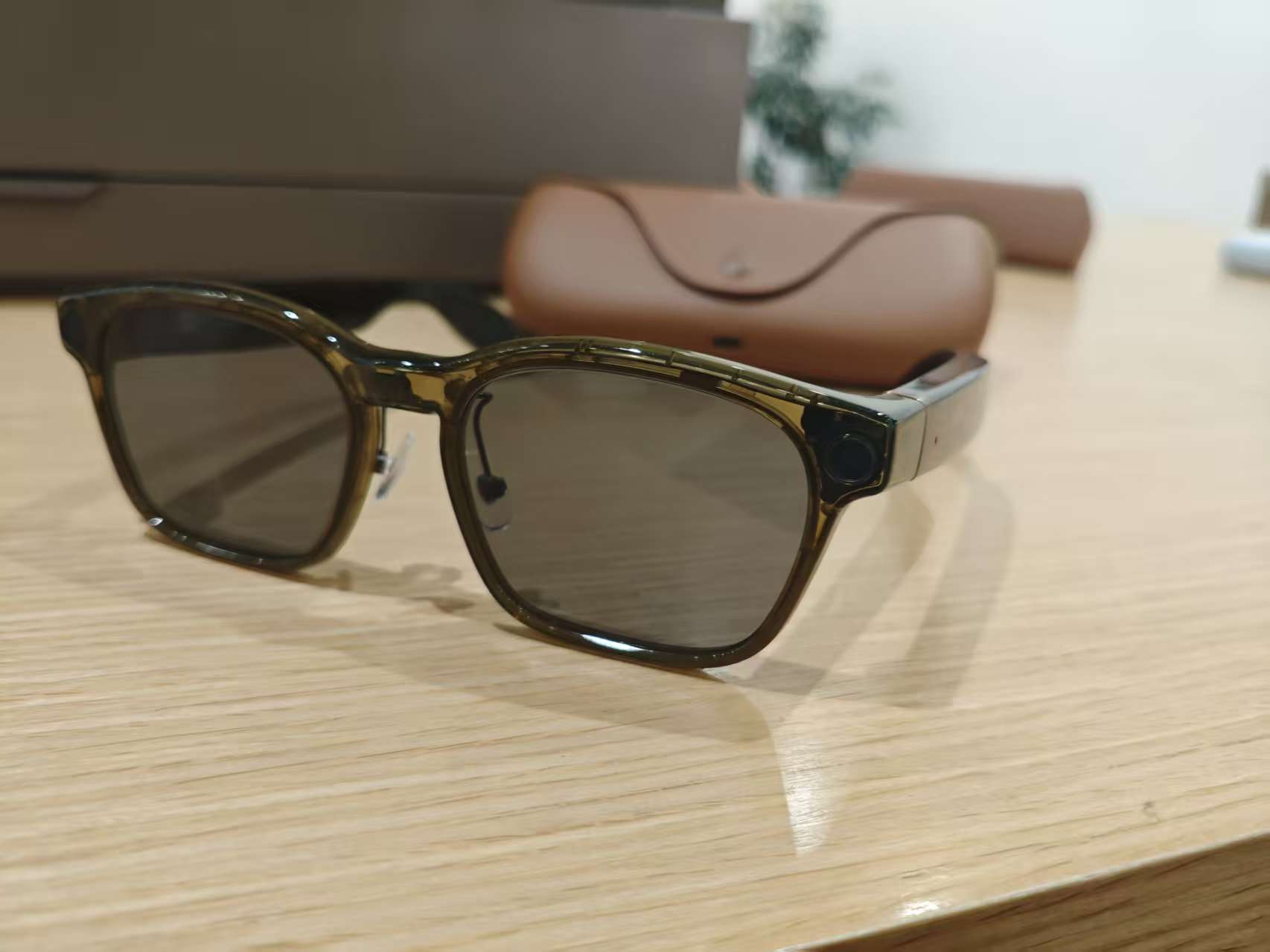
Core Insights - In 2025, AI glasses have emerged as a significant trend in the tech industry, with major companies like Meta, Google, and Apple making substantial advancements and product launches in this space [1][3] - Domestic companies in China, including Huawei, Xiaomi, Alibaba, and ByteDance, are also actively developing AI glasses, with notable products like Alibaba's Quark AI glasses experiencing high demand [1][3] - The competition landscape is diverse, with various types of AI glasses categorized into AI audio glasses, AI photography glasses, and AI+AR glasses, each with distinct functionalities [3][7] Industry Overview - The AI glasses market is driven by advancements in large model technology, with companies recognizing the necessity to invest in AI glasses to avoid falling behind in the AI race [3][21] - Meta's Ray-Ban smart glasses have set a successful precedent, selling over 1 million units and demonstrating the feasibility of integrating AI capabilities into eyewear [3][21] - The market is expected to see significant sales growth, with projections indicating that AI glasses could reach 7 million units sold, with Meta accounting for 5 million of that total [9] Competitive Landscape - Major competitors in the AI glasses market include: - Internet platform companies like Alibaba, Baidu, and ByteDance, leveraging their ecosystem advantages [8] - Hardware manufacturers such as Xiaomi and Huawei, utilizing their supply chain and user base [9] - New automotive entrants like Li Auto, which are creating niche products tailored to specific use cases [9] - Specialized XR/AR companies like Rokid and Thunderbird, focusing on optical display technology and lightweight designs [9] Market Dynamics - The pricing of AI glasses varies widely, from hundreds to thousands of yuan, reflecting the differentiation in product features and target markets [12] - The current market is characterized by a mix of established tech giants and agile startups, each pursuing different strategies to capture market share [10][20] - The demand for AI glasses is still being evaluated, with concerns about whether consumers truly need such devices compared to existing technologies like smartphones [13][19] Future Outlook - The AI glasses market is anticipated to evolve, with companies needing to address privacy concerns and enhance user experience to transition from novelty items to essential tools [17][24] - The exploration of AI glasses is seen as a stepping stone towards more advanced human-machine interactions, potentially leading to future innovations like implantable devices or brain-computer interfaces [24][22] - As the market matures, companies are expected to focus on validating the value of AI glasses in B2B applications while nurturing consumer interest in C2C scenarios [20][22]


