Citi(C)

Search documents
花旗:对美国财政债务的担忧 --探寻制度性转变的迹象
花旗· 2025-06-23 02:09
Investment Rating - The report does not explicitly provide an investment rating for the industry or market discussed Core Insights - Concerns over US fiscal debt sustainability have been a recurring theme in discussions, with net interest now constituting 14% of the US fiscal budget, making it the third largest expenditure item after health insurance and social security [2][5] - The Congressional Budget Office (CBO) projects the fiscal deficit for FY2025 to be $1.7 trillion against revenues of $5.2 trillion, with total US debt expected to rise from $36.2 trillion to approximately $60 trillion by 2034 due to proposed spending plans [5][6] - The bond market is currently viewed as stable, with no significant regime change detected despite rising concerns about fiscal sustainability [13][22] - The relationship between equity markets and US fiscal debt is critical, as bond market conditions can influence government spending capabilities [32] Summary by Sections US Fiscal Debt Concerns - The US fiscal debt has significantly increased under both the Trump and Biden administrations, raising investor concerns about the sustainability of this debt [9][26] - Historical underestimations by the CBO regarding US debt levels have led to skepticism about future projections [6][7] Bond Market Dynamics - The US10-year bond yields are currently in the range of 3.84%-4.61%, with expectations of an increase to 3.99%-4.73% by year-end [17][37] - A breakdown below the lower end of this range could indicate a recession, while a rise above the upper end would signal increased concerns about fiscal sustainability [22][23] Investment Opportunities - If bond yields remain stable within the projected range without a recession, significant investment opportunities may arise, particularly in dual digital options [37][39] - The correlation between TLT ETF and US10-year bond yields has been over 96%, indicating a strong relationship that can guide investment strategies [33][34]

花旗:全球经济展望-具韧性的全球增长- 但能持续多久
花旗· 2025-06-23 02:09
Investment Rating - The report indicates a cautious outlook for global growth, projecting a slowdown to 2.4% in 2025 from 2.8% in 2024, with a modest recovery to 2.5% in 2026 [1][12]. Core Insights - The global economy has shown resilience in early 2025, but signs of strain from tariffs are emerging, particularly in global trade indicators [1][2]. - The front-loading of purchases in anticipation of tariffs has temporarily boosted imports, but this effect is diminishing, leading to a forecasted slowdown in growth across multiple economies [3][22]. - Geopolitical tensions and policy uncertainties, particularly regarding tariffs and fiscal policy, are significant risks to the economic outlook [4][52]. Summary by Sections Global Economic Outlook - The global economy is expected to slow down, with growth projected at 2.4% for 2025, down from 2.8% in 2024, and a slight recovery to 2.5% in 2026 [1][12]. - The resilience observed in the US and global economy over the past few years may be overstated, as tariff impacts are anticipated to become more pronounced [1][62]. Trade Indicators - US imports surged nearly 30% from October to March but fell sharply in April, indicating a potential decline in trade activity [2][22]. - PMIs for new export orders are below 50 for nearly 70% of major economies, signaling contraction in global trade [33]. Inflation and Central Banks - Global headline inflation has returned to 2%, with core inflation remaining above pre-pandemic levels, particularly in services [35][38]. - The Federal Reserve is expected to favor growth, with potential rate cuts later in the year as economic activity weakens [6][43]. Country-Specific Insights - The US economy is projected to grow at 1.6% in 2025, down from 2.8% in 2024, with inflation expected to rise to around 3% by year-end [64]. - Emerging markets are expected to see growth of 3.8% in 2025, with significant variations across countries [64]. Risks to the Outlook - Geopolitical tensions, particularly in the Middle East, pose risks of rising oil prices, which could negatively impact global growth and inflation [50]. - Uncertainties regarding the future of tariffs and fiscal policy in the US add to the economic risks, with an effective tariff rate expected to settle around 15% [52][60].
花旗:中国出口追踪_ 风暴夏季前噪音渐增
花旗· 2025-06-23 02:09
Investment Rating - The report does not explicitly provide an investment rating for the industry. Core Insights - Direct shipments to the US have shown signs of recovery, with a 11.4% year-over-year increase in containership departures for the 15 days ending June 19th, indicating a potential trough in trade between the US and China [1][11] - The overall cargo throughput data has been mixed, with a contraction of -2.1% year-over-year in the week ending June 15th, contrasting with a reported 13.0% year-over-year expansion in another dataset for the week of June 7th-13th [1][4][8] - The report suggests that while there are signs of recovery in direct exports to the US, uncertainties remain due to tariff impacts and the reorganization of global supply chains [1] Summary by Sections Direct Shipments to the US - Containership departures to the US increased by 11.4% year-over-year in mid-June, suggesting a recovery from previous lows [1][11] - Bills for US seaborne imports from China contracted by -19.2% year-over-year in the week ending June 13th, an improvement from -35.3% the previous week [1][7] Cargo Throughput Data - Mixed signals in cargo throughput data, with a -2.1% year-over-year contraction reported for the week ending June 15th, compared to a +0.8% year-over-year increase the previous week [1][4] - PortWatch/IMF reported a 13.0% year-over-year expansion in container export volume for the week of June 7th-13th, indicating volatility in the data [1][8] Transshipment Trends - Transshipment via ASEAN is experiencing a temporary retreat, while direct exports to the US are picking up [1] - Containership arrivals at ASEAN ports showed a marginal moderation, with a 9.5% year-over-year increase in the week ending June 18th, down from 12.2% the previous week [1][10]
香港,突发!重磅信号来袭!
券商中国· 2025-06-19 10:08
6月19日,港股市场亦是全线杀跌。截至19日收盘,香港恒生指数下挫1.99%,报23237.74点;恒生科技指数下 跌2.42%,报5088.32点;恒生国企指数下跌2.13%%,报8410.94点。那么,港股市场是否又已经见顶? 香港金管局释放重磅信号 香港市场可能正在迎来变数! 香港金管局最新表态称,港美息差扩阔引发套息交易,令港元在过去数周逐步走近"弱方兑换保证"的7.85水 平。若套息交易持续,可能会令港元汇率进一步走弱,甚至可能触发"弱方兑换保证",届时金管局将按照联汇 制度买入港元沽出美元,银行体系总结余将相应下降,而港元拆息将会逐步回升。 那么,这对市场的影响表现在哪里?可能在于流动性。花旗发表研究报告指出,若港元兑美元触及7.85弱方兑 换保证且外汇需求仍存在,香港金管局将沽售美元以维持联系汇率,并减少港元流动性,估计将会有约700亿 至1000亿港元流动性会被抽走。 北京时间19日凌晨,美联储维持联邦基金利率目标区间于4.25%至4.5%。香港金管局表示,美联储这次的决定 符合市场预期,点阵图显示联储局有可能于今年内减息共50个基点。不过,市场普遍认为美联储来的减息步伐 仍然存在较大的不确定 ...


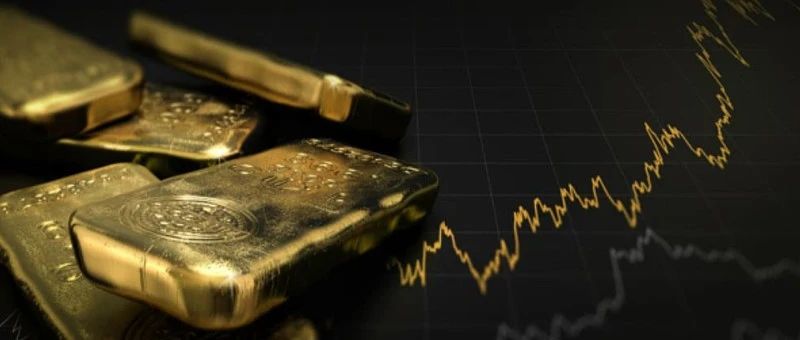
多空大博弈!国际投行对黄金目标价价差,高达一千美元
券商中国· 2025-06-19 10:08
Core Viewpoint - The article discusses the significant divergence in gold price predictions among major international investment banks, highlighting a potential price difference of up to $1,000 per ounce by the end of the year [2][5]. Group 1: Gold Price Predictions - UBS Wealth Management maintains a bullish outlook, predicting gold prices to reach $3,500 per ounce by the end of the year, citing a strong increase in central bank gold purchases [3]. - Citigroup, on the other hand, has a bearish stance, forecasting gold prices to drop below $3,000 per ounce in the coming quarters, with a potential decline to $2,500-$2,700 by mid-2026 [4][7]. - Goldman Sachs predicts gold prices will rise to $3,700 per ounce by the end of 2025 and reach $4,000 by mid-2026, indicating a $700 price difference with Citigroup's forecast [6][7]. Group 2: Central Bank Behavior - Central banks have been increasing their gold reserves significantly, with over 1,000 tons added annually in the past three years, double the average growth rate of the previous decade [3]. - A recent survey by the World Gold Council indicates that 95% of central banks expect to increase their gold reserves in the next 12 months, reflecting ongoing strong demand for gold [3]. Group 3: Market Dynamics and Investment Products - The article notes that gold has been one of the best-performing asset classes this year, with a year-to-date increase of approximately 30% [10]. - Various structured financial products linked to gold have been successfully launched, with many achieving high returns, indicating strong market interest [11][16]. - Investment firms are increasingly offering products that combine fixed-income assets with gold exposure, catering to investors seeking to benefit from gold price movements while managing risk [15].


“特朗普-鲍曼”组合煽起美联储放松监管风向 华尔街巨头们迎来资本松绑
智通财经网· 2025-06-18 12:15
Core Viewpoint - The Federal Reserve is considering relaxing leverage requirements for large banks, initiating a broader review of banking regulations, particularly the Supplementary Leverage Ratio (SLR) [1][2] Group 1: Regulatory Changes - The Federal Reserve's policy committee will hold a meeting on June 25 to discuss potential modifications to the SLR, which mandates banks to hold a capital ratio against all assets regardless of risk [1] - The meeting will be the first under the newly confirmed regulatory head, Michelle Bowman, who is expected to advocate for a more lenient regulatory approach [1][2] Group 2: Industry Implications - The SLR, originally intended as a baseline requirement, has become a rigid constraint limiting the lending capabilities of major financial institutions, particularly during periods of market liquidity stress [2] - If the SLR is adjusted to exempt U.S. Treasury securities or lower the capital requirements, it could release hundreds of billions in capital, allowing major banks like JPMorgan, Citigroup, and Morgan Stanley to expand their balance sheets and enhance shareholder returns [3] - A more relaxed SLR could significantly boost the return on equity (ROE) for Wall Street firms and provide room for stock buybacks and dividends, particularly benefiting investment banks like Goldman Sachs and Morgan Stanley [3]


美联储今夜恐亮“鹰派”点阵图,年内一次降息将成市场新共识?
华尔街见闻· 2025-06-18 10:05
Core Viewpoint - The upcoming Federal Reserve meeting is expected to focus on a potentially "hawkish" dot plot, which may reshape investor expectations regarding interest rate cuts in 2025 [1][3]. Summary by Sections Interest Rate Decision - The Federal Reserve is anticipated to maintain interest rates in the range of 4.25%-4.50%, with a consensus among economists supporting this view [2][3]. Dot Plot Expectations - The dot plot is expected to show a significant adjustment, with a shift from two rate cuts in 2025 to possibly only one, reflecting a stronger hawkish sentiment among analysts [3][5][6]. - Bank of America predicts a 25 basis point increase in the median of the dot plot, indicating only one rate cut this year, while also suggesting a potential 75 basis point cut in 2026 [6]. Economic Projections - The economic projections (SEP) are likely to reflect a "stagflation" scenario, with upward revisions to inflation forecasts and downward adjustments to growth and unemployment rates [4][9]. - GDP growth is expected to be revised down from 1.7% to 1.4%, while the unemployment rate is projected to rise slightly to 4.5% [10][13]. Inflation Forecasts - Core PCE inflation forecasts are set to be significantly raised, with estimates from various institutions indicating an increase from 2.8% to around 3.2%-3.3% for 2025 [11][12]. - Despite the upward revision in inflation forecasts, many analysts believe the Fed will view tariff-related inflation as a "one-time" shock, allowing for future policy adjustments [14]. Tariff Impact - The effective tariff rate is expected to rise by 14 percentage points, which could negatively impact consumer spending and business investment, leading to a reduction in GDP growth by nearly 1 percentage point [15][16]. Market Reactions - The dollar's response to a potentially hawkish Fed may be complex, as structural selling pressures could limit any significant rebound despite hawkish signals [20][21][22].
全球屏息以待今晚!
Ge Long Hui· 2025-06-18 09:18
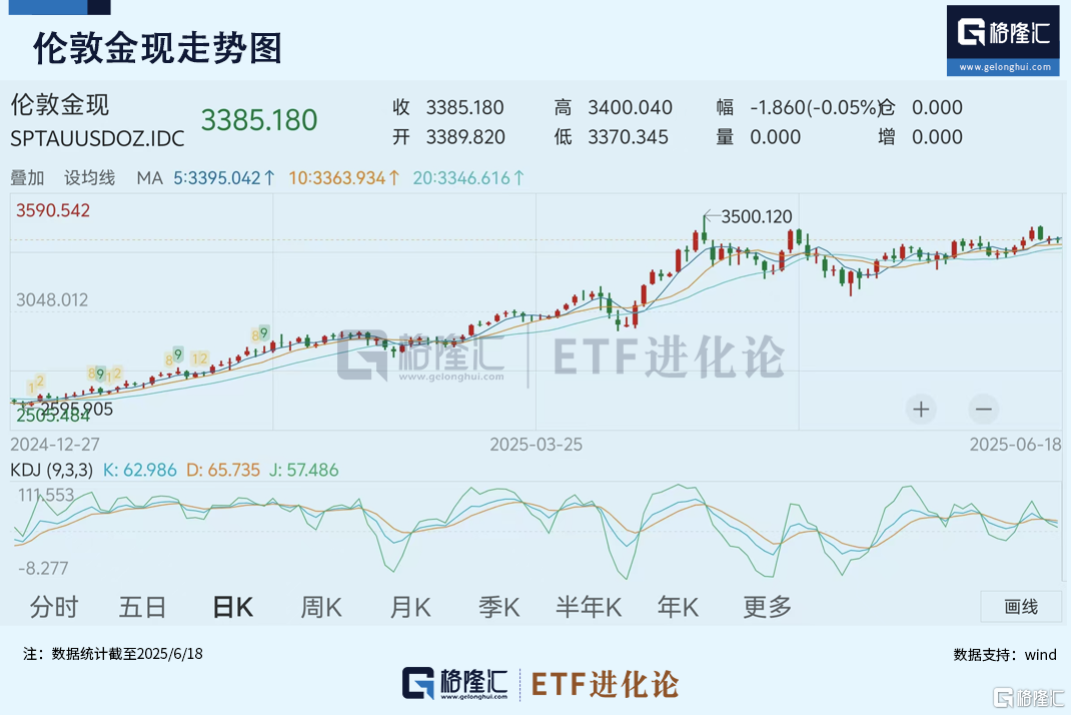
Group 1 - The core viewpoint of the article highlights the escalating tensions in the Middle East, particularly due to President Trump's warning to Iran, which has increased the risk of a loss of control in the situation [1][2]. - The market reaction to Trump's statements has been significant, with global stock markets declining and oil prices surging by 5% at one point [2]. - Despite the geopolitical tensions, the gold market has shown mixed reactions, with London gold prices slightly down by 0.06% to 3385.18 [4]. Group 2 - Citibank has unexpectedly turned bearish on gold prices, predicting a drop to $3000 per ounce in the coming quarters and potentially to $2500-$2700 by the second half of next year, indicating a decline of over 20% from current levels [6][7]. - This bearish outlook contrasts sharply with Goldman Sachs, which is optimistic about gold reaching $4000 by mid-next year, highlighting a significant divergence in market sentiment [7]. - Citibank's analysis suggests that the demand for gold may have peaked, with global gold holdings at a historical high and central bank purchases showing diminishing marginal effects [11][12]. Group 3 - Citibank's bearish forecast is based on two main factors: the potential for improved global growth confidence due to U.S. midterm elections and the anticipated decline in gold's safe-haven demand [11]. - The bank also notes that the current global gold demand is at 0.5% of GDP, the highest in half a century, and that ultra-high-net-worth individuals may have reached saturation in their gold holdings [11]. - Despite the bearish outlook, Citibank acknowledges that there are scenarios where gold prices could remain high or even increase, depending on geopolitical tensions and trade issues [8][9][10]. Group 4 - The article mentions that foreign capital has been increasingly invested in domestic stocks, with a notable net inflow of 16.6 billion yuan into gold ETFs last week, indicating a shift in market dynamics [15]. - The upcoming Federal Reserve meeting is anticipated to maintain interest rates, with a 97.3% probability of no rate cut, which could influence market sentiment and investment flows [19].
每日投行/机构观点梳理(2025-06-17)
Jin Shi Shu Ju· 2025-06-18 01:40
Group 1: Commodity Market Insights - Citigroup predicts gold prices will fall below $3000 per ounce in the coming quarters, with a target range of $2500-$2700 by mid-2026 due to weakening investment demand and improved global economic outlook [1] - Citigroup expects Brent crude oil prices to trade around $70-$80 per barrel in the near term, while maintaining a long-term forecast of $60-$65 per barrel [2] - Bank of America warns of declining foreign demand for U.S. Treasury bonds, with custodial assets dropping over $60 billion since April [3] Group 2: Economic Policy and Market Impact - Morgan Stanley suggests that the "Beautiful America" bill may increase the deficit without significantly boosting economic growth, predicting a fiscal drag on GDP in the medium term [2] - Dutch Bank analysts indicate limited upside potential for the U.S. dollar, as geopolitical tensions and rising oil prices may not provide sufficient support [4] - German Bank analysts note that the recent strength of the dollar is primarily driven by rising oil prices rather than its safe-haven status [5] Group 3: Domestic Economic Outlook - CITIC Securities forecasts continued rapid economic growth in Q2, driven by strong industrial and service sector performance, with a focus on consumer demand and investment trends [8] - CITIC Securities identifies a long-term growth trend in the controllable nuclear fusion industry, supported by favorable policies and increased financing [8] - CITIC Securities anticipates that recent policy changes in drug and medical supply procurement will benefit high-quality innovative companies in the pharmaceutical sector [8] Group 4: Market Trends and Predictions - Zheshang Securities predicts a dual bull market for stocks and bonds in the second half of the year, driven by improved economic conditions and supportive policies [9] - Huatai Securities highlights the potential for a surge in oil transportation rates due to increased risks in the Strait of Hormuz, impacting global shipping supply chains [10] - Tianfeng Securities recommends focusing on high-elasticity industries such as storage and AI, anticipating optimistic growth in the semiconductor sector [10]



黄金大顶将至?花旗拉响警报:年底恐开启20%下跌周期!
华尔街见闻· 2025-06-17 11:01
Group 1: Gold Market Outlook - The core view is that gold prices are expected to decline below $3000 per ounce in the coming quarters, marking the end of the current record rally [1][2] - Citigroup analysts predict that gold prices will peak between $3100 and $3500 per ounce in Q3 of this year, before gradually falling to a range of $2500 to $2700 per ounce by the second half of 2026, representing a decline of approximately 20-25% from current forward prices [2] - The report outlines three scenarios for gold price movements: a base case (60% probability) where prices remain above $3000 per ounce for the next quarter before declining, a bullish case (20% probability) where geopolitical tensions and inflation risks push prices to new highs, and a bearish case (20% probability) where resolution of tariff issues leads to a sharp price drop [4] Group 2: Factors Influencing Gold Prices - Short-term, gold is expected to maintain high prices in Q3 due to strong investment demand [5] - The rise in gold prices is primarily driven by concerns over tariffs, Federal Reserve policies, and geopolitical risks, rather than central bank purchases; resilient jewelry consumption also supports prices [6] - Global gold expenditure as a percentage of GDP has reached 0.5%, the highest level in the past fifty years, indicating strong investor preference for gold as a safe-haven asset [7] Group 3: Future Economic Conditions - In Q4, global growth confidence may improve slightly, particularly with the implementation of U.S. stimulus budgets, which could reduce safe-haven sentiment; a potential shift towards more moderate trade policies under Trump may also decrease market uncertainty [9] - Expectations of a shift from tightening to a neutral stance by the Federal Reserve could further diminish gold's appeal as a non-yielding asset [9] - Historical data over the past 55 years shows that when investment demand declines, gold prices tend to fall, as price adjustments lead to reduced jewelry consumption and encourage inventory holders to sell [10] Group 4: Industrial Metals Outlook - In contrast to gold, Citigroup maintains a structurally bullish outlook on industrial metals despite short-term pressures from tariffs and weak demand [11] - The aluminum market is particularly favored, with the report highlighting aluminum as a "future-facing" metal, constrained on the supply side by energy intensity and driven on the demand side by strong growth in AI data centers, humanoid robots, and decarbonization processes [12][13] - Citigroup forecasts a supply shortage in aluminum over the next five years at current price levels, necessitating prices to rise above $3000 per ton to incentivize sufficient supply growth [14]