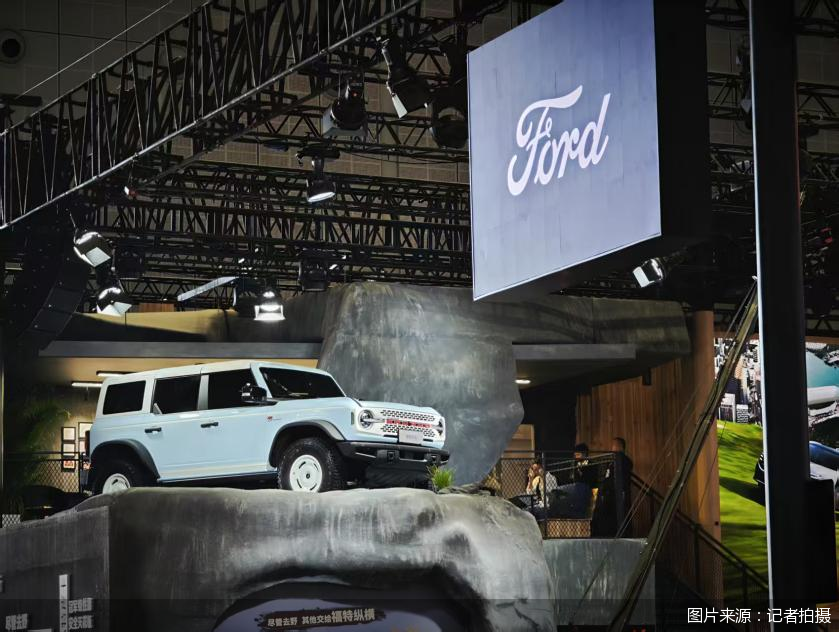
Ford Motor(F)

Search documents
美国汽车关税下,韩日车企在美库存即将见底
Huan Qiu Shi Bao· 2025-06-23 21:38
Group 1 - The global automotive industry is experiencing an accelerated trend of price increases due to the rapid depletion of "non-tariff inventories" in the U.S. market [1] - Toyota plans to raise the average price of its brand vehicles in the U.S. by $270 next month, while Mitsubishi will increase prices by an average of 2.1% [1] - Subaru has also announced price hikes starting from products shipped in June [1] Group 2 - Japanese automakers are temporarily absorbing the costs from high tariffs imposed by the U.S., while Korean automakers are facing significant pricing pressure [3] - Experts indicate that for global automakers, not raising prices equates to profit erosion, making the timing of price increases a critical issue [3] - Hyundai Motor Group remains cautious about adjusting prices, having extended its price freeze period previously set to end on July 7 [3] Group 3 - Hyundai and Kia rely heavily on imports for their U.S. sales, with 65% of their vehicles imported, significantly higher than competitors like Honda (35%) and Toyota (51%) [4] - The ability of Hyundai and Kia to maintain price freezes is attributed to their prior inventory levels, which are now rapidly depleting [4] - As of April, Hyundai's inventory could support sales for about three months, while Kia's could last for about two months, indicating a looming need for imports as inventories are nearly exhausted [4]


Ford Stock Looks Cheap at 0.26X P/S - But is It Worth Buying?
ZACKS· 2025-06-23 14:10
Core Viewpoint - Ford is currently undervalued with a forward 12-month price-to-sales (P/S) ratio of 0.26, which is below industry levels and its own 5-year average, indicating potential investment opportunities despite recent stock performance [1][3][19] Valuation Comparison - Ford's P/S ratio of 0.26 is lower than General Motors' (GM) 0.27 and significantly lower than Tesla's (TSLA) 9.88, suggesting a favorable valuation compared to peers [1][8] - Despite a year-to-date stock increase of approximately 7%, Ford's valuation remains attractive compared to the industry's decline of over 19% [3][19] Growth Drivers - Ford Pro's strong demand and successful launch of the Super Duty are key catalysts for future earnings growth, supported by a growing number of paid software subscriptions [10][11] - The company has a robust liquidity position with around $45 billion in liquidity, including $27 billion in cash, which supports its investment priorities [11] - Ford's dividend yield of over 5% is appealing for income-focused investors, especially compared to the S&P 500's average yield of just over 1% [12] Challenges - The EV segment is facing significant losses, with a reported loss of $5.07 billion in 2024, driven by competition and high development costs [13] - The traditional internal combustion engine (ICE) business is expected to see reduced sales, impacting profitability [14] - Tariff-related challenges are projected to have a net negative impact of approximately $1.5 billion on adjusted EBIT in 2025 [15] Earnings Estimates - The Zacks Consensus Estimate indicates a year-over-year decline of 7% in sales and 40% in earnings for 2025 [16] - Recent revisions show a decrease in earnings estimates for the current quarter and upcoming periods, reflecting growing concerns about Ford's near-term performance [17] Conclusion - While Ford's stock appears cheap with a low P/S ratio and attractive dividend yield, the company faces headwinds in its EV and ICE segments, making the near-term outlook uncertain [19][20] - Existing investors may find reasons to hold due to the strong balance sheet and commitment to shareholder returns, while new investors may consider a wait-and-watch approach [20]
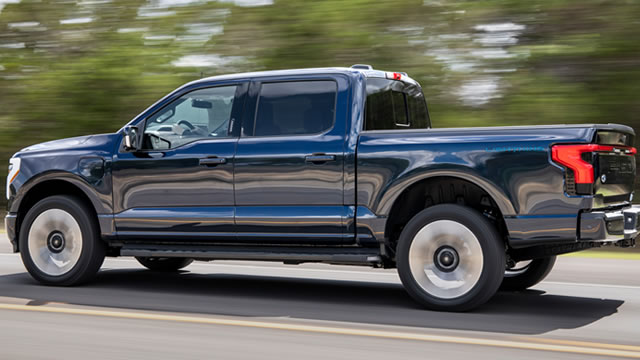
跨国车企为何对混动“真香”了?
Zhong Guo Qi Che Bao Wang· 2025-06-23 01:23
Core Viewpoint - Increasing number of multinational automakers are shifting their focus from pure electric vehicles to hybrid technology, following Toyota's lead, due to slowing growth in the electric vehicle market [2][3][6] Group 1: Company Strategies - Honda announced a shift in its electric vehicle strategy, reducing its investment from 10 trillion yen to 7 trillion yen and lowering its target for electric vehicle sales to below 30% by 2030 [3][10] - Ford plans to introduce hybrid versions of all its gasoline models by 2030 and has postponed the launch of some electric models due to ongoing losses in its electric vehicle division [4][5] - Mercedes-Benz and other automakers have also abandoned their aggressive electric-only strategies, opting for a diversified product lineup that includes hybrids [5][6] Group 2: Market Trends - In Q1 of this year, global sales of hybrid vehicles surpassed those of pure electric vehicles, with hybrids accounting for 16% of the market compared to 14.5% for pure electric [6][7] - In Europe, hybrid vehicle sales are projected to reach 4.06 million units in 2024, a 20% increase year-on-year, while sales of pure electric vehicles are expected to decline by 1.3% [7][8] - The U.S. market is also seeing a significant rise in hybrid vehicle sales, with a 36.7% increase year-on-year, contributing to overall new car sales growth [7][8] Group 3: Policy and Economic Factors - Changes in U.S. policy under the current administration have created uncertainty in the electric vehicle market, leading to a reassessment of electric vehicle strategies by automakers [8][9] - In Europe, the EU has softened its emissions targets and regulations, allowing for more flexibility in the transition to electric vehicles, which has influenced automakers' strategies [9][10] Group 4: Financial Performance - Ford's electric vehicle division reported a pre-tax loss of $5.1 billion in 2024, prompting a reevaluation of its electric vehicle strategy [11][12] - In contrast, Toyota's hybrid vehicle sales grew by 23.6% in the last fiscal year, contributing to a record net profit of 4.765 trillion yen [12][13] Group 5: Technological Developments - Hybrid technology is evolving, with companies like Toyota and Honda investing in new systems that improve fuel efficiency and reduce costs [14][15] - The rise of plug-in hybrids and range-extended vehicles is gaining traction, particularly in the Chinese market, as automakers adapt to changing consumer preferences [15][16]

观点湃|“扭扭捏捏”难成合力,“貌合神离”搞不好联盟
Xin Lang Cai Jing· 2025-06-22 09:12
Group 1: Industry Trends - The automotive industry is experiencing intense competition in 2025, characterized by consolidation, elimination, and systemic transformation [1] - The rise of electric vehicles is accelerating industry reshuffling, prompting companies to consider mergers and collaborations to enhance competitiveness [3][8] Group 2: Ford's Joint Ventures in China - Recent rumors about the merger of Jiangling Ford and Changan Ford were denied by Jiangling Motors, indicating no current plans for asset restructuring [2][4] - Both joint ventures, Jiangling Ford and Changan Ford, have faced declining sales, with Changan Ford's sales dropping by 16.43% year-on-year in the first five months of 2025, and Jiangling Ford's passenger vehicle sales falling to 35,000 units in 2024 [3] Group 3: Renault-Nissan Alliance Changes - Nissan announced plans to reduce its stake in Renault, coinciding with the resignation of Renault's CEO Luca de Meo, highlighting a shift in the traditional capital-binding alliance model [5][6] - The reduction of cross-holding from 43.4% to below 10% marks a transition to a "low-binding, high-autonomy" phase for the Renault-Nissan alliance [5][7] Group 4: Strategic Shifts and Challenges - Nissan's new CEO emphasized that funds from the stake reduction will be used for new vehicle development, aligning with its "Re: Nissan" revival plan [6] - Renault's leadership change raises concerns about the continuity of its electric vehicle strategy and the stability of the alliance with Nissan [6][7]


Better EV Stock: Ford vs. Tesla
The Motley Fool· 2025-06-21 20:05
Core Insights - The comparison between Ford and Tesla highlights the future direction of the auto industry, particularly in electric vehicles (EVs) and robotaxis, with both companies facing similar opportunities and challenges [1] - Tesla's full-self-driving (FSD) robotaxi is seen as a strategic move to counteract declining sales and market share, while major automakers recognize the profit potential of robotaxis through recurring income from ride-per-mile revenue [2] Electric Vehicles and Affordability - Automakers need to make EVs more affordable to ensure their future viability, as current EVs are not cheap [2] - Ford's CEO emphasized the importance of developing affordable EVs to achieve profitability, indicating a shift in strategy [4] Robotaxi Development - Ford has faced setbacks in its robotaxi plans, notably after the shutdown of Argo AI, while Tesla is preparing to launch its unsupervised FSD/robotaxi service [14][15] - Tesla's ability to transform existing vehicles into robotaxis and produce a dedicated model, the Cybercab, gives it a competitive edge [8] Financial Performance - Ford's Model E segment reported significant losses, with a loss of $5.1 billion in 2024 and $849 million in Q1 2025, indicating challenges in achieving a profitable EV business [10] - In contrast, Tesla generated $7.1 billion in operating profit in 2024 and maintained a dominant market share of 43.5% in Q1 2025, compared to Ford's 7.7% [11] Future Outlook - Both companies plan to release low-cost models, but Tesla's ability to lower its average cost per car positions it better for sustainable profitability [13] - The auto industry is moving towards lower-cost EVs and robotaxis, with Tesla currently in the best position to meet these industry aims [18]


Can Ford's US Muscle Shield It From the Tariff Crossfire?
ZACKS· 2025-06-20 15:16
Core Insights - Ford Motor Company anticipates a net adverse adjusted EBIT impact of approximately $1.5 billion for 2025 due to tariff pressures and has withdrawn its guidance amid industry instability [1][7] - Ford's competitive advantage includes producing 300,000 more vehicles in the U.S. than its competitors, with 80% of its parts compliant with USMCA trade rules [2][7] - The company has implemented strategies to mitigate tariff impacts, such as shipping vehicles from Mexico to Canada using bonded carriers to avoid U.S. tariffs [3][7] Peer Comparison - General Motors has predicted profit declines this financial year, with an estimated exposure of $4 million to $5 million due to auto tariffs, but expects to mitigate 30% of cost increases through tailored initiatives [4] - Stellantis has suspended its guidance for fiscal 2026 amid tariff challenges and is reassessing its capital spending strategies while reducing vehicle imports in response to tariffs [5] Financial Metrics - Ford's shares have decreased by approximately 5.1% over the past year, contrasting with the industry's growth of 20.8% [6] - The company trades at a forward price-to-sales ratio of 0.26, which is below the industry average, and carries a Value Score of A [8] Earnings Estimates - Recent revisions of Ford's EPS estimates show slight fluctuations, with current estimates for the current quarter at $0.30 and for the next year at $1.26 [10]



渠道整合几度失败,福特在华缘何又起重组之心
Jing Ji Guan Cha Wang· 2025-06-20 13:58
Core Viewpoint - The news reflects Ford's strategic confusion and survival desire in the Chinese market, highlighted by rumors of merging its joint ventures, Jiangling Ford and Changan Ford, amidst operational pressures [2][4]. Group 1: Merging Rumors and Responses - On June 18, rumors emerged that Ford China was integrating Jiangling Ford into Changan Ford, with actions already taking place at the sales and channel levels [3]. - Ford China responded to the merger rumors on June 19, emphasizing its commitment to building a sustainable sales service network as a core part of its long-term strategy in China [4]. Group 2: Historical Context and Challenges - Jiangling Ford and Changan Ford are both joint ventures of Ford in China, with Changan Ford established in 2001 and Jiangling Ford in 2021, complicating any potential restructuring due to intertwined shareholding [5]. - Previous attempts at channel integration, such as the establishment of a national distribution service agency in 2018, faced resistance from dealers and ultimately led to the cancellation of plans for a unified sales company [6]. Group 3: Current Market Dynamics - The Chinese automotive market is undergoing a brand restructuring wave, with various companies, including SAIC and BYD, integrating their operations to enhance efficiency [8]. - Ford's sales in China peaked in 2016 at 957,400 units but plummeted to 184,000 units by 2019, prompting strategic adjustments including capacity cuts and a focus on exports [9]. Group 4: Future Strategies and Adjustments - In 2024, Changan Ford's sales reached 247,000 units, a 5.97% increase, primarily driven by overseas markets, indicating ongoing challenges in the domestic market [9]. - Lincoln China is also undergoing channel reforms, including reducing the number of 4S stores to ensure efficient resource allocation [10]. - Ford's electric vehicle strategy has faced challenges, with limited model availability and mismatched sales channels, complicating its market position [10]. Group 5: Conclusion on Integration Efforts - While channel integration may not resolve fundamental issues, it could help eliminate unnecessary obstacles for Ford's future actions in the Chinese market [11].
稀土:全球汽车新\"命脉\"
Zhong Guo Qi Che Bao Wang· 2025-06-20 01:20
Group 1 - Several automakers are facing production challenges due to a shortage of rare earth materials, which are critical for high-end automotive manufacturing [2][3] - Suzuki has suspended production of its Swift model due to the impact of China's rare earth export controls, marking it as the first Japanese automaker affected [3] - Mercedes-Benz and BMW are in urgent discussions with suppliers to stabilize the supply of rare earth components, while Ford has reported increased transportation costs and delays in parts delivery due to extended approval processes for rare earth exports from China [4] Group 2 - China's Ministry of Commerce and Customs announced export controls on seven types of medium and heavy rare earth materials, with a new regulation set to take effect on October 1, 2024, establishing a closed-loop management system for the entire rare earth industry [5] - The Chinese government emphasizes that these export controls are in line with international practices and aim to protect national security and interests [6] - The demand for rare earth materials in the automotive industry is increasing, particularly for electric motors, where rare earth materials account for about 20% of the motor's cost [10] Group 3 - The global supply chain for rare earth materials is heavily reliant on China's processing capabilities, despite the country's relatively small reserves [8] - There is ongoing research and development in the automotive industry for rare earth-free motors, but current alternatives still lag behind in performance compared to rare earth-based motors [11][12] - The upcoming Rare Earth Management Regulations in China signify a shift towards sustainable development and stricter industry standards, aiming to enhance the stability of the global supply chain [12]

Ford Pauses Mustang Mach-E Sales Due to Door Lock Issue
ZACKS· 2025-06-19 15:11
Core Points - Ford Motor Company is recalling approximately 317,000 Mustang Mach-E vehicles due to a malfunction that may lock occupants in or out of the vehicle [1][9] - The recall affects Mach-E models from the 2021 to 2025 model years, both in the United States and internationally [1] - A software update is expected to resolve the issue, with a release anticipated in the third quarter [3] Sales Performance - From January to May 2023, Ford sold 19,258 Mach-E units in the United States, representing a 2.8% increase compared to the same period in 2022 [4] - In contrast, sales of the gas-powered Mustang decreased by 18%, totaling 19,309 units [4] Pricing and Tariffs - Ford has increased the price of the Mach-E by up to $2,000, partly due to a 25% tariff on imported vehicles and parts [5] - The company estimates that these tariffs will cost $2.5 billion by 2025, with plans to offset $1 billion through pricing and cost-cutting strategies [5]
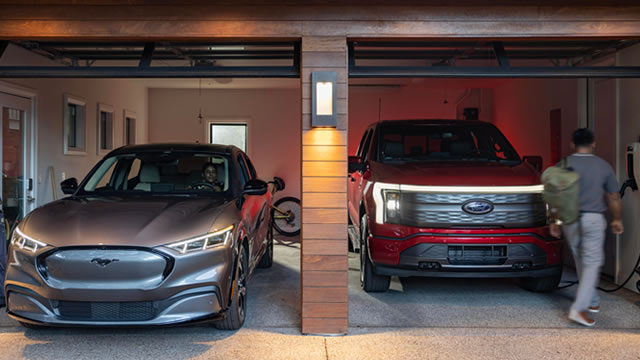
紧急辟谣合体传言,“两个”福特还能撑多久
Bei Jing Shang Bao· 2025-06-19 08:28
Core Viewpoint - Jiangling Motors denies rumors of merging Jiangling Ford with Changan Ford, stating no asset restructuring plans are in place [2] Group 1: Company Operations - Jiangling Motors has been collaborating with Ford since 1995, initially producing light passenger vehicles, and has since transitioned to passenger vehicles with the introduction of SUVs and MPVs [2] - Jiangling Ford focuses on the SUV and pickup market, while Changan Ford targets traditional passenger vehicles, creating a complementary product offering for Ford in China [3] Group 2: Market Performance - Ford's sales in China have significantly declined from nearly 1.27 million units in 2016 to 467,000 units in 2023, a drop of 63% [3] - Despite Jiangling Ford's denial of a merger, Ford is undergoing major adjustments in China, including focusing on core businesses and accelerating electrification [3][4] - In 2022, Jiangling Ford's passenger vehicle sales were 48,000 units, projected to decline to 39,000 units in 2023 and 35,000 units in 2024 [5] Group 3: Financial Performance - Ford reported a profit of approximately $600 million (around 4.3 billion RMB) in China last year, marking its first profit in seven years [4] - Changan Ford's sales increased by 5.97% year-on-year last year, but faced a 16.43% decline in the first five months of this year [5]