
Intel(INTC)

Search documents
英特尔Arc B770显卡临近上市:有望于CES 2026官宣,剑指RTX 5060
Feng Huang Wang· 2026-01-04 09:01
从目前已知的信息来看,BMG-G31 预计将推出四个 SKU,而这款旗舰显卡所采用的"Big Battlemage"GPU 可能配备最多 32 个 Xe2 核心,搭载 16GB GDDR6 显存,TDP 约为 300W。 1 月 4 日消息,@Haze2K1 今日发现,英特尔已在其 GitHub 仓库中添加了顶级 Battlemage 显卡 ——Arc B770 的相关代码。这意味着 Arc B770 将很快面 世,最快有望在 CES 2026 上亮相。 英特尔上一款面向游戏玩家的 Battlemage 显卡更新可追溯至 CES 2025 发布的 Arc B570,而距离上一代旗舰 A770 的推出已超过一年时间。 全新 Arc B770 将搭载代号为 BMG-G31 的 GPU 核心。待正式发布,这款显卡将接替 Arc A770 成为 Arc 独显产品线中的新旗舰。 在当前 DRAM 供应紧张、部分厂商可能推迟甚至取消新品计划的背景下,Arc B770 的出现被视为英特尔独显战略的重要一步,甚至不排除会成为 CES 2026 上唯一一款显卡新品的可能。市场普遍期待英特尔能在未来一年内带来更多实质性的 GPU ...


雷军:未来五年至少2000亿研发,加大大模型投入;Anthropic210亿美元购谷歌100万块TPU;罗永浩科技春晚翻车致歉,自曝ADHD引争议|AI周报
AI前线· 2026-01-04 08:56
行业热点 雷军:未来五年研发至少投入 2000 亿元,加大大模型投入 整理 | 傅宇琪、褚杏娟 雷军:未来五年研发至少投入 2000 亿元,加大大模型投入;微信回应安装包 10 多年膨胀数百倍;Anthropic 豪掷 210 亿美元购 谷歌 100 万块 TPU;比亚迪首次超越特斯拉,成全球最大电动汽车销售商;技术元老离场!腾讯 AI Lab 副主任俞栋离职;传快 手副总裁、基础大模型及推荐大模型负责人周国睿即将离职;新论文暗示 DeepSeek V4 已完成训练;Manus 武汉团队基本搬 离,核心业务人员迁往新加坡;"全球大模型第一股"来了!智谱发行市值达 511 亿港元;50 亿美元联姻!NVIDIA 正式收购 Intel 股份…… 1 月 3 日晚,小米集团董事长雷军在新年首场直播中透露,小米汽车 2026 年全年交付目标为 55 万辆,2025 年交付量超 41 万辆,超过原先计划的 30 万辆。而在今日早间发布的微博中,雷军称,"希望今年也能超额完成(目标)。" 雷军介绍小米规划聚焦三点:一是未来五年至少投入 2000 亿元坚持技术研发;二是加大对大模型的投入;三是坚持为人车家 全生态体验打造极 ...




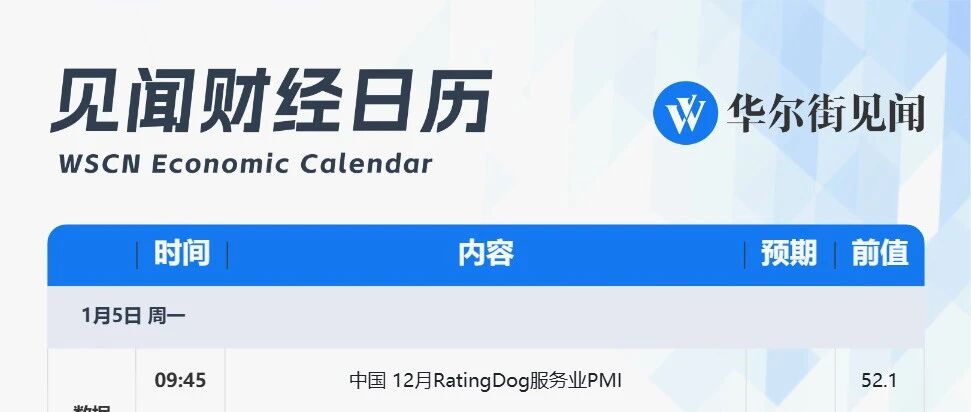
一周重磅日程:“科技春晚”CES、马杜罗或在美受审、美非农、智谱MiniMax港股上市
华尔街见闻· 2026-01-04 05:05
Core Viewpoint - The article highlights significant upcoming economic data releases and events that could impact investment opportunities, particularly focusing on the U.S. and China markets, as well as key technology developments at the CES event. Economic Data and Events - China is expected to release its December CPI and PPI data on January 9, with CPI growth projected to remain at 0.7% year-on-year and PPI decline narrowing to -1.9% from -2.2% [7] - The U.S. will release its December non-farm payroll report on January 9, with expectations of an increase of approximately 55,000 jobs and an unemployment rate holding steady at 4.6% [9] - The CES event will take place from January 4 to 9, featuring major tech leaders like NVIDIA's CEO Jensen Huang and AMD's CEO Lisa Su, who will present on advancements in AI hardware [10][11] IPOs and Market Activity - Several companies are set to launch IPOs in Hong Kong, including: - Zhipu AI, with a pricing of HKD 116.20 per share, expected to start trading on January 8 [15] - MiniMax, with a pricing range of HKD 151-165 per share, expected to start trading on January 9 [17] - Precision Medical, seeking to raise HKD 1.2 billion, expected to start trading on January 8 [18] - TianShu Intelligent Chip, aiming to raise HKD 3.68 billion, expected to start trading on January 8 [19] - GigaDevice Semiconductor, with a pricing range of HKD 162 per share, expected to be priced on January 9 [20] Geopolitical Events - South Korean President Lee Jae-myung is visiting China from January 4 to 7 to strengthen economic cooperation [21] - Venezuelan President Maduro may appear in a U.S. court on January 5, which could have implications for geopolitical stability and market reactions [12] - Ukrainian President Zelensky announced a meeting with U.S. officials on January 6 to finalize security agreements [13] Commodity Market Insights - The Bloomberg Commodity Index (BCOM) will undergo annual weight rebalancing from January 8 to 14, with warnings of potential technical sell-offs in gold and silver due to their overrepresentation in the index [14]


下周重磅日程:“科技春晚”CES、马杜罗或在美受审、美非农、智谱MiniMax港股上市
Hua Er Jie Jian Wen· 2026-01-04 04:10
Economic Data and Events - China will release December CPI and PPI data on January 9, with CPI expected to remain at 0.7% year-on-year and PPI's decline narrowing to -1.9% from -2.2% [7][8] - The U.S. will publish the December non-farm payroll report on January 9, with expectations of 55,000 new jobs and an unemployment rate of 4.6% [9] - The Bloomberg Commodity Index (BCOM) will undergo annual weight rebalancing from January 8 to 14, with significant technical selling expected for gold and silver due to their overrepresentation [19] IPOs and Market Activities - Several tech companies, including Zhipu AI, MiniMax, and GigaDevice, are set to launch IPOs in Hong Kong, with Zhipu AI priced at HKD 116.20 per share and expected to start trading on January 8 [20][21][22] - Lenovo will jointly launch an enterprise-level AI product with NVIDIA on January 6, highlighting the growing collaboration in AI technology [24] Political and Geopolitical Events - Venezuelan President Maduro is expected to appear in a U.S. court on January 5, facing charges related to drug trafficking and corruption [17] - Ukrainian President Zelensky announced a new round of talks with the U.S. on January 6, focusing on security guarantees for Ukraine [18] - South Korean President Lee Jae-myung will visit China from January 4 to 7, aiming to strengthen economic cooperation [23]
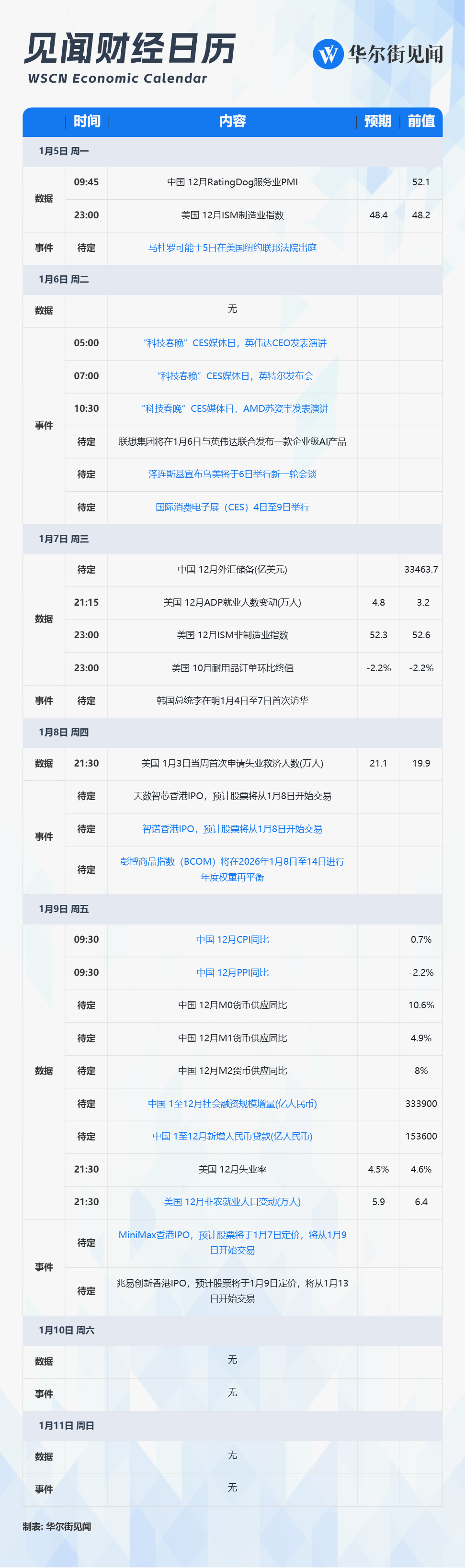
CES 2026前瞻:黄仁勋到处赶场站台,中国军团角逐AI明日终端
Tai Mei Ti A P P· 2026-01-04 02:13
Group 1: CES 2026 Overview - CES 2026 will take place from January 6 to January 9, 2026, in Las Vegas, showcasing the latest innovations in technology and serving as a window to predict future trends in the tech industry [2] - A total of 4,112 companies will participate, with China and the US being the main players, despite Apple's absence [2] - The central theme of CES 2026 will revolve around AI, transitioning into the stage of practical applications and integration across various industries, including consumer electronics and automotive sectors [2] Group 2: Key Company Highlights - Nvidia, AMD, and Intel are expected to showcase significant advancements in AI technology, with AMD's stock having risen over 75% in the past year [5] - AMD will unveil its next-generation mobile processor, the Ryzen AI 400 series, featuring 12 Zen 5 cores and enhanced NPU capabilities [5] - Intel will introduce the third-generation Core Ultra series processors, boasting a 50% performance improvement over the previous generation [5] Group 3: AI Integration in Consumer Electronics - AI is increasingly embedded in consumer electronics, with major home appliance companies demonstrating deep applications of AI to enhance product efficiency [9] - Hisense will launch the world's first upgraded display technology featuring a "four-core architecture" and AI image processing capabilities [9] - TCL will present a wide range of display products, including the world's first printed OLED screen for automotive displays [10] Group 4: Robotics and Smart Home Innovations - The robotics sector is seeing a surge in companies showcasing products capable of complex tasks, with a significant presence from Chinese firms at CES 2026 [19] - New products include flying vacuum cleaners and stair-climbing robots, indicating advancements in smart home technology [14][16] - Companies like Ecovacs and Roborock are expected to unveil new models in the cleaning appliance category, with Ecovacs CEO scheduled to give a keynote speech [12] Group 5: AI-Driven New Devices - CES 2026 will feature a variety of AI-native devices, including AI glasses and headphones, with numerous companies participating in this emerging market [23] - XREAL will showcase its latest AI glasses, while other firms will present innovative AR products [25] - Lightwear AI, a new wearable device, will be introduced, aiming to redefine human-computer interaction in the AI era [26] Group 6: Industry Discussions and Networking - TiMedia will host multiple roundtable discussions on topics such as AI's impact on industries and the commercialization of embodied intelligence [31] - A high-end networking event, "China Innovation Night," will take place, bringing together leaders from global tech brands and AI ecosystems [31] - The event will also feature the release of the "2026 CES Innovation List," recognizing outstanding achievements in technology and design [31]


300mm氮化镓,全球首发
半导体行业观察· 2026-01-04 01:48
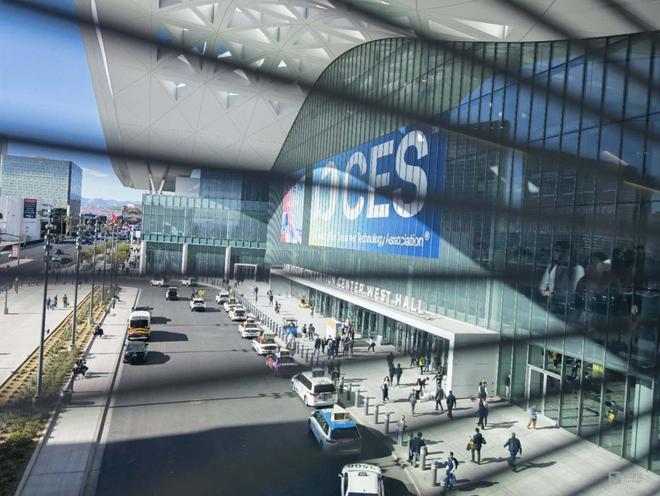
公众号记得加星标⭐️,第一时间看推送不会错过。 在IEDM 2025上,英特尔首次展示了一种基于300mm硅基氮化镓工艺的氮化镓Chiplet技术。该氮化 镓Chiplet技术具有以下特点: 英特尔认为,这项工作中展示的技术要素表明,300mm GaN-on-silicon 技术是一种有吸引力且功能 强大的Chiplet技术,适用于高性能、高密度、高效功率和高速/射频电子产品。 引言 随着计算解决方案向更高功率扩展以应用于图形和服务器平台,以及新兴的 5G/6G 通信不断提高数 据速率,氮化镓 (GaN) 和先进的 3D 封装等半导体技术在提供超越当前硅和 III-V 族技术的更高性 能、更高效率、更高集成度和更高密度方面,正发挥着越来越重要的作用。 在此前,就有专家提出了 300mm GaN-on-silicon 技术,由于其卓越的性能指标 (FoM) 以及将低电 压至 48V GaN 与硅 CMOS 集成的能力,正成为高密度、高性能功率和高速/射频电子器件领域极具 本文展示了实现基于 300mm 硅基 GaN 工艺的 GaN Chiplet技术所需的技术要素。图 2 展示了 GaN Chiplet集成的示 ...
晶圆代工,走向何方?
半导体行业观察· 2026-01-04 01:48
公众号记得加星标⭐️,第一时间看推送不会错过。 英伟达斥资超过7万亿韩元(约合48.6亿美元)收购英特尔股份,再次撼动了全球晶圆代工格局。此 举被解读为英伟达正在实现供应链多元化的信号,此前该公司几乎完全依赖台积电生产人工智能芯 片。随着台积电正式宣布2纳米制程工艺量产,三星电子和英特尔也加入竞争,围绕大型科技公司的 晶圆代工竞争正迎来一个重要的转折点。 根据近期行业报告,英伟达以每股23.28美元的价格购入了214,776,632股英特尔股票,总投资额达50 亿美元,约合7.2万亿韩元。此次收购使英伟达成为英特尔的主要股东,持有约4%的股份。业内人士 认为,这笔投资并非简单的财务决策,而是一项战略举措。分析表明,此举旨在将英特尔的CPU设计 技术与英伟达的AI能力相结合,同时为未来在芯片生产领域的合作留下空间。 目前两家公司之间尚未签署任何代工合同。然而,鉴于双方通过股权投资建立的紧密联系,评估认为 英伟达未来将部分人工智能芯片生产委托给英特尔的可能性有所增加。尤其值得注意的是,这项投资 与美国政府正在进行的"英特尔代工重建"战略相契合。英特尔已从美国政府获得57亿美元的补贴,并 正基于这笔资金准备大规模生 ...

科技分化加剧,中概股强势爆发,黄金冲高回落
Ge Long Hui· 2026-01-03 22:07
Market Overview - The market experienced a mixed performance with the S&P 500 rising by 0.66%, the Nasdaq declining by 0.03%, and the Dow Jones increasing by 0.19% [1] Banking Sector - The banking sector saw widespread gains, with Goldman Sachs surging by 4.02%, Morgan Stanley increasing by 2.46%, and other major banks like Bank of America, Citigroup, JPMorgan, Zions Bancorporation, and Alliance West Bank all rising by over 1% [3] Technology Sector - The technology sector displayed continued divergence, highlighted by Intel's significant increase of 6.72% and AMD's rise of 4.35%. However, notable declines were observed in Netflix, which fell by 3.95%, Tesla down by 2.59%, and Microsoft decreasing by 2.21%, with Amazon and META also experiencing declines of over 1% [3] Chinese Concept Stocks - Chinese concept stocks experienced a strong rally, with the China Golden Dragon index rising by 4.38%. Baidu saw a remarkable increase of 15.03%, while Bilibili rose by 7.24%, NetEase by 7.22%, Alibaba by 6.25%, and Tencent Holdings and iQIYI also saw gains exceeding 5% [3] Gold Market - The COMEX gold market experienced volatility, initially rising by 1.91% before closing slightly up by 0.02% at $4341.9 per ounce. The intraday trading range saw a low of $4340 and a high of $4414.8 [3]


Qué no perderse en CES 2026
Prnewswire· 2026-01-03 20:50
Los innovadores se presentan en el evento tecnológico más poderoso del mundo que regresa a Las Vegas del 6 al 9 de enero. ARLINGTON, Va., 3 de enero de 2026 /PRNewswire/ -- ® CES2026, el evento tecnológico más poderoso del mundo, regresa a Las Vegas, del 6 al 9 de enero, reuniendo a empresas globales, nuevas empresas innovadoras, ejecutivos de la industria, medios de comunicación globales y lÃderes gubernamentales para experimentar la próxima generación de tecnologÃa que resolverá los desafÃos globales. "CE ...


AMD(AMD.US)游戏处理器,创历史新高!
智通财经网· 2026-01-03 13:49
Valve发布了2025年12月的Steam硬件调查报告,结果显示,在游戏处理器市场,AMDAMD(AMD.US)正 逐步蚕食英特尔(Intel)(INTC.US)的霸主地位。这家"红色军团"在2025年第三季度的市场份额突破40%大 关后,仅用四个月时间,就再从英特尔手中夺走7%的份额——英特尔在2025年最后一期调查报告中的 占比为55.47%。其中,12月的增幅最为显著,AMD单月份额暴涨4.66个百分点,攀升至47.27%。值得 注意的是,这一增长态势是在当前内存供应短缺、DDR5等内存模组价格创下历史新高的背景下实现 的。 未来数月,Steam玩家将如何应对这场内存危机,值得持续关注。尽管Steam硬件调查并非严格意义上的 科学抽样调查,但在当前行业形势不明朗的背景下,其数据仍能清晰反映出游戏硬件市场的发展趋势。 本文转载自微信公众号"半导体行业观察";智通财经编辑:严文才。 挑战重重,内存容量仍逆势增长 本期Steam硬件调查的另一大惊喜是,尽管内存供应持续短缺,用户装机内存容量仍在稳步提升。近几 个月,人工智能行业对内存的海量需求持续挤占消费级市场份额,导致内存价格暴涨超100%。受此影 响,美 ...