
JD(JD)

Search documents
追加超过3000万元物资 京东全力保障香港大埔火灾后民生所需
Zheng Quan Ri Bao Wang· 2025-11-30 10:48
Core Points - JD Group announced an additional supply of over 30 million yuan for disaster relief and reconstruction efforts following the fire in Tai Po, Hong Kong [1][2] - The company established a special task force immediately after the fire to coordinate resources and deliver emergency supplies to the affected area [2] - JD's logistics team and local employees were mobilized to provide hot meals and distribute emergency supplies to shelters [2] Group 1 - The additional supplies will include essential living items for affected residents and home renovation products needed for rebuilding [2] - The supply list will be adjusted based on actual needs and the progress of reconstruction, ensuring timely delivery through JD's supply chain [2] - JD has maintained close communication with the Hong Kong SAR government under the guidance of the Liaison Office of the Central People's Government [2] Group 2 - The company plans to continuously monitor the recovery progress and optimize its support plan to assist the affected areas in returning to normalcy [2] - JD aims to work alongside local residents to help restore their lives to normal [2]
观察|“外卖大战”两个季度三巨头烧钱近800亿元,能否带来良性竞争
Xin Lang Cai Jing· 2025-11-30 01:17
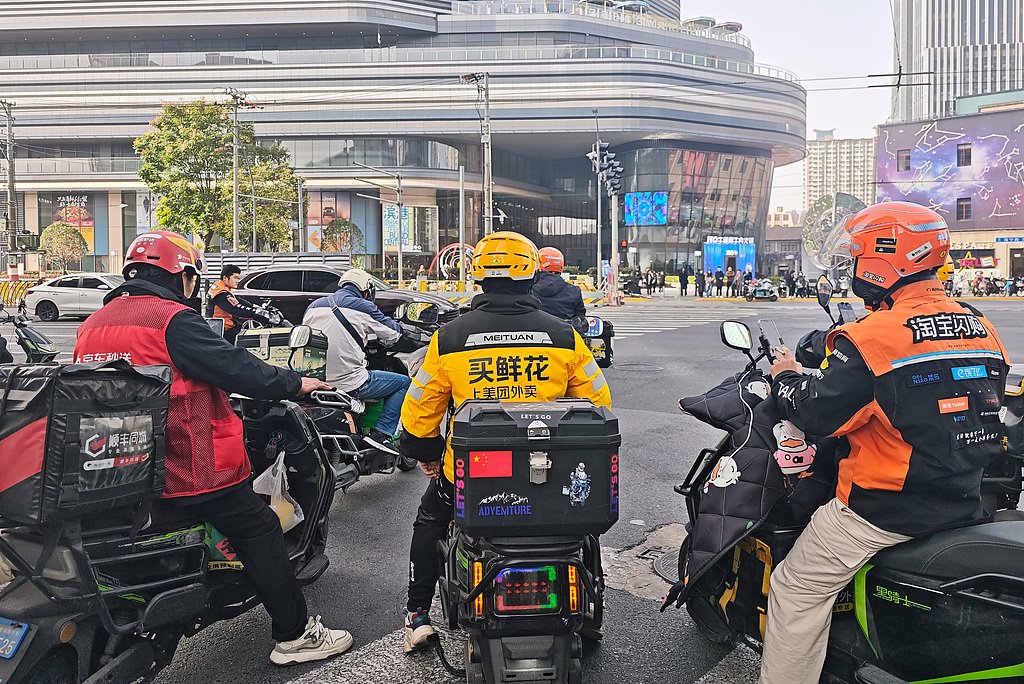
Group 1 - The core point of the article highlights the significant financial losses reported by the three major players in the food delivery industry, namely Meituan, Alibaba, and JD.com, due to intense competition and high marketing expenditures [2][3][4] - Meituan reported a record net loss of 16 billion yuan in Q3, marking its largest loss since its IPO, compared to a profit of 12.8 billion yuan in the same period last year [2] - Alibaba's net profit for the same quarter fell by 52% to 20.99 billion yuan, while JD.com saw a 55% decline in net profit to 5.3 billion yuan [2][3] Group 2 - The marketing expenses for Meituan surged by 90.9% to 34.3 billion yuan in Q3, primarily due to increased spending on promotions and user incentives in response to fierce competition [3] - JD.com's marketing expenses rose by 110.5% to 21.1 billion yuan, with a significant portion allocated to its new food delivery business [3] - Alibaba's sales and marketing expenses reached 66.5 billion yuan, up from 32.5 billion yuan year-on-year, indicating substantial investment in its e-commerce operations [3] Group 3 - The total expenditure on food delivery by the three companies in Q2 and Q3 is estimated to exceed 74.4 billion yuan, with Q3 alone accounting for 44.4 billion yuan, reflecting a 48% increase in spending [4] - Despite the high expenditures, the competitive landscape remains challenging, with companies like Alibaba indicating a potential reduction in spending in the upcoming quarters [4][5] - Meituan's CEO expressed that while losses may have peaked, the company will continue to invest to maintain its market leadership without engaging in price wars [2][4] Group 4 - The intense competition has led to a situation where merchants experience increased order volumes but decreased actual revenue, indicating a "growth without profit" scenario [7] - The average daily order volume for merchants increased by 7%, but their actual revenue declined by approximately 4%, highlighting the adverse effects of the subsidy wars [7] - The ongoing subsidy competition has raised concerns about market saturation and the sustainability of such aggressive pricing strategies in the long term [9]



百亿利润没了,外卖大战的残酷账本
吴晓波频道· 2025-11-30 00:21
Core Insights - The article discusses the intense competition in the food delivery market among Meituan, Alibaba, and JD, revealing significant financial losses and market share dynamics as a result of aggressive subsidy strategies [2][3][5][7][9]. Market Share and Financial Performance - Meituan leads the market with a daily order volume of 71 million, capturing 50% of the market share, followed by Alibaba at 42% and JD at 8% [2][9]. - Meituan reported a loss of 14.1 billion RMB in its core local business, a stark contrast to a profit of 14.5 billion RMB in the same period last year, contributing to an overall loss of 16 billion RMB for the quarter [3][9]. - JD's new business segment, which includes food delivery, incurred a loss of 15.7 billion RMB in Q3, totaling 31.8 billion RMB in losses over nine months [5][6]. - Alibaba's operating profit related to the food delivery battle fell to 5.37 billion RMB, down 85% year-on-year, with a net profit of 20.61 billion RMB, a 53% decline [7][9]. User Engagement and Growth - Despite financial losses, user engagement has increased significantly, with Meituan's active user base surpassing 800 million and JD's reaching over 700 million [9]. - The competition has led to a surge in active users for all platforms, with Meituan's daily active users growing over 20% year-on-year [9][34]. Competitive Strategies and Market Dynamics - The article highlights the shift from a subsidy war to a focus on operational efficiency as companies adapt to market pressures and regulatory scrutiny [23][49]. - Meituan's CEO emphasized the company's commitment to maintaining its market position and creating long-term value through strategic investments [19][51]. - The competition has also led to a blurring of business boundaries among the three platforms, increasing user overlap and engagement [34]. Impact on Delivery Workforce - The number of active delivery riders has surged, with a 140% increase in monthly active riders by July, reflecting the growing demand for delivery services [37][41]. - The profile of delivery riders is evolving, with more young and female workers entering the field, indicating a shift in the labor market dynamics [41][42]. Conclusion - The article concludes that the ongoing competition in the food delivery sector is reshaping the market landscape, with significant implications for business models and consumer behavior, ultimately paving the way for a new era in local commerce [52].

刘强东:未来机器人会完成所有工作!网友:技术垄断或加剧贫富分化
Sou Hu Cai Jing· 2025-11-29 22:36
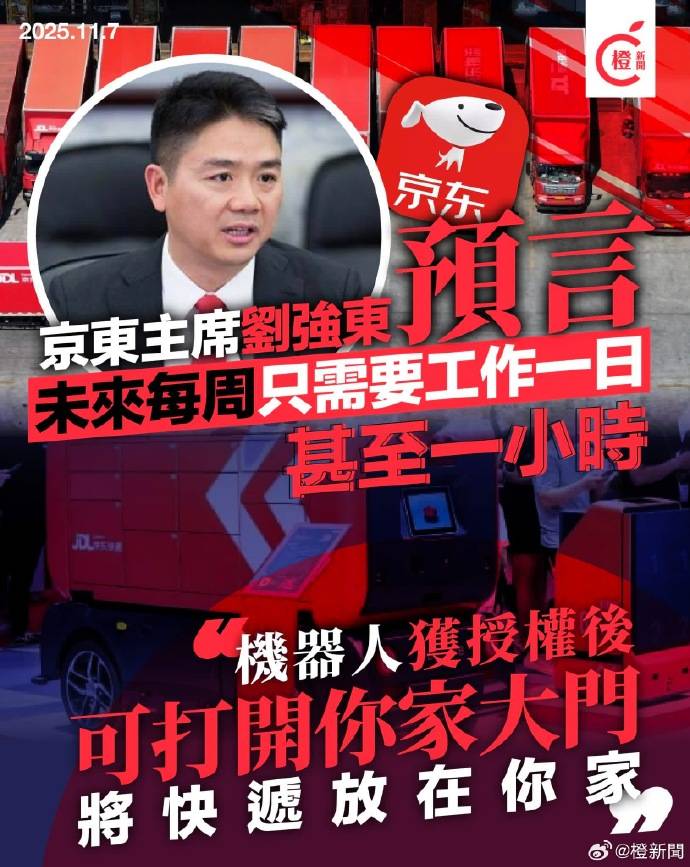
Core Insights - Liu Qiangdong's statement about "robots completing all work" signifies JD's commitment to automation in logistics and sparks societal discussions on employment and wealth distribution in the automation era [2][3] - JD Logistics has achieved 90% automation in warehousing and sorting, with over 700,000 kilometers of testing for unmanned trucks and over one million kilometers for last-mile delivery vehicles [2] - Aiming for a fully automated delivery station by April 2026, JD plans to procure 3 million robots, 1 million unmanned vehicles, and 100,000 drones over the next five years [2] Automation and Employment - Liu predicts that automation will significantly reduce working hours, with employees potentially working only one day a week or even one hour, allowing a shift towards creative fields [3] - While positions like couriers face replacement risks, JD claims that modular design will enable workers to transition to technical roles such as equipment maintenance and scheduling [3] - Critics argue that the notion of working one day a week is unrealistic, especially for low-skilled laborers who may face structural unemployment [3] Wealth Distribution and Societal Impact - Liu has suggested that the wealth generated by robots could lead to a form of communism, where the government redistributes resources to eliminate wealth gaps [3] - This vision raises questions about the fair distribution of wealth created by automation, with concerns that without institutional safeguards, technological monopolies could exacerbate wealth inequality [3] - The discussion emphasizes the need for policies like "excess profit tax" to reinvest in education and social welfare [3] Technological Utopia vs. Social Reality - The advancement of unmanned delivery is seen as irreversible, yet the ideal of "robots supporting humanity" requires institutional innovation to ensure equitable benefits [3] - Historical patterns indicate that technological revolutions will eventually create new balances, but the transitional pains necessitate shared responsibility between companies and society [3] - Public sentiment reflects a desire for equitable distribution of automation's benefits, highlighting concerns that ordinary people may not share in the wealth generated by robots [3]

利润减少数百亿,外卖大战还打吗?
财联社· 2025-11-29 14:45
Core Viewpoint - The intense competition in the food delivery sector has significantly impacted the profits of major platforms like Meituan, Alibaba, and JD.com, leading to a shift towards refined operations in the ongoing battle for market share [1][2][5]. Financial Performance - In Q3, Meituan's core local business segment reported a loss of 14.1 billion yuan, down from a profit of 14.6 billion yuan in the same period last year, with a profit margin decline from 21% to -20.9% [2]. - Alibaba's e-commerce group adjusted EBITA was 10.497 billion yuan, a decrease of 33.83 billion yuan year-on-year [2]. - JD.com reported a loss of 15.736 billion yuan in new business operations, an increase in losses by 15.121 billion yuan compared to the previous year [2]. Market Dynamics - The three major platforms collectively saw a reduction of over 77 billion yuan in operating profits from food delivery and related businesses compared to last year [3]. - Meituan's shift from profit to loss in its core local business is attributed to declining gross margins and increased spending on user incentives and advertising to maintain market position amid fierce competition [3]. - Both Meituan and Alibaba's management emphasized that the price war is unsustainable and does not create real value for the industry [3][4]. Strategic Shifts - The food delivery battle is expected to evolve into a long-term engagement, with intensified competition between Alibaba and Meituan, impacting JD.com, Douyin, and Pinduoduo significantly [5]. - Meituan is focusing on enhancing cooperation with brand merchants and expanding its "brand officer flag lightning warehouse" for 24-hour delivery services [6]. - JD.com is witnessing an increasing conversion rate of new users from food delivery to other services, with nearly 50% of early food delivery users transitioning to other business areas [6]. Future Outlook - The future competition among food delivery platforms will shift towards refined operations, focusing on unit economic efficiency and multi-business collaboration [7]. - Instant retail is set to become the main battleground, with platforms like Meituan and Alibaba enhancing their operational efficiencies and expanding their service offerings [7]. - A recent report from JPMorgan highlights that platforms may shift subsidies towards higher-ticket lunch and late-night orders, which could improve profitability per order [7].

外卖三国杀新阶段:不想打,但也停不下
Di Yi Cai Jing· 2025-11-29 13:41
Core Insights - The recent earnings reports from JD, Alibaba, and Meituan reflect the impact of the intense competition in the food delivery sector, indicating a shift in strategy as companies reassess their investments and profitability boundaries [1][3][5] Group 1: Company Strategies - Meituan's CEO Wang Xing firmly opposes price wars in the food delivery sector, stating that they do not create value for the industry [1] - Alibaba's e-commerce CEO Jiang Fan highlighted improvements in unit economics for instant retail, indicating a significant reduction in short-term losses and a notable decrease in overall investment in flash purchase business for the next quarter [1][3] - JD has quietly reduced its investment in food delivery services in the third quarter, signaling a strategic retreat from aggressive competition [1][3] Group 2: Market Dynamics - The food delivery market is entering a more complex phase where companies express a desire to avoid price wars but feel compelled to continue competing [2][5] - The competitive landscape has shifted, with Meituan capturing 47.1% of the market share, Alibaba at 42.3%, and JD at 8.4%, indicating a significant change from previous perceptions of a more balanced market [5] - The reduction in subsidies has led to a noticeable decline in order volumes for both consumers and merchants, with reports of a 20% drop in sales for some businesses [4][5] Group 3: Consumer Behavior - Consumers have adjusted their habits, with many now favoring Meituan and Alibaba's flash purchase services, noting that flash purchase prices are often lower while Meituan offers more reliable delivery speeds [3][4] - The decrease in subsidies has been felt by consumers, with many reporting a reduction in the frequency of low-priced promotions [3][4] Group 4: Future Outlook - The next phase of competition will focus on efficiency rather than capital expenditure, with companies expected to adapt their strategies based on market dynamics [6][8] - Both Meituan and Alibaba are exploring new strategies, such as Meituan's focus on high-value orders and Alibaba's emphasis on "explosive product groups" to enhance customer engagement and reduce decision-making time [7][8] - The ongoing challenges from previous low-price competition will require platforms to innovate in supply chain and operations to emerge successfully from the current market conditions [8]
外卖三国杀新阶段:不想打,但也停不下
第一财经· 2025-11-29 13:14
Core Insights - The article discusses the recent developments in the food delivery industry, particularly focusing on the financial reports of major players like JD.com, Alibaba, and Meituan, highlighting the impact of the "delivery war" on their business strategies and financial performance [2][3]. Group 1: Industry Dynamics - The food delivery battle has led to significant financial strain, prompting companies to reconsider their investment strategies and operational efficiency [2][7]. - Meituan's CEO Wang Xing emphasized the unsustainable nature of the price war, indicating a shift towards efficiency-driven competition rather than capital-driven growth [7][9]. - The market share dynamics have shifted, with Meituan holding 47.1%, Alibaba at 42.3%, and JD.com at 8.4% as of Q3 2025, indicating a significant change from previous perceptions of market distribution [6]. Group 2: Financial Performance and Strategy Adjustments - Alibaba's CFO Xu Hong noted that Q3 represented a peak in investment for flash purchase services, with expectations for significant reductions in the following quarter [3][5]. - Meituan and JD.com have already begun to reduce their subsidies, with Meituan's delivery volume and rider earnings declining as a result of the reduced promotional activities [4][6]. - The article highlights a trend where consumers are noticing a decrease in delivery subsidies, impacting their purchasing behavior and the overall market dynamics [4][5]. Group 3: Future Outlook and Strategic Shifts - The next phase of competition will focus on operational efficiency and innovation, with companies like Alibaba and Meituan exploring new strategies such as "explosive product groups" and "meal sharing" to attract consumers [10][11]. - Both companies are adjusting their focus towards higher-value orders, with Meituan reporting that over 70% of its orders exceed 30 yuan, indicating a strategic pivot towards more profitable segments [10][11]. - The article concludes that the ability to innovate and enhance supply chain operations will be crucial for companies to navigate the post-subsidy landscape and emerge successfully from the current market challenges [12].
超百家企业捐赠总额超12亿港元,企业驰援香港大埔火灾救援


第一财经· 2025-11-29 07:06
Core Points - A significant fire occurred in Hong Kong's Tai Po district, resulting in major casualties and prompting over 100 companies and foundations to donate for emergency relief and community recovery efforts, with total donations exceeding HKD 1.2 billion [2][4]. Donation Summary - Major companies such as Yuexiu Group donated HKD 10 million, while China Overseas and China State Construction contributed HKD 20 million [3]. - Tencent donated HKD 30 million, and Alibaba made an initial donation of HKD 20 million [3]. - Other notable contributions include HKD 30 million from the Li Ka Shing Foundation and HKD 12 million from the Chaozhou Association [4]. - The total amount of donations has surpassed HKD 1.2 billion as of the latest reports [4].

数千架空客A320飞机需紧急更换软件|首席资讯日报
首席商业评论· 2025-11-29 05:08
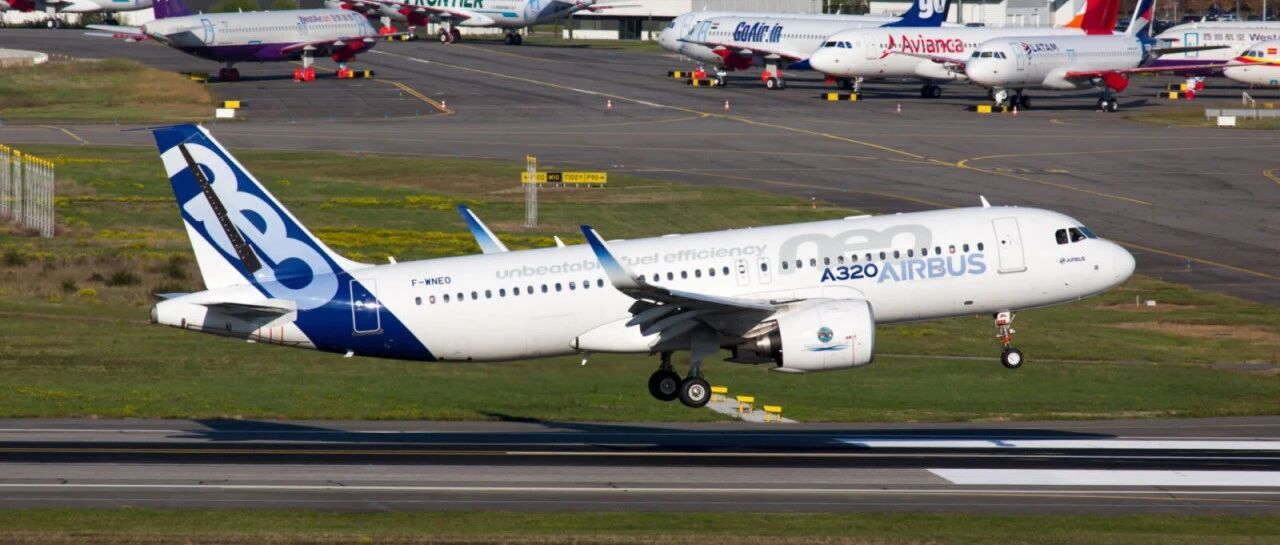
Group 1 - Airbus A320 aircraft require urgent software replacement due to vulnerability to solar radiation, affecting approximately 6,000 planes, following an incident involving JetBlue Airlines [2] - Changan Automobile's subsidiary, Avita Technology, has applied for a public listing on the Hong Kong Stock Exchange, focusing on high-end smart connected electric vehicles [3] - SolGold Plc has rejected a second acquisition offer from China Molybdenum, with the latest bid at 26 pence per share, leading to a significant increase in SolGold's stock price [4] Group 2 - Sohu Video plans to increase procurement of American TV shows and movies, aiming to provide a better experience for users seeking non-pirated content, despite current profitability challenges [5] - GSMA reports that global mobile operators' cybersecurity spending is projected to double from $15-19 billion annually to $40-42 billion by 2030, highlighting the need for better regulatory collaboration [7] - Samsung has dissolved its HBM development team, integrating it back into the DRAM division, indicating challenges in the high-bandwidth memory market [8] Group 3 - Xiahe Technology has initiated IPO counseling with CITIC Securities, aiming for a public offering [9] - DeepSeek has launched a new mathematical reasoning model, DeepSeekMath-V2, which utilizes a self-verifying training framework and has achieved high scores in competitive evaluations [10] - Xiaomi faced a legal setback in a case regarding unreturned deposits for undelivered cars, with the court ruling against the company's contract terms [11] Group 4 - Citigroup analysts suggest that Li Ning is unlikely to acquire foreign brands in the near term due to its current business strategy, maintaining a "buy" rating on several Chinese sportswear stocks [12] - JD.com announced changes to its JD Bean rules, with a maximum validity of 180 days starting in 2026 [13]






追加超过3000万元物资:京东保障香港大埔火灾后民生所需
Xin Lang Cai Jing· 2025-11-29 01:15
11月28日,京东集团宣布,将追加总价值超过 3000万元人民币的物资,专项用于香港大埔火灾灾后物 资补给、灾后重建和民生保障。此次追加的物资,将涵盖受灾居民目前所需的应急生活物品、家园重建 重修所需的装修及家用商品等,所需物资清单,将会按照实际所需,按重建进度,第一时间通过京东的 供应链体系,送达当地政府和居民手中。(智通财经记者 范佳来) ...