
LI AUTO(LI)

Search documents
多家车企1月销量出炉 出口成拉动销量重要因素
Zhong Guo Zhi Liang Xin Wen Wang· 2026-02-05 05:41
转自:中国质量报 多家车企1月销量出炉 出口成拉动销量重要因素 □ 本报记者 岳 倩 近日,多家车企陆续披露新年首月销量数据。整体来看,1月车企销量呈现出同比稳健上升、环比回落 的特征,新能源车与燃油车、新势力与传统品牌的市场表现呈现出结构性分化趋势。在国内存量竞争日 趋白热化的背景下,出口成为车企拉动整体销量、对冲国内市场波动的增长极。 据了解,车企往往选择在年底刺激销量,大部分车企2025年12月的销量基数较高。此外,1月为传统汽 车销售淡季,叠加新能源汽车购置税补贴退坡、以旧换新和报废补贴规则修改等政策换挡影响,因此, 大部分车企出现"环比下滑"的趋势符合市场规律。 传统车企的销量数据显示,有燃油车业务板块的车企在一定程度上对冲了风险,1月表现相对稳健;同 时,海外市场已经成为销量的重要增长极。 央国企方面,上汽集团实现整车批售32.7万辆,同比增长23.9%,环比下降约18.03%;海外销售10.5万 辆,同比增长51.7%。广汽集团销售汽车11.66万辆,同比增长18.47%,环比下滑37.79%,海外销量同比 增长68.59%。 民营企业方面,吉利汽车销量为27.02万辆,同比增长1.29%,环比 ...




腾讯等入股新石器无人车
Xin Lang Cai Jing· 2026-02-05 03:24
天眼查App显示,近日,新石器无人车关联公司新石器慧通(北京)科技有限公司发生工商变更,新增 广西腾讯创业投资有限公司、湃栎投资有限合伙企业为股东。新石器慧通(北京)科技有限公司成立于 2018年2月,法定代表人为李子夷,注册资本约4138万人民币,经营范围包括工业机器人制造、智能机 器人的研发、智能机器人销售等。股东信息显示,该公司现由余恩源、理想汽车关联公司北京车和家信 息技术有限公司及上述新增股东等共同持股。 来源:滚动播报 ...

中国汽车 - 智能驾驶座舱加速走向集成-China Autos & Shared Mobility-One box, one dream - Smart-drivingcockpit racing towards integration
2026-02-05 02:22
Summary of Conference Call on China Autos & Shared Mobility Industry Overview - The focus is on the integration of smart-driving and cockpit functionalities within the automotive industry, particularly in China. This integration is expected to accelerate significantly in the next 6-12 months due to advancements in VLA (vision-language-action) models and a pressing need for cost savings [1][2]. Key Insights 1. **Integration of Smart Systems**: The integration of smart cockpit and smart driving systems is anticipated to reach a new level, with penetration rates of approximately 80% for smart cockpits and 60% for smart driving (L2 and above) in China by 2025. This shift is driven by the synergy between these systems, increased AI computing needs, and OEMs' focus on cost savings [2][3]. 2. **Cost Savings from Integration**: Integrating cockpit and driving functions onto a single SoC (System on Chip) could yield cost savings of Rmb2-3k per vehicle by eliminating the need for separate hardware components. This integration is expected to make advanced features accessible in vehicles priced below Rmb150k [10][11]. 3. **Technological Advancements**: The automotive industry is witnessing rapid technological upgrades, with chip processes advancing from 7nm to 5nm and below. This is crucial for meeting the higher computing power demands of L3 autonomous driving systems, which require onboard computing power ranging from 700 to 2250 TOPS [4]. 4. **Market Dynamics**: Companies like Horizon Robotics are positioned to benefit from this trend, provided they can compete effectively with established players like Nvidia in the SoC market. However, this integration poses risks for tier-one DCU makers, as it may lead to a decrease in the value content of their products [11][16]. Additional Considerations - **Supplier Landscape**: Key suppliers and OEMs adopting integrated smart cockpit and driving solutions are highlighted, indicating a shift in the competitive landscape within the industry [11]. - **Risks**: Potential risks include slower-than-expected adoption of ADAS/AD technologies, supply chain disruptions, and successful in-house hardware design initiatives by OEMs [18]. Conclusion The automotive industry in China is on the brink of significant transformation with the integration of smart-driving and cockpit functionalities. This shift is driven by technological advancements, cost-saving measures, and changing market dynamics, presenting both opportunities and risks for stakeholders involved.


科技股遭抛售,AMD大跌17%
Mei Ri Jing Ji Xin Wen· 2026-02-05 01:04
Market Performance - The three major U.S. stock indices closed mixed on Wednesday, with the Dow Jones Industrial Average rising by 0.53%, while the Nasdaq Composite fell by 1.51% and the S&P 500 declined by 0.51% [2] - Popular technology stocks experienced widespread declines, with AMD dropping over 17%, and Nvidia, Tesla, Broadcom, and Meta each falling more than 3% [2] Sector Performance - Semiconductor equipment and materials, as well as storage concept stocks, saw significant declines, with SanDisk falling nearly 16% and Micron Technology dropping over 9% [2] - In contrast, weight loss drug concept stocks and residential real estate sectors performed well, with Eli Lilly rising over 10% and Amgen increasing by more than 8% [2] Chinese Stocks - The Nasdaq Golden Dragon China Index fell by 1.95%, with popular Chinese concept stocks generally declining; Bilibili dropped over 6%, Baidu fell more than 4%, and Alibaba, NIO, and Xpeng Motors each decreased by over 2% [2] - However, Li Auto and Bawang Tea saw gains, with Li Auto increasing by over 1% [2]


8点1氪丨微信公关总监回应屏蔽元宝链接;vivo确认立项Vlog相机,对标大疆;贾国龙微博解禁,首发内容是速冻西兰花科普视频
3 6 Ke· 2026-02-05 00:04
Group 1 - Novo Nordisk's semaglutide sales reached 250.84 billion yuan in 2025, with a year-on-year growth of over 10% [5] - The sales breakdown includes 127.09 billion Danish kroner for Ozempic, 79.11 billion for Wegovy, and 22.09 billion for oral semaglutide [5] - In China, the total sales for all three semaglutide products amounted to 6.81 billion Danish kroner (approximately 7.49 billion yuan) [5] Group 2 - The Hong Kong High Court rejected Xu Jiayin's appeal regarding the appointment of a receiver and ordered him to pay 1.2 million HKD in legal fees by February 20 [6] - The National Healthcare Security Administration is conducting collective interviews with mental health insurance institutions to strengthen management and combat misuse of insurance funds [6][7] Group 3 - Panasonic's CFO announced potential layoffs could expand to 12,000 employees, following a previous plan to cut 10,000 jobs globally [8] - Multiple small and medium-sized banks have announced increases in deposit rates ahead of the Spring Festival, while some banks have opted to lower rates [8] Group 4 - Walmart's market capitalization surpassed 1 trillion USD, with a stock price increase of over 24% in the past year [10] - PayPal announced that Enrique Lores will take over as CEO on March 1, aiming to enhance execution efficiency and advance strategic initiatives [11] Group 5 - AMD reported a fourth-quarter net profit of 2.52 billion USD, with a year-on-year growth of 42% and revenue of 10.27 billion USD, exceeding market expectations [23] - Alphabet's fourth-quarter net profit was 34.455 billion USD, a 29.8% increase year-on-year, with total revenue of 113.83 billion USD [21]


全世界都在抢的车,中国却开始嫌弃
汽车商业评论· 2026-02-04 23:06
Core Viewpoint - The article discusses the significant decline in the growth rate of plug-in hybrid vehicles (PHEVs) in the Chinese automotive market, highlighting the competitive pressure from pure electric vehicles (EVs) and the changing consumer preferences that have led to this shift [4][6][7]. Group 1: Market Trends - In 2025, the growth rate of PHEVs dropped to 8.8%, with range-extended vehicles seeing a mere 6% increase, marking the first instance of consecutive monthly declines in this segment [6][7]. - The penetration rate of PHEVs in the new energy vehicle market surged from 17% in 2021 to 40% in 2024, but the market dynamics shifted dramatically in 2025 [4][6]. - The average price of pure electric vehicles fell by 15% from 168,000 yuan in 2024 to 143,000 yuan in 2025, while mainstream PHEVs remained in the 150,000 to 180,000 yuan range, erasing the price advantage previously held by PHEVs [11]. Group 2: Consumer Behavior - The average range of pure electric vehicles exceeded 528 kilometers in 2025, with many mainstream models surpassing 600 kilometers, significantly reducing consumer anxiety regarding range [15]. - The rapid development of charging infrastructure, with a car-to-charging station ratio of 2.5:1 and a total of 20.09 million charging facilities by the end of 2025, has made pure electric vehicles a more reliable choice for consumers [15]. - Consumers are increasingly viewing pure electric vehicles as a dependable option, leading to a decline in the perceived necessity of PHEVs, which were initially chosen to alleviate range anxiety [15][19]. Group 3: Technological Shifts - PHEVs are experiencing a shift towards larger battery capacities and faster charging solutions, with many manufacturers adopting battery sizes exceeding 60 kWh to enhance their appeal [27][29]. - The introduction of 800V high-voltage platforms and ultra-fast charging technologies is becoming standard, allowing for significant improvements in charging efficiency [15][27]. - The trend of integrating larger batteries into PHEVs is raising production costs, which could undermine their competitive pricing advantage [32][35]. Group 4: Regulatory Environment - New regulations set to take effect in 2026 will tighten the eligibility criteria for tax exemptions for PHEVs, making it more challenging for lower-end models to compete [39][40]. - The shift from a "universal" tax exemption policy to one that favors stronger models will further complicate the market landscape for PHEVs [37][41]. Group 5: Future Outlook - Despite the current challenges, the article suggests that PHEVs will maintain a significant market share, with a projected penetration rate of 36% in 2025, corresponding to 4.669 million units [51]. - The global market for PHEVs is expected to grow, with predictions indicating that their growth rates will surpass those of pure electric vehicles in the coming years [60][66]. - The unique energy structure and market conditions in China suggest that PHEVs will continue to play a crucial role in the automotive landscape, particularly in regions with less developed charging infrastructure [52][54].


恒生指数收涨0.05%,煤炭、内房股走高,科网股低迷
Jin Rong Jie· 2026-02-04 09:58
作者:观察君 2月4日,港股收盘,恒生指数收涨0.05%,报26847.32点;恒生科技指数收跌1.84%,报5366.44点。 板块方面,煤炭股涨幅居前,兖矿能源涨超10%,中国神华涨超5%;芯片股走势疲软,上海复旦跌超 5%,华虹半导体跌近5%;科网股整体表现低迷,腾讯控股跌近4%,哔哩哔哩跌超3%;内房股集体走 高,世茂集团涨超14%,融创中国涨超8%。恒生指数成分股中,信义玻璃、中国神华、华润置地涨幅 靠前;携程集团-S、腾讯控股、网易-S跌幅居前。恒生科技指数成分股中,理想汽车-W、零跑汽车、 海尔智家涨幅靠前;金蝶国际、携程集团-S、同程旅行跌幅居前。 声明:市场有风险,投资需谨慎。本文为AI基于第三方数据生成,仅供参考,不构成个人投资建议。 本文源自:市场资讯 ...


小摩:在理想汽车的持股比例升至5.07%
Zhong Guo Qi Che Bao Wang· 2026-02-04 09:32
香港交易所信息显示,摩根大通在理想汽车-WH股的持股比例于01月29日从4.73%升至5.07%,购 买的平均股价为67.3824港元。 ...
7年贷+减配,买车“套路”大揭秘
3 6 Ke· 2026-02-04 08:51
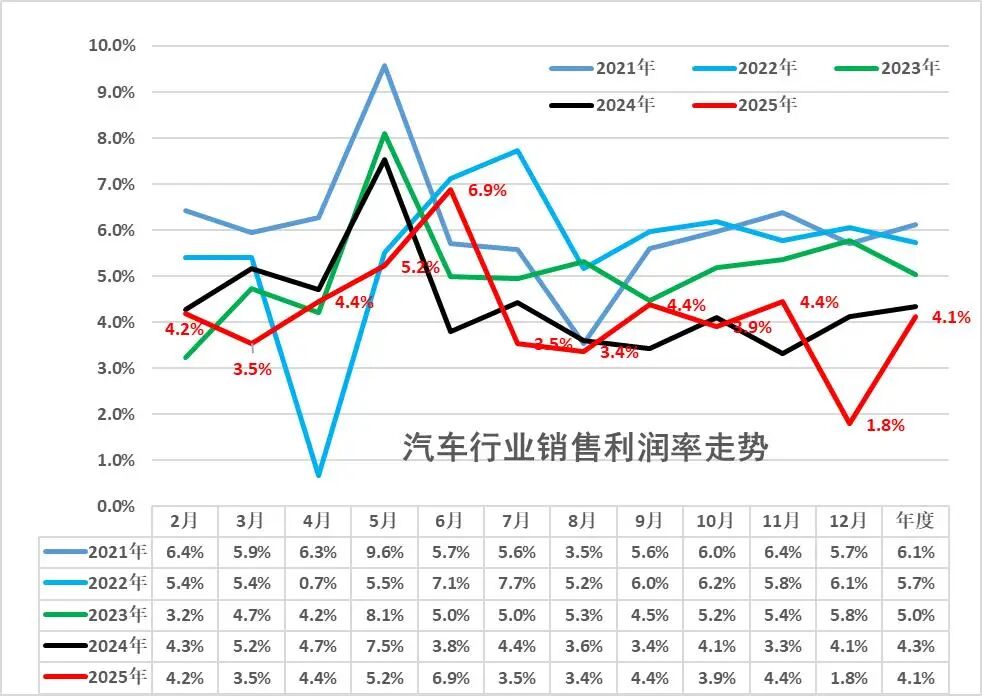
20多个品牌、超75款车疯狂促销。2026年刚开年,车圈就跟打了鸡血一样!什么"现金直降"、"零首付开走"、"月供一千三"的广告满天飞,好像不买就亏 了。 这波热闹促销的背后,其实藏着一个让行业都沉默的数据:去年12月,整个汽车行业的销售利润率,只剩下1.8%了。 什么概念?比去年同期直接腰斩, 甚至低于很多保本理财的收益。 数据来源:崔东树 就算看全年,平均利润4.1%,也是连续两年趴在地板上,低于工业平均的5.9%。 车是越造越多,2025年产了3478万台,增长10%,但"增产不增利",终究是压着车企喘不过气。 那么问题来了:利润都去哪了?车企为了活下去,使出的招数会不会影响我们买车? 三座大山压垮车企 利润薄得像张纸,有哪些大山正在压垮车企? 第一座山:原材料大涨。 来看瑞银刚出的这份研报,过去三个月,铝价涨了,单车成本多出约600块;铜价涨了,又多出1200块。但这都是小头,波动最大的是锂,一辆装80度电 池的纯电车,光锂成本就涨了约3800元! 仅金属部分,一辆电车成本就多出5600元。 你以为这就完了?更狠的还在后面——内存。 蔚来李斌之前预警得一点没错:到2026年,车企最大的成本压力可能不是 ...

登春晚、进工厂!车企“造人”从技术演示进入量产冲刺阶段
Xin Lang Cai Jing· 2026-02-04 08:29
Group 1 - The automotive industry is undergoing a transformation with the integration of "vehicles, people, and machines," leading to a significant shift towards intelligent robotics [1] - The "Wuyou" AI traffic management robot by Moja Robotics has officially started operations, collaborating with traffic police to manage traffic and identify violations [1] - Xiaopeng Motors has merged its autonomous driving and smart cockpit departments into a new General Intelligence Center, indicating a strategic focus on AI in automotive and robotics [1][2] Group 2 - Tesla's third-generation humanoid robot, Optimus V3, is set to be mass-produced, with an expected annual output of one million units, showcasing a shift from demonstration to production in the humanoid robot race [2] - Over twenty automotive companies globally are investing in humanoid robotics, with some already integrating these robots into their factories [2] - Li Auto has confirmed a leadership change to focus on humanoid robotics, with new job postings indicating a push for expertise in embedded software and motor development [2] Group 3 - Seres has established a new company focused on intelligent robotics and AI software development, marking its entry into the "automotive + AI + robotics" ecosystem [3] - Morgan Stanley has significantly raised its forecast for humanoid robot sales in China, predicting a 133% year-on-year increase to 28,000 units in 2023, with long-term projections reaching 260,000 units by 2035 [3] Group 4 - The automotive manufacturing sector is seen as a key area for the application of embodied robots due to its large scale and established automation [4] - Challenges remain for the integration of embodied robots in automotive manufacturing, including the maturity of core technologies and high operational costs [4] - The application of embodied robots in the automotive sector is expected to accelerate, driven by policy, market demand, and technological advancements [4]
