Luckin Coffee(LKNCY)

Search documents
3万店叩关全民咖啡时代,瑞幸的本土生长启示录
新浪财经· 2026-02-11 11:07
Core Viewpoint - Luckin Coffee has successfully transformed the coffee consumption landscape in China, achieving a milestone of 30,000 stores by focusing on accessibility, affordability, and quality, thus redefining coffee as a daily necessity rather than a luxury item [2][4][40]. Group 1: Market Context - Before Luckin's emergence, the Chinese coffee market was perceived as elitist, with a significant barrier between high-end brands and ordinary consumers [5][6]. - The market was dominated by international brands that maintained high prices and limited access for new entrants, creating an uneven playing field [6][7]. - Luckin Coffee's entry disrupted this status quo, challenging the established norms and offering a new approach to coffee consumption [8][9]. Group 2: Business Model and Strategy - Luckin's strategy focuses on scale, affordability, and a robust supply chain, allowing it to penetrate the market effectively [11][12]. - The company emphasizes convenience with a network of stores designed to be easily accessible, integrating coffee into daily life across various locations [11][12]. - By offering coffee at a price point of 9.9 yuan, Luckin has effectively lowered the barrier for consumers, making quality coffee accessible to a broader audience [15][16][19]. Group 3: Quality and Supply Chain - Luckin maintains high quality by directly sourcing coffee beans from global production areas, ensuring control over the supply chain and product quality [20][31]. - The company has established partnerships with key coffee-producing countries, such as Brazil and Colombia, to secure high-quality beans and maintain consistent supply [31][32]. - The integration of a digital supply chain enhances operational efficiency, allowing for real-time monitoring and optimization of processes from bean roasting to store delivery [35][36]. Group 4: Consumer Engagement - Luckin understands the emotional needs of young consumers, positioning coffee as a comforting and accessible beverage rather than a status symbol [12][14][24]. - The brand's marketing strategy focuses on relatable messaging, making coffee a part of everyday life rather than an exclusive experience [14][24]. - By prioritizing value over price, Luckin has cultivated a loyal customer base that appreciates quality without the burden of high costs [19][24]. Group 5: Future Outlook - With its extensive network and innovative supply chain, Luckin is poised to expand beyond China, aiming to establish itself as a global coffee brand [36][41]. - The company's success serves as a model for local brands, demonstrating that understanding consumer needs and maintaining quality can lead to significant market breakthroughs [40][41]. - Luckin's journey reflects a broader trend of local brands redefining industries through innovation and deep market understanding [42].



亮剑浦江:网络法治在上海的生动实践
Xin Lang Cai Jing· 2026-02-11 08:50
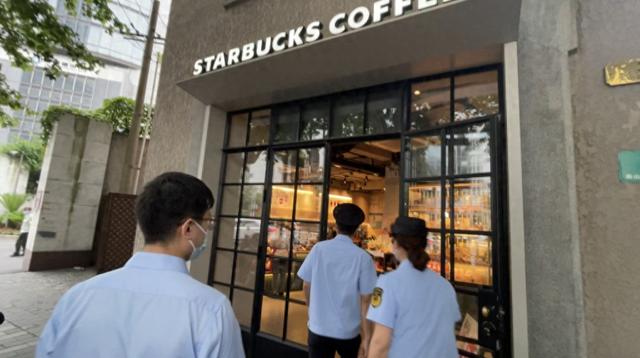
Core Viewpoint - The "Liangjian Pujiang" initiative in Shanghai aims to enhance personal information protection through legal enforcement, addressing the challenges posed by digital technology in daily life [1][9]. Group 1: Initiative Overview - The "Liangjian Pujiang" personal information protection enforcement action was launched in June 2023, focusing on consumer scenarios that frequently collect personal data [2][4]. - The initiative has evolved over three years, with 2023 focusing on "small cuts" in daily life, 2024 targeting typical scenarios, and 2025 aiming for ecological construction in governance [1][19]. Group 2: Enforcement Actions - The initiative identified eight consumer scenarios with significant data collection issues, including QR code dining, parking payments, and children's education [2][4]. - Major coffee chains like Starbucks were targeted for frequent data collection practices, leading to compliance training and guidance from regulatory bodies [5][6]. Group 3: Legal Framework and Governance - The implementation of the Personal Information Protection Law in 2021 marked a new phase in legal governance, with Shanghai establishing a scene-based governance model [9][10]. - The initiative has created a governance framework that includes collaboration among various departments, breaking down silos for effective enforcement [11][12]. Group 4: Innovative Solutions - The introduction of the "Pure Code" for parking payments allows users to pay without providing personal information, demonstrating innovative governance thinking [13][14]. - The initiative emphasizes a balanced approach to sensitive data collection, advocating for minimal use and maximum transparency [15][16]. Group 5: Long-term Mechanisms - The "Liangjian Pujiang" initiative has transitioned from a special action to a sustainable governance model, establishing a closed-loop enforcement process [19][20]. - By 2025, the initiative aims to solidify its achievements through continuous legal guidance and compliance resources for businesses [20][21].

奶茶行业流行“搭快船”出海?
Sou Hu Cai Jing· 2026-02-11 05:16
Core Viewpoint - The article discusses the strategic partnership between Cha Bai Dao and SG Mart in Singapore, highlighting the brand's approach to international expansion through localized strategies and partnerships to enhance market entry efficiency [1][4]. Group 1: Cha Bai Dao's International Strategy - Cha Bai Dao began its overseas journey in 2024, opening its first store in Seoul, South Korea, strategically located in the affluent Gangnam district to target mainstream local consumers rather than just the Chinese community [2]. - The brand has rapidly expanded its international presence, covering over 20 stores across more than ten countries, including South Korea, Thailand, Australia, Singapore, Spain, France, and the United States, within two years [2]. - The partnership with SG Mart is seen as a pragmatic move to leverage SG Mart's established local network and logistics, facilitating a quicker market entry for Cha Bai Dao in Singapore [5]. Group 2: Market Dynamics and Competitors - Other beverage brands, such as Ba Wang Cha Ji, are also pursuing aggressive international strategies, with Ba Wang Cha Ji forming a joint venture in Thailand to gain access to local market insights and distribution channels [6]. - The article notes that the trend of forming strategic partnerships to enhance market entry efficiency is not unique to Chinese brands, as global giants like Starbucks have also adopted similar strategies in their expansion efforts [7]. - The overall landscape of the beverage industry is witnessing a surge in international expansion, with numerous brands, including Mi Xue Bing Cheng and Luckin Coffee, rapidly increasing their overseas store counts [15][18]. Group 3: Challenges and Considerations - Despite the aggressive expansion, brands face significant challenges in local market adaptation, including understanding consumer preferences and establishing efficient supply chains [16][18]. - The competition in overseas markets is intensifying, with many brands entering the same regions, leading to potential market saturation and price wars [18]. - Successful international expansion requires not only opening stores but also achieving deep localization in product offerings, supply chain management, and brand positioning to resonate with local consumers [19].


申万宏源证券晨会报告-20260211
Shenwan Hongyuan Securities· 2026-02-11 00:44
Core Insights - The report highlights the strong growth potential of Luckin Coffee, projecting a compound annual growth rate (CAGR) of 25% for net profit from 2025 to 2027, driven by an increase in store count and market penetration [9][11] - The report also emphasizes the strategic positioning of Juchip Technology in the low-power AIoT chip design sector, with expectations of significant revenue growth and a favorable valuation compared to peers [3][12] - The oil and petrochemical industry is anticipated to experience a decline in oil prices, impacting upstream performance while downstream sectors may see a mixed outlook, with polyester margins expected to improve by Q4 2025 [13][14] Luckin Coffee Analysis - Luckin Coffee, established in 2017, utilizes a new retail model leveraging mobile internet and big data to provide high-quality coffee at competitive prices, achieving a market share of approximately 21.8% in China's fresh coffee sector by 2023 [9][10] - The company has a robust R&D system with 85 employees, continuously innovating and winning multiple international awards, including the IIAC International Coffee Tasting Competition [10] - The marketing strategy focuses on a youthful image and efficient private domain operations, resulting in a record of over 1 billion transactions by 2024 [10][11] - The store count reached 29,214 by Q3 2025, with a mix of direct and franchise models tailored to different market segments [10][11] - The target price for Luckin Coffee is set at $49, based on a 2026 PE valuation of 19 times, reflecting a discount compared to competitors like Starbucks [11] Juchip Technology Insights - Juchip Technology is recognized as a leading low-power AIoT chip designer, expanding its offerings from mid-to-high-end audio to edge AI applications [3][12] - The company has developed a proprietary protocol stack that enhances wireless audio capabilities, demonstrating its competitive edge in high-interference environments [3][12] - Revenue projections for Juchip Technology indicate a net profit of 2.04 billion, 2.89 billion, and 3.77 billion from 2025 to 2027, with a target PE of 38 times, suggesting a 21% upside potential [3][12] Oil and Petrochemical Industry Overview - The report forecasts a decrease in crude oil prices, with Brent crude expected to average $63.1 per barrel in Q4 2025, reflecting a 7.4% decline from the previous quarter [13][14] - Price differentials for various petrochemical products are expected to widen, with certain margins improving while others face compression [13][14] - Key companies in the sector are projected to experience varied performance, with some like China National Offshore Oil Corporation expected to see profit growth, while others like China Petroleum may face significant declines [13][14] - Investment recommendations include focusing on high-quality polyester companies and major refining firms, anticipating improved competitiveness due to cost reductions and market dynamics [13][14]


3万店叩关全民咖啡时代,瑞幸的本土生长启示录
Feng Huang Wang Cai Jing· 2026-02-10 12:48
Core Insights - Luckin Coffee has opened its 30,000th store, marking a significant milestone in China's coffee industry and reflecting its growth trajectory over eight years [1][3][24] - The brand has transformed coffee consumption in China from a niche luxury to an everyday necessity, breaking down barriers between coffee and the average consumer [3][7][26] Group 1: Market Transformation - Before Luckin, the coffee market in China was perceived as elitist, with high prices and limited accessibility for the average consumer [3][4] - Luckin's strategy focused on affordability and convenience, positioning itself as a brand that meets the everyday needs of consumers rather than as a luxury item [7][10] - The brand's rapid expansion has created a dense network of coffee outlets, making coffee easily accessible across various urban settings [7][10] Group 2: Pricing Strategy - The introduction of a 9.9 yuan price point for coffee has disrupted the traditional pricing structure in the industry, challenging perceptions of quality associated with low prices [9][11] - Luckin emphasizes that its low prices do not compromise quality, as it maintains high standards in sourcing and production [11][13] - The brand's approach is to create value through efficiency and a strong supply chain, rather than engaging in price wars [11][13] Group 3: Supply Chain and Digitalization - Luckin's extensive supply chain is a key competitive advantage, allowing it to maintain quality and manage costs effectively [14][20] - The company has established deep partnerships with coffee-producing countries, ensuring a stable supply of high-quality beans [20][21] - A digital supply chain system enhances operational efficiency, allowing for real-time monitoring and optimization across its 30,000 stores [23][24] Group 4: Brand Philosophy and Future Outlook - Luckin's philosophy centers on understanding consumer needs and providing a product that fits seamlessly into daily life, rather than being a status symbol [10][13] - The brand's success serves as a lesson for local companies, highlighting the importance of long-term commitment, quality, and innovation in achieving market breakthroughs [26] - Luckin is expanding its presence internationally, aiming to establish itself as a global coffee brand while continuing to innovate in the domestic market [23][24]

3万店叩关全民咖啡时代,瑞幸的本土生长启示录
凤凰网财经· 2026-02-10 12:43
Core Viewpoint - Luckin Coffee has successfully transformed the coffee consumption landscape in China by opening its 30,000th store, making coffee accessible and affordable for the masses, thus redefining the brand's identity from a niche symbol to a daily necessity for ordinary consumers [1][4][10]. Group 1: Transformation of Coffee Consumption - Before Luckin, the coffee market in China was perceived as elitist and distant, with traditional brands dominating and creating barriers for new entrants [5][6]. - Luckin Coffee's emergence disrupted the existing market dynamics by focusing on affordability and accessibility, allowing coffee to become a part of everyday life for ordinary people [10][11]. - The brand's strategy involved creating a dense network of stores, ensuring that coffee was easily reachable within five minutes for consumers across various locations in China [10][12]. Group 2: Pricing Strategy and Value Proposition - The introduction of a 9.9 yuan price point for coffee was a strategic move to challenge the long-standing pricing norms in the industry, emphasizing value over mere low pricing [14][15]. - Luckin's approach is not about sacrificing quality for lower prices; instead, it focuses on maintaining high standards while reducing unnecessary costs, thus ensuring that consumers receive good value for their money [16][17]. - The brand has successfully shifted consumer perception, demonstrating that high quality does not have to come with a high price tag, aligning with the modern consumer's expectations [21][22]. Group 3: Supply Chain and Operational Efficiency - Luckin's extensive supply chain, which includes direct partnerships with coffee-producing countries, is a critical factor in its ability to maintain quality and manage costs effectively [24][29]. - The company has established a digital supply chain that enhances operational efficiency, allowing for real-time monitoring and optimization of every aspect of the business, from sourcing to delivery [33][34]. - This robust supply chain infrastructure supports the operation of 30,000 stores, providing a competitive edge that is difficult for others to replicate [25][26]. Group 4: Future Outlook and Industry Impact - Luckin Coffee's growth signifies a shift in the Chinese coffee market, moving towards a model that prioritizes local brands and consumer needs [37][38]. - The company's journey reflects the potential for domestic brands to innovate and thrive in competitive landscapes by understanding and catering to local consumer preferences [37][39]. - As Luckin expands internationally, it sets a precedent for how local brands can redefine global markets and influence industry standards [34][38].

瑞幸回应包装出现错别字
Xin Lang Cai Jing· 2026-02-10 09:37
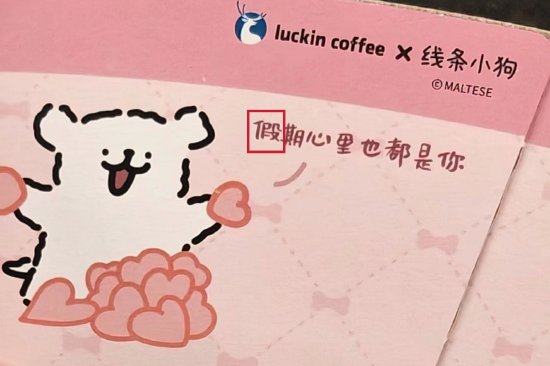
Core Viewpoint - Recent consumer feedback highlighted a typo on a collaboration cup sleeve between Luckin Coffee and Line Dog, specifically an error in the character "假" [1] Group 1 - Consumers reported a spelling mistake on the co-branded cup sleeve [1] - Luckin Coffee's official customer service acknowledged the issue and stated that it would be reported to the relevant business department [1]
热搜第一!瑞幸咖啡联名杯套现错别字,网友:已经不知道正确的怎么写了
Xin Lang Cai Jing· 2026-02-10 08:53
Core Viewpoint - Recently, consumers reported a typo on the collaboration cup sleeve between Luckin Coffee and Line Dog, where the upper right part of the character "假" was incorrect [1][3]. Group 1 - Luckin Coffee's customer service acknowledged the issue and stated that it would be reported to the relevant business department [1][3]. - The topic "瑞幸 错别字" surged to the top of Weibo's trending list on February 10, sparking widespread discussion among netizens [1][3]. - Some netizens expressed confusion, stating "I don't even know how to write it correctly anymore" [2][4].
9.9元咖啡,正在悄悄消失?
创业邦· 2026-02-10 03:45
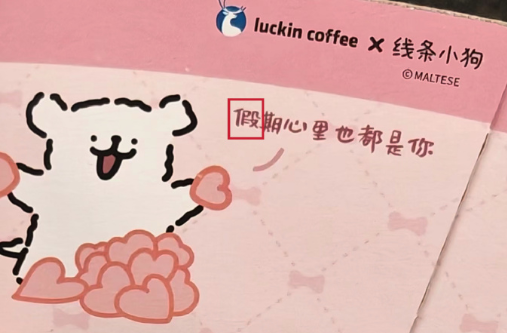
以下文章来源于伯虎财经 ,作者伯虎团队 伯虎财经 . 聚焦科技和大消费,以深度原创为特色,为你发掘精彩的商业价值。 过去几年, "9.9元"几乎成了中国咖啡市场的代名词,对于 广大的咖啡用户来说 ,这不再是一个促 销折扣,而是已经被广泛接受的消费心智。 在这个价格带以内的咖啡,通常意味着高性价比 ,才 能成为消费者的日常必需品;相反,高于 9.9 元的咖啡,则往往需要更强的品牌溢价和服务体验,才能打动消费者。 不过,这个由库迪率先建立起来的价格锚点,如今正在逐渐松动。近日,库迪宣布正式结束 "全场 9.9不限量" 活动,仅在 特价专区保留 3 - 7款 9.9元产品, 其余产品 则 恢复 11.9 - 16.9元的常 规售价 ,平均涨幅在 40%左右。 消息一出,引发了网友的激烈讨论。有网友表示,如果库迪没有 9.9元咖啡,自己就去别家买;但网 友一对账,才发现自去年外卖大战以来,低至8.8元,甚至5元以下的低价咖啡,早已悄悄退场,如今 想轻松买到一杯9.9元咖啡已越来越难了。 不过, 对于 咖啡行业而言,这或许并非坏事。只是,没有了库迪,以后还会不会有其他咖啡品牌再 次踏入同一条河流,不打价格战,咖啡品牌还 ...

9.9元咖啡,正在悄悄消失?
Xin Lang Cai Jing· 2026-02-09 15:11
Core Viewpoint - The coffee market in China is experiencing a shift as Kudi Coffee ends its "9.9 yuan unlimited" promotion, raising prices by an average of 40% for most products, which has sparked discussions among consumers about the availability of affordable coffee options [2][11][20]. Group 1: Market Dynamics - Kudi Coffee established the "9.9 yuan" price point, which became synonymous with high cost-performance coffee, but this price anchor is now loosening as Kudi raises prices [2][4]. - The coffee market saw significant growth in 2023, with a 27.2% increase in market size compared to 2022, but growth is expected to slow in 2024 [11][12]. - The number of new coffee shop openings in 2024 decreased by 46.08% compared to 2023, indicating a trend of market saturation and reduced expansion [12]. Group 2: Competitive Landscape - Kudi and Luckin Coffee have engaged in aggressive pricing strategies, but both companies are now scaling back on subsidies and promotions [7][8]. - Other coffee brands, including Tims and Manner, have also participated in the price war, but the trend is shifting towards more sustainable pricing strategies [8][20]. - New entrants like WA Coffee and Tea Yan Yue Se are still offering low-priced options, indicating that while the "9.9 yuan" era may be ending, price competition continues [18][20]. Group 3: Financial Implications - Kudi's franchisees are struggling with profitability due to high operational costs, with some reporting losses despite high order volumes [14][16]. - Rising costs for raw materials and operational expenses are squeezing profit margins, leading Kudi to adjust prices upwards to maintain viability [16][20]. - The shift from aggressive pricing to a focus on brand value and customer retention is becoming essential for long-term sustainability in the coffee market [24][26].