
Morgan Stanley(MS)

Search documents
高估值遇上疲软经济,华尔街齐声示警:标普500或将下跌10%至15%
美股IPO· 2025-08-04 23:25
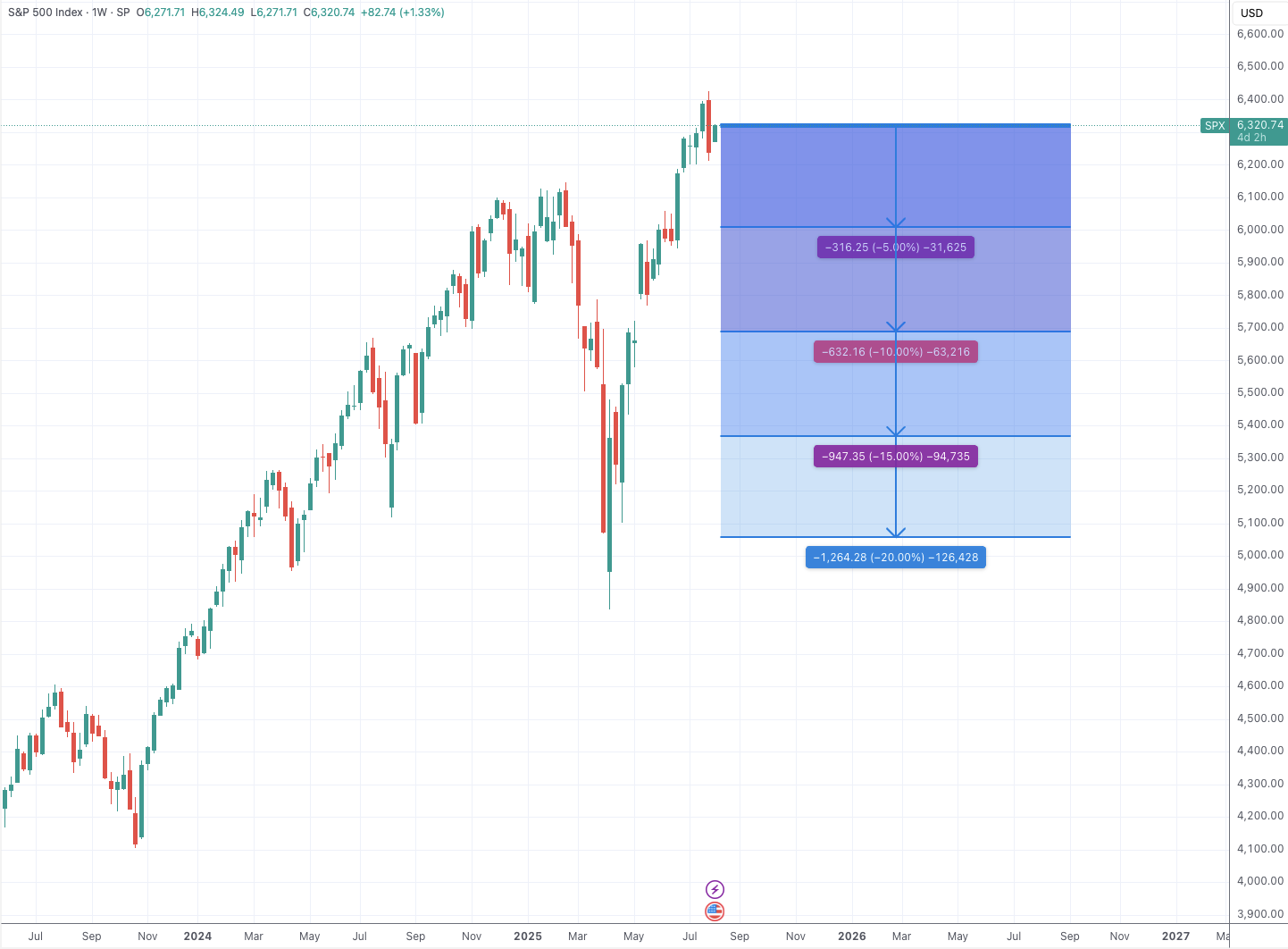
Core Viewpoint - Major banks including Morgan Stanley, Deutsche Bank, and Evercore have warned that the S&P 500 index may decline by 10% to 15% in the coming weeks to months due to high valuations and weakening economic indicators, despite a strong rebound over the past three months [1][5][6] Group 1: Market Performance and Predictions - The S&P 500 index has risen sharply since April, reaching historical highs, with a 1.47% increase on Monday, closing at 6329.94 points [2][6] - Analysts predict a potential adjustment of up to 10% this quarter, with Evercore forecasting a possible decline of 15% due to tariffs impacting consumer and corporate finances [5][6] - The S&P 500 index's 14-day Relative Strength Index (RSI) recently surpassed 76, indicating overbought conditions, which historically precedes market corrections [6] Group 2: Economic Indicators and Market Sentiment - Recent economic data shows a resurgence in inflation, alongside slowing job growth and consumer spending, raising concerns about the U.S. economic outlook [6] - Historically, the S&P 500 has performed poorly in August and September, averaging a decline of 0.7% during these months over the past 30 years [6] - Increased costs for hedging against market downturns are evident, with the implied volatility premium for put options on the SPDR S&P 500 ETF reaching its highest level since the regional banking crisis in 2023 [6] Group 3: Investment Strategy and Long-term Outlook - Despite short-term bearish sentiments, analysts maintain a bullish long-term outlook, suggesting investors should continue holding positions, particularly in companies benefiting from the AI trend [7] - Historical patterns indicate that the S&P 500 typically experiences minor corrections of about 3% every 1.5 to 2 months and larger corrections of over 5% every 3 to 4 months [7] - Market participants appear to be adopting a strategy of buying during corrections, as evidenced by the recent uptick in the S&P 500 and Nasdaq 100 indices [8]



多家大行警告美股面临短期调整压力,但“下跌也是机会”
Feng Huang Wang· 2025-08-04 22:39
多家大型机构的策略师周一集体发声,警告投资者上周刚创出新高的美股市场可能会出现一波短期调整。 其中最惹人关注的,是过去一年里美股多头方的旗帜人物——摩根士丹利的首席投资官兼首席美国证券策略师麦克·威尔逊(Mike Wilson)。他在写给客户 的报告中表示,投资者应"预期到(美股)三季度可能会出现适度调整"。他在报告中指出,由于关税影响消费者和企业资产负债表,美股市场可能出现最高 可达10%的调整。 知名机构Evercore ISI的证券、延伸品和量化策略团队主管Julian Emanuel甚至预期,调整幅度可能达到15%。 德意志银行美国证券策略研究主管帕拉格·塔特也表示,鉴于美股的强劲上涨已经延续3个月,适度回调已经势在必行。塔特指出,在标普500指数历史上, 平均每隔一个半到两个月会出现约3%的小幅回调,每三到四个月就会出现5%或更大幅度的调整。 在上周的经济数据发布后,华尔街机构也纷纷对美国经济表达担忧,这自然会影响到估值展望。标普500指数的14天相对强弱指数上周突破76点,分析师们 普遍将超过70点视作过热水平。 期权市场也显示出投资者为潜在下跌做准备的迹象。保护标普500 SPDR ETF(SP ...

Morgan Stanley(MS) - 2025 Q2 - Quarterly Report
2025-08-04 20:30
Financial Information [Management's Discussion and Analysis of Financial Condition and Results of Operations](index=5&type=section&id=Management%27s%20Discussion%20and%20Analysis%20of%20Financial%20Condition%20and%20Results%20of%20Operations) This section provides an overview of Morgan Stanley's financial performance, business segments, and key financial metrics for the quarter and six months ended June 30, 2025 [Introduction](index=5&type=section&id=Introduction) Morgan Stanley is a global financial services firm operating across Institutional Securities, Wealth Management, and Investment Management segments, offering diverse products and services to a broad client base - Morgan Stanley operates in three main business segments: Institutional Securities, Wealth Management, and Investment Management, providing a wide array of financial products and services to corporations, governments, financial institutions, and individuals[12](index=12&type=chunk) - Future results may be materially affected by competition, legislative, legal, and regulatory developments, and other risk factors[17](index=17&type=chunk) [Executive Summary](index=6&type=section&id=Executive%20Summary) Morgan Stanley reported strong financial results for Q2 2025 and YTD 2025, with significant increases in net revenues, net income, and diluted EPS | Metric | Q2 2025 ($ millions) | Q2 2024 ($ millions) | % Change (QoQ) | | :-------------------------------- | :------------------- | :------------------- | :--------------- | | Net Revenues | $16,800 | $15,000 | 12% | | Net Income Applicable to Morgan Stanley | $3,500 | $3,100 | 15% | | Diluted EPS | $2.13 | $1.82 | 17% | | Metric | YTD 2025 ($ millions) | YTD 2024 ($ millions) | % Change (YoY) | | :-------------------------------- | :------------------- | :------------------- | :--------------- | | Net Revenues | $34,500 | $30,200 | 15% | | Net Income Applicable to Morgan Stanley | $7,900 | $6,500 | 21% | | Diluted EPS | $4.73 | $3.85 | 23% | - The Firm delivered ROE of **13.9%** and ROTCE of **18.2%** for Q2 2025. The expense efficiency ratio was **71%** for Q2 and **70%** YTD, reflecting cost discipline and productivity gains[25](index=25&type=chunk) - Institutional Securities reported **$7.6 billion** in net revenues, driven by strong Markets business performance, especially in Equity. Wealth Management delivered a pre-tax margin of **28.3%** with **$7.8 billion** in net revenues, boosted by higher Asset management and Transactional revenues, adding **$59 billion** in net new assets. Investment Management saw **$1.6 billion** in net revenues, primarily from asset management fees on higher AUM[25](index=25&type=chunk) Selected Financial Information and Other Statistical Data | Metric | Q2 2025 | Q2 2024 | YTD 2025 | YTD 2024 | | :-------------------------------- | :------ | :------ | :------- | :------- | | Net revenues ($ millions) | 16,792 | 15,019 | 34,531 | 30,155 | | Earnings applicable to common shareholders ($ millions) | 3,392 | 2,942 | 7,549 | 6,208 | | Earnings per diluted common share | 2.13 | 1.82 | 4.73 | 3.85 | | Expense efficiency ratio | 71% | 72% | 70% | 72% | | ROE | 13.9% | 13.0% | 15.7% | 13.8% | | ROTCE | 18.2% | 17.5% | 20.6% | 18.6% | | Pre-tax margin | 28% | 27% | 29% | 28% | | Effective tax rate | 22.7% | 23.5% | 21.8% | 22.3% | | **Pre-tax margin by segment:** | | | | | | Institutional Securities | 28% | 29% | 32% | 31% | | Wealth Management | 28% | 27% | 28% | 27% | | Investment Management | 21% | 16% | 20% | 17% | | **At June 30, 2025 / Dec 31, 2024:** | | | | | | Average liquidity resources (Q2/YTD) ($ millions) | 363,389 | 345,440 | | | | Loans ($ millions) | 267,395 | 246,814 | | | | Total assets ($ millions) | 1,353,870 | 1,215,071 | | | | Deposits ($ millions) | 389,377 | 376,007 | | | | Borrowings ($ millions) | 328,801 | 288,819 | | | | Common equity ($ millions) | 98,434 | 94,761 | | | | Tangible common equity ($ millions) | 75,517 | 71,604 | | | | Common shares outstanding (millions) | 1,598 | 1,607 | | | | Book value per common share | 61.59 | 58.98 | | | | Tangible book value per common share | 47.25 | 44.57 | | | | Worldwide employees (thousands) | 80 | 80 | | | | Client assets (billions) | 8,205 | 7,860 | | | | **Capital Ratios (June 30, 2025 / Dec 31, 2024):** | | | | | | Common Equity Tier 1 capital—Standardized | 15.0% | 15.9% | | | | Tier 1 capital—Standardized | 16.9% | 18.0% | | | | Common Equity Tier 1 capital—Advanced | 15.7% | 15.7% | | | | Tier 1 capital—Advanced | 17.6% | 17.8% | | | | Tier 1 leverage | 6.8% | 6.9% | | | | SLR | 5.5% | 5.6% | | | [Economic and Market Conditions](index=9&type=section&id=Economic%20and%20Market%20Conditions) The second quarter of 2025 experienced varied market conditions, starting with economic uncertainty and market volatility due to global trade concerns, followed by a steady rebound in capital markets - Q2 2025 began with economic uncertainty and market volatility from global trade concerns, but later saw a steady rebound in capital markets[44](index=44&type=chunk) - Geopolitical uncertainty, trade policy changes, inflation, and central bank actions are identified as ongoing factors impacting capital markets and business[44](index=44&type=chunk) [Selected Non-GAAP Financial Information](index=9&type=section&id=Selected%20Non-GAAP%20Financial%20Information) The firm uses non-GAAP financial measures like adjusted net revenues, adjusted compensation expense, tangible common equity, and ROTCE to provide additional transparency and comparability of financial condition and operating results - Non-GAAP financial measures are used to provide further transparency and an alternate means of assessing financial condition, operating results, and capital adequacy, particularly by excluding the impact of mark-to-market gains and losses on DCP investments[46](index=46&type=chunk)[48](index=48&type=chunk) - Tangible common equity, ROTCE, and tangible book value per common share are non-GAAP measures considered useful for evaluating operating performance and capital adequacy, calculated by adjusting common equity for goodwill and intangible assets[50](index=50&type=chunk) Reconciliations from U.S. GAAP to Non-GAAP Consolidated Financial Measures | Metric | Q2 2025 (GAAP) | Q2 2025 (Adjusted Non-GAAP) | Q2 2024 (GAAP) | Q2 2024 (Adjusted Non-GAAP) | | :-------------------------------- | :------------- | :-------------------------- | :------------- | :-------------------------- | | Net revenues ($ millions) | $16,792 | $16,415 | $15,019 | $15,073 | | Compensation expense ($ millions) | $7,190 | $6,819 | $6,460 | $6,405 | | Wealth Management Net revenues ($ millions) | $7,764 | $7,470 | $6,792 | $6,837 | | Wealth Management Compensation expense ($ millions) | $4,147 | $3,883 | $3,601 | $3,568 | | Metric | YTD 2025 (GAAP) | YTD 2025 (Adjusted Non-GAAP) | YTD 2024 (GAAP) | YTD 2024 (Adjusted Non-GAAP) | | :-------------------------------- | :------------- | :-------------------------- | :------------- | :-------------------------- | | Net revenues ($ millions) | $34,531 | $34,303 | $30,155 | $30,022 | | Compensation expense ($ millions) | $14,711 | $14,342 | $13,156 | $12,852 | | Wealth Management Net revenues ($ millions) | $15,091 | $14,928 | $13,672 | $13,577 | | Wealth Management Compensation expense ($ millions) | $8,146 | $7,899 | $7,389 | $7,200 | | Metric | June 30, 2025 | December 31, 2024 | | :-------------------------------- | :------------ | :---------------- | | Common equity ($ millions) | $98,434 | $94,761 | | Less: Goodwill and net intangible assets ($ millions) | ($22,917
Noted Tesla analyst Adam Jonas moving into new role at Morgan Stanley
CNBC· 2025-08-04 20:08
Group 1 - Morgan Stanley auto research analyst Adam Jonas is transitioning to a new role focusing on artificial intelligence themes, moving away from his long-standing coverage of the automobile industry [1][2] - Jonas has nearly 30 years of experience in the auto sector and will now concentrate on physical/embodied AI, including areas such as autonomous vehicles (AVs), electric vertical takeoff and landing (eVTOL) aircraft, space technology, and humanoid robots [2] - Andrew Percoco will take over the coverage of the North American auto industry at Morgan Stanley in the coming months [3] Group 2 - Jonas gained recognition on Wall Street as a long-time bull on Tesla, proposing a broader vision for the company that included autonomous robotaxis to support its high valuation [3] - The internal move of Jonas was first reported by Bloomberg News, indicating a significant shift in Morgan Stanley's research focus [3]


兴业银行石家庄分行:兴业银行助力摩根士丹利成功发行熊猫债
Zhong Guo Jin Rong Xin Xi Wang· 2025-08-04 13:08
Core Viewpoint - Industrial Bank successfully assisted Morgan Stanley in issuing the first tranche of Panda bonds in the Chinese interbank market, marking a significant milestone as the first Panda bond issued by a US-based company [1] Group 1: Panda Bonds - The bond issuance has a scale of 2 billion RMB, a maturity of 5 years, and a coupon rate of 1.98% [1] - Panda bonds are a crucial fundraising tool for foreign institutions in the Chinese domestic market, denominated in RMB [1] Group 2: Industrial Bank's Role - Industrial Bank acted as a joint lead underwriter and bookrunner, showcasing its commitment to the opening of China's bond market [1] - The bank has served over 30 foreign clients, facilitating the issuance of more than 100 billion RMB in Panda bonds, covering various issuers including corporations, financial institutions, and multilateral organizations [1] - Over the past three years, Industrial Bank has maintained the leading position in the underwriting scale of foreign bonds among Chinese joint-stock banks [1] Group 3: International Business Strategy - The bank is building a comprehensive international business service system, integrating domestic and foreign, online and offline, and various currencies, contributing to China's high-level opening-up [1]

大摩继续看涨美股:盈利前景强劲,建议逢低买入
Zhi Tong Cai Jing· 2025-08-04 11:05
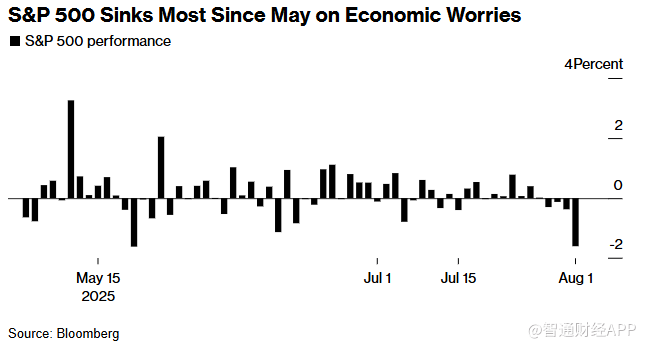
经济担忧加剧,标普500指数创5月以来最大单日跌幅 摩根士丹利策略师Michael Wilson周一表示,由于未来一年的企业盈利前景强劲,投资者应该趁美国股 市抛售之际买入。 Wilson在报告中写道,尽管标普500指数面临劳动力市场疲软和关税相关通胀的压力,这可能会推迟美 联储的降息行动,但投资者应将任何回调视为买入良机。 Wilson表示:"正如我们对盈利修正广度的分析所证明的那样,持续复苏已经开始。尽管美联储目前仍 维持利率不变,但今年晚些时候通胀势头减弱以及劳动力市场疲软,应会促成一轮强劲的降息周期。" 美国股市创纪录的涨势上周戛然而止,标普500指数先是连续六个交易日创下历史新高,随后却遭遇了 四连跌。上周五,由于数据显示美国就业增长放缓、失业率上升,以及美国总统唐纳德.特朗普对贸易 伙伴加征了一系列关税,股市应声下跌。 高盛集团策略师David Kostin表示,公司高管们迄今似乎对自身能够减轻关税对利润的影响充满信心。 他表示,尽管下半年关税对营收增长的压力应该会加大,但大型科技股的盈利以及2026年的财政政策应 该会为股市带来支撑。 摩根士丹利的Wilson表示,人工智能的广泛应用、美元的走弱 ...
每日机构分析:8月4日
Xin Hua Cai Jing· 2025-08-04 09:11
Group 1 - The expectation of interest rate cuts in the US is likely to persist due to a weak labor market, with disappointing non-farm employment data reinforcing market predictions for a rate cut in September [1] - Continuous low non-farm employment numbers below 50,000 for six months could signal an economic recession, leading to increased market expectations for further rate cuts by the Federal Reserve [1][2] - Barclays predicts the European Central Bank will cut rates in December instead of September, influenced by anticipated weak economic activity in the second half of the year [2] Group 2 - Concerns over the independence and reliability of official economic data have intensified following President Trump's claims of data manipulation and the dismissal of the Labor Statistics Bureau director [3][4] - The Korea Export-Import Bank forecasts a decline in South Korea's export value in Q3 2025 due to the impact of tariffs, projecting exports to reach approximately $167 billion, a year-on-year decrease of about 3% [3] - Analysts from Danske Bank expect the Bank of England to announce a rate cut in the upcoming decision, which may exert downward pressure on the British pound [4]

摩根士丹利:未来数月关税将使美国物价上涨约1个百分点
Xin Hua Cai Jing· 2025-08-04 05:41
Core Insights - The actual tariff rate for U.S. imports in May was 8.3%, significantly lower than Morgan Stanley's baseline forecast of 10% to 15% [1] - It is anticipated that the tariff rates will trend towards the forecasted levels in June and July, with implications for inflation [1] - Key factors contributing to the lower-than-expected actual tariff rate include transportation delays, higher-than-expected import volumes from Mexico and Canada under the USMCA, and a significant decline in imports from emerging markets [1] Economic Impact - The expected increase in effective tariff rates in June and July is likely to have a more pronounced effect on U.S. inflation [1] - Historically, the actual impact of tariffs on consumer prices typically manifests 3 to 5 months after implementation, while the economic growth repercussions are observed within 3 months [1] - Morgan Stanley projects that tariffs could lead to a price increase of approximately 1 percentage point in the coming months, which may gradually dissipate as demand weakens [1]
非农大幅下修确实“历史罕见”,但大摩不认为这意味着美国衰退
Hua Er Jie Jian Wen· 2025-08-04 01:55
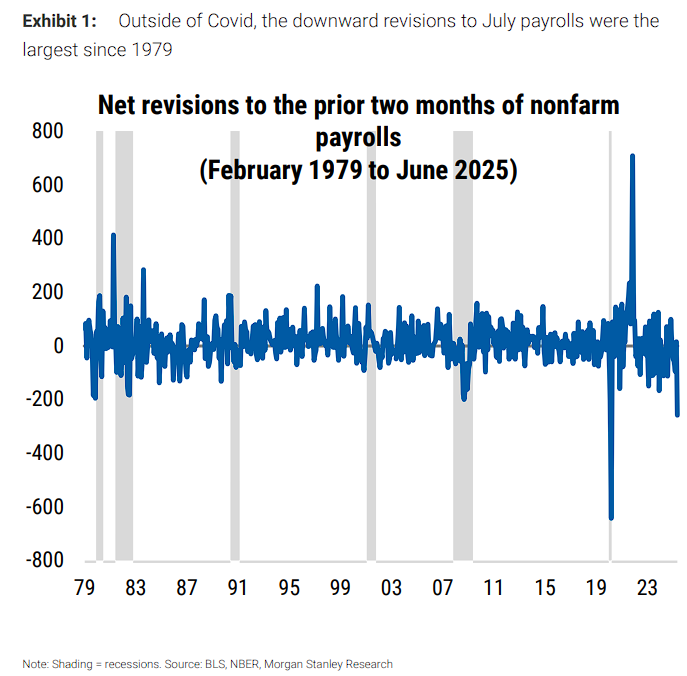
Core Insights - Morgan Stanley reports a significant downward revision of 258,000 jobs, the largest since 1979, which is 4-5 times the normal adjustment range [1][2][5] - The analysis indicates that current employment data holds more predictive power regarding economic trends than historical revisions, maintaining the expectation of no interest rate cuts until 2025 [1][9] Employment Data Revision - The July employment report revealed unexpected large downward revisions for the previous two months: June's non-farm employment was revised from 147,000 to only 14,000, a reduction of 133,000; May's data was adjusted from 144,000 to 19,000, a drop of 125,000, totaling a net revision of 258,000 [2][3] - Historically, from March 1979 to July 2025, the average net revision has been an upward adjustment of 1,200 jobs, making this downward revision the largest in 46 years when excluding the impact of the COVID-19 pandemic [3] Statistical Analysis - The average absolute value of historical revisions is 56,000 jobs, with a standard deviation of 61,000; thus, the 258,000 job revision is statistically significant and considered an outlier [5] - Using a Probit regression model, Morgan Stanley found that while the large downward revision correlates with an increased recession probability, the effect is limited, raising the likelihood of recession by only 9 percentage points [9] Current Employment Signals - The July report showed an addition of 73,000 jobs, which is deemed more critical than the previous downward revisions; the current employment data is viewed as a stronger indicator of economic health [9] - Other indicators from the July report, such as moderate wage growth, slight increases in hours worked, and low unemployment rates, suggest that these current signals are more relevant than the historical downward adjustments [9] - Despite acknowledging that the downward revisions indicate a faster-than-expected slowdown in labor demand, Morgan Stanley maintains its forecast of no interest rate cuts through 2025, suggesting that recession risks remain elevated but not at a level that would alter the overall economic outlook [9]
关税效应仍不明朗 今晚非农必须“够坏但不崩”!
Hua Er Jie Jian Wen· 2025-08-01 11:01
Group 1 - The upcoming non-farm payroll data for July is crucial for assessing the labor market and determining the Federal Reserve's interest rate decisions in September [1] - The market expects 104,000 new jobs in July, a decrease from 147,000 in June and below the three-month average of 150,000 [1] - The unemployment rate is anticipated to rise to 4.2%, slightly worse than the previous 4.1%, but still below the Fed's year-end forecast of 4.5% [1] Group 2 - Initial jobless claims fell to 221,000, down from 246,000, indicating a potential improvement in the job market [2] - The Challenger job cuts increased by 62,000 in July, up from 48,000 in June, signaling rising layoffs [2] - The labor market sentiment index dropped to a cycle low of 11.3 percentage points, significantly below the 2019 average of 33.2 percentage points [2] Group 3 - Bank of America predicts a 60,000 increase in jobs for July, primarily due to a decline in government employment [3] - Morgan Stanley forecasts a total of 100,000 new jobs, with the private sector contributing all of this growth [3] - Analysts note that tariff policies may negatively impact manufacturing employment in the coming months [3] Group 4 - Bank of America suggests that the impact of immigration restrictions may not be fully realized in July, but they expect negative effects on industries like leisure and hospitality [4] Group 5 - The Federal Reserve aims for a balanced labor market rather than a sharp decline, with market reactions dependent on the strength of the employment data [6] - High employment numbers could delay interest rate cuts, while weak data may raise recession concerns [6] - Market reactions to employment data are categorized by ranges of job growth, with specific predicted impacts on the S&P 500 index [6]
