
NIKE(NKE)

Search documents
跨境电商运营:2024年服饰鞋靴及配饰品类研究报告
Sou Hu Cai Jing· 2025-10-28 03:08
Core Insights - The report focuses on the global cross-border e-commerce market for apparel, footwear, and accessories, highlighting current market conditions, DTC brand case studies, operational strategies, and consumer insights for 2024 [1]. Group 1: Market Overview - The global apparel and footwear market reached a size of $1,818.74 billion in 2023, with stable search volume trends in recent years [1]. - The accessories market size in 2023 was $663.4 billion, showing continuous growth since 2020 [1]. - High attention regions for both markets include Eastern North America and Europe, with significant consumer interest in products like dresses, shoes, and shorts, as well as brands like Nike and Adidas [1]. Group 2: DTC Brand Opportunities - DTC brands are emerging as new opportunities in the industry, with notable examples including ARITZIA (women's apparel, $1.5 billion sales in 2022) and OOFOS (recovery footwear, $210 million sales in 2022) [1]. - Key success factors for DTC brands include effective user communication, leveraging social media traffic, reinforcing brand values, and focusing on niche markets [1]. Group 3: Consumer Insights and Strategies - The report emphasizes the importance of data-driven consumer insights, integrating user profiles, behaviors, and feedback to achieve strategic data utilization, brand localization, and operational refinement [1]. - Recommendations include deepening market penetration, enhancing brand equity, and monitoring performance optimization [1]. Group 4: Operational Strategies - The report provides case studies, such as a hair removal device project, to illustrate the application of consumer insights [1]. - It also offers solutions for building independent apparel websites, highlighting features like first-order conversion, bundled promotions, and repurchase activation [1].



BTIG Gives Nike (NKE) a Buy Rating
Yahoo Finance· 2025-10-27 15:54
Core Viewpoint - NIKE, Inc. is recognized as one of the top stocks to buy according to Wall Street analysts, with BTIG initiating coverage and giving it a Buy rating, setting a price target of $100 for the stock [1][2]. Group 1: Analyst Ratings and Projections - BTIG has projected that NIKE's earnings per share (EPS) will reach $1.70 for fiscal year 2026 and $2.75 for fiscal year 2027, indicating confidence in the company's recovery [2]. - The firm anticipates that NIKE can return to operating margins above 12% in the long term, with an estimated EPS of around $3.50 for fiscal year 2028 as the recovery progresses [2]. Group 2: Company Overview - NIKE, Inc. is a multinational corporation that designs, manufactures, and markets athletic footwear, apparel, equipment, and accessories under the Nike, Converse, and Jordan brands [3]. Group 3: Recovery Progress - BTIG noted that while NIKE has made solid progress in its recovery, there is still significant work to be done [1].
美股市场速览:市场再创新高,大盘成长领先
Guoxin Securities· 2025-10-26 01:04
Market Performance - The S&P 500 index increased by 2.4% this week, while the Nasdaq rose by 3.9%[1] - Large-cap growth stocks (Russell 1000 Growth) outperformed with a gain of 3.2%, compared to small-cap value (Russell 2000 Value) at +2.5%[1] - The technology hardware and equipment sector led the gains with an increase of 3.9%[1] Fund Flows - Estimated fund flow for S&P 500 components was +$65.6 billion this week, down from +$91.7 billion last week[2] - Semiconductor products and equipment saw the highest inflow at +$22.9 billion, while media and entertainment experienced the largest outflow at -$13.2 billion[2] Earnings Forecast - The forward 12-month EPS estimate for S&P 500 components was revised up by 0.4% this week, consistent with the previous week[3] - The automotive sector saw a significant upward revision of 9.0% in earnings expectations, while durable goods and apparel experienced a downward revision of -0.5%[3] Risk Factors - Key risks include uncertainties in economic fundamentals, international political situations, U.S. fiscal policies, and Federal Reserve monetary policies[3]




Down 62%, Can Nike Stock Be a Millionaire Maker?
The Motley Fool· 2025-10-25 11:45
Core Viewpoint - The investment community has lost confidence in Nike, a global leader in sportswear, which has faced significant challenges in recent years [1][2] Financial Performance - Nike's revenue and net income for fiscal 2025 were down 10% and 44% respectively compared to the previous year, contributing to a decline in stock price [4] - In Q1 2026, Nike reported a slight revenue gain of 1%, but faced a 9% sales dip in China and pressure on gross margins due to discounting and tariffs [6][7] - The stock is currently trading 62% below its all-time high and has fallen 11% in 2025, indicating a lack of market confidence [2][13] Strategic Initiatives - Nike is focusing on rebalancing its distribution strategy, emphasizing wholesale accounts over its digital channel, and improving product innovation to enhance customer engagement [5] - The company is adopting a sport-centric approach by putting the "athlete back at the center" of its strategy [5] Market Outlook - Management anticipates low single-digit revenue declines in the current quarter, which includes the critical holiday shopping period [7] - Wall Street analysts project an 11% sales increase from fiscal 2025 to fiscal 2028, suggesting a potentially positive long-term outlook [7] Brand Positioning - Despite challenges, Nike maintains a strong brand presence and pricing power, supported by effective marketing and high-profile endorsements [10][11] - The company is viewed as operating from a position of strength, although it faces competition from younger rivals [10] Investment Considerations - Nike's current price-to-sales ratio of 2.2 is among the lowest in the past decade, indicating low market expectations but potential upside if fundamentals improve [14] - The company is considered a risky investment due to high uncertainty, and while it may not offer explosive growth, it could appeal to risk-tolerant investors [12][15]
阿迪达斯,“逆袭”耐克、安踏、李宁?
2 1 Shi Ji Jing Ji Bao Dao· 2025-10-25 09:24
Core Viewpoint - Adidas has become the "old fourth" in the Chinese market, ranking behind Nike, Anta, and Li Ning in market share after years of struggle [1][5]. Group 1: Market Position and Challenges - Adidas's market share in China has significantly declined from 15% in 2021 to 8.7% in 2024, while Nike's market share decreased from 18.1% to 16.2% [5]. - The Yeezy controversy, stemming from Kanye West's remarks, led to Adidas terminating its partnership, which accounted for 8% of its total revenue and 40% of its profits as of October 2022 [3][5]. - Domestic brands have gained traction, with Anta's market share increasing from 9.8% in 2021 to 10.5%, and Li Ning's from 9.3% to 9.4% [7]. Group 2: Strategic Changes and Initiatives - Adidas is in an expansion phase in China, with 95% of its products sold in the market being "made in China" and a focus on local design [8]. - The company's CEO, Bjørn Gulden, has increased the influence of the Chinese team and has made multiple visits to China to strengthen relationships [9][11]. - In Q2 2023, Adidas's revenue in the Greater China region grew by 11% to €798 million (approximately ¥6.65 billion), contrasting with Nike's 10% revenue decline in the same region [14][15]. Group 3: Competitive Landscape - Nike is also empowering its Chinese team, with its Greater China CEO holding additional global responsibilities [18]. - Domestic competitors like Anta are thriving, while some brands like Peak are facing challenges, including significant salary cuts due to losses [19]. - The competitive environment remains tough, with Adidas's path to recovery being fraught with difficulties [20].



耐克CEO上任一周年中国行,能否找回失落的“主场”?
36氪未来消费· 2025-10-25 08:12
Core Viewpoint - The return of Elliott Hill as CEO of Nike is seen as a critical strategy to address the company's stagnation in growth and declining stock prices, following a significant drop in revenue and market value [2][5]. Group 1: Financial Performance - In the fiscal year 2024, Nike reported annual revenue of $51.4 billion, a slight increase of 0.3% year-on-year, but the stock price plummeted by 20% after the earnings report, resulting in a market value loss of approximately $28.41 billion [2]. - For the first quarter of fiscal year 2026, Nike achieved revenue of $11.7 billion, a 1% year-on-year growth, although net profit decreased by 31% to $727 million, with revenue and profit exceeding market expectations [5]. Group 2: Market Challenges - Nike faced a 10% decline in revenue in the Greater China region, marking the fifth consecutive quarter of negative growth, which is significant given its previous role as a growth pillar during the pandemic [5][15]. - The company has been losing market share to local brands like Anta and Li-Ning, which have made significant advancements in technology and consumer engagement, capturing nearly 40% of the market share in 2025 [16][17]. Group 3: Strategic Changes - Upon his return, Hill implemented the "Win Now" strategy and made significant organizational changes, including restoring relationships with key wholesale partners and focusing on product innovation [5][12]. - Nike's product strategy has shifted to emphasize innovation, with new product launches in running and basketball categories, leading to a 20% growth in the running business in the first quarter of fiscal year 2026 [12][13]. Group 4: Future Outlook - Hill's leadership aims to reposition Nike as a creative-driven company focused on innovation rooted in sports, emphasizing the importance of the Chinese market and the potential for long-term growth despite current challenges [20]. - The appointment of Dong Wei as the chairman and CEO for Greater China indicates a strategic focus on enhancing Nike's presence in the outdoor segment and addressing the competitive landscape in the region [18][20].

宗馥莉两大“心腹”:严学峰恢复生产总监职位,祝丽丹仍“待定”;宗婕莉入职杜建英名下一公司;理想汽车回应MEGA起火事故丨邦早报
创业邦· 2025-10-25 01:09
Group 1 - The internal position of Yan Xuefeng at Hongsheng Beverage Group has been restored to Production Center Director and General Manager of Xun'er Company, while Zhu Lidan's position remains "pending" [3] - JD.com, Meituan, and Ele.me are under investigation by the State Administration for Market Regulation regarding food safety and merchant qualification issues [5][6] - Didi has launched 500 electric vehicles in Mexico, marking its first standardized ride-hailing service in Latin America, with all vehicles sourced from domestic brands [5][6] Group 2 - Hongsheng Group has confirmed it will continue selling Wahaha products next year and will sign a joint sales agreement for 2026 [6] - The total market capitalization of Samsung Electronics and SK Hynix has surpassed 1,000 trillion KRW for the first time, reaching approximately 5.05 trillion RMB [13] - The third quarter of 2025 saw China's gaming market revenue reach 88.026 billion RMB, marking a 6.96% quarter-on-quarter growth [19] Group 3 - The launch of the Lingchuang platform by Zhiyuan Robotics allows users to create content for humanoid robots without coding [17] - BYD has launched the Song L DM-i and Song Pro DM-i models, achieving a new low in SUV fuel consumption at 3.2L per 100km [15] - The company Moonshot AI is reportedly completing a new financing round amounting to several hundred million dollars, following a previous round of approximately 300 million dollars [6]





Cramer's Mad Dash: Deckers Outdoor
Youtube· 2025-10-24 14:33
Consumer Brands - Deckers has issued a lukewarm guidance, indicating struggles with its Ugg and Hoka brands, leading to continued market punishment [1] - There is elevated competition in the sneaker market, with brands like Nike and New Balance intensifying the competition, causing a loss of allure for some brands [2] - Concerns about excess inventory in the system persist, but there is optimism that Nike may surprise the market positively in upcoming quarters [4] Starbucks - There is a belief that Starbucks is approaching the end of a challenging quarter, with expectations for improved performance in the future [4] - The outlook for Starbucks is considered strong, with a focus on operational excellence and cost initiatives aimed at enhancing performance by 2026 [5]


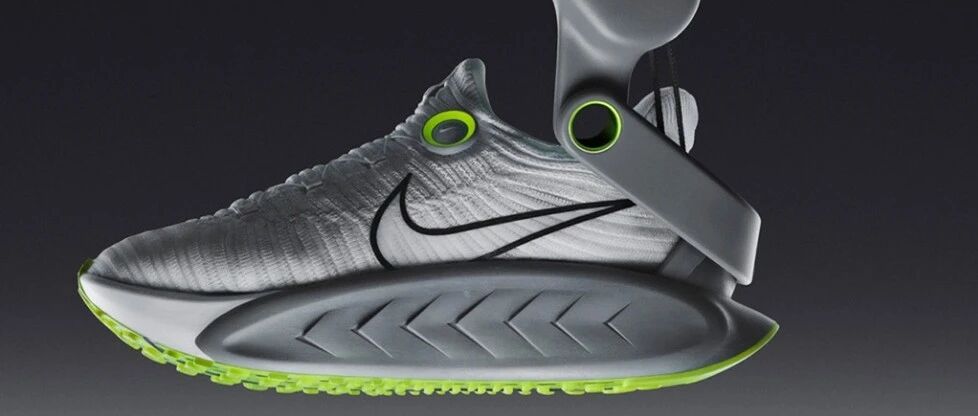
耐克发布原型“机器人鞋”:日常通勤像开挂
财联社· 2025-10-24 14:25
Core Insights - Nike, in collaboration with robotics startup Dephy, has launched Project Amplify, the world's first powered shoe system designed to enhance walking and running experiences by enabling users to run faster and walk further with less effort [2][4]. Product Overview - The Amplify system resembles an exoskeleton, featuring a transmission device that wraps around the ankle to assist human movement, significantly improving speed and ease of movement [2]. - The target demographic for this device includes "runners" with a pace of 10-12 minutes per mile (approximately 6-7 minutes per kilometer), aiming to make uphill walking or running feel like moving on flat ground [4]. - Early tests indicate that the device can enhance a runner's pace by nearly 20%, meaning a runner who typically takes 6 minutes to cover 1 kilometer could potentially reduce their pace to under 5 minutes with Amplify [4]. Market Positioning - Nike emphasizes that Amplify is not merely a "running aid" but is aimed at everyday commuters, as battery-assisted devices are not permitted in formal competitions [4]. - Market testing in cities like Los Angeles, New York, and San Francisco revealed that potential users might be more inclined to walk longer distances instead of taking taxis if they had access to this device [4]. Development Status - Currently, Amplify is in the early prototype stage, with the existing models being noisier and bulkier than desired, lacking the streamlined aesthetic [5]. - The company plans to launch the product to the market around 2028, indicating a significant development timeline ahead [5].
耐克宣布Nike、Jordan与Converse组建一体化创作引擎
Bei Jing Shang Bao· 2025-10-24 13:32
Core Insights - Nike announced the integration of its Nike, Jordan, and Converse brands' innovation, design, and product teams to create a unified athlete-centric creative engine aimed at accelerating technological innovation and driving business growth [1] - This restructuring is part of Nike's "Sport Offense" strategy, which focuses on sharing insights, technology, and craftsmanship across teams to develop innovative performance products that help athletes push their limits [1] - The initiative aligns with the launch of four major innovation technologies: Aero-FIT performance apparel technology, Therma-FIT Air Milano, Nike Mind science, and Project Amplify, highlighting the brand's commitment to solving problems for athletes [1] Company Strategy - The integration of teams is designed to enhance collaboration and efficiency in the innovation process, ensuring that insights and technologies are shared effectively [1] - Nike's future innovations will continue to stem from its deep connections with elite and everyday athletes, as well as its leading design and product development teams [1] - The establishment of world-class research spaces is emphasized as a critical component in shaping the future of sports innovation [1]