
PDD(PDD)

Search documents
美股三大指数小幅低开,蔚来涨超8%
Feng Huang Wang Cai Jing· 2025-08-26 13:42
Group 1 - US stock indices opened slightly lower, with Dow down 0.13%, S&P 500 down 0.06%, and Nasdaq down 0.04% [1] - Eli Lilly's oral GLP-1 drug orforglipron achieved positive results in Phase 3 clinical trials, leading to plans for a global regulatory submission within the year [4] - South Korea's Korean Air signed a $50 billion procurement agreement with Boeing for 103 new-generation aircraft and engine maintenance services over the next 20 years [5] Group 2 - Beike reported a 11.3% year-on-year increase in revenue for Q2, totaling 26 billion yuan, while NON-GAAP net profit decreased by 32.4% to 1.82 billion yuan [6]


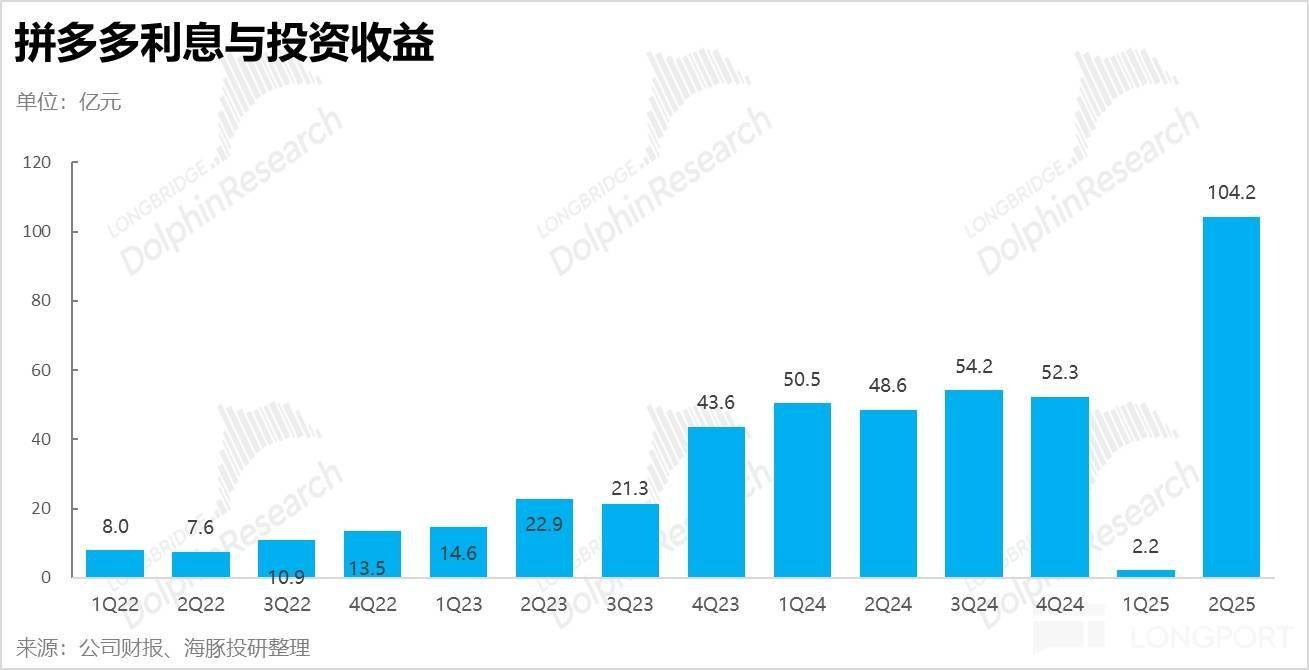
单季理财赚百亿!“拒不分红” 拼多多要当 “巴菲特”?
Sou Hu Cai Jing· 2025-08-26 13:32
Core Viewpoint - Pinduoduo has accumulated significant cash assets and is facing the critical question of how to utilize these funds effectively as it transitions from a growth phase to a mature phase [1] Group 1: Financial Performance - In the second quarter, Pinduoduo's cash or idle funds that can generate interest or be invested totaled approximately 538.8 billion RMB, equivalent to about 75 billion USD [3] - The company's interest and investment income for the quarter reached a substantial level of 10 billion RMB, which is notable compared to the 25.8 billion RMB operating profit from core business [1][3] - The average quarterly income from interest and investments remains around 5.3 billion RMB, consistent with the previous year's performance [1] Group 2: Investment Strategy - Pinduoduo's short-term investments, which account for 60% of its investment portfolio, primarily consist of fixed deposits and held-to-maturity bonds, with a growing portion allocated to stock trading, increasing from 17.2 billion RMB in 2023 to 44.5 billion RMB in 2024 [5][10] - The company has maintained a clean balance sheet with minimal external equity investments or cross-industry mergers, focusing instead on core e-commerce operations [9] - The overall return on cash and investment assets has remained between 4-5%, aligning with the risk-free rate of U.S. Treasury bonds [13] Group 3: Capital Allocation Considerations - Pinduoduo's return on equity (ROE) for the first half of the year was 13.5%, significantly higher than the 4-5% return on idle cash, indicating a clear priority for capital allocation [15] - The company faces two main options for future capital allocation: either increase investments in core business areas or consider dividends and share buybacks as growth slows [15][16] - The current strategy appears to lack effective market value management, raising concerns about potential declines in ROE and overall valuation if cash accumulation continues without strategic deployment [16]


Temu Restarts China-to-US Shipments After Tariff Truce
PYMNTS.com· 2025-08-26 13:20
Temu reportedly restarted shipping products from China to consumers in the United States after a tariff-related truce.By completing this form, you agree to receive marketing communications from PYMNTS and to the sharing of your information with our sponsor, if applicable, in accordance with our Privacy Policy and Terms and Conditions .Complete the form to unlock this article and enjoy unlimited free access to all PYMNTS content — no additional logins required.Suppliers, partners and investors said the eComm ...

增长放缓、利润连降,拼多多模式失灵?
Xin Lang Cai Jing· 2025-08-26 11:31
作者:沈 阳 来源:市场资讯 (来源:中时财经) 然而,大量的扶持投入必然会对营收和利润产生拖累,"随着市场环境变化和新挑战的出现,营收增速 放缓不可避免。"拼多多集团董事长、联席CEO陈磊称。他此前表示,第一季度在平台生态系统上做出 了大量投资,以支持商家和消费者应对外部环境的快速变化,这些投资对短期盈利能力产生了压力。 编辑:李 捷 制图:乔寒云 8月25日,拼多多发布了截至2025年6月30日的第二季度财报。财报显示,二季度实现总收入为1039.848 亿元,较2024年同期的970.595亿元增长7%。增速较此前有所放缓。营业利润为257.929亿元,同比下滑 21%,低于去年同期的325.645亿元。净利润报307.5亿元,同比下降4%,连续两个季度下滑。 拼多多控股财务副总裁刘军称,在激烈的竞争中,本季度收入增长进一步放缓。公司仍然专注于长期价 值创造,持续投资可能会继续拖累短期盈利能力。 在财报电话会上,拼多多副总裁刘俊表示:"第二季度的利润水平不应被视为未来的参考基准,我们不 认为当前的利润水平具备可持续性。未来几个季度,盈利水平仍可能出现波动。" 实际上,今年一季度,拼多多的业绩就已显现压力 ...

These 3 Chinese Stocks Could Be a Ticking Time Bomb of Growth
MarketBeat· 2025-08-26 11:26
Core Viewpoint - Investors have been overly cautious about investing in the Chinese stock market, leading to missed opportunities despite favorable risk-to-reward profiles in the technology sector compared to American stocks [1][2]. Group 1: Chinese Stocks and Investment Opportunities - Chinese technology stocks, particularly Baidu, Alibaba, and PDD, present better risk-to-reward profiles than their American counterparts, with current valuations favoring Chinese companies [2]. - Institutional investors are beginning to recognize the potential in these stocks, as seen with Primecap Management increasing its stake in Baidu by 1.4%, bringing their total holdings to $1 billion [6]. - Analysts are optimistic about Baidu's future, with Citigroup's Alicia Yap rating it a Buy with a target price of $140, indicating a potential upside of 55% from current levels [7]. Group 2: Baidu's Business Model and Growth - Baidu operates similarly to Alphabet Inc., focusing on online search and data monetization, and is expanding into autonomous driving and robotaxis through partnerships with Uber and Lyft [4][5]. - The company's growth potential is underappreciated, contributing to institutional interest and a significant increase in holdings [6]. Group 3: Alibaba's Strategic Position - Alibaba is leveraging its data center expansion across Asia's growing economies, positioning itself as a key player in the consumer data market as middle-class sizes increase [9]. - The demand for cloud computing services is expected to rise, with Alibaba capturing a larger share of its total revenue from this segment [10]. - Analysts view Alibaba as a Moderate Buy with a target price of $159, suggesting a 30% upside from current prices [11]. Group 4: PDD's Market Position - PDD is positioned as a consumer engagement leader in Asia's growing economies, with a year-to-date performance of 31%, indicating strong fundamentals despite market concerns [14][15]. - Institutional confidence is reflected in Orbis Allan Gray's significant stake in PDD, valued at $591 million, highlighting the company's potential in a burgeoning consumer demographic [15][16].



当电商竞逐即时零售,拼多多重金砸向“基础设施”?
Ge Long Hui· 2025-08-26 10:24
Core Viewpoint - Pinduoduo demonstrates the courage and vision to sacrifice short-term profits for long-term value creation in the competitive e-commerce industry [1] Financial Performance - In Q2 2025, Pinduoduo achieved revenue of 1,040 billion RMB, a year-on-year growth of 7%, despite a slowdown in growth [1] - Operating profit reached 258 billion RMB, aligning with market expectations, and the operating profit margin rebounded from 17% to 25% [1] Strategic Initiatives - Pinduoduo launched the "100 Billion Support" strategy, marking a significant investment in high-quality development, aimed at reducing operational costs for merchants through fee reductions, traffic support, and logistics subsidies [1][4] - The "100 Billion Support" plan is not merely a financial investment but focuses on comprehensive empowerment for industry transformation and upgrading [5] Market Response - Following the earnings report, Pinduoduo's stock price remained stable at 128 USD, indicating a market shift towards a long-term valuation perspective [3] - The company has been strategically exchanging short-term profits for long-term ecological barriers since the introduction of the "100 Billion Subsidy" policy in late 2022 [3] Agricultural Focus - Pinduoduo has emphasized agricultural development, with a 47% year-on-year increase in agricultural product sales, supported by the "Duoduo Good Specialty" initiative [7] - The platform has successfully helped young merchants, such as a 00s entrepreneur selling Hubei rice, to enhance product quality and achieve significant sales growth [8] Technological Innovation - Pinduoduo is actively promoting agricultural technology innovation through initiatives like the "Duoduo Agricultural Research Technology Competition," which encourages the development of cutting-edge agricultural technologies [10][11] Conclusion - Pinduoduo's Q2 2025 performance and strategic initiatives reflect a commitment to long-term value creation, agricultural modernization, and industry ecosystem reconstruction, setting a benchmark for sustainable development in the e-commerce sector [13]
战无不胜的韭菜策略
Sou Hu Cai Jing· 2025-08-26 10:23
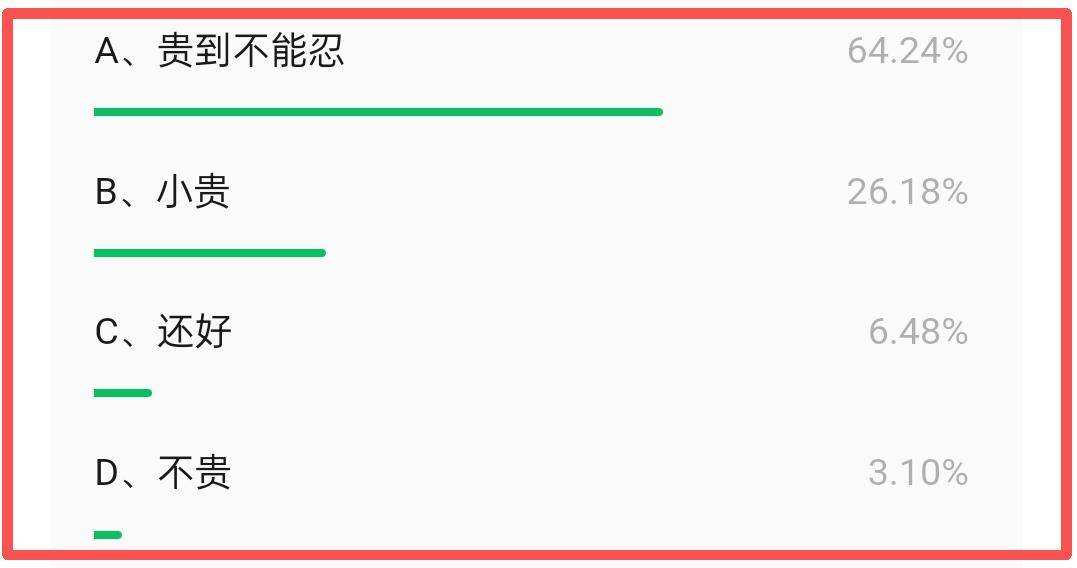
给昨天文章打个补丁。 90%的人认为香港170块的电影票价贵,64%认为贵到不能忍。 同样产品和服务,香港价格确实比内地高太多,很多游客难免在心里提高对产品和服务的要求,但要求无法达成,于是觉得钱花得不值。 1 北京法定最低月薪2540元。 7409.6 ➗ 2540 ≈ 3 香港收入是北京的3倍。 香港价签除以3,可能是当地人真实感受。 电影票170,除以3等于56。 洗剪吹130,除以3等于43。 真实感受 我觉得物价应该和收入比。 香港法定最低时薪42.1元,每天8小时每月22个工作日,月薪至少7409.6元。 美式咖啡50,除以3等于16。 便利店矿泉水10,除以3等于3.3。 米其林大餐人均900,除以3等于300。 路边快餐50,除以3等于16。 机场快轨120,除以3等于40。 打车10公里110,除以3等于36。 是不是瞬间容易接受了? 2 心理建设 事实上,经济发达国家地区的物价都很高,比如咱们周围的韩国日本新加坡。 物价高不代表物价贵,高只是和支付能力匹配。 内地支付能力差几个档次,消费起来就会很痛。 那怎么办? 要么努力搬砖赚钱,从源头解决问题。 要么去穷国玩,地理套利。 要么买单时装傻 ...
拼多多(PDD):2季度利润因利息收益好于预期,下半年业绩压力较上半年边际好转
BOCOM International· 2025-08-26 10:02
Investment Rating - The report assigns a "Buy" rating for Pinduoduo (PDD US) with a target price raised from $135 to $150, indicating a potential upside of 17.0% [2][11][13]. Core Insights - The second quarter profits exceeded expectations primarily due to better-than-expected interest income and marketing expenses. Advertising revenue grew by 13% year-on-year, aligning with expectations, while commission income slowed due to the contraction of the full-service business and a decrease in merchant support program growth [2][6]. - The report anticipates marginal improvement in performance for the second half of the year compared to the first half, despite ongoing support for merchants and user investments. The impact of merchant support plans and national subsidies is expected to improve marginally, and disruptions to overseas business are anticipated to be less severe than in the second quarter [2][6]. Financial Projections - Revenue projections for 2025 are set at RMB 436,926 million, a decrease of 2.9% from previous estimates. For 2026, revenue is projected at RMB 522,532 million, down 6.0% from earlier forecasts, and for 2027, it is expected to be RMB 590,022 million, also a 6.4% reduction [5][14]. - Adjusted net profit for 2025 is forecasted at RMB 109,073 million, reflecting a 4.1% increase from previous estimates, while adjusted net profit margins are expected to improve to 25.0% [5][14]. Market Performance - The stock has shown a year-to-date change of +32.19%, with a market capitalization of approximately $178.05 billion. The 52-week high and low for the stock are $154.27 and $88.35, respectively [4][14]. Earnings Overview - For Q2 2025, the company reported revenue of RMB 104 billion, with a year-on-year growth rate slowing to 7%. Adjusted net profit for the quarter was RMB 32.7 billion, which was 20% higher than consensus estimates due to better-than-expected interest income and lower marketing expenses [6][7].
二季度营收增速放缓至7% 拼多多“长期主义”攻坚战:还要直面即时零售激烈竞争
Mei Ri Jing Ji Xin Wen· 2025-08-26 10:01
Core Viewpoint - Pinduoduo remains committed to "long-termism" despite slowing revenue growth and profit contraction, emphasizing long-term value creation over short-term financial performance [1][3][8] Revenue and Profit Summary - In Q2 2025, Pinduoduo reported total revenue of 104 billion RMB, a year-on-year increase of 7%, indicating a further slowdown in growth [2][4] - Operating profit under Non-GAAP was 27.7 billion RMB, down 21% year-on-year, while net profit attributable to ordinary shareholders was 32.7 billion RMB, a decline of approximately 5% [1][2] - Revenue from online marketing services and other income was 55.7 billion RMB, up 10%, while transaction service revenue was 48.3 billion RMB, only a 1% increase compared to the same period in 2024 [2] Cost and Expense Analysis - Total revenue costs rose significantly from 33.7 billion RMB to 45.9 billion RMB, a 36% increase year-on-year, primarily due to higher fulfillment costs, bandwidth and server costs, and payment processing fees [2] - Total operating expenses increased from 30.8 billion RMB to 32.3 billion RMB, a 5% rise, mainly driven by increased sales and marketing expenses [2] Strategic Initiatives - Pinduoduo has launched the "100 Billion Support" plan and the "100 Billion Reduction" initiative to support merchants, which includes various measures such as fee reductions and deposit adjustments [2][3] - The company is focusing on long-term investments to strengthen its ecosystem and upgrade its value chain, prioritizing merchant support over immediate profit [1][3][4] Market Response and Future Outlook - Following the earnings report, Pinduoduo's stock price initially rose over 10% before closing at 128.21 USD, reflecting a 0.87% increase [1] - Management has cautioned the market about future earnings volatility, emphasizing the need for continued investment to support small and medium-sized merchants amid increasing competition [4][5] Competitive Landscape - Pinduoduo is not engaging in the immediate retail battle but is focusing on supply-side strategies through its support plans [6] - The company acknowledges the challenges of the "Duoduo Buy Vegetables" business, which requires significant long-term investment, while also addressing the need for a robust supply chain to meet consumer demands [7][8]
拼多多(PDD):信息更新报告:2025Q2利润好于预期,持续投入长期生态建设
KAIYUAN SECURITIES· 2025-08-26 09:51
Investment Rating - The investment rating for the company is "Buy" (maintained) [1][2] Core Views - The company is expected to continue its long-term ecological investments despite short-term profit fluctuations, with a focus on sustainable development through enhanced merchant services and user experience [2][4] - The company's revenue for Q2 2025 was 104 billion yuan, a year-on-year increase of 7%, aligning with Bloomberg's consensus expectations, while non-GAAP net profit was 32.7 billion yuan, down 5% year-on-year but exceeding expectations [3] - The company has adjusted its non-GAAP net profit forecasts for 2025-2027 to 99 billion, 138.3 billion, and 170 billion yuan respectively, reflecting a year-on-year growth rate of -19.1%, 39.7%, and 22.9% [2][6] Financial Summary and Valuation Metrics - For 2025, the expected revenue is 445.3 billion yuan, with a year-on-year growth of 13.1%, and non-GAAP net profit is projected at 99.0 billion yuan, reflecting a decline of 19.1% [6] - The gross margin is expected to be 55.6% in 2025, down from 63.0% in 2023, while the net profit margin is projected at 22.2% [6] - The diluted EPS for 2025 is estimated at 16.7 yuan, with a P/E ratio of 13.2 times [6]