
PDD(PDD)

Search documents
拼多多,盘前大跌!陈磊最新发声!
证券时报· 2025-05-27 13:14
Core Viewpoint - Pinduoduo's Q1 2025 financial report shows a revenue growth of 10% year-on-year, but a significant net profit decline of 47%, attributed to increased strategic investments aimed at supporting merchants [1][5][6]. Financial Performance - Pinduoduo reported revenue of 957 billion yuan for Q1 2025, marking a 10% increase compared to the previous year, continuing a trend of slowing growth [1][5]. - The net profit attributable to ordinary shareholders was approximately 147 billion yuan, down 47% year-on-year, while the non-GAAP net profit was 169.2 billion yuan, a decline of 45% [1][5][6]. - The decline in net profit is primarily due to the company's proactive "trillion support" strategy, which includes commission reductions and other forms of merchant support [6]. Strategic Investments - Pinduoduo's chairman and co-CEO, Chen Lei, emphasized that the company is willing to sacrifice short-term profits to invest in long-term value creation for merchants [2][6]. - The company has a healthy cash flow, with cash and cash equivalents amounting to 1,872 billion yuan, providing ample resources for long-term strategic investments [7]. Merchant Support Initiatives - Pinduoduo launched the "trillion support" strategy to assist merchants, which includes significant reductions in store security deposits and increased support for small and medium-sized businesses [9][10]. - The "Merchant Rights Protection Committee" was established to better understand merchant needs and enhance service mechanisms [9]. - The company has initiated various subsidy policies, including a 100 billion yuan consumer coupon program to stimulate spending across all product categories [10]. Market Response - Following the financial report, Pinduoduo's stock price fell over 20% in pre-market trading, dropping below 100 USD per share [3].



PDD Holdings Inc. Sponsored ADR (PDD) Lags Q1 Earnings and Revenue Estimates
ZACKS· 2025-05-27 13:11
Company Performance - PDD Holdings Inc. reported quarterly earnings of $1.56 per share, missing the Zacks Consensus Estimate of $2.49 per share, and down from $2.83 per share a year ago, representing an earnings surprise of -37.35% [1] - The company posted revenues of $13.18 billion for the quarter ended March 2025, missing the Zacks Consensus Estimate by 6.93%, compared to $12.02 billion in the same quarter last year [2] - Over the last four quarters, the company has surpassed consensus EPS estimates two times but has not beaten consensus revenue estimates [2] Stock Performance - PDD Holdings Inc. shares have increased by approximately 22.9% since the beginning of the year, while the S&P 500 has declined by -1.3% [3] - The current consensus EPS estimate for the upcoming quarter is $2.85 on revenues of $15.62 billion, and for the current fiscal year, it is $11.99 on revenues of $64.94 billion [7] Industry Outlook - The Internet - Commerce industry, to which PDD Holdings belongs, is currently ranked in the top 26% of over 250 Zacks industries, indicating a favorable outlook [8] - Empirical research shows a strong correlation between near-term stock movements and trends in earnings estimate revisions, which can impact stock performance [5][6]

PDD(PDD) - 2025 Q1 - Quarterly Results
2025-05-27 12:32
[PDD Holdings First Quarter 2025 Financial Results](index=1&type=section&id=PDD%20Holdings%20First%20Quarter%202025%20Financial%20Results) [Management Commentary](index=1&type=section&id=Management%20Commentary) Management emphasized strategic ecosystem investments to support merchants and consumers, impacting short-term profitability but fostering long-term growth - The company made substantial investments in its platform ecosystem, weighing on short-term profitability but strengthening long-term platform health[3](index=3&type=chunk) - A slowdown in growth rate is anticipated as the business scales and faces external challenges[3](index=3&type=chunk) - Ecosystem investments were strategically increased to drive sales and reduce costs for SME merchants amid growing uncertainties[3](index=3&type=chunk) [Q1 2025 Financial Performance](index=1&type=section&id=Q1%202025%20Financial%20Performance) Q1 2025 revenue grew 10% to RMB 95.7 billion, but profitability declined due to increased costs and expenses [Key Financial Metrics (Consolidated)](index=1&type=section&id=Key%20Financial%20Metrics%20%28Consolidated%29) | Financial Metric | Q1 2025 (RMB Million) | Q1 2024 (RMB Million) | YoY Change | | :--- | :--- | :--- | :--- | | **Total Revenues** | 95,672.2 | 86,812.1 | +10% | | **Operating Profit** | 16,085.6 | 25,973.7 | -38% | | **Net Income** | 14,741.8 | 27,997.8 | -47% | | **Non-GAAP Operating Profit** | 18,259.7 | 28,552.2 | -36% | | **Non-GAAP Net Income** | 16,916.0 | 30,601.8 | -45% | [Revenue Breakdown](index=1&type=section&id=Revenue%20Breakdown) | Revenue Source | Q1 2025 (RMB Million) | Q1 2024 (RMB Million) | YoY Change | | :--- | :--- | :--- | :--- | | Online marketing services and others | 48,722.2 | 42,456.2 | +15% | | Transaction services | 46,950.0 | 44,355.8 | +6% | [Costs and Expenses](index=1&type=section&id=Costs%20and%20Expenses) - Total costs of revenues increased **25%** year-over-year to **RMB 40.9 billion**, primarily due to higher fulfillment and payment processing fees[6](index=6&type=chunk) - Total operating expenses rose **37%** year-over-year to **RMB 38.6 billion**, driven by a **43% increase in sales and marketing expenses** to **RMB 33.4 billion** for promotion and advertising[6](index=6&type=chunk)[8](index=8&type=chunk) - Research and development expenses increased to **RMB 3.6 billion** from **RMB 2.9 billion** in the prior year period[8](index=8&type=chunk) [Profitability and Earnings per Share (EPS)](index=2&type=section&id=Profitability%20and%20Earnings%20per%20Share%20%28EPS%29) | EPS Metric | Q1 2025 (US$) | Q1 2024 (RMB) | | :--- | :--- | :--- | | **Diluted Earnings per ADS (GAAP)** | 1.37 | 18.96 | | **Non-GAAP Diluted Earnings per ADS** | 1.56 | 20.72 | [Financial Position and Cash Flow](index=2&type=section&id=Financial%20Position%20and%20Cash%20Flow) PDD Holdings maintained a robust financial position with strong assets and liquidity, despite decreased operating cash flow [Balance Sheet Summary](index=2&type=section&id=Balance%20Sheet%20Summary) - Cash, cash equivalents, and short-term investments totaled **RMB 364.5 billion** as of March 31, 2025, up from **RMB 331.6 billion** at December 31, 2024[12](index=12&type=chunk) - Total assets grew to **RMB 530.5 billion** from **RMB 505.0 billion** at the end of 2024[21](index=21&type=chunk) - Total liabilities were **RMB 200.8 billion**, and total shareholders' equity was **RMB 329.7 billion** as of March 31, 2025[24](index=24&type=chunk) [Cash Flow Summary](index=2&type=section&id=Cash%20Flow%20Summary) | Cash Flow Item (RMB Million) | Q1 2025 | Q1 2024 | | :--- | :--- | :--- | | Net cash generated from operating activities | 15,516.9 | 21,067.2 | | Net cash used in investing activities | (6,384.0) | (28,290.1) | [Detailed Financial Statements](index=3&type=section&id=Detailed%20Financial%20Statements) [Condensed Consolidated Balance Sheets](index=3&type=section&id=Condensed%20Consolidated%20Balance%20Sheets) The balance sheet as of March 31, 2025, details the company's financial position, including assets, equity, and liabilities - Detailed unaudited condensed consolidated balance sheets for March 31, 2025, and December 31, 2024, are provided[21](index=21&type=chunk)[23](index=23&type=chunk)[24](index=24&type=chunk) [Condensed Consolidated Statements of Income](index=4&type=section&id=Condensed%20Consolidated%20Statements%20of%20Income) The income statement for Q1 2025 presents detailed financial performance, including revenues, profit, and net income - Detailed unaudited condensed consolidated statements of income for the three months ended March 31, 2025, and March 31, 2024, are provided[26](index=26&type=chunk)[28](index=28&type=chunk) [Condensed Consolidated Statements of Cash Flows](index=5&type=section&id=Condensed%20Consolidated%20Statements%20of%20Cash%20Flows) The cash flow statement for Q1 2025 details net cash from operating and investing activities and period-end cash - Detailed unaudited condensed consolidated statements of cash flows for the three months ended March 31, 2025, and March 31, 2024, are provided[35](index=35&type=chunk) [Reconciliation of GAAP to Non-GAAP Measures](index=6&type=section&id=Reconciliation%20of%20GAAP%20to%20Non-GAAP%20Measures) This section reconciles GAAP to non-GAAP financial measures, detailing adjustments for share-based compensation Reconciliation of GAAP to Non-GAAP Measures (RMB Million) | Reconciliation (RMB Million) | Q1 2025 | Q1 2024 | | :--- | :--- | :--- | | **Operating profit (GAAP)** | 16,085.6 | 25,973.7 | | Add: Share-based compensation | 2,174.1 | 2,578.5 | | **Non-GAAP operating profit** | 18,259.7 | 28,552.2 | | **Net income (GAAP)** | 14,741.8 | 27,997.8 | | Add: Share-based compensation | 2,174.1 | 2,578.5 | | **Non-GAAP net income** | 16,916.0 | 30,601.8 |
PDD(PDD) - 2025 Q1 - Earnings Call Transcript
2025-05-27 12:32
Financial Data and Key Metrics Changes - In Q1 2025, total revenues increased by 10% year over year to RMB 95.7 billion, driven by growth in online marketing services and transaction services [22][23] - Total cost of revenues rose by 25% to RMB 40.9 billion, primarily due to increased fulfillment and payment processing fees [24] - Operating profit decreased significantly, with GAAP operating profit at RMB 16.1 billion compared to RMB 26 billion in the same quarter last year [26] - Net income attributable to ordinary shareholders was RMB 14.7 billion, down from RMB 28 billion in the same quarter last year [27] Business Line Data and Key Metrics Changes - Revenues from online marketing services were RMB 48.7 billion, up 15% year over year [23] - Revenues from transaction services increased to RMB 47 billion, a 6% rise from the previous year [23] - Non-GAAP operating profit margin fell to 19% from 33% in the same quarter last year, reflecting increased investments in ecosystem initiatives [26] Market Data and Key Metrics Changes - The company noted intensified competition in the Chinese e-commerce sector, impacting merchant performance and profitability [8][9] - The global business faced significant pressure due to changes in external policy environments, such as tariffs, affecting merchants' capabilities [9][35] Company Strategy and Development Direction - The company is focusing on a high-quality development strategy, emphasizing merchant support and ecosystem investments [6][7] - A new RMB 100 billion support program was launched to enhance merchant support, particularly for small and medium-sized businesses [15][46] - The strategy includes fee reductions and comprehensive support initiatives aimed at improving the operational efficiency of merchants [16][47] Management Comments on Operating Environment and Future Outlook - Management acknowledged that the slowdown in revenue growth and profit decline are due to external uncertainties and increased competition [8][37] - The company remains committed to long-term investments in its platform ecosystem, prioritizing merchant and consumer needs over short-term profitability [11][40] - Future financial results may continue to reflect the impact of sustained investments in ecosystem support [28] Other Important Information - The company has launched initiatives to support agricultural products and enhance the distribution of local farm products [18] - A new consumer coupon program was introduced to stimulate demand and support high-quality merchants [19][20] Q&A Session Summary Question: What preparations has the company made in response to macro policy changes affecting merchants? - Management emphasized proactive actions and increased support for merchants through the RMB 100 billion support program to help them navigate external uncertainties [34][36] Question: What factors contributed to the significant decline in net profit margins this quarter? - The decline is attributed to a mismatch between business investment and return cycles, compounded by external market changes [38][39] Question: How will the RMB 100 billion support program be delivered to merchants? - The program will extend support to more small and medium-sized merchants, enhancing their operational efficiency and reducing costs [46][47] Question: How does the company view competition in the current market environment? - Management acknowledged the challenges posed by competition and the need for the platform to support merchants to ensure their success [54][56]
PDD(PDD) - 2025 Q1 - Earnings Call Transcript
2025-05-27 12:32
Financial Data and Key Metrics Changes - In Q1 2025, total revenues increased by 10% year over year to RMB 95.7 billion, driven by growth in online marketing services and transaction services [23] - Total cost of revenues rose by 25% to RMB 40.9 billion, primarily due to increased fulfillment and payment processing fees [24] - GAAP operating profit decreased to RMB 16.1 billion from RMB 26 billion in the same quarter last year, while non-GAAP operating profit fell to RMB 18.3 billion from RMB 28.6 billion [26] - Net income attributable to ordinary shareholders was RMB 14.7 billion, down from RMB 28 billion in the same quarter last year [27] Business Line Data and Key Metrics Changes - Revenues from online marketing services were RMB 48.7 billion, up 15% year over year, while transaction services revenues were RMB 47 billion, up 6% [23] - Non-GAAP sales and marketing expenses increased by 44% to RMB 32.8 billion, reflecting increased promotional programs and marketing support for merchants [25] Market Data and Key Metrics Changes - The company noted intensified competition in the Chinese e-commerce sector, impacting merchant performance and profitability [10] - The external policy environment, including tariffs, has created significant pressure for merchants, affecting their ability to adapt [11] Company Strategy and Development Direction - The company is focusing on a high-quality development strategy, emphasizing ecosystem investments and merchant support programs, including a RMB 100 billion support initiative [8][17] - The strategy aims to enhance support for small and medium-sized merchants, driving broader supply chain upgrades and improving product offerings [18][46] - The company is committed to long-term intrinsic value over short-term financial results, prioritizing merchant and consumer needs [14][40] Management Comments on Operating Environment and Future Outlook - Management acknowledged that the slowdown in revenue growth and profit decline are due to external uncertainties and the mismatch between investment and return cycles [10][38] - The company expects continued challenges to profitability in the near term but remains focused on long-term investments in the ecosystem [40][41] Other Important Information - The company has launched initiatives to support agricultural products and enhance digital systems for local merchants, aiming to modernize the agriculture supply chain [19][20] - The company is enhancing consumer initiatives, including coupon programs and direct discounts, to stimulate demand and support merchants [21][48] Q&A Session Summary Question: What preparations has the platform made in response to macro policy changes and the decline in net profit margins? - Management emphasized proactive actions and increased support for merchants through the RMB 100 billion support program to help them navigate external uncertainties [34][36] Question: What is the long-term impact of the RMB 100 billion support program on financial performance? - Management believes that investments in the merchant ecosystem will lead to higher quality products and services, fostering long-term healthy development [46][49] Question: How does management view competition in the current market environment? - Management acknowledged the challenges faced by merchants due to competition and the need for the platform to support them to ensure collective success [56] Question: What updates can be provided on overall consumption momentum during the June promotion? - Management highlighted efforts to simplify mechanisms and provide real savings to consumers, enhancing the shopping experience during promotional events [60]
PDD(PDD) - 2025 Q1 - Earnings Call Transcript
2025-05-27 12:30
Financial Data and Key Metrics Changes - In Q1 2025, total revenues increased by 10% year over year to RMB 95.7 billion, driven by online marketing services and transaction services [23][28] - Total cost of revenues rose by 25% to RMB 40.9 billion, primarily due to increased fulfillment and payment processing fees [24] - GAAP operating profit decreased to RMB 16.1 billion from RMB 26 billion in the same quarter last year, while non-GAAP operating profit fell to RMB 18.3 billion from RMB 28.6 billion [27][28] - Net income attributable to ordinary shareholders was RMB 14.7 billion, down from RMB 28 billion in the same quarter last year [28] Business Line Data and Key Metrics Changes - Revenues from online marketing services were RMB 48.7 billion, up 15% year over year [23] - Revenues from transaction services increased to RMB 47 billion, a 6% rise from the previous year [23] - Non-GAAP sales and marketing expenses surged by 44% to RMB 32.8 billion, reflecting increased promotional efforts [26] Market Data and Key Metrics Changes - The e-commerce sector in China is experiencing intensified competition, impacting profit margins and growth rates [9][39] - The company is facing challenges in passing on policy incentives to consumers, putting merchants at a disadvantage compared to first-party businesses [10][50] Company Strategy and Development Direction - The company is focusing on a high-quality development strategy, emphasizing merchant support and ecosystem investments [7][8] - A new RMB 100 billion support program has been launched to enhance merchant support, particularly for small and medium-sized businesses [16][49] - The company aims to build a win-win ecosystem that benefits both merchants and consumers, prioritizing long-term intrinsic value over short-term financial results [12][42] Management Comments on Operating Environment and Future Outlook - Management acknowledges the challenges posed by external policy changes and competition, emphasizing the need for increased support for merchants [36][38] - The company expects profitability to face challenges in the near term due to ongoing investments in the ecosystem [42] - Long-term growth is prioritized, with a focus on building a robust merchant ecosystem to ensure sustainable development [59] Other Important Information - The company has launched initiatives to support agricultural products and enhance supply chain transformation [19][20] - A digital system for agricultural product operations has been developed to modernize traditional supply chains [20] Q&A Session Summary Question: What preparations has the platform made in response to macro policy changes? - Management emphasized proactive actions and increased support for merchants through the RMB 100 billion support program to help them navigate external uncertainties [36][38] Question: What factors contributed to the decline in net profit margins this quarter? - The decline is attributed to a slowdown in revenue growth and increased ecosystem investments, leading to a mismatch between investment and return cycles [39][41] Question: How will the RMB 100 billion support program be delivered to merchants? - The program will extend support to more small and medium-sized merchants, enhancing operational efficiency and reducing costs [48][49] Question: How does the company respond to the National Subsidy Program? - The company has launched a dedicated page for the national subsidy program and is enhancing promotional efforts to provide additional savings to consumers [51]
拼多多盘前跌超20%,第一季度净利润下降45%
Di Yi Cai Jing Zi Xun· 2025-05-27 12:28
Core Insights - Pinduoduo's Q1 2025 financial report shows significant underperformance, with total revenue of 95.7 billion yuan, a 10% year-on-year increase, but adjusted net profit of 16.9 billion yuan, down 45% from the previous year, falling short of market expectations by 11 billion yuan [1][2] Revenue Structure - Online marketing services and other revenues accounted for 48.7 billion yuan, up 15% year-on-year, while transaction service revenue was 47 billion yuan, up 6% year-on-year [1] - The growth rate of Pinduoduo's revenue is slowing, particularly in transaction service revenue, which has decreased from a 33% growth rate in the previous quarter [1][4] Cost and Profitability - Sales and marketing expenses surged to 33.4 billion yuan, a 43% increase from 23.4 billion yuan in the same quarter last year, contributing to a significant decline in profits [1][2] - Total operating expenses reached 38.6 billion yuan, a 37% increase, outpacing revenue growth [2] Strategic Initiatives - Pinduoduo has launched initiatives like the "100 Billion Support" plan to improve the business environment, which includes reducing store security deposits for various categories [4][5] - The company aims to explore further commission reduction measures to alleviate costs for merchants, focusing on small and medium-sized businesses [5] Regulatory Environment - Recent regulatory proposals from the market supervision authority may impact Pinduoduo's revenue, as they emphasize reducing fees for platform operators, particularly benefiting small merchants [5] Competitive Landscape - Pinduoduo is facing increased profit costs to compensate for competitive disadvantages, particularly in response to national subsidy policies [5] - The management has indicated a willingness to sacrifice short-term performance to support merchants through market fluctuations [5]
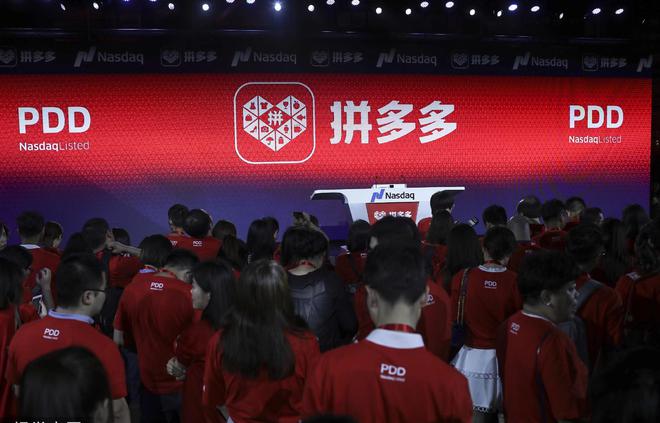
拼多多公布Q1财报:营收利润增速放缓,“千亿扶持”反哺供需两侧
Feng Huang Wang· 2025-05-27 12:19
凤凰网科技讯(作者/于雷)5月27日,拼多多今日发布的2025年第一季度财报,公司本季度营收957亿 元,同比增长10%,增速较此前有所放缓。 去年下半年,拼多多在电商行业首次推出了"百亿减免"等一系列举措,一方面为广大商家减佣降本,另 一方面拿出真金白银扶持产业转型升级。从过去几个季度的财报表现来看,拼多多营收、利润的增长连 续放缓,"减免+扶持"的举措投入超市场预期。 拼多多集团董事长、联席CEO陈磊在财报中透露,公司在年初就预见到商家群体将面临更大压力,因此 管理层做出了"千亿扶持"的战略决定。这项投入涵盖了降佣减费、流量倾斜、技术扶持等多个维度,旨 在为商家创造更多成本空间、经营空间和创新空间。 在具体实施层面,拼多多通过成立"商家权益保护委员会",建立了系统性的商家服务机制。该委员会由 联席CEO赵佳臻亲自带队,统筹平台各部门资源,形成了从头部商家到中小商家的全覆盖扶持体系。特 别值得关注的是,平台将扶持重心向中小商家倾斜,这一策略调整体现了拼多多对长期生态建设的深度 思考。 从产业维度观察,拼多多的"千亿扶持"计划在推动产业转型升级方面已显现成效。通过"新质供给"专项 团队深入各地产业带,平台正在 ...
谁替走失老人找回“回家的钥匙”?拼多多(PDD.US)公益实践打开新思路
智通财经网· 2025-05-27 11:58
Core Viewpoint - The "Key to Home" initiative, launched by the Central Radio and Television Station and Pinduoduo, addresses the urgent issue of safeguarding elderly individuals, particularly those with Alzheimer's disease, in the context of an aging society in China [1][3]. Group 1: Initiative Overview - The "Key to Home" initiative aims to help families of elderly individuals with Alzheimer's disease by providing a technological solution to prevent them from going missing [1][3]. - Since its launch at the end of 2023, the initiative has reached over 5,000 families across cities like Wuhan, Zhengzhou, and Qingdao, distributing keychains designed to assist in locating missing elderly individuals [1][9]. Group 2: Technological Solution - The keychain features advanced technology, including high-precision positioning via the Beidou system and a dual-mode tracking system that allows family members and passersby to assist in locating missing individuals [6][9]. - Families can apply for the keychain at local police stations, and after registration and assessment, they can receive it for free [8]. Group 3: Social Impact - The initiative not only enhances the safety of elderly individuals but also alleviates the burden on families and public resources, reflecting a collaborative effort among law enforcement, media, and businesses [12]. - The project has been recognized as a model of innovation in addressing the challenges posed by an aging population, promoting dignity and social efficiency [12].

拼多多营收增速连续放缓,陈磊:敢于牺牲短期业绩,真金白银反哺供需两侧
Guan Cha Zhe Wang· 2025-05-27 11:30
Core Viewpoint - Pinduoduo reported a revenue of 95.7 billion yuan for Q1 2025, reflecting a 10% year-on-year growth, but the growth rate has been slowing for several consecutive quarters [1] Group 1: Business Strategy - The company has increased its investment in high-quality development strategies, upgrading its "100 billion subsidy" initiatives to a "1 trillion support" program to enhance the e-commerce ecosystem [1] - Pinduoduo's management emphasizes the importance of supporting merchants during challenging market conditions, prioritizing their interests to ensure long-term platform health [1][2] Group 2: Merchant Support - The platform is exploring more commission reduction measures to lower costs for merchants, expanding support from top and mid-tier merchants to include small and medium-sized businesses [2] - The company aims to maximize the potential of small and medium-sized merchants, focusing on high-quality development and driving overall industry upgrades [2] Group 3: Consumer Initiatives - The "1 trillion support" initiative has led to various subsidy policies benefiting consumers, including a new "100 billion merchant feedback plan" and 100 billion yuan in consumer vouchers [2] - Pinduoduo is also exploring an innovative "platform direct subsidy" model to enhance consumer purchasing power while ensuring merchant rights, thereby stimulating demand and market competitiveness [2]
