PDD(PDD)

Search documents
2月10日热门中概股涨跌不一 日月光半导体涨6.01%,理想汽车跌3.27%
Xin Lang Cai Jing· 2026-02-09 21:17
Group 1 - The Nasdaq China Golden Dragon Index (HXC) showed mixed performance among Chinese concept stocks on February 10, with some stocks rising while others fell [1][7] - Notable gainers included TSMC up 1.83%, Alibaba up 0.28%, Pinduoduo up 0.32%, and Netease up 0.50% [1][7] - Significant losers included JD.com down 0.21%, Ctrip down 1.38%, and Li Auto down 3.27% [1][7] Group 2 - U.S. stock markets closed higher on Monday, with technology stocks leading the gains, and the Dow Jones Industrial Average reaching a new all-time high [2][8] - The Dow Jones increased by 20.20 points, or 0.04%, closing at 50,135.87 points; the Nasdaq rose by 207.46 points, or 0.90%, to 23,238.67 points; and the S&P 500 gained 32.51 points, or 0.47%, to 6,964.81 points [2][8] Group 3 - A list of top-performing Chinese concept stocks showed significant increases, with Xuniao Software up 48.55% and IFBD up 36.51% in after-hours trading [3][11] - Other notable gainers included Yingzhong Group up 29.30% and ATXG up 21.61% in after-hours trading [4][11] Group 4 - The list of underperforming Chinese concept stocks included Mingcheng Group down 29.42% and Zhongwang Zai Line down 24.65% [6][13] - Other significant decliners were Lanv down 20.71% and JZXN down 18.56% [6][14]


Wall Street's Hidden Value Play? Amazon's Chinese Rival Ranks Top 10% On Key Score After Recent Pullback
Benzinga· 2026-02-09 13:02
Group 1 - The company's value score has surged to 89.66, placing it in the top 10% of stocks globally based on relative worth, despite a year-to-date decline of approximately 9.09% [1][2] - The proprietary value metric evaluates the stock's price against fundamental measures like assets, earnings, and sales, indicating that the market price is low relative to its underlying financial strength [2] - PDD maintains a weaker price trend over the short, medium, and long terms according to Benzinga's Edge Stock Rankings [3] Group 2 - The recent 9% year-to-date slide is attributed to external pressures, including a ban imposed by Texas Governor Greg Abbott on state employees using PDD's international platform, Temu, due to data privacy concerns [4] - The company has faced a fine of 100,000 yuan from Chinese tax authorities and an expanded government probe into its Shanghai headquarters over alleged misconduct [4] - Despite these challenges, PDD continues to be a formidable rival to Amazon, leveraging a unique social commerce model and "team purchase" strategy to maintain strong margins while expanding into over 80 countries [5] Group 3 - Shares of PDD have declined by 9.09% year-to-date, while the Nasdaq Composite has decreased by 0.88% in the same period; however, the stock was up 9.55% over the year [6] - The stock closed 3.65% higher at $105.23 per share on Friday, with a slight increase of 0.067% in premarket trading on Monday [6]



这个春节,拼年货的战斗力还得看老乡
2 1 Shi Ji Jing Ji Bao Dao· 2026-02-09 06:54
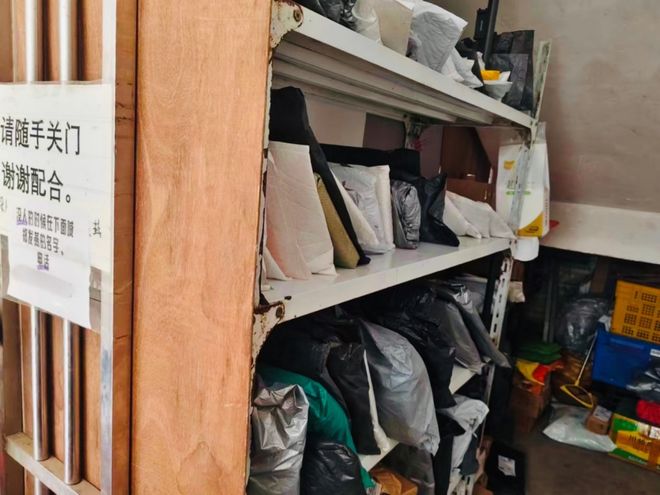
Core Insights - The article highlights the significant increase in online shopping for traditional New Year goods in rural areas, driven by improved logistics and digital platforms like Pinduoduo [1][12][14] - Rural consumption is outpacing urban growth, with a reported 4.1% year-on-year increase in rural retail sales, indicating a shift in consumer behavior and market dynamics [1][12] Group 1: Rural Consumption Trends - As the Spring Festival approaches, there is a noticeable rise in the volume of packages, with some rural areas experiencing a 30% increase in delivery volumes compared to earlier in the month [4] - The average disposable income for rural residents is projected to reach 24,456 yuan in 2025, reflecting a 6% real growth from the previous year [1] - The retail sales of consumer goods in rural areas are expected to reach 6.8 trillion yuan by 2025, continuing a trend of growth that outpaces urban areas for 13 consecutive years [12] Group 2: Logistics and Delivery Innovations - The logistics network has been significantly enhanced, with rural delivery services adapting to local conditions, including challenging terrains and weather [5][6] - Pinduoduo's rural delivery initiatives have led to a substantial increase in package volumes, with some stations handling up to 6,000 packages daily [6][10] - The integration of e-commerce into rural logistics has reduced delivery times from five to seven days to approximately three days [14] Group 3: Demographic Shifts in Online Shopping - Older consumers are increasingly participating in online shopping, challenging the stereotype that e-commerce is only for the young [7][10] - Many elderly individuals are becoming comfortable with online purchases, often starting with assistance from younger family members [7][10] - The trend of older consumers engaging in e-commerce is reshaping their shopping habits, making online platforms a stable part of their daily lives [10][12] Group 4: Economic Impact and Future Prospects - The article emphasizes the role of e-commerce in enhancing rural productivity and convenience, with farmers increasingly purchasing agricultural supplies online [8][14] - The ongoing digital transformation in rural areas is seen as a critical factor for rural revitalization, with e-commerce providing new opportunities for local economies [17] - The challenges of maintaining stable supply chains for rural products highlight the need for sustainable growth strategies in the e-commerce sector [17]
春节里的下沉市场经济学:用包裹“熨平”城乡温度差
Di Yi Cai Jing Zi Xun· 2026-02-08 02:16
Core Insights - The article highlights the transformative impact of e-commerce and logistics on rural consumption patterns in China, particularly during the Spring Festival, showcasing how these changes bridge the urban-rural divide [3][12][25] Group 1: E-commerce and Rural Consumption - The Spring Festival serves as a critical period for observing changes in rural consumption, with a significant increase in e-commerce activity as villagers purchase various goods online [3][12] - By 2025, rural areas are projected to account for 28% of the total express delivery volume in China, marking a substantial increase from previous years [3][12] - The rise of e-commerce platforms like Pinduoduo has enabled rural consumers to access a wider range of products, reducing the historical consumption gap between urban and rural areas [12][13] Group 2: Logistics and Infrastructure Development - The establishment of rural logistics networks is reshaping the delivery landscape, making it easier for villagers to receive packages without traveling long distances [6][9] - Local delivery hubs, such as those operated by villagers, have become essential in facilitating the last-mile delivery of goods, significantly improving access to e-commerce [6][9] - The logistics revolution is characterized by a shift from traditional market visits to convenient home delivery, enhancing the overall shopping experience for rural consumers [6][10] Group 3: Economic Empowerment and Cost Reduction - E-commerce has significantly lowered the procurement costs for rural residents, encompassing transportation, time, and decision-making expenses [13][24] - The availability of affordable tools and agricultural equipment through online platforms has led to increased productivity and efficiency in rural farming practices [22][24] - The economic benefits of e-commerce are fostering a sustainable cycle of growth, where increased income from enhanced agricultural output leads to higher consumption levels [22][24] Group 4: Emotional and Cultural Connections - The article discusses the emerging trend of emotional reciprocity in rural areas, where local products are being sent to family members living in urban centers, thus strengthening emotional ties [25][26] - The dual flow of goods, including local specialties being shipped to urban areas, is reshaping the cultural connections between rural and urban populations [25][26] - The integration of e-commerce into rural life is not only about economic transactions but also about preserving and sharing local culture and traditions [25][26]
春节里的下沉市场经济学:用包裹“熨平”城乡温度差
第一财经· 2026-02-08 02:09
Core Viewpoint - The article highlights the transformative impact of e-commerce and logistics on rural consumption in China, particularly during the Spring Festival, showcasing how the delivery of goods is bridging the urban-rural divide and reshaping local economies [2][12][30]. Group 1: E-commerce and Rural Consumption - The Spring Festival serves as a critical observation point for changes in rural consumption patterns, with a significant increase in the volume of goods being delivered to rural areas [2][12]. - By 2025, it is projected that one in four packages will be delivered to rural areas, with rural express delivery volume reaching 28%, a notable increase from the end of the 13th Five-Year Plan [2][11]. - The rise of e-commerce platforms like Pinduoduo has facilitated a structural shift, where rural retail sales growth has consistently outpaced urban areas over the past thirteen years [2][12]. Group 2: Logistics and Accessibility - The establishment of local delivery stations has significantly reduced the distance and time required for rural residents to access goods, transforming the logistics landscape [5][10]. - In remote areas, logistics challenges have been addressed through innovative solutions, such as local delivery networks that connect villages directly to e-commerce platforms [9][10]. - The average daily package volume at local delivery stations can reach up to 150 during peak times, indicating a robust demand for e-commerce services in rural settings [6][9]. Group 3: Economic Empowerment through E-commerce - E-commerce has become a vital lifeline for rural residents, enabling them to access essential goods and services that were previously unavailable or difficult to obtain [15][17]. - The cost savings associated with online shopping, including reduced transportation and time costs, have empowered rural consumers to make more informed purchasing decisions [12][26]. - The introduction of efficient agricultural tools through e-commerce has led to increased productivity and income for farmers, creating a sustainable cycle of economic growth [22][26]. Group 4: Emotional and Cultural Connections - The article discusses the emerging trend of emotional reciprocity, where rural residents send local specialties to family members in urban areas, fostering a sense of connection and cultural exchange [28][29]. - This dual flow of goods not only enhances emotional ties but also promotes the visibility of rural products in broader markets, contributing to local economic development [28][30]. - The integration of rural products into e-commerce platforms is seen as a way to elevate local culture and traditions, allowing rural communities to share their unique offerings with a wider audience [29][30].

做不到“绝对公正”与“全网比价”的AI购物助理,都不会成功
虎嗅APP· 2026-02-07 10:10
Core Viewpoint - The article discusses the impact of AI development on e-commerce platforms, particularly focusing on the competitive dynamics between companies like Amazon, Alibaba, and Pinduoduo, emphasizing the importance of consumer trust and value delivery in the retail sector [6][29]. Group 1: AI and E-commerce Dynamics - The daily token consumption in China is projected to increase from 100 billion at the beginning of 2024 to 40 trillion by September 2025, representing a growth of over 400 times [7]. - Major US tech companies are significantly increasing their capital expenditures for AI infrastructure, with Google estimating its 2026 CapEx to be between $175 billion and $185 billion, nearly double its 2025 spending [8]. - Amazon's projected capital expenditure for 2026 is $200 billion, primarily focused on AWS AI infrastructure, while Microsoft anticipates around $150 billion in spending [9]. Group 2: Competitive Analysis of E-commerce Platforms - Amazon's 2025 GMV is estimated at approximately $700 billion, with AI assistant Rufus contributing $12 billion in annual transaction volume, accounting for 1.67% of total GMV [11][12]. - The article critiques the effectiveness of AI assistants in enhancing user experience, suggesting that they often serve as high-level customer service rather than providing significant incremental value [17]. - Pinduoduo's business model emphasizes "lowest price" as a prerequisite for advertising, contrasting with Amazon and Alibaba, which rely on advertising revenue from brand merchants [20][21]. Group 3: Consumer Trust and Value Proposition - The article argues that platforms like Costco succeed because they prioritize consumer trust and value, contrasting with Amazon and Alibaba, which may not always align with consumer needs [22]. - The effectiveness of AI shopping assistants is questioned, particularly in their ability to deliver on consumer expectations for price and quality, with the assertion that they cannot change the underlying business models of platforms like Alibaba [22][23]. - The article concludes that the future of AI in e-commerce will likely favor companies that can maintain consumer trust and deliver genuine value, with Apple and WeChat identified as potential leaders in this space due to their business models [27][28].





千亿景林持仓曝光!大幅减持英伟达,重仓谷歌、Meta、拼多多
券商中国· 2026-02-07 09:44
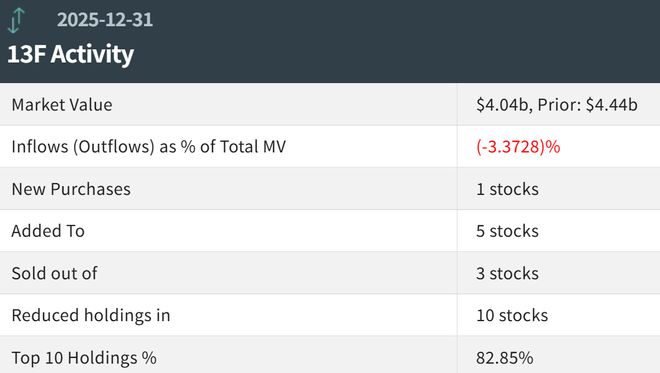
Core Viewpoint - Jinglin Capital has significantly adjusted its US stock holdings in the fourth quarter, reducing its position in Nvidia while increasing investments in Google, Pinduoduo, and Intel [1][5]. Group 1: Holdings Overview - As of the end of the fourth quarter, Jinglin's total US stock holdings amounted to $4.04 billion, a decrease of 3.37% from the previous quarter [2]. - The top ten holdings include Google, Meta, Pinduoduo, NetEase, Manbang, Futu, Nvidia, Alibaba, Intel, and Yaduo [2]. Group 2: Major Increases in Holdings - The largest increase in holdings was in Google, where the number of shares rose to 2.69 million, reflecting a 52.81% increase, making it the largest position at 20.82% of the portfolio [4]. - Jinglin also initiated a position in Broadcom with 245,800 shares, representing 2.1% of the portfolio, and increased holdings in Pinduoduo, Intel, and Futu [4]. Group 3: Major Reductions in Holdings - The most significant reduction was in Nvidia, where Jinglin sold 1.5409 million shares, a decrease of 64.78%, reducing its portfolio share to 3.86% [5]. - Additionally, Jinglin reduced its stake in Meta by 22,910 shares, resulting in an 18.68% decrease in holdings [5]. Group 4: Investment Strategy Insights - Jinglin's partner and fund manager, Gao Yuncheng, highlighted the importance of companies in emerging sectors like AI, new energy, and smart driving, emphasizing the ongoing transformation across industries [5][6]. - The core holdings are characterized by strong customer loyalty, pricing power, and distinct product differentiation, focusing on companies with stable valuations and cash flows [6].



张一鸣登顶中国首富
Xin Lang Cai Jing· 2026-02-07 08:52
Group 1 - Zhang Yiming, founder of ByteDance, tops the Forbes 2026 China Rich List with a net worth of $69.3 billion, surpassing Zhong Shanshan for the first time [2][5] - The list reflects a significant reshuffling, with many traditional industries being disrupted by the rise of internet and hard technology sectors [2][5] - The top ten includes major figures from technology, new energy, and manufacturing, indicating a shift in wealth towards hard tech [6] Group 2 - Lei Jun of Xiaomi makes a notable comeback, ranking tenth with a net worth of $30.4 billion, surpassing Jack Ma, who is now ranked eleventh with $29.6 billion [2][5] - ByteDance's investments in AI, including a $160 billion budget for AI development, are key to Zhang Yiming's wealth increase [5] - The real estate tycoons have seen a decline, with internet billionaires now making up less than 40% of the list, highlighting a trend towards AI, new energy, and high-end manufacturing [6]





千亿私募巨头 第一大重仓股变了!
Zhong Guo Ji Jin Bao· 2026-02-07 06:01
【导读】景林资产四季度减持英伟达,增持谷歌、拼多多 私募巨头景林资产海外主体景林资产管理香港有限公司(以下简称景林香港公司),近日向美国证券交 易委员会(SEC)提交了截至2025年四季度末的美股持仓数据。 根据13F文件,截至2025年12月31日,景林香港公司四季度末在美股市场合计持仓总市值为40.45亿美 元,较三季度末的44.41亿美元下降了8.92%。 从调仓动向来看,去年四季度景林香港公司新买进了1只证券,加仓了5只证券,同时清仓了3只证券, 减持了10只证券。其中,景林香港公司大幅削减了对英伟达的持仓,同时将谷歌母公司Alphabet提升至 第一大重仓股。 记者从渠道获悉,景林资产认为,AI对各行各业的渗透和改造才刚刚开始,未来的巨头现在可能还是 刚起步的AI原生公司。 | 2025-12-31 | | | --- | --- | | 13F Activity | | | Market Value | $4.04b, Prior: $4.44b | | Inflows (Outflows) as % of Total | (-3.3728)% | | MV | | | New Purchases ...

景林资产Q4持仓:英伟达(NVDA.US)失宠 减持超六成
Xin Lang Cai Jing· 2026-02-07 03:42
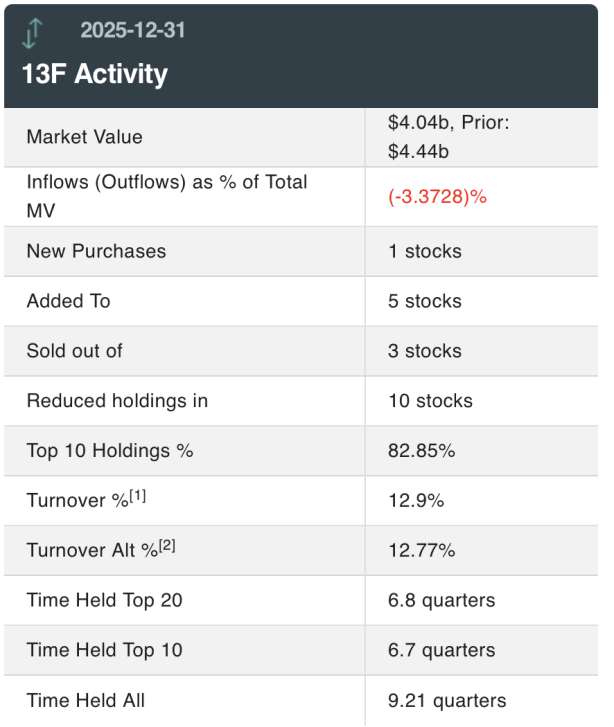
Core Insights - Jinglin Asset significantly reduced its holdings in NVIDIA while increasing its position in Alphabet Inc. to become the largest holding in the fourth quarter of 2025 [1][6]. Group 1: Portfolio Overview - Jinglin Asset's total market value for the fourth quarter was $4.04 billion, down from $4.44 billion in the previous quarter, reflecting a decrease of approximately 3.37% [2]. - The fund made one new purchase, added to five existing positions, sold out of three stocks, and reduced holdings in ten stocks, with the top ten holdings accounting for 82.85% of the total market value [2][5]. Group 2: Major Holdings - Alphabet Inc. (GOOGL) is the largest holding with approximately 2.69 million shares valued at about $841.97 million, representing 20.82% of the portfolio, an increase of about 929,680 shares or 52.81% from the previous quarter [2][5]. - Meta Platforms Inc. (META) is the second-largest holding with approximately 996,908 shares valued at about $658.05 million, accounting for 16.27% of the portfolio, a decrease of about 229,056 shares or 18.69% [2][5]. - Pinduoduo (PDD) ranks third with approximately 3.97 million shares valued at about $449.96 million, representing 11.12% of the portfolio, an increase of about 611,306 shares or 18.21% [3][5]. Group 3: Changes in Holdings - Jinglin Asset reduced its holdings in NVIDIA by approximately 1.54 million shares, cutting over 60% of its position, due to market concerns regarding AI industry financing [6][7]. - The fund also reduced its stake in Meta by approximately 229,056 shares, leading to its drop from the top position to second largest [6]. - In contrast, Jinglin increased its holdings in Alphabet by approximately 929,680 shares and in Pinduoduo by approximately 611,306 shares, indicating a strategic shift in technology stock allocation [6][7]. Group 4: Other Notable Adjustments - The fund also reduced its positions in other semiconductor-related stocks such as TSMC and Spotify, while increasing its stake in Intel by approximately 694,363 shares [7][9]. - Notably, Jinglin continued to reduce its holdings in KE Holdings, having sold 1.88 million shares in the fourth quarter, following a significant reduction in the previous quarter [9].