PDD(PDD)

Search documents
美股科技股遭抛售,英伟达跌近3%!黄金反弹;谷歌最强大AI模型来了;ChatGPT、X一度瘫痪;机器人视频被质疑,优必选回应丨每经早参
Mei Ri Jing Ji Xin Wen· 2025-11-18 22:07
Market Overview - US stock markets experienced a collective decline, with the Dow Jones down 1.07%, S&P 500 down 0.83%, and Nasdaq down 1.21%. Major tech stocks like Amazon and AMD fell over 4%, while Microsoft and Nvidia dropped nearly 3% [4] - European stock indices also closed lower, with Germany's DAX down 1.85%, France's CAC40 down 1.86%, and the UK's FTSE 100 down 1.27% [7] Commodity Prices - Spot gold increased by 0.52% to $4066.11 per ounce, while COMEX gold futures fell by 0.22% to $4065.6 per ounce [5] - US oil futures rose by 1.29% to $60.63 per barrel, and Brent crude oil futures increased by 1% to $64.84 per barrel [6] Company Earnings - Pinduoduo reported Q3 2025 revenue of RMB 108.2765 billion, a 9% year-on-year increase, with net profit of RMB 29.3282 billion, up 17% [17] - Xiaomi Group announced Q3 2025 revenue of RMB 113.121 billion, a 22.3% increase, and adjusted net profit of RMB 11.311 billion, up 80.9% [17] - Baidu's Q3 2025 revenue reached RMB 31.2 billion, with core revenue of RMB 24.7 billion. AI business revenue grew over 50%, with AI cloud revenue up 33% [17] Corporate Developments - Alibaba's AI application, Qianwen App, quickly rose to the fourth position in the App Store's free applications chart, indicating strong market interest [22] - Yuyuan Group announced a revenue growth target of RMB 500 million for 2025, indicating a return to a revenue scale of RMB 70 billion [20] - Nvidia and Microsoft announced a strategic partnership with Anthropic, committing to invest up to $150 billion combined, highlighting the competitive landscape in the AI sector [25] Regulatory and Policy Updates - The Ministry of Industry and Information Technology aims to establish around 200 high-standard digital parks by 2027, focusing on digital transformation across industries [11] - The Ministry of Natural Resources introduced a management method for satellite navigation positioning stations, enhancing regulatory oversight [11] Industry Trends - The artificial intelligence terminal industry in Chongqing is projected to exceed RMB 300 billion by 2030, with plans to launch over 20 AI terminal products [13] - Cloudflare resolved a service outage that affected major platforms, including ChatGPT, highlighting the vulnerabilities in internet infrastructure [27]



热门中概股收盘涨跌不一 拼多多跌超7%
Xin Lang Cai Jing· 2025-11-18 21:45
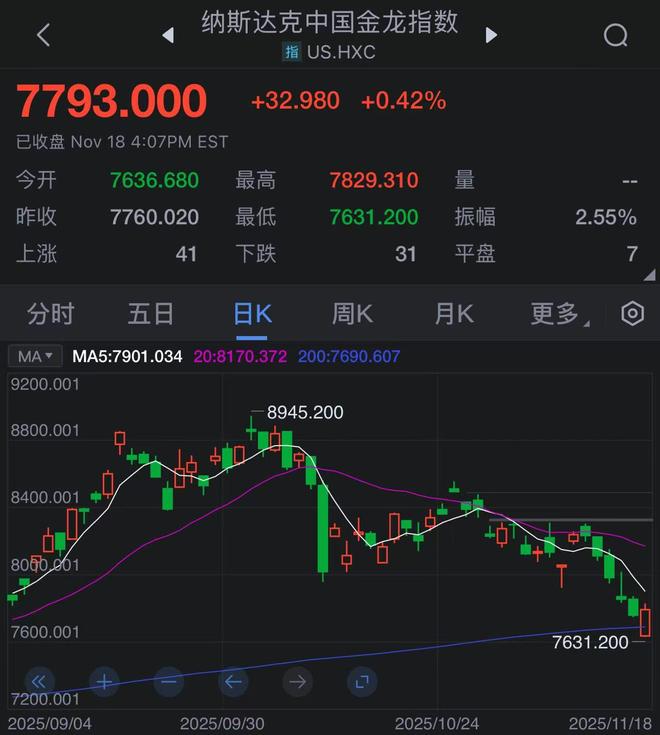
Core Viewpoint - The performance of popular Chinese concept stocks showed mixed results, with the Nasdaq Golden Dragon China Index increasing by 0.42% [1] Group 1: Stock Performance - iQIYI saw a significant increase, rising over 6% [1] - Baidu, Huya, and Kingsoft Cloud each rose by more than 2% [1] - Alibaba and NetEase experienced gains of over 1% [1] - Pinduoduo faced a notable decline, dropping 7.33%, marking its largest drop since May 27 [1] - Tiger Brokers fell by more than 2% [1] - NIO decreased by over 1% [1] - Li Auto and JD.com had slight declines [1]


估值优势与AI前景驱动 外资巨头三季度加仓中国资产
Shang Hai Zheng Quan Bao· 2025-11-18 18:42
Core Viewpoint - Major Wall Street investment institutions have significantly increased their allocation to Chinese assets, particularly in the technology sector, as indicated by the latest 13F filings from the U.S. [1][2] Group 1: Investment Trends - In Q3, major financial institutions such as Bank of America, UBS, and Morgan Stanley have substantially increased their holdings in the China Overseas Internet ETF (KWEB), with share increases of 215.89%, 35.29%, and 24.76% respectively [1] - Soros Fund Management increased its holdings in KWEB from 290,000 shares to 2.4 million shares, a growth of over 700% [2] - Jain Global LLC, founded by Bobby Jain, increased its KWEB holdings by over 850% in Q3 [2] Group 2: Performance of Key Stocks - The top two holdings in the China Overseas Internet ETF are Tencent and Alibaba, each accounting for over 10% of the portfolio [2] - The total size of the China Overseas Internet ETF grew from $6.373 billion at the end of the first half to $9.793 billion by the end of Q3 [2] - Alibaba saw significant increases in holdings from UBS, Fidelity, and Goldman Sachs, with increases of 51.05%, 30.83%, and 8.16% respectively [2] Group 3: Market Sentiment and Future Outlook - Analysts believe that Alibaba's investments in artificial intelligence have not yet been fully reflected in its stock price, and confidence in its AI prospects has begun to rise [3] - UBS's China equity strategy head noted that despite recent adjustments in global AI stocks potentially impacting Chinese tech stocks, several factors may mitigate this effect, including lower correlation with other emerging markets [3] - Invesco's senior fund manager expressed optimism about the long-term performance of Chinese assets, citing ongoing technological innovations as a key growth driver [3]

Volkswagen has secured chip supply for now, brand boss says
Reuters· 2025-11-18 18:18
Core Insights - Volkswagen has successfully secured sufficient semiconductor chips for its production needs, contrasting with other automotive companies that continue to face supply shortages due to trade disruptions [1] Company Summary - The head of Volkswagen's VW brand confirmed the availability of chips, indicating a positive outlook for the company's production capabilities [1] Industry Summary - Other automotive firms are still struggling with supply shortages, highlighting ongoing challenges within the industry related to semiconductor availability and trade issues [1]

百度三季度AI收入增超50%拼多多“千亿扶持”继续反哺产业
Zheng Quan Shi Bao· 2025-11-18 18:13
Group 1: Pinduoduo Performance - Pinduoduo reported Q3 revenue of 108.3 billion yuan, a year-on-year increase of 9%, and adjusted net profit of 31.382 billion yuan, up 14% year-on-year [2] - Operating profit growth for Pinduoduo was in the low single digits year-on-year, indicating a slowdown in revenue and profit growth over multiple quarters [2] - The company initiated a "trillion-level" support strategy in the e-commerce sector this year, which has impacted performance but aims to create long-term value for merchants and the industry [2] Group 2: Pinduoduo Merchant Growth - As of September, Pinduoduo's report indicated a rapid increase in the number of merchants in industrial belts, with a 31% year-on-year growth in merchants born after 1995 and a 44% increase for those born after 2000 [2] - The number of quality product SKUs increased by over 50%, and brand stores in industrial belts saw significant growth, indicating a shift towards high-quality development [2] Group 3: Baidu Performance - Baidu's Q3 total revenue was 31.2 billion yuan, a year-on-year decrease of 7%, with a net loss of 11.232 billion yuan compared to a net profit of 7.632 billion yuan in the same period last year [2] - For the first time, Baidu disclosed AI business revenue, showing a year-on-year growth of over 50%, with AI cloud revenue increasing by 33% [3][4] Group 4: Baidu AI Business Growth - AI application revenue reached 2.6 billion yuan, while AI native marketing service revenue surged by 262% to 2.8 billion yuan [3] - Baidu's AI cloud maintained robust growth, with subscription revenue for high-performance computing infrastructure increasing by 128% year-on-year [4] - Baidu's AI public cloud service has been recognized as the market leader in China for six consecutive years, reflecting its strong position in the AI sector [4]
全文|拼多多Q3业绩会实录:千亿扶持等惠及供需两侧的战略项目将进一步增多
Xin Lang Ke Ji· 2025-11-18 16:02
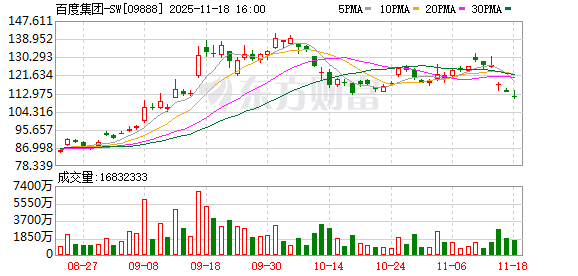
Core Insights - Pinduoduo reported Q3 2025 total revenue of 108.2765 billion yuan, a year-on-year increase of 9% [1] - Net profit attributable to ordinary shareholders was 29.3282 billion yuan, up 17% year-on-year; non-GAAP net profit was 31.3817 billion yuan, a 14% increase [1] Financial Performance - Total revenue for Q3 2025 reached 108.2765 billion yuan, reflecting a 9% growth compared to the previous year [1] - Net profit attributable to ordinary shareholders was 29.3282 billion yuan, marking a 17% increase year-on-year [1] - Non-GAAP net profit was reported at 31.3817 billion yuan, which is a 14% increase from the same period last year [1] Industry Trends - The online retail market is showing signs of recovery, with the industry year-on-year growth rate reaching its highest level in recent quarters [2] - The competition in the e-commerce sector is intensifying, with many players investing heavily in new business models [3][10] Strategic Initiatives - The company has launched the "100 Billion Support" initiative to enhance platform ecology and support merchants, aiming for high-quality development [3][4] - A merchant rights protection committee has been established to improve communication with merchants and enhance the after-sales service system [3] - The company is committed to long-term investments that may impact short-term revenue and profit sustainability [5][10] Globalization and Compliance - The company has been developing its global business for over three years, focusing on integrating into local markets and complying with regulations [6][7] - Significant resources are being allocated to ensure product compliance and enhance consumer safety on the platform [7] Future Outlook - The management anticipates fluctuations in financial performance in the coming quarters due to ongoing investments and competitive pressures [4][10] - The company aims to maintain a long-term perspective, prioritizing sustainable growth over short-term profits [10][11]
拼多多,最新财报发布!
Zheng Quan Shi Bao· 2025-11-18 15:56
Core Insights - Pinduoduo reported Q3 2025 revenue of 108.3 billion yuan, a 9% year-on-year increase, and adjusted net profit of 31.38 billion yuan, up 14% year-on-year [2] - The company continues to invest heavily in its "100 billion support" initiative, which may impact future performance [2] - The international environment is becoming increasingly complex, presenting challenges and uncertainties for the company [2] Financial Performance - Q3 revenue reached 108.3 billion yuan, reflecting a 9% increase compared to the same period last year [2] - Adjusted net profit for the quarter was 31.38 billion yuan, marking a 14% year-on-year growth [2] Strategic Initiatives - The "100 billion support" initiative is aimed at enhancing ecosystem development and providing financial relief to merchants [2][4] - Pinduoduo's agricultural initiatives have led to a 47% increase in agricultural product sales in the first half of the year [4] - The company has allocated 10 billion yuan in subsidies and 20 billion yuan in traffic resources to support agricultural products during the harvest season [4] Industry Impact - Pinduoduo's support for agricultural e-commerce is driving significant growth in the number of agricultural merchants, particularly among younger generations [4][5] - The company is actively promoting the transformation of traditional industries through its "new quality supply" initiative, which has led to the emergence of new brands and products [7][8] - The platform's efforts have resulted in a 31% increase in the number of "95 post-90s" merchants and a 44% increase in "00 post-00s" merchants [8]
拼多多,最新财报发布!
证券时报· 2025-11-18 15:53
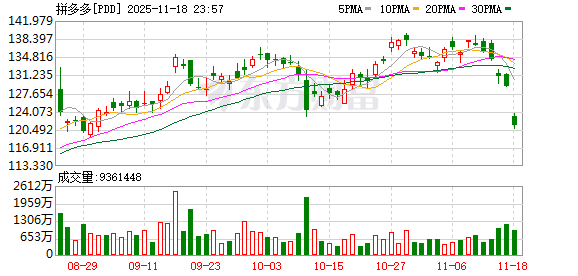
Core Viewpoint - Pinduoduo reported a revenue of 108.3 billion yuan for Q3 2025, marking a 9% year-on-year increase, and an adjusted net profit of 31.382 billion yuan, up 14% year-on-year [1] Group 1: Financial Performance - The company continues to invest heavily in its ecosystem through the "100 billion support" initiative, which includes reducing service fees for merchants and providing traffic and resource support [2] - The CEO highlighted the increasing complexity of the international environment, with significant changes in trade policies and regulations, which pose challenges and uncertainties for the company's financial performance [2] Group 2: Agricultural Initiatives - Pinduoduo launched a "100 billion-level" initiative to support agricultural e-commerce, resulting in a 47% year-on-year increase in agricultural product sales in the first half of the year [4] - The company invested 1 billion yuan in subsidies and 2 billion yuan in traffic resources to support local agricultural products during the harvest season [4] Group 3: Industry Transformation - The "100 billion support" initiative is aimed at helping industrial merchants transition to higher quality production, with a focus on reducing homogenization in competition [7] - The number of merchants in industrial belts has rapidly increased, with a 31% year-on-year growth in "post-95" merchants and a 44% increase in "post-00" merchants [9]

PDD(PDD) - 2025 Q3 - Quarterly Results
2025-11-18 14:58
Financial Performance - Total revenues for Q3 2025 were RMB 108,276.5 million (US$ 15,209.5 million), an increase of 9% from RMB 99,354.4 million in Q3 2024[5] - Operating profit for the quarter was RMB 25,025.9 million (US$ 3,515.4 million), compared to RMB 24,292.5 million in the same quarter of 2024[9] - Net income attributable to ordinary shareholders was RMB 29,328.2 million (US$ 4,119.7 million), a 17% increase from RMB 24,980.7 million in Q3 2024[10] - Revenues for Q3 2025 reached RMB 108.28 billion, a 9.2% increase from RMB 99.35 billion in Q3 2024[26] - Net income for Q3 2025 was RMB 29.33 billion, up 17.5% from RMB 24.98 billion in Q3 2024[28] - Operating profit for the nine months ended September 30, 2025, was RMB 66.90 billion, a decrease of 19.3% compared to RMB 82.83 billion for the same period in 2024[26] Revenue Breakdown - Revenues from online marketing services were RMB 53,347.6 million (US$ 7,493.7 million), an increase of 8% from RMB 49,351.0 million in Q3 2024[8] - Revenues from transaction services were RMB 54,928.9 million (US$ 7,715.8 million), a 10% increase compared to RMB 50,003.4 million in Q3 2024[8] Expenses and Costs - Total costs of revenues were RMB 46,840.2 million (US$ 6,579.6 million), an increase of 18% from RMB 39,709.2 million in Q3 2024[7] - Research and development expenses increased by 41% to RMB 4,332.2 million (US$ 608.5 million) from RMB 3,063.4 million in Q3 2024[7] - Research and development expenses for Q3 2025 were RMB 4.33 billion, a 41.5% increase from RMB 3.06 billion in Q3 2024[26] Cash Flow and Liquidity - Net cash generated from operating activities was RMB 45,660.5 million (US$ 6,413.9 million), compared to RMB 27,522.3 million in Q3 2024[12] - Cash, cash equivalents, and short-term investments totaled RMB 423.8 billion (US$ 59.5 billion) as of September 30, 2025, up from RMB 331.6 billion as of December 31, 2024[12] - Cash, cash equivalents, and restricted cash at the end of Q3 2025 were RMB 163.39 billion, compared to RMB 125.69 billion at the end of Q3 2024, reflecting a significant increase[34] Earnings Per Share - Basic earnings per ADS were RMB 20.96 (US$ 2.94), compared to RMB 18.02 in Q3 2024[11] - Earnings per ordinary share (diluted) for Q3 2025 were RMB 4.93, compared to RMB 4.23 in Q3 2024, representing a 16.5% increase[28] Liabilities - Total current liabilities increased to RMB 219.22 billion as of September 30, 2025, from RMB 188.42 billion as of December 31, 2024[24] - Total liabilities as of September 30, 2025, were RMB 222.32 billion, up from RMB 191.72 billion as of December 31, 2024[24] Non-GAAP Measures - For the three months ended September 30, 2025, the non-GAAP operating profit was RMB 27,079,444, representing an increase from RMB 26,770,463 in the same period of 2024[35] - Non-GAAP diluted earnings per ordinary share for the three months ended September 30, 2025, was RMB 5.27, compared to RMB 4.65 in the same period of 2024, reflecting an increase of about 13%[35] - The non-GAAP net income attributable to ordinary shareholders for the three months ended September 30, 2025, was RMB 31,381,704, up from RMB 27,458,701 in 2024, marking an increase of approximately 14%[35] - The diluted earnings per ordinary share for the nine months ended September 30, 2025, was RMB 12.60, down from RMB 14.37 in 2024, indicating a decrease of about 12%[35] - Non-GAAP diluted earnings per ADS for the nine months ended September 30, 2025, was US$ 7.68, compared to US$ 62.56 in the same period of 2024, reflecting a decrease of about 12%[35] Other Financial Metrics - The company reported a foreign exchange loss of RMB 265.20 million in Q3 2025, a decrease from a loss of RMB 547.34 million in Q3 2024[26] - Share-based compensation expenses for the three months ended September 30, 2025, were RMB 2,053,520, down from RMB 2,478,005 in 2024, indicating a decrease of approximately 17%[35] - The loss from fair value change of certain investments for the nine months ended September 30, 2025, was zero, compared to RMB 25,456 in 2024, indicating a significant improvement[35]
拼多多财报电话会,释放最新信号
第一财经· 2025-11-18 14:30
Core Viewpoint - Pinduoduo's third-quarter financial report indicates a focus on long-term growth and ecosystem investment despite facing competitive pressures and uncertainties in global operations [1][2][3] Group 1: Industry Competition - Pinduoduo acknowledges that competition in the industry is inevitable and emphasizes empowering consumers and merchants rather than overly focusing on short-term competitive dynamics [2] - The company plans to increase strategic projects similar to its "100 billion support" initiative in the future [2] - Pinduoduo is committed to supply chain optimization and platform ecosystem development, which may lead to temporary disadvantages compared to some competitors and could impose financial pressure [2] Group 2: Globalization Challenges - Pinduoduo is actively working on compliance for its global operations and collaborating with external parties, but faces significant uncertainties due to changing regulatory policies across different countries and regions [3] - The company recognizes that these uncertainties may pose unpredictable risks that could impact both short-term and long-term financial performance [3]