
TRIP.COM(TCOM)

Search documents
大消费行业周报(8月第5周):在线旅游行业龙头中报业绩稳健增长-20250901
Century Securities· 2025-09-01 00:39
Investment Rating - The report suggests a positive outlook for the online travel industry, particularly for leading companies like Ctrip and Tongcheng, which have shown steady growth in their mid-year reports [1][2]. Core Insights - The online travel industry is experiencing a robust recovery, with Tongcheng's revenue growing by 10% year-on-year in Q2 2025 and Ctrip's revenue increasing by 16.2% in the same period. Both companies maintained stable growth rates compared to Q1 2025, with notable performance in international business [1][2]. - Domestic tourism is on the rise, with the Ministry of Culture and Tourism reporting 5.62 billion domestic trips in 2024, a 14.8% increase year-on-year, and total spending of 5.8 trillion yuan, up 17.1% [1][2]. - The Guangdong provincial government plans to launch a "Golden Autumn Cultural Tourism Consumption Season" on September 12, 2025, with a budget of 20 million yuan for issuing tourism consumption vouchers, which is expected to stimulate local tourism and related industries [1][2]. Summary by Sections Market Weekly Review - The consumer sector saw mixed performance, with retail, food and beverage, and social services showing positive growth, while beauty care, home appliances, and textile and apparel sectors experienced declines [1][2]. - Notable stock performances included Wanchen Group (+41.10%) and Jiaheng Home Care (+55.37%), while West China Animal Husbandry (-5.88%) and Gree (-8.30%) faced declines [1][2]. Industry News and Key Company Announcements - The report highlights significant announcements from various companies, including Taiping Bird's revenue decline of 7.86% and Shanghai Jahwa's revenue growth of 4.75% in the first half of 2025 [1][2]. - Noteworthy is the performance of companies like Nongfu Spring, which reported a 15.6% increase in revenue, and Youyou Food, which saw a 45.59% rise in revenue [1][2].

暑期旅游收官:出游人次全面超过去年,《浪浪山小妖怪》再度带火山西古建
Xin Lang Cai Jing· 2025-09-01 00:15
Group 1: Summer Travel Trends - The summer travel season of 2025 has seen a significant increase in travel volume compared to the previous year, with long-distance travel being the primary focus [1][2] - Family travel and senior travel have shown notable growth, particularly among children aged 10 and under and seniors aged 60 and above [2] - Domestic and international travel bookings through platforms like Tuniu have experienced double-digit year-on-year growth [2][6] Group 2: Air Travel and Passenger Volume - The total passenger volume for civil aviation during the summer is expected to reach a historical high of 150 million, driven by affordable ticket prices and increased demand for long-distance travel [2] - Approximately 6 million first-time flyers are anticipated this summer, primarily consisting of children, students, and seniors [2] Group 3: Emerging Travel Preferences - There is a growing trend towards small group and private tours, with a significant increase in demand for personalized travel experiences [6][7] - The number of customized travel orders has surged, with a 53% increase in revenue from cross-province small group tours compared to 2024 [6] Group 4: Impact of Events and Entertainment - Events such as concerts and exhibitions have significantly boosted travel interest, with searches for accommodations and attractions near event venues increasing dramatically [10][11] - The popularity of sports events has also driven travel, with notable increases in bookings for destinations hosting these events [11] Group 5: Influence of Media and Culture - The release of popular films and TV shows has led to increased travel to filming locations, with some destinations experiencing over a 380% increase in search volume [12] - The success of domestic animations and dramas has particularly highlighted cultural tourism, with specific sites seeing substantial growth in visitor interest [12]



全球要闻:美股8月全线累涨纳指连涨5个月 美上诉法院裁定特朗普关税违法
Sou Hu Cai Jing· 2025-09-01 00:15
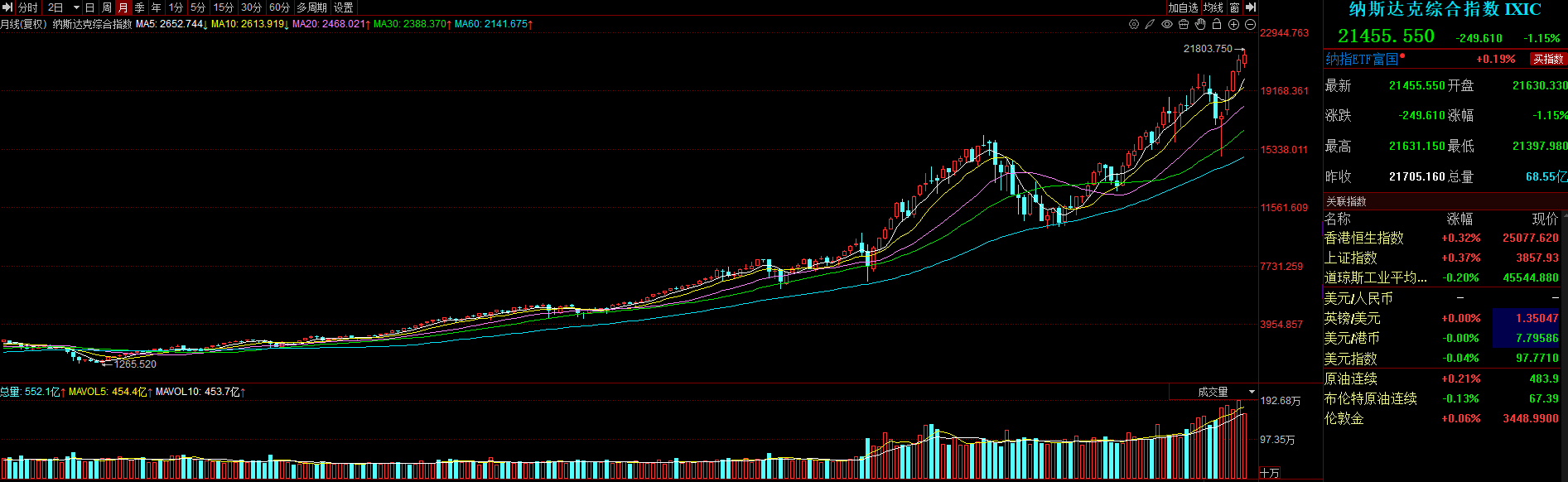
Market Overview - US stock markets collectively declined last Friday, with technology stocks facing significant sell-offs, but overall performance in August remained positive, with the Nasdaq recording five consecutive monthly gains and the S&P 500 four consecutive monthly gains [1][2] - The S&P 500 index fell by 0.64% to 6460.26 points, the Dow Jones index decreased by 0.20% to 45544.88 points, and the Nasdaq index dropped by 1.15% to 21455.55 points as of last Friday's close [1] - In the week, the Dow Jones and Nasdaq indices both saw a decline of 0.19%, while the S&P 500 index fell by 0.10% [1] Economic Indicators - The US non-farm payroll data for August is set to be released this Friday, which will serve as a crucial indicator of economic health and test investor expectations regarding potential interest rate cuts by the Federal Reserve [5] - The Federal Reserve will also release its Beige Book on Wednesday, which includes various economic condition surveys [5] Legal and Regulatory Developments - A US appeals court ruled that most of the global tariff policies implemented by former President Trump were illegal, marking a significant blow to one of his administration's hallmark policies [4][16] - The court's decision allows the tariffs to remain in effect until mid-October, providing time for further appeals to the Supreme Court [4][16] Seasonal Trends - September is historically the worst-performing month for the S&P 500, with an average decline of 0.8% over the past 35 years, and this trend is expected to continue [6][18] - The month is characterized by high volatility, particularly in the first year of a presidential term, where the probability of decline increases to 58% [18] Company Performance - Notable declines were observed in major tech stocks last Friday, including Nvidia down 3.32%, Microsoft down 0.58%, and Tesla down 3.50% [9][12] - In contrast, Alibaba saw a significant increase of 12.90% [12] Global Market Performance - European stock indices experienced slight declines, with the UK FTSE 100 down 0.32%, France's CAC 40 down 0.76%, and Germany's DAX down 0.57% [10] - Asian markets showed mixed results, with the Hang Seng Index up 0.32% and the Nikkei 225 down 0.26% [10]




携程集团_营收韧性强,利润率走势好于预期
2025-08-31 16:21
Summary of Trip.com Group Ltd (TCOM.O) Conference Call Company Overview - **Company**: Trip.com Group Ltd (TCOM) - **Industry**: Online Travel Agency (OTA) in China - **Founded**: 1999, listed on NASDAQ in 2003 Key Financial Results - **2Q25 Performance**: Revenue increased by 16% year-over-year (YoY) to RMB 14.8 billion, exceeding expectations - **Segment Breakdown**: - Accommodation revenue: RMB 6.2 billion (+21% YoY) - Transportation ticketing: RMB 5.4 billion (+11% YoY) - Packaged tours: RMB 1.1 billion (+5% YoY) - Corporate travel: RMB 692 million (+9% YoY) - Other revenues: RMB 1.47 billion (+31% YoY) [11][12] Revenue Growth Projections - **Domestic Revenue Growth**: Projected at 9% YoY in 2H25, driven by hotel room nights growth despite softening transportation ticketing volume [2] - **Outbound Growth**: Expected to slow to low teens in 2H25 but still outperform the industry [2] Margin Insights - **Operating Margin**: Adjusted Operating Profit Margin (OPM) expected to improve to 32% in 3Q25, with a drop anticipated in 4Q25 due to seasonal factors [3] - **Marketing Efficiency**: Improved marketing optimization has positively impacted margins [3] Shareholder Return Strategy - **Share Repurchase Program**: Announced a USD 5 billion share repurchase program to offset dilution from Employee Stock Ownership Plans (ESOP) and support share price during volatility [4][12] Earnings Estimates - **Revised Earnings Estimates**: Increased by 2% for 2025, 2% for 2026, and 3% for 2027 [1] - **Target Price**: Raised to USD 85 from USD 78, reflecting a 30.2% expected share price return [6][10] Financial Metrics - **2023A Net Profit**: RMB 13,071 million - **2024A Net Profit**: RMB 18,041 million - **2025E Net Profit**: RMB 18,698 million - **2026E Net Profit**: RMB 21,231 million - **2027E Net Profit**: RMB 23,287 million [5] Risks and Challenges - **Downside Risks**: Include potential softening of the China macro environment, slower-than-expected recovery in travel demand, worsening spending and margins, intensified domestic competition, and new outbreaks of COVID-19 or other epidemics [26] Conclusion - **Investment Recommendation**: The stock is rated as a Buy due to resilient domestic performance, strong growth prospects, and a focus on shareholder returns [24][25]
TRIP.COM-S(09961.HK):STRONG 2Q25 RESULTS
Ge Long Hui· 2025-08-29 18:53
Core Viewpoint - Trip.com Group reported strong financial performance in Q2 2025, exceeding expectations, driven by lower sales and marketing expenses, leading to an increase in target price and maintained Buy rating [1][3]. Financial Performance - Q2 2025 revenue reached Rmb14.9 billion, representing a 16% year-over-year increase, with a non-GAAP operating profit of Rmb4.7 billion and a non-GAAP operating profit margin of 31% [1]. - By business segment, accommodation reservation revenue increased by 21% YoY, transportation ticketing revenue rose by 11%, packaged-tour revenue grew by 5%, corporate travel revenue increased by 9%, and other business revenue surged by 31% [2]. - Overall reservations on the Trip.com brand increased by over 60% YoY, with inbound travel bookings more than doubling (over 100% YoY), and outbound hotel and air ticket bookings up by 20% compared to 2019 levels [2]. Share Repurchase Program - The company has fully utilized the US$400 million share repurchase authorization limit for 2025 and has approved a new multi-year repurchase program not exceeding US$5 billion to enhance shareholder returns [3]. Future Outlook - The non-GAAP EPS forecast for 2025 has been raised from Rmb27.7 to Rmb27.8, with forecasts for 2026 and 2027 maintained at Rmb29.7 and Rmb30 respectively [1]. - The target price has been increased from HK$590 to HK$618, indicating a 21% upside potential [1]. - The company is expected to maintain a leading position in China's online travel industry and has potential for market share growth internationally [3].
携程集团(09961.HK):业绩稳健超预期 回购力度加大
Ge Long Hui· 2025-08-29 18:53
Core Viewpoint - The company reported better-than-expected financial results for Q2 2025, driven by strong accommodation revenue and effective cost control measures [1][2]. Financial Performance - Q2 2025 revenue increased by 16% to 14.9 billion yuan, exceeding market expectations by 1% due to higher-than-expected accommodation revenue [1]. - Non-GAAP net profit reached 5 billion yuan, with a net profit margin of 34%, surpassing market expectations by 15% due to controlled marketing expenses and additional government subsidies [1]. - The company completed its previously announced $400 million shareholder return plan ahead of schedule and approved a new buyback plan of up to $5 billion in August 2025 [1]. Industry Trends - Domestic hotel bookings grew faster than the industry average, with accommodation revenue of 6.2 billion yuan in Q2 2025, a 21% year-on-year increase, exceeding market expectations by 3% [1]. - The overall hotel industry showed a decline in occupancy rates (OCC) by 4% and average daily rates (ADR) by 1% during the summer period, indicating a challenging environment [1]. - The company expects domestic hotel night volume to maintain low double-digit year-on-year growth in Q3 2025, with ADR declines narrowing to low single digits [1]. International Travel - Outbound travel bookings recovered to over 120% of 2019 levels in Q2 2025, outperforming the industry average of 84% recovery in flight volumes [2]. - The company anticipates a slight slowdown in year-on-year growth for outbound revenue due to high base effects from last year's summer travel [2]. - Trip.com maintained rapid growth with international OTA bookings increasing by over 60% in Q2, and the company's share of group revenue rising to 14% [2]. Profit Forecast and Valuation - The company has adjusted its 2025 non-GAAP net profit forecast upward by 8% to 17.7 billion yuan, while maintaining the 2026 forecast at 18.9 billion yuan [2]. - The company continues to rate outperforming the industry and has switched to a 2026 PE valuation method, maintaining target prices of $75.9 for US stocks and HK$588.5 for Hong Kong stocks, indicating potential upside of 16% and 15% respectively [2].
携程集团-S(9961.HK):利润略超预期 新增回购提振市场信心
Ge Long Hui· 2025-08-29 18:52
Core Insights - Ctrip Group reported Q2 2025 revenue of 14.83 billion yuan, a 16.2% increase, and a NON-GAAP net profit of 5.01 billion yuan, a 0.5% increase, with overall revenue meeting guidance and performance slightly exceeding expectations [1][3] - The company experienced steady release of domestic travel demand since Q2 2025, with inbound and international business continuing to show high growth trends, supported by optimized domestic marketing expenses and effective personnel cost control [1][2] Revenue Breakdown - Revenue from various segments includes accommodation bookings at 6.23 billion yuan (+21.2%), transportation tickets at 5.40 billion yuan (+10.8%), travel vacation at 1.08 billion yuan (+5.3%), business travel management at 690 million yuan (+9.3%), and other businesses at 1.47 billion yuan (+31.0%) [1] Profitability Analysis - The overall gross margin for the period was 81.0%, down 0.9 percentage points, primarily due to the increasing proportion of lower-margin international business [2] - The adjusted operating profit margin (OPM) was 31.5%, down 1.7 percentage points, with the NON-GAAP net profit margin at 33.8%, down 5.3 percentage points [2] Growth Drivers - The outbound, overseas, and inbound businesses showed rapid growth, with outbound hotel and flight bookings exceeding 120% of pre-pandemic levels from 2019, and international OTA platform bookings increasing over 60% year-on-year, while inbound tourism bookings more than doubled [2] - A new share repurchase plan was approved, with an expected total repurchase scale of up to 5 billion USD, alongside dividends, aiming to provide continuous investment returns to shareholders [2] Investment Outlook - The company maintains a "strong buy" rating, anticipating sustained growth in performance driven by the maturation of international market operations and improved profitability of trip.com [3]
携程集团(9961.HK):2季度业绩超预期 内地营销投放效率提升趋势将持续
Ge Long Hui· 2025-08-29 18:52
Core Viewpoint - The company reported better-than-expected Q2 performance, with hotel business growth surpassing expectations and market share continuing to increase. The competitive environment in mainland China is favorable for the company, and the trend of improving marketing investment efficiency is expected to continue. Although competition in some overseas markets has intensified, the impact on overall company profits is manageable. The target price has been raised based on a 20x 2026 P/E ratio, maintaining a buy rating [1]. Group 1 - Q2 revenue reached 14.9 billion RMB, a year-on-year increase of 16%, slightly above market expectations [2]. - The growth breakdown includes accommodation up 21%, transportation up 11%, vacation up 5%, and business travel up 9% [2]. - The number of hotel room nights in mainland China increased by over 15% year-on-year, exceeding the expected growth of over 10% [2]. Group 2 - Adjusted net profit was 5 billion RMB, remaining stable year-on-year and exceeding market expectations by 19% [2]. - The net profit margin was 34%, a decline of approximately 5 percentage points due to ongoing investments in overseas markets [2]. - For Q3, revenue is expected to grow by 15% year-on-year, with hotel revenue increasing by 18%, driven primarily by the growth in room nights [2].
携程集团-S(09961.HK):收入利润超预期 海外保持高增
Ge Long Hui· 2025-08-29 18:52
Core Viewpoint - The company reported strong Q2 performance with significant revenue and profit growth, driven by robust demand in accommodation and transportation sectors, alongside effective cost management strategies [1][2]. Financial Performance - In Q2, the company achieved net revenue of 14.843 billion yuan, a year-on-year increase of 16.2% - The net profit attributable to shareholders reached 4.846 billion yuan, up 26.4% year-on-year - Non-GAAP net profit attributable to shareholders was 5.011 billion yuan, reflecting a slight increase of 0.5% year-on-year [1]. Business Segment Analysis - Accommodation revenue was 6.225 billion yuan, growing 21.2% year-on-year and 12.3% quarter-on-quarter - Transportation revenue stood at 5.397 billion yuan, with a year-on-year increase of 10.8% and stable quarter-on-quarter performance - Vacation revenue reached 1.079 billion yuan, up 5.3% year-on-year and 13.9% quarter-on-quarter - Business travel revenue was 0.692 billion yuan, showing a year-on-year growth of 9.3% and a quarter-on-quarter increase of 20.8% [1]. Cost Management - The gross margin was 81.0%, a decrease of 0.9 percentage points year-on-year - Non-GAAP sales expense ratio was 22.1%, an increase of 0.3 percentage points year-on-year - R&D expense ratio was 21.8%, up 0.9 percentage points year-on-year - Management expense ratio was 5.7%, down 0.4 percentage points year-on-year - Lower-than-expected sales expense investment contributed to better-than-expected profit performance [1]. Market Recovery and Growth - The recovery of outbound tourism is faster than the industry average, with Q2 hotel and flight bookings exceeding 120% of 2019 levels, compared to the industry’s 84% - The company’s international OTA platform bookings grew over 60% year-on-year in Q2 - Inbound tourism saw over 100% year-on-year growth, with the company expanding its inbound group tour offerings across 22 countries and 23 sites [2]. Share Buyback Initiatives - The company has repurchased 400 million USD since February and has approved a new share buyback plan to repurchase up to 5 billion USD worth of stock [2]. Profit Forecast and Valuation - The company is projected to achieve adjusted net profits of 18.144 billion yuan, 20.954 billion yuan, and 24.048 billion yuan for FY2025, FY2026, and FY2027 respectively - The current stock price corresponds to a Non-GAAP PE valuation of 19, 17, and 15 times for the respective years, maintaining a "buy" rating [2].
每天挣5054万!携程半年赚了近92亿元,股价飙升
2 1 Shi Ji Jing Ji Bao Dao· 2025-08-29 13:28
Core Insights - Trip.com Group (携程) reported strong financial results for the first half of 2025, with total revenue of 28.7 billion yuan, a year-on-year increase of 21%, and a net profit of 9.194 billion yuan, up 17% [1][2] Group 1: Financial Performance - The company's daily net earnings have surged to 50.54 million yuan, which is 2.8 times higher than the pre-pandemic average of 17.8 million yuan in 2019 [1][7] - Operating profit for the first half of 2025 reached 7.665 billion yuan, reflecting a 27% year-on-year growth [1] - The second quarter net income was 14.8 billion yuan, a 16% increase year-on-year and a 7% increase quarter-on-quarter [5] Group 2: International Business Growth - International business has been a significant growth driver, with inbound travel bookings more than doubling year-on-year, particularly from South Korea and Southeast Asia [3][4] - The international brand Trip.com saw total bookings increase by over 60%, with inbound travel bookings growing over 100% [3] - Trip.com has established a global hotel coverage of 1.2 million properties across more than 200 countries and regions [3] Group 3: Domestic Market Performance - Domestic travel saw 3.285 billion trips in the first half of 2025, a 20.6% increase year-on-year, with total spending reaching 3.15 trillion yuan, up 15.2% [5] - The average price of travel services has decreased, but the overall resilience of domestic travel remains strong [5][6] - The company is focusing on enhancing service capabilities and expanding inbound tourism [6] Group 4: Competitive Landscape - Compared to global OTA giants like Booking Holdings and Expedia, Trip.com has outpaced them in revenue and profit growth [4] - Booking's revenue for the first half of 2025 was approximately 82.45 billion yuan, while Expedia's was about 48.32 billion yuan, both showing negative growth rates [4] - Trip.com’s gross merchandise volume (GMV) market share in the hotel and travel market is estimated at 56%, significantly higher than its competitors [8] Group 5: Strategic Initiatives - The company is transitioning from high growth to high-quality development, focusing on inbound tourism expansion and service enhancement [6] - Trip.com has opened its first inbound tourism service center at Beijing Capital International Airport, providing multilingual assistance and exclusive booking services [6] - The company is leveraging AI technology to improve user experience, including a new AI-driven itinerary planner [6][7] Group 6: Industry Challenges - Despite Trip.com's success, many of its platform partners, including airlines and hotels, are facing significant financial difficulties, with major airlines reporting substantial losses [7] - The hotel industry has seen a decline in average revenue per available room (RevPAR) and a significant number of hotel closures [7] - Airlines are attempting to counteract OTA pressures by promoting direct sales through their own platforms [8]