
XPENG(XPEV)

Search documents
何小鹏,透露人形机器人最新进展
中国基金报· 2026-01-08 15:02
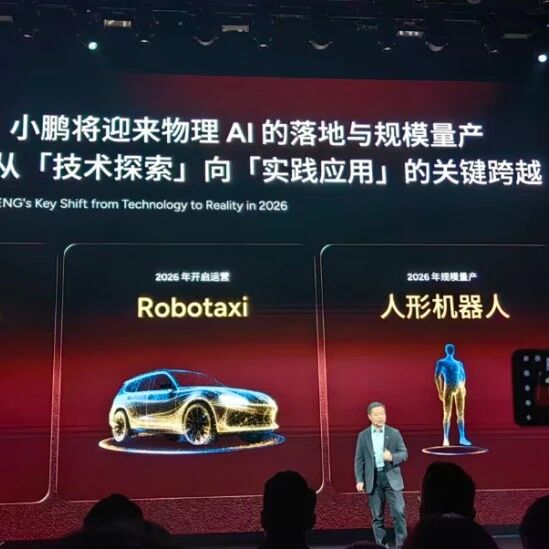
Core Viewpoint - Xiaopeng Motors held its 2026 Global New Product Launch Conference, unveiling four new models and signaling its ambition to transition from a traditional car manufacturer to a technology-driven company, including plans for humanoid robot mass production by 2026 [3][4][5]. Group 1: New Model Launches - Xiaopeng Motors launched four new models on January 8, including the 2026 Xiaopeng P7+ (pure electric + super range), Xiaopeng G7 super range version, 2026 Xiaopeng G6 pure electric version, and 2026 Xiaopeng G9 version [5][8]. - The company aims to accelerate its product launch pace, planning to release over ten new models in 2026, including refreshed models, entirely new vehicles, and Robotaxi (autonomous taxis) [9][11]. Group 2: Strategic Direction - Xiaopeng Motors is implementing its "one car, dual energy" strategy, expanding its technology roadmap from pure electric vehicles to super range vehicles starting in the second half of 2025 [7][10]. - The company ranked third among new car manufacturers in terms of delivery volume in 2025, with a total of 429,400 vehicles delivered globally, representing a year-on-year growth of 126% [13]. Group 3: Technological Advancements - In 2026, Xiaopeng Motors plans to launch the second-generation VLA (Vision-Language-Action) large model, which will be integrated into the newly launched models, enabling L4-level autonomous driving capabilities [15][17]. - The second-generation VLA model is currently being trained to enhance L4-level assisted driving capabilities, with Robotaxi already passing third-party testing and set to begin public road testing [19][20].


四车齐发加码AI出行 小鹏汽车加速推进全球化布局
Zheng Quan Ri Bao Wang· 2026-01-08 14:01
Core Insights - Xiaopeng Motors launched four significant models at the 2026 Global New Product Launch, showcasing its systematic advancement in smart, electric, and global strategies in the "AI mobility" sector [1] Product Development - The new models include the 2026 Xiaopeng P7+, Xiaopeng G7 Super Range, 2026 Xiaopeng G6, and 2026 Xiaopeng G9, covering various segments such as sedans and SUVs, and both pure electric and super range technologies [1] - The 2026 Xiaopeng P7+ offers a maximum CLTC comprehensive range of 1550 kilometers and a pure electric range of 430 kilometers, making it one of the longest-range extended-range sedans globally [1] - The Xiaopeng G7 Super Range sets a new SUV range record with a comprehensive range of 1704 kilometers, while the 2026 Xiaopeng G6 and G9 enhance competitiveness through upgrades in computing power, smart cockpit, and chassis technology [1] Technological Advancements - Xiaopeng Motors introduced its second-generation VLA physical world model, which is crucial for achieving L4-level autonomous driving capabilities, and will be rolled out to initial models by March 2026 [2] - The new Tianji AIOS 6.0 system transforms the smart cockpit from "passive response" to "active service," improving interaction design and efficiency, and will be available to global users as Xiaopeng expands its overseas market [2] Hardware and Efficiency - The 2026 Xiaopeng P7+ features a combination of "large fuel tank + large battery + 800V ultra-fast charging," achieving a minimum energy consumption of 10.9 kWh/100 km and charging from 10% to 80% in just 12 minutes [3] - The Xiaopeng G7 Super Range emphasizes family travel with enhanced comfort, space utilization, and comprehensive configurations, broadening the application scenarios for smart SUVs [3] - Safety remains a key focus, with new models meeting dual five-star safety standards in China and Europe, and improvements in vehicle structure, battery safety, and active safety systems [3] Global Expansion - Xiaopeng Motors is accelerating its global expansion, with cumulative global deliveries expected to exceed 420,000 units by 2025, marking over a 100% year-on-year growth and entering over 60 countries [4] - The introduction of super range technology broadens Xiaopeng's product offerings, supporting its transition from "going global" to "rooting globally" [4] - The launch of four models at the beginning of 2026 aligns product rhythm, technological expression, and strategic narrative, addressing market concerns regarding range and charging efficiency while promoting the concept of "technology equity" [4]
从两个“百万”看中国新能源汽车产业的量质齐升
Xin Hua She· 2026-01-08 13:58
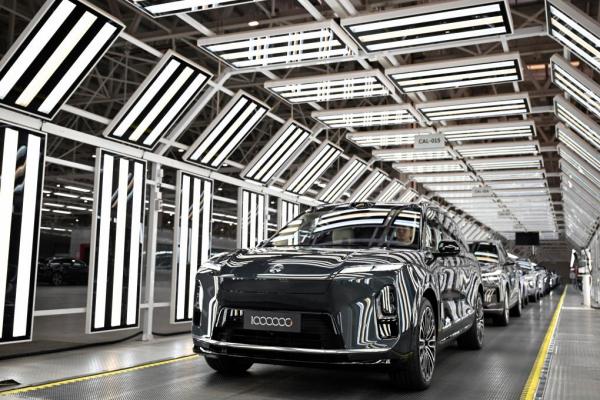
Group 1 - The core message of the articles highlights the significant milestones achieved by Chinese electric vehicle manufacturers, particularly NIO, which recently produced its one-millionth vehicle, symbolizing a dual breakthrough in scale and brand for the industry [1][3] - The emergence of new energy vehicle companies like NIO, Li Auto, and Xpeng has redefined the automotive industry in China, moving away from traditional fuel vehicles to electric and intelligent models, thus reshaping business models and user relationships [3][4] - The collaboration between Huawei and JAC Motors to create the high-end vehicle, the ZunJie S800, signifies a shift in the automotive industry towards high-end and intelligent vehicles, showcasing a new model of cooperation between technology companies and traditional automakers [4] Group 2 - Data from the China Association of Automobile Manufacturers indicates strong performance in the new energy vehicle sector, with production and sales reaching 14.907 million and 14.78 million units respectively from January to November 2025, reflecting year-on-year growth of 31.4% and 31.2% [4] - The launch of the ZunJie S800 is seen as a starting point for Chinese manufacturing to move towards high-end markets, providing a reference for traditional automakers seeking breakthroughs in their own intelligent transformation [4] - Chinese new energy vehicle brands are transitioning from survival mode to a new journey focused on value creation, indicating a maturation phase for the industry as it aims for global competitiveness [4]


何小鹏称小鹏汽车今年将推进渠道下沉和北部扩张
Xin Lang Ke Ji· 2026-01-08 12:07
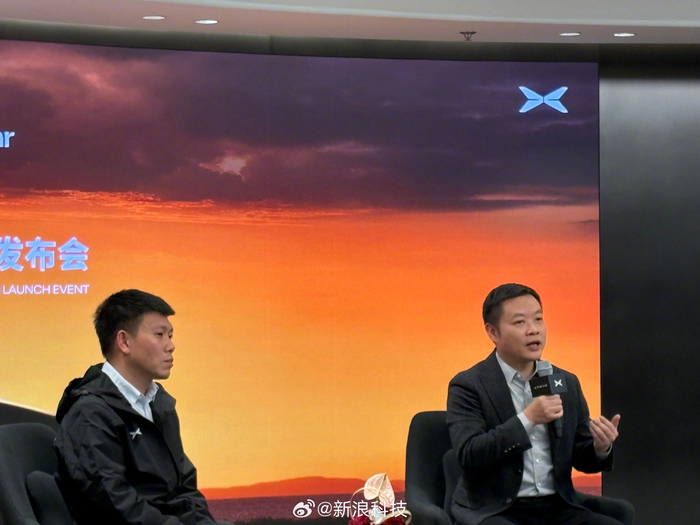
Group 1 - The core strategy of Xiaopeng Motors for this year involves expanding its distribution channels into lower-tier cities, moving beyond its previous focus on first to third-tier cities [1] - The company plans to further expand its presence in the northern regions of China as part of its channel strategy [1]
18.68万起售,2026款小鹏P7+上市
Bei Jing Shang Bao· 2026-01-08 11:45
Group 1 - The core viewpoint of the article is the official launch of four new models by XPeng Motors, including the 2026 XPeng P7+, G7 Super Range, G6, and G9 [1] - The 2026 XPeng P7+ is released simultaneously in 36 countries globally, featuring both super range and pure electric energy forms, with prices set at 186,800 RMB and 198,800 RMB for the two super range versions, and the same prices for the pure electric versions [3] - The 2026 XPeng P7+Ultra is equipped with three self-developed Turing AI chips, offering 2250 TOPS computing power, targeting the 200,000 RMB market [3] Group 2 - The 2026 XPeng P7+ has an energy consumption of 10.9 kWh/100 km in pure electric mode and 12.5 kWh/100 km in range-extended mode, with a 49.2 kWh 5C supercharging AI battery that supports 800V charging, allowing for 277 km of range in just 10 minutes [3] - The newly launched models include the Ultra and Ultra SE versions, which feature XPeng's self-developed second-generation VLA, marking the industry's first physical world model with L4 initial capabilities, set to begin vehicle deployment in March 2026 [3]
2025AIEV销量榜出炉!华为、小米等七强围攻10万亿特斯拉
Xin Lang Cai Jing· 2026-01-08 11:43
Core Insights - Tesla remains the top seller in the smart electric vehicle (AIEV) market but faces its largest sales decline in history, with a 8.6% drop in 2025, resulting in total sales of 1.636 million units [2][39] - In 2025, seven leading Chinese smart electric vehicle companies collectively achieved sales that are double that of Tesla, indicating a significant competitive challenge [2][40] - Despite the sales decline, Tesla's market capitalization remains robust at over 1 trillion RMB, significantly higher than the combined market value of its Chinese competitors [4][40] Tesla - In 2025, Tesla delivered approximately 1.636 million electric vehicles globally, with the Shanghai Gigafactory contributing 851,000 units, accounting for over 52% of total deliveries [10][46] - The company faces increasing pressure from rapidly rising Chinese competitors in the electric vehicle market, which is impacting its market share [10][47] - Tesla's innovation pace in key areas like autonomous driving and battery technology has slowed compared to previous years, while local competitors are catching up [10][47] Chinese Competitors - Leap Motor achieved sales of 597,000 units in 2025, surpassing its target of 500,000 units, marking a significant milestone in its growth trajectory [3][50] - Hongmeng Zhixing delivered 589,000 units, establishing a strong presence in both mainstream and high-end markets, with a notable average transaction price of 390,000 RMB [16][52] - Xpeng Motors reported a 126% year-on-year increase, delivering 429,000 units, exceeding its target of 380,000 units, although some new models underperformed [21][57] - Xiaomi Motors delivered over 410,000 units, significantly exceeding its target of 350,000 units, despite facing brand challenges [23][59] - Li Auto's sales fell to 406,000 units, down 18.8% from its target of 640,000 units, reflecting competitive pressures [26][62] - NIO delivered 326,000 units, achieving a 46.9% year-on-year growth, although it did not meet its target of 440,000 units [34][69] Market Dynamics - The combined sales of the seven leading Chinese smart electric vehicle companies indicate a growing competitive landscape that is beginning to challenge Tesla's dominance [2][40] - The market capitalization of Tesla remains a significant barrier for Chinese competitors, who have substantial growth potential but currently lack comparable valuations [4][42] - The ongoing strategic adjustments by Tesla and its competitors highlight the dynamic nature of the electric vehicle market, with companies striving to innovate and capture market share [8][44]




小鹏开年连发四款新车 超级增程家族添新成员
Zheng Quan Shi Bao Wang· 2026-01-08 11:18
Core Insights - Xiaopeng Motors is expanding its product line from pure electric vehicles to extended-range vehicles, launching four new models at the 2026 global product launch event [1] - The 2026 Xiaopeng P7+ features both super extended-range and pure electric versions, with prices starting at 186,800 yuan and 198,800 yuan respectively [1] - The second-generation VLA, capable of L4 autonomous driving, will be rolled out in March 2026, marking a significant advancement in the company's AI technology [2] Product Launch - The 2026 Xiaopeng P7+, G7 Super Extended Range, G6, and G9 were unveiled, with the P7+ being the longest-range extended-range sedan globally [1][3] - The P7+ has undergone 104 experience upgrades and a 36% renewal of key components, emphasizing its global development and manufacturing standards [3] Autonomous Driving Technology - The second-generation VLA will enable L4 autonomous driving and Robotaxi functionalities, with public road testing imminent [2] - Xiaopeng Motors aims to leap from L2 to L4 autonomous driving, bypassing L3, as highlighted by CEO He Xiaopeng's recent test drive of Tesla's FSD [2] Global Expansion - Xiaopeng Motors achieved a cumulative global delivery of 429,445 units in 2025, a 126% year-on-year increase, and is now present in 60 countries [3] - The company is establishing a strong foothold in international markets, ranking first in sales among Chinese new energy vehicle brands in several countries [3]
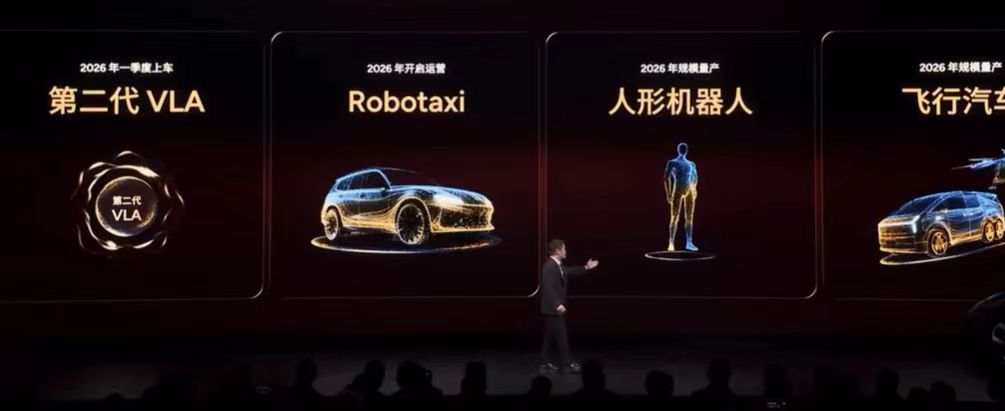
何小鹏宣布2026年量产人形机器人和飞行汽车、Robotaxi开启运营
Jin Rong Jie· 2026-01-08 10:58
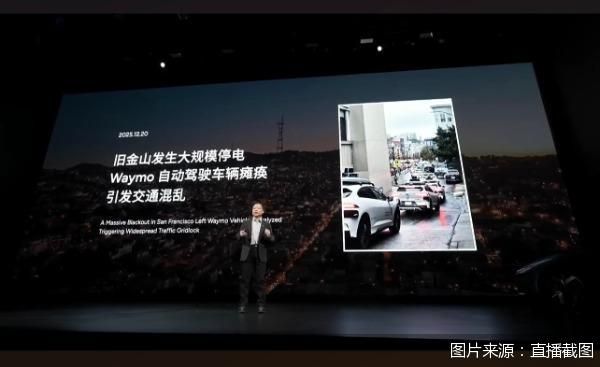
Group 1 - The core message of the news is that XPeng Motors is advancing its technology and product offerings, including the launch of the second-generation VLA, humanoid robots, flying cars, and the initiation of Robotaxi operations by Q1 2026 [1][3]. - XPeng's second-generation VLA eliminates the "language translation" step, enabling direct generation of action commands from visual signals, which revolutionizes the traditional V-L-A architecture [3]. - The new VLA can utilize vast amounts of real driving video for training without manual data labeling, enhancing the performance of intelligent driving in complex environments [3][5]. Group 2 - The Robotaxi initiative represents XPeng's exploration into Level 4 autonomous driving, leveraging the capabilities of the second-generation VLA and VLM for low-latency interactions with the autonomous driving system [5]. - The new humanoid robot, IRON, features a human-like spine, bionic muscles, and flexible skin, with 82 degrees of freedom, allowing for natural and fluid movements [5]. - The flying car, XPeng Huìtiān A868, boasts a range of 500 km and a maximum speed of 360 km/h, with a passenger capacity of six [6]. Group 3 - XPeng Motors projects a global sales volume of 429,445 units by 2025, representing a 126% year-on-year increase, with overseas deliveries reaching 45,008 units, a 96% increase [8].

小鹏P7+/G7/G6/G9四款新车同步更新 辅助驾驶与座舱全面升级
Feng Huang Wang· 2026-01-08 10:46
Core Insights - Xiaopeng Motors officially launched four new models: 2026 Xiaopeng P7+, Xiaopeng G7 Super Extended Range, 2026 Xiaopeng G6, and 2026 Xiaopeng G9, all equipped with the second-generation VLA system [1] Group 1: Company Performance - In 2025, Xiaopeng Motors achieved global cumulative deliveries of 429,445 vehicles and established nine R&D centers worldwide [1] - The company has initiated three overseas localization production projects and expanded its self-operated charging network to cover 430 cities with 3,150 charging stations [1] Group 2: Strategic Focus - The CEO emphasized two key themes for 2026: "Physical AI" and "Globalization," with plans to achieve mass production of the second-generation VLA system and initiate Robotaxi operations in the first quarter [1] - The second-generation VLA system aims to provide an L4-like driving experience through the integration of large models, computing power, and big data [1][2] Group 3: Technological Advancements - The second-generation VLA system features capabilities such as real-time parking, speed bump recognition, and driving style selection, supporting both L4 autonomous driving and Robotaxi functions [2] - The system's computing power reaches 2,250 TOPS at the vehicle level and 30,000 nodes at the cloud level, with nearly 100 million training video data segments [1][2] Group 4: New Model Highlights - The 2026 Xiaopeng P7+ offers a comprehensive range of 1,550 km for the Super Extended Range version and 430 km for the pure electric version, with a power consumption of 12.5 kWh per 100 km [5] - The 2026 Xiaopeng G7 Super Extended Range has a starting price of 195,800 yuan and a CLTC comprehensive range of 1,704 km [6] - The 2026 Xiaopeng G6 is priced from 176,800 yuan and features an AI chip standard across all models [7] - The 2026 Xiaopeng G9 starts at 248,800 yuan, with a clear configuration gradient for the AI chip, ranging from 750 TOPS to 2,250 TOPS [7]
何小鹏谈渠道策略:过去主要在一至三线 今年会下沉
Xin Lang Cai Jing· 2026-01-08 10:33
Core Viewpoint - Xiaopeng Motors plans to expand its sales channels into lower-tier cities and increase its presence in northern regions this year [1] Group 1 - Xiaopeng Motors' previous sales channels were primarily focused on first to third-tier cities [1] - The company aims to penetrate deeper into lower-tier cities in its channel strategy for this year [1] - In addition to expanding into lower-tier cities, Xiaopeng Motors will also focus on regional expansion towards the northern areas [1]