
巨子生物

Search documents
2025年中国烟酰胺行业生产方法、产业链、市场规模、竞争格局及未来前景:随着食品、医药和化妆品等下游需求持续增长,行业将迎来更广阔的发展空间[图]
Chan Ye Xin Xi Wang· 2025-07-11 01:26
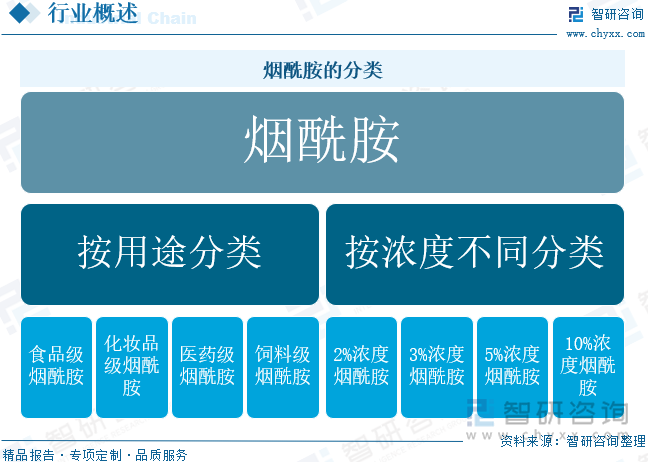
Core Insights - Nicotinamide, an important member of the B-vitamin family, has diversified applications in the food, pharmaceutical, and cosmetic industries, driven by its nutritional enhancement and functional characteristics [1][15] - The market size of the nicotinamide industry in China is projected to reach approximately 2.535 billion yuan in 2024, with a year-on-year growth of 17.26% [1][15] - The industry is expected to benefit from the ongoing "Healthy China" strategy and the increasing consumer demand for functional products, indicating a broader development space in the future [1][15] Industry Overview - Nicotinamide, also known as niacinamide, is a white crystalline powder with a molecular weight of 122.125, primarily used in clinical settings for the prevention and treatment of various health issues [3] - The industry can be segmented into food-grade, cosmetic-grade, pharmaceutical-grade, and feed-grade nicotinamide, with varying concentrations available [3] Production Methods - Three main production methods for nicotinamide include oxidation of β-methylpyridine to niacin, dehydration of niacin with ammonium hydroxide, and a reaction involving niacin, boric acid, and ammonia [5][11] Applications and Benefits - Nicotinamide is recognized for its anti-acne, anti-inflammatory, whitening, and anti-aging properties, making it a popular ingredient in skincare products [7][8] - In the pharmaceutical sector, it is crucial for treating conditions related to niacin deficiency, while in cosmetics, it enhances skin barrier function and moisture retention [9][12] Industry Chain - The nicotinamide industry chain includes upstream raw material supply, midstream production and processing, and downstream applications in pharmaceuticals, cosmetics, and food [9] - Key raw materials include 3-cyanopyridine, niacin, ammonia, and solvents, with production methods involving chemical synthesis or fermentation [9] Market Dynamics - The global nicotinamide industry exhibits a tiered competitive landscape, with leading companies like Lonza, Vantiv, and Brother Technology dominating the market [17][19] - Brother Technology is identified as a leading domestic player, focusing on the production and sales of nicotinamide and niacin products across various sectors [19][21] Future Trends - The industry is shifting towards high-value products, with a focus on technological innovation and product upgrades to enhance purity and bioavailability [26][28] - The application of nicotinamide is expanding into new areas such as oral beauty products and functional foods, driven by consumer trends and interdisciplinary research [27][28]


恒生医疗ETF(513060)交投活跃,近2周新增规模居可比基金首位,政策支持高端医疗器械快速发展
Sou Hu Cai Jing· 2025-07-10 03:49
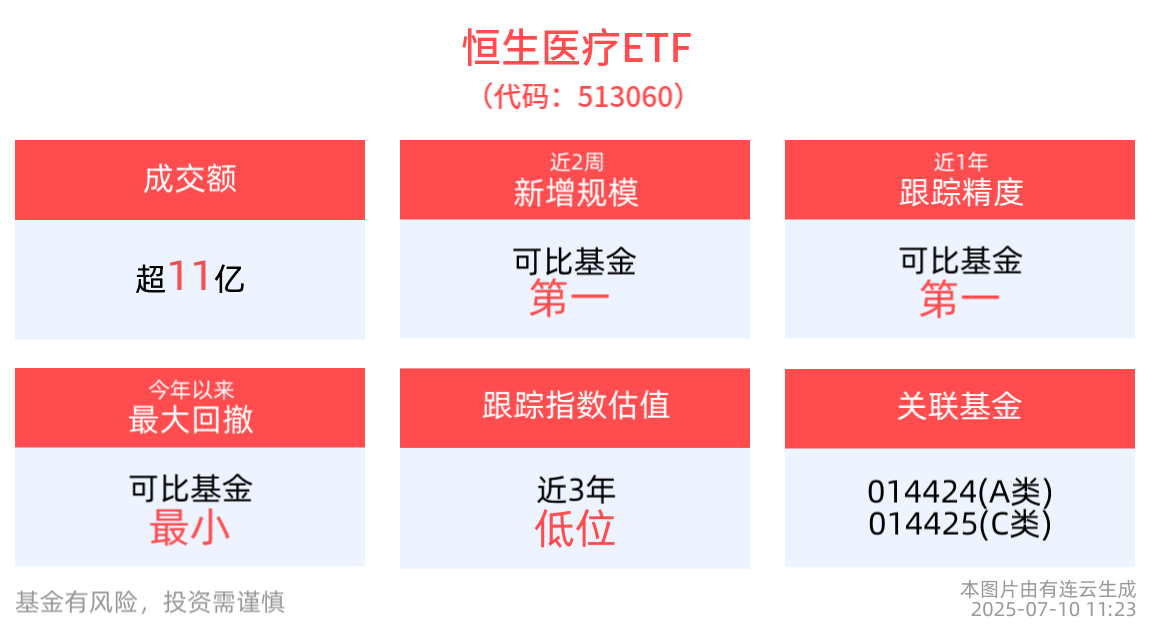
Group 1: Market Performance - The Hang Seng Healthcare Index (HSHCI) decreased by 0.18% as of July 10, 2025, with mixed performance among constituent stocks [3] - Major gainers included Giant Bio (02367) up 4.24%, Yaoshi Bang (09885) up 4.13%, and Dongyangguang Changjiang Pharmaceutical (01558) up 3.48% [3] - The Hang Seng Healthcare ETF (513060) fell by 0.17%, with a latest price of 0.58 yuan, but saw a 2.48% increase over the past week [3] Group 2: Regulatory Developments - The National Medical Products Administration (NMPA) announced measures to optimize lifecycle regulation to support high-end medical device innovation, particularly benefiting the in vitro diagnostics (IVD) industry [4] - Policies include accelerated approvals and international registration facilitation, which will enhance the global competitiveness of IVD companies [4] - The document from NMPA is expected to directly benefit the IVD sector, with domestic biochemical diagnostics largely free from foreign constraints [4] Group 3: ETF Performance Metrics - The Hang Seng Healthcare ETF recorded a financing buy-in of 220 million yuan and a financing balance of 267 million yuan [5] - Over the past two years, the ETF's net value increased by 20.23%, with a maximum monthly return of 28.34% and an average monthly return of 6.82% [5] - As of July 4, 2025, the ETF's one-year Sharpe ratio was 2.07, indicating strong risk-adjusted returns [5] Group 4: Valuation and Tracking - The Hang Seng Healthcare ETF has a current price-to-earnings ratio (PE-TTM) of 27.84, which is below the historical average, indicating a low valuation compared to the past three years [6] - The ETF has the highest tracking accuracy among comparable funds, with a tracking error of 0.069% over the past year [5][6] - The ETF's management fee is 0.50%, and the custody fee is 0.15%, contributing to its overall cost structure [5]
34亿重注!前首富钟睒睒押宝北交所“胶原蛋白之王”,医美新风口决战打响
Xin Lang Zheng Quan· 2025-07-10 02:41
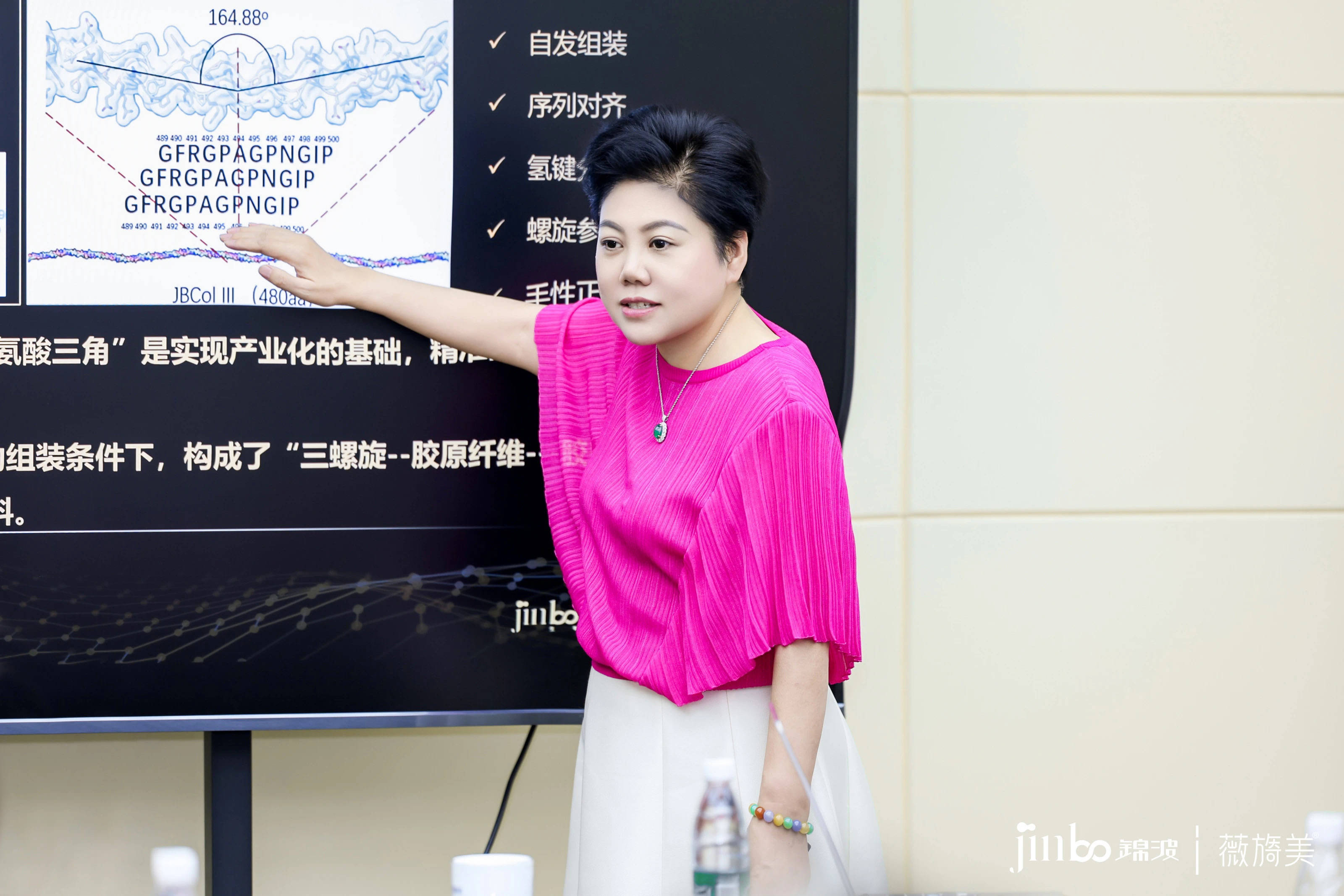
Core Insights - Zhong Shanshan's investment of 3.4 billion yuan in Jinbo Biological, acquiring 10.58% equity, marks the largest cash capital increase in the history of the Beijing Stock Exchange, highlighting a significant shift in the medical beauty industry landscape [1][5] - Jinbo Biological, a leader in the recombinant collagen sector, holds three Class III medical device certifications, establishing a formidable technical barrier in the market [2] - The recombinant collagen market is projected to grow at a compound annual growth rate (CAGR) of 45%, reaching 219.38 billion yuan by 2030, making it a critical growth area for Zhong's health empire [3] Company Overview - Jinbo Biological's revenue for 2024 is expected to reach 1.443 billion yuan, a year-on-year increase of 84.92%, with a net profit of 732 million yuan, up 144.27% [2] - The company's gross margin for medical devices is an impressive 95.03%, surpassing that of major brands like Moutai [2] - Despite its strong financials, Jinbo Biological relies heavily on its flagship product, "Wei Yimei" injection, which accounts for over 88% of its medical device revenue, indicating a potential growth bottleneck due to limited consumer brand performance [2] Strategic Implications - Zhong Shanshan's investment is not merely financial but a strategic move to find new growth avenues as his other businesses face slowdowns [3] - The collaboration between Zhong's Yangshengtang and Jinbo Biological aims to leverage Yangshengtang's extensive retail network and marketing capabilities to enhance Jinbo's consumer outreach [3] - The 2 billion yuan capital increase will fund the development of a recombinant collagen FAST database and product development platform, utilizing AI and high-throughput technologies to accelerate innovation [3] Industry Dynamics - The recombinant collagen market is poised for intense competition, with major players like Juzhi Biological and Huaxi Biological entering the space, potentially disrupting Jinbo's market position [4] - Advances in synthetic biology are expected to significantly reduce production costs, transforming recombinant collagen from a luxury product to a standard skincare item, which may trigger price wars [4] - The success of consumer brands in the market, such as Juzhi Biological's "Ke Fumei" mask generating 5.5 billion yuan in annual revenue, underscores the importance of consumer engagement for growth [4] Conclusion - Zhong Shanshan's substantial investment in Jinbo Biological is a catalyst for accelerating growth in the recombinant collagen sector, setting the stage for a competitive landscape in the medical beauty industry [5] - The ability of Jinbo Biological to transition from a B2B focus to a more consumer-oriented approach will be critical in navigating the evolving market dynamics [5]
护肤行业的“功效叙事”,隐忧渐显
Hu Xiu· 2025-07-10 02:09
Core Insights - The skincare industry is experiencing intense competition in technology, with numerous suppliers showcasing unique ingredients and certifications at a recent cosmetics trade show [1][2][3] - The trend of emphasizing active ingredients and technical claims on product packaging is prevalent, as brands seek to carve out market positions by replicating successful commercial models [4][5] - The lack of authoritative industry standards and clarity on ingredient efficacy is causing confusion and skepticism among consumers [6][7][8] Group 1: Active Ingredients and Technology Trends - Active proteins and plant extracts remain core competitive areas in the skincare industry, with leading brands continuing to invest heavily in research and development [10][11] - The popularity of active proteins is driven by their previous applications in medical and aesthetic fields, which lend credibility to their use in consumer products [15][20] - New technologies in plant extraction are emerging, aiming to address traditional challenges such as stability and absorption rates [18][19] Group 2: Marketing and Industry Challenges - The rapid iteration of core ingredients in domestic beauty brands has outpaced normal industry evolution, leading to communication gaps between technology, products, and consumers [22][23] - The absence of unified national standards for new ingredients has resulted in market confusion and potential harm to consumers [24][26] - Overemphasis on marketing claims has led to exaggerated efficacy narratives, causing consumer dissatisfaction and adverse reactions [30][31][33] Group 3: Future Directions and Brand Strategies - The skincare industry is entering a period of deep adjustment, with competition shifting from ingredient-based to ecosystem-building capabilities [37][39] - Brands must find new competitive advantages beyond ingredient efficacy, such as emotional value and consumer experience [41][42] - The rise of niche markets, including male skincare and elderly care, presents new opportunities for growth and diversification [48][49]

女教师创业成“山西女首富”,被钟睒睒投资了
Sou Hu Cai Jing· 2025-07-10 02:02
Core Insights - The annual "500 Wealth Creation List" by New Fortune has been released, with Zhang Yiming of ByteDance topping the list for the first time at 481.5 billion yuan, while Zhong Shanshan's wealth has decreased to 360 billion yuan, dropping him to second place after four consecutive years as the richest [1][22]. Company Overview - Zhong Shanshan's business empire has faced significant challenges, with Nongfu Spring's bottled water revenue declining by 21.3%, marking its worst performance since going public, and Wantai Biological's net profit plummeting by 91.5% due to increased competition in the HPV vaccine market [2][22]. - Despite these setbacks, Zhong has actively invested in new ventures, including a 3.4 billion yuan stake in Jinbo Biological, a rising player in the medical beauty sector [2][23]. Industry Dynamics - The medical beauty industry is characterized by the emergence of "female billionaires," with notable figures like Yang Xia, founder of Jinbo Biological, who has a net worth of 11.5 billion yuan [4][6]. - Jinbo Biological, established later than its competitors, has seen its stock price surge by 802% since its listing on the Beijing Stock Exchange in 2023, reaching a market value of over 50 billion yuan [7][11]. - The company has achieved a gross margin of 92.02%, surpassing that of Moutai, despite its revenue being significantly lower than that of its competitors [11][15]. Financial Performance - Jinbo Biological's revenue has grown from 233 million yuan in 2021 to 1.443 billion yuan in 2024, with net profit increasing from 57 million yuan to 732 million yuan during the same period [11][12]. - The company has successfully commercialized its recombinant collagen products, receiving multiple medical device registrations, which has contributed to its competitive edge [11][12]. Market Challenges - The medical beauty sector is currently experiencing intense competition, particularly in the recombinant collagen market, which has seen a decline in the popularity of hyaluronic acid products [12][15]. - Jinbo Biological's marketing expenses have surged by 56.73% in 2025, indicating a strategic shift towards expanding its consumer market presence [15][17]. - The company faces challenges in building brand recognition among consumers, as a significant portion of its revenue is still reliant on medical institutions [15][17]. Strategic Moves - Zhong Shanshan's investment in Jinbo Biological is seen as a strategic move to enhance his business portfolio, particularly in the high-margin collagen market, which is projected to reach a market size of 219.3 billion yuan by 2030 [21][23]. - The partnership with Yang Xia and Jinbo Biological is expected to leverage Zhong's existing distribution networks to strengthen brand presence in the consumer market [21][23].

八成受访消费企业今年拟引入或加大AI技术应用
Nan Fang Du Shi Bao· 2025-07-09 23:10
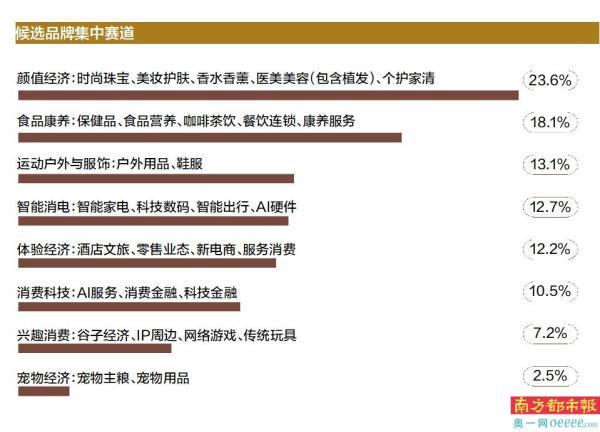
Core Insights - The "2025 High-Quality Consumption Brand TOP 100" list is being unveiled, highlighting trends in consumer behavior and brand innovation across various sectors [9] - The report identifies four major trends: health consciousness driving wellness and sports consumption, AI enhancing product and service upgrades, novel experiences igniting consumer enthusiasm, and emotional value unlocking new consumption scenarios [9] Group 1: Candidate Brands and Market Trends - Candidate brands are concentrated in nine primary sectors, including beauty economy, health food, outdoor sports, smart electronics, experience economy, consumer technology, interest consumption, and pet economy [10] - The health and wellness sector is seeing significant growth, with brands focusing on outdoor sports and health products, driven by a national initiative promoting weight management [11] - AI technology is becoming a core competitive advantage in high-end home appliances, with brands integrating AI features into their products [11] Group 2: Brand Age and Distribution - Over 70% of candidate brands were established within the last 30 years, with nearly 40% founded within the last 10 years, indicating a trend towards newer brands [13] - Shanghai has the highest concentration of candidate brands, with a significant presence of foreign brands, while Beijing is recognized for its consumer technology brands [14][15] Group 3: Emerging Consumption Trends - The demand for functional skincare products is rising, with brands focusing on specific skin issues and leveraging e-commerce for sales growth [16][17] - Outdoor sports consumption is becoming more segmented, with traditional apparel brands entering the market to capture this growing trend [18] - The concept of "new Chinese wellness" is gaining traction, with brands emphasizing health and wellness in their product offerings [20] Group 4: Cultural and Global Expansion - Companies are increasingly looking to expand internationally, with a focus on brand, culture, and service exports, adapting to global market demands [25][26] - The "AI + consumption" trend is reshaping the consumer landscape, with businesses planning to integrate AI technologies into various aspects of their operations [27][28]
招银国际:理性看待短期估值上升 中国创新药出海趋势将长期持续
智通财经网· 2025-07-09 07:56
Group 1 - The MSCI China Healthcare Index has increased by 41.4% year-to-date, outperforming the MSCI China Index which rose by 25.2% [1] - The upcoming implementation of commercial insurance for innovative drugs is expected to have limited short-term impact but will open up long-term payment opportunities for innovative drugs [1] - The National Healthcare Security Administration has introduced measures to support the high-quality development of innovative drugs, emphasizing comprehensive policy support [1] Group 2 - The commercial health insurance premium income in China is projected to reach CNY 9.773 billion in 2024, reflecting an 8.2% year-on-year growth [2] - The low claims ratio of commercial health insurance, with claims amounting to CNY 3.848 billion in 2023, indicates potential for significant growth in both premium income and claims ratio under supportive policies [2] - The consumption medical sector presents valuation recovery opportunities, with key companies such as Giant Bio, Guoshengtang, and Times Angel being highlighted for their strong product performance and growth potential [3] Group 3 - Recommended stocks for investment include 3SBio (01530), Giant Bio (02367), Guoshengtang (02273), Times Angel (06699), BeiGene (ONC.US), and Innovent Biologics (01801) [4]
赫诗琴面膜陷“水解”与“胶原”概念混用风波,胶原蛋白争议再起
Xi Niu Cai Jing· 2025-07-08 15:52
Core Viewpoint - The beauty industry is facing scrutiny due to ingredient controversies, particularly regarding HEXKIN's "Rejuvenating Collagen Mask," which has been questioned for allegedly lacking collagen [1] Group 1: Product Controversy - A beauty blogger sent HEXKIN's mask for testing, revealing that "collagen was not detected" in the sample [3] - HEXKIN responded by commissioning a retest, which found "hydrolyzed collagen" at a level of 0.532%, raising confusion over the difference between collagen and its hydrolyzed form [3][6] - The company's marketing has been criticized for using vague terminology, leading consumers to assume the presence of effective collagen rather than its hydrolyzed form, which has different absorption and efficacy characteristics [7] Group 2: Regulatory and Testing Standards - HEXKIN claims compliance with national regulations and has completed the necessary registration with the National Medical Products Administration [5] - The lack of standardized testing methods for collagen in cosmetics has led to discrepancies in results from different testing institutions, highlighting a significant issue within the industry [7] - The controversy reflects broader challenges in the beauty industry regarding the clarity and reliability of ingredient testing standards [7] Group 3: Marketing and Consumer Trust - HEXKIN heavily relies on influencer marketing, with over 80% of its GMV dependent on key opinion leaders, which can lead to misinformation about product efficacy [8] - The company's promotional claims, such as comparing the mask to "collagen infusion," may mislead consumers and exacerbate trust issues [8] - Consumers are encouraged to consider product registration and testing reports when purchasing cosmetics, emphasizing the need for transparency and genuine product efficacy [8]

联合利华领投Messy,护发赛道持续升温
Bei Jing Shang Bao· 2025-07-08 12:18
Core Insights - Unilever has made a strategic investment in the hair care brand Messy, leading a $5 million funding round, with over $3 million already received [1][3] - Messy, founded by Alli Webb, is recognized as a prominent independent hair care brand, having launched five core products and planning to expand its product range [3] - Unilever's recent activities in the hair care sector indicate a focus on high-growth and high-margin beauty and health segments, with significant investments in brands like NEXXUS [4] Company Developments - Messy has gained attention for its innovative approach in the hair care market, with plans to introduce mini products, hair accessories, and travel kits [3] - Unilever's investment in Messy is likely influenced by Webb's extensive entrepreneurial experience in the hair care industry [3] - The company has been actively enhancing its brand portfolio in China, as seen with the launch of NEXXUS and its marketing strategies [4] Industry Trends - The hair care market in China is experiencing rapid growth, with a projected market size exceeding 30 billion yuan in 2024, reflecting a year-on-year growth rate of over 33% [5] - Competition in the hair care sector is intensifying, with both international and domestic brands entering the market, including recent moves by Proya and other local brands [5] - The market is characterized by a high level of maturity, making it challenging for new entrants unless they can offer significant technological differentiation and strong branding [5]

理性看待创新药估值,寻找优秀公司的买点
Zhao Yin Guo Ji· 2025-07-08 08:37
Investment Rating - The report assigns a "Buy" rating to several companies in the Chinese pharmaceutical industry, indicating a potential upside of over 15% in the next 12 months [31]. Core Insights - The MSCI China Healthcare Index has increased by 41.4% since the beginning of 2025, outperforming the MSCI China Index, which rose by 25.2% [2]. - The report emphasizes the need for a rational perspective on the valuation of innovative drugs, as their prices are expected to continue rising due to high expectations for overseas transactions [2]. - The Chinese innovative drug sector is characterized by high risk, long development cycles, and high returns, with a strong global competitive edge in R&D capabilities [2]. - Recent policy measures from the National Healthcare Security Administration are expected to support the long-term payment space for innovative drugs, including encouraging commercial health insurance to expand investment in innovative drugs [5]. Summary by Sections Company Ratings and Valuations - Companies such as Sanofi (1530 HK), Junshi Biosciences (2367 HK), and others are rated as "Buy" with significant upside potential, with target prices indicating potential increases of 15% to 54% [3]. - For instance, Junshi Biosciences has a market cap of $7,720 million and a target price of $79.96, suggesting a 37% upside [3]. Market Trends and Policy Impact - The report highlights that the innovative drug sector will benefit from new policies that support high-quality development, which will open up payment avenues for innovative drugs [5]. - The commercial health insurance market is projected to grow significantly, with expected premium income reaching 977.3 billion yuan in 2024, a year-on-year increase of 8.2% [5]. Investment Opportunities - The report identifies specific companies with strong growth potential, including Junshi Biosciences, Guo Shengtang, and Angelalign, which are expected to benefit from robust product offerings and market expansion [5]. - The overseas business of Angelalign is noted for its improving profitability, with expectations for continued growth driven by a large international market [5].