牧原股份

Search documents
东兴证券2026年农林牧渔策略:静待生猪周期拐点 饲料动保后周期属性弱化
智通财经网· 2025-12-24 07:15
Group 1: Pig Farming Industry - The supply-demand structure of the pig farming industry is improving, but short-term oversupply will continue to pressure pig prices in the first half of 2026, leading to ongoing industry losses [2][3] - Cost is a core factor for pig companies to achieve excess returns and long-term growth, especially significant during the down cycle [2] - The industry is experiencing a shift towards larger-scale farming, which is reshaping the market dynamics and reducing the volatility of pig prices [2][3] Group 2: Feed and Animal Health - The animal health sector is seeing a weakening of its cyclical attributes, with research and innovation becoming the core competitive advantage for long-term growth [4] - The feed industry is expected to benefit from high livestock inventory supporting demand, while the aquatic feed sector is expected to operate steadily under rational farming behavior [5] - Domestic market competition is fierce, with leading feed companies expected to enhance their competitiveness through cost control and refined management [5] Group 3: Pet Food Market - The pet food market is experiencing a reshaping of global supply-demand dynamics due to tariff disturbances, but domestic consumption remains robust [6] - There is a clear trend of domestic brands rising in the pet food sector, with companies adapting to health and refinement trends in consumer preferences [6] - Recommended stocks in the pet food industry include Zhongchong Co., Ltd. (002891.SZ) and Petty Co., Ltd. (300673.SZ) [6]

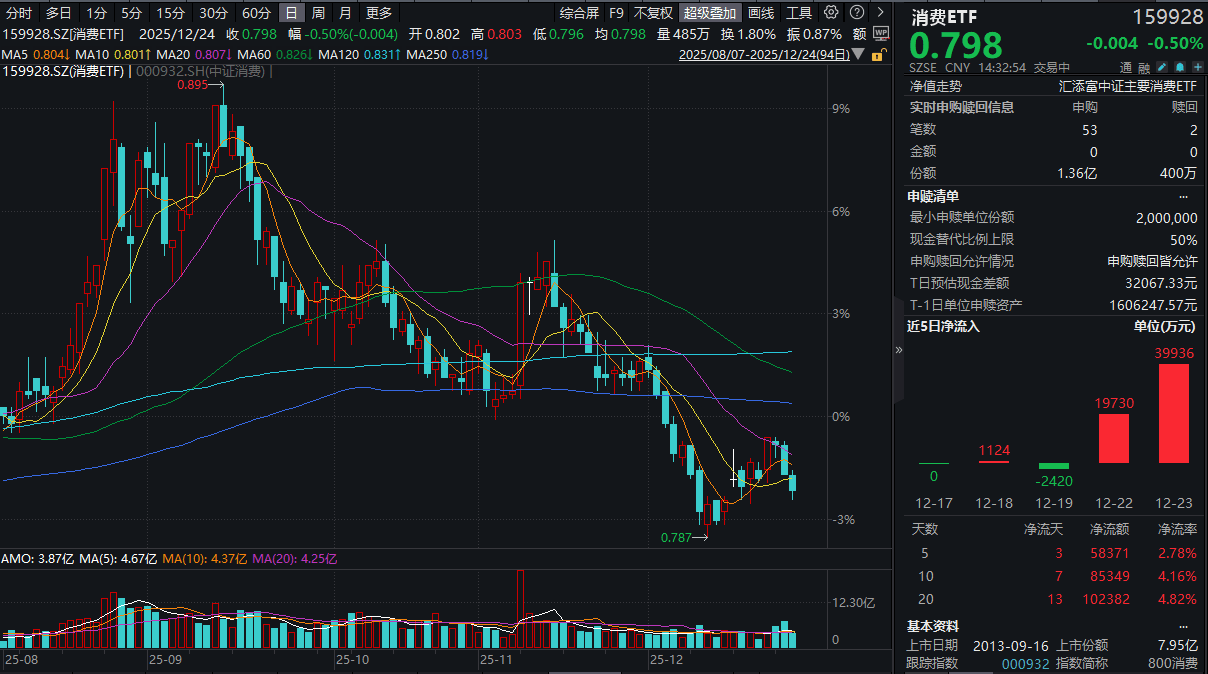
如何布局跨年攻势?科技与内需主题轮动!消费ETF(159928)三连跌走势,资金逢跌布局,3日累计巨幅净流入超7亿元!
Sou Hu Cai Jing· 2025-12-24 06:48
Market Overview - A-shares experienced a rebound, with the consumption ETF (159928) declining by 0.5% and a trading volume exceeding 380 million yuan [1] - The consumption ETF has seen a net subscription of over 130 million units during the day, accumulating a significant net inflow of over 700 million yuan over three days [1] Spring Market Expectations - As the year-end approaches, discussions about the spring market are intensifying, with analysts expecting positive policies to boost investor confidence [3] - The anticipated improvement in corporate earnings and favorable liquidity conditions are expected to contribute to a "spring rally," with technology growth and domestic consumption identified as key investment themes [3] Valuation Insights - The consumption ETF's underlying index has a TTM price-to-earnings ratio of 19.32, placing it in the 2.8% percentile over the past decade, indicating a high valuation attractiveness [5] - Seasonal trends in Q4 suggest a potential shift in market style towards undervalued sectors, particularly in December [5] Investment Themes - The rotation between domestic demand and technology themes is noted, with significant inflows into sectors like dairy, retail, and food processing [7] - External factors such as the Federal Reserve's interest rate cuts and the Bank of Japan's rate hikes are expected to stabilize market risk appetite [7] AI Applications - The domestic AI industry is entering a phase of large-scale demonstration applications, driven by advancements in computing architecture and product iterations [8] - Notable developments include the launch of new GPU architectures and AI health applications achieving significant user engagement [8] Commercial Aerospace - The upcoming launch of the Long March 12 rocket and advancements in satellite networking are highlighted as key developments in China's commercial aerospace sector [9] - The National Space Administration's action plan aims to support the development of new technologies and applications in commercial aerospace [9] Hainan Free Trade Zone - The Hainan Free Trade Port has officially launched its full island closure, with significant foreign investment projects commencing operations [9] - The first day of customs supervision saw substantial imports benefiting from zero tariffs, indicating a positive start for the free trade zone [9] Domestic Consumption - Policies aimed at boosting consumption are being implemented, with new consumption scenarios emerging in sports events, tourism, and cultural activities [10] - The expected growth in ice and snow sports consumption is projected to exceed 187.5 billion yuan, reflecting a 25% year-on-year increase [10] New Consumption Trends - The Chinese consumption market is characterized by structural highlights despite overall weak demand, with new products and channels gaining traction [11] - Health-conscious consumption trends are accelerating, particularly in sectors like health supplements and functional foods [11] ETF Composition - The consumption ETF's top ten constituent stocks account for over 68.55% of its weight, with leading liquor brands and major agricultural companies prominently featured [12]

西部证券晨会纪要-20251224
Western Securities· 2025-12-24 03:32
Group 1: Core Conclusions - The core conclusion of the report indicates that the pig farming industry is experiencing a significant increase in the number of pigs marketed in November 2025, with a year-on-year increase of 26.67% but a month-on-month decrease of 2.96% [1][4] - The revenue of listed pig companies in November 2025 was 22.556 billion yuan, reflecting a year-on-year decrease of 17.03% and a month-on-month decrease of 4.94% [1][5] Group 2: Industry Dynamics - In November 2025, the total number of pigs marketed by listed companies reached 18.2581 million, with leading companies such as Muyuan, Wens, and New Hope reporting respective sales of 6.602 million, 4.3535 million, and 1.5675 million pigs, showing year-on-year increases of 11.80%, 49.71%, and 24.44% [4][5] - The cumulative number of pigs marketed from January to November 2025 was 176 million, with a stable year-on-year growth rate of approximately 21.42% [4] - The average selling price of pigs in November 2025 increased by 1.60% month-on-month but decreased by 30.05% year-on-year, indicating a significant drop in prices due to oversupply and weak demand during the peak season [6][5] Group 3: Investment Recommendations - The report suggests seizing opportunities in the pig farming sector, focusing on companies with strong growth in marketing and stable operations, recommending companies such as Muyuan, Wens, Tangrenshen, Huadong, and Juxing Agriculture [7]
A股股票回购一览:今日13家公司披露回购进展
Xin Lang Cai Jing· 2025-12-23 23:43
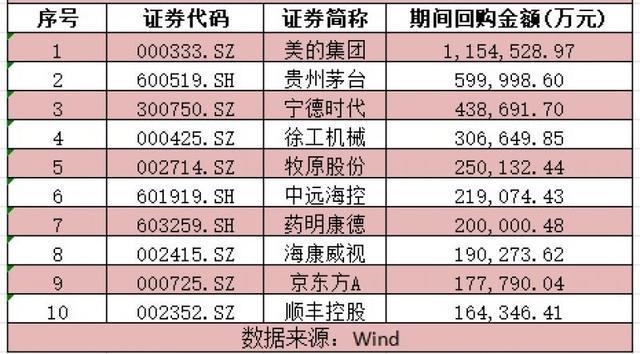
Group 1 - On December 24, 13 companies announced progress related to stock repurchase plans, including one company disclosing a new repurchase plan, one company obtaining shareholder approval for a repurchase plan, one company revealing implementation progress, and ten companies completing their repurchase plans [1] - The company Weimaisi announced the highest repurchase plan amount, proposing to repurchase up to 100 million yuan [1] - The company Fanwei Network had the highest repurchase amount approved by shareholders, proposing to repurchase up to 158 million yuan [1] Group 2 - The company Dong'a Ejiao reported the highest repurchase amount in progress, having repurchased 19.9976 million yuan [1] - Among the companies that have completed repurchases, seven companies reported amounts exceeding 10 million yuan, with Baiwei Storage, Zhongyan Chemical, and Maiwei Biological-U having the highest completed repurchase amounts of 150 million yuan, 67.0411 million yuan, and 49.9945 million yuan respectively [1] - As of December 24, a total of 1,992 repurchase plans have been implemented this year, involving 1,434 companies, with 389 companies completing repurchases exceeding 100 million yuan [1] - The companies Midea Group, Kweichow Moutai, and Muyuan Foods reported the highest completed repurchase amounts of 10.035 billion yuan, 6 billion yuan, and 3 billion yuan respectively [1]
2025年数据分析Agent白皮书:AI重构数据消费解读(34页附下载)
Sou Hu Cai Jing· 2025-12-23 14:18
Core Argument - The core argument of the white paper is that AI is reconstructing the way data is consumed, transitioning from a "tool-driven" approach to an "Agent-driven" model, where AI becomes the central engine of the entire data consumption chain. By 2025, traditional BI's passive response model is expected to be fully replaced by proactive analytical Agents [1]. Evolutionary Context - The development of data analysis is categorized into five stages: 1. **First Stage (1990s)**: Manual spreadsheet era, reliant on individual Excel skills with limited data processing capabilities [2]. 2. **Second Stage (2000s)**: Emergence of traditional reporting software requiring specialized data developers for customized reports, leading to long response cycles and poor flexibility [3]. 3. **Third Stage (around 2015)**: Agile BI emerged, with data analysts taking center stage, enabling self-service analysis through visual dashboards, though still requiring analytical skills [4]. 4. **Fourth Stage (2020)**: Initial AI capabilities were embedded by some vendors, enhancing point functionalities without changing the fundamental logic of "people finding data" [5]. 5. **Fifth Stage (2025)**: The era of analytical Agents, focusing on data consumers and enabling intelligent services that proactively discover information and drive decisions [5]. Core Capabilities - The white paper identifies three core capabilities essential for a true data analysis Agent: 1. **Data Retrieval Capability (QueryAgent)**: Converts user queries into data query languages using natural language understanding, supporting various technical paths [6]. 2. **Understanding Capability (DocumentAgent)**: Achieves deep semantic understanding based on large language models, supported by domain-specific models and knowledge systems [6]. 3. **Analytical Capability (DeepAnalyzeAgent)**: Differentiates Agents from traditional BI by automatically identifying data anomalies and trend changes [6]. Enterprise Application Scenarios - The white paper outlines five typical scenarios for the application of analytical Agents in enterprises: 1. **Revolutionizing Business Analysis Meetings**: Traditional methods require extensive manual preparation, while Agents can automate report generation and real-time responses during meetings [6][7]. 2. **Intelligent Querying and Insight Acquisition**: Business personnel can directly ask questions and receive not only data but also visualizations and diagnostic insights, promoting "data democratization" [8]. 3. **Automation of Periodic Reporting**: Agents can automate data updates and risk alerts for repetitive tasks, significantly reducing preparation time [9]. 4. **Data Interpretation and Anomaly Diagnosis**: Agents can automatically analyze reports and provide actionable insights, bridging the gap from data to decision-making [10]. 5. **Multi-Source Information Fusion Analysis**: Agents can integrate structured and unstructured data to provide comprehensive insights for management [12]. Benchmark Cases - The white paper presents four industry case studies demonstrating the practical application of analytical Agents: 1. **Security Technology Company**: Implemented a query assistant to help employees ask the right questions, reducing the data retrieval burden on analysts [13]. 2. **Large Energy Group**: Developed an intelligent querying system across various departments, enabling real-time data access and analysis [14]. 3. **Leading Commercial Bank**: Upgraded static monthly reports to dynamic reports that automatically update and share insights [15]. 4. **Muyu Group**: Transitioned from manual sales analysis to an AI-assisted platform, enabling efficient decision-making across various business metrics [16]. Implementation Path - The white paper emphasizes that the deployment of enterprise-level Agents requires a systematic approach involving "good data, good tools, strong organization, and good scenarios" [17]. Key Judgments and Future Outlook - Six core judgments are made regarding the future of data analysis: 1. **Interaction Revolution**: Natural language will become the primary mode of data interaction, with drag-and-drop BI becoming less prevalent [21]. 2. **Capability Decentralization**: Analytical capabilities will be democratized, allowing all employees to act as "super data analysts" [22]. 3. **Value Transition**: The data value chain will shift from merely providing data to offering insights and driving actions [23]. 4. **Human-Machine Collaboration**: Agents will not replace analysts but will free them from repetitive tasks, allowing focus on strategic analysis [24]. 5. **Security as a Foundation**: Data security, access control, and result credibility must be addressed in enterprise applications [25]. 6. **Cultural Penetration**: Data-driven decision-making is a cultural transformation, with Agents serving as catalysts for this change [26].

A股回购规模超1400亿元,真金白银护航市场估值修复|2025中国经济年报
Hua Xia Shi Bao· 2025-12-23 14:15
Core Viewpoint - The A-share market has seen a significant wave of stock buybacks in 2025, with nearly 1,500 companies participating, reflecting a robust response to economic recovery and external fluctuations [2][3]. Group 1: Market Overview - As of December 23, the Shanghai Composite Index closed at 3,919.98 points, with a year-to-date increase of 16.95%, peaking above 4,000 points [1]. - The overall market has shown a "shock bottoming and gradual recovery" trend, supported by favorable policies and improved corporate earnings [3]. - The three major indices have all risen this year, with the Shanghai Composite Index, Shenzhen Component Index, and ChiNext Index increasing by 16.95%, 28.37%, and 49.66%, respectively [3]. Group 2: Buyback Activity - Nearly 1,500 companies have initiated stock buybacks this year, with a total repurchase amount exceeding 1,400 billion yuan and over 13 billion shares repurchased [2][3]. - The buyback trend spans various sectors, including consumer, manufacturing, technology, and finance, indicating a comprehensive market support structure [2]. - Companies are increasingly using buybacks to enhance shareholder value and stabilize market expectations [2][3]. Group 3: Leading Companies in Buybacks - The top ten companies by buyback amount include Midea Group (11.55 billion yuan), Kweichow Moutai (5.99 billion yuan), and CATL (4.39 billion yuan) [1][6]. - Notably, Midea Group is the only company with a buyback amount exceeding 10 billion yuan this year [6]. - Companies like JD Display and XCMG Machinery have also made significant contributions to both buyback quantity and amount, showcasing their commitment to shareholder interests [6][7]. Group 4: Industry Participation - The manufacturing, consumer, and information technology sectors have the highest participation rates in buybacks, with leading firms like BOE Technology Group and XCMG Machinery actively repurchasing shares [4][5]. - These companies, backed by stable operating performance and ample cash flow, play a crucial role in stabilizing their stock prices and driving industry valuation recovery [4]. Group 5: Regulatory Support - The ongoing buyback trend is supported by regulatory policies, including the establishment of stock buyback and repurchase loans, which provide low-cost funding for companies [7]. - As of December 23, over 780 companies have disclosed receiving buyback loan support, with total loan amounts reaching over 100 billion yuan [7]. - The combination of these policies encourages companies to shift from passive stabilization to proactive value management [7][8].






钉钉发布全球首个工作智能操作系统Agent OS 专为AI打造
Zheng Quan Ri Bao Wang· 2025-12-23 10:21
Core Viewpoint - DingTalk has launched the world's first AI-driven work operating system, Agent OS, marking a significant shift towards AI collaboration in the workplace [1][2] Group 1: Product Launch and Features - The new version, AI DingTalk 1.1, named "Mulan," introduces over 20 AI products, including DingTalk Real, which provides a physical environment for AI agents to operate securely in complex enterprise settings [2][3] - DingTalk ONE serves as a new interactive entry point for human-AI collaboration, utilizing large models to manage and prioritize work information across various platforms [2][3] - The upgraded AI search engine, "AI Search," now offers capabilities to search, ask questions, and perform tasks, enhancing efficiency in enterprise operations [3][4] Group 2: Industry Impact and Ecosystem - DingTalk aims to build an open AI ecosystem in collaboration with partners, focusing on industry models and AI hardware markets, promoting a comprehensive AI landscape for enterprises [3] - The AI table feature allows users to create applications easily, transitioning from traditional Excel to AI applications without coding, thus lowering barriers for businesses [4] - DingTalk's first AI hardware, DingTalk A1, has evolved to assist teams across various functions, integrating seamlessly into business processes for better data management and analysis [4]
欧盟乳品反补贴落地,国产替代有望加速!消费ETF(159928)回调再获近5亿份净申购,昨日吸金近2亿元!
Sou Hu Cai Jing· 2025-12-23 07:06
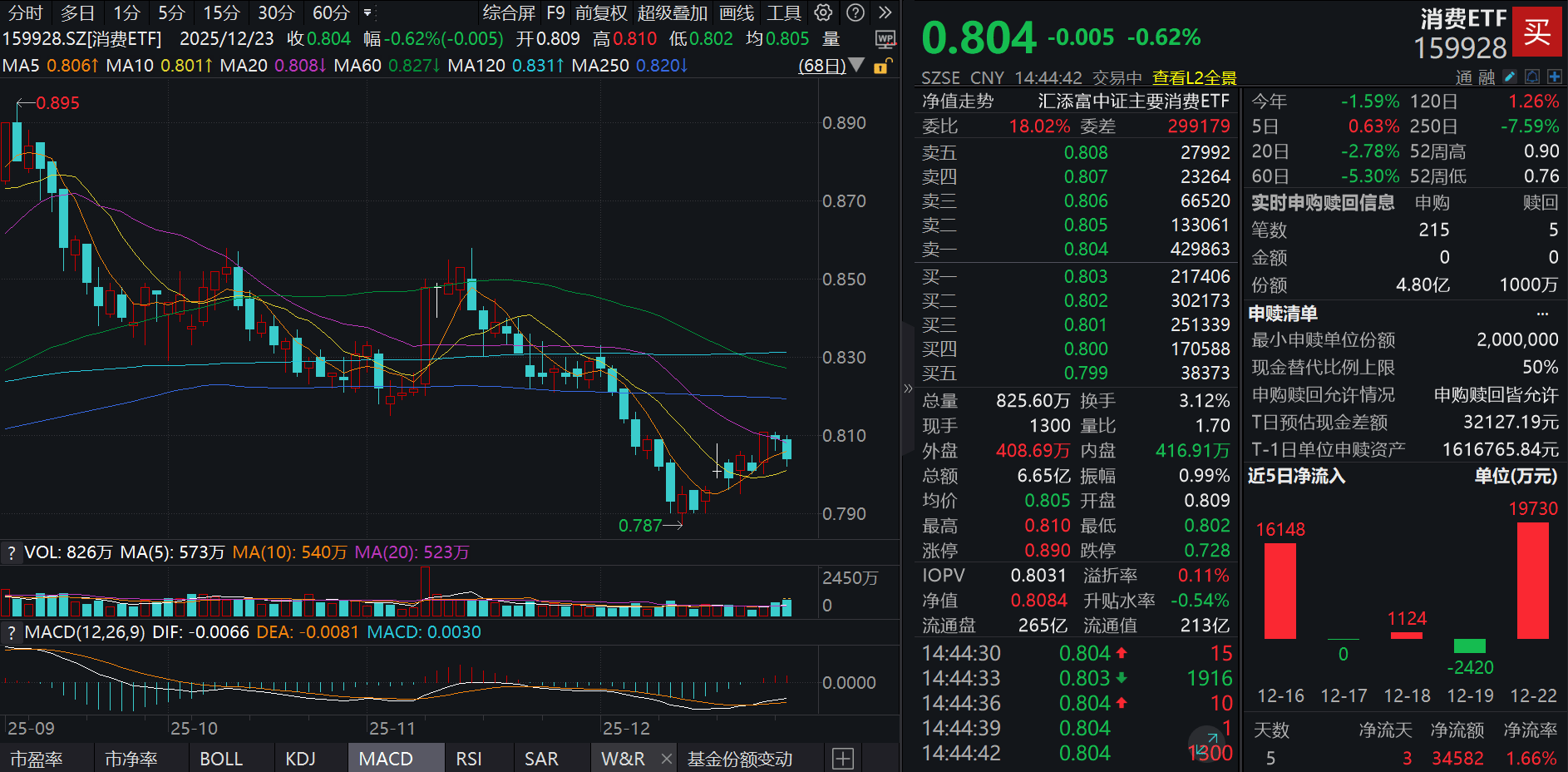
Group 1: Market Performance - A-shares experienced fluctuations and a decline, with the Consumer ETF (159928) dropping by 0.74% and a trading volume exceeding 650 million yuan [1] - The Consumer ETF (159928) has seen a net subscription of over 470 million units during the day, accumulating over 600 million yuan in the last 20 days [1] - As of December 22, the latest scale of the Consumer ETF (159928) exceeded 21.3 billion yuan, leading its peers [1] Group 2: EU Dairy Products Subsidy - The EU has announced a preliminary ruling on dairy products, determining that subsidies exist with a countervailing duty rate ranging from 21.9% to 42.7% [3][7] - Starting December 23, temporary countervailing measures will be implemented on imported dairy products from the EU [3] - The additional countervailing duty is expected to increase import prices, potentially accelerating domestic substitution in the dairy sector [8] Group 3: Domestic Dairy Industry Impact - The countervailing duties are projected to shift the deep processing of dairy products to domestic enterprises, as domestic milk prices are currently lower than international prices [8] - The deep processing sector is anticipated to enhance demand for raw milk, improving the supply-demand balance in the upstream raw milk industry [8] - Domestic dairy companies are actively focusing on deep processing, which is expected to drive demand growth and stabilize the industry [8] Group 4: Consumer Sector Insights - The Consumer ETF (159928) is characterized by its resilience across economic cycles, with the top ten constituent stocks accounting for over 68.55% of its weight [13] - The ETF includes major players such as Yili (10.37%), Kweichow Moutai (9.94%), and Wuliangye (9.50%) [14] - The current valuation of the Consumer ETF (159928) is attractive, with a TTM P/E ratio of 19.4, placing it in the lower 3.13% of the past decade [5] Group 5: Future Consumption Trends - The service consumption sector is expected to grow significantly as China's GDP per capita exceeds $10,000, indicating a shift in consumer spending patterns [11] - Emerging consumer groups, particularly the Z generation and affluent elderly, are likely to drive demand for service-oriented consumption [12] - Investment opportunities in the service sector are anticipated, particularly in areas such as event economy and AI applications [12]




农林牧渔行业报告(2025.12.12-2025.12.19):猪价低位窄幅震荡,供给压力仍大
China Post Securities· 2025-12-23 06:58
Investment Rating - The industry investment rating is "Outperform the Market" and is maintained [1] Core Insights - The agricultural sector showed a modest performance with the agricultural index rising by 0.87%, ranking 15th among 31 primary industries [3][11] - Supply pressure in the pig market remains significant, with prices fluctuating around 11.25 CNY/kg, a slight increase of 2.05% from the previous week [4][16] - The white feather chicken market has stabilized, with prices for chicken seedlings holding steady at 3.7 CNY per chick, and average profits per chick at approximately 0.8 CNY [5][32] Summary by Sections Market Review - The agricultural sector's performance was average, with the agricultural index increasing by 0.87% [11] - Among sub-industries, agricultural product processing, particularly fruit and vegetable processing, saw the most significant gains, while animal vaccines and seeds experienced substantial adjustments due to policy underperformance [12] Livestock Industry Chain Tracking Pigs - Prices for pigs are in a low and narrow fluctuation range, with a weekly average of 11.25 CNY/kg [4][16] - The industry is currently facing overall losses, with expectations that pig prices have not yet reached their lowest point [4][18] - Recommendations include focusing on leading companies with cost advantages, such as Muyuan Foods and Wens Foodstuffs, as well as smaller companies with significant cost reduction potential like Juxing Agriculture and Huadong Animal Husbandry [4][18] White Feather Chicken - The price of white feather chicken seedlings remains stable, with an average price of 3.7 CNY per chick [5][32] - The total number of breeding updates in November was 209,700 sets, the highest monthly figure this year, although the cumulative updates from January to November decreased by approximately 100,000 sets year-on-year [5][32][33] Planting Industry Chain Tracking - Sugar prices have continued to decline, with a national average of 5,280 CNY/ton, down 113 CNY/ton from the previous week [36] - Soybean prices have also decreased, with Brazilian soybeans at 3,643 CNY/ton and U.S. soybeans at 4,182 CNY/ton, reflecting declines of 3.2% and 3.4% respectively [36] - Cotton prices have seen a slight rebound, currently at 15,132 CNY/ton, up 0.79% from the previous week [36] - Corn prices have slightly decreased, averaging 2,296 CNY/ton [37]
西部证券:猪价持续低迷 建议把握生猪养殖板块布局机会
智通财经网· 2025-12-23 05:48
Group 1 - The core viewpoint of the report indicates that the listed pig companies' slaughter volume in November 2025 reached 18.2581 million heads, representing a year-on-year increase of 26.67% but a month-on-month decrease of 2.96% [1][2] - The cumulative slaughter volume of listed pig companies from January to November 2025 was 176 million heads, with a year-on-year growth of 21.42%, indicating stable growth around 20% [2] - The report suggests seizing investment opportunities in the pig farming sector, focusing on companies with strong growth in slaughter volume and stable operations, recommending Muyuan Foods (002714.SZ), Wens Foodstuff Group (300498.SZ), Tangrenshen (002567.SZ), Huatong Food (002840.SZ), and Juxing Agriculture (603477.SH) [1] Group 2 - The operating revenue of listed pig companies in November 2025 was 22.5556 billion yuan, down 17.03% year-on-year and 4.94% month-on-month [3] - The sales revenue from commodity pigs for leading companies in November was 9.390 billion yuan for Muyuan, 5.199 billion yuan for Wens, and 1.812 billion yuan for New Hope, with year-on-year declines of 20.43%, 14.19%, and 11.61% respectively [3] - The decline in revenue is attributed to a larger decrease in pig prices compared to the increase in slaughter volume, with cumulative revenue from January to November 2025 amounting to 268.644 billion yuan, a slight year-on-year increase of 2.09% [3] Group 3 - The average selling price of pigs in November increased by 1.60% month-on-month but decreased by 30.05% year-on-year [4] - The average selling prices for leading companies were 11.56 yuan/kg for Muyuan, 11.71 yuan/kg for Wens, and 11.54 yuan/kg for New Hope, with year-on-year declines of 28.73%, 29.92%, and 30.02% respectively [4] - The decline in average selling prices is due to ample supply and weak demand during the peak season, with expectations of low prices persisting until the Spring Festival [4] Group 4 - The average weight of pigs slaughtered in November was 105.80 kg per head, showing a month-on-month decrease of 0.35% and a year-on-year decrease of 3.31% [5] - Leading companies reported average weights of 123.04 kg for Muyuan, 101.98 kg for Wens, and 100.17 kg for New Hope, with month-on-month declines and varying year-on-year changes [5] - The decrease in average weight is a result of companies voluntarily reducing slaughter weights in response to market conditions [5]