奔驰

Search documents
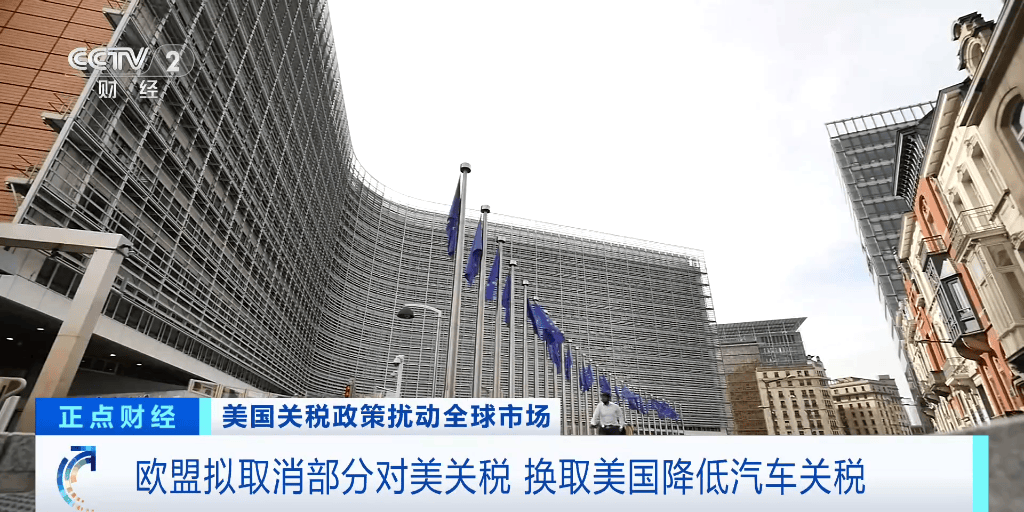
欧盟拟取消部分对美关税 换取美国降低汽车关税
Sou Hu Cai Jing· 2025-08-29 09:34
Group 1 - The European Commission proposed several legislative measures, including the elimination of tariffs on U.S. industrial goods, in exchange for the U.S. reducing tariffs on EU automobiles, which is a key part of the trade agreement reached last month between the EU and the U.S. [1] - The proposals include zero tariffs on potatoes, reduced tariffs on tomatoes, and zero or low tariffs on pork, cocoa, and pizza, along with extending the duty-free treatment for U.S. lobster [3] - The U.S. has committed to reducing tariffs on EU cars and parts from 27.5% to 15%, effective from August 1, contingent upon the EU's formal cancellation of tariffs on U.S. goods, which is expected to save car manufacturers over €500 million in tariffs within a month [5] Group 2 - Automobiles are one of the most important export products from the EU to the U.S., with imports totaling €38.9 billion in 2024, ranking first [7] - European car manufacturers such as Mercedes, BMW, and Volkswagen have experienced significant declines in revenue and profit in the first half of the year due to U.S. tariffs, and the new trade agreement has not brought about a notably optimistic sentiment [7] - The high tariffs on raw materials like steel and aluminum imposed by the U.S. continue to exert cost pressure on upstream suppliers, which is passed down to car manufacturers, compressing profit margins further [7]

全联车商:目前返利兑现账期比较长的品牌建议尽快进行调整
Xin Lang Cai Jing· 2025-08-29 09:03
Core Insights - The report from the China Automobile Dealers Association indicates that over half of the surveyed dealers have rebate payment periods controlled within 30 days, while some brands exceed 60 days [1] - 53.19% of dealers reported inventory levels exceeding 1.5, with 29.36% having inventory over 2.0 [1] - Among the surveyed brands, 8 reported no price inversion issues, while the remaining 32 brands experienced an average price inversion of approximately 16.18% [1] Recommendations - The association suggests optimizing rebate policies by simplifying rebate structures, shortening payment periods to no more than 30 days, and providing rebates in cash or easily accessible forms [2] - It emphasizes the need for strict cost accounting and market-based pricing to address price inversion issues [2] - The association advises against forcing dealers to take vehicles linked to rebate policies and recommends reducing dealer inventory to reasonable levels [2] - Local government departments are encouraged to enhance market competition management and address unfair competition and pricing distortions caused by inconsistent subsidy policies [2] Surveyed Brands - The report includes a list of 40 surveyed brands, such as BMW, BYD, and Audi, among others [3]
云出海大潮下,BAT云与外资云巨头「相爱相杀」
雷峰网· 2025-08-29 06:41
Core Viewpoint - The competition between domestic cloud service providers and foreign cloud giants is intensifying, with significant cloud migration activities occurring among key clients like BYD and GoTo Group, indicating a shift in market dynamics [2][3][7]. Group 1: Cloud Migration Cases - BYD is migrating its overseas business from AWS to Google Cloud, Alibaba Cloud, and Tencent Cloud, with AWS losing a significant client that previously generated over $10 million annually [2][5]. - GoTo Group in Southeast Asia has also migrated its services from Google Cloud to Tencent Cloud and from AWS to Alibaba Cloud, marking a major cloud migration event in the region [3][4]. - Other notable clients like Kuaishou and Xiaohongshu are also moving away from AWS, with Xiaohongshu transitioning to Alibaba Cloud due to cost considerations and increased demand for GPU computing [12][13]. Group 2: Competitive Landscape - The competition between domestic and foreign cloud providers has been ongoing for several years, initially focused on the Chinese market but now expanding globally as domestic providers seek to capture market share [5][17]. - Domestic cloud providers like Alibaba, Tencent, and Huawei are increasingly competitive against foreign players like AWS and Microsoft, particularly in pricing and specific service offerings [10][11][30]. - The price advantage of domestic clouds, often nearly half that of foreign clouds, is driving many companies to consider migration [10][11]. Group 3: Strategic Moves and Partnerships - Companies like TCL and Kdian are also involved in competitive dynamics, with TCL recently announcing a strategic partnership with Alibaba Cloud after previously engaging with AWS [21][22]. - The collaboration between Tencent and GoTo Group is underpinned by Tencent's prior investment in Gojek, facilitating a smoother transition to Tencent Cloud [23]. - Fireworks Engine is leveraging its strengths in entertainment to penetrate foreign markets, showcasing the strategic maneuvers of domestic cloud providers [14][24]. Group 4: Market Dynamics and Future Outlook - Despite the rapid expansion of domestic cloud providers, they still lag significantly behind foreign clouds in terms of revenue, with AWS's revenue in Greater China reaching over $4 billion, compared to Alibaba Cloud's approximately $4.3 billion [47]. - The ongoing AI model wave presents both challenges and opportunities, with foreign clouds currently showing stronger growth in this area [49][50]. - The cautious approach of some domestic cloud providers in their overseas strategies may widen the gap with foreign competitors, indicating a complex and evolving competitive landscape [51][52].






中国贸促会:外资企业深耕中国意愿强烈信心坚定
Sou Hu Cai Jing· 2025-08-29 04:09
Group 1 - The number of foreign-funded enterprises in Yiwu, Zhejiang has surpassed 10,000, indicating strong foreign investment interest in China despite external uncertainties [2] - In the first half of this year, the establishment of new foreign-invested enterprises in China continued to grow year-on-year, reflecting the strong willingness and confidence of foreign companies to invest in China [2] - The China Council for the Promotion of International Trade (CCPIT) has engaged with nearly 100 multinational company leaders and organized 274 delegations to 55 countries for discussions on international cooperation in supply chains and support for foreign enterprises in China [2] Group 2 - A recent survey by the German Chamber of Commerce revealed that 92% of German companies are willing to continue deepening their investment in China, with over half planning to increase their investments in the next two years [3] - The American Chamber of Commerce's 2025 Business Environment Survey indicates that nearly half of its member companies still consider China one of the top three global investment destinations [3] - The CCPIT plans to host a series of economic and trade activities, including the eighth meeting of the China-Kazakhstan Entrepreneurs Committee and high-level dialogues with Malaysia, to strengthen international economic cooperation [3][4]

只会“窝里横” 一汽奥迪销量创新低:嘲讽上汽保正统
Xin Lang Ke Ji· 2025-08-29 03:49
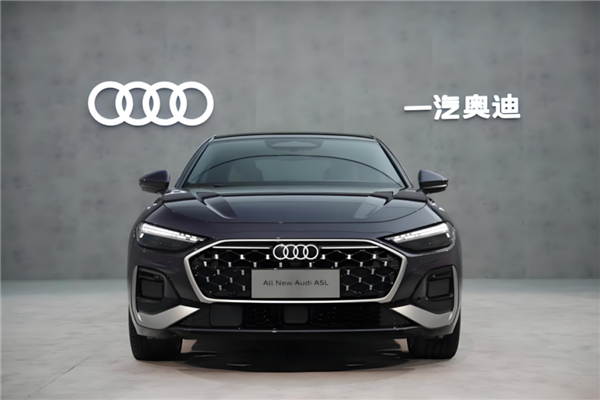
Core Viewpoint - Audi's pricing strategy has collapsed under intense competition, leading to a significant drop in sales and profits, particularly in the Chinese market, despite aggressive pricing tactics [1][12]. Group 1: Sales and Financial Performance - The 2025 model of the FAW Audi A3 has seen its base price drop to 112,400 yuan, equivalent to a 34% discount [1]. - FAW Audi's sales for 2024 are projected to plummet by 12.5% to 611,100 units, marking a new low [13]. - Audi's overall sales in China for 2024 are expected to be 649,400 units, with FAW Audi contributing 611,100 units, representing over 94% of total sales [13]. - Audi's financial report for the first half of 2025 shows a revenue increase of 5.3% to 32.57 billion euros, but a 37.5% decline in net profit to 1.346 billion euros [15]. Group 2: Competitive Dynamics - The competition between FAW Audi and SAIC Audi has intensified, with both brands targeting similar market segments but with different styling and branding strategies [6][8]. - SAIC Audi launched a new luxury electric brand, AUDI, which has further complicated the competitive landscape for FAW Audi [8][16]. - FAW Audi's recent statements emphasizing the "four rings" logo are perceived as a direct critique of SAIC Audi, highlighting the ongoing internal conflict [10][11]. Group 3: Strategic Responses - FAW Audi is attempting to revitalize its brand by introducing new models equipped with advanced technology, such as the Huawei QianKun driving system [17]. - The company has initiated a "fusion direct sales" model to streamline sales processes and pricing, which may disrupt traditional dealership operations [19][20]. - The pricing strategy for the FAW Audi A5L has been adjusted to remain competitive against SAIC Audi, with the A5L priced at 239,800 yuan, lower than SAIC Audi's A5L Sportback [7][8].
理想(LI.US/2015.HK)Q2:连续11个季度盈利,高研发投入夯实核心竞争力
Ge Long Hui· 2025-08-29 02:47
Core Viewpoint - The article highlights the significant growth potential in the electric vehicle (EV) market, with a forecast of 15.73 million units sold by 2025, representing a 29% year-on-year increase. However, the industry faces challenges due to intense price competition and profitability pressures among leading companies. In this context, Li Auto has demonstrated a unique performance, being the only new force in the industry to achieve profitability for 11 consecutive quarters [1][2]. Group 1: Li Auto's Financial Performance - In Q2 2025, Li Auto reported revenue of 30.2 billion RMB and an operating profit of 827 million RMB, marking a year-on-year increase of 76.7% and a quarter-on-quarter increase of 204.4% [1]. - Li Auto's sustained profitability amidst industry challenges showcases its effective business strategy and operational efficiency [1][6]. Group 2: R&D Investment and Technological Advancements - Li Auto's R&D investment reached 2.8 billion RMB in Q2 2025, with an expected total of over 12 billion RMB for the year, including over 6 billion RMB specifically for AI [2][3]. - The company is set to launch the world's first VLA driver model, which utilizes reinforcement learning and enhances user experience through advanced features [3]. - Li Auto's self-developed silicon carbide (SiC) chips and electric drive systems are now in mass production, improving efficiency and performance [4]. Group 3: Market Position and Sales Performance - As of July 2025, Li Auto led the market for SUVs priced above 200,000 RMB, with sales of 229,943 units and a market share of 12.31%, surpassing competitors like Tesla and AITO [6]. - The launch of the Li MEGA Home has positioned the company as a leader in the high-end MPV segment, achieving the highest sales in both the 500,000 RMB and pure electric categories [6]. Group 4: Financial Stability and Future Outlook - As of June 30, 2025, Li Auto's cash reserves stood at 106.9 billion RMB, providing a strong financial cushion for ongoing R&D and operational activities [7]. - The company is well-prepared for the anticipated competitive landscape in the automotive industry from 2025 to 2027, focusing on building technological barriers and enhancing brand competitiveness [8].

C位“易主”,从成都车展透视车市三大变化
Zhong Guo Jin Rong Xin Xi Wang· 2025-08-29 02:19
Core Insights - The 28th Chengdu International Auto Show has commenced, featuring nearly 120 automotive brands and over 1,600 vehicles on display, indicating a significant event in the automotive industry [1] - A notable trend is the collective absence of traditional luxury brands, reflecting a shift in the automotive market dynamics in China [2][3] - In contrast, domestic brands have significantly expanded their presence at the show, showcasing their growing strength and market influence [4][5] Luxury Brands Absence - The absence of luxury brands such as Porsche, Bentley, and Lamborghini at this year's show marks a significant change compared to previous years, driven by cost control measures [2][3] - Only six luxury brands, including Mercedes-Benz, BMW, and Audi, continue to participate, highlighting a decline in luxury brand representation [2] - The luxury car market is experiencing a downturn, with Porsche's global deliveries down 6% year-on-year, and a staggering 28% decline in the Chinese market [3] Domestic Brands Expansion - Domestic brands like BYD, Changan, and Chery have established dedicated exhibition spaces, showcasing their growing importance in the automotive sector [4][5] - BYD's pavilion features advanced technologies such as "God's Eye" intelligent driving demonstrations, indicating a focus on innovation [4] - The trend of domestic brands adopting "pavilion" formats at auto shows is becoming more common, enhancing brand visibility and communication [4] Rise of Regional Auto Shows - Regional auto shows are gaining prominence, with events like the Guangdong-Hong Kong-Macao Greater Bay Area Auto Show surpassing the Chengdu Auto Show in size and influence [6] - The Chongqing Auto Show is also expanding, with increased participation and audience numbers, indicating a growing interest in regional events [6][7] - These regional shows are evolving beyond mere sales platforms, integrating local economic and industrial ecosystems, thus becoming vital for brand promotion and investment attraction [7] Industry Evolution - The automotive industry in China is undergoing a transformation, moving from traditional luxury brands to a focus on domestic brands and technological advancements [7] - The competition landscape is shifting, with a clear trend towards high-quality development centered on technology, ecology, and user experience [7]
外资企业深耕中国意愿强烈信心坚定
Ren Min Ri Bao Hai Wai Ban· 2025-08-29 00:42
Group 1 - The number of newly established foreign-invested enterprises in China continues to grow year-on-year in the first half of this year, indicating strong interest and confidence from foreign companies despite external uncertainties [1] - The China Council for the Promotion of International Trade (CCPIT) has engaged with nearly 100 multinational company leaders and organized 274 delegations to 55 countries and regions to strengthen international cooperation in supply chains and support foreign investment in China [1][2] - A survey by the German Chamber of Commerce reveals that 92% of German companies are willing to continue investing in China, with over half planning to increase their investments in the next two years [2] Group 2 - The CCPIT is focused on optimizing the business environment and promoting localized production in the pharmaceutical industry, holding 10 meetings to address foreign enterprises' needs and facilitate solutions [2] - The upcoming Shanghai Cooperation Organization summit in 2025 will be held in Tianjin, with various economic and trade activities planned to enhance cooperation among member states [2][3] - The number of foreign-invested entities in Yiwu, Zhejiang has surpassed 10,000, showcasing the growing foreign investment landscape in the region [4]
纳百川创业板IPO过会 为宁德时代的战略供应商
Zhi Tong Cai Jing· 2025-08-28 14:00
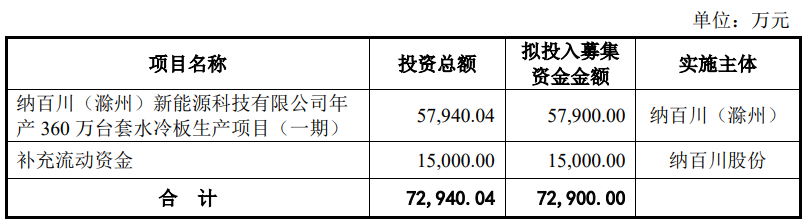
Core Viewpoint - Nanbaichuan New Energy Co., Ltd. has successfully passed the IPO review on the Shenzhen Stock Exchange's ChiNext board, aiming to raise 729 million yuan for its business expansion in the new energy sector [1] Company Overview - Nanbaichuan specializes in the research, production, and sales of thermal management products for new energy vehicle power batteries, fuel vehicle power systems, and energy storage batteries [1] - The company has been a strategic supplier for CATL since 2012, providing products to major automotive brands including NIO, Xpeng, and Geely [1] Financial Highlights - The company reported revenues of approximately 1.031 billion yuan, 1.136 billion yuan, 1.437 billion yuan, and 337 million yuan for the years 2022, 2023, 2024, and the first quarter of 2025, respectively [3] - Net profits for the same periods were approximately 113 million yuan, 98.25 million yuan, 95.43 million yuan, and 14.89 million yuan [3] Investment Projects - The company plans to invest in a water-cooled plate production project with a total investment of approximately 57.94 million yuan, using 57.9 million yuan from the raised funds [3] - Additional funds will be allocated to supplement working capital, amounting to 15 million yuan [3] Production Capacity - Nanbaichuan operates three production bases in Wenzhou, Ma'anshan, and Chuzhou, covering over 200,000 square meters [2] - The Chuzhou production base is still under construction to enhance the supply capabilities for core customers [2] Financial Ratios - The company's total assets increased from 1.265 billion yuan in 2022 to 1.981 billion yuan in March 2025 [4] - The debt-to-asset ratio for the parent company was 51.91% as of March 2025, showing a slight improvement from 56.26% in 2022 [4] - The return on equity decreased from 30.40% in 2022 to 2.34% in the first quarter of 2025 [4]

裁员超5万,半数德企撂挑子了,德国对美强烈不满,目光转向中国
Sou Hu Cai Jing· 2025-08-28 11:48
Core Viewpoint - The trade agreement between the US and EU, while reducing tariffs on most EU goods to 15%, has left significant dissatisfaction, particularly in Germany, due to unresolved automotive tariffs and the perceived imbalance in concessions [3][5][11]. Group 1: Trade Agreement Details - The US has adjusted tariffs on most EU goods to 15%, but automotive tariffs remain unresolved, with Trump insisting on zero tariffs on US industrial goods before considering any changes to EU automotive tariffs [3][5]. - The agreement is viewed as a temporary fix, with both sides expressing dissatisfaction, particularly regarding the automotive sector [5][11]. Group 2: Impact on Germany - Germany, as a major automotive exporter, faces significant financial burdens due to the 15% tariff, which translates to billions in additional costs for companies like Volkswagen and Mercedes-Benz [7][14]. - The automotive industry in Germany has seen substantial job losses, with 51,500 positions cut in one year, representing nearly half of all industrial layoffs in the country [9]. - Major German automotive companies are experiencing severe operational challenges, with production lines halted and significant cuts in research and development [9][16]. Group 3: Reactions from Other EU Countries - Other EU nations, particularly France and Hungary, express frustration over the agreement, feeling that it disproportionately benefits the US at their expense, especially in agriculture and energy purchases [11][18]. - France's agricultural sector is particularly affected, facing tariffs while US agricultural products enter the EU tariff-free [11]. Group 4: Shift in Strategy for German Automakers - In response to the pressures from the US, German automakers are increasingly turning their focus to the Chinese market, with significant investments planned for electric vehicle production and technology development [19][23]. - Companies like Volkswagen and Mercedes-Benz are investing billions in China to adapt their products to local preferences and compete with domestic brands [19][23]. Group 5: Competitive Landscape - The shift towards China is complicated by fierce competition from local brands like BYD and NIO, which are rapidly gaining market share in the high-end segment [21][24]. - German automakers are adapting their strategies to meet the demands of Chinese consumers, incorporating local technology and preferences into their vehicles [23].