三花智控

Search documents
港股破发股赛力斯上市累跌17.79% 林园广发携手浮亏
Zhong Guo Jing Ji Wang· 2025-12-17 09:11
Core Points - The stock price of Sais (601127) closed at HKD 108.10, with a decline of 0.64%, marking a cumulative drop of 17.79% since its listing on the Hong Kong Stock Exchange [1] - Sais reached an all-time low of HKD 107.40 during intraday trading, the lowest since its IPO on November 5, 2025, when it opened at HKD 128.9 [1] - The total number of shares offered globally was 108,619,000 H-shares, with 10,861,900 H-shares allocated for the Hong Kong offering and 97,757,100 H-shares for international offering [1] Financial Summary - The final offer price for Sais was HKD 131.50, raising a total of HKD 14,283.40 million, with net proceeds amounting to HKD 14,016.41 million after deducting estimated listing expenses of HKD 266.99 million [2] - Key cornerstone investors included Chongqing Industry Mother Fund, Linyuan Fund, Huatai Capital, and several asset management firms [2] Investor Details - New China Asset Management is 99.6% directly and indirectly owned by New China Life Insurance [3] - Sanhua (Hong Kong) is wholly owned by Zhejiang Sanhua Intelligent Control [3] - Other notable investors include Hichain Logistics HK, which is ultimately controlled by Jiangsu Haichen Logistics, and Zhongsheng, which is indirectly wholly owned by Zhongsheng Holdings [3]

磷酸铁锂涨价潮催化,新能车ETF(515700)涨超2%
Sou Hu Cai Jing· 2025-12-17 03:16
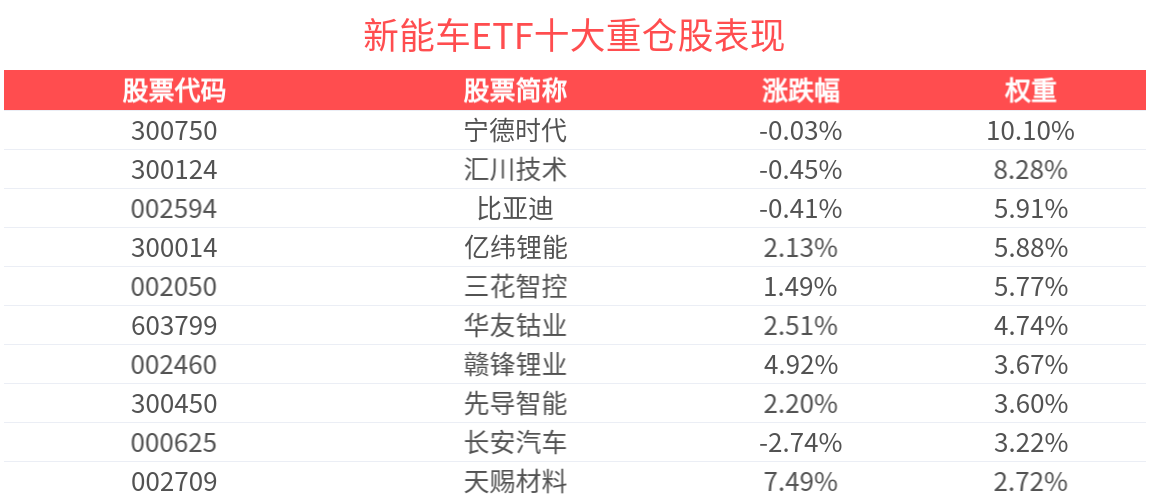
Core Viewpoint - The new energy vehicle (NEV) industry is experiencing significant price fluctuations, particularly in lithium iron phosphate (LFP) materials, with major manufacturers initiating price hikes, which are expected to continue into 2026 [1][2]. Group 1: Market Performance - As of December 17, 2025, the CSI New Energy Vehicle Industry Index (930997) rose by 2.12%, with notable increases in constituent stocks such as Tianhua New Energy (300390) up 15.28%, Shengxin Lithium Energy (002240) up 10.01%, and Defu Technology (301511) up 8.56% [1]. - The New Energy Vehicle ETF (515700) increased by 2.10%, with the latest price reported at 2.34 yuan [1]. Group 2: Price Trends - Since early December, LFP manufacturers have begun collective price increases, with some leading companies negotiating price hikes between 2,000 to 3,000 yuan per ton [1]. - Analysts indicate that for every 10,000 yuan per ton increase in lithium carbonate, the cost of LFP materials rises by approximately 2,300 to 2,500 yuan per ton [1]. Group 3: Demand and Liquidity - The China Passenger Car Association predicts strong growth in NEV retail sales in December due to the impending expiration of the NEV purchase tax exemption policy in 2025, leading to increased consumer urgency [2]. - The New Energy Vehicle ETF recorded a turnover rate of 2.03%, with a transaction volume of 40.37 million yuan [2]. - The latest scale of the New Energy Vehicle ETF reached 1.958 billion yuan [2]. Group 4: Index Composition - As of November 28, 2025, the top ten weighted stocks in the CSI New Energy Vehicle Industry Index accounted for 51.96% of the index, including CATL (300750), Huichuan Technology (300124), and BYD (002594) [2].

“制造强国”实干系列周报(12、14期)-20251217
Shenwan Hongyuan Securities· 2025-12-17 01:46
Group 1: Aluminum vs. Copper in Air Conditioning - The shift from copper to aluminum in air conditioning systems is driven by the copper-aluminum price gap, energy efficiency standards upgrades, and refrigerant replacements, with microchannel technology becoming increasingly prevalent[3] - The competitive landscape for microchannel heat exchangers is dominated by three players: Sanhua, Mahler/Delphi, and Danfoss[3] - Sanhua's revenue growth has slowed, indicating a need for innovation and adaptation in the market[14] Group 2: Nuclear Fusion Developments - The nuclear fusion sector is expected to accelerate due to continuous technological breakthroughs and policy support, with significant project milestones achieved in 2025[19] - The global nuclear fusion market is projected to reach approximately $479.5 billion by 2029, with a total of 196 fusion devices expected by 2035[40][42] - Key investment opportunities in nuclear fusion include core supporting entities and high-value segments within the supply chain, such as superconducting magnets and power systems[46] Group 3: Commercial Aerospace - The commercial aerospace sector is witnessing stable or potentially increasing core players due to cost reduction trends, with a focus on satellite manufacturing and launch services[3] - The domestic satellite constellation projects, such as G60 and GW, are set to significantly increase satellite launches, with G60 planning to deploy 1,296 satellites by the end of 2027 and 15,000 by 2030[60] - The market for satellite services and ground equipment is expected to dominate, accounting for over 90% of the commercial aerospace value chain[52]
腾讯,跌破600港元
Shang Hai Zheng Quan Bao· 2025-12-16 08:44
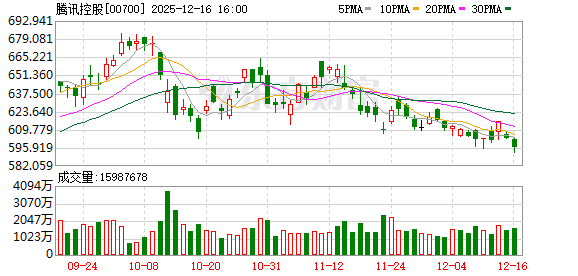
12月16日,港股市场全线下跌。截至收盘,恒生指数跌1.54%报25235.41点,恒生国企指数跌1.79%报8757.93点,恒生科技指数跌1.74%报5402.51点。 近期,港股市场波动加剧,自12月1日以来,恒生科技指数累计跌逾4%,恒生指数累计跌逾3%。港股板块全线下跌,黄金及贵金属、软件服务、保险、 零售领跌,仅部分中资券商股、汽配股、食品饮料股逆势活跃。果下科技今日港股上市,盘中一度涨超145%。腾讯控股今日跌1.08%,盘中股价跌破600 港元/股。 亚太市场今日开盘不久后均急速下挫。截至收盘,日经225指数跌1.56%,韩国综合指数跌2.24%。 业内人士认为,近期美联储降息预期降温引发全球流动性担忧,以及市场对人工智能泡沫的争论造成了港股下挫。此外,资金面上,年末内地资金流入港 股放缓、港股解禁潮带来的技术性卖压,也是港股市场下跌原因。 消息面上,12月11日,据新华社报道,分析人士认为,美联储内部围绕是否进一步降息分歧加剧,因此有人猜测,在明年5月美联储主席鲍威尔卸任前可 能不会再降息。下一任美联储主席预计将推动进一步降息,但受制于通胀压力依然较高等因素,降息空间或有限。 科技股回撤较大 ...
机械行业2026年投资策略:聚焦新技术,拥抱顺周期
ZHONGTAI SECURITIES· 2025-12-16 08:41
Group 1: Market Review and Outlook - The mechanical equipment industry outperformed the market in 2025, with an overall increase of 27.80%, surpassing the Shanghai Composite Index by 17.65 percentage points [10][11] - The industry saw a recovery in performance, with revenue reaching 15,337 billion yuan, a year-on-year increase of 6.34%, and net profit of 1,103 billion yuan, up 14.19% [11] - The outlook for 2026 is optimistic, with expectations of a moderate recovery in macroeconomic conditions and improvements in domestic manufacturing demand [15][18] Group 2: Investment Directions: New Technologies - Focus on new technologies such as humanoid robots, nuclear fusion, quantum technology, low-speed unmanned systems, and perovskite solar cells, which are expected to drive industry upgrades and innovation [15][19] - Humanoid robots are shifting from theme-driven investments to value verification, with a focus on production schedules and scene orders [28][30] - Nuclear fusion is gaining momentum with accelerated technological progress and policy support, particularly in the Tokamak technology route [19][60] Group 3: Investment Directions: Cyclical Recovery - The cyclical recovery is driven by overseas expansion and policy support, with expectations for high export demand in 2026 [23][24] - The engineering machinery sector is showing strong recovery momentum, with significant growth in overseas exports and stabilization in domestic sales [23] - The oil service sector is entering an upward cycle, driven by the natural gas industry and AI computing power demands [23] Group 4: Recommended Stocks and Investment Portfolio - The investment strategy emphasizes a dual approach, focusing on both global benchmark chains and domestic supply chains [52][53] - Key recommended stocks include Sanhua Intelligent Controls, Beite Technology, and Yushun Technology, which are positioned to benefit from the growth in humanoid robots and related technologies [53][54] - The portfolio should balance between high visibility stocks linked to Tesla's supply chain and those offering higher growth potential in the domestic market [54][55]




人形机器人的2025:一半是迷雾森林,一半是星辰大海
Tai Mei Ti A P P· 2025-12-16 08:03
Core Viewpoint - The humanoid robot industry is experiencing significant investment and interest, with projections suggesting that humanoid robots could become as common as computers and smartphones in households within the next two decades. However, there are contrasting opinions regarding the feasibility and practicality of these robots, with some industry leaders expressing skepticism about their commercial viability and technological readiness [2][3][9]. Investment Trends - In the first nine months of 2025, global investments in humanoid robots reached approximately $7 billion, driven particularly by the Chinese market, marking a 250% increase compared to the same period last year [3]. - Major companies like UBTECH have reported significant order volumes, with UBTECH's cumulative order amount reaching 1.3 billion yuan [9]. Technological Challenges - The VLA (Vision-Language-Action) model, widely used in humanoid robot training, faces limitations due to the need for dynamic, three-dimensional data, which is scarce and complex to obtain [5][6]. - Critics argue that the reliance on language as an intermediary in the VLA model leads to information loss and inefficiencies, suggesting a shift towards a "World Model" that directly connects visual input to actions [8]. Market Dynamics - There is skepticism regarding the authenticity of reported large orders, with concerns that many are framework agreements or intention orders rather than binding contracts, which could lead to inflated market expectations [10][12]. - The industry is witnessing a surge in companies entering the humanoid robot space, with over 150 firms established, many of which are seeking capital to sustain operations amid unclear technological and commercial pathways [17]. Future Outlook - Despite current technological uncertainties, there is a strong belief in the potential of humanoid robots to integrate into everyday life, with predictions of significant advancements in the next few years [14][15]. - The investment return cycle for humanoid robots is expected to be short, with some analysts estimating a payback period as brief as 36 weeks, particularly in household service applications [15]. Industry Developments - Companies like Yuzhu Technology and Zhiyuan Robotics are preparing for capital market engagements, with Yuzhu Technology expected to submit an IPO application soon [16][17]. - The market for humanoid robots is showing signs of volatility, with some startups already ceasing operations, indicating potential challenges ahead for the industry [19].


2026年机器人投资策略
2025-12-16 03:26
Summary of Key Points from the Conference Call Industry Overview - The robot industry is entering a peak period with the upcoming launch of Tesla's V3 robot and the listing of domestic companies like Yushuzhiyuan, which will drive valuation reconstruction opportunities in the supply chain [1][2] - The liquid cooling sector is benefiting from increased demand in data centers, with companies like Minshi, Feilong, and Yinlun transitioning from automotive to liquid cooling applications, further driving business growth [1][4] Core Insights and Arguments - Tesla's robot hardware is gradually being finalized, which will lead to increased orders for core component suppliers such as Top, Sanhua, Hengli Hydraulic, Junsheng Electronics, Shuanghuan, and Aikedi, enhancing their market positions [1][5] - The liquid cooling market in China is projected to reach approximately 16 billion yuan in 2024, with expectations to grow to a scale of 100 billion yuan [3][17] - Key catalysts for the robot industry in 2026 include Tesla's robot launch, brain upgrades, and the listing of domestic companies, which will stimulate upward development in the sector [6][8] Company-Specific Developments - Companies like Top, Sanhua, Hengli Hydraulic, and Junsheng Electronics are expected to gain more orders in critical areas such as actuator assemblies, head modules, and dexterous hands [3][5] - New Yuan Zhuomei has received significant orders from companies like Xiaopeng, Xiaomi, and Jike, with profits expected to double, reaching over 150 million yuan in 2026 [3][23] - Xiaopeng is diversifying into multiple application areas, including robots and low-altitude aircraft, which enhances its valuation potential [21] Emerging Trends and Future Outlook - The domestic robot industry is in a rapid breakthrough phase, with companies like Yushuzhiyuan, Ubtech, and Xiaopeng showing strong performance in production and profits [8] - The development of "brain" technology in robotics is being driven by advancements in AI and large models, with Tesla leading in efficient data processing and execution [14][16] - Companies like Junsheng, Shuanghuan, and Aikedi are expected to achieve significant breakthroughs in the robot sector in 2026, potentially enhancing their overall valuations [22] Additional Important Insights - The flexibility and valuation of component companies can be assessed based on global market scales, similar to investment opportunities in the new energy vehicle sector [7] - The liquid cooling technology is rapidly evolving due to AI computing demands, with significant growth expected in the market for cooling solutions [17] - The hardware development in the robot sector is focusing on dexterous hand hardware convergence and the differentiation brought by "brain" technology, which will help companies achieve higher valuations [15][16]
三花智控获GIC Private Limited增持89.88万股 每股作价约36.6港元
Xin Lang Cai Jing· 2025-12-16 00:03
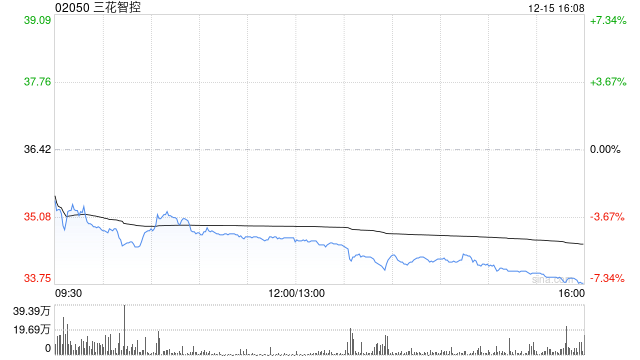
香港联交所最新资料显示,12月11日,GIC Private Limited增持三花智控(02050)89.88万股,每股作价 36.5958港元,总金额约为3289.23万港元。增持后最新持股数目约为3402.48万股,持股比例为7.14%。 责任编辑:卢昱君 香港联交所最新资料显示,12月11日,GIC Private Limited增持三花智控(02050)89.88万股,每股作价 36.5958港元,总金额约为3289.23万港元。增持后最新持股数目约为3402.48万股,持股比例为7.14%。 责任编辑:卢昱君 热点栏目 自选股 数据中心 行情中心 资金流向 模拟交易 客户端 热点栏目 自选股 数据中心 行情中心 资金流向 模拟交易 客户端 ...
三花智控(02050.HK)获GIC Private Limited增持89.88万股
Ge Long Hui A P P· 2025-12-15 23:19
增持后,GIC Private Limited最新持股数目为3402.48万股,持股比例由6.95%上升至7.14%。 | 農植序號 | 大股東/董事/最高行政人員名 作出按羅的 賣入 / 賣出或涉及的 每股的平均價 | | 持有權益的股份數目 佔已發行的海關事件的日 相關法國股 債權證權益 | | --- | --- | --- | --- | | | 原因 股份數目 | | ( 請多題上述*註 | | | | | M) 份目分比 年) | | | | | ( 96 ) G 的旅 | | CS20251215E00030 GIC Private Limited | 1101(L) | 898,800(L) | HKD 36,5958 34.024.800(L) 7.14(L)11/12/2025 | | 股份代號: | 02050 | | --- | --- | | 上市法國名稱: | 浙江三花智能控制股份有限公司 - H股 | | 日期 (日 / 月 / 年): | 16/11/2024 - 16/12/2025 | 格隆汇12月16日丨根据联交所最新权益披露资料显示,2025年12月11日,三花智控(0 ...

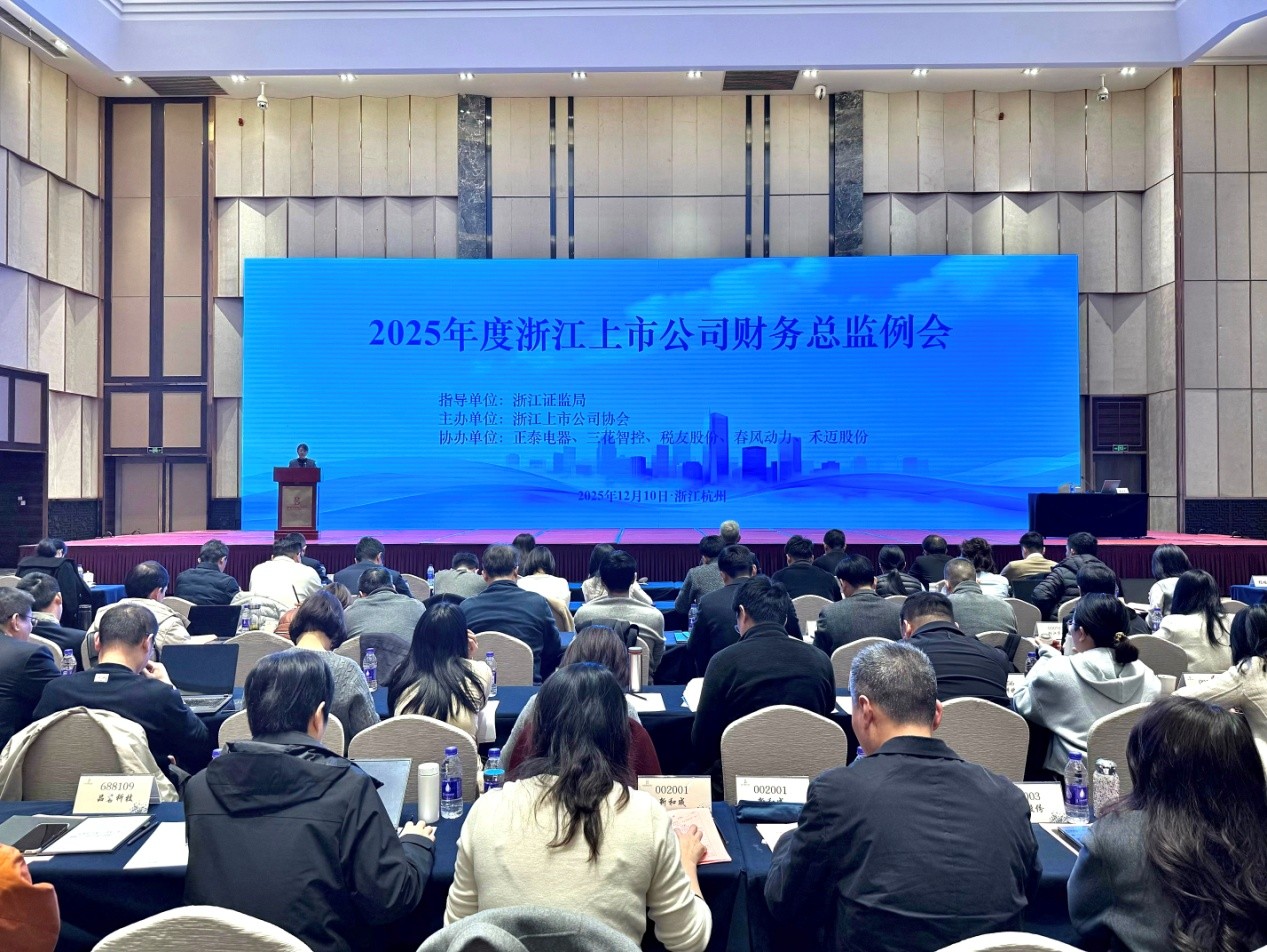
强监管防风险促发展 浙江辖区举办财务总监例会
Zheng Quan Ri Bao Wang· 2025-12-15 14:08
Core Viewpoint - The Zhejiang Securities Regulatory Bureau held a meeting to discuss the financial management of listed companies in the region, focusing on the implementation of the spirit of the 20th National Congress and the current state of the capital market [1][3]. Group 1: Regulatory Focus and Market Conditions - The Zhejiang Securities Regulatory Bureau emphasized a strong regulatory approach, focusing on risk prevention and development promotion amid a complex economic environment [3]. - The bureau reported that listed companies in the region have shown a recovery in operational performance, with cash dividends reaching a record high in both amount and number [3]. Group 2: Responsibilities of Financial Executives - Financial executives are urged to enhance the quality of financial information, ensuring compliance and timely disclosure of accurate financial data [3]. - There is a call for improved internal and external communication, particularly in collaboration with independent directors and audit committees for performance forecasts and annual report preparation [3]. Group 3: Training and Development Initiatives - The meeting included expert discussions on annual report disclosure rules, common errors, and key focus areas to improve the quality of information disclosure [4]. - Various topics such as financial governance, digital finance, and industry-specific mergers and acquisitions were covered, with practical sharing and discussions from experts [4]. - The event aimed to strengthen the financial management capabilities of listed companies, enhancing their accounting foundations and overall financial quality to support high-quality development [4].