华为

Search documents
深圳投资人,难进“大疆圈”
3 6 Ke· 2026-02-03 09:44
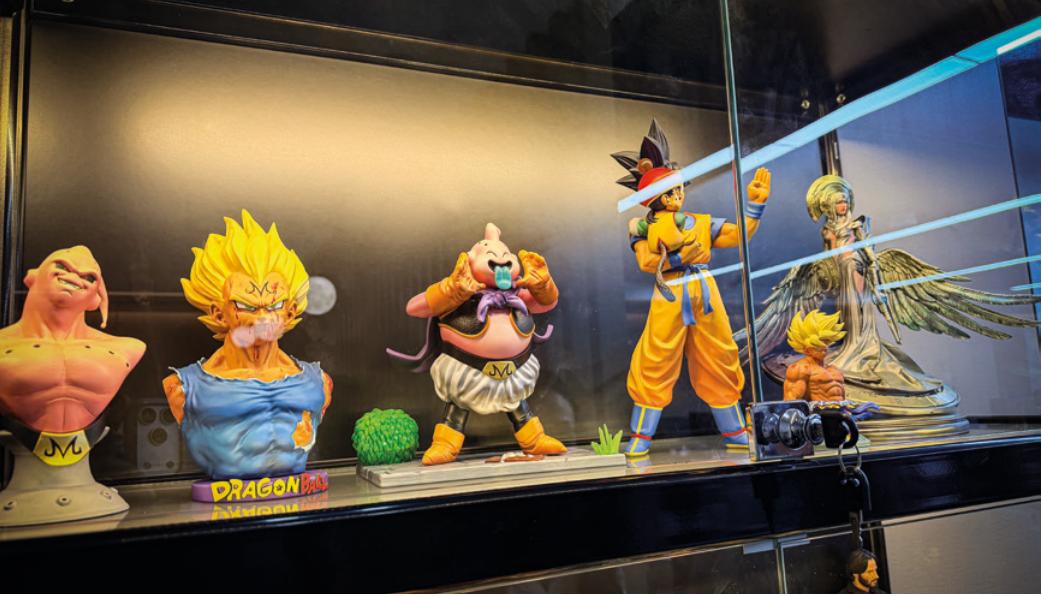
2026年1月初,深圳南山科技园的inno100智能硬件集合店里,人头攒动。 货架上清一色是海外热销的"深圳爆款":外骨骼机器人、3D打印机、AI玩具、无人机⋯⋯或是出自大疆、小米、华为等巨头前员工之手,或是由本地供 应链几天内打样迭代而成,件件都是这轮"AI硬件"热潮的代表作。 深圳一家头部风投机构的投资人徐清站在一款名为"清闲"的智能办公椅前,反复试坐了三次。椅子能自动调节腰托、监测坐姿,甚至通过微震动提醒用户 起身活动。他眼睛发亮,"这产品我们真想投"。 但很快,他的表情又黯淡下来,"高瓴刚投了它们"。这个项目徐清跟踪了几个月,美元基金一来,他就知道自己没有机会了,项目的估值几个月便翻了 倍,"我们连尽调名单都没进"。 2025年的深圳智能硬件市场,宛如一个高速运转的造星工厂。 大量美元机构涌入,创业公司估值水涨船高;"大疆系"创业者群体崛起,各类细分场景的硬件层出不穷,以深圳为核心的中国智能硬件产业,正酝酿着一 场席卷全球的品类重构。 这场发生在本土的资本盛宴中,深创投、高新投等深圳"土著"机构却集体缺位——它们手握地利、背靠政府资源,却眼睁睁看着外来的投资人们包圆 了"大疆系"等优质项目,自己只能沉 ...

补偿N+4,德国巨头博世在华启动人员优化,燃油汽车项目成「重灾区」
36氪· 2026-02-03 09:18
Core Viewpoint - Bosch is facing significant challenges in its traditional fuel vehicle business, leading to layoffs and a decline in market competitiveness against emerging Chinese companies like Huawei and BYD [5][6][11]. Group 1: Layoffs and Business Performance - Bosch China has initiated layoffs affecting nearly 200 employees, primarily in its fuel vehicle and hydrogen fuel cell projects, with compensation packages reported to be generous [5][8]. - The company has acknowledged a decline in its workforce in China, with employee numbers dropping from approximately 58,000 in 2023 to 56,000 in 2024 [6]. - Bosch's sales in China showed a growth of 5.2% in 2023, reaching about 139 billion RMB, but this growth is expected to slow to 2.7% in 2024, with projected sales of 142.7 billion RMB [10]. Group 2: Market Competition and Challenges - Bosch's market share in the ADAS (Advanced Driver Assistance Systems) segment has been declining, with its installation volume dropping from 22.5% in the first half of 2024 to 15.2% in the first half of 2025 [12][15]. - Competitors like BYD have significantly increased their market share, with BYD's ADAS installation volume rising from 6.1% to 12.7% within a year [15]. - The company is struggling with a profit margin of approximately 2%, which is below expectations, and is facing pressures from rising costs and a challenging economic environment [9][10]. Group 3: Strategic Adjustments and Future Outlook - Bosch's leadership has indicated the need for organizational restructuring to enhance long-term competitiveness and investment capacity, citing the necessity to adapt to a rapidly changing market [9][17]. - The company is focusing on local investments and innovation in China, despite the competitive landscape becoming increasingly challenging due to the rise of domestic players [10][17]. - Analysts suggest that Bosch's reliance on traditional fuel vehicle technologies is hindering its ability to compete effectively in the electric vehicle market, leading to a potential further decline in market share [17].

阶跃星辰发布Step 3.5 Flash开源模型
Guo Ji Jin Rong Bao· 2026-02-03 08:11
阶跃星辰在大模型研发与应用落地领域的快速发展,离不开上海完善的人工智能产业生态与国资力 量的强力支撑。今年以来,上海市人工智能企业轮番登陆资本市场,上海市政府主导的国家资本早已在 该赛道提前布局,且上海国资敢于在企业发展关键阶段扮演领投方角色,以此吸引更多社会资本入局, 形成合力共同支持硬科技企业发展。 目前,上海国资已在沪逐步构建起覆盖底层芯片算力、中间层模型工具、上层行业应用的完整AI 生态版图。 2月2日,阶跃星辰正式发布新一代开源Agent基座模型Step 3.5 Flash。该模型专为实时Agent工作流 场景打造,实现了推理速度、智能水平与使用成本的兼顾,在单请求代码类任务中,其最高推理速度可 达每秒350个token,为市场提供了"更快更强更稳"的Agent底层模型选择。 据悉,Step 3.5 Flash采用稀疏MoE架构设计,模型总计拥有1960亿参数,且每个token仅激活约110 亿个参数,在保障模型核心能力的同时,实现了推理效率的显著提升,也为Agent类应用打造了更高 效、更具性价比的底层模型方案。目前,华为昇腾、沐曦股份、壁仞科技、燧原科技、天数智芯、阿里 平头哥等多家头部芯片厂商 ...
华创证券:算力稀缺性凸显 AIDC产业或迈入结构性扩张新周期
智通财经网· 2026-02-03 07:59
Core Insights - The global AIDC demand continues to grow rapidly, with positive signals from cloud vendors regarding capital expenditure, business promotion, and pricing strategies. The price increase and expansion of AI spending are reshaping the AIDC industry logic, enhancing the return expectations of computing assets and elevating the industry's scale ceiling, transitioning AIDC from a heavy asset industry to a core infrastructure sector with high barriers and certainty [1][5]. Group 1: Market Trends - The global cloud computing market is expected to grow from approximately $1.29 trillion in 2025 to about $2.28 trillion by 2030, with a CAGR of around 12%. However, supply-side constraints are evident, as the prices of storage chips and CPUs are rising, leading to increased cloud service costs [1][2]. - NAND flash prices are predicted to rise by 33% to 38% in Q4 2025, with similar increases expected in Q1 of the same year. Additionally, Intel and AMD plan to raise server CPU prices by 10-15%. Energy costs are also rising, with U.S. electricity costs increasing by 6.7% year-on-year in December last year, cumulatively up by about 38% since 2020 [2]. Group 2: Competitive Landscape - The domestic AI model competition is accelerating the deployment of computing infrastructure, with companies like DeepSeek, Kimi, and Alibaba launching model upgrades that highlight the significant demand for training and inference computing power. The focus of competition has shifted from individual model performance to the overall capability of computing supply and system engineering efficiency [3]. - In the application layer, competition is intensifying, with Tencent's Yuanbao rapidly increasing its user base by integrating the DeepSeekR1 model and leveraging extensive marketing resources. This growth is expected to translate into high-frequency demand for backend intelligent computing centers and high-speed networks, further accelerating the deployment and upgrade of related technologies [4]. Group 3: Industry Outlook - The AIDC industry is likely entering a structurally expanding cycle with high barriers. Innovations such as liquid cooling and high-density power supply solutions are penetrating the market, addressing the technical challenges posed by the increase in power consumption per rack from traditional 5-15 kW to 200 kW. The domestic chip ecosystem is maturing, with Alibaba's "Zhenwu 810E" performance matching international mainstream products, facilitating the optimization of the domestic computing system [5]. - The AIDC market is expected to expand at a compound annual growth rate of 31.5%, with the core barriers of the industry shifting from capital investment to technology integration and operational efficiency. The price increases from cloud vendors and the expansion of AI spending are jointly reshaping the AIDC industry logic, benefiting leading companies with technological iteration capabilities and resource integration efficiency [5]. Group 4: Investment Recommendations - Suggested investment targets include: 1. Cloud Computing: Alibaba-W (09988), Cloudflare (NET.US), Shenxinfu (300454.SZ), Kingsoft Cloud (03896), New Intent Group (01688), and UCloud (688158.SH) [6]. 2. AIDC: Runze Technology (300442.SZ), Baoxin Software (600845.SH), Data Port (603881.SH), Guanghuan New Network (300383.SZ), Aofei Data (300738.SZ), and Yunsai Zhili (600602.SH) [6]. 3. Computing Power Services: Xiechuang Data (300857.SZ), Hongjing Technology (301396.SZ), Dawi Technology (600589.SH), Youfang Technology (688159.SH), Litong Electronics (603629.SH), Zhiwei Intelligent (001339.SZ), and Coreweave (CRWV.US) [6]. 4. CDN: Wangsu Technology (300017.SZ) [7]. 5. Chips: Haiguang Information (688041.SH), Cambrian-U (688256.SH), Muxi Shares-U (688802.SH), Tianshu Zhixin (09903), Moer Thread-U (688795.SH), and Longxin Zhongke (688047.SH) [7]. 6. Large Models: Minimax-WP (00100), Zhipu (02513), and iFlytek (002230.SZ) [7].

科创芯片设计ETF易方达(589030)反弹上扬涨超1%,阶跃星辰发布新开源模型,多家国产芯片厂商完成适配
Xin Lang Cai Jing· 2026-02-03 07:25
Group 1 - The Shanghai Stock Exchange Sci-Tech Innovation Board Chip Design Theme Index (950162) rose by 2.19% as of February 3, 2026, indicating strong market performance in the chip design sector [1] - The E Fund Sci-Tech Chip Design ETF (589030) increased by 1.46%, with a trading volume of 66.14 million yuan and a turnover rate of 13.6%, reflecting active market participation [1] - The E Fund Sci-Tech Chip Design ETF has seen continuous net inflows over the past four days, with a peak single-day net inflow of 82.71 million yuan, totaling 172 million yuan [1] Group 2 - The semiconductor industry is entering a new upcycle driven by AI applications, with a recovery starting in January 2024 and a peak expected in August 2024 [2] - The overall upward trend in the semiconductor sector is confirmed, with AI application deepening and rising storage chip prices as core drivers [2] - The E Fund Sci-Tech Chip Design ETF closely tracks the performance of the Shanghai Stock Exchange Sci-Tech Innovation Board Chip Design Theme Index, which includes listed companies involved in chip design [2]

国产算力专题报告(一):模型密集发布,国产算力需求有望加速
CAITONG SECURITIES· 2026-02-03 07:25
Investment Rating - The industry investment rating is "Positive" (maintained) [1] Core Insights - The domestic model release period is intensifying, with significant models such as DeepSeek's open-source OCR2, Kimi's K2.5, Alibaba's Qwen3-Max-Thinking, and Baidu's Wenxin 5.0 being launched recently. ByteDance plans to release three new AI models in February, indicating a rapid acceleration in model commercialization [5] - Domestic cloud vendors are maintaining high capital expenditures, with ByteDance planning 160 billion yuan for 2026, up from approximately 150 billion yuan in 2025. Alibaba is also advancing a 3-year plan for 380 billion yuan in AI infrastructure [5] - The rapid iteration of domestic models is expected to significantly increase demand for inference-side computing power, with 2026 being a pivotal year for the deployment of domestic supernodes. Major companies like Huawei and Alibaba are launching new supernode solutions [5] - Investment suggestions highlight that the acceleration of domestic model iterations and improvements in inference-side performance will benefit the domestic computing power industry chain, with a focus on companies like Chipone Technology, Huafeng Technology, and Weicai Technology [5] Summary by Sections Recent Market Performance - The report notes a recent market performance with fluctuations, including a -13% change in one segment and a 67% increase in another [2] Key Company Ratings - Chipone Technology: Market cap of 109.3 billion yuan, with a rating of "Increase" [4] - Huafeng Technology: Market cap of 42.1 billion yuan, with a rating of "Increase" [4] - Weicai Technology: Market cap of 17.9 billion yuan, with no specific rating provided [4]


光大证券:1月各车企购车优惠加码 关注AI转型、以及上游原材料涨价压力消化
Zhi Tong Cai Jing· 2026-02-03 07:17
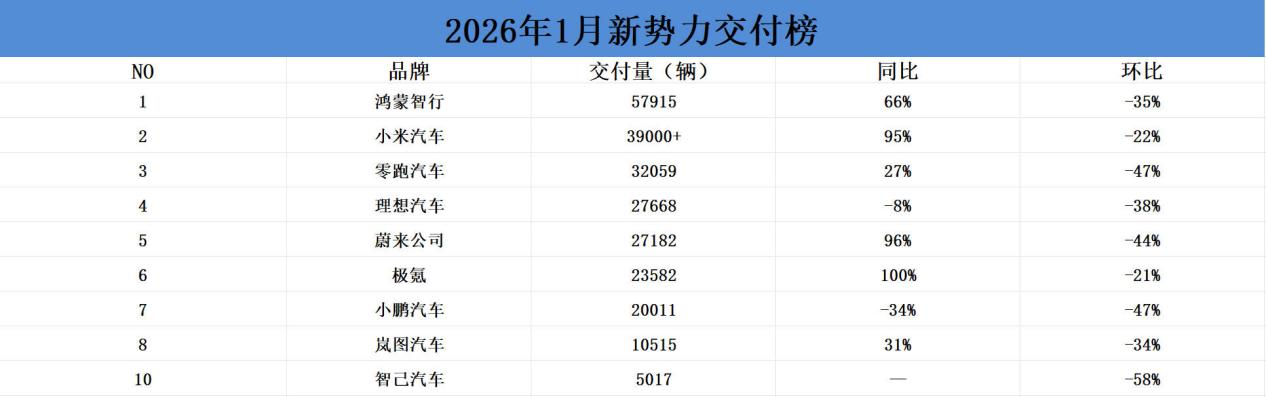
Core Viewpoint - The report from Everbright Securities highlights the focus on AI transformation in the automotive industry, particularly among new energy vehicle (NEV) manufacturers, while also addressing the pressure from rising raw material prices affecting profit margins. Group 1: AI Transformation in Automotive Industry - New energy vehicle companies are actively transitioning towards AI, especially in humanoid robotics, with Tesla planning to convert its Model S/X production line for humanoid robots, Xiaopeng announcing mass production of humanoid robots by 2026, and Li Auto establishing a humanoid robot team [1] Group 2: January NEV Performance - In January, the performance of NEVs was weak, with Li Auto's deliveries down 7.5% year-on-year and 37.5% month-on-month to 27,668 units; NIO's deliveries increased by 96.1% year-on-year but decreased by 43.5% month-on-month to 27,182 units; Xiaopeng's deliveries fell 34.1% year-on-year and 46.6% month-on-month to 20,011 units [1] Group 3: New Model Launches - Various NEV manufacturers launched updated models in January to meet tax requirements and enhance product competitiveness, including BYD's long-range versions of the Qin and Sea models, Xiaopeng's new P7+ and G7 models, and AITO's M7 long-range version [2] Group 4: Increased Purchase Incentives - Tesla is offering significant purchase incentives, including an 8,000 yuan insurance subsidy and low-interest financing for its Model 3 and Model Y vehicles, with delivery timelines ranging from 1 to 6 weeks [3] - Li Auto has maintained short delivery timelines for several models and extended purchase subsidies into February, while NIO and Xiaopeng have also introduced low-interest financing options across their vehicle ranges [4]

2026年1月新势力销量分析:头部洗牌激烈 鸿蒙智行登顶
Zhong Guo Zhi Liang Xin Wen Wang· 2026-02-03 07:07
Core Viewpoint - The new energy vehicle market in China is experiencing a seasonal downturn in January 2026, with most new car manufacturers showing a month-on-month decline in sales due to various factors such as the end of purchase tax subsidies and the upcoming Spring Festival [1] Group 1: Sales Performance - The top three new energy vehicle brands in January 2026 are Hongmeng Zhixing, Xiaomi Auto, and Leap Motor, all surpassing 30,000 units in sales [3] - Hongmeng Zhixing leads with 57,915 units sold, marking a 66% year-on-year increase, driven primarily by its core brand, Aito, which contributed over 40,000 units [2][3] - Xiaomi Auto achieved over 39,000 units, a 95% year-on-year increase, attributed to the YU7 model while preparing for the new generation SU7 launch [5] - Leap Motor sold 32,059 units, a 27% year-on-year increase, but faced a 46.9% month-on-month decline [7] Group 2: Second and Third Tiers - Li Auto delivered 27,668 units, experiencing a 7.5% year-on-year decline and a 37.5% month-on-month decline, attributed to its L series model being in the mid-product lifecycle [8] - NIO delivered 27,182 units, a 96.1% year-on-year increase but a 43.5% month-on-month decline, with the new ES8 model being a significant contributor [10] - Zeekr reported 23,582 units sold, a 99.7% year-on-year increase, but a 21.2% month-on-month decline, indicating its competitive position in the high-end electric vehicle market [11] - XPeng delivered 20,011 units, a 34% year-on-year decline and a 46.6% month-on-month decline, with the XPeng X9 model showing strong performance [13] - Lantu achieved 10,515 units, a 31% year-on-year increase, continuing its growth trend in January [13] - Zhiji faced a significant seasonal impact with 5,017 units sold, down from over 10,000 units at the end of 2025, but is expected to recover with new models [14] Group 3: Market Dynamics - The overall market performance in January indicates that new energy vehicle brands are facing month-on-month pressure, influenced by multiple external factors rather than a fundamental decline in market demand [16] - Future product iterations and market strategies will be crucial for new energy vehicle brands in maintaining competitiveness throughout the year [16]
问界M6最新预告 将于春季发布
Zhong Guo Zhi Liang Xin Wen Wang· 2026-02-03 07:07
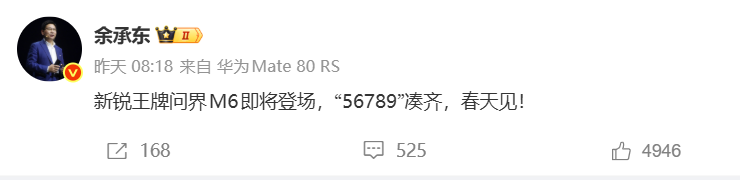
问界M6的外观造型延续家族式设计,采用封闭式格栅和狭长大灯,前包围造型运动,配有梯形进气口。车顶配备有激光雷达,预计搭载华为最新智能 驾驶辅助系统。车身侧面线条简洁流畅,此外,配备运动风格的五辐花瓣轮圈,大尺寸的红色制动卡钳以及半隐藏式车门把手。 车辆尾部目前能看到比较饱满圆润的造型,车顶后方延伸出扰流板并配备摄像头。贯穿式尾灯与下方的保险杠造型依旧延续整车运动感。动力方面,预 计提供增程和纯电版车型,续航表现可能进一步提升。 2月2日,华为常务董事、产品投资评审委员会主任、终端BG董事长余承东发文称:"新锐王牌问界M6即将登场,'56789'凑齐,春天见!"新车定位为中 大型SUV,将于春季正式发布。 问界M6的动力信息尚未公布,目前M7、M8、M9均提供增程和纯电两种动力形式,预计M6保持一致。 ...
华为云CEO周跃峰:聚产业之力,让医疗AI创新更简单
Sou Hu Cai Jing· 2026-02-03 06:56
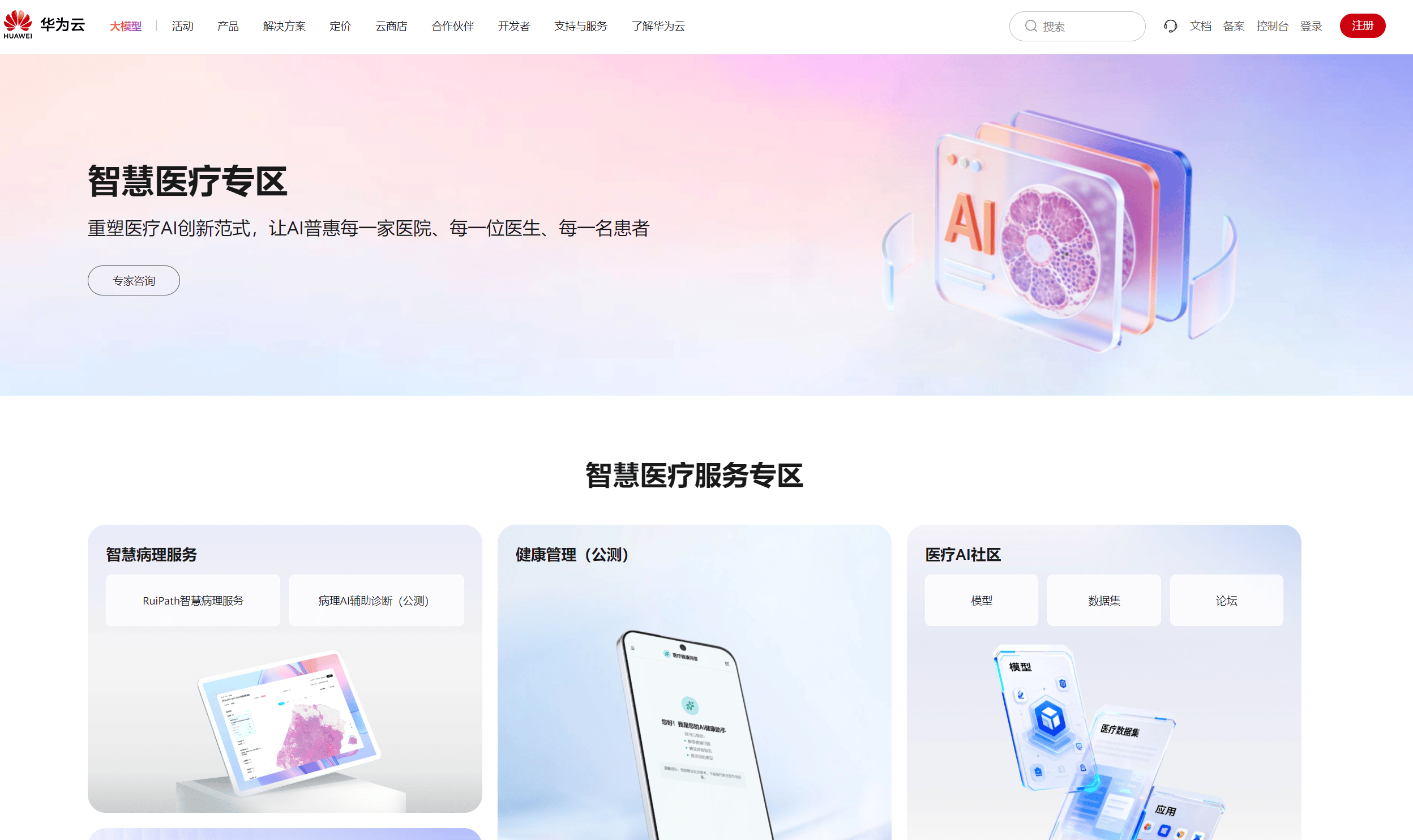
2月1日,医疗人工智能协同创新论坛暨医疗人工智能联盟(筹)2026年第一次学术会议在上海练秋湖华为研发中心举办。华为云在会上发布"行业AI梦工 厂"首个专区——智慧医疗专区,明确在医疗AI领域的布局,目标以技术创新破解医疗资源均衡难题,推动医疗AI普惠。 第二项重磅举措,是华为云"行业AI梦工厂"首个专区——智慧医疗专区的正式推出。据周跃峰介绍,技术只有解决行业问题,才能创造真正价值。该专区深 度融合了瑞金医院等头部医疗机构的先进临床经验,以及华为在ICT、云、AI等领域的技术沉淀与实践成果。它将为基层医院及医生、合作伙伴、开发者提 供一套覆盖场景、模型、平台到社区的端到端支撑体系,让AI真正普惠每一家医院、每一位医生、每一名患者。 第三项举措是关于生态建设。周跃峰强调,医疗AI的普惠从来不是一家企业能单独完成的使命,生态共筑才是关键,要聚产业之力,共建共享,才能让医 疗AI创新更简单。华为呼吁更多医疗机构、科技企业和开发者加入进来,共同建设智慧医疗专区。通过共建共享领先的行业模型、高质量数据集、场景化 应用与AI工具链,降低医疗AI创新的门槛,加速医疗AI的规模化落地与普惠应用。 从夯实数字底座到打造智慧医 ...