华润啤酒

Search documents
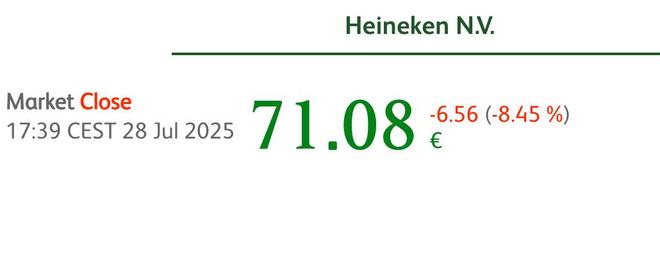
喜力啤酒业绩下行股价大跌8% 中国成增长救星|酒业财报观察
2 1 Shi Ji Jing Ji Bao Dao· 2025-07-29 04:20
Core Insights - Heineken's revenue for the first half of 2025 was €16.924 billion, with a volume of 11.64 million hectoliters and an operating profit of €1.433 billion, all showing a year-on-year decline [1] - The company attributed part of the revenue decline to the strength of the euro, but reported organic growth in net revenue of 2.1%, organic growth in revenue per hectoliter of 3.3%, and organic growth in operating profit of 7.4% compared to the first quarter [1] Group 1: Market Performance - Global beer sales for Heineken decreased by 1.2% compared to the same period last year, with Europe experiencing the largest decline [2] - In Europe, net revenue fell by 4% and sales volume dropped by 4.7%, attributed to stalled negotiations in Western Europe and declining sales in Poland and Austria [2] - The Americas saw a smaller decline, with net revenue down 0.8% and sales volume down 1.2%, as growth in Mexico was offset by declines in Brazil and the U.S. [2] Group 2: Regional Growth - The Asia-Pacific and Africa-Middle East markets, which are smaller than Europe and the Americas, showed significant growth, with Africa-Middle East net revenue increasing by 19.8% and operating profit rising by 102.8% [4] - The Asia-Pacific market saw the highest beer sales growth, with an organic increase of 3.1%, driven by strong performances in Vietnam, India, Myanmar, and Laos [4] - In China, Heineken's licensed beer sales grew by over 30%, with specific brands like Heineken Silver and Red爵 seeing substantial increases [4] Group 3: Marketing Strategy - Heineken has intensified its marketing efforts in China, becoming an official supplier for the "Super League" alongside local brands, marking a shift from its previous sponsorship of only top-tier international events [5] - The company maintains its forecast for organic operating profit growth of 4% to 8% for the year, consistent with prior expectations [5]


食饮:二季报前瞻及当前如何看待板块投资机会?
2025-07-29 02:10
Summary of Key Points from Conference Call Records Industry Overview - **Food and Beverage Sector**: The overall situation in the food and beverage sector is currently at a historical low in institutional holdings, with the food and beverage index declining for four consecutive years since 2021. The fundamentals and expectations are also at low levels, making it a potential time for bottom-fishing opportunities [2][3][4]. Key Insights and Arguments - **Snack Sector**: The snack sector is expected to rebound as new products are launched and the third quarter enters a peak sales season. Short-term data is anticipated to improve, with a significant verification point in Q1 2026 during the Chinese New Year, which is expected to show impressive growth due to a low base [1][3]. - **Konjac Products**: The konjac category continues to grow, with companies like Wei Long and Yan Jin adjusting their SKUs and channels, leading to short-term performance pressure. Yan Jin is expected to maintain a growth rate of 20-25% in the second half of the year [1][4]. - **Wan Chen Company**: The resignation of the chairman and the appointment of new management is seen as a positive development. The company is expected to open 1,000 to 2,000 new stores in the first half of the year, with a projected net profit of around 250 million RMB [1][5]. - **Frozen Food Sector**: The frozen food sector is under pressure, with Anji experiencing single-digit revenue growth and profit decline due to various factors including a ban on alcohol and price fluctuations. The company aims for close to 10% revenue growth in the second half of the year [1][7]. Additional Important Content - **Diverse Performance Among Snack Companies**: Companies like Yan Jin and Wei Long are performing well, while others like Gan Yuan are facing challenges due to channel changes. Gan Yuan's revenue is expected to remain flat or slightly decline, and the company is focusing on new product promotions [1][6]. - **Beer and Seasoning Sectors**: The beer sector faced challenges in Q2 due to external factors and a ban on alcohol, but cost reductions have helped maintain overall industry profits. Recommended companies include Yanjing, Zhujiang, and China Resources [2][9]. - **Dairy Sector**: The dairy sector is experiencing a high level of activity, driven by travel and hot weather. Companies like Yili and Mengniu are expected to show improved performance, with Yili's liquid milk revenue expected to remain stable [2][20]. - **Market Dynamics**: The market for soft drinks and dairy products is competitive, with companies like Nongfu Spring recovering from a low base and showing significant growth. The decline in PET prices is beneficial for profit margins [2][16][17]. Conclusion The food and beverage sector is currently navigating through a challenging environment, with varying performances across different categories. Opportunities for investment exist, particularly in the snack and dairy sectors, while caution is advised in the frozen food and beer sectors due to ongoing pressures.
如何看待当前啤酒板块投资机会
2025-07-28 01:42
Summary of Beer Industry Conference Call Industry Overview - The beer industry experienced a slight increase in sales in Q2 2025, with most companies achieving low single-digit growth. Budweiser continued to decline, while Chongqing remained flat, Qingdao and China Resources grew by approximately 2%, Zhujiang increased by 3-4%, and Yanjing saw low single-digit growth [1][5] - Cost benefits persisted with improved prices for barley and packaging materials, leading to expectations of mid to high single-digit profit growth for the industry in Q2, with the first half nearing high single-digit profit increases [1][5] Key Insights and Arguments - The impact of alcohol bans in Q3 is expected to be significant, especially in northern regions, although social media corrections may mitigate this effect. Hot weather is anticipated to aid in sales recovery, with July sales for China Resources and Qingdao expected to show positive growth, while Zhujiang faces short-term pressure [1][6][7] - 2025 is marked by significant management changes across the beer industry, with companies like Qingdao, China Resources, Zhujiang, and Budweiser adjusting leadership to focus more on market share and competitive strategies [1][8] - Qingdao is prioritizing the South China market, fresh beer, and instant retail, while China Resources is increasing sales KPI assessments. Budweiser is investing more in core products, and Zhujiang plans to expand outside its province [1][9] High-End Beer Market Performance - From 2021 to 2023, the high-end beer market maintained double-digit growth in the 8 yuan and above price range, even during the pandemic-affected year of 2022. However, the pace of premiumization has slowed due to ongoing weakness in the dining sector [3][4] - Yanjing's U8 product is expected to grow by 30% this year, reaching 900,000 tons, with a long-term target of 1.2 million tons. The net profit margin is projected to improve to around 10% through efficiency gains [3][10] Company-Specific Developments - China Resources is expected to see over 2% sales growth in the first half of 2025, with profits likely to achieve low double-digit growth. The departure of key personnel has been absorbed, and the transition is expected to be smooth due to the new CEO's experience in the beer business [11] - Budweiser faces challenges in Guangdong due to its reliance on large distributors and a focus on high-end products, which limits its distribution effectiveness. Without attractive new products, Budweiser risks losing market share to competitors like Zhujiang [12] Conclusion - The beer industry is navigating a complex landscape with varying growth rates among companies, management changes, and external pressures such as alcohol bans and market competition. The focus on market share and product innovation will be crucial for sustaining growth in the coming quarters [1][8][12]
啤酒巨头中年危机,1300亿精酿围城,谁能破局同质化内卷?
Tai Mei Ti A P P· 2025-07-27 08:56
Core Insights - The beer industry in China is experiencing a generational divide, with traditional industrial beers seeing a decline in consumption while craft beers are gaining popularity among younger consumers [2][10][11] - In 2022, the beer industry revenue in China fell by 5.7%, making it the only category in the food and beverage sector to experience negative growth [1][2] - The craft beer market is projected to reach 130 billion yuan by 2025, with a 17% annual growth rate, significantly outpacing the decline of industrial beers [2] Industry Trends - The traditional beer market is characterized by high price sensitivity among consumers, particularly among older generations who prioritize affordability over taste [5][6][10] - Local beer brands have a strong understanding of their regional consumers, but the high transportation costs limit their ability to expand nationally [4][9] - The shift in consumer demographics, with younger generations less reliant on alcohol for stress relief, has led to a decline in traditional beer consumption [10][11] Consumer Behavior - Younger consumers are increasingly seeking unique flavors and experiences, leading to a rise in demand for craft beers that offer diverse taste profiles [11][13] - The consumption patterns of younger generations emphasize moderation and quality, with many preferring to drink less but enjoy higher-quality beverages [11][12] - Emotional connections and social experiences are becoming crucial for brands to engage younger consumers, prompting a shift in marketing strategies [14][15] Market Dynamics - The beer market is witnessing intense competition, with brands innovating rapidly to capture consumer interest through unique flavors and marketing campaigns [16][17] - Price competition is becoming a significant issue, with brands risking quality in an attempt to attract price-sensitive consumers [17][18] - The craft beer segment is expanding rapidly, driven by changing consumer preferences and the desire for new experiences [13][16]
能源化工短纤、瓶片周度报告-20250727
Guo Tai Jun An Qi Huo· 2025-07-27 07:45
Report Information - Report Title: Short Fiber and Bottle Chip Weekly Report [1] - Report Date: July 27, 2025 [1] - Analyst: Chen Xinchao, He Xiaoqin; Contact: Qian Jiayin [1] Industry Investment Rating - Not provided in the report Core Views - Short fiber: Supported by cost, it is expected to fluctuate strongly in the short term, but there is still pressure in the medium term [7] - Bottle chip: Supported by cost, it will fluctuate in the short term, with a tight balance in July - August and restocking after September [8][94] Summary by Section Short Fiber (PF) Supply - Factory new production cuts are few. The average weekly factory operating rate is 90.6%, and the spinning direct - spun polyester staple operating rate is 94.7%, expected to remain or slightly increase [7] Demand - Terminal weaving starts to bottom out, but yarn is still reducing load due to high inventory. External demand orders will be reflected in mid - to late August. Short fiber inventory is healthy, with 1.4D equity inventory at 9.8 days and physical inventory at 21.7 days this week [7] View - Supported by cost, it fluctuates strongly in the short term. The demand side bottoms out and fluctuates at a low level in the short term. The most difficult seasonal time may have passed [7] Valuation - The current spot processing fee is 1,000 - 1,050 yuan/ton, and the 09 contract processing fee is compressed to 850 - 900 yuan/ton, with a slightly high - neutral valuation [7] Strategy - Unilateral: Roll long in the short - term range, with pressure in the long - term; Inter - period: None; Inter - variety: Take profit on long PR and short PF positions at high levels [7] Bottle Chip (PR) Supply - Leading factories' production cuts have been implemented, with a low possibility of further cuts. The current operating rate is 79%. If the processing fee recovers, restarts may be advanced [8] Demand - Domestic downstream demand remains high, and downstream restocks on dips. After the production cuts, bottle chips are expected to have a slight destocking pattern in July - August [8] View - Supported by cost, it fluctuates in the short term. The destocking expectation in July - August is considerable, and the processing fee still has room to expand, but there is pressure in the long term [8] Valuation - The current processing fee is 350 - 400 yuan/ton, which is neutral - low and expected to rise slowly [8] Strategy - Unilateral: Roll long in the short - term range, and short at high levels in the long - term; Inter - period: None; Inter - variety: Take profit on long PR and short PF positions at high levels [8] Other Aspects - "Anti - involution" impact: It may increase costs, but has little impact on supply [11] - Sea freight: It has decreased, and the impact on exports in June - July has weakened [16] - Base and spread: The basis and inter - month spread have weakened as the futures price rises faster than the spot price [21][99] - Price and spread: The price has risen this week, and the FOB price is 800 - 815 US dollars/ton. The substitution spread shows different trends [24][27] - Production and operation rate: The effective production capacity has reached 2,168 million tons, and the current operating rate has dropped to 79.7% [32] - Raw material operation: PTA has slightly increased inventory, and MEG has seen changes in load and inventory [43][44] - Cost and profit: The polymerization cost has risen, the processing fee has stabilized, and the export profit has weakened [48] - Inventory: Factory inventory has remained flat this week, and destocking is expected after production cuts [53] - Device changes: Production cuts have been implemented as planned, and no future major device overhauls are expected [59][60] - Demand - Downstream load remains high, with beverage, edible oil, and sheet material industries showing different operating rates [63] - 2025 Q1 - Q2 beverage consumption was weak year - on - year, but there are new production lines to be put into operation [69][70] - Edible oil demand is neutral, and sheet material demand is average, with improved supermarket consumption [72][75] - Global trade flow: Overseas demand increasingly depends on imports, and China's main export flows are to Southeast Asia, South Asia, Central Asia, and other regions [79] - Export situation: In June 2025, the export volume was 657,000 tons, a year - on - year increase of 6.5%. There are short - term disturbances but a strong long - term trend [82] - Anti - dumping policy: Multiple countries have implemented anti - dumping policies on Chinese bottle chips [93] - Supply - demand balance: A tight balance in July - August and restocking after September, with assumptions about supply and demand [94][95]
食饮行业周报(2025年7月第4期):白酒胜在深秋,中报密集披露期将至-20250726
ZHESHANG SECURITIES· 2025-07-26 11:36
Investment Rating - The industry rating is maintained as "Positive" [3] Core Views - The white liquor sector is experiencing a rebound due to policy catalysts and sector rotation, with a focus on new consumer products represented by "Jiu Gui · Zi You Ai" and "Da Zhen" [1][17] - The upcoming reporting period for consumer goods is expected to show mixed results, with short-term adjustments in Q2 performance, but long-term growth potential remains [1][29] - Recommended stocks include Guizhou Moutai, Shanxi Fenjiu, and Zhujiang Liquor for white liquor, and Weidong Delicious, Wancheng Group, and others for consumer goods [1][2][17] Summary by Sections White Liquor Sector - The white liquor sector has shown a positive performance with a 0.95% increase in the index from July 21 to July 25, 2025 [3][4] - Key stocks with notable increases include Tianyoude Liquor (+6.80%), Yingjia Gongjiu (+3.58%), and Zhenjiu Lidu (+3.50%) [4][39] - The report emphasizes the importance of selecting leading brands with strong momentum and high dividend yields, suggesting that the current price decline for top liquor companies may be limited [1][17] Consumer Goods Sector - The consumer goods sector is undergoing a structural adjustment, but long-term opportunities remain clear, particularly for trend-aligned stocks [2][29] - The report highlights the importance of focusing on stocks that align with new consumption trends, such as quality consumption and emotional value [2][29] - Recommended stocks in this sector include Weidong Delicious, Wancheng Group, New Dairy, and others, with a focus on those showing strong performance and potential for market share growth [2][29] Market Performance - From July 21 to July 25, 2025, the Shanghai and Shenzhen 300 Index rose by 1.69%, with frozen foods and seasoning products leading the gains [2][35] - The report notes that while some sectors like dairy products and other liquors saw declines, the overall market sentiment remains positive for consumer goods [2][35] Key Company Updates - Guizhou Moutai announced the establishment of a new subsidiary with a registered capital of 1 billion yuan [11] - Shanxi Fenjiu launched a new product, Qinghua Fenjiu 30, which has received positive market feedback [12] - Yingjia Gongjiu's new product "Jiu Gui · Zi You Ai" has been well-received, indicating strong consumer interest [14]






精酿啤酒成济南夏日新宠,三新趋势引领消费热潮
Sou Hu Cai Jing· 2025-07-25 14:22
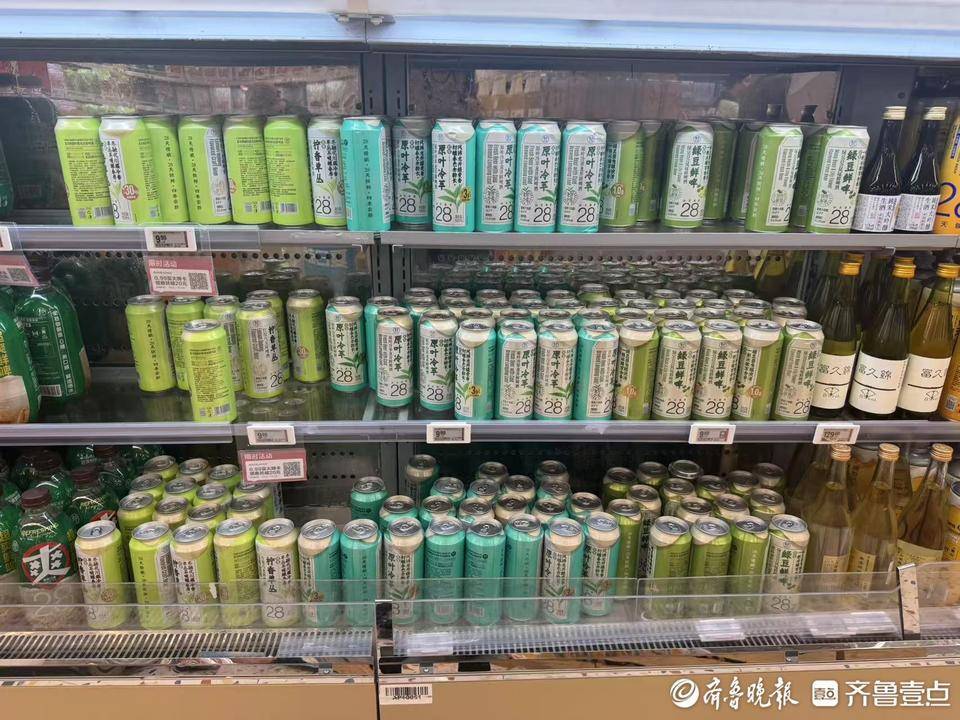
Core Insights - The craft beer market in Jinan is experiencing a surge in popularity, particularly among young consumers, driven by diverse flavors and competitive pricing [1][2] - Sales of craft beer have seen explosive growth, with craft beer accounting for 88% of beer sales in some supermarkets in June [1] - Major brands are expanding their craft beer offerings to capture market share, while local brands are also increasing production capacity [2][5] Group 1: Market Trends - Craft beer has become a star product in various supermarkets and convenience stores in Jinan, with sales increasing by 20-30% compared to previous years [2] - New flavors such as mung bean and cold brew green tea are particularly popular among young consumers, with some flavors seeing sales increases of over 200% [2] - The shift from niche to mainstream consumption is evident as craft beer is increasingly seen as an everyday beverage [2] Group 2: Pricing Strategies - Recent price reductions have made craft beer more accessible, with significant price drops on popular products [3] - For example, the price of a 1L German-style wheat beer has decreased from 19.9 yuan to 13.9 yuan, and a 500ML fruit-flavored craft beer has dropped from 19.9 yuan to 9.9 yuan [3] - This pricing strategy aims to attract more consumers and encourage trial among new customers [3] Group 3: Industry Dynamics - The craft beer market is evolving towards affordability, with a focus on everyday consumption scenarios such as home drinking and family gatherings [5] - Industry experts suggest that while competition intensifies, there is still room for price reductions without compromising quality [5] - Brands are encouraged to adopt a product strategy that balances cost optimization with quality assurance to maintain competitiveness [5]
日用玻璃行业绿色转型蹄疾步稳
Xiao Fei Ri Bao Wang· 2025-07-25 03:38
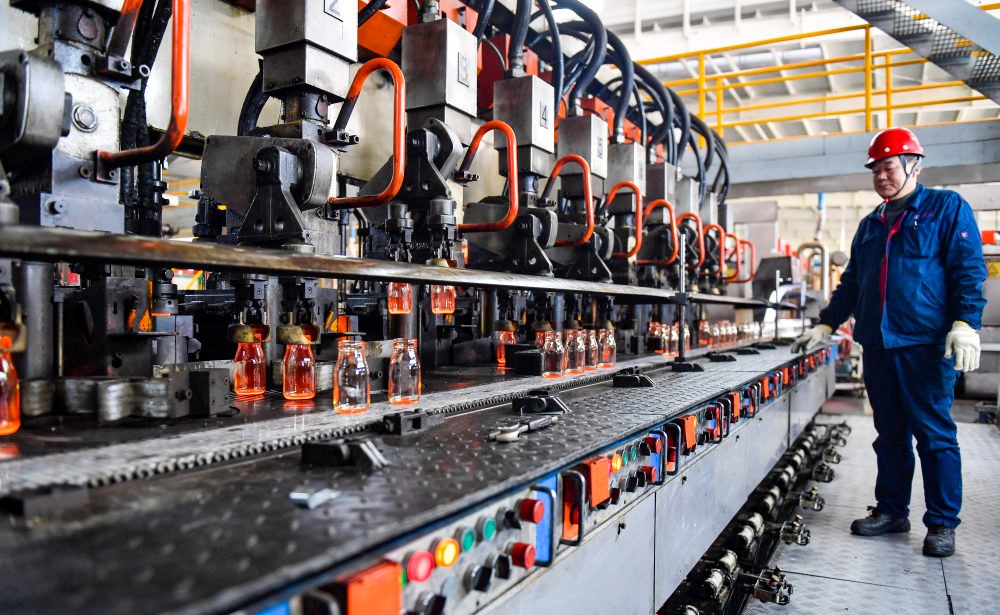
Group 1 - The technical review meeting in Anyang, Henan, approved the group standard for "Design Specification for All-Oxygen Combustion Glass Kilns," which is expected to promote green development in the daily glass industry [1] - The daily glass industry in China has been actively exploring paths for green productivity, achieving comprehensive transformation in energy and product structures [2] Group 2 - The Ministry of Ecology and Environment issued a notice in 2019 to enhance the elimination of backward production capacity and non-compliant industrial kilns, accelerating the clean and low-carbon replacement of fuels [3] - Yongsheng Glass Technology Co., Ltd. was the first in the country to complete the upgrade to "electricity instead of coal," directly replacing gas-fired kilns with electric melting glass kilns [3] - The domestic technology for electric melting glass kilns has rapidly advanced, with companies like Huafu Glass achieving significant improvements in green production [3] Group 3 - Huafu Glass has established a research and development team of over 30 people and partnered with well-known universities to enhance its R&D capabilities [6] - The all-electric melting kiln designed by Huafu Glass can produce 96 tons of glass daily, with a power consumption of only 0.8 kilowatt-hours per kilogram of glass liquid, which is a reduction of 0.2 kilowatt-hours compared to traditional electric melting furnaces [6] Group 4 - Lightweight bottles can achieve over 20% weight reduction and more than 15% energy savings compared to non-lightweight products, effectively reducing energy consumption and costs [7] - Huaxing Glass, located in Putian, Fujian, is the largest intelligent lightweight glass packaging manufacturing project globally, producing approximately 140 million beer bottles monthly [7] - Lightweight bottles are being progressively adopted in various sectors, including beer, liquor, condiments, and pharmaceuticals, with significant carbon reduction effects reported [7]
精酿啤酒打响夏日“突围战”,济南市场现“三新”消费趋势
Qi Lu Wan Bao Wang· 2025-07-25 02:35
Core Viewpoint - The craft beer market is experiencing a surge in popularity, particularly among young consumers, driven by new flavors, competitive pricing, and diverse consumption scenarios [1][2][3]. Group 1: Market Trends - Craft beer is becoming a dominant choice in supermarkets, with sales showing explosive growth compared to previous years, particularly in June where craft beer accounted for over 88% of beer sales in some stores [2][3]. - Young consumers are the primary drivers of this trend, with many seeking out unique flavors such as jasmine tea and ice sugar hawthorn [2][3]. - The overall sales of craft beer in various retail outlets have increased by 20-30% compared to last year, indicating a shift from niche to mainstream consumption [3][5]. Group 2: Pricing Dynamics - The pricing of craft beer has become more competitive, with many products now priced below 20 yuan per bottle, making them more accessible to consumers [5][6]. - Major brands like Qingdao Beer and Yanjing are rapidly expanding their craft beer production capabilities to capture market share, with local brands like Quancheng Craft Beer also increasing production [5][6]. - Retailers are leveraging their supply chain advantages to introduce private label craft beers at lower price points, further driving down prices in the market [6][7]. Group 3: Consumer Behavior - Consumers are increasingly making rational purchasing decisions, comparing prices across different brands before buying [5][6]. - The demand for craft beer is shifting from a focus on novelty to practicality, with consumers prioritizing affordability and quality for home consumption and social gatherings [6][7]. - The industry is expected to continue evolving towards a more affordable segment without compromising quality, as competition intensifies [6][7].
解码国内叶黄素行业趋势:儿童市场成必争之地,尚无龙头品牌领航
Bei Ke Cai Jing· 2025-07-25 01:30
Core Insights - The increasing prevalence of electronic devices has heightened awareness of the potential visual hazards associated with prolonged screen exposure, leading to a surge in demand for lutein as a vital nutrient for eye health [1][3] - The children's market for lutein products has become a competitive battleground, driven by rising concerns among parents regarding children's vision health [1][15] Market Overview - The domestic market for lutein is estimated to reach nearly 6 billion yuan, with a compound annual growth rate (CAGR) of 19.8% from 2020 to 2024, significantly outpacing global market growth [4][3] - The eye care sector is the primary contributor to market growth, with annual sales of lutein soft capsules exceeding 200 million bottles [4] Competitive Landscape - The lutein market is characterized by intense competition across both health food and regular food sectors, with no dominant brand currently leading the market [2][20] - Major players in the extraction and processing segment include Chenguang Biotech, DSM, and Kemin, creating a "three-legged" competitive structure [4] Product Development - The market has seen a rapid increase in the registration of lutein health products, with over 150 products registered, primarily in capsule form [7][8] - Innovative product forms such as gummies and ready-to-drink beverages are gaining popularity, with the market for lutein gummies expected to exceed 1.5 billion yuan by 2024 [11] Consumer Trends - The demand for lutein products is driven by the rising incidence of myopia among children, with the overall myopia rate in Chinese children reaching 51.9% [18] - The average price of imported lutein products is significantly higher than that of domestic products, with imported items often exceeding 100 yuan per unit [17] Regulatory Environment - Lutein products are primarily classified as health foods and must undergo a registration process, as they are not included in the approved health food ingredient directory [9][14] - The lack of a clear definition for dietary supplements in China has led to many imported lutein products being marketed as regular foods, despite their health claims [13] Future Outlook - The lutein market is expected to continue evolving, with a focus on product differentiation and innovation to address the challenges of market saturation and consumer trust [20][22] - Companies are encouraged to invest in research and development to create unique products that can withstand competition and avoid the pitfalls of market homogenization [22]