中国联通

Search documents
eSIM全面上线 通信业迈向“无卡化”时代
Zhong Guo Jing Ji Wang· 2025-11-14 09:40
Core Insights - The approval of eSIM mobile services by China's three major telecom operators marks a significant step towards the commercialization of eSIM technology in the mobile sector, transitioning the information and communication industry towards a "cardless" era [1][2][3] Group 1: Industry Developments - The eSIM technology integrates the functionality of a physical SIM card into a built-in chip within the phone, allowing users to download their number over the air without needing a physical card [1] - The eSIM industry encompasses various segments, including chip design and manufacturing, platform operation, network services, terminal integration, and application scenarios, presenting opportunities for restructuring the industry ecosystem [1][3] Group 2: Market Adoption - China Unicom has reported over 170,000 pre-orders for eSIM cards since the launch of its reservation system, indicating strong consumer interest [2] - China Telecom and China Mobile have also launched eSIM services nationwide, with China Mobile planning to support a full range of eSIM products across various devices, including smartwatches and tablets, facilitating seamless connectivity [2] Group 3: Future Projections - According to GSMA Intelligence, global eSIM smartphone connections are expected to reach 1 billion by the end of 2025 and grow to 6.9 billion by 2030, representing 76% of total smartphone connections worldwide [2] Group 4: Technological Advancements - The introduction of eSIM services is anticipated to lead to richer terminal forms and enhanced user experiences, as well as increased business opportunities for industry partners [3] - Companies are focusing on developing eSIM products that support both traditional physical SIM cards and eSIM technology, alongside efforts to innovate in eSIM chip and operating system technologies [3]
昆明呈贡数智产业崛起 打造面向南亚东南亚算力枢纽
Zhong Guo Xin Wen Wang· 2025-11-14 08:53
Core Insights - The article emphasizes the importance of digital technologies such as big data and artificial intelligence in driving economic and social development, particularly in the context of China's "14th Five-Year Plan" [1] - Yunnan Province aims to establish Kunming as an international communication hub and digital industry center, leveraging its advantages in low latency and high stability [1][3] Group 1: Economic Development - Chenggong District has set a goal to become a "Modern Science and Education Innovation City," focusing on digital economy and infrastructure development, which has led to a significant economic transformation [3][4] - In 2024, Chenggong's GDP reached 71.9 billion, marking a year-on-year growth of 7.9%, the highest in Kunming, with industrial output increasing by 34.1% [4][5] - The digital economy's revenue surged from 1.256 billion to 8.432 billion, with its share of total revenue rising from 3.8% to 20.2% [7] Group 2: Infrastructure Development - The region is focusing on building a regional international computing power industry cluster, with significant investments in computing infrastructure [8] - The Kunming Wanxichong Intelligent Computing Industry Park has been established, featuring 19,300 square meters of data center space and a computing power capacity of 2,935P [8][9] - Key projects include the Yunnan Provincial Information Center and China Mobile's data center, which will enhance the region's computing capabilities and support the "East Data West Computing" strategy [9][11] Group 3: Industry Ecosystem - Chenggong is transitioning from industry aggregation to ecosystem construction, aiming to create a collaborative environment for the digital economy [12] - The district is leveraging its educational resources to support data labeling and AI model development, with partnerships between universities and enterprises [12][13] - The establishment of a data labeling demonstration zone aims to attract talent and companies, enhancing local capabilities in data processing and AI applications [13] Group 4: Future Outlook - Chenggong is positioned to become a key player in the digital economy, with plans to support digital exports to South and Southeast Asia [14][15] - The district's strategic initiatives are expected to contribute significantly to the national digital economy, aligning with China's modernization goals [17]

港股央企红利50ETF(520990)跌0.81%,成交额1.69亿元
Xin Lang Cai Jing· 2025-11-14 07:11
来源:新浪基金∞工作室 流动性方面,截止11月14日,港股央企红利50ETF(520990)近20个交易日累计成交金额32.80亿元,日 均成交金额1.64亿元;今年以来,210个交易日,累计成交金额271.80亿元,日均成交金额1.29亿元。 港股央企红利50ETF(520990)现任基金经理为龚丽丽、汪洋。龚丽丽自2024年7月25日管理(或拟管 理)该基金,任职期内收益29.07%;汪洋自2025年7月15日管理(或拟管理)该基金,任职期内收益 14.19%。 最新定期报告显示,港股央企红利50ETF(520990)重仓股包括中国石油股份、中国移动、中国神华、 中国海洋石油、中远海控、中国石油化工股份、中国电信、中国联通、中煤能源、华润置地,持仓占比 如下。 股票代码股票名称持仓占比持仓股数(股)持仓市值(元)00857中国石油股份10.88%7257.80万4.69亿 00941中国移动10.33%577.45万4.45亿01088中国神华9.72%1233.40万4.19亿00883中国海洋石油 9.54%2365.60万4.11亿01919中远海控8.43%3288.45万3.64亿00386中国 ...
港股通央企红利ETF天弘(159281)跌1.12%,成交额3804.08万元
Xin Lang Cai Jing· 2025-11-14 07:10
Core Viewpoint - The Tianhong CSI Hong Kong Stock Connect Central State-Owned Enterprises Dividend ETF (159281) experienced a decline of 1.12% in its closing price on November 14, with a trading volume of 38.04 million yuan [1]. Group 1: Fund Overview - The Tianhong CSI Hong Kong Stock Connect Central State-Owned Enterprises Dividend ETF was established on August 20, 2025, with an annual management fee of 0.50% and a custody fee of 0.10% [1]. - As of November 13, the fund had a total of 213 million shares and a total size of 229 million yuan [1]. - The fund's performance benchmark is the CSI Hong Kong Stock Connect Central State-Owned Enterprises Dividend Index, adjusted for valuation exchange rates [1]. Group 2: Liquidity and Performance - Over the past 20 trading days, the fund has accumulated a total trading amount of 1.069 billion yuan, with an average daily trading amount of 53.45 million yuan [1]. - The current fund manager, He Yuxuan, has managed the fund since its inception, achieving a return of 7.34% during the management period [1]. Group 3: Top Holdings - The top holdings of the fund include: - COSCO Shipping Holdings (0.85% holding, 218,000 shares, market value of 2.9175 million yuan) [2] - Orient Overseas International (0.40% holding, 10,500 shares, market value of 1.3717 million yuan) [2] - China Foreign Transport (0.33% holding, 270,000 shares, market value of 1.1396 million yuan) [2] - China Petroleum (0.32% holding, 162,000 shares, market value of 1.0973 million yuan) [2] - CITIC Bank (0.32% holding, 175,000 shares, market value of 1.1136 million yuan) [2] - CNOOC (0.29% holding, 58,000 shares, market value of 1.0041 million yuan) [2] - China Shenhua Energy (0.29% holding, 30,500 shares, market value of 982,600 yuan) [2] - China Pacific Insurance (0.29% holding, 164,000 shares, market value of 1.0107 million yuan) [2] - China Unicom (0.28% holding, 104,000 shares, market value of 952,800 yuan) [2] - Agricultural Bank of China (0.27% holding, 189,000 shares, market value of 933,900 yuan) [2].


中原证券:北美云厂商继续上调资本开支 硅光助力AI网络规模化扩展
智通财经网· 2025-11-14 06:21
Core Viewpoint - The report highlights significant growth in capital expenditure among major cloud service providers and anticipates a robust expansion in the data center optical device market driven by advancements in AI and high-speed optical products [1][3]. Group 1: Cloud Service Providers - In Q3 2025, the combined capital expenditure of the four major North American cloud service providers reached $112.43 billion, marking a year-on-year increase of 76.9% [1][3]. - The demand for optical devices is expected to grow steadily due to the ongoing deployment of 400G/800G products, driven by AI development and the construction of large data centers [1][3]. - The overall supply of high-speed optical chips is tight, prompting domestic and international manufacturers to accelerate capacity expansion and process upgrades [1][4]. Group 2: Telecommunications Industry - In the first nine months of 2025, the total revenue from telecommunications services in China reached 1.327 trillion yuan, reflecting a year-on-year growth of 0.9% [1]. - By September 2025, 5G mobile phone users accounted for 63.9% of total mobile phone users, with a monthly data usage (DOU) of 21.23GB per user, up 15.5% year-on-year [1]. - The three major telecom operators are focusing on key sectors such as industrial manufacturing, digital government, healthcare, education, and energy, leveraging cloud-network integration and new digital technologies [1]. Group 3: Optical Module Market - In September 2025, China's optical module exports totaled 27.78 billion yuan, a year-on-year decrease of 15.0%, while exports from provinces like Sichuan and Hubei showed significant month-on-month increases [3]. - The optical device market is projected to grow over 60% by 2025, primarily due to the increasing deployment of advanced optical products [3]. - The silicon photonics market is expected to expand from $27.8 million in 2024 to $2.7 billion by 2030, with a compound annual growth rate (CAGR) of 46% [3]. Group 4: Investment Recommendations - The report suggests focusing on the optical communication sector, highlighting the optimistic capital expenditure outlook for leading cloud providers and the ongoing demand for optical devices [4]. - For AI smartphones, the report notes that technological innovations and upgrades may enhance user experience and improve average selling prices and profit margins [4]. - The telecom operators are identified as quality dividend assets, with expectations for increased cash dividends and stable operational performance [5].

紫牛热点︱青海联通信号突然中断!用户公交难乘烧烤买单尴尬
Yang Zi Wan Bao Wang· 2025-11-14 03:19
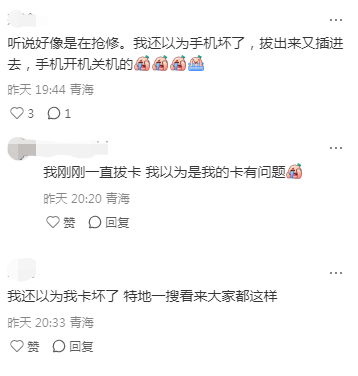
Core Points - On November 13, users in multiple areas of Qinghai reported sudden signal interruptions from China Unicom, affecting their ability to make payments and use public transport [1][4] - Users expressed frustration on social media, with many initially believing the issue was with their devices rather than the network [4] - China Unicom issued an apology on the evening of November 13, confirming that the signal disruption was due to a network fault, which has since been resolved [4] User Reactions - Users reported significant inconvenience, with one individual stating they had to walk home in cold weather due to the lack of signal [4] - Many users attempted to troubleshoot their devices, including restarting their phones and toggling airplane mode, before realizing the issue was with the network [4] - A specific incident was highlighted where a user was unable to pay for food at a barbecue restaurant due to the signal loss, illustrating the practical impact of the outage [4] Company Response - China Unicom acknowledged the issue and expressed gratitude for users' patience and understanding during the outage [4] - The company confirmed that the network fault has been repaired, restoring service to affected users [4]

通宇通讯:公司已在射频通信领域拥有授权专利700多项
Ju Chao Zi Xun· 2025-11-14 02:19
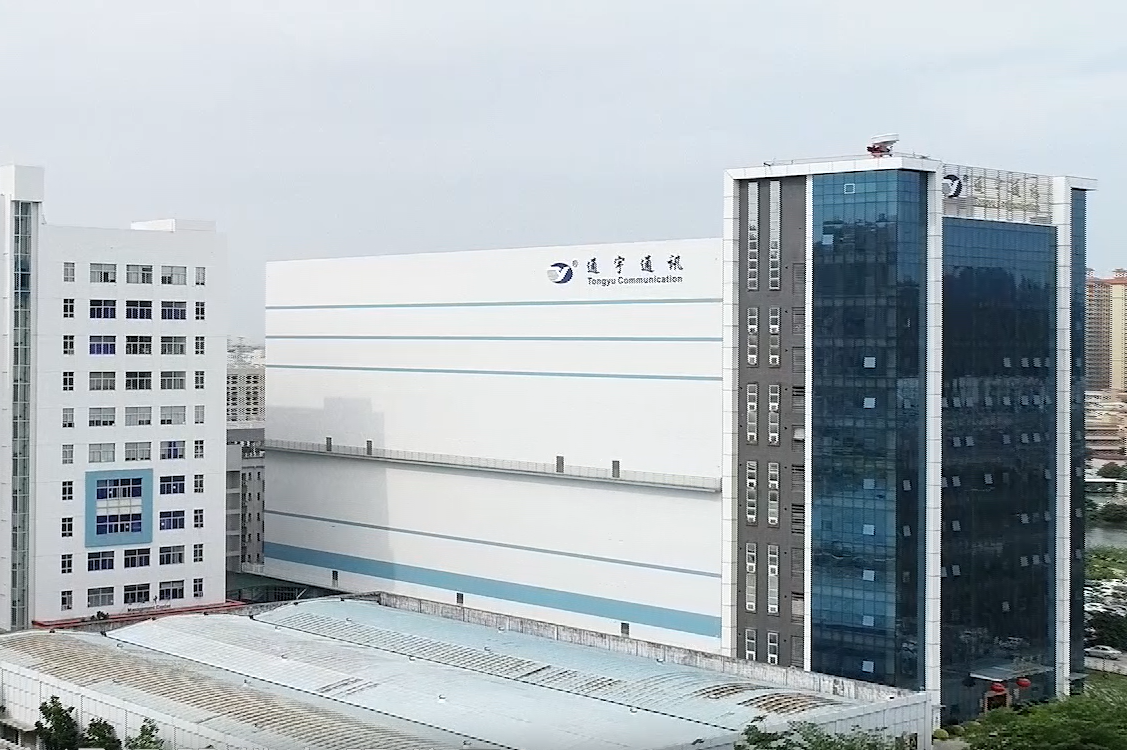
Core Insights - Tongyu Communication has over 700 authorized patents in the RF communication field as of June 2025, focusing on a dual-driven strategy of "communication antennas + satellite communication" to enhance its global leadership in communication equipment [2] - The company has a comprehensive product range covering 2G to 5G networks, serving major domestic operators and international partners, maintaining a solid industry position [2] - Despite a slight decline in overall revenue, the company has made breakthroughs in satellite communication and special scenario antennas, securing overseas orders [2] Domestic Market - The domestic communication equipment market is facing challenges due to slowed operator investments and intensified product price competition, leading to pressure on the company's domestic operator business [3] - The slowdown in 5G base station construction and declining equipment prices have narrowed industry profit margins [3] International Market - The company has successfully expanded its overseas market, with overseas revenue surpassing domestic revenue for the first time this year, becoming a core growth driver [3] - The company is deepening cooperation with key clients like Ericsson and has successfully entered emerging markets such as Canada and Australia, while actively pursuing collaboration with Nokia in Europe [3]

聚焦“真问题” 在生产线上做科研 工程硕博士培养改革“上海方案”完成首批2025年招生
Jie Fang Ri Bao· 2025-11-14 01:40
Core Viewpoint - The article discusses the reform of the engineering master's and doctoral programs in Shanghai, emphasizing the integration of industry and education to better meet the needs of enterprises and enhance talent cultivation [2][3]. Group 1: Reform Objectives and Structure - The reform aims to reshape the talent cultivation model by focusing on enterprise needs, with a guiding principle of "enterprise-led, demand-driven, categorized training, and scientific evaluation" [2][3]. - The Shanghai plan includes 16 reform measures, such as establishing a talent cultivation committee and promoting joint curriculum development between schools and enterprises [1][2]. Group 2: Industry Collaboration and Demand - A recent industry-academia matchmaking event involved 62 companies proposing 166 joint training projects for engineering master's and doctoral candidates, highlighting the focus on real-world applications in fields like integrated circuits and artificial intelligence [3][5]. - Companies recognize the importance of nurturing talent internally, with a shift towards engaging in the educational process to develop the skills they require [3][9]. Group 3: Educational Outcomes and Student Profiles - The new program emphasizes practical problem-solving, with students encouraged to identify industry pain points and collaborate with companies to address them [8][9]. - Graduates from this program are expected to possess strong practical innovation capabilities, making them highly sought after by employers [9][10]. Group 4: Challenges and Solutions - Companies face challenges in understanding the comprehensive qualities of students during the recruitment process, as initial interactions are primarily with academic mentors [9][10]. - To enhance talent retention, Shanghai is exploring dual mentorship systems where both academic and industry mentors collaborate on training plans [10].
中原证券晨会聚焦-20251114
Zhongyuan Securities· 2025-11-14 00:28
Core Insights - The report highlights the ongoing recovery in various sectors, particularly in the semiconductor and battery industries, with A-shares showing a steady upward trend [6][10][28] - The communication industry is experiencing significant capital expenditure increases from North American cloud providers, indicating strong growth potential [15][31] - The sports nutrition market in China is projected to grow at a compound annual growth rate (CAGR) of 11.56% from 2024 to 2030, driven by a large and growing sports population [22][24] Domestic Market Performance - The Shanghai Composite Index closed at 4,029.50, with a daily increase of 0.73%, while the Shenzhen Component Index rose by 1.78% to 13,476.52 [3] - The average price-to-earnings (P/E) ratios for the Shanghai Composite and ChiNext are 16.40 and 49.22, respectively, indicating a favorable long-term investment environment [10][11] International Market Performance - The Dow Jones Industrial Average closed at 30,772.79, down 0.67%, while the Nikkei 225 increased by 0.62% to 26,643.39 [4] Industry Analysis - The semiconductor industry reported a 6.07% year-on-year increase in revenue for Q3 2025, with a notable 48.93% rise in net profit, indicating robust growth [31] - The sports nutrition market is characterized by a high growth rate in China, with local brands gaining market share against international competitors [22][23] Investment Recommendations - The report suggests focusing on sectors such as batteries, energy metals, and semiconductors for short-term investment opportunities, given their strong performance [10][12][28] - In the communication sector, companies like ZTE and China Mobile are recommended due to their solid dividend yields and growth potential [20][34]
早报|阿里秘密启动千问项目;BBC向特朗普道歉,但拒付赔偿;江苏一快递员因送错快递被杀;我国完成第一阶段6G技术试验
虎嗅APP· 2025-11-14 00:01
Group 1 - Alibaba has secretly launched the "Qianwen" project, aiming to create a personal AI assistant app to compete directly with ChatGPT, leveraging the Qwen model's strengths [2][3] - This initiative is part of Alibaba's broader AI strategy, which includes a significant investment of 380 billion RMB in AI infrastructure announced earlier this year [2] - The management believes the timing is right to enter the consumer AI market, having previously focused on B2B AI services through Alibaba Cloud [3] Group 2 - Tencent's president confirmed a good relationship with Apple, discussing potential agreements regarding a 15% fee on purchases of WeChat mini-games [4][5] - The two companies are exploring ways to enhance the mini-game ecosystem, with a formal approval possibly forthcoming [5] Group 3 - Evergrande Auto has received a court ruling accepting creditors' bankruptcy and liquidation petitions for its subsidiary, Evergrande New Energy Vehicle (Tianjin) Co., Ltd [7][8] - The subsidiary, which has a registered capital of 4.1 billion RMB, has halted production since January 2024 [8][9] - Trading of the company's shares will remain suspended until further notice [10] Group 4 - China has completed the first phase of 6G technology trials, accumulating over 300 key technology reserves [11] Group 5 - Starting next year, the full exemption of purchase tax for new energy vehicles will end, prompting 17 major automotive brands to offer tax subsidies to secure orders [12][13] - From 2024 to 2025, new energy vehicles will continue to be exempt from purchase tax (up to 30,000 RMB per vehicle), while from 2026 to 2027, the tax will be halved (up to 15,000 RMB per vehicle) [12] Group 6 - Baidu's chairman addressed concerns about an AI bubble, stating that the industry structure is shifting from an unhealthy "pyramid" to a healthier "inverted pyramid" [16][18] - This new structure emphasizes that the value generated by models and applications should significantly exceed that of the underlying chips, promoting a sustainable ecosystem [18] Group 7 - A fire incident at Sinochem Quanzhou Petrochemical resulted in 7 injuries, with the situation now under control and the cause under investigation [19] Group 8 - The "Jiu Yang" brand's stock surged following the popularity of its new product, but the company clarified that it has no equity ties with the related "Jiu Yang Bean Industry" [20]