
蔚来

Search documents
力鸿一号遥一飞行器亚轨道飞行试验任务取得圆满成功,返回式载荷舱顺利着陆;人类首次在空间站完成“太空脑机接口实验”——《投资早参》
Mei Ri Jing Ji Xin Wen· 2026-01-13 02:58
Market News - US stock indices closed higher, with the Dow Jones up 0.17%, S&P 500 up 0.16% reaching a new closing high, and Nasdaq up 0.26% [1] - Google confirmed a multi-year agreement with Apple to support Apple's AI technology, including the voice assistant "Siri" [1] - Major Chinese stocks saw gains, with the Nasdaq Golden Dragon China Index up 4.26%, Alibaba up over 10%, and other notable increases in companies like Bilibili and XPeng [1] Oil and Gold Prices - International oil prices rose, with light crude oil futures for February closing at $59.50 per barrel, up 0.64%, and Brent crude for March at $63.87 per barrel, up 0.84% [2] - Gold prices also increased, with spot gold rising 1.84% to $4592.13 per ounce and COMEX gold futures up 2.28% to $4603.30 per ounce [2] Industry Insights - The successful suborbital flight test of the Zhongke Aerospace Li Hong No. 1 spacecraft marks a significant step in space manufacturing, achieving a precision landing within a hundred meters [3] - The satellite communication industry is projected to exceed 200 billion to 400 billion yuan by 2030, with an annual growth rate of 10%-28% [3] - Brain-computer interface technology is gaining traction, with the global medical application market expected to reach $40 billion by 2030 and $145 billion by 2040 [4] - The Ministry of Industry and Information Technology emphasizes the integration of AI and manufacturing, aiming to enhance the application of intelligent technologies across various sectors [5] Company Developments - Companies like Silver Bond, Aerospace Micro, and Tianyin Machinery are identified as potential beneficiaries in the satellite communication sector [3] - Brain-computer interface companies such as Zhongke Information, Guanhao Biological, and Aipeng Medical are highlighted for their growth potential in the medical field [4] - AI companies like Hand Information, Cai Xun Shares, and Tuoer Si are noted for their advancements in AI capabilities and applications [6]
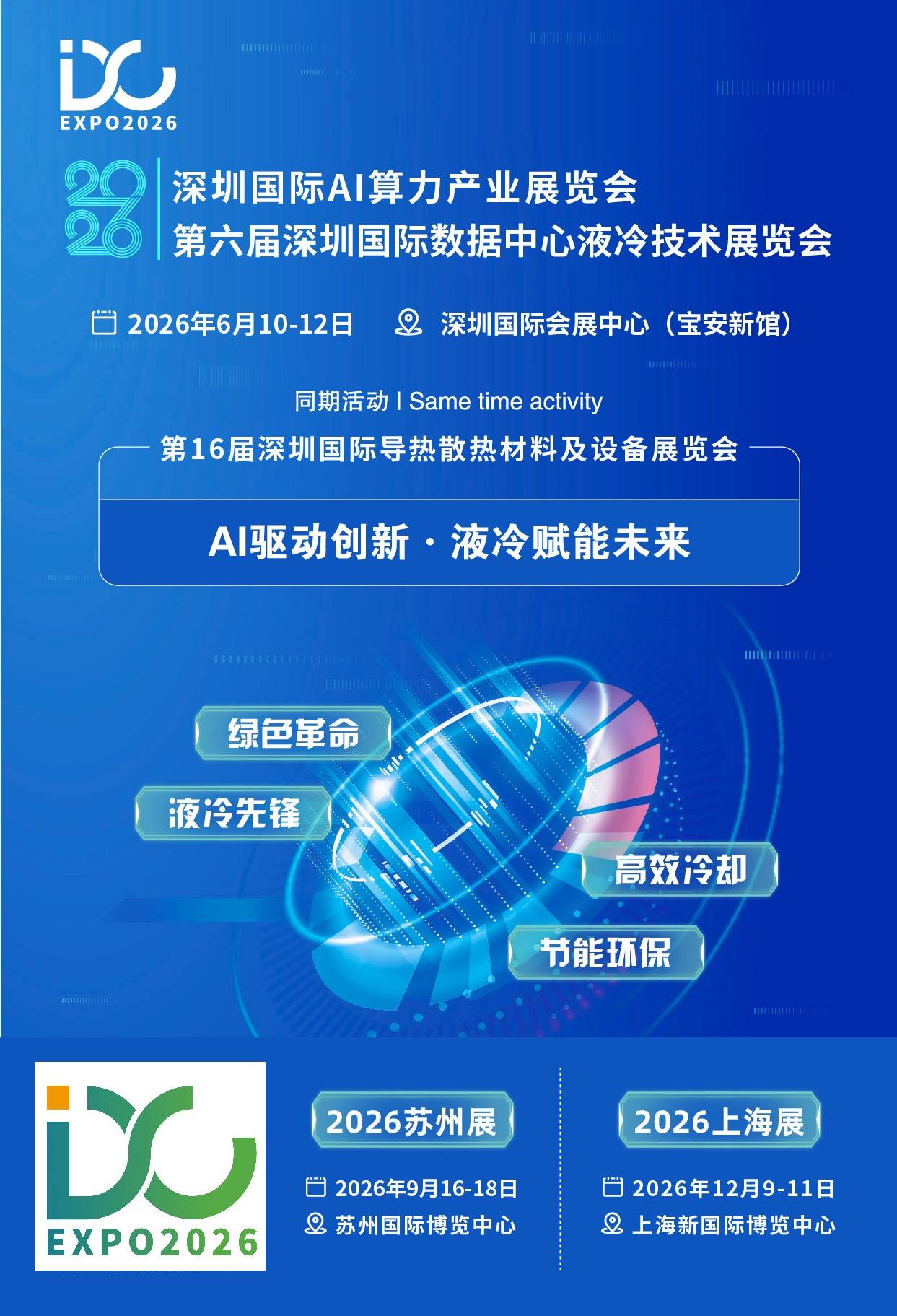
全球最大的液冷展会来了|2026深圳国际液冷产业展会及论坛
Sou Hu Cai Jing· 2026-01-13 01:51
Group 1 - The 2026 Shanghai International Liquid Cooling Industry Exhibition will take place from December 9-11, 2026, at the Shanghai New International Expo Center [3] - The 2026 China (Shenzhen) International Liquid Cooling Industry Technology Exhibition is scheduled for June 10-12, 2026, at the Shenzhen International Convention and Exhibition Center [3] - The 2026 Suzhou Exhibition will occur from September 16-18, 2026, at the Suzhou International Expo Center [5] Group 2 - The rapid growth of big data has increased the demands on data center servers, necessitating higher power density in server cabinets [14] - Liquid cooling technology is becoming essential for data center efficiency, especially with the rise of 5G, edge computing, and AI applications [14][18] - The exhibitions aim to showcase the latest products and technologies in the liquid cooling industry, attracting professional audiences from data centers, power, electronics, edge computing, AI, and renewable energy sectors [14] Group 3 - The 2026 IDC exhibition is expected to cover an area of 15,000 square meters and will feature participation from major organizations such as the National Supercomputing Center in Shenzhen and Tencent [18] - Various technical exchange activities will be held during the IDC 2026 exhibition, focusing on industry hot topics and promoting diversified marketing strategies [19] - The exhibition will include a wide range of products covering cooling liquids, refrigerants, and various cooling devices, showcasing over a thousand new products across the entire industry chain [56] Group 4 - Shenzhen Angpai Technology Co., Ltd. is currently in the A-share IPO guidance stage, with plans to expand production capacity and R&D investment to capture market growth in liquid cooling [66] - The company has a registered capital of 90 million RMB and aims to leverage its professional R&D team and partnerships with universities to enhance its technological capabilities [66][68] - Angpai Technology's product offerings include liquid cooling module design, thermal management system integration, and innovative compressor technologies, with a focus on high reliability and efficiency [71][72]

汽车生产 谁在领跑?
Ren Min Ri Bao Hai Wai Ban· 2026-01-13 01:46
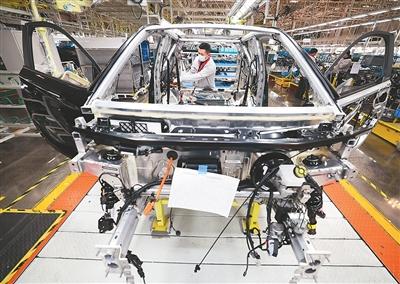
Core Insights - The automotive production landscape in China is experiencing significant growth, with several cities surpassing one million vehicles produced in 2025 [3][7] - Hefei leads the nation in new energy vehicle (NEV) production, with over 1.24 million units manufactured in the first 11 months of 2025 [4] - The shift in statistical methods for measuring production has altered the rankings of cities, impacting how production data is reported [7] Group 1: Automotive Production Statistics - Chongqing's automotive production reached 2.4981 million units in the first 11 months of 2025, marking a 12.1% year-on-year increase [3] - Beijing produced 1.335 million vehicles, a 27.6% increase compared to the previous year, while Shanghai's production was 1.6011 million units, with 1.042 million being NEVs [3] - Cities like Zhengzhou and Qingdao are approaching the one million vehicle production mark, with Zhengzhou at 956,300 units and Qingdao at 911,700 units [3] Group 2: New Energy Vehicle Leadership - Hefei's NEV production is the highest in the country, with 1.246 million units produced in the first 11 months of 2025, supported by a strong industrial layout [4] - The rapid growth of NEVs in Hefei is attributed to the presence of major manufacturers such as Jianghuai, NIO, and BYD [4] - In Hunan province, NEV production increased by 41.8% year-on-year, indicating a robust growth trend in the sector [6] Group 3: Industry Support and Innovation - The automotive industry in cities like Liuzhou and Qingdao benefits from a complete industrial chain, including raw materials and core components [5] - Chongqing is advancing in autonomous driving and vehicle networking technologies, with plans to establish itself as a hub for smart connected NEVs [6] - Policy support is crucial, with cities like Chongqing and Anhui focusing on developing their NEV industries as part of their strategic plans [6] Group 4: Statistical Changes and Future Outlook - The change in statistical methodology from "enterprise location" to "production location" has significantly impacted the reported production figures for various cities [7] - Guangzhou aims to accelerate its automotive industry transformation, focusing on smart and connected vehicles to regain competitive advantage [7] - Overall, China's automotive industry shows resilience and vitality, with production and sales figures reaching new highs in 2025 [8]


为什么说蔚来百万辆下线意义不凡?
Zhong Guo Qi Che Bao Wang· 2026-01-13 01:41
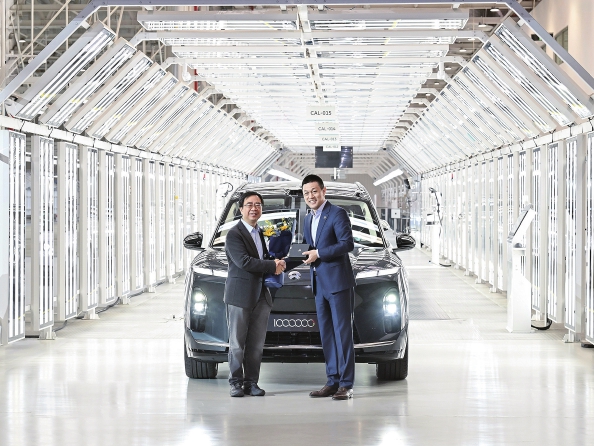
Core Insights - NIO officially entered the "one million club" with the production of its one millionth vehicle, a new ES8, at its Hefei factory, marking a significant milestone in the company's growth and commitment to innovation in China's advanced technology sector [2][3] - The achievement reflects NIO's long-term strategy and maturity in its operational capabilities, transitioning from a focus on survival to prioritizing quality in its third development phase [3][5] Company Performance - NIO's journey from its first production vehicle in May 2018 to reaching one million units by January 2026 demonstrates a robust growth trajectory, with a total investment of 650 billion yuan in core technology and 180 billion yuan in a nationwide charging and battery swap network [2][4] - In 2025, NIO delivered 326,000 vehicles, a 46.9% year-on-year increase, with the new ES8 achieving over 22,000 deliveries in a single month, setting a record for vehicles priced above 400,000 yuan [2][4] Industry Impact - NIO's success is seen as a representation of the upward trajectory of China's smart electric vehicle industry, breaking the stereotype that Chinese brands cannot produce luxury vehicles [4][5] - The company has established a strong presence in the high-end market, contributing to the transformation and upgrade of the Chinese automotive industry, and enhancing the global competitiveness of Chinese high-end new energy vehicles [4][5] Regional Development - NIO's growth is closely linked to the development of the automotive industry cluster in Hefei, which has seen significant advancements in production and competitiveness, with the region leading in automotive output and new energy vehicle production [5] - The collaboration agreements signed with local companies like Chery and Jianghuai, as well as partnerships with semiconductor firms, signify a shift from isolated breakthroughs to collective advancements in the automotive sector [5] Future Outlook - NIO's future strategy includes continued investment in its 12 core technology systems, infrastructure expansion with a goal of over 10,000 charging and battery swap stations by 2030, and a focus on maintaining a growth rate of 40%-50% annually while deepening its market presence in China and expanding globally [5]
中国金龙指数大涨4.26%;重磅!力鸿一号遥一飞行器亚轨道飞行试验任务取得圆满成功,返回式载荷舱顺利着陆;人类首次在空间站完成“太空脑机接口实验”——《...
Mei Ri Jing Ji Xin Wen· 2026-01-13 00:48
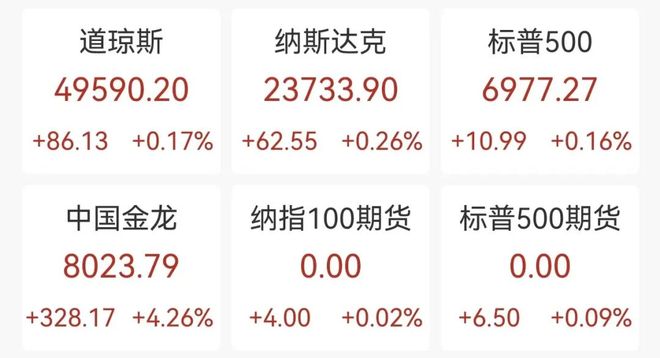
(一)重要市场新闻 1、美股三大指数集体收涨,道琼斯指数涨0.17%,标普500指数涨0.16%创收盘新高,纳斯达克综合指 数涨0.26%。谷歌收涨1.09%,苹果收涨0.34%,谷歌证实与苹果达成一项为期多年的协议,将为苹果的 人工智能技术提供支持,其中包括语音助手"Siri"。Meta收跌1.7%,公司启动名为"Meta Compute"的全 新顶级战略项目。热门中概股多数收涨,纳斯达克中国金龙指数涨4.26%,阿里巴巴涨超10%,哔哩哔 哩、小鹏汽车涨超8%,百度、微博涨超6%,蔚来、网易、京东涨超4%,理想汽车涨超2%。 2、国际油价12日上涨。截至收盘,纽约商品交易所2月交货的轻质原油期货价格上涨38美分,收于每桶 59.50美元,涨幅为0.64%;3月交货的伦敦布伦特原油期货价格上涨53美分,收于每桶63.87美元,涨幅 为0.84%。纽约尾盘,现货黄金涨1.84%,报4592.13美元/盎司;COMEX黄金期货涨2.28%,报4603.30 美元/盎司;沪银夜盘收涨7.23%,报21268元人民币/千克,一度达到21518元。WTI 2月原油期货收涨 0.38美元,涨幅0.64%,报59.50美 ...
中国资产爆发、金银齐创新高!中国金龙指数大涨4.26%,阿里巴巴股价暴涨10.17%
Jin Rong Jie· 2026-01-13 00:41
Market Overview - The global financial market displayed a distinct structural trend, with major US stock indices closing at historical highs, driven by a reallocation of funds between risk and safe assets [1] - The US stock market experienced a V-shaped rebound, with the Dow Jones Industrial Average rising by 86.13 points (0.17%) to close at 49,590.20 points, and the S&P 500 index increasing by 10.99 points (0.16%) to 6,977.27 points [2] Technology Sector - Large tech stocks showed mixed performance, with Google's Class A shares rising by 1.09%, marking a market capitalization breakthrough of $4 trillion, bolstered by a long-term AI collaboration agreement with Apple [4] - Apple's stock also increased by 0.34%, while Meta Platforms saw a decline of 1.7% as it announced a strategic project to build AI computing facilities over the next decade [4] Consumer and Financial Sectors - The consumer sector experienced significant gains, exemplified by Walmart's stock surging by 3% to reach a historical high, with a market capitalization exceeding $940 billion due to expectations of its inclusion in the Nasdaq 100 index [5] - Conversely, the financial sector led declines in the S&P 500 index, with a drop of over 1%, influenced by President Trump's announcement of a 10% cap on credit card annual interest rates, which pressured loan institutions and credit card companies [6] Chinese Stocks - Chinese stocks emerged as market stars, with the Nasdaq China Golden Dragon Index soaring by 4.26% to close at 8,023.79 points, marking a single-day increase of 328.17 points [7] - Notable individual stock performances included Kingsoft Cloud rising by 21.60%, Zhihu by 17.46%, and Alibaba by 10.17% [9] Precious Metals - The international precious metals market saw a strong surge, with COMEX gold futures rising by 2.40% to $4,608.80 per ounce, and spot gold increasing by 1.84% to $4,592.13 per ounce, reaching historical peaks [10] - Silver prices experienced even greater gains, with COMEX silver futures up by 7.33% to $85.16 per ounce [10] Oil and Industrial Metals - International oil prices saw slight increases, with light crude oil futures for February rising by $0.38 to $59.50 per barrel, and Brent crude oil futures for March up by $0.53 to $63.87 per barrel [10] - Industrial metals also showed signs of recovery, with copper prices returning to $6 per pound, indicating improved market expectations for global economic recovery [10]

中国金龙指数大涨4.26%;重磅!力鸿一号遥一飞行器亚轨道飞行试验任务取得圆满成功,返回式载荷舱顺利着陆;人类首次在空间站完成“太空脑机接口实验”——《投资早参》
Mei Ri Jing Ji Xin Wen· 2026-01-13 00:38
Market News - The three major US stock indices closed higher, with the Dow Jones up 0.17%, the S&P 500 up 0.16% reaching a new closing high, and the Nasdaq up 0.26% [1] - Google confirmed a multi-year agreement with Apple to support Apple's AI technology, including the voice assistant "Siri," with Google shares rising by 1.09% and Apple by 0.34% [1] - Major Chinese stocks saw significant gains, with the Nasdaq China Golden Dragon Index up 4.26%, Alibaba up over 10%, and other notable increases in companies like Bilibili and XPeng [1] Oil and Gold Prices - International oil prices rose, with light crude oil futures for February closing at $59.50 per barrel, up 0.64%, and Brent crude for March at $63.87 per barrel, up 0.84% [2] - Gold prices also increased, with spot gold rising by 1.84% to $4,592.13 per ounce and COMEX gold futures up 2.28% to $4,603.30 per ounce [2] Industry Insights - The successful suborbital flight test of the Zhongke Aerospace Li Hong No. 1 spacecraft marks a significant step in space manufacturing, achieving a precision landing within 100 meters [3] - The satellite communication industry is projected to exceed 200 billion to 400 billion yuan by 2030, with an annual compound growth rate of 10%-28% [3] - The brain-computer interface market is expected to reach $40 billion by 2030 and $145 billion by 2040, with significant advancements in medical applications for neurological disorders [4] - The Ministry of Industry and Information Technology emphasizes the integration of AI in manufacturing, aiming to enhance the application of intelligent technologies across various sectors [5][6]
阿里巴巴大涨10%
财联社· 2026-01-13 00:07
Core Viewpoint - The U.S. stock market saw a slight increase, with the S&P 500 and Dow Jones indices reaching historical highs, driven by strong performances in technology stocks and Walmart, despite concerns over a criminal investigation into Federal Reserve Chairman Jerome Powell [1][2]. Market Dynamics - The Dow Jones increased by 86.13 points (0.17%) to close at 49,590.20 points, the Nasdaq rose by 62.56 points (0.26%) to 23,733.90 points, and the S&P 500 gained 10.99 points (0.16%) to finish at 6,977.27 points [5]. - Among the 11 sectors of the S&P 500, the information technology sector rose by 0.35%, industrials by 0.75%, and materials by 0.73%, while energy and financial sectors fell by 0.66% and 0.8%, respectively [5]. - Consumer discretionary ETFs rose by 1.17%, while financial sector ETFs fell by 0.79% [5]. Company Performances - Walmart's stock surged by 3%, contributing to the support of the S&P 500 and Nasdaq indices, and is set to be included in the Nasdaq 100 index on January 20, which is expected to attract billions in passive index fund investments [3][4]. - Major tech stocks mostly rose, with Google A increasing by 1% and surpassing a market capitalization of $4 trillion, while Tesla rose by 0.89% and Apple by 0.34%. However, Amazon, Microsoft, and Meta saw declines [6]. - Planet Labs, a space concept stock, surged over 12% after announcing a multi-year agreement with the Swedish Armed Forces [7]. Chinese Stocks - The Nasdaq Golden Dragon China Index rose by 4.26%, with Alibaba increasing by over 10%, marking its largest gain since August 29. Other Chinese stocks like Bilibili, Xpeng Motors, and Baidu also saw significant increases [8].

乘用车2026 | 2025政策促需 2026高端发力+智能平权+出海提速
汽车琰究· 2026-01-13 00:05
Group 1 - The core viewpoint of the article emphasizes that the demand for automobiles is driven by the continuation of the trade-in policy, leading to an unexpected penetration of new energy vehicles (NEVs) and improved profitability through high-end products and overseas expansion [3][4][5][6][7][8] Group 2 - In 2025, the cumulative wholesale sales of passenger cars reached 24.119 million units, a year-on-year increase of 12.6%, with NEVs growing by 30.7% [3][8] - The penetration rate of NEVs in wholesale sales was 50.4%, up by 7.0 percentage points year-on-year, while the penetration rate for insurance reached 53.3%, an increase of 6.6 percentage points [3][46] - The share of domestic passenger cars in wholesale sales reached 69.3%, a year-on-year increase of 4.9 percentage points, with brands like Geely, Xiaomi, and Leap Motor showing significant growth [3][50] Group 3 - Looking ahead to 2026, the trade-in policy is expected to continue, supporting demand, with projected insurance sales of 22.32 million units, a decrease of 5.0% year-on-year, and wholesale sales of 30.10 million units, an increase of 1.0% [4][5] - The NEV insurance sales are expected to reach 13.8 million units, a year-on-year increase of 6.2%, while wholesale sales are projected to be 17.3 million units, up by 13.4% [4][15] Group 4 - The competitive landscape is shifting, with joint ventures declining and domestic brands accelerating their rise in the mid-to-high-end market [5][10] - In the 5-15 million price range, price-sensitive consumers are expected to drive competition, while brands like Geely, BYD, and Leap Motor are anticipated to gain higher sales growth due to their advantages in intelligence and cost-effectiveness [5][10] Group 5 - The article highlights the acceleration of intelligent driving technology, with major players like Huawei and BYD pushing for the democratization of advanced driving features [6][10] - The L3 commercial deployment is expected to gain momentum in 2026-2027, with various automakers launching new high-level driving systems and models [6][10] Group 6 - The export of passenger cars is projected to reach 6.64 million units in 2026, a year-on-year increase of 15.5%, driven by the technological advantages of domestic NEVs and the expansion of overseas manufacturing [7][11] - Companies like BYD and Geely are expected to increase their export efforts, with BYD establishing overseas factories and Geely accelerating NEV exports [7][11]




隔夜欧美·1月13日
Sou Hu Cai Jing· 2026-01-12 23:40
Market Performance - The three major US stock indices experienced slight gains, with the Dow Jones up 0.17% at 49,590.2 points, the S&P 500 up 0.16% at 6,977.27 points, and the Nasdaq up 0.26% at 23,733.9 points [1] - Major tech stocks showed mixed performance, with Google rising approximately 1%, Tesla up 0.89%, Apple up 0.34%, and Nvidia up 0.04%. In contrast, Facebook fell over 1%, Microsoft dropped 0.44%, and Amazon decreased by 0.37% [1] - Popular Chinese concept stocks mostly rose, with Alibaba increasing over 10%, Bilibili and Xpeng up over 8%, Baidu and Weibo up over 6%, NIO, NetEase, and JD.com up over 4%, and Li Auto up over 2% [1] European Market - European stock indices closed mixed, with Germany's DAX index up 0.45% at 25,376.43 points, France's CAC40 down 0.04% at 8,358.76 points, and the UK's FTSE 100 up 0.16% at 10,140.7 points [1] Commodity Markets - International precious metal futures generally rose, with COMEX gold futures up 2.40% at $4,608.80 per ounce and COMEX silver futures up 7.33% at $85.16 per ounce [1] - US oil main contract rose 1.22% to $59.84 per barrel, while Brent crude oil main contract increased by 1.41% to $64.23 per barrel [1] - London base metals saw an overall increase, with LME tin up 5.47% at $48,200.0 per ton, LME nickel up 2.12% at $18,075.0 per ton, LME zinc up 2.05% at $3,213.5 per ton, LME copper up 1.59% at $13,172.0 per ton, LME aluminum up 1.33% at $3,191.0 per ton, and LME lead up 0.32% at $2,053.0 per ton [1] Bond Markets - US Treasury yields collectively rose, with the 2-year yield up 0.64 basis points at 3.534%, the 3-year yield up 0.29 basis points at 3.590%, the 5-year yield up 0.53 basis points at 3.755%, the 10-year yield up 1.19 basis points at 4.177%, and the 30-year yield up 1.62 basis points at 4.828% [1] - European bond yields collectively fell, with the UK 10-year yield down 0.1 basis points at 4.372%, France's 10-year yield down 1.7 basis points at 3.504%, Germany's 10-year yield down 2.3 basis points at 2.838%, Italy's 10-year yield down 2.7 basis points at 3.466%, and Spain's 10-year yield down 1.6 basis points at 3.229% [1]