徐福记

Search documents
680亿,一代“鞋王”卖身了
投中网· 2025-05-13 06:29
Core Viewpoint - The acquisition of Skechers by 3G Capital marks the largest merger deal in the footwear industry to date, with a transaction value of approximately $9.4 billion (around 68 billion RMB) at a cash price of $63 per share, expected to be completed in Q3 of this year [2][3]. Company Overview - Skechers, founded in 1992, focuses on affordable athletic and casual footwear, becoming the third-largest sports brand globally with sales of $8.97 billion in 2024, following Nike and Adidas [2][5]. - The company entered the Chinese market in 2007 and has localized its supply chain, with over 90% of products sold in China being "Made in China" [5]. Financial Performance - In 2024, Skechers achieved a sales revenue of $8.97 billion, a 12% year-on-year increase, marking a historical high, with revenue nearly doubling over the past five years [6]. - However, the company faces challenges, including a 16% decline in sales in China over two consecutive quarters and rising costs due to recent tariff policies affecting its supply chain [6]. Strategic Implications - The decision to go private is seen as a strategic move to mitigate pressures from public markets and to allow for business adjustments in response to trade uncertainties [6]. - 3G Capital's acquisition strategy typically involves identifying high-potential brands in struggling conditions, which aligns with Skechers' current situation [9]. Market Context - The global athletic footwear market is projected to grow at a compound annual growth rate of 5% from 2024 to 2029, indicating potential for further expansion [9]. - Skechers' current price-to-earnings ratio of 14 is significantly lower than that of its competitors, making it an attractive acquisition target for 3G Capital [9]. Acquisition Strategy - Unlike previous acquisitions, 3G Capital plans to retain Skechers' current CEO and management team, indicating a shift towards a more collaborative approach rather than aggressive restructuring [10]. - This acquisition reflects a broader trend in the consumer sector, where significant merger and acquisition activity is occurring across various industries, including food and beverage, apparel, and small appliances [12][16].


泰国小学生迷上河南辣条,中国零食卷去东南亚
创业邦· 2025-05-02 00:56
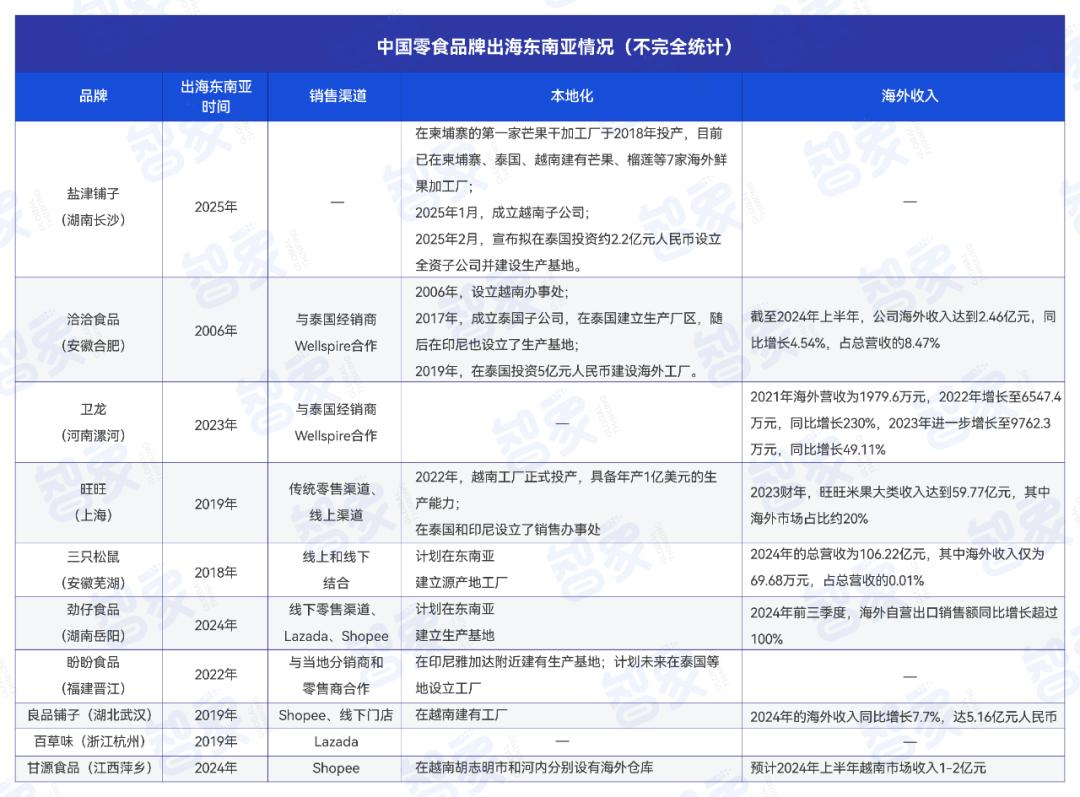
Core Viewpoint - The article discusses the increasing trend of Chinese snack brands expanding into Southeast Asia, highlighting the significant growth potential in this market and the strategies employed by various companies to establish their presence [4][8][12]. Group 1: Market Growth and Opportunities - Wangwang's overseas business saw a double-digit growth in fiscal year 2023, with revenue from the rice snack category reaching 5.977 billion yuan, and overseas markets accounting for about 20% of total revenue [4]. - The Southeast Asian snack market is projected to reach $13.1 billion by 2029, with a compound annual growth rate (CAGR) of 10.60% [6]. - Companies like Qiaqia Foods and Jinzhai Foods have successfully established operations in Southeast Asia, with Qiaqia's Thailand subsidiary contributing 400 million yuan in revenue in 2023 [5][6]. Group 2: Market Entry Strategies - Chinese snack brands are increasingly adopting proactive strategies for overseas expansion, particularly in Southeast Asia, where cultural similarities and large Chinese populations present favorable conditions [12][14]. - Different entry strategies are employed based on the characteristics of each Southeast Asian market, with brands targeting either mature markets like Thailand and Singapore or emerging markets like Vietnam and Indonesia [15][23]. - The article emphasizes the importance of localizing products and marketing strategies to cater to the unique preferences of Southeast Asian consumers [45][46]. Group 3: Distribution Channels - The choice of distribution channels is critical for success in Southeast Asia, with brands like Xu Fu Ji and Aice leveraging innovative channel strategies to penetrate local markets [19][22]. - Traditional retail channels, such as community stores, play a significant role in Indonesia, where a large portion of snack consumption occurs outside modern retail environments [26][27]. - The article highlights the need for brands to adapt their channel strategies to the specific retail landscape of each country, such as focusing on convenience stores in Thailand and schools in Indonesia [24][30]. Group 4: Compliance and Localization - Compliance with local regulations is a major hurdle for Chinese snack brands entering Southeast Asian markets, with specific requirements for product certification and labeling [44]. - Localization of products is essential, with brands like Xu Fu Ji and Panpan introducing flavors and products tailored to local tastes, such as durian-flavored candies [45][46]. - Establishing local supply chains is also crucial for reducing costs and improving efficiency, as seen with brands like Salted Fish and Qiaqia, which have set up production facilities in Southeast Asia [46][47]. Group 5: Competitive Landscape - The competitive landscape in Southeast Asia is characterized by the dominance of established Japanese snack brands, which have historically occupied the market [17]. - New entrants face challenges in differentiating their products and gaining market share, particularly in a market where local preferences may not align with traditional Chinese snack offerings [17][49]. - The article suggests that successful brands will be those that can effectively navigate the complexities of local consumer behavior and preferences while maintaining a strong brand identity [49].


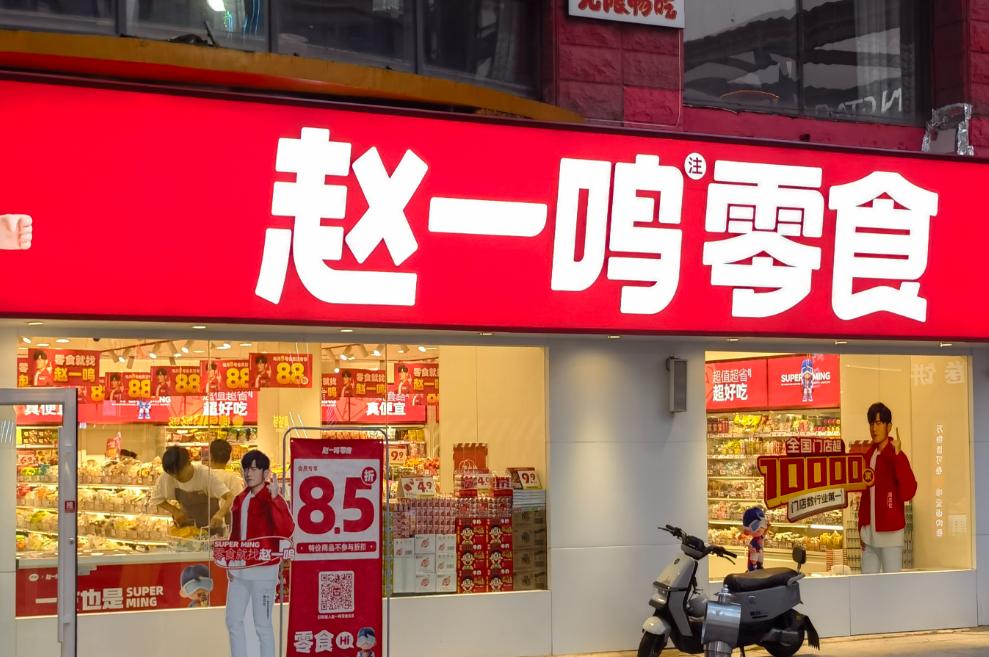
年轻人涌入“鸣鸣很忙们”
3 6 Ke· 2025-04-30 11:49
Core Insights - The article discusses the rise of snack retail chains in China, emphasizing the shift in consumer behavior towards value-for-money products and the emotional significance of snacks in modern life [1][6][17] Group 1: Market Trends - The snack industry in China has seen significant growth, with the market size increasing from over 400 billion yuan in 2010 to over 1 trillion yuan in 2021, indicating a strong economic impact [6] - The emergence of chains like "鸣鸣很忙" reflects a broader trend in the consumer market where quality and price are balanced, leading to a new consumer value system [7][12] - The number of "鸣鸣很忙" stores has surpassed 14,000 nationwide, generating over 55.5 billion yuan in revenue, showcasing rapid expansion and consumer acceptance [6][12] Group 2: Consumer Behavior - Consumers are increasingly prioritizing quality and safety over traditional notions of luxury, leading to a preference for affordable yet reliable snack options [6][11] - The concept of "消费平权" (consumer equality) is gaining traction, as consumers in lower-tier cities now have access to the same quality and pricing as those in major urban centers [10][12] - The emotional value of snacks has become significant, with consumers viewing them as a form of self-reward and companionship in a fast-paced, often isolating society [1][17] Group 3: Competitive Landscape - The success of "鸣鸣很忙" and similar chains is attributed to their efficient supply chains and direct sourcing from manufacturers, allowing them to offer competitive pricing without compromising quality [10][11] - Other brands like "蜜雪冰城" and "瑞幸咖啡" have also adopted similar strategies, focusing on high quality at low prices, which has proven effective in attracting consumers [7][10] - The snack retail sector is characterized by a mix of traditional and modern retail strategies, with new entrants challenging established brands by offering better value propositions [11][12] Group 4: Societal Implications - The rise of snack retail chains is seen as part of a larger societal shift towards valuing shared experiences and emotional connections over mere consumption [17] - The concept of "第四消费时代" (Fourth Consumption Era) is referenced, highlighting a transition from individualistic consumption to a focus on community and shared values [13][17] - The growth of snack retail chains is contributing to local economies by creating job opportunities and enabling entrepreneurship among local residents [12]
泰国小学生迷上河南辣条,中国零食卷去东南亚
3 6 Ke· 2025-04-30 02:40
Group 1 - Wangwang invested RMB 138 million in a business jet to facilitate management's domestic and international travel, with a focus on expanding overseas operations [1] - In the fiscal year 2023, Wangwang's overseas business grew by double digits, with snack revenue reaching RMB 5.977 billion, accounting for approximately 20% of total revenue [1] - Southeast Asia has become a primary target for Chinese snack brands due to its large population and cultural similarities, with many brands already establishing a presence in the region [2][5] Group 2 - Companies like Qiaqia, Jinzhai, and Panpan have successfully penetrated the Southeast Asian market, with Qiaqia's Thailand subsidiary contributing RMB 400 million in revenue and nearly RMB 90 million in net profit in 2023 [2] - The Southeast Asian snack market is projected to reach USD 13.1 billion by 2029, with a compound annual growth rate of 10.60% [3] Group 3 - Salted snacks and other unique Chinese products are gaining traction in Southeast Asia, with brands like Yanjin and Qiaqia focusing on local market education to introduce their products [11][12] - The entry strategies of Chinese snack brands vary by country, with some targeting mature markets like Thailand and Singapore, while others focus on emerging markets like Vietnam and Indonesia [11] Group 4 - The retail landscape in Southeast Asia is diverse, with traditional community stores still dominating in Indonesia, where 80% of consumption occurs outside modern retail channels [17] - Successful market entry often relies on innovative channel strategies, as demonstrated by the ice cream brand Aice, which focused on community stores rather than traditional retail [14] Group 5 - Compliance with local regulations is crucial for market entry, with specific requirements for product certification and labeling in countries like Thailand and Indonesia [27] - Localization of products and supply chains is essential for success, with brands adapting flavors and ingredients to meet local preferences [28][31]



寻找下一个超级爆款:300+品牌展商,2000+爆款新品,47000+全球创新者邀您共聚FBIF食品创新展2025!
FBIF食品饮料创新· 2025-04-29 00:18
300+ 品牌展商, 2000+ 创新产品,寻找爆品脉络,打造《 全球食品爆品手册 》 (38个案例) 、 《 2025年度食品爆品与创新产品手册-渠道商选品目录 》 (300+品牌和1000+产品) 。FBIF食品 创新展 All in 创新 ,用前沿产品与卓越品质,助力渠道伙伴精准选品。 专业观众可扫码注册观展票 ,与品牌面对面深度沟通。现场还可领取 2本FBIF小蓝书、1本FBIF小采书 纸质版手册 ,每日发布数量有限,先到先得。 (注:观展票不包含论坛、赛事、渠道对接会权益) FBIF食品创新展2025 · 精彩亮点一览 展会现场 : 1、 300+品牌展商 产品展出,覆盖14大品类方向 2、 2000+全球新品 ,直击未来市场风口 3、FBIF Wow食品创新奖 3大赛道 获奖产品集中亮相 4、FBIF小蓝书·全球版 《全球食品爆品手册》 (纸质版) ,精选 20个国际爆品案例 5、FBIF小蓝书·国内版 《2025食品爆品与创新产品手册》 (纸质版) ,收录 700+优质产品 6、FBIF小采书 《FBIF供应链采购指南:代工、配料、包装采购目录》 (纸质版),收录 200+供应 链 企业 7、F ...
雀巢再现重大人事变动!大中华区将换帅,中国市场投资加码
Nan Fang Du Shi Bao· 2025-04-27 13:14
继去年集团CEO换人后,雀巢又有新的高层变动,这次是中国市场负责人的变更。 近日,雀巢集团宣布任命马凯思(Kais Marzouki)为大中华区市场负责人,现任大中华区市场负责人张 西强将卸任,2025年7月1日起生效。根据安排,双方将在5月开始进行交接。张西强将在今后的18个月 中继续担任公司战略顾问。 与此同时,张西强也有了新的职业动向,将加入由元气森林创始人唐彬森创办的挑战者创投,担任运营 合伙人。新老负责人交接背后,雀巢对于中国市场的重视程度不断提高,同时持续加码中国市场投资。 雀巢中国时隔三年多换帅 新负责人是雀巢"老将" 公开资料显示,马凯思拥有欧洲管理学院管理学硕士学位,于1995年加入雀巢集团,现任雀巢菲律宾董 事长兼首席执行官。此前曾在雀巢担任多个重要职务。在本次新任命之前,他于2018年7月起就出任雀 巢菲律宾董事长兼首席执行官。在更早前,他还担任过雀巢中非和西非地区首席执行官等职位。 值得关注的是,作为"老将"的马凯思受到雀巢新任全球CEO傅乐宏的赏识,后者曾多次赞扬菲律宾市场 的本土化创新,称"10个当地家庭中有9个都购买雀巢产品。"在马凯思的带领下,雀巢在菲律宾市场上 取得了业务的显 ...


撤销独立大区后,雀巢又换了中国市场负责人
Jing Ji Guan Cha Bao· 2025-04-26 07:16
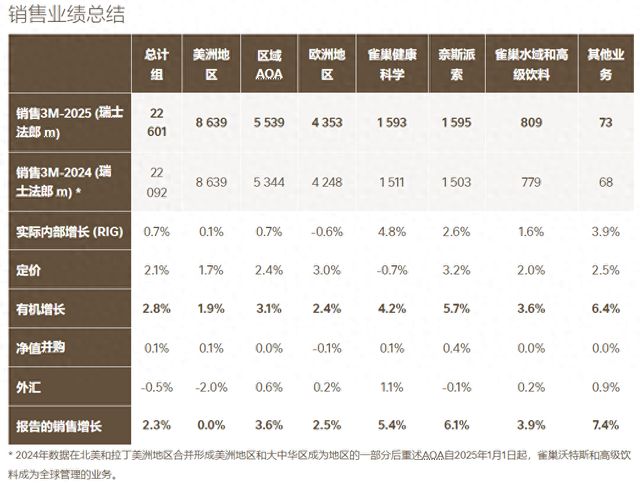
Group 1 - Nestlé Group appointed Kais Marzouki as the head of Greater China market, effective July 1, 2025, while Zhang Xiqiang will join Challenger Ventures as an operating partner [1] - This personnel adjustment follows Nestlé's decision to no longer treat the Chinese market as an independent region, which took effect on January 1, 2025 [1] - Kais Marzouki has been with Nestlé since 1995 and has successfully led Nestlé Philippines as Chairman and CEO [1] Group 2 - In September 2024, Fu Lehong officially took over as CEO of Nestlé Group, initiating organizational restructuring [2] - Nestlé announced the simplification of its five regional markets into three: Americas (AMS), Asia, Oceania, and Africa (AOA), and Europe (EUR), with Greater China being reintegrated into the AOA region [2] - Nestlé's Q1 2025 report indicated a total sales increase of 2.3% year-on-year to 22.6 billion Swiss francs, with Greater China's organic growth rate at 1.7% [2]
雀巢2025财年一季度:全球销售额微增,大中华区逆势增长
Huan Qiu Wang Zi Xun· 2025-04-24 10:50
Core Insights - Nestlé Group reported a total sales of 22.6 billion Swiss Francs (approximately 199.1 billion RMB) for the first quarter of fiscal year 2025, reflecting a year-on-year growth of 2.3% [1] - The company achieved an organic growth of 2.8%, driven primarily by pricing measures in response to inflation in coffee and cocoa-related categories [1][2] - The actual internal growth rate, excluding pricing effects, was only 0.7%, indicating weak consumer demand and short-term adjustments due to price increases [1] Sales Performance - All product categories within Nestlé showed positive internal growth rates, with the candy and coffee segments performing particularly well, achieving year-on-year revenue growth of 8.9% and 5.1% respectively [2] - The organic growth rates for other categories included 1.6% for pet care and a slowdown to 4.2% for health science [2] Regional Insights - In the Greater China region, organic growth was 1.7%, with an actual internal growth rate of 4.0%, indicating that pricing strategies did not contribute positively to growth in this market [3] - The AOA region, which includes Greater China, reported a revenue increase of 3.6%, outperforming the Americas' 0% growth and Europe's 2.5% growth [3] Financial Metrics - The sales figures for the first quarter of 2025 compared to the same period in 2024 showed a reported sales growth of 2.3%, with a negative impact of -0.5% from foreign exchange fluctuations [4] - The breakdown of internal growth rates by region showed varied performance, with the Americas at 0.1%, Europe at -0.6%, and health science at 4.8% [4] Strategic Initiatives - Nestlé is focusing on core business investments and has received positive consumer feedback on new products like Nestlé Coffee Concentrate [2] - The company is actively managing 18 underperforming business units and is seeing encouraging signs of improvement [2] - Nestlé has increased its stake in two companies, including acquiring the remaining minority shares of the candy company Xu Fu Ji in China and increasing its majority stake in Orgain, a leader in plant-based nutrition [4] Future Outlook - Nestlé anticipates that organic sales growth in 2025 will outperform that of 2024, as the company continues to execute its growth plans and enhance efficiency [5]
雀巢集团CEO:上任半年两次来华,还要集中发力这些重点业务
Di Yi Cai Jing· 2025-03-25 09:52
Core Insights - Nestlé's new CEO, Laurent Freixe, emphasizes the company's commitment to the Chinese market, focusing on coffee, pet food, and nutrition as key growth areas [1][6][9] - The Chinese market is viewed as stable and innovative, with significant changes noted since Freixe's last visit eight years ago, particularly in technology and consumer behavior [2][3] - Nestlé's recent acquisition of the remaining 40% stake in Xu Fu Ji reflects confidence in the Chinese market and aims to enhance its presence in the candy sector [5][6] Investment Focus - Nestlé plans to invest heavily in three main sectors in China: coffee, pet food, and nutrition, recognizing the potential for growth driven by urbanization and an aging population [8][10] - The company aims to streamline its operations by focusing on fewer, larger, and more impactful business areas, responding to global consumer trends towards rational consumption [6][7][8] Digital Transformation - Digitalization and artificial intelligence (AI) are central to Nestlé's strategy, with the company leveraging AI to enhance operational efficiency and decision-making processes [10][11] - The integration of AI in supply chain management and product innovation is expected to significantly improve responsiveness to market demands [10][11] Market Dynamics - The Chinese government’s recent initiatives to stimulate consumption are seen as beneficial for Nestlé's growth strategy in the region [3] - The rise of "self-indulgent" consumption trends in China presents additional opportunities for Nestlé in the snack and leisure food segments [9]