百联股份

Search documents
百联股份:公司未来将持续努力提升公司的内在价值与核心竞争力,促进持续稳定发展
Zheng Quan Ri Bao· 2026-01-19 11:05
Group 1 - The company emphasizes its commitment to legal and compliant operations [2] - The management team is dedicated and responsible during their tenure [2] - The company aims to continuously enhance its intrinsic value and core competitiveness for stable development [2]


百联股份:公司重视投资者的反馈和意见
Zheng Quan Ri Bao· 2026-01-19 11:05
证券日报网讯 1月19日,百联股份在互动平台回答投资者提问时表示,公司重视投资者的反馈和意见, 微信公众号系公司对外宣传的平台。目前,公司通过投资者热线、IR邮箱、业绩说明会、上证E互动平 台等多元渠道与投资者保持沟通与交流。 (文章来源:证券日报) ...
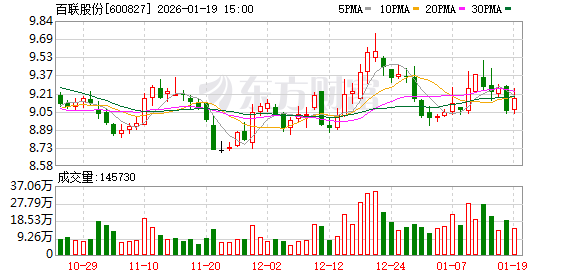
百联股份涨2.10%,成交额6255.74万元,主力资金净流入615.68万元
Xin Lang Cai Jing· 2026-01-19 02:50
Core Viewpoint - Bailing Co., Ltd. has experienced fluctuations in stock price and financial performance, with a notable decrease in revenue and net profit for the first nine months of 2025 compared to the previous year [2][3]. Group 1: Stock Performance - On January 19, Bailing's stock price increased by 2.10%, reaching 9.24 CNY per share, with a trading volume of 62.56 million CNY and a turnover rate of 0.43%, resulting in a total market capitalization of 16.49 billion CNY [1]. - Year-to-date, Bailing's stock price has risen by 2.78%, but it has seen a decline of 1.49% over the last five trading days and 1.60% over the last twenty days, while it has increased by 0.65% over the last sixty days [1]. Group 2: Financial Performance - For the period from January to September 2025, Bailing reported a revenue of 19.05 billion CNY, reflecting a year-on-year decrease of 11.86%, and a net profit attributable to shareholders of 295 million CNY, down 81.78% compared to the previous year [2]. - Since its A-share listing, Bailing has distributed a total of 4.93 billion CNY in dividends, with 901 million CNY distributed over the past three years [3]. Group 3: Shareholder Information - As of September 30, 2025, Bailing had 78,000 shareholders, a decrease of 6.17% from the previous period, with an average of 0 circulating shares per shareholder [2]. - The top ten circulating shareholders include Hong Kong Central Clearing Limited, which holds 10.39 million shares, a decrease of 10.50 million shares from the previous period [3].
“人工智能+”与数字经济上市公司走进郑州
Xin Lang Cai Jing· 2026-01-17 16:39
Group 1 - The meeting highlighted the importance of collaboration between Zhengzhou and leading companies in the fields of artificial intelligence and digital economy, aiming to create a shared future through innovation and resource integration [1][2][3] - Zhengzhou is focusing on digital transformation and industrial upgrades, leveraging its historical strengths and current policies to attract investment and foster a conducive business environment [2] - Guests expressed their commitment to deepening cooperation with Zhengzhou, particularly in exploring opportunities in artificial intelligence and digital economy, which will contribute to high-quality local economic development [3] Group 2 - Zhengzhou's leadership emphasized the city's potential as a hub for innovation and technology, aiming to build a strong foundation for future growth in the smart economy and society [2] - The meeting served as a platform for discussing the integration of new ideas, technologies, and business models with Zhengzhou's industrial base and development needs [2][3] - The collaboration aims to enhance the local ecosystem by attracting innovative technologies and capital, ultimately benefiting the regional economy [3]
【招银研究|行业深度】经营性不动产之零售物业——全景透视与评价模型,解码优质现金流资产
招商银行研究· 2026-01-14 09:05
Core Viewpoint - Retail properties are essential for providing a one-stop shopping experience and are favored by financial institutions due to their ability to generate stable cash flows, especially in a period of real estate inventory [4][6] Group 1: Market Characteristics - The retail property market has entered a phase of deepening inventory, with over 50% of properties now in a mature stage, characterized by a significant reduction in new supply since 2020 [4][36] - Rental levels for retail properties are on a downward trend, while vacancy rates remain relatively controllable as operators adjust rents to maintain occupancy [4][39] Group 2: Key Determinants of Performance - Location, management capabilities, and product types are critical to the operational performance of retail properties [5][57] - High-quality retail properties are concentrated in first- and second-tier cities, with 60% located in these areas, indicating a trend towards high-capacity urban centers [59][61] Group 3: Financial Aspects - Retail properties exhibit high financial intervention potential due to their heavy asset characteristics and the ability to generate stable cash flows during the operational phase [8][13] - The development of a multi-tiered REITs market is enhancing the financial attributes and investment value of retail properties, with a notable increase in interest from institutional investors [12][14] Group 4: Operational Trends - The operational model of retail properties is shifting towards a focus on experience and social interaction, with shopping centers increasingly integrating dining and entertainment options [27][30] - The rental income structure is evolving, with a growing preference for leasing models that include fixed rents and performance-based components [52][54] Group 5: Competitive Landscape - The competitive landscape is intensifying in high-capacity cities, leading to potential oversupply risks in certain markets, particularly where retail space is concentrated [61][62] - The operational management landscape is characterized by a concentration of a few large operators, while many smaller firms struggle to compete effectively [66]
房地产行业2026年年度策略:正视困境,冲出重围,长坡薄雪,向阳而生
Bank of China Securities· 2026-01-13 02:12
Core Insights - The real estate industry is currently facing significant challenges, with a decline in GDP contribution from the real estate and construction sectors, dropping from 15% in 2019 to 12% in the first three quarters of 2025 [7] - The shift in housing demand from "having a house" to "having a good house" indicates a structural change in the market, with a projected annual housing demand of over 860 million square meters until 2035, primarily driven by improvement needs [7] - The report emphasizes the need for policy adjustments to address the ongoing market downturn, with potential policy directions including administrative, public fund, fiscal, urban renewal, and stock activation measures [7][9] Macro Perspective - The economy is undergoing a transformation, with a noticeable decline in the contribution of the real estate sector to GDP [7] - The population peaked in 2021 and has been declining, affecting housing demand dynamics, particularly among potential first-time buyers [7] - Employment and income expectations remain weak, impacting consumer willingness to purchase homes [7] Mid-Macro Perspective - Market transaction volumes and prices are continuously declining, with new home transactions in 100 cities down 15% year-on-year from January to November 2025 [7] - The frequency and effectiveness of local policy interventions have decreased, leading to rising inventory levels and prolonged de-stocking periods [7] - Real estate companies are experiencing significant financial strain, with funding levels dropping from 20.1 trillion yuan in 2021 to 10.8 trillion yuan in 2024 [7] Micro Perspective - Home prices in first-tier cities have seen significant declines, with second-hand home prices dropping over 35% from their peak [7] - The expectation of falling home prices is growing among residents, with 23.5% anticipating further declines as of Q3 2025 [7] - The market is witnessing a shift towards improvement-type housing, with larger units (over 120 square meters) gaining market share [7] Policy Space - Future policy adjustments are expected to focus on loosening purchase restrictions in major cities and enhancing public fund policies [9] - Fiscal measures may include subsidies for home loans and adjustments to tax policies related to property transactions [9] - Urban renewal initiatives are anticipated to expand, particularly in transforming urban villages [9] Opportunities in the Real Estate Sector - The commercial real estate sector is poised for growth by adapting to new consumer demands and creating innovative shopping experiences [9] - Residential developers focusing on core cities and high-demand housing types are likely to benefit from market shifts [9] - The report highlights the potential for real estate investment trusts (REITs) to expand, particularly in commercial properties, as the market matures [9] Investment Recommendations - The report suggests focusing on companies with strong fundamentals in core cities, such as China Resources Land and China Merchants Shekou [9] - Smaller, agile firms that have made significant sales and land acquisition strides since 2024 are also recommended for consideration [9] - Companies innovating in the commercial real estate space, such as China Resources Vientiane Life and Swire Properties, are highlighted as potential investment opportunities [9]





房地产行业第2周周报(2026年1月3日-2026年1月9日):新房、二手房成交同比降幅扩大,成都、沈阳等地持续优化公积金政策-20260113
Bank of China Securities· 2026-01-13 00:04
Investment Rating - The report rates the real estate industry as "Outperform" [1] Core Views - The current market is under pressure with declining transaction volumes and prices, but there is potential for policy adjustments in the first quarter of the year to stabilize the market [9] - The report suggests focusing on companies with strong fundamentals in core cities, smaller firms with significant breakthroughs, and commercial real estate companies exploring new consumption scenarios [9] Summary by Sections 1. Key City New Housing Market, Second-hand Housing Market, and Inventory Tracking - New housing transaction area decreased by 45.7% month-on-month and 35.6% year-on-year, with a notable increase in the decline rate [20][28] - Second-hand housing transaction area increased by 35.5% month-on-month but decreased by 21.6% year-on-year [51] - New housing inventory area increased by 0.2% month-on-month and decreased by 8.6% year-on-year, with an average de-stocking cycle of 16.3 months [44][45] 2. Land Market Tracking - Total land transaction area across 100 cities was 1,744.7 million square meters, down 60.3% month-on-month and 2.2% year-on-year [67] - Total land transaction value was 32.19 billion, down 71.2% month-on-month and 63.3% year-on-year, with an average floor price of 1,844.7 yuan per square meter [67][73] - The land premium rate was 0.6%, down 7.9 percentage points month-on-month and 4.6 percentage points year-on-year [67][69] 3. Policy Overview - Various cities are optimizing housing fund policies, such as extending the mutual assistance policy for housing fund withdrawals in Chengdu until the end of 2026 [5][104] - In Shenyang, five housing fund loan policies were optimized starting January 2026, including extending the minimum down payment ratio of 15% [5][104] 4. Sector Performance Review - The real estate sector's absolute return was 5.1%, up 5.8 percentage points from the previous week, and the relative return compared to the CSI 300 was 2.3%, up 2.4 percentage points [106][107] - The sector's price-to-earnings ratio was 25.66X, an increase of 1.02X from the previous week [110] 5. Key Company Announcements - New City Holdings reported a shareholding change with its controlling shareholder holding 1.4 billion shares, representing 6.11% of the total [118]




韩国游客扎堆上海商超“扫货”,零售端抢抓入境游红利
Zhong Guo Jin Rong Xin Xi Wang· 2026-01-12 11:03
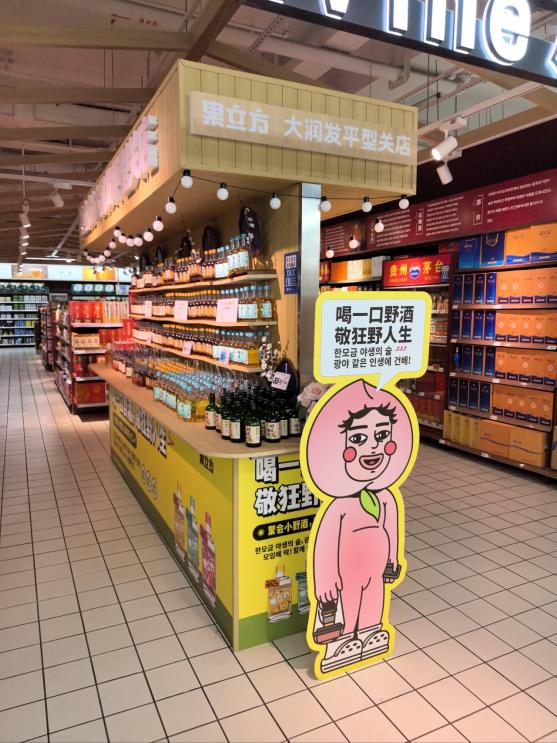
Core Insights - The implementation of the visa-free policy between China and South Korea has significantly increased the enthusiasm of South Korean tourists to visit China, with Shanghai emerging as a preferred destination due to its unique blend of international and local consumer experiences [1][2] Group 1: Tourist Trends - The Da Run Fa Pingxingguan store has become a popular spot for South Korean tourists, receiving an average of 200-300 visitors daily, with weekend peaks exceeding 500 [1] - The surge in popularity is attributed to social media sharing, where tourists highlighted the store's competitive pricing on nut products, leading to a chain reaction of interest [1][2] Group 2: Consumer Behavior - The store has adapted its services to cater to South Korean tourists, including bilingual signage and a curated list of 13 popular products for easy identification [2] - Special checkout lanes and payment options, including Kakao Pay and UnionPay, have been introduced to enhance the shopping experience, along with a promotional offer of 25 yuan off for purchases over 300 yuan [1][2] Group 3: Product Popularity - Popular items among South Korean tourists include small bottles of Jiangxiaobai liquor, Hawaii macadamia nuts, and themed souvenirs like "I Love Shanghai" T-shirts, which have seen monthly sales exceeding 800 units [2][3] - The store's unique offerings and services have made it a standout in the Shanghai retail sector, particularly with the introduction of an immediate tax refund service for foreign tourists [3] Group 4: Industry Response - Other retail companies, such as Bailian Group and Hangzhou Jiebai, are following suit by launching similar tax refund services to capitalize on the influx of foreign tourists [3] - Industry experts recommend that retail businesses further explore local product resources, enhance multilingual services, and integrate shopping experiences into tourism itineraries to foster sustainable growth in consumer spending [3]
上海淮海中路高奢成色不足,“东方香榭丽舍”何去何从
3 6 Ke· 2026-01-12 02:52
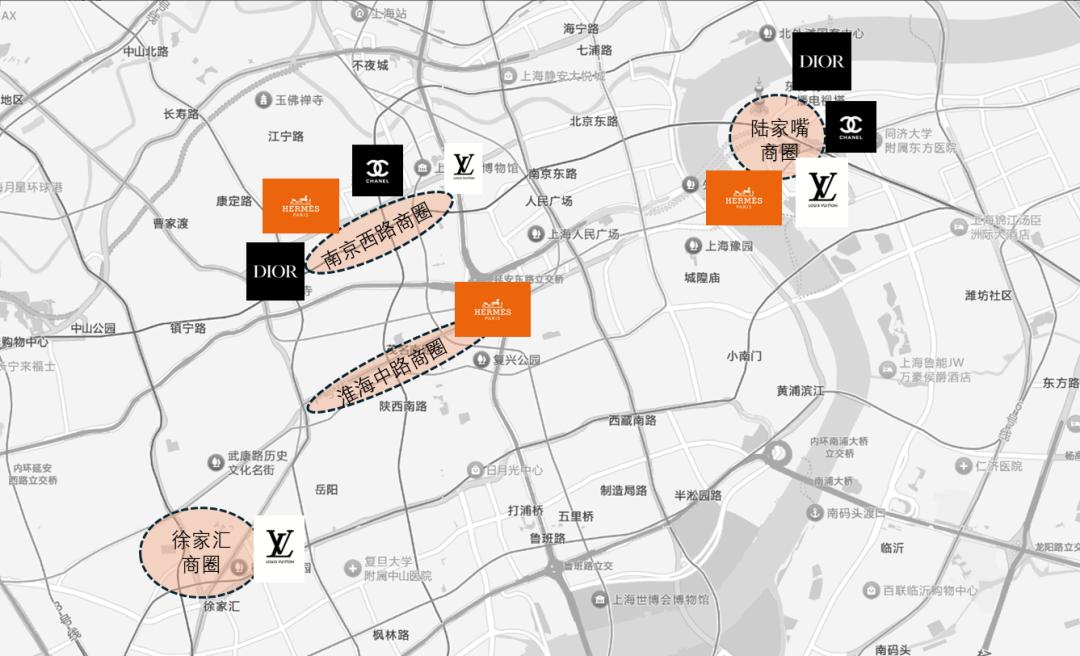
Core Insights - Huaihai Road, known as the "Oriental Champs-Élysées," is experiencing a decline in its luxury brand presence compared to other commercial districts in Shanghai, such as Nanjing West Road and Lujiazui [1][6] - The evolution of high-end commercial development on Huaihai Road has led to a clear "polarization," with the eastern section seeing a shift towards office-centric developments and the western section revitalizing the shopping ecosystem through new commercial formats [2][4] Group 1: High-End Commercial Landscape - The eastern section of Huaihai Road has seen flagship stores of luxury brands like Louis Vuitton and Zegna close, leading to a "high luxury vacuum period" [4] - The western section, particularly IAPM, has attracted significant foot traffic and a mix of mid-range and light luxury brands, filling the gap for a comprehensive shopping experience [4] - The overall decline in high-end commercial appeal is attributed to changing market dynamics and consumer preferences, necessitating a shift from merely counting luxury brands to creating unique commercial allure [6] Group 2: Non-Standard Commercial Development - Post-2010, Huaihai Road transitioned from traditional department stores to non-standard commercial formats, becoming a testing ground for innovative retail concepts [9] - Projects like Huaihai 755 and TX Huaihai have successfully attracted younger consumers, with Huaihai 755 seeing a threefold increase in foot traffic after its transformation [9][10] - Despite the success of non-standard projects, challenges remain regarding customer flow stability and operational consistency [11] Group 3: Brand Flagship Stores and Ecosystem Challenges - Flagship stores on Huaihai Road have evolved into large-scale advertising spaces, but many traditional brands face challenges in adapting to new consumer expectations [12][15] - The lack of cohesive branding and thematic collaboration among different consumer demographics has led to a fragmented shopping experience [15] - The commercial ecosystem is further complicated by the insufficient coverage of flagship stores compared to other global shopping streets, leading to a disconnect between potential customers and available offerings [15] Group 4: Future Directions - The challenges facing Huaihai Road in becoming a world-class shopping street include long pedestrian experiences, uneven commercial atmospheres, and a lack of cohesive branding [21] - Learning from Tokyo's Omotesando, Huaihai Road could benefit from segmenting its main street to enhance consumer experience and engagement [22][25] - Future developments should focus on creating a symbiotic relationship between the main street and surrounding areas, fostering a diverse and integrated shopping ecosystem [25]
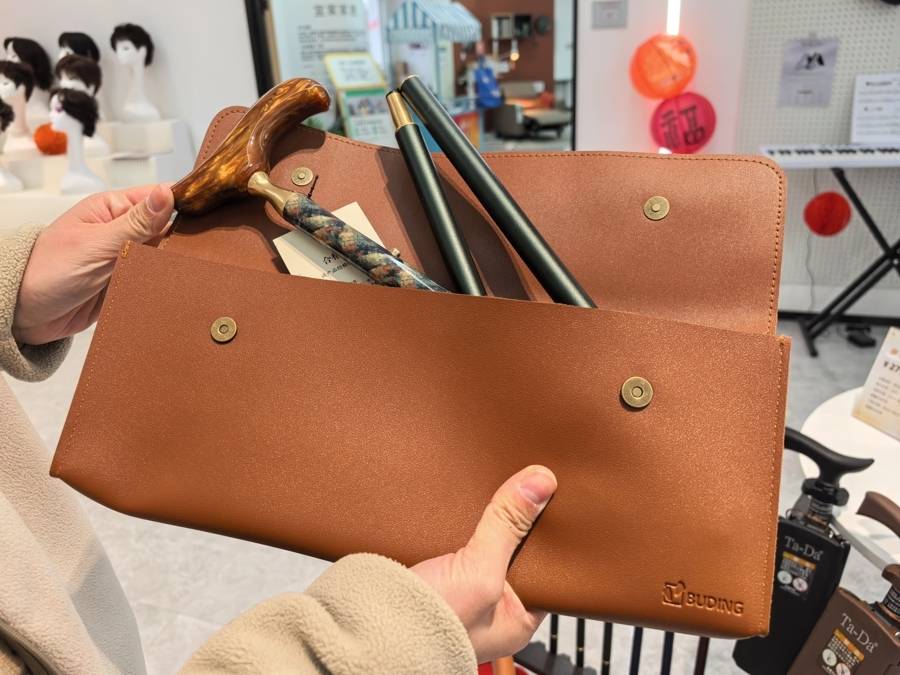
上海首家银发商店开业即销售火爆
Sou Hu Cai Jing· 2026-01-11 03:30
Core Insights - The opening of Shanghai's first "Silver Hair Store" has attracted significant attention, becoming a popular destination for the elderly, with sales exceeding 300,000 yuan within two weeks of opening [1] - The store aims to bridge the gap between innovative products and the elderly population, addressing their specific needs and preferences [1][4] - The growing elderly population in Shanghai, nearing 40%, indicates a stable and capable consumer market for silver-haired products [1] Product Offerings - The store features a wide range of products, including smart aids, age-friendly home decor, health foods, and functional clothing, catering to the evolving tastes of the elderly [2][4] - Popular items include stylish walking shoes and multifunctional carts, which combine practicality with modern aesthetics [5][7] - The store also offers rental services for elderly care equipment, making it more accessible for families [2] Consumer Behavior - The new generation of elderly consumers is increasingly seeking quality and aesthetic appeal in products, moving away from traditional perceptions of elderly goods [4] - A significant portion of purchases is made by children for their elderly parents, indicating a family-oriented consumption pattern [8] Experience-Oriented Shopping - The store operates as a dynamic showroom, adjusting its product offerings based on customer feedback and needs, exemplified by the "wish wall" where elderly customers can express their desires for specific products [9] - The importance of hands-on experience is highlighted, as many elderly customers prefer to try products before making a purchase decision, especially for larger items [10][11] Community Engagement - The store collaborates with local businesses and community initiatives to enhance the shopping experience and provide tailored services, such as policy interpretation for subsidies related to elderly care [13][24] - Other local stores are also exploring unique approaches to cater to the elderly, creating a diverse landscape in the silver economy [14][16] Market Trends - The silver economy in Shanghai is characterized by a diverse range of offerings, from community-focused shops to large retail spaces integrating technology and lifestyle products [18][19] - The market is evolving, with a need for clarity in defining the boundaries of the silver economy, which encompasses both products specifically for the elderly and broader societal changes due to aging [19][20] Future Outlook - The silver store model is seen as a positive development, contributing to a more elderly-friendly society and creating a complete ecosystem for the silver economy [24] - There is an expectation for continued growth and innovation in this sector, with a focus on integrating various aspects of elderly care and consumer needs [24]