
伊利股份

Search documents
加仓!险资前三季度股票余额增万亿 重仓了这些行业
Di Yi Cai Jing· 2025-11-16 21:26
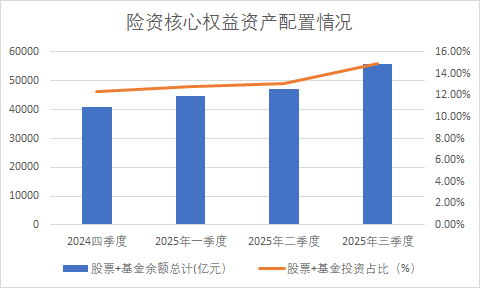
今年前三季度,险资投资的一大重点就是加仓股票。 第一财经记者根据金融监管总局最新发布的2025年三季度保险公司资金运用情况表(下称"资金运用情 况表")梳理,三季度末,保险资金运用余额达到37.46万亿元,其中股票的账面余额为3.62万亿元。这 一数字较去年末增加了1.19万亿元,增幅近五成;其中第三季度增加5524亿元。 如果加上证券投资基金,则截至三季度末险资配置的核心权益资产近5.6万亿元,较去年末增加近1.5万 亿元,其中第三季度单季增加值为8640亿元。 从Choice显示的险资三季度重仓股来看,银行股依然是险资的"心头好",不仅三季度末持仓市值占比超 一半,且第三季度险资增持股数也在所有重仓股中排名首位。在银行股外,据业内分析师统计,钢铁、 通信、食品饮料等行业在三季度获险资重点增持,而电力设备、有色金属、交通运输等则环比减持。 从去年末到今年三季度末,险资配置的股票余额一路上涨。资金运用情况表数据显示,今年三季度末险 资(指产险、寿险公司,下同)持有股票的账面余额为3.62万亿元,较去年末的2.43万亿元大幅增加了 1.19万亿元,涨幅高达49.14%,在资金运用余额中的占比也从去年末的7.30 ...

中国中免、美的、伊利、牧原,谁将领跑大消费,未来龙头谁更有料
Sou Hu Cai Jing· 2025-11-16 21:08
Core Insights - The article compares four major companies in the consumer sector: China Duty Free Group, Midea Group, Yili, and Muyuan Foods, highlighting their performance and potential as leaders in the current market environment [1] Company Summaries China Duty Free Group - The company has partnerships with approximately 1,600 brands and operates around 200 duty-free stores across over 100 cities [3] - In Q3, revenue decreased by 7% and net profit fell by 22%, reflecting broader economic challenges [3] - The current P/E ratio is about 44.9, slightly above its historical average of 43.84, indicating a modest recovery from historical lows [3] - Recent technical signals suggest a potential upward trend after a period of decline [3] Midea Group - Midea is recognized for its stability in the home appliance sector, with a strong presence in smart home solutions and core appliance components [3] - Q3 revenue grew by 13% and profit increased by 19%, marking 12 consecutive years of profit growth [3] - The current P/E ratio is approximately 12.1, below the historical average of 15.33, suggesting it is undervalued [3] - The stock has shown resilience and is nearing a breakout after a prolonged period of consolidation [3] Yili - Yili is a leading player in the food and beverage industry, with a diverse product range and a global footprint [5] - In Q3, the net profit grew by 18%, while revenue saw a slight increase of 1.71% [5] - The current P/E ratio is around 12.9, significantly lower than the historical average of 29, indicating potential undervaluation [5] - The stock has been in a consolidation phase since November 2022 [5] Muyuan Foods - Muyuan represents the pork industry chain, with a fully integrated operation from breeding to slaughtering [5] - Q3 revenue increased by 15% and profit surged by 41%, although profits are highly cyclical and sensitive to pork price fluctuations [5] - The current P/E ratio is about 13.8, well below its historical average of 45.78, suggesting it is undervalued [5] - The stock recently broke out of a two-year consolidation phase and is currently testing the upper boundary of this range [5] Market Context - The consumer sector has been underperforming until recent positive CPI data, which has shifted market sentiment towards previously undervalued consumer stocks [7] - China Duty Free and Muyuan exhibit higher volatility and sensitivity to macroeconomic factors, while Midea and Yili are characterized by stable growth and lower volatility [7] - Valuation analysis shows that China Duty Free's P/E ratio is above its historical average, while Midea, Yili, and Muyuan are trading below their historical averages, reflecting market skepticism about their short-term growth potential [9]





中国 A 股股票策略_从资本支出和库存趋势视角评估反内卷政策进展
2025-11-16 15:36
Summary of Conference Call Notes Industry Overview - The conference call focuses on the **China A-shares Equity Strategy** and the impact of the **anti-involution policies** initiated by the Chinese government in late Q2 2025, affecting various industries [2][34]. Key Points and Arguments Anti-Involution Policies - The anti-involution policy aims to shift competition from price and scale to quality, with a projected execution timeframe of about a decade [2]. - The policy is expected to support the **CSI-300's** EPS growth, with a bottom-up consensus estimate of **14.6% year-on-year** for 2026 [2]. Capital Expenditure (Capex) and Inventory Trends - In Q3 2025, **nine out of twelve industries** reported year-on-year cuts in capex, indicating a trend towards quality-based competition [2]. - The **hog, battery materials, dairy, and chemicals sectors** are leading in destocking, with average inventory days decreasing by **13%, 9%, 6%, and 4%** respectively [5]. - Capex reductions in these sectors were significant, with year-on-year drops of **20%, 45%, 22%, and 15%** respectively [5]. Sector Performance - **Battery materials and chemicals** have been recognized for production cuts and ASP stabilization, outperforming the CSI-300 in the second half of 2025 [5]. - The **coal, baijiu, lithium, cement, and solar sectors** are facing inventory pressures due to softer demand against prior capacity expansions [6]. - The **autos and logistics sectors** are increasing capex while reducing inventories, with companies like **BYD** and **Great Wall Motor** pursuing aggressive overseas expansion [7]. Market Dynamics - The **CSI-300 index** is expected to perform well until the end of 2026, supported by shifts in household asset allocation towards equities [7]. - The **battery manufacturer CATL** is operating at nearly full capacity, indicating strong demand for power and energy storage batteries [7]. Fiscal Support and Government Initiatives - Targeted fiscal support from the Chinese government is seen as a potential catalyst for transitioning sectors from active to passive destocking [5]. - Various sectors, including **autos, battery materials, and solar**, have seen government initiatives aimed at stabilizing growth and curbing low-price competition [34]. Additional Important Insights - The **dairy sector** is focusing on high-end products to differentiate from competitors, while the **hog sector** is stabilizing prices through capacity control measures [34]. - The **logistics sector** is shifting from price wars to value-added services, with regulatory support to prevent below-cost dumping [34]. Conclusion - The anti-involution policies are reshaping competition across multiple sectors in China, with significant implications for capital expenditure, inventory management, and overall market dynamics. The focus on quality over quantity is expected to drive long-term growth and stability in the affected industries [2][5][7][34].
底部复苏系列跟踪:(餐饮供应链、液态奶、啤酒)经销商系列电话会
2025-11-16 15:36
Summary of Conference Call Notes Industry Overview - The conference call discusses the dairy products, seasoning, and frozen food industries, focusing on the performance of major companies like Yili and Mengniu, as well as market trends and challenges faced by various brands. Key Points on Dairy Products - The overall dairy market is expected to stabilize in 2025, with Yili outperforming Mengniu. Mengniu's ambient liquid milk has seen a significant decline, but product innovation and channel optimization may lead to growth [1][4]. - Dairy product terminal prices are gradually stabilizing from the second half of 2024, while upstream raw milk prices continue to decline, resulting in a decrease in net profits for distributors, with about one-third currently operating at a loss [1][17]. - The demand for liquid milk is declining, primarily due to reduced gifting and everyday consumption, particularly among low-income consumers [10][18]. - Mengniu's ambient liquid milk sales have declined by approximately 14% to 15% year-on-year, while Yili's decline is around 3% [5][12]. - The dairy industry is experiencing a cyclical downturn, but a rebound is expected in 2026, particularly for high-end products [9][19]. Key Points on Seasoning Market - The seasoning market is overall sluggish in 2025, with many brands failing to meet growth targets. The hot pot base market share is declining, while compound seasoning's share is increasing, but total sales are still in negative growth [1][22]. - Yihai International's hot pot base has declined due to overall industry downturn and competition from private label products, necessitating product innovation and expansion into B-end business [1][23]. - The online and offline price chaos has impacted the market, with a 10% decrease in offline prices compared to 2024 [25][26]. Key Points on Frozen Food Market - The frozen food market has shown signs of recovery in 2025, particularly in October, driven by the sales of hot pot balls. C-end growth is outperforming B-end growth [3][49]. - The overall sales of frozen food have increased by approximately 3% from January to October 2025, with significant growth in products like dumplings and wontons [37][50]. - The sales recovery in the fourth quarter is attributed to inventory clearance and promotional activities [38][39]. Additional Insights - The restaurant industry is witnessing a closure trend, particularly among large stores in shopping malls, but there is potential for recovery in 2026, which may boost hot pot base sales [1][33]. - The performance of brands like Tianwei is hindered by weak channel price control and uneven regional development, resulting in negative growth [30][31]. - The competitive landscape is shifting, with smaller brands struggling to survive due to financial pressures and market competition [56]. Conclusion - The dairy, seasoning, and frozen food industries are navigating a challenging environment with varying performance across different segments. While there are signs of stabilization and potential growth in certain areas, companies must focus on innovation, channel management, and adapting to changing consumer behaviors to capitalize on future opportunities.

食品饮料月月谈电话会
2025-11-16 15:36
Summary of Conference Call on Dairy and Beverage Industry Industry Overview - The dairy industry is experiencing a continuous capacity reduction, with expectations for supply-demand balance improvement by mid to late 2026, leading to potential stabilization in milk prices. As of October, milk prices remained stable at 2.94 yuan per kilogram, with a production loss of approximately 0.2 yuan per kilogram and a loss rate of about 5% [2][2][2]. Key Points on Dairy Companies New Dairy Industry - New Dairy reported a strong performance in October, continuing the trend from Q3, with double-digit growth in low-temperature fresh milk and yogurt. The company is expanding into new channels, achieving significant revenue from collaborations, and is expected to meet its profit margin targets ahead of schedule by 2026 [4][4][4]. Mengniu Dairy - Mengniu's Q3 results met expectations, with stable market share following price reductions on its flagship product. The company anticipates stable revenue and profit margin growth through 2026, with a relatively low valuation providing investment flexibility [5][5][5]. Yili Group - Despite weak overall demand, Yili's low-temperature milk and other segments showed positive growth, with low-temperature white milk exceeding 20% growth. The company is expected to stabilize its liquid milk business by 2026, benefiting from diversified product offerings and channels [6][7][6][7]. Miao Ke Lan Duo and Youran Dairy - Miao Ke Lan Duo is experiencing rapid growth in the B-end market, with significant C-end product launches. The company is expanding its deep processing of dairy products, which is expected to improve profitability. Youran Dairy is increasing fresh milk supply with stable prices, supporting profits, and is projected to enhance profitability further with a reduction in livestock numbers [8][8][8]. Beverage Industry Insights Master Kong - Master Kong's beverage business saw a slight decline in Q3, but the drop has narrowed in October. The company expects to stabilize its beverage business next year, with a focus on promotional activities and potential price adjustments for its one-liter products [9][10][9][10]. Nongfu Spring - Nongfu Spring's water business experienced double-digit growth in October, with its sugar-free tea brand capturing nearly 80% market share. The company is expected to maintain steady revenue and profit growth, making it a strong long-term investment choice [10][10][10]. Dongpeng Beverage - Dongpeng Beverage reported a nearly 30% growth rate, with ambitious annual targets. The company shows significant growth potential from a valuation perspective [10][10][10]. Investment Recommendations - The dairy sector is recommended for investment due to expected improvements in profitability and market conditions by 2026. Companies like Mengniu, Yili, and New Dairy are highlighted for their growth potential and stable valuations [5][7][4][4]. - In the beverage sector, Master Kong and Nongfu Spring are noted for their resilience and growth prospects, making them attractive investment options [9][10][10].


食品饮料2026:大年,起点
Orient Securities· 2025-11-16 15:35
Investment Rating - The investment rating for the food and beverage industry is "Positive" (maintained) [5] Core Viewpoints - The food and beverage sector is expected to experience a "difficult to decline" phase starting in 2026, with a clear bottom and upward potential. The growth will shift from valuation recovery to performance-driven [8] - The report emphasizes the importance of "individual stock improvement" and "structural dividends," suggesting that the sector is currently in a performance bottoming phase, with short-term trading opportunities focused on stocks showing significant performance recovery [8] - The report anticipates that the overall performance of the food and beverage sector will improve in 2026, driven by supply-side adjustments and a gradual recovery in consumer demand [8] Summary by Sections Investment Recommendations and Targets - Short-term strategy focuses on trading "individual stock improvement" and "turnaround" themes, recommending stocks such as Miaokelando (600882, Buy), Jinshiyuan (603369, Buy), Gujinggongjiu (000596, Buy), and Shede Liquor (600702, Buy) [4] - Structural dividends are expected to continue, with recommendations for Dongpeng Beverage (605499, Buy) and Yanjinpuzi (002847, Buy) [4] - On the demand side, stability or market share themes are highlighted, recommending stocks like Kweichow Moutai (600519, Buy), Shanxi Fenjiu (600809, Buy), Luzhou Laojiao (000568, Buy), Qingdao Beer (600600, Buy), and Yili Group (600887, Buy) [4]




加仓!险资前三季度股票余额增万亿,重仓了这些行业
第一财经· 2025-11-16 12:51
Core Viewpoint - The article highlights a significant increase in insurance capital investment in stocks during the first three quarters of the year, driven by favorable market conditions and regulatory support [3][4][5]. Group 1: Investment Trends - As of the end of Q3, the balance of insurance capital investment reached 37.46 trillion yuan, a year-to-date increase of 12.64% [4]. - The stock investment balance rose to 3.62 trillion yuan, an increase of 1.19 trillion yuan from the end of last year, marking a growth rate of 49.14% [5]. - Including securities investment funds, the total core equity assets reached 5.59 trillion yuan, up 1.49 trillion yuan, with a growth rate of 36.19% [5]. Group 2: Sector Preferences - Bank stocks remain the most favored by insurance capital, accounting for 51.92% of the total value of heavy holdings, which amounted to approximately 6.4 trillion yuan [9]. - Other sectors that saw significant increases in investment include steel, communication, and food and beverage, while sectors like electric equipment and non-ferrous metals experienced reductions [10][11]. Group 3: Market Dynamics - The increase in equity investment is attributed to several factors, including policy guidance, the need for better returns in a low-interest-rate environment, and a recovering capital market [7][12]. - The A-share market has shown a "slow bull" trend, with the CSI 300 index rising approximately 18% in the first three quarters, contributing to the profitability of insurance companies [7][12]. Group 4: Investment Strategy - Insurance capital adopts a "dividend stock + growth stock" strategy, focusing on high-dividend stocks for stable returns while also investing in high-growth sectors [11]. - Different preferences exist between life insurance and property insurance funds, with life insurance favoring low PB (price-to-book) and high-dividend blue-chip stocks, while property insurance leans towards higher PE (price-to-earnings) growth stocks [11].

加仓!险资前三季度股票余额增万亿,重仓了这些行业
Di Yi Cai Jing· 2025-11-16 11:05
Core Insights - Insurance capital has significantly increased its stock investments, with a notable rise in equity assets driven by favorable market conditions and regulatory support [1][3][6] Investment Trends - As of the end of Q3, the total balance of insurance capital investments reached 37.46 trillion yuan, marking a 12.64% increase from the beginning of the year [2] - The stock balance alone rose to 3.62 trillion yuan, an increase of 1.19 trillion yuan or 49.14% compared to the end of last year [3] - Including securities investment funds, the core equity assets reached approximately 5.59 trillion yuan, up 1.49 trillion yuan or 36.19% year-on-year [3] Sector Preferences - Bank stocks remain the most favored by insurance capital, accounting for 51.92% of the total value of heavy holdings, which amounted to nearly 640 billion yuan [8] - Other sectors that saw significant increases in investment include steel, communication, and food and beverage, while sectors like electric equipment and non-ferrous metals experienced reductions [1][8] Market Dynamics - The increase in equity investments is attributed to a strong stock market performance, with the CSI 300 index rising approximately 18% in the first three quarters [6][10] - Insurance companies reported that equity assets were a major contributor to significant growth in investment income, leading to record net profits for the third quarter [6][10] Investment Strategy - Insurance capital is adopting a "dividend stocks + growth stocks" strategy, focusing on high-dividend and stable profit companies while also seeking high-growth opportunities in emerging industries [9] - Different preferences exist between life insurance and property insurance funds, with life insurance favoring low PB (price-to-book) and high dividend stocks, while property insurance leans towards higher PE (price-to-earnings) growth stocks [9]
食品饮料行业点评:近期更新反馈:固本强基,趋时驭势
GOLDEN SUN SECURITIES· 2025-11-16 09:39
Investment Rating - The report maintains an "Accumulate" rating for the food and beverage industry, indicating a positive outlook for investment opportunities in this sector [5]. Core Insights - The food and beverage industry is experiencing a transformation driven by health-conscious consumer trends, product innovation, and channel expansion, with companies actively enhancing their product offerings and exploring overseas markets [1][9]. - In the liquor segment, the supply side is undergoing continuous changes to seek growth, while the demand side is gradually recovering, highlighting the absolute investment value in the industry [2][3]. - The beverage sector is focusing on product innovation and network expansion to uncover growth potential, with a strong emphasis on health upgrades and premiumization [4][7]. Summary by Relevant Sections Liquor Industry - **Water Well**: The company is optimizing its product matrix and plans to launch a new high-end product in 2025, focusing on brand collaboration and expanding its terminal network [2]. - **Jiu Gui Jiu**: The brand is implementing a strategic focus on brand depth and product line simplification, with expectations for improved sales performance [3]. - **She De Jiu Ye**: The company is maintaining its core strategy while expanding its product offerings, particularly in e-commerce, to drive growth [3]. Beverage Industry - **Kang Shi Fu**: The company is committed to innovation and quality, focusing on expanding its product range to meet diverse consumer needs [4]. - **Unified Enterprises**: The company is experiencing stable performance with a focus on product innovation and market expansion, particularly in the instant noodle and beverage segments [7]. - **Hua Run Beverage**: Short-term performance is under pressure due to competition, but long-term growth prospects remain strong due to the essential nature of its products [7]. Health and Wellness Trends - **Anqi Yeast**: The company is targeting over 10% revenue growth, with a focus on expanding its overseas market presence and maintaining cost advantages [9]. - **Xian Le Health**: The company is advancing its global strategy and product innovation to capture new consumer trends, with a focus on high-margin products [9]. - **Jian Yi Health**: The company is enhancing its probiotic offerings and expanding its product lines to meet evolving consumer demands [10]. Overall Market Trends - The food and beverage industry is witnessing a shift towards healthier products and innovative marketing strategies, with companies adapting to changing consumer preferences and exploring new growth avenues [1][4].


顶级资本正在“抄底”消费
Xin Lang Cai Jing· 2025-11-16 02:14
Core Insights - The recent surge in mergers and acquisitions in the consumer sector contrasts with the sluggish growth of the consumption market, raising questions about the underlying investment logic of top-tier capital [1][4]. Group 1: Current Market Conditions - The retail sales of consumer goods in China reached 36.59 trillion yuan in the first three quarters, growing by 4.5% year-on-year, which is still below the 8% growth rate seen in 2019 [1]. - The performance of listed consumer companies shows significant divergence, with major players like Kweichow Moutai and Yum China experiencing slowed growth compared to previous years [2]. - Smaller food and beverage companies are facing considerable operational pressure, with many reporting declines in both revenue and net profit [2]. Group 2: Investment Logic Behind Mergers - The first logic is that target companies possess strong cash flow and a solid foundation, making them attractive despite slower growth rates [4]. - The second logic highlights the brand influence of the target companies, which have established networks and consumer loyalty, making them appealing for capital investment [5]. - The third logic suggests that the current market downturn presents a "buying opportunity" for capital, allowing for acquisitions at reasonable prices [5]. - The fourth logic emphasizes the ongoing opportunities in the consumer sector, as the majority of production activities ultimately cater to consumer needs [5]. Group 3: Future Trends in the Consumer Market - Companies face challenges in understanding new consumer demographics, adapting to new marketing methods, and embracing innovative organizational structures [6]. - Three key trends to watch include a focus on cost-effective innovation, the rise of niche products that provide immediate satisfaction, and growth in self-improvement sectors such as health investments and knowledge-based services [6]. - The exit strategies for capital in the consumer market are evolving, with a shift towards long-term investment approaches rather than relying solely on rapid growth and IPOs [7].



