
东风汽车

Search documents
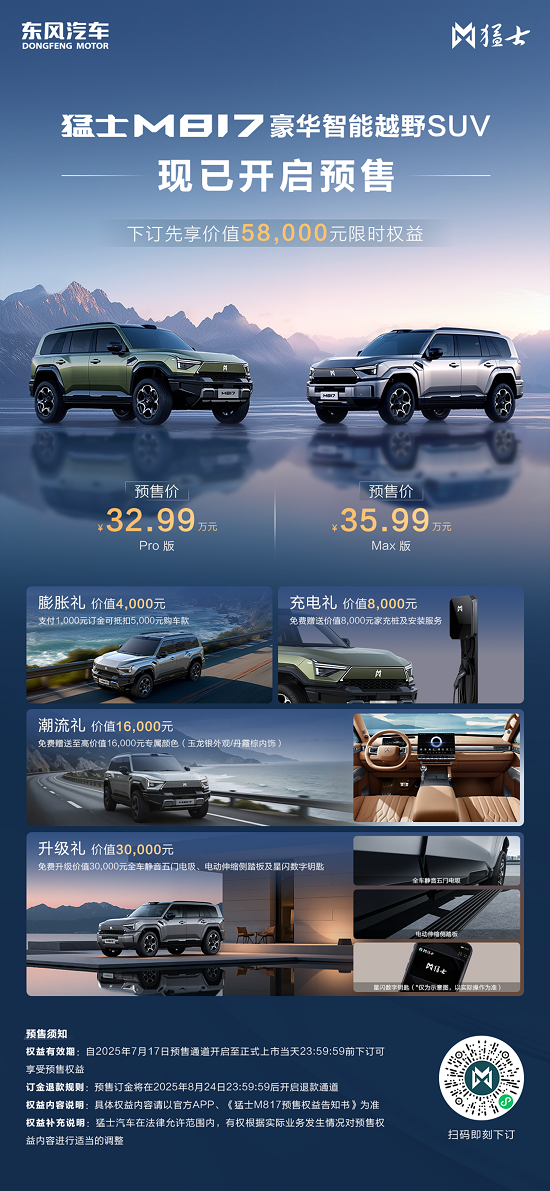
猛士、华为碰出新火花,M817将豪华智能越野带入主流市场
Zhong Guo Jing Ji Wang· 2025-07-21 03:37
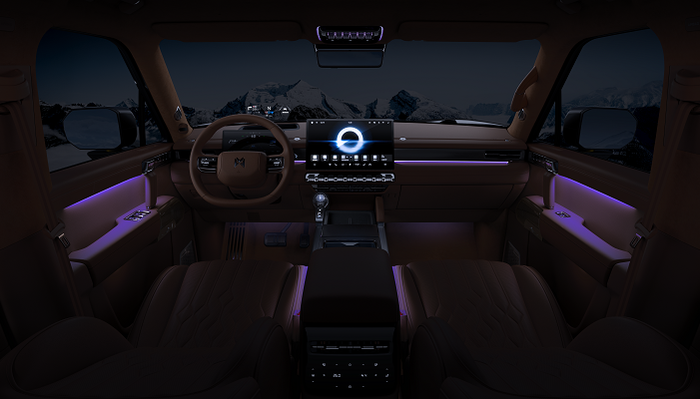
Core Insights - The launch of the Mengshi M817 marks a significant collaboration between Mengshi Technology and Huawei, aiming to penetrate the mainstream consumer market with an innovative product [1][3]. Pricing and Market Positioning - The Mengshi M817 is priced starting at 329,900 yuan, making it more accessible compared to the higher-end Mengshi 917, which was priced over 600,000 yuan [3]. - The vehicle targets the luxury smart off-road SUV segment, which has traditionally been viewed as a niche market dominated by high-end imported models like the Mercedes G-Class and Land Rover Defender [3]. Product Features and Technology - The Mengshi M817 is equipped with Huawei's "full-stack" technology, which enhances its appeal by integrating advanced smart features into the off-road vehicle segment [4]. - It features the Qian Kun Intelligent Driving HUAWEI ADS 4, providing comprehensive parking assistance and advanced driving capabilities for various road scenarios [6]. - The vehicle includes a high-tech interior with a 10.25-inch instrument screen, a 15.6-inch central control screen, and a HarmonyOS cockpit, offering a rich application ecosystem and seamless user interaction [6]. Performance and Capabilities - The Mengshi M817 boasts a robust performance profile with a dual-gear 11-mode PHEV architecture, delivering a system power of 505 kW and a torque of 848 N·m, enabling acceleration from 0 to 100 km/h in approximately 5 seconds [9]. - It features a maximum water wading depth of 900 mm and a minimum turning radius of 5.2 meters, enhancing its versatility for both urban and off-road driving [7][9]. - The vehicle offers a comprehensive range of 1,300 km on a single charge, with a fuel consumption rate of 7.24 L/100 km when running on gasoline [9].

上半年央企实现增加值5.2万亿元——稳的基础在夯实 进的态势在巩固
Jing Ji Ri Bao· 2025-07-20 22:09
Core Viewpoint - Central enterprises in China are facing challenges but are maintaining overall economic stability, with significant contributions to the national economy through various sectors [1][2]. Group 1: Economic Performance - From January to June, central enterprises achieved a value-added output of 5.2 trillion yuan and completed fixed asset investments of 2 trillion yuan [1]. - Strategic emerging industries have seen strong investment, with significant increases in electricity sales, crude oil production, air transport turnover, and container throughput [1]. - The sales of new energy vehicles from major automotive companies like China FAW, Dongfeng, and Changan grew by over 20% in the first half of the year [1]. Group 2: Technological Innovation - Central enterprises are actively implementing the "Artificial Intelligence+" initiative, with over 800 application scenarios developed [2]. - Major telecommunications companies have launched general models capable of complex reasoning and multimodal capabilities [2]. - R&D expenditure for central enterprises reached 413.98 billion yuan, maintaining a research intensity of 2.26% compared to the previous year [2]. Group 3: Strategic Goals and Future Directions - Central enterprises are at a critical juncture for high-quality development, emphasizing the need for improved productivity and innovation [3]. - The focus is on enhancing core functions and competitiveness while achieving this year's targets [3]. - The State-owned Assets Supervision and Administration Commission (SASAC) aims to improve original technology supply capabilities and promote deep integration of industry, academia, and research [4].
【周观点】7月第2周乘用车环比-8.9%,继续看好汽车板块
东吴汽车黄细里团队· 2025-07-20 15:04
Core Viewpoint - The automotive sector is expected to continue its growth trajectory, driven by three main themes: dividends, smart technology, and robotics [4][5][11]. Weekly Review - In the second week of July, the number of compulsory insurance registrations for vehicles was 362,000, reflecting a week-over-week decrease of 8.9% and a month-over-month decrease of 19.6% [49]. - The performance of sub-sectors showed significant variation, with commercial trucks leading at +9.4%, followed by auto parts at +4.1%, and passenger vehicles at +1.8% [4][11]. Research Outcomes - The team released in-depth reports on the domestic market prospects for range-extended vehicles and the evolution of the automotive lighting industry, highlighting the decline of Japanese brands and the rise of domestic manufacturers [2]. Industry Changes 1. The Li Auto i8 has opened for pre-orders with an expected price range of 350,000 to 400,000 yuan, with a launch event scheduled for July 29 [3]. 2. Great Wall Motors reported a revenue of 92.367 billion yuan for H1 2025, a year-over-year increase of 1.03%, but a net profit decrease of 10.22% to 6.337 billion yuan [3]. 3. Jifeng Co. projected a net profit of 150 to 180 million yuan for H1 2025, marking a significant year-over-year increase of 182.25% to 238.70% [3]. 4. Wencan Co. forecasted a net profit of 1.2 to 1.5 million yuan for H1 2025, a decrease of 81.67% to 85.33% year-over-year, primarily due to geopolitical factors and rising energy prices in Europe [3]. Sector Configuration - The automotive sector is advised to focus on three main lines: dividends and good structure, AI smart technology, and AI robotics. The recommendation is to increase the allocation towards dividend-style investments in the second half of the year compared to the first half [5][11]. - Key stocks in the dividend and good structure line include Yutong Bus, China National Heavy Duty Truck, and Fuyao Glass [6][11]. - For the AI smart technology line, preferred stocks include Xpeng Motors and Li Auto in Hong Kong, and companies like Seres and BYD in A-shares [6][11]. - In the AI robotics line, recommended stocks include Top Group and Precision Forging Technology [7]. Market Performance - The automotive sector in A-shares ranked third this week, while the Hong Kong automotive sector ranked fourth [15][11]. - The overall market saw a rebound across various segments, particularly in commercial trucks and the Hong Kong automotive index [4][11].

【汽车】国常会定调“反内卷”,聚焦技术升级+技术降本新趋势——汽车和汽车零部件板块跟踪报告(倪昱婧/邢萍)
光大证券研究· 2025-07-20 14:03
Core Viewpoint - The article discusses the recent initiatives by the Chinese government to regulate the competition in the electric vehicle (EV) industry, aiming for high-quality development and a shift from price competition to value competition in the automotive sector [3][4]. Group 1: Government Initiatives - On July 16, 2025, the State Council, led by Premier Li Qiang, held a meeting to discuss the regulation of competition in the EV industry, emphasizing the need for high-quality development and monitoring of production consistency [3]. - The "anti-involution" strategy has been highlighted, indicating a shift from aggressive price cuts to a healthier industry model [3]. Group 2: Industry Self-Regulation - Since the mention of preventing "involution-style" competition in July 2024, various self-regulatory measures have been introduced, including a May 2025 initiative by the China Automobile Association to oppose below-cost dumping [4]. - In June 2025, 17 major automakers, including FAW and Dongfeng, committed to a payment term of no more than 60 days to suppliers [4]. Group 3: Market Dynamics - In the first half of 2025, domestic retail sales of narrow-sense passenger cars increased by 10.8% year-on-year to 10.9 million units, with new energy vehicle sales rising by 33.3% to 5.468 million units [5]. - As of June 2025, the total inventory depth of domestic passenger car manufacturers was approximately 1.6, down 18% year-on-year and 11% month-on-month [5][6]. Group 4: Sales Risks - Some major automakers, including BYD and Dongfeng, have only achieved 40% or less of their annual sales targets by mid-2025, indicating potential risks for sales adjustments throughout the year [6].
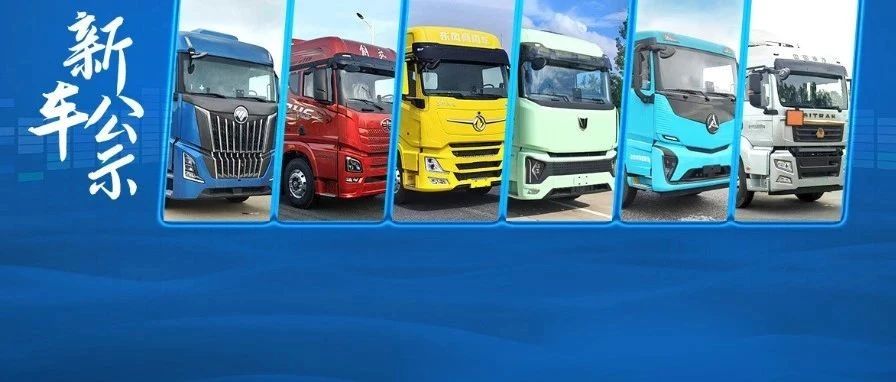
东风数量最多 解放/陕汽/三一推大电量 397批牵引车公示亮点揭秘 | 头条
第一商用车网· 2025-07-20 13:34
Core Viewpoint - The recent announcement of the 397th batch of new vehicles by the Ministry of Industry and Information Technology indicates a significant shift in the tractor market, with a notable increase in the number of National VI tractors while the number of new energy tractors has decreased. Group 1: National VI Tractors - A total of 12 new National VI tractors were announced, with 2 being diesel-powered, 9 natural gas-powered, and 1 hybrid model [5][8][10] - The number of National VI tractor applications increased by 200% compared to the previous batch, reaching the highest level this year [3][30] - Major manufacturers in this segment include FAW Jiefang, China National Heavy Duty Truck Group, Dongfeng Commercial Vehicle, Foton Daimler, and Beiqi Foton [5][8] Group 2: New Energy Tractors - The new energy tractor segment saw a decline of 30%, with 29 new models announced, including 7 battery swap tractors and 16 charging tractors [3][16] - No new players or significant new models were introduced in the new energy tractor market during this batch [16][30] - Dongfeng led the new energy tractor applications with 6 models, including fuel cell and dual-motor electric tractors [18][20] Group 3: Market Dynamics - The competition in the National VI tractor market is intensifying, particularly in the high-power natural gas tractor segment, with manufacturers like Dongfeng and Foton introducing models with up to 700 horsepower [14][30] - The new energy tractor market is focusing on larger battery capacities and longer ranges, with several models featuring over 600 kWh of battery capacity [27][30] - The market dynamics suggest a potential reshaping of the industry landscape as manufacturers strive for technological upgrades and competitive advantages [14][30]




豪车税收政策调整,国产新能源品牌如何“弯道超车”?
Haitong Securities International· 2025-07-20 12:28
Investment Rating - The report does not explicitly provide an investment rating for the automotive industry or specific companies within it. Core Insights - The adjustment of the ultra-luxury vehicle consumption tax aims to promote rational consumption and optimize the tax structure, with the threshold lowered from Rmb1.3 million to Rmb900,000, affecting both new energy vehicles (NEVs) and traditional luxury vehicles [1][9]. - The new tax policy is expected to significantly increase the purchase cost of ultra-luxury vehicles, dampening demand in the Rmb900,000–1.3 million price range, which accounted for only about 20,000 units sold in the first half of 2025 [2][10]. - Domestic NEV brands are presented with a historical opportunity to capture market share in the high-end segment, while imported brands like Porsche face significant challenges due to their reliance on models priced within the affected range [3][12]. Summary by Sections Tax Policy Changes - The consumption tax for ultra-luxury vehicles has been adjusted to include a 10% tax at the retail stage, while NEVs remain exempt from production-stage taxes, leading to a lower overall tax burden for NEVs compared to traditional fuel vehicles [2][11]. - Second-hand ultra-luxury vehicles are exempt from the consumption tax, which may stimulate the used car market and encourage consumers to opt for these vehicles to avoid new tax burdens [2][11]. Market Impact - The new tax policy is expected to further squeeze the market share of high-end imported brands, particularly Porsche, which saw a 49% year-on-year decline in sales in the first half of 2025 [3][12]. - Traditional luxury brands such as Mercedes-Benz and BMW are also anticipated to face pressure, with the pricing center for high-end NEVs expected to shift towards the Rmb500,000–600,000 range [3][12]. Strategic Adjustments - Imported brands must quickly adapt their strategies, either by reducing prices below Rmb900,000 or enhancing vehicle configurations to maintain competitiveness [4][13]. - Domestic brands, benefiting from tax exemptions, have more flexibility in pricing strategies, allowing them to mitigate the impact of the new tax policy through adjustments in vehicle configurations [4][14]. Fiscal Implications - The expansion of the tax base is projected to increase consumption tax revenue, helping to offset declines in ultra-luxury vehicle sales, with consumption tax revenue in the first five months of 2025 totaling Rmb772.9 billion, up 1.6% year-on-year [5][16]. - The policy encourages automakers to focus on the mid- to low-end NEV market, aligning with the trend of rising NEV price ceilings and discouraging blind expansion into the ultra-premium segment [5][16].
一周新车盘点 | 猛士M817开启预售 路虎卫士OCTA国内正式发布
Xin Lang Cai Jing· 2025-07-20 02:43
Group 1 - The core point of the article is the launch of the M817 SUV by Mengshi Technology, which starts at a pre-sale price of 329,900 yuan, featuring advanced technology and design elements [1][5][8] - The M817 offers two versions: a city version and an off-road version, with a distinctive mech-inspired design and a length of 5.1 meters, along with a wheelbase exceeding 3 meters [1][5] - The vehicle is equipped with Huawei's advanced driving system and drone technology, enhancing its smart capabilities for both urban and off-road driving [5][8] Group 2 - The M817's powertrain includes a 1.5T engine combined with an electric motor, delivering a total output of 687 horsepower and a peak torque of 848 Nm, achieving 0-100 km/h in 5.2 seconds [5][8] - The SUV's competitive landscape includes models like the Tank 700 and Equation Leopard 8, with the M817 aiming to differentiate itself through pricing and smart features [7][8] - The article highlights the limited competition in this segment, suggesting that the M817's performance in high-intensity off-road scenarios remains to be validated [8] Group 3 - The article also discusses the launch of the Land Rover Defender OCTA, which targets the luxury off-road SUV market with a starting price of approximately 1.46 million yuan [10][16] - The OCTA features a powerful 635 horsepower engine and advanced suspension technology, aiming to compete with high-end models like the Mercedes G-Class and Lexus LX600 [16] - The Volvo EX30 Cross Country is introduced as a small electric SUV with a limited-time price of 233,800 yuan, focusing on a light off-road design appealing to urban commuters [31][35]
6月充电重卡大增1.8倍!三一居首 解放/徐工拼前二 谁暴涨近300倍?| 头条
第一商用车网· 2025-07-19 14:43
Core Viewpoint - The sales of new energy heavy trucks have shown significant growth, with a record of 18,000 units sold in June 2025, indicating a strong upward trend in the market [1][4][35] Sales Performance - In June 2025, the domestic new energy heavy truck market sold a total of 18,000 units, marking a 19% increase from May and a 158% increase year-on-year [4] - The sales of pure electric heavy trucks reached 17,600 units, accounting for 97.87% of total sales, with charging heavy trucks contributing 12,100 units, reflecting a 19% month-on-month increase and a 183% year-on-year increase [5][15] - Charging heavy trucks have maintained a growth rate of over 100% for 18 consecutive months, outperforming the overall new energy heavy truck market [5][35] Market Share and Competition - In the first half of 2025, the cumulative sales of charging heavy trucks reached 52,500 units, a 232% increase compared to the same period last year [19] - The market share of leading companies includes SANY at 22.48%, XCMG at 15.68%, and FAW Liberation at 14.72%, with significant year-on-year increases for several players [23] - The competition among the top three companies in the charging tractor segment is intense, with SANY, FAW Liberation, and XCMG all exceeding 6,000 units sold [28] Segment Analysis - The charging tractor segment has seen a remarkable increase, with sales reaching 35,900 units in the first half of 2025, a 351% increase year-on-year [26] - Charging dump trucks sold 6,954 units, reflecting a 102% increase, although this growth is slower compared to the overall market [30] - The charging heavy truck market has expanded to include all 31 provincial-level administrative regions in China, with 304 cities registering charging heavy trucks [11] Future Outlook - The continuous growth in sales and market participation suggests a robust future for the new energy heavy truck sector, with expectations for sustained performance [35]

孚能科技20250718
2025-07-19 14:02
Summary of Fulin Technology Conference Call Company Overview - **Company**: Fulin Technology - **Industry**: Solid-state battery technology Key Points and Arguments Production and Development Plans - Fulin Technology plans to establish a 0.2 GWh sulfide all-solid-state battery pilot line by the end of 2025, with a target to deliver 60 Ah batteries and expand production to GWh level by 2026 [2][3][5] - The company adopts a "produce one generation, develop one generation, reserve one generation" strategy to accelerate product iteration, expecting to deliver the first generation product with an energy density of 400 Wh/kg by 2025 and a second generation product with 500 Wh/kg by 2026 [2][5] Technical Expertise and Market Position - Fulin Technology has a strong focus on soft-pack packaging and has accumulated extensive R&D and mass production experience, ranking first in soft-pack shipments in China and among the top three globally [2][6][10] - The company has established partnerships with major clients such as GAC and Dongfeng, which are expected to become significant customers for its all-solid-state batteries [2][7] Production Capacity and Technology - The pilot line is designed for a scale of 0.2 GWh, primarily using wet processing while exploring dry processing routes [2][7] - The company has developed a unique soft-pack technology that allows for better absorption of electrode expansion, which is crucial for solid-state battery performance [9][10] Product Performance and Market Trends - Fulin Technology's half-solid-state products offer a cycle life of over 3,000 cycles and energy densities between 330 to 350 Wh/kg, suitable for high-demand applications such as low-altitude flying vehicles [4][20] - The company anticipates that solid-state batteries will coexist with liquid and half-solid-state batteries in the market, as different applications will require different battery types [15][16] Cost and Safety Considerations - The production cost of Fulin Technology's half-solid-state batteries is among the lowest in the industry, only slightly higher than liquid batteries, while sulfide all-solid-state batteries currently do not have market viability due to high material and manufacturing costs [23] - Safety measures are in place to ensure that the batteries meet high safety standards, with ongoing efforts to enhance both intrinsic and system-level safety features [24] Future Outlook - Fulin Technology aims to become a leading player in the solid-state battery sector, with plans to achieve GWh-level production capacity by 2026 and large-scale mass production by 2030 [12][31] - The company is optimistic about the commercial prospects of its products, particularly in the automotive sector, where demand for half-solid-state batteries is expected to grow rapidly [34][26] Challenges and Innovations - The company faces challenges in scaling up production and ensuring the reliability of new technologies, particularly in the transition from pilot to mass production [18][19] - Innovations in aluminum-plastic film technology have improved the cost-effectiveness and performance of soft-pack batteries, enhancing Fulin Technology's competitive edge [29] Additional Important Information - The company has made significant progress in the domestic production of key materials, such as lithium sulfide, which supports its strategic goals in solid-state battery development [37] - Fulin Technology's commitment to R&D and strategic partnerships positions it well to capitalize on emerging opportunities in the solid-state battery market [12][35]

多部门密集部署,新能源汽车产业“反内卷”思路明晰
Di Yi Cai Jing· 2025-07-19 08:39
Core Viewpoint - The Chinese government is intensifying efforts to regulate the competitive order in the electric vehicle (EV) industry, addressing issues such as irrational price wars and promoting long-term mechanisms for healthy competition [1][2][4]. Group 1: Regulatory Measures - The Ministry of Industry and Information Technology, the National Development and Reform Commission, and the State Administration for Market Regulation are collaborating to enhance monitoring of product prices and production consistency in the EV sector [1][2]. - A recent State Council meeting outlined three key measures: strengthening cost investigations and price monitoring, reinforcing product production consistency checks, and ensuring major automakers adhere to payment commitments to suppliers [1][4]. - The government is also focusing on addressing the issue of extended payment terms for suppliers, which has been detrimental to the industry's innovation and sustainable development [4]. Group 2: Industry Response - The China Automobile Industry Association has called for an end to bottomless price wars, emphasizing the need for industry self-discipline and fair competition [2][5]. - Major automakers, including FAW Group and Dongfeng Motor, have committed to reducing supplier payment terms to no more than 60 days, reflecting a shift towards more sustainable business practices [4]. - The industry is witnessing a transition from price competition to value competition, with companies encouraged to enhance their competitiveness through technological innovation and quality improvement [5][6]. Group 3: Market Performance - In the first half of the year, China's EV production and sales reached 6.968 million and 6.937 million units, respectively, marking year-on-year growth of 41.4% and 40.3% [5]. - Despite the rapid growth, the industry faces challenges due to increased external uncertainties and ongoing competitive pressures, leading to a decline in overall profitability [5][6]. Group 4: Innovation and Development - The industry is urged to focus on technological advancements, such as solid-state and fuel cell technologies, to drive future growth and innovation [6]. - Companies are restructuring their operations to enhance research and development capabilities, aiming to create high-quality vehicles and contribute to the development of a strong automotive nation [6].