
北特科技

Search documents
万亿赛道从零起,人形机器人才是AI全村的希望?
3 6 Ke· 2025-12-25 23:31
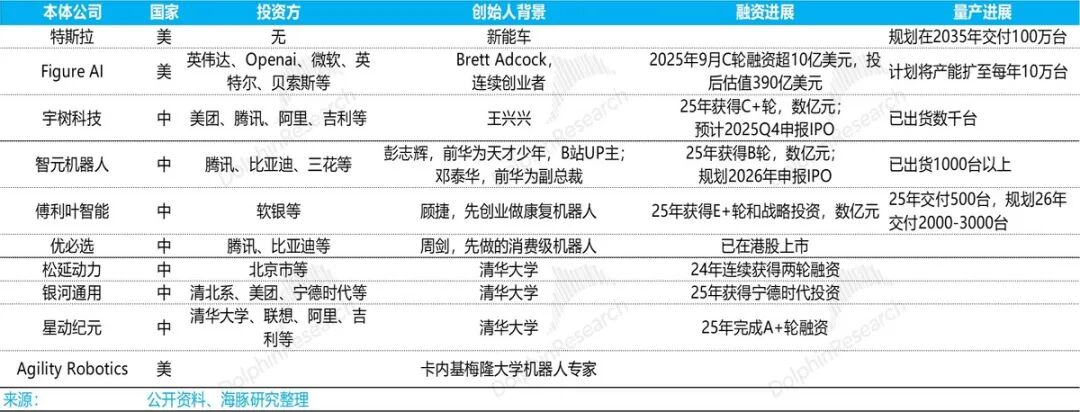
Core Insights - The key focus for AI in 2026 will be on reducing computing costs and the implementation of AI investments in both software and hardware, with new hardware deployment representing true incremental opportunities [1] Industry Overview - The humanoid robot industry is expected to be significantly impacted by the upcoming mass production of Tesla's Optimus robot, which is anticipated to change human interaction and productivity [2] - The analysis of the humanoid robot supply chain will cover the composition of the industry, challenges in hardware industrialization, and opportunities in humanoid robot hardware [2] Humanoid Robot Characteristics - Humanoid robots are defined by two core features: the "form" resembling a human and the "brain" that enables multi-modal perception, continuous learning, and decision-making [2][3] - Achieving the general capabilities required for humanoid robots necessitates advancements in computing power, algorithms, data, and the integration of hardware and software [3] Hardware Challenges - The hardware requirements for humanoid robots differ significantly from other industries, with some components needing to be developed from scratch, such as highly sensitive tactile sensors [4] - The cost of hardware must be sufficiently low to enable widespread adoption, as the estimated future demand for humanoid robots is substantial [4] Supply Chain Breakdown - The humanoid robot industry can be divided into upstream, midstream, and downstream segments, with a complex supply chain similar to that of the electric vehicle industry [5][6] - Upstream focuses on collaboration between manufacturers and suppliers of actuators, sensors, and control systems, with a diverse range of cooperation models [7] - Midstream consists of manufacturers of humanoid robots, primarily concentrated in the US and China, with a mix of established companies and startups [8][9] Upstream Hardware Analysis - Tesla's Optimus robot is projected to have a production capacity of 100,000 units annually by the end of 2026, with significant potential for growth in the humanoid robot market [12] - The hardware components of the Optimus robot include perception, decision-making, and execution layers, with specific focus on sensors and actuators [14][36] Sensor Technologies - Visual sensors are critical for environmental perception, with Tesla opting for a 2D camera approach, while other manufacturers may use 3D cameras and LIDAR [15] - Tactile sensors, essential for human-like interaction, face significant technological challenges and are a key area for development [16][20] - Six-dimensional force sensors are crucial for motion control, with a focus on domestic alternatives to reduce reliance on foreign suppliers [22][27] Actuator Technologies - Electric motors are the primary drive mechanism for humanoid robots, with a focus on developing high-performance, cost-effective solutions [37] - Linear and rotary actuators are essential for joint movement, with a significant emphasis on the development of planetary roller screws and gear reducers [46][58] Market Dynamics - The humanoid robot market is characterized by high entry barriers and significant opportunities in the development of tactile sensors and actuators, particularly in the context of domestic production capabilities [69]


从春晚扭秧歌到演唱会空翻 2026年人形机器人还能“火力全开”吗?
天天基金网· 2025-12-24 08:42
Core Viewpoint - The humanoid robot industry is on the verge of mass production, with significant interest from major companies and expected policy support, indicating a strong upward trend and a favorable investment window by 2026 [2][4][8]. Industry Overview - The recent performance of humanoid robots, showcased at a concert, highlights the technological advancements and commercial potential in entertainment [7]. - The humanoid robot sector has seen a surge in orders and capital activity since 2025, with leading companies initiating IPOs and mergers [7]. Market Outlook - Multiple brokerages predict that 2025 will mark the beginning of mass application for humanoid robots, with 2026 expected to see expanded application scenarios and deeper industry involvement [4][8]. - The humanoid robot product output is anticipated to increase exponentially in 2026 compared to 2025, with significant sales and delivery milestones expected [4][8]. Investment Opportunities - Key suppliers in the humanoid robot supply chain are recommended for investment consideration as the market prepares for mass production [4][8]. - Recent data shows a rebound in the humanoid robot sector index and leading stocks, indicating a return of capital to the market [8].

北特科技:公司近段时间股东人数基本维持同一水平
Zheng Quan Ri Bao· 2025-12-23 12:12
(文章来源:证券日报) 证券日报网讯 12月23日,北特科技在互动平台回答投资者提问时表示,公司近段时间的股东人数基本 维持在同一水平上。 ...

汽车行业周报:鸿蒙智行2026年将推出多款新车,理想汽车预计三年内推出首款L4级自动驾驶车型-20251217
Yong Xing Zheng Quan· 2025-12-17 14:52
Investment Rating - The report maintains an "Overweight" rating for the automotive industry [4][6]. Core Insights - The automotive industry is expected to see stable growth in consumer demand due to supportive policies and increasing sales of new energy vehicles [17]. - The report highlights the performance of major automakers, with BYD, Geely, and FAW-Volkswagen leading in retail sales for November 2025 [2]. - The report notes a significant increase in the market share of new energy vehicles, reaching approximately 53.2% in November 2025 [2][51]. Market Review - The automotive sector experienced a decline of 0.27% from December 8 to December 12, 2025, outperforming the overall A-share market [19]. - Among sub-sectors, motorcycles and others saw the highest increase of 1.62%, while automotive services faced the largest decline of 4.58% during the same period [22]. Industry Data Tracking - In November 2025, total automotive sales were approximately 3.429 million units, reflecting a month-on-month increase of 3.2% and a year-on-year increase of 3.4% [39]. - Retail sales of passenger vehicles for the first week of December 2025 were about 297,000 units, showing a year-on-year decline of 32% [53]. - The report indicates that the price competition in the new energy vehicle market has cooled, with a rational return to pricing strategies [18]. Industry Dynamics - The report discusses significant developments, including the launch of new models by Hongmeng Zhixing and the collaboration between Volkswagen and Xiaopeng [3][59]. - It mentions that Hongmeng Zhixing plans to introduce multiple new vehicles in 2026, while Li Auto aims to launch its first L4 autonomous driving model within three years [3][59]. Investment Recommendations - The report suggests focusing on leading automakers in smart technology and those benefiting from the convergence of technology cycles and model cycles, such as SAIC Motor, Xiaopeng Motors, Xiaomi Group, and Leap Motor [4][17]. - It also recommends looking at the electric and intelligent components sector, particularly companies involved in the AIDC liquid cooling supply chain, such as Huguang Co., Chuanhuan Technology, Yinlun Co., and Horizon Robotics [4][17].
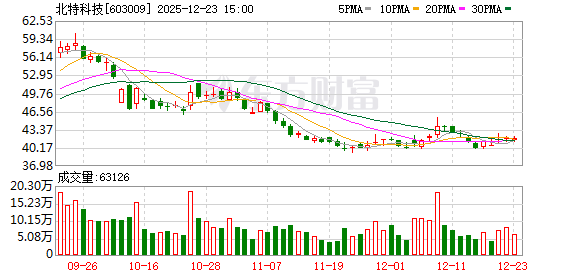
北特科技今日大宗交易平价成交34万股,成交额1404.2万元
Xin Lang Cai Jing· 2025-12-17 09:44
Group 1 - The core transaction of Beite Technology involved a block trade of 340,000 shares, with a total transaction value of 14.042 million yuan, accounting for 4.86% of the total trading volume on that day [1][2] - The transaction price was 41.3 yuan per share, which remained stable compared to the market closing price of 41.3 yuan [1][2]

机械行业2026年投资策略:聚焦新技术,拥抱顺周期
ZHONGTAI SECURITIES· 2025-12-16 08:41
Group 1: Market Review and Outlook - The mechanical equipment industry outperformed the market in 2025, with an overall increase of 27.80%, surpassing the Shanghai Composite Index by 17.65 percentage points [10][11] - The industry saw a recovery in performance, with revenue reaching 15,337 billion yuan, a year-on-year increase of 6.34%, and net profit of 1,103 billion yuan, up 14.19% [11] - The outlook for 2026 is optimistic, with expectations of a moderate recovery in macroeconomic conditions and improvements in domestic manufacturing demand [15][18] Group 2: Investment Directions: New Technologies - Focus on new technologies such as humanoid robots, nuclear fusion, quantum technology, low-speed unmanned systems, and perovskite solar cells, which are expected to drive industry upgrades and innovation [15][19] - Humanoid robots are shifting from theme-driven investments to value verification, with a focus on production schedules and scene orders [28][30] - Nuclear fusion is gaining momentum with accelerated technological progress and policy support, particularly in the Tokamak technology route [19][60] Group 3: Investment Directions: Cyclical Recovery - The cyclical recovery is driven by overseas expansion and policy support, with expectations for high export demand in 2026 [23][24] - The engineering machinery sector is showing strong recovery momentum, with significant growth in overseas exports and stabilization in domestic sales [23] - The oil service sector is entering an upward cycle, driven by the natural gas industry and AI computing power demands [23] Group 4: Recommended Stocks and Investment Portfolio - The investment strategy emphasizes a dual approach, focusing on both global benchmark chains and domestic supply chains [52][53] - Key recommended stocks include Sanhua Intelligent Controls, Beite Technology, and Yushun Technology, which are positioned to benefit from the growth in humanoid robots and related technologies [53][54] - The portfolio should balance between high visibility stocks linked to Tesla's supply chain and those offering higher growth potential in the domestic market [54][55]


开源证券:法规松绑助力线控量产落地 EMB/SBW有望加速普及
Zhi Tong Cai Jing· 2025-12-16 07:04
Core Insights - The report from Kaiyuan Securities indicates that the braking system can be divided into control, power supply, transmission, and braking devices, with the upgrade process based on the electronicization of structural components [1][3] - The market for braking systems in China is expected to reach a scale of 50 billion by 2030, with the electronic mechanical brake (EMB) market projected at 16.4 billion [3] - The domestic production rhythm of local manufacturers is expected to be close to that of international giants like Bosch, allowing for competitive positioning [3] Summary by Category Braking Systems - The braking system is categorized into control, power supply, transmission, and braking devices, with the electronicization process being crucial for upgrades [1][3] - EMB is expected to benefit from regulatory relaxations starting in 2025, allowing for domestic mass production and potential overseas expansion [3] - The anticipated mass release of EMB-equipped vehicles is expected by the end of this year or early next year [3] Market Size and Dynamics - The domestic braking market is projected to reach 50 billion by 2030, with the EMB segment alone expected to be 16.4 billion [3] - Considering overseas markets and Robotaxi, the overall market size is likely to expand further [3] - The domestic market for line control chassis is expected to exceed 100 billion by 2030, with significant opportunities for local suppliers [1] Line Control Steering - Line control steering is crucial for enhancing driving experience and ensuring safety in advanced driving scenarios [2] - The SBW (Steer-by-Wire) system is seen as essential for L4/L5 autonomous driving, with potential benefits in cabin space and maneuverability [4] - The market for steering systems is expected to reach 50 billion by 2030, with SBW projected at 21.5 billion [4] Future Trends - The next generation of intelligent chassis is expected to break traditional system boundaries, integrating braking, driving, and steering through "corner modules" [6] - This integration aims to address issues such as control lag and pitch effects seen in early smart vehicles [6] Investment Opportunities - Companies with comprehensive platform capabilities in chassis systems and upstream motor/lead screw technologies are recommended for investment, including companies like Nissin Brake (01316), Zhejiang Shibao (01057), and others [7]
北特科技向特定对象发行股票申请审核状态变更为提交注册
Zheng Quan Shi Bao Wang· 2025-12-16 03:22
Group 1 - The core point of the article is that Beite Technology (603009) has changed the status of its application for a specific stock issuance to "submitted for registration" [1] - Beite Technology plans to issue no more than 7.9808 million shares, with an expected fundraising amount of 300 million yuan [1] - The sponsoring institution for this issuance is China Galaxy Securities Co., Ltd. (601881) [1]

线控制动/转向:法规渐松绑,有望加速步入放量周期
Hua Yuan Zheng Quan· 2025-12-15 11:13
Investment Rating - The report rates the automotive parts industry as "Positive" (First Time) [1] Core Viewpoints - The loosening of regulations is expected to accelerate the mass production of electronic mechanical brakes (EMB) and steer-by-wire (SBW), leading to a significant market expansion [3] - The domestic market for line-controlled chassis is projected to exceed 100 billion by 2030, driven by advancements in high-level autonomous driving [3][30] - The report emphasizes the importance of focusing on high-quality Tier 1 suppliers and upstream components such as motors and lead screws [4][9] Summary by Relevant Sections Line-Controlled Chassis - The pursuit of human-machine decoupling in line-controlled chassis is fundamental for achieving L3/L4 autonomous driving [9] - The market for line-controlled braking systems is expected to reach 50 billion by 2030, with EMB projected at 16.4 billion [3][30] - The line-controlled steering market is anticipated to reach 50 billion by 2030, with SBW projected at 21.5 billion [3][30] Regulatory Developments - Regulations allowing EMB to be implemented in vehicles will officially take effect on January 1, 2026 [3][26] - New policies regarding SBW are expected to be catalyzed within the year, although specific certification details remain unclear [3][26] Market Dynamics - The report highlights that the penetration rate of line-controlled chassis is expected to rise from 5% in 2025 to 30% by 2030 [31] - The overall market for intelligent chassis in China is projected to exceed 100 billion by 2030, with a compound annual growth rate (CAGR) of 37% from 2025 to 2030 [30][29] Key Companies to Watch - The report suggests focusing on leading Tier 1 suppliers with comprehensive platform capabilities, such as NEXTEER, ZF, and others [4][9]





具身智能纳入多省级“十五五”规划,智元第 5000 台机器人下线
SINOLINK SECURITIES· 2025-12-14 11:21
Investment Rating - The report does not explicitly state an investment rating for the high-end equipment manufacturing industry, particularly in the context of embodied intelligence and humanoid robots. Core Insights - The embodied intelligence sector is recognized as the strongest application of AI, with humanoid robots being a key focus area. The ROBO+ track is expected to reshape the entire automotive supply chain, emerging as a significant industrial trend [5][32]. - The report highlights a shift from policy guidance to commercial implementation, indicating a long-term development trajectory for the embodied intelligence industry [9][10]. - Significant capital inflow into the robotics sector is noted, reflecting growing market confidence and the potential for enhanced industry capabilities [29][30]. Summary by Sections 1. Industry Frontiers - The robotics sector is experiencing a surge in activity, with multiple regions incorporating embodied intelligence and humanoid robots into their "14th Five-Year Plan" as future growth points [3][9]. - Major milestones include the production of the 5,000th humanoid robot by Zhiyuan Robotics and the delivery of the 1,000th robotic dog by Chery Mocha, indicating a clear acceleration in commercialization [9][10][17]. - The report emphasizes the importance of local policies and the establishment of training centers for humanoid robots, which are expected to enhance resource integration and organizational development within the industry [10][11]. 2. Capital Trends - Recent financing activities include A1+ and A2 rounds completed by Zhongqing Robotics, and several other companies securing significant funding, indicating robust investor interest in the sector [4][29]. - Alibaba's investment in Qunche Intelligent and the completion of over 500 million RMB in financing by Yundongchu reflect a trend of major tech companies entering the robotics space [4][29]. - The report notes that capital is flowing into both innovation in core technologies and the application of robotics, which is expected to enhance overall industry capabilities [30]. 3. Weekly Perspectives - The report suggests that companies with established supply chains and technological capabilities, such as Tesla and Huawei, are likely to gain competitive advantages in the humanoid robotics market [33]. - It highlights the importance of supply chain dynamics and technological iterations, particularly in components like tactile sensors and motors, which are critical for the advancement of humanoid robots [34]. - The anticipated production capacity for humanoid robots is projected to increase significantly, with companies like Tesla and Zhiyuan Robotics planning substantial output in the coming years [35][36].