LVMH

Search documents
欧洲老钱盯上了老铺黄金
远川研究所· 2026-01-14 13:10
Core Viewpoint - The article discusses the rise of Laopuhuangjin (老铺黄金) as a significant player in the luxury jewelry market, highlighting its unique business model and the implications for established luxury brands like LVMH and Richemont [5][11]. Group 1: Market Position and Competition - Laopuhuangjin has attracted attention from major luxury brands, with LVMH's CEO acknowledging its impact on the jewelry market despite a 23% revenue decline in the Chinese market for LVMH [5]. - The sales per store of Laopuhuangjin are approximately double that of Cartier and three times that of Van Cleef & Arpels, indicating its strong market performance [5]. - The overlap in consumer demographics between Laopuhuangjin and luxury brands like LV, Hermes, and Cartier is significant, with an average overlap rate of 77.3% [7]. Group 2: Disruption of Luxury Market Dynamics - Laopuhuangjin is seen as a threat to the monopoly that luxury brands have over high-net-worth consumers, as it diversifies the luxury market landscape [7][11]. - The luxury goods market is dominated by three major groups (LVMH, Kering, Richemont) and two iconic brands (Hermes, Chanel), which have historically controlled the narrative around luxury consumption [7][8]. - The luxury market is projected to exceed €150 billion in revenue by 2024, while Laopuhuangjin's revenue is estimated at around HKD 30 billion for 2025, highlighting the disparity in scale [8][13]. Group 3: Unique Business Model of Laopuhuangjin - Laopuhuangjin has achieved a gross margin of 40% on gold products, significantly higher than the industry average, which is typically below 20% [15][16]. - The brand's success is attributed to its ability to modernize gold jewelry aesthetics and incorporate cultural elements, making it appealing to contemporary consumers [18][19]. - Laopuhuangjin's strategic location in high-end shopping areas reinforces its luxury positioning, with a limited number of stores enhancing its exclusivity [21][23]. Group 4: Consumer Behavior and Perception - The perception of gold as a stable asset allows consumers to justify their purchases as investments, creating a psychological loop where spending feels like asset allocation [27]. - Laopuhuangjin's pricing strategy and the inherent value of gold contribute to a consumer mindset that equates high spending with smart investment, differentiating it from traditional luxury goods [27][30]. - The brand's growth is characterized by a blend of luxury and investment appeal, which is a departure from conventional luxury consumption patterns [30][31]. Group 5: Future Challenges and Market Dynamics - The success of Laopuhuangjin may inspire new entrants in the luxury gold market, as established brands like Chow Tai Fook and others begin to adapt their strategies to compete [31][33]. - The potential for replication of Laopuhuangjin's model exists, as the gold market is transparent and accessible, allowing other brands to adopt similar strategies [31][33]. - The luxury market's hierarchical nature poses challenges for Laopuhuangjin in establishing itself as a true luxury brand, as it navigates the complexities of brand perception and consumer loyalty [33].


Wall Street Breakfast Podcast: Saks Global Files Chapter 11
Seeking Alpha· 2026-01-14 11:42
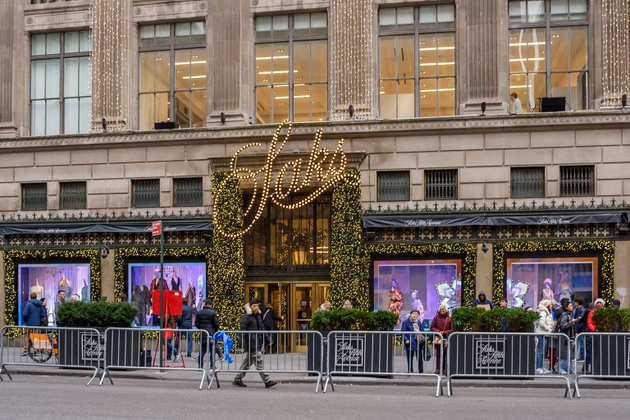
Core Insights - Saks Global Enterprises has filed for Chapter 11 bankruptcy protection, following a $2.7 billion acquisition of Neiman Marcus that resulted in a significant debt burden, marking a major retail collapse post-COVID-19 pandemic [3] - The company has secured a financing commitment of approximately $1.75 billion to support its operations and restructuring efforts [4][5] Financial Overview - Saks reported assets and liabilities in the range of $1 billion to $10 billion as per court filings [3] - The financing commitment includes $1.5 billion from an ad hoc group of bondholders and around $240 million from asset-based lenders [4] Operational Changes - Saks is evaluating its operational footprint to focus resources on areas with the greatest long-term potential [3] - The company appointed Geoffroy van Raemdonck as CEO, who previously led Neiman Marcus before its acquisition by Saks [5] Background Context - Saks Global was formed after Hudson's Bay acquired Neiman Marcus in 2024, consolidating several luxury brands under one entity [6] - The acquisition involved about $2 billion in debt financing and equity contributions from investors, including Amazon and Salesforce [7] - Prior to the Neiman Marcus acquisition, Saks was already facing challenges due to a slowdown in the luxury market and had delayed payments to vendors [7]


Wall Street Breakfast Podcast: Saks Global's Luxury Gamble Fails
Seeking Alpha· 2026-01-14 11:42
Core Insights - Saks Global Enterprises has filed for Chapter 11 bankruptcy protection, following a $2.7 billion acquisition of Neiman Marcus that resulted in a significant debt burden, marking a major retail collapse post-COVID-19 pandemic [3] - The company has secured a financing commitment of approximately $1.75 billion to support its operations and restructuring efforts [4][5] Financial Overview - Saks reported assets and liabilities in the range of $1 billion to $10 billion as per court filings [3] - The financing commitment includes $1.5 billion from an ad hoc group of bondholders and around $240 million from asset-based lenders [4] Operational Changes - Saks is evaluating its operational footprint to focus resources on areas with the greatest long-term potential [3] - Geoffroy van Raemdonck has been appointed as the new CEO, previously serving as CEO of Neiman Marcus [5] Background Context - Saks Global was formed after Hudson's Bay acquired Neiman Marcus in 2024, consolidating several luxury brands under one entity [6] - The acquisition involved about $2 billion in debt financing and equity contributions from investors, including Amazon and Salesforce [7] - Prior to the Neiman Marcus acquisition, Saks was already facing challenges due to a slowdown in the luxury market [7]

张勇重任海底捞CEO,能否打造第二曲线?丨消费参考
2 1 Shi Ji Jing Ji Bao Dao· 2026-01-14 03:10
Group 1: Company Leadership Changes - Zhang Yong has returned to the CEO position of Haidilao, effective January 13, 2026, following the resignation of Guo Yiqun as CEO [1] - Zhang Yong previously handed over the CEO role to Yang Lijuan in March 2022, and Guo Yiqun took over in June 2024 [1] - The leadership change comes as Haidilao faces performance challenges, with a 3.0% year-on-year revenue decline to 20.703 billion yuan and a 13.7% drop in net profit to 1.755 billion yuan in the first half of 2025 [1] Group 2: Industry Context - The restaurant industry in China is experiencing a slowdown, with the China Cuisine Association noting a trend of "slowing revenue growth, declining profits, and intensified competition" in the first half of 2025 [1] - Competitors like Xiaobing Xiaobing reported an 18.88% revenue decline to 1.942 billion yuan and a net loss of 84 million yuan during the same period [1] Group 3: Strategic Initiatives - Zhang Yong's return is linked to the "Pomegranate Plan," a multi-brand incubation strategy launched in August 2024, aimed at creating a second growth curve for Haidilao [2] - As of June 2025, the "Pomegranate Plan" has incubated 14 restaurant brands, with a total of 126 stores, and the related business saw a 227% year-on-year revenue increase to 600 million yuan in the first half of 2025 [2] - The company is at a critical juncture for transformation, with Zhang Yong becoming more involved in operational details [2]


2025年第53周:服装行业周度市场观察
艾瑞咨询· 2026-01-14 00:06
Industry Environment - The domestic mid-to-high-end women's clothing market is witnessing the emergence of new brands that attract high-net-worth customers through differentiated positioning and high-quality materials [2] - Brands like AWPROJECT and CHICJOC are expanding rapidly, with AWPROJECT focusing on urban women and CHICJOC implementing a "luxury alternative" strategy to achieve high repurchase rates [2] - International brands such as AnnAndelman are accelerating their presence in the Chinese market, leveraging unique designs and online-offline integration to drive market reshuffling [2] Outdoor Lifestyle Migration - Over 500 million participants are engaged in outdoor sports in China, with a shift in consumer logic towards multi-scenario adaptability, sustainability, and emotional value [3] - The outdoor apparel market is growing at an annual rate of 49%, with consumers prioritizing durability, environmental friendliness, and multifunctionality [3] - Future trends include the proliferation of smart equipment, community integration, and the "no-trace outdoor" concept, driving professional development in the industry [3] Fast Fashion Trends - The fast fashion industry is undergoing significant changes by 2025, characterized by three main trends: premiumization, acceleration, and technology-driven innovation [5] - International brands like Uniqlo and H&M are entering the high-end market through price increases and collaborations, while local brands are expanding overseas [5] - The integration of online and offline channels is deepening, with brands utilizing AI technology in design, warehousing, and marketing to enhance efficiency [5] Luxury Goods Market - The luxury goods sector is experiencing a "store opening wave," with brands like CHANEL and Louis Vuitton opening new stores in China, indicating signs of recovery [7] - The Asia-Pacific market, particularly China, is a key growth driver, while the Japanese market shows mixed performance due to currency and tourism impacts [7] - Brands are focusing on core markets and accelerating localization marketing to strengthen cultural resonance [7] Consumer Behavior Shifts - Consumers are increasingly prioritizing functionality and brand trust over mere trends, as evidenced by the popularity of high-value down jackets [4] - The success of Sam's Club's down jackets reflects a new rational consumption trend where consumers value core needs like warmth and cost-effectiveness [4] - The shift in women's shopping behavior towards men's and children's clothing highlights a growing demand for quality and practicality over traditional fashion norms [13] Jewelry Market Trends - The jewelry market is witnessing a resurgence of retro styles, with a focus on emotional resonance and personalized design appealing to younger consumers [14] - The global jewelry market is expected to grow, with the U.S. and U.K. projected annual growth rates of 1.78% and 3.35%, respectively [14] - The industry is transitioning from "material consumption" to "spiritual consumption," emphasizing the balance between craftsmanship and emotional needs [15] Brand Dynamics - The luxury e-commerce platform Mile has acquired the bankrupt fashion retailer Matches, aiming to reshape luxury retail with a new business model [24] - Scottish luxury cashmere brand Begg x Co is expanding into the Chinese market through a strategic partnership with Meizui, launching its official Tmall flagship store [25] - Sequoia China has acquired a controlling stake in the fashion brand Golden Goose, aiming to support its global expansion and strengthen its market position [26]


中信建投:高端消费复苏,买什么?
Xin Lang Cai Jing· 2026-01-13 01:42
Core Viewpoint - The high-end consumption sector in China is gradually recovering since Q3 2025, driven by the wealth effect from the stock market, with significant investment opportunities anticipated in 2026 [3][4][6]. Group 1: Recovery of High-End Consumption - The recovery of high-end consumption is validated by three key points: international luxury brands in the Asia-Pacific region have shown revenue growth since Q2 2025, high-end retail properties in China are entering a recovery phase, and the global luxury market has also begun to recover since Q3 2025 [4][16][19]. - The stock market's wealth effect has significantly contributed to the recovery of high-end consumption, with the total market capitalization of A-shares and Hong Kong stocks reaching 123 trillion yuan and 48 trillion HKD respectively by the end of 2025, an increase of 24.5 trillion yuan and 12.7 trillion HKD [12][14]. Group 2: Investment Opportunities in High-End Consumption - The recovery timing and intensity of different high-end consumption categories are influenced by four dimensions: the proportion of VIC (Very Important Customer) groups, the order of consumption following wealth increase, the elasticity of supply, and consumption trends [3][5][35]. - High-net-worth individuals are a primary source supporting high-end consumption, with approximately 300 million global high-end luxury consumers in 2024, where 2%-3% of core VIC users contribute over 40% of sales, a proportion that is continuously increasing [9][24]. - The luxury goods market is expected to see the fastest growth in categories such as luxury cruises, private jets, high-end dining, and personal luxury goods, with jewelry projected to perform best in 2025, growing by 4%-6% [5][28][29]. Group 3: Market Trends and Consumer Behavior - The luxury experience segment is expected to increase its share to 20% by 2025, with a compound annual growth rate of 4%, continuing to outperform the overall market [33]. - The recovery of high-end consumption is characterized by a shift from essential needs to optional purchases, with categories that have strong social and status-related demands recovering first, while those with high VIC customer proportions and favorable supply conditions are expected to sustain longer [39].

LVMH管理层再洗牌;Alo挖角前Dior总经理
2 1 Shi Ji Jing Ji Bao Dao· 2026-01-12 05:07
Group 1: Luxury Goods Sector - The luxury goods sector is undergoing significant management changes, with brands like Givenchy, Dior, and Hermès initiating leadership transitions to enhance brand competitiveness and adapt to market demands [1][3] - Alo has appointed Benedetta Petruzzo, a former Dior executive, as CEO of international business, aiming to strengthen its high-end brand positioning and expand globally [1][2] - LVMH continues its management reshuffle, appointing Amandine Ohayon as CEO of Givenchy and promoting Alessandro Valenti to a key role at Dior, reflecting a strategy focused on internal talent development [3][6][7] Group 2: Sportswear Industry - Anta Sports is reportedly seeking to acquire a 29% stake in Puma, which would make it the largest single shareholder, amidst Puma's declining sales and strategic challenges [4][5] - Puma has appointed Nadia Kokni as Vice President of Global Brand Marketing to lead its marketing strategy during a critical phase of brand restructuring [9][10] Group 3: Beauty Industry - Estée Lauder is considering selling three brands, including Too Faced and Smashbox, for an estimated $300-500 million, significantly lower than the $2.5 billion spent on their acquisition, as part of a strategy to focus on high-end beauty [11][12] - L'Oréal plans to launch over 20 new products in 2026, leveraging multi-channel strategies to drive growth, following a strong performance in the previous year [17][18] Group 4: Domestic Market Trends - The Shanghai New World Daimaru Center has ended its partnership with Japanese retail and will operate independently, marking a significant shift towards local business autonomy [15][17] - The family behind the Chinese beauty brand Mao Geping plans to reduce their stake, raising concerns about the impact on the company's future despite its current growth trajectory [13][14] Group 5: Investment Movements - Fairfax Financial Holdings has increased its stake in Under Armour to 22%, betting on the brand's potential for recovery and transformation amid ongoing challenges [19][20] - The management changes at Hermès Japan, with Shigeru Takagaki taking over, are expected to enhance operational efficiency in the Japanese market [21][22]
LVMH管理层再洗牌;Alo挖角前Dior总经理|二姨看时尚
2 1 Shi Ji Jing Ji Bao Dao· 2026-01-12 05:01
Group 1: Luxury Goods Industry - The luxury goods sector is undergoing significant adjustments with management changes, capital maneuvers, and strategic optimizations as core themes, reshaping the industry landscape [1] - Givenchy and Dior have initiated management changes to enhance brand competitiveness, while Alo has hired a former Dior executive to accelerate its high-end lifestyle transformation [1][2] - LVMH continues its management reshuffle, appointing Amandine Ohayon as CEO of Givenchy and promoting Alessandro Valenti to a key role at Dior, reflecting a strategy focused on internal talent development [6][8][9] Group 2: Sportswear Industry - Anta Sports has made a bid to acquire a 29% stake in Puma, which would make it the largest single shareholder, amidst Puma's declining sales and restructuring efforts [4][5] - Puma has appointed Nadia Kokni as Global Brand Marketing Vice President to lead its marketing strategy during a critical phase of brand restructuring [10] Group 3: Beauty Industry - Estée Lauder is considering selling three brands for $300-500 million, significantly less than the $2.5 billion spent on their acquisition, as part of a strategy to focus on high-end beauty [11][12] - L'Oréal plans to launch over 20 new products in 2026, leveraging multi-channel strategies to capture market growth, following strong performance in recent years [17][18] Group 4: Market Trends - The beauty industry is shifting from incremental to stock market pressures, with high-end positioning becoming increasingly important [1] - The trend of local business autonomy is highlighted by the Shanghai New World New Maru Center ending its partnership with Japanese firms to operate independently, showcasing resilience in local commerce [1][16] Group 5: Company-Specific Developments - Alo has launched a high-end custom series and plans to expand its international presence, including a flagship store on the Champs-Élysées by 2026 [3] - The family behind the Chinese beauty brand Mao Geping plans to sell shares worth up to 1.41 billion HKD, raising concerns about the impact on the company's future despite its current growth [14][15]

CAC 40 Notably Higher Ahead Of U.S. Jobs Data
RTTNews· 2026-01-09 11:17
Market Performance - France's equity benchmark CAC 40 increased by 63.18 points or 0.77%, reaching 8,306.65, as investors await U.S. non-farm payroll data that may influence the Federal Reserve's interest rate decision [1] - L'Oreal was the top gainer in the index, rising by 4.7%, followed by BNP Paribas with a 3.3% increase, and Hermes International which climbed 3.25% [1] Notable Gainers - Kering advanced nearly 3%, while Stellantis increased by 2.7%. Other companies such as LVMH, Capgemini, STMicroElectronics, Publicis Groupe, and TotalEnergies saw gains between 1.8% and 2% [2] Notable Losers - Euronext and Bouygues experienced declines of 3.3% and 2.5%, respectively. Orange fell nearly 2%, and Vinci, Safran, Societe Generale, and AXA dropped between 1.5% and 1.9% [3] Economic Data - Industrial production in France fell by 0.1% month-on-month in November 2025, following a 0.2% gain in October. Over the last three months, industrial production rose by 1.8%, while year-on-year output increased by 0.3% [4] - Household consumption in France unexpectedly decreased by 0.3% month-on-month in November 2025, contrary to market expectations of a 0.2% rise, reversing an upwardly revised 0.5% growth in October [4]

职业体育开始争夺富人
3 6 Ke· 2026-01-07 01:59
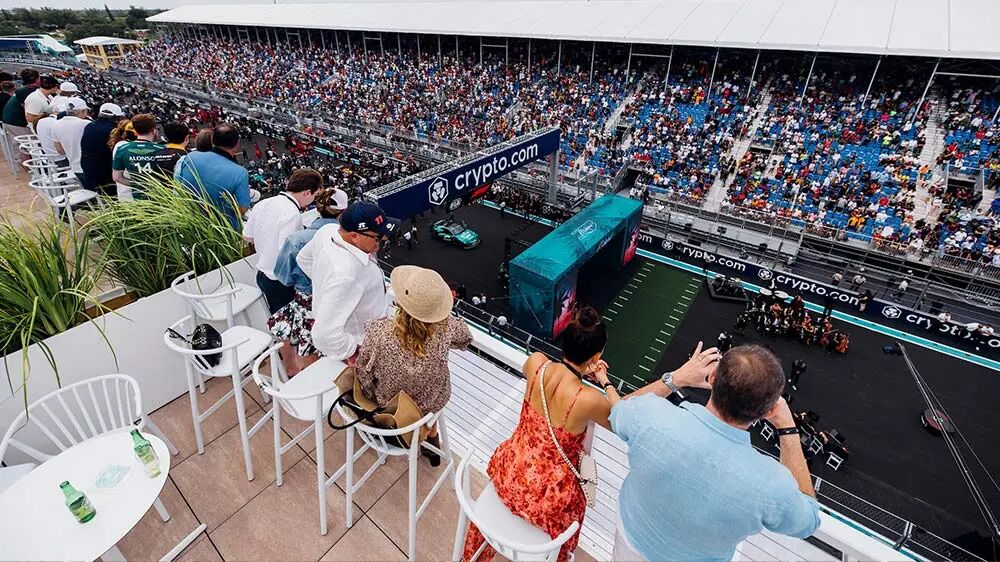
Core Insights - The growth logic of professional sports has evolved from merely attracting large audiences to focusing on high-value, high-net-worth individuals, emphasizing the importance of audience quality over quantity [3][4][12] - Sports events are increasingly being transformed into luxury experiences, integrating social status and high-end lifestyles into the spectator experience [4][12][24] - The trend of high-end ticketing and luxury experiences is not limited to F1 but is rapidly being adopted across various sports, including tennis and basketball [7][24] Group 1: Industry Transformation - The global sports industry is shifting its growth engine from serving the largest audience to providing high-value experiences for wealthier demographics [4][24] - F1 exemplifies this trend, where premium experiences like paddock clubs contribute significantly to overall revenue, often surpassing traditional ticket sales [5][10] - The standardization of high-end experiences allows for scalable revenue generation, making them a crucial part of the business model for sports leagues [14][23] Group 2: High-End Experience Development - High-end experiences are being meticulously designed and standardized, allowing for consistent delivery across different events and locations [14][16] - F1's collaboration with luxury service providers, such as DO&CO, showcases the operational sophistication required to deliver premium experiences [16][18] - The creation of a multi-tiered product matrix for high-end offerings ensures the maintenance of exclusivity while nurturing potential future high-net-worth clients [18][20] Group 3: Economic Impact and Brand Partnerships - The focus on high-net-worth individuals not only boosts ticket sales but also enhances the attractiveness of events to sponsors, creating a more lucrative advertising environment [24][30] - Partnerships with luxury brands, such as the 10-year agreement between F1 and LVMH, highlight the mutual benefits of aligning high-end experiences with luxury marketing [27][30] - Events that successfully attract affluent audiences can significantly impact local economies, transforming them into strategic assets for cities [32][34]