比亚迪

Search documents
从广东制造到全球智造,硬核广货畅销全球
Nan Fang Du Shi Bao· 2026-01-31 14:50
Core Insights - Guangdong products are transitioning from "Made in China" to "Intelligent Manufacturing Globally," showcasing innovation and quality as key advantages [1] - The "Guangdong Products Go Global" initiative aims to promote smart appliances and new energy vehicles internationally, reflecting Guangdong's commitment to innovation-driven consumption upgrades [1][2] Group 1: Global Market Performance - Guangdong's cross-border e-commerce import and export scale has expanded 66 times over nine years, accounting for over one-third of the national total, maintaining its position as the leading province [2] - By early 2026, Guangdong has established over 5,000 overseas branches, covering major economies across six continents, creating a comprehensive international layout [2][6] - The export value of Guangdong's home appliances reached 480 billion yuan in 2025, with a year-on-year growth of 12.3%, representing 35% of the national total [4][6] Group 2: Automotive Industry Growth - By 2025, Guangdong's new energy vehicle exports are projected to grow by approximately 120%, increasing its share of the national total to about 35% [3] - In 2025, Guangdong's automotive production is expected to exceed 5.7 million units, with new energy vehicles making up over 60% of this total [7] - BYD's ATTO 3 model is anticipated to rank among the top ten best-selling electric vehicles in Germany and France by 2025, highlighting its competitive edge in the European market [3] Group 3: Home Appliance Sector - Guangdong's home appliance industry, represented by brands like Gree, Midea, and TCL, has become a global leader through technological innovation and international expansion [4][6] - Midea has become the first domestic home appliance company to obtain the EU Product Environmental Declaration, marking a significant step towards becoming a global standard setter [9] - Gree's customized dehumidifiers have gained popularity in Southeast Asia, demonstrating the effectiveness of technology output over mere product exports [9] Group 4: Low-altitude Economy - Guangdong's low-altitude economy has surpassed 100 billion yuan, with over 15,000 related enterprises, capturing 70% of the global consumer drone market [5][8] - DJI leads the consumer drone market, while new entrants like Yihang are providing diverse low-altitude experiences [5][8] - The province has established 64 general airports and over 1,400 takeoff and landing points, enhancing its low-altitude infrastructure [8] Group 5: Cultural and Technological Impact - The internationalization of Guangdong products signifies a shift from simple product exports to technology and cultural exchange, enhancing China's global image [9] - Guangdong's products are not only recognized for their quality but also for their cultural significance, as seen in BYD's ATTO 3, which incorporates Chinese cultural elements [9][10] - The province's commitment to innovation and quality is expected to drive high-quality development and strengthen the global presence of "Chinese manufacturing" [10]



Chinese carmakers cash in on Britain’s EV credits
Yahoo Finance· 2026-01-31 14:00
Group 1 - Major car manufacturers in Britain, including Jaguar Land Rover and Toyota, failed to meet electric vehicle (EV) sales targets, leading to potential fines and the need to purchase credits from competitors [1][5] - Four Japanese manufacturers—Suzuki, Nissan, Mazda, and Honda—are significantly behind the targets and will need to acquire credits to avoid fines, with a collective risk of around £50 million if they do not comply [2][6] - The zero-emission vehicle (ZEV) mandate requires increasing proportions of electric vehicles in manufacturers' sales, starting at 22% in 2024 and rising to 80% by 2030 [3][4] Group 2 - Manufacturers can receive allowances for low-emission vehicles and may borrow against future sales, but this borrowing is capped, necessitating credit acquisition for those far below targets [4][5] - The analysis indicates that last year, when the target was 28%, most carmakers missed the quota based solely on EV sales, with some needing to borrow against future sales to meet requirements [5] - Industry experts criticize the mandate for favoring Chinese manufacturers, as those selling exclusively EVs have surplus credits to sell, impacting competition [3][4]
31省份去年GDP成绩单全部揭晓
第一财经· 2026-01-31 13:43
2026.01. 31 本文字数:2666,阅读时长大约4分钟 作者 | 第一财经 李秀中 在广东和新疆统计局30日发布了去年经济数据之后,全国31个省份去年GDP结果全部揭晓。在总量排 名上,31个省份基本上保持稳定,只有重庆超越辽宁发生变动;在经济增速上,西藏继续领跑全国。 西藏领跑 1月29日,西藏统计局发布,2025年,全区实现生产总值3031.89亿元,按不变价格计算,同比增长 7.0%,增速连续四个季度位居全国前列。 梳理全国各省份经济增速,西藏、甘肃、河南和河北增速位居前三位,分别增长了7.0%、5.8%、 5.6%和5.6%。而这些省份高速增长的原因分别代表了当前经济4个发动机,大基建、资源开发和新能 源汽车等制造业。 西藏GDP增速的高增长,一个重要因素就是重大基建项目的落地。近年来,川藏铁路、雅江水电站等 大项目开始施工,带动基础设施建设投资高速增长。在这些项目带动下,民间资本大量进入,工业投资 高速增长。 2025年,西藏全区固定资产投资同比增长17.2%。2023年,全区固定资产投资比上年增长35.1%(不 含川藏铁路雅安至林芝段西藏境内投资)。2024年,西藏固定资产投资同比增长19 ...


Exxon’s (XOM) Relative Valuation Comes into Focus at BofA
Yahoo Finance· 2026-01-31 13:34
Core Insights - Exxon Mobil Corporation (NYSE:XOM) is recognized as one of the 12 best long-term stocks to buy [1] Group 1: Valuation and Market Position - BofA raised Exxon's price target to $135 from $129 while maintaining a Neutral rating, indicating a focus on relative valuation among US and European integrated oil companies [2] - BofA prefers Buy-rated TotalEnergies and Chevron over Neutral-rated Exxon and Shell, and Underperform-rated BP, based on relative valuations within the supermajors [2] Group 2: Strategic Partnerships - Exxon Mobil and China's BYD have signed a long-term strategic Memorandum of Understanding to expand their partnership in hybrid vehicle technology, focusing on customized product R&D and new materials [3] - The collaboration follows the launch of a specialized engine oil for BYD's plug-in electric vehicles, indicating a commitment to innovation in the automotive sector [3] Group 3: Company Overview - Exxon Mobil is one of the largest integrated energy companies globally, involved in oil and natural gas exploration, production, refining, and manufacturing of fuels, petrochemicals, lubricants, and advanced plastics [4] - The company is also investing in lower-emission initiatives, including carbon capture and lithium production, reflecting a focus on sustainability [4]

宁德时代(300750):换电篇:迈向应用创新,再造宁德时代
Changjiang Securities· 2026-01-31 12:43
Investment Rating - The investment rating for the company is "Buy" and is maintained [14] Core Insights - The report shifts focus from lithium battery manufacturing to application innovation, emphasizing battery swapping and separation of vehicle and battery, integrated energy storage for data centers, and zero-carbon grids [4][25] - By 2024, the company is expected to capture 72% of the high-end passenger vehicle market and 45% overall, indicating strong brand value in the high-end segment but requiring more strategies for the low-end market [9][21] - The demand for lithium batteries is expected to slow, but the trend of new energy replacing fossil fuels continues to create broader market opportunities and profit flexibility [9][25] Summary by Sections Passenger Vehicles - The company launched its first-generation chocolate battery swapping solution in January 2022, with a renewed plan set for December 2024, aiming to build 1,000 battery swapping stations by 2025 and 30,000 in the long term [10][27] - The penetration rate of new energy vehicles in the 5-15 million price range is challenging, with only 38% for 5-10 million and 52% for 10-15 million, indicating a need for better cost-performance and refueling efficiency [10][30] - If the battery swapping model is successfully promoted, the company's market share in passenger vehicles could exceed 50% [10][37] Commercial Vehicles - The report discusses the advantages of battery swapping for electric heavy trucks, including higher refueling efficiency and lower lifecycle costs compared to fast charging [12] - The company aims to establish a comprehensive network of battery swapping stations to support the growing demand for electric heavy trucks [12] Business Model Viability - The chocolate battery swapping model includes both battery swapping station operations and battery bank services, with a focus on achieving competitive pricing and operational efficiency [38] - The economic viability of battery swapping stations is sensitive to the number of daily swaps and service fees, with potential returns improving significantly with higher usage [41] Strategic Progress - The company has made significant progress in partnerships with multiple automakers, with new models set to launch in 2025, indicating a strong commitment to the battery swapping strategy [56]

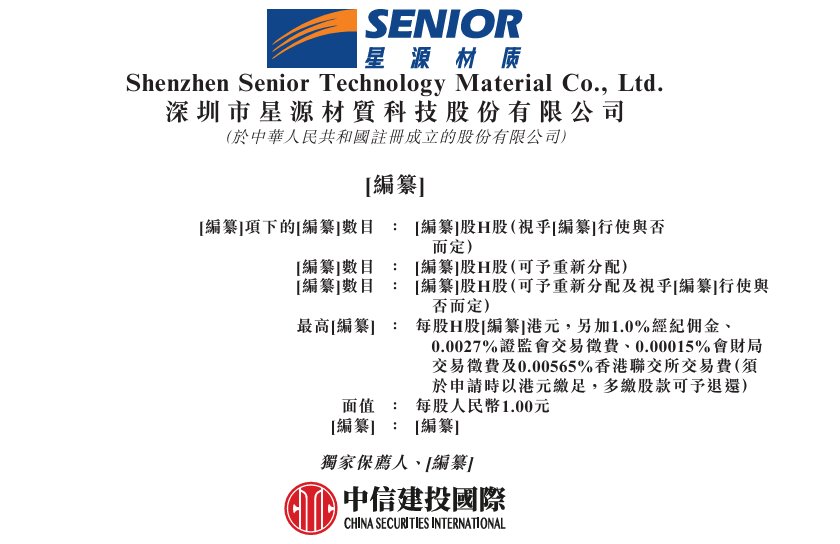
新股消息 | 星源材质二度递表港交所 为锂离子电池隔膜制造商
Zhi Tong Cai Jing· 2026-01-31 12:21
Company Overview - Shenzhen Xingyuan Material Technology Co., Ltd. (Xingyuan Material) is a lithium-ion battery separator manufacturer established in 2003, with over 20 years of industry experience in R&D, production, and sales of separators, which are critical components affecting battery quality, safety, and production costs [4]. - The company is the first in China to master the dry-process unidirectional stretching technology for lithium-ion battery separators, with a significant portion of its revenue generated from the Chinese market [4]. - The company has established six production bases in China, with overseas bases in Europe, Southeast Asia, and the United States under construction, and R&D centers in China, Japan, and Sweden, with plans for more in Southeast Asia and the U.S. [5]. Financial Performance - The company reported revenues of approximately RMB 2.867 billion, RMB 2.982 billion, RMB 3.506 billion, and RMB 2.932 billion for the years ending December 31, 2022, 2023, 2024, and the nine months ending September 30, 2025, respectively [6]. - The net profit for the same periods was approximately RMB 748 million, RMB 594 million, RMB 371 million, and RMB 141 million [8]. - The gross profit margins for the years were 44.8%, 43.3%, 28.1%, and 21.3% respectively [10]. Market Position - The company ranked second globally in lithium-ion battery separator shipments over the past five years, with a market share increasing from 11.0% in 2020 to 14.4% in 2024 [4]. - In 2024, the company is expected to hold approximately 17.1% of the Chinese battery separator market, ranking second [22]. - The company is a key supplier to leading global lithium-ion battery manufacturers, including LG Energy, Samsung SDI, and CATL [4]. Industry Overview - The global lithium-ion battery industry is projected to grow from 323.2 GWh in 2020 to 1,519.6 GWh in 2024, with a compound annual growth rate (CAGR) of 47.3% [12]. - China remains the largest market, with lithium-ion battery shipments expected to grow from 142.5 GWh in 2020 to 1,133.0 GWh in 2024, reflecting a CAGR of 67.9% [12]. - The global battery separator market is expected to expand from 6.4 billion square meters in 2020 to 27.7 billion square meters in 2024, with a CAGR of 44.5% [14].
韩系电池厂Q4巨亏6000亿,储能能否成为救命稻草?
高工锂电· 2026-01-31 11:29
摘要 2025 年 Q4 韩系三大头部电池企业集体陷入亏损,纷纷押注储能与 LFP 电池赛道转型,但面临中国企业竞争壁垒与政策不确定性等困境,短期内 难抵动力电池业务巨额亏损 。 2025年第四季度,韩国头部电池企业盈利防线全面失守, LG新能源、三星SDI、SK On 三家集体陷入亏损,其中此前三季度唯一保持盈利的LG新 能源也未能幸免。 据外媒数据,LG新能源该季度录得 1220亿韩元营业亏损 ,剔除美国先进制造业税收抵免后亏损将突破4500亿韩元;三星SDI同期预计 亏损3003亿 韩元 ,已连续四个季度亏损,全年亏损额或将达1.7万亿韩元;SK On预估 亏损2000亿韩元 ,2025年总亏损规模逼近7000亿韩元。 集体亏损:三家头部企业全线承压 韩系电池企业的集体亏损,是多重因素叠加共振的结果, 其中欧美市场政策调整引发的需求萎缩是首要诱因。 LG新能源在2025年第四季度电话会议中提及, 美国市场 除补贴终止外,大而美法案对下游市场的影响、采购法规变化及关税调整等因素,进一步 降低了市场需求的可见性;同时美国平均金属价格下跌也对电动车销量形成拖累,叠加下半年客户保守管理库存的策略,导致EV电池出 ...

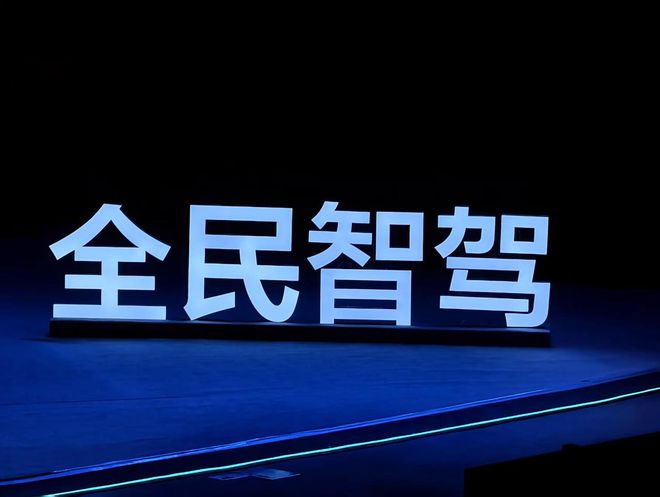
超256万用户:比亚迪兑现“全民智驾”承诺
Guan Cha Zhe Wang· 2026-01-31 11:27
导读:智驾走向全民,信任才是最终的交付。 (文 / 观察者网 周盛明 编辑 / 高莘) 1月28日,比亚迪推送"天神之眼5.0"OTA更新。该版本在端到端的基础上,新增强化学习的能力,从算 法层面推动体验的提升。 如果只把辅助驾驶理解为一种"高配功能",那么一次版本升级似乎只是产品层面的例行迭代。在智能化 的浪潮中,似乎并不引人注目。 过去一年,L2及以上辅助驾驶的渗透率持续上升,高速领航、智能泊车等功能开始成为消费者购车时 反复比较的关键配置。 中国汽车工业协会的数据显示,2025年前三季度,具备L2级功能的乘用车新车销量同比增长21.2%,渗 透率达64%,2025年全年约66.1%。 在这样的背景之下再去观察比亚迪的辅助驾驶,观察"天神之眼"的行业地位,视角则完全不同: 2025年2月,比亚迪宣布"全民智驾"的战略。仅仅到了2025年12月,比亚迪辅助驾驶车型累计保有量就 已超过256万辆,"天神之眼"也成为中国市场装车量最大的辅助驾驶系统之一。 2025年开年,比亚迪提出"全民智驾"。 与行业里常见的"辅助驾驶加价选装"不同,比亚迪选择把智驾作为一项面向大众的基础能力下沉到主力 车型上,甚至7万元级别 ...
赛力斯股票再创新低,市值蒸发超千亿
Xin Lang Cai Jing· 2026-01-31 09:40
Core Viewpoint - The market is concerned about the declining market value of Seres despite its strong performance in sales and revenue, leading to a significant drop in stock price and market capitalization [1][15]. Sales Performance - In 2025, Seres is projected to achieve sales of 472,000 electric vehicles, a year-on-year increase of 10.63%, with the AITO brand accounting for over 420,000 units [3][17]. - The AITO M9 model has sold over 260,000 units, maintaining its position as the top-selling luxury vehicle in China for 20 consecutive months [3][17]. - For the first three quarters of 2025, Seres' revenue surpassed 110 billion yuan, with a net profit of 5.3 billion yuan and a gross margin of 29.37%, all showing year-on-year growth [3][18]. Market Concerns - Despite strong sales figures, the stock price has declined due to concerns over diluted channel advantages as the AITO brand's sales channels are shared with other brands under the HarmonyOS ecosystem [4][19]. - The proportion of AITO sales within the HarmonyOS ecosystem is expected to drop from 87% in 2024 to approximately 71% in 2025 [5][20]. - The initial advantage of Huawei's technology as the primary platform for AITO is diminishing, as new models are now competing for launch opportunities [6][21]. Brand Perception - Seres acquired all 919 trademarks of the AITO brand from Huawei for 2.5 billion yuan, indicating a shift from a supplier relationship to a more integrated strategic partnership [9][23]. - There is a growing recognition among consumers that AITO represents a combination of Seres manufacturing and Huawei technology, leading to a disconnect in brand perception [9][23]. Competitive Landscape - In the luxury vehicle market, AITO M9 captures 70% of the target demographic, but faces increasing competition from brands like Zeekr, Li Auto, and others targeting the same high-income consumer base [8][22]. - The competitive pressure is heightened as these brands are actively targeting consumers who are considering switching from traditional luxury brands [8][22]. Cost Structure Concerns - The gross margin of 29.37% is above the critical threshold of 20%, indicating a healthy financial position [10][24]. - However, the costs associated with Huawei's technology and marketing services are rising, with payments to Huawei for core components reaching 75 billion yuan from 2022 to mid-2025, averaging 136,000 yuan per vehicle [10][25]. - Marketing and service fees have surged from 4.036 billion yuan in 2022 to 18.111 billion yuan in 2024, indicating a heavy reliance on Huawei's brand for maintaining high margins [10][25]. Future Goals - Seres aims to produce its one-millionth vehicle by January 2026, with a target of achieving 550,000 to 600,000 units in 2026 [11][26]. - The company plans to expand its international presence, with 20% of its Hong Kong IPO proceeds allocated for overseas sales and charging network development [12][26]. - Increased investment in R&D, amounting to approximately 5.06 billion yuan in the first three quarters of 2025, is aimed at building a robust manufacturing foundation for future growth [13][26]. Strategic Challenges - As the Huawei brand's influence wanes, Seres must establish a sustainable competitive advantage in technology, distribution, and brand recognition to avoid being overshadowed by competitors [14][27].

900亿AI存储龙头又要IPO了
投中网· 2026-01-31 07:05
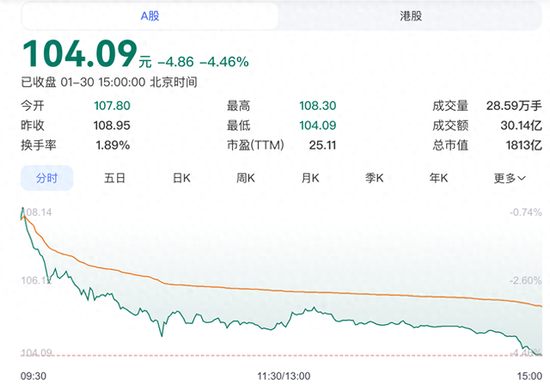
Core Viewpoint - The article discusses the significant surge in demand and prices for storage chips driven by AI, highlighting the emergence of domestic companies like Baiwei Storage as key players in this evolving market [4][10]. Group 1: Market Dynamics - The price of DDR5 memory has skyrocketed by over 300%, and enterprise SSDs are in short supply, with HBM (High Bandwidth Memory) orders extending to 2027 [4]. - The price of HBM3E chips has increased by 50%, reaching over $500, while the total cost for a complete HBM3E memory module ranges from $2,800 to $3,100 [7]. - The overall DRAM contract prices are expected to rise by 55% to 60% in Q1 2026, with NAND Flash products also seeing price increases of 33% to 38% [17]. Group 2: Company Performance - Baiwei Storage (688525.SH) anticipates a 4-5 times increase in annual performance, with projected net profits for 2025 reaching between 850 million to 1 billion yuan, marking a year-on-year growth of 427% to 520% [4][7]. - The company's stock price has surged from around 110 yuan to a peak of 199.38 yuan, reflecting an 81% increase and a market valuation nearing 900 billion yuan [12]. Group 3: Strategic Initiatives - Baiwei Storage has submitted a prospectus to the Hong Kong Stock Exchange to capitalize on the AI wave, focusing on advanced packaging and testing capabilities, as well as CXL memory pooling technology [5][9]. - The company plans to use funds from its IPO to enhance R&D and production capabilities for high-end DRAM modules and enterprise SSDs, while expanding its global sales and service network [9]. Group 4: Competitive Landscape - Major players like Samsung and SK Hynix are increasing prices and extending delivery times, indicating a tight supply chain for high-end memory products [8]. - Baiwei Storage has successfully integrated into the supply chains of top global tech companies, including Meta and Google, providing embedded storage solutions for AI devices [15]. Group 5: Future Outlook - The ongoing price increases and demand for storage chips are expected to continue until at least mid-2026, with a potential supply-demand imbalance lasting until 2028 [18]. - The surge in IPO activities among storage chip companies reflects a broader trend of value reassessment in the industry, driven by AI computing needs and domestic market dynamics [20].