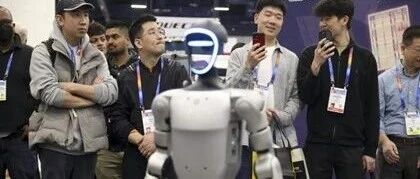
宇树科技

Search documents
人形机器人T链一级供应商冲刺IPO,机器人ETF(159770)、科创综指ETF天弘(589860)标的指数双双冲高涨近2%!
Sou Hu Cai Jing· 2026-01-12 02:33
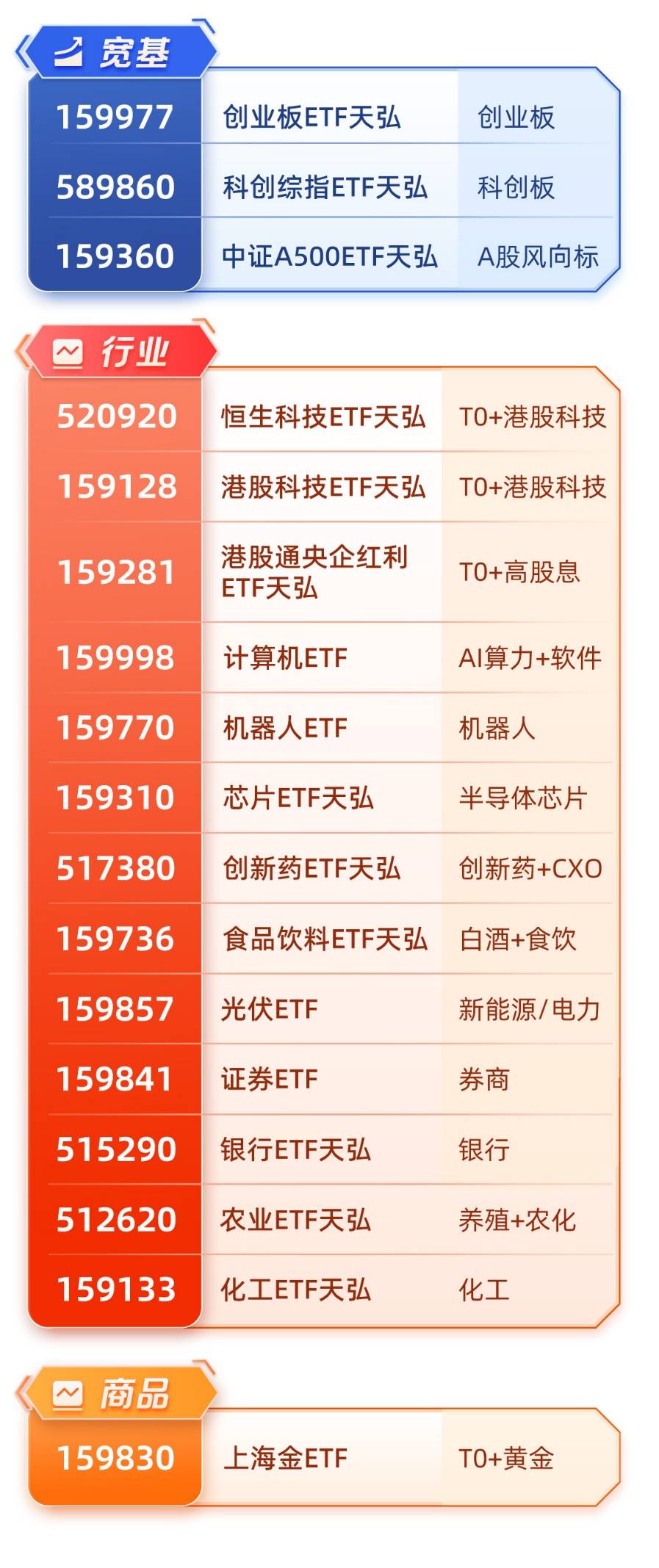
Core Insights - The Robot ETF (159770) has shown significant trading activity, with a turnover of 2.08% and a transaction volume of 229 million yuan, while the underlying index, the CSI Robot Index (H30590), increased by 1.60% [1] - The Robot ETF has experienced substantial growth, with an increase of 333 million yuan over the past two weeks and 18.47 billion shares over the last three months [1] - The Tianhong Sci-Tech ETF (589860) also performed well, with a transaction volume of 2.8849 million yuan and the underlying SSE Sci-Tech Innovation Board Composite Index (000680) rising by 1.93% [1] Product Highlights - The Robot ETF (159770) closely tracks the CSI Robot Index, providing investors with an efficient tool to invest in the entire robot industry chain [2] - The Tianhong Sci-Tech ETF (589860) closely follows the Sci-Tech Composite Index, featuring leading technology companies with strong brand advantages and research capabilities [2] Related Products - The Robot ETF (159770) corresponds to the off-market linked funds (A: 014880; C: 014881) [3] - The Tianhong Sci-Tech ETF (589860) corresponds to the off-market linked funds (A: 023721; C: 023722) [3] Industry Events - Tesla's core supplier for the Optimus robot, Xinjian Transmission, has initiated IPO counseling, focusing on components for humanoid robots, which is expected to accelerate the industry chain [3] - According to Omdia, global shipments of humanoid robots are projected to reach 13,000 units by 2025, with Chinese manufacturers dominating the market, holding the top six positions in shipment volume [4] - The leading Chinese brand, Zhiyuan Robotics, accounted for 5,168 units, representing 39% of the global market share, while Yushu Technology followed closely with 4,200 units, together controlling 71% of the market [4] Institutional Views - Recent advancements in consumer robots are moving towards embodied intelligence, with companies showcasing robots with enhanced environmental adaptability at CES 2026 [5] - The push for domestic supply chain development is expected to lower core component costs, further promoting the large-scale deployment of consumer robots [5]


宇树科技,全球第二!
DT新材料· 2026-01-11 23:28
Core Insights - The global humanoid robot market is expected to enter a rapid growth phase by 2025, with total shipments projected to reach 13,318 units [1][2] - Chinese manufacturers are leading in mass production and shipment volume, with ZhiYuan achieving over 5,100 units in annual shipments, capturing 39% of the global market share, ranking first in both metrics [1][2] Group 1: Market Overview - The humanoid robot market is projected to grow significantly, with an expected shipment of 1.3 million units in 2025 [1] - By 2035, global shipments are anticipated to reach 2.6 million units, indicating exponential growth in the next decade [6] Group 2: Key Players and Market Share - ZhiYuan, Unitree, and UBTECH are the top three players in the market, with respective shipments of 5,100 units (39% market share), 4,200 units (32% market share), and 1,000 units (7% market share) in 2025 [4] - Other notable companies include Leju Robotics, Engine AI, and Tesla, with shipments ranging from 150 to 500 units [5] Group 3: Competitive Landscape - The report categorizes humanoid robot companies into tiers based on various performance metrics, with ZhiYuan, Figure AI, Tesla, UBTECH, and Unitree in the top tier [5] - The second tier includes Agility Robotics, Apptronik, Fourier Intelligence, and Leju Robotics [5] Group 4: Future Trends and Developments - The integration of generative AI with robotics is driving the evolution of robots towards "general embodied intelligence," enhancing their autonomous learning and environmental adaptability [6] - 2026 is identified as a critical turning point for the humanoid robot industry, with significant differentiation expected among startups based on technological breakthroughs and industrial capabilities [6] - Companies like Xiaopeng Motors and ZhiYuan are preparing for large-scale production, with ZhiYuan's sales revenue expected to exceed 1 billion yuan in 2025 [2][6][7]

上千家中企携最新产品和创新技术亮相拉斯维加斯消费电子展 “中国产品的技术含金量越来越高”(第一现场)
Ren Min Ri Bao· 2026-01-11 21:59
Group 1 - The 2026 Consumer Electronics Show in Las Vegas will take place from January 6 to 9, featuring thousands of companies from 155 countries showcasing innovations in AI, digital health, energy, immersive entertainment, mobility, and robotics [1] - Chinese companies such as Lenovo, TCL, Hisense, and others are prominently displaying their latest products and innovations, indicating a growing presence and influence in the global market [1] - TCL's global marketing center vice president noted that Chinese brands are accelerating technological innovation and moving into the mid-to-high-end global market by enhancing R&D investments and transitioning from single product sales to ecosystem solutions [1] Group 2 - Hisense's Mini LED TV received high praise for its stunning picture quality, highlighting the significant efforts Chinese companies are making in original technology and product quality [2] - Hisense has established a global presence over 30 years, with 30 R&D centers and 37 industrial parks, becoming a widely recognized brand among consumers [2] - The show introduced an "Innovation Workshop" section to present trends in AI and quantum technology, facilitating interaction and collaboration among businesses, researchers, and investors [2] Group 3 - Chinese companies are showcasing numerous innovative products and technologies, demonstrating strong innovation capabilities, as noted by the CEO of South Africa's Polestar brand [3] - There is a growing recognition of the technological value of Chinese products, with increasing consumer demand for these innovations [3]



美国消费者技术协会首席执行官夏皮罗:期待在CES看到中国科技创新成果
Xin Lang Cai Jing· 2026-01-11 21:22
Core Insights - The 2026 CES in Las Vegas will prominently feature Chinese companies showcasing innovations in AI, robotics, smart mobility, and immersive entertainment [1][2] - The event will attract thousands of exhibitors from over 155 countries, focusing on transformative trends in AI, robotics, digital health, mobile transportation, and energy [1] - AI will remain a central theme at CES 2026, driving advancements in personalized health diagnostics, autonomous driving, industrial automation, and creative tools [1][2] Industry Highlights - Chinese companies such as Geely, Hisense, Lenovo, TCL, and Yushu Technology will participate, representing both leading firms and dynamic startups [1] - Lenovo will host an innovation technology summit during the event, while other Chinese firms will conduct discussions on innovation and leadership [1] - Digital twin technology is expected to enhance decision-making by simulating real systems before actions are taken, contributing to smarter and safer outcomes [2] Robotics and AI Developments - Robotics will be a key focus at CES, with advancements making homes smarter, agriculture more efficient, and factories safer [2] - Future developments in robotics will emphasize improving mobility and enhancing the ability to perform multiple tasks [2] - The introduction of the "CES Innovation Workshop" will provide a platform for showcasing the latest in AI and quantum technology through live demonstrations and forums [2]
能干活、接地气,中国机器人领跑全球
Xin Lang Cai Jing· 2026-01-11 17:16
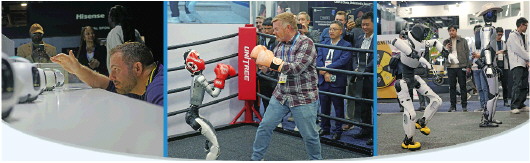
Core Insights - The CES 2026 showcased a significant "Chinese moment" in the robotics sector, highlighting the transition of humanoid robots from experimental stages to market-ready products, emphasizing their practicality and readiness for household integration [2][5] Industry Overview - Among the 598 exhibitors in the robotics sector, 149 were Chinese companies, accounting for nearly a quarter of the total. In the humanoid robot segment, 21 out of 38 exhibitors were from China, representing over half [3] - The event featured a diverse range of products from industrial to consumer-grade robots, with notable participation from both established companies and new entrants [3][4] Product Innovations - Zhiyuan Robotics, leading in humanoid robot shipments, showcased a full range of products, including the portable Q1 robot, which redefines humanoid robot design [3][4] - The introduction of the fully autonomous humanoid nanny robot by "Chinese Figure" Wan'an targets the vast household service market, capable of performing laundry tasks autonomously [5] - The Jupiter robot, equipped with a specialized training environment, can navigate complex home settings, while the W1 robot integrates emotional interaction capabilities [6] Market Trends - The trend towards consumer-grade humanoid robots is accelerating, with significant price reductions making them more accessible. The price of humanoid robots is expected to drop by over 25% compared to 2024 due to increased domestic production of key components [6][7] - Companies like Yushutech and Songyan Power are breaking the traditional high-price barrier, with products priced below 30,000 yuan and even under 10,000 yuan [6][7] Sales and Delivery Projections - The humanoid robot shipment volume in China is projected to reach 18,000 units in 2025, a more than 650% increase from 2024, with expectations of further growth to 62,500 units in 2026 [7][8] - Leading companies are already achieving significant delivery volumes, with estimates of over 5,100 units for Zhiyuan Robotics in 2025 and plans to increase to tens of thousands in 2026 [8] Global Competitive Landscape - The competition in the global humanoid robot market is shifting towards engineering, commercialization, and ecosystem development, with Chinese companies gaining more influence in this trillion-dollar sector [8]
商业航天加速发展,AI基建景气持续
Xinda Securities· 2026-01-11 15:08
Investment Rating - The investment rating for the mechanical equipment industry is "Positive" [2] Core Insights - The commercial aerospace sector is accelerating, and the demand for AI infrastructure remains strong, indicating potential investment opportunities in these areas [11][12] - The performance of excavators and other construction machinery is showing a significant recovery, with notable increases in both domestic and export sales [13][73] Company Summaries 1) Rilian Technology - Rilian Technology is a leading domestic supplier of industrial X-ray intelligent detection equipment and core components, establishing significant technological barriers in core components, AI software, and detection equipment. In the first three quarters of 2025, the company's revenue grew by 44.01% year-on-year, and net profit attributable to shareholders increased by 18.83%. The slower profit growth compared to revenue is attributed to costs related to new production bases and employee stock incentives. The company is expected to convert orders into revenue effectively, leading to profit elasticity release as cost impacts diminish [3][14]. 2) Konstar - Konstar focuses on the research and sales of digital testing instruments. Despite facing performance pressure from tariffs, the company saw a positive turning point in Q3 2025, with revenue reaching 148 million yuan, a year-on-year increase of 22.24%, and net profit attributable to shareholders growing by 30.66%. The company demonstrates strong operational resilience in international markets under tariff pressures, and its domestic business is performing well, with growth potential in MEMS sensors [4][15]. 3) Xinxin Co., Ltd. - Xinxin Co., Ltd. specializes in hard alloys and tools, reporting a revenue growth of 38.02% and a net profit increase of 75.40% in Q3 2025. The company is experiencing accelerated growth in both revenue and profit, driven by effective cost management amid rising raw material prices [5][16]. Industry Trends - The demand for AI-related infrastructure continues to thrive, with significant investments in AI technologies and related supply chains expected to benefit from this trend [12]. - The construction machinery sector is witnessing a comprehensive recovery, with excavator sales reaching 23,095 units in December 2025, a year-on-year increase of 19.2%, and loader sales growing by 30.00% [13][73].
汽车行业周报:吉利集团2025年总销量首次突破400万辆,智元机器人登顶全球人形机器人出货量榜首-20260111
KAIYUAN SECURITIES· 2026-01-11 13:47
Investment Rating - The investment rating for the automotive industry is "Positive" (maintained) [1] Core Insights - The automotive sector is experiencing significant growth, with notable performances from companies like Xpeng and Geely, which have reported substantial year-on-year increases in deliveries and sales [5][14] - The market is witnessing a shift towards electric vehicles (EVs), with a strong emphasis on autonomous driving technology and AI integration [13][14] - The overall automotive market in China is projected to continue its upward trajectory, with increasing penetration of new energy vehicles [19] Industry News - Xpeng delivered over 420,000 vehicles in 2025, marking a 126% year-on-year increase, and is focusing on full autonomous driving and physical AI production in 2026 [5][13] - Geely's total sales surpassed 4 million vehicles for the first time in 2025, achieving a 26% increase, with a 56% penetration rate for new energy vehicles [5][14] - GAC Group's sales fell by 14.06% in 2025, with GAC Toyota being the only brand to show growth [5][15] - Xiaomi's SU7 model became a bestseller in the 200,000+ yuan category, with over 360,000 units delivered [5][16] - Tesla's Shanghai Gigafactory produced its 5 millionth electric drive system, highlighting its significant role in global EV production [5][18] Market Performance - The automotive sector's performance in the A-share market showed a 2.73% increase, ranking 20th among primary industries [6][28] - The passenger vehicle index rose by 0.71%, while the commercial vehicle index increased by 3.14% [6] - The automotive parts index saw a 3.87% rise, with specific segments like electric control systems and bearings showing notable gains [6][38] Investment Recommendations - For passenger vehicles, there is a strong demand for high-end domestic luxury cars, with recommendations for companies like JAC Motors and Seres, while Geely is identified as a beneficiary [7] - In the automotive parts sector, profitability is expected to improve, with recommendations for companies such as Desay SV and Zhejiang Xiantong, and beneficiaries including Weichai Power and Fuyao Glass [7]

2026CES(国际消费类电子产品展览会)系列跟踪:AI+加速落地,物理AI+Rubin+机器人多项重要发布
Shenwan Hongyuan Securities· 2026-01-11 13:45
Investment Rating - The report maintains a positive outlook on the sectors of physical AI, overseas computing power, robotics, and intelligent connected vehicles [4][10]. Core Insights - The report highlights significant advancements in physical AI, including NVIDIA's comprehensive suite for physical AI, which encompasses models, frameworks, and infrastructure, marking a pivotal moment in AI development [4][10]. - The robotics sector is showcased as a competitive arena, with numerous Chinese companies demonstrating their technological capabilities at CES 2026, alongside international competitors like Boston Dynamics [4][10]. - The intelligent connected vehicle industry is undergoing a comprehensive upgrade, with companies like Geely enhancing their AI capabilities and setting ambitious sales targets for 2026 [4][10]. Summary by Sections 1. NVIDIA: Launch of Physical AI Suite and Rubin - NVIDIA introduced a comprehensive suite for physical AI, termed the "Cosmos" model, which integrates various data sources for training and application [10][11]. - The Rubin platform was unveiled, featuring a new memory storage system to address KV Cache expansion issues and doubling bandwidth capabilities [29][30]. 2. AMD: Need to Enhance Scale-up Capabilities - AMD showcased its MI455X Helios rack, which includes new GPU and CPU technologies aimed at competing with NVIDIA's offerings [61][66]. - The report notes that AMD's scale-up network capabilities are still in development, with future enhancements expected from partnerships with ecosystem players [64][66]. 3. Robotics: Global Competition and Technological Showcases - The report emphasizes the rapid development of the Chinese robotics industry, with numerous companies presenting their latest advancements at CES 2026 [67][68]. - Internationally, Boston Dynamics introduced the latest version of its Atlas robot, which is set for mass production and aims to integrate advanced AI capabilities [82][83]. 4. Intelligent Connected Vehicles: Comprehensive Upgrades - Geely is enhancing its AI-driven vehicle capabilities, aiming for significant sales growth and the introduction of advanced driving features by 2026 [91].

【AI产业跟踪】阿里通义发布并开源Qwen3模型
GUOTAI HAITONG SECURITIES· 2026-01-11 13:17
Investment Rating - The report does not explicitly provide an investment rating for the AI industry Core Insights - The AI industry is experiencing significant advancements, with multiple companies releasing innovative products and models, indicating a robust growth trajectory in the sector [1][5][9][14][18] - The Chinese government is actively promoting AI integration in manufacturing, aiming to establish a leading position in AI technology and applications by 2027 [5] - Major companies like Lenovo and Tencent are launching new AI models and platforms, enhancing the capabilities and applications of AI in various fields [8][15][18] Summary by Sections 1. AI Industry Dynamics - The Ministry of Industry and Information Technology and other departments have issued guidelines for the "Artificial Intelligence + Manufacturing" initiative, targeting the development of core AI technologies and industry applications by 2027 [5] - In 2026, over 30 national standards related to data in AI will be introduced, focusing on areas like intelligent agents and embodied intelligence [6] - The Sichuan provincial government has launched a plan to develop a national digital economy innovation zone, aiming to enhance digital infrastructure and promote the growth of digital industries [7] 2. AI Application Insights - LuKe announced the global launch of the "Air Charging AI Smart Lock V7 Max" at CES 2026, featuring technology for continuous power supply [10] - Yushun released training videos for its humanoid robot Unitree H2, showcasing advanced capabilities [11] - DeepTing released the world's first dual-wheeled outdoor companion robot Rovar, designed for various outdoor scenarios [12] - Rokid introduced the "Style" AI glasses at CES 2026, featuring a dual-chip architecture and 4K video capabilities [13] 3. AI Large Model Insights - Alibaba Tongyi has released and open-sourced the Qwen3-VL-Embedding and Qwen3-VL-Reranker models, designed for multimodal information retrieval and understanding [14] - Tencent launched the HY-Motion1.0 model, a significant advancement in 3D character animation generation [15] - Xiaopeng unveiled its second-generation VLA model, marking a shift towards practical applications of physical AI technology [16][17] - Lenovo introduced the Lenovo Qira personal super intelligent agent, emphasizing cross-device functionality and personalized services [18] 4. Technology Frontiers - Alibaba Cloud launched a new multimodal interaction development kit, integrating various foundational models for diverse applications [19] - Tsinghua University published a paper on an AI-driven drug virtual screening platform, significantly improving screening speed and accuracy [20] - Chinese scientists made progress in cancer immunotherapy, developing a protein-targeting degradation technology [21] - A team from the University of Science and Technology of China achieved advancements in heterogeneous quantum communication networks [22]



机器人进家,卡在哪一步?
财富FORTUNE· 2026-01-11 13:04
Core Insights - The article discusses the potential for a technological revolution in household robotics driven by advancements in artificial intelligence, particularly following the recent CES event in Las Vegas [1][3] - It highlights the challenges that need to be addressed before household robots can become reliable assistants, including data availability, privacy concerns, and societal acceptance [3][4] Group 1: Current State of Household Robotics - The rapid development of AI has led to increased interest in humanoid household robots, with existing AI systems already integrated into daily life through devices like vacuum robots and smart doorbells [3] - Despite significant advancements, over 46% of companies struggle to convert innovative concepts into practical products due to a lack of training data and real-world experience [4] - The need for household robots to operate safely 99.999% of the time is emphasized, as any failure could lead to severe consequences [4] Group 2: Privacy and Data Challenges - The introduction of household robots raises significant privacy concerns, as they may inadvertently expose personal data to malicious actors [5][6] - The industry faces the challenge of ensuring data security while developing reliable robots, with a need for a systematic approach similar to that seen in the automotive industry [6][9] - The article suggests that developers should learn from the automotive sector's gradual approach to problem-solving and innovation [6] Group 3: Building Trust and Acceptance - Gaining public trust is crucial for the acceptance of household robots, similar to how elevators were initially met with skepticism [7] - The article draws parallels between the evolution of AI in credit card fraud detection and the need for household robots to demonstrate reliability and safety [7] - It stresses the importance of addressing ethical considerations and user experience alongside technological development to foster trust in robotic systems [9]