华润啤酒

Search documents
观酒|主业增长乏力布局饮料等外业,啤酒公司能做好副业吗?
Nan Fang Du Shi Bao· 2025-05-13 09:23
Core Viewpoint - The beer industry is experiencing performance pressure, leading companies to explore diversification through cross-industry ventures to boost growth and attract investment [1][4][5]. Group 1: Industry Trends - Major beer companies in China, including Chongqing Beer, Qingdao Beer, and Yanjing Beer, are increasingly engaging in cross-industry expansions, particularly into beverage and liquor sectors, as a response to declining beer sales [1][2][4]. - The trend of diversification is seen as a way to build a "second growth curve" and create a competitive advantage, although it may take around five years for these new ventures to significantly impact performance [1][6]. Group 2: Company Strategies - Chongqing Beer has launched new beverage products, such as Cang'e soda, leveraging existing distribution channels in strong markets like Xinjiang and Chongqing [2][3]. - Qingdao Beer is pursuing a full acquisition of a Huangjiu (yellow wine) factory and has integrated its beverage business with existing operations, aiming to avoid competition with its beer products [2][3]. - Yanjing Beer has introduced a new soda brand, Best, and plans to utilize its beer distribution channels to penetrate the market quickly, focusing on dining establishments [3][4]. Group 3: Performance Insights - Despite some positive signs in Q1, overall performance for major beer companies remains mixed, with revenue and profit declines reported for several firms in 2024 [4][5][7]. - The sales volume for beer has decreased, with notable declines for companies like China Resources Beer and Qingdao Beer, attributed to high previous year bases and changing consumer preferences [5][6]. Group 4: Market Outlook - Analysts suggest that while cross-industry ventures are necessary for growth, the actual benefits may take time to materialize, with successful examples from other industries taking over a decade to develop [6]. - The diversification trend among beer companies is expected to continue, driven by changing consumer environments and the need for companies to establish strong brand recognition [6].




港股收盘(05.13) | 恒指收跌1.87%终结八连涨 医药股逆市走强 苹果概念股集体回吐
智通财经网· 2025-05-13 08:55
蓝筹股表现 舜宇光学科技(02382)领跌蓝筹。截至收盘,跌7.64%,报68.3港元,成交额17.75亿港元,拖累恒指6.66 点。舜宇光学科技公布,2025年4月,手机镜头出货量1.03亿件,环比增长9.2%,同比增长1.3%。车载 镜头出货量1156.6万件,环比增长17.8%,同比增长28.9%。手机摄像模组出货量3924.7万件,环比增长 5.2%,同比下降14.1%。 智通财经APP获悉,港股未能延续昨日强劲走势,三大指数悉数回吐,恒指跌近2%终结八连涨,恒生 科技指数则跌超3%。截止收盘,恒生指数跌1.87%或441.19点,报23108.27点,全日成交额2198.45亿港 元,较上一交易日明显缩减;恒生国企指数跌2.02%,报8386.21点;恒生科技指数跌3.26%,报5269.66 点。 兴业证券全球首席策略分析师张忆东表示,过去压制中国资产的三座大山逐步被推翻。中国资产的风险 溢价将逐步从过去四年的历史高位回归正常,甚至可能回到历史低位水平。增量资金将成为港股市场震 荡向上的重要驱动力。后续依然战略性看多港股,认为港股将迎来一个新的大时代,长牛的趋势依然存 在。 其他蓝筹股方面,东方海 ...

【港股收评】三大股指集体回调!苹果概念、汽车股普跌
Jin Rong Jie· 2025-05-13 08:52
Market Overview - On May 13, Hong Kong's three major indices collectively declined, with the Hang Seng Index falling by 1.87%, the Hang Seng China Enterprises Index down by 2.02%, and the Hang Seng Tech Index decreasing by 3.26% [1] Sector Performance - The Apple-related stocks experienced significant declines, including: - Highway Electronics (01415.HK) down 7.69% - Sunny Optical Technology (02382.HK) down 7.64% - BYD Electronics (00285.HK) down 7.11% - AAC Technologies (02018.HK) down 3.07% - Q Tech (01478.HK) down 3.41% [1] - The automotive supply chain, including lithium batteries and Tesla-related stocks, also saw declines: - Jinli Permanent Magnet (06680.HK) down 4.88% - Xpeng Motors-W (09868.HK) down 5.35% - NIO-SW (09866.HK) down 5.17% - Xiaomi Group-W (01810.HK) down 3.85% - Li Auto-W (02015.HK) down 3.05% [1] - Semiconductor stocks faced notable declines: - Hua Hong Semiconductor (01347.HK) down 4.24% - SMIC (00981.HK) down 4.05% - Beike Micro (02149.HK) down 2.86% - Shanghai Fudan (01385.HK) also declined [1] Technology Sector - Technology-related stocks, including short video concepts, cloud office, and cloud computing, mostly weakened: - Weimob Group (02013.HK) down 5.52% - Kuaishou-W (01024.HK) down 4.62% - Bilibili-W (09626.HK) down 3.14% - Alibaba-W (09988.HK) down 3.89% - NetEase-S (09999.HK) down 2.96% - Kingsoft Cloud (03896.HK) down 5.91% [2] - Other consumer sectors, including holiday concepts, sports goods, home appliances, and beer, also saw declines: - Meituan-W (03690.HK) down 4.91% - China Resources Beer (00291.HK) down 4.63% - Hisense Home Appliances (00921.HK) down 2.33% [2] Biopharmaceutical Sector - The biopharmaceutical and medical aesthetics sectors showed resilience, with notable gains: - Kintor Pharmaceutical-B (02171.HK) up 14.94% - Peijia Medical-B (09996.HK) up 9.2% - Yiming Oncology-B (01541.HK) up 7.77% - Genscript Biotech (02367.HK) up 5.64% [2] Gold Sector - The gold sector saw gains in the afternoon, with significant increases: - Tongguan Gold (00340.HK) up 15.79% - Chifeng Jilong Gold Mining (06693.HK) up 5.19% - Lingbao Gold (03330.HK) up 5.37% - Shandong Gold (01787.HK) up 4.75% - China Gold International (02099.HK) up 4.26% - Zhaojin Mining (01818.HK) up 3.45% [3] - The international gold price rebounded, influenced by uncertainties in U.S. macroeconomic policies and inflation concerns, which may support gold prices throughout the year [3]
港股开盘 | 恒生指数低开0.23% 华润啤酒(00291)跌超6%
智通财经网· 2025-05-13 01:39
Group 1 - The Hang Seng Index opened down 0.23%, and the Hang Seng Tech Index fell 0.29% [1] - China Resources Beer dropped over 6%, while Li Auto fell over 2%. In contrast, UBTECH Robotics rose over 14% following a comprehensive cooperation agreement with Huawei [1] Group 2 - Cathay Securities noted that historical trends show that economic conditions, liquidity, and technical factors are crucial for the rise of Hong Kong stocks. They expect substantial progress in US-China trade negotiations and a decline in tariff risks, alongside the implementation of various incremental policies, which may lead to a stable macroeconomic recovery [2] - Domestic monetary easing measures have been implemented, maintaining liquidity, which could result in continued inflows of southbound funds into the Hong Kong stock market. Current valuations of Hong Kong stocks are at historically low levels, indicating high medium to long-term investment value [2] - China Galaxy Securities' chief strategist Yang Chao suggested focusing on consumer and technology sectors, as well as sectors with low trade dependency and high dividend yields in the short term [2] Group 3 - Citigroup's report anticipates moderate government stimulus to boost the domestic economy, particularly benefiting the consumer, internet, resources, and technology sectors. They believe that both mainland and Hong Kong stock markets appear undervalued, slightly below historical averages, maintaining a constructive outlook [3] - Citigroup upgraded the consumer sector to "overweight" and prefers domestic stocks, while downgrading the transportation sector to "neutral" due to rising US trade tariffs. They also favor large internet stocks and technology stocks supported by government policies [3] - Huatai Securities remains optimistic about the relative performance of Hong Kong stocks, suggesting a shift towards a more aggressive stance due to improved policy environments and low valuations in technology and consumer sectors [3] Group 4 - According to China Securities Journal, significant net inflows of southbound funds are expected from 2025 onwards, with strong inflows into ETFs indicating individual investors' interest in Hong Kong stocks. Estimates suggest a net inflow of HKD 80 billion to 100 billion for the year [4] - Huatai Securities' chief macroeconomist noted that overseas liquidity is likely to remain loose in the short term, which may not negatively impact Hong Kong stocks. Recent strong purchases of Japanese bonds and stocks by overseas investors suggest a global search for alternatives to US assets [4] - The Hong Kong dollar has strengthened recently, and while the interest rate differential with the US has narrowed, the strong Hong Kong dollar indicates potential global fund reallocation demand for Hong Kong stocks [4]
财报解读|2024年啤酒业绩集体降速,场景化与多元化增长路线初现
Di Yi Cai Jing· 2025-05-12 10:07
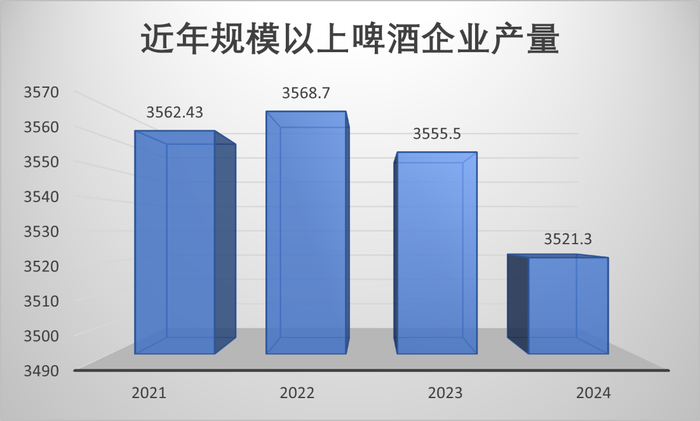
Core Insights - The beer industry is experiencing a slowdown in growth for 2024, with major companies reporting their first negative revenue growth in three years due to various factors including weather and market conditions [1][2]. Industry Performance - Major beer companies such as Budweiser APAC, China Resources Beer, Tsingtao Brewery, and Chongqing Brewery have reported revenue declines ranging from 1% to 13% in 2024, with Budweiser APAC experiencing the largest drop at 13% [2]. - The total beer production in China for 2024 was 35.213 million kiloliters, a decrease of 0.6% year-on-year, making beer the only declining category in the food and beverage sector [2]. - In the first two months of 2025, the cumulative production of major beer companies in China fell by 4.9% [3]. Shifts in Growth Strategy - The beer industry is transitioning from a focus on high-end products to a more diversified approach, including scenario-based layouts and multi-category operations to seek new growth [4][5]. - Companies are adapting to changing consumer preferences, with a shift from high-priced products to better value-for-money options, particularly in the mid-range price segment [5]. Diversification Efforts - Qingdao Beer announced a 665 million yuan acquisition of 100% equity in Jimo Huangjiu, marking its entry into the yellow wine market to diversify its product offerings [7]. - Other companies like Yanjing Beer and Chongqing Beer are also expanding into non-beer beverages, with Yanjing launching a new soda product and Chongqing introducing various soft drinks [7][8]. - The beverage industry is showing stable growth, with a 7.9% increase in all-channel growth for 2024, indicating potential opportunities for beer companies to expand into this sector [7][8].
中证香港300休闲指数报2674.35点,前十大权重包含腾讯控股等
Jin Rong Jie· 2025-05-12 08:06
Core Insights - The China Securities Hong Kong 300 Leisure Index (H300 Leisure) has shown a significant increase, rising by 6.37% over the past month, 1.24% over the last three months, and 3.65% year-to-date [1] Group 1: Index Performance - The H300 Leisure Index is currently reported at 2674.35 points [1] - The index is designed to reflect the overall performance of listed companies in various sectors such as banking, transportation, resources, infrastructure, logistics, and leisure [1] Group 2: Index Composition - The top ten holdings of the H300 Leisure Index include Tencent Holdings (12.17%), NetEase (11.18%), Kuaishou (10.7%), Baidu Group (10.01%), Yum China (8.98%), Trip.com Group (8.54%), Meituan (8.46%), Galaxy Entertainment (5.49%), China Resources Beer (2.99%), and Bilibili (2.72%) [1] - The index is fully composed of stocks listed on the Hong Kong Stock Exchange, with a 100% allocation [1] Group 3: Sector Allocation - The sector allocation of the index shows that leisure services account for 40.90%, digital media for 38.37%, cultural entertainment for 12.44%, alcohol for 6.99%, and marketing and advertising for 1.30% [2] - The index samples are adjusted semi-annually, with adjustments occurring on the next trading day after the second Friday of June and December [2]

“美好生活、书香中国”城市行南宁站成功举办
Qi Lu Wan Bao· 2025-05-12 07:11
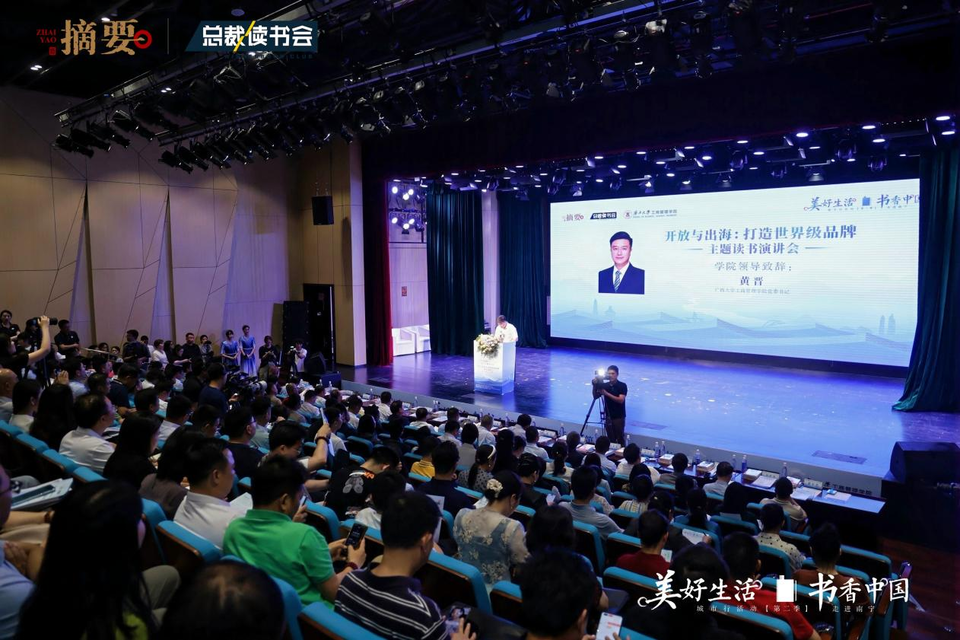
Group 1 - The event "Open and Go Global: Building World-Class Brands" was successfully held in Nanning, aiming to promote national reading and the construction of bookish enterprises and cities [1][22] - Chinese enterprises are at a critical juncture where "not going global means going out," emphasizing the need to accelerate their global expansion to enhance competitiveness [3][4] - The event featured discussions on practical methods for building world-class brands, including insights from the books "Going Global: Lenovo's 20 Years of Globalization" and "Survival Rules in the New Business World" [3][4] Group 2 - 彭华岗, President of the China Enterprise Reform and Development Research Association, highlighted that Chinese enterprises have the capability to go global but face challenges in the globalization process [4] - The book "Going Global" reviews Lenovo's globalization journey and provides a practical methodology for enterprises looking to expand internationally [4] - 侯孝海, Chairman of China Resources Beer, discussed the significant changes in the global landscape and how his company adapted its strategy to thrive in the new business environment [6][7] Group 3 - 夏飞, a former president of Guangxi Finance Institute, emphasized the importance of brand globalization, particularly in the ASEAN market, amidst challenges posed by decoupling from the West [9][11] - 张国华, President of the China Advertising Association, outlined key factors for building world-class brands, including product quality, innovation, market research, and understanding local cultures and regulations [11] - The event included a "Bookish Enterprise Creation Project" award ceremony, recognizing exemplary organizations in promoting reading and knowledge [19]

Z世代不爱豪饮爱微醺,存量博弈下啤酒巨头如何“大象转身”?
Xin Lang Cai Jing· 2025-05-12 05:40
Core Insights - The Chinese beer market is entering a new phase characterized by stock competition and structural adjustments, with a projected 0.6% decline in production for 2024, marking the beginning of a "volume reduction and price increase" cycle [1][3] - Major beer companies are experiencing revenue declines, with the top five companies reporting a 4% drop in total revenue, while profit performance is increasingly divergent [3][5] Industry Performance - In 2024, the beer industry saw a 5.7% decline in revenue, making it the only category in the food and beverage sector to experience negative growth [5] - Key players like China Resources Beer, Budweiser APAC, and Tsingtao Brewery reported revenue declines of 0.76%, 8.9%, and 5.3% respectively, while Chongqing Brewery's revenue fell by 1.15% [5][8] - The total sales volume for major companies also decreased, with China Resources Beer down 2.5% and Budweiser APAC down 11.8% [8] Profitability Trends - Tsingtao Brewery managed a slight profit increase of 1.81%, while Yanjing Brewery saw a significant profit growth of 63.74%, contrasting with declines in profits for other major players [3][10] - Yanjing Brewery's revenue grew by 3.2%, allowing it to surpass Chongqing Brewery and become the fourth largest in the industry [10] Market Dynamics - The beer market is witnessing a shift in consumer preferences, particularly among younger generations who favor lighter drinking experiences, leading to a decrease in traditional beer consumption [12][13] - The restaurant industry is facing challenges, with a significant reduction in the number of registered dining establishments, impacting beer sales in on-premise channels [12][13] Strategic Responses - Companies are adapting by exploring new sales channels such as e-commerce and instant retail to meet changing consumer demands [13][14] - The rise of craft beer is also influencing the market, with a notable increase in the number of craft beer companies established in recent years [14] High-End Market Challenges - Despite efforts to target the high-end market, growth appears to be plateauing, with many companies facing competition from lower-priced craft beers [15][16] - Companies like Qingdao Beer and China Resources Beer are focusing on brand building and product innovation to maintain competitiveness in the high-end segment [15][18]
异动股盘点0512| 特朗普重挫港股医药;汽车、汽配、博彩上行;美股上周五LYFT、RGC、TTD大涨
贝塔投资智库· 2025-05-12 03:58
Group 1: Automotive Sector - Chinese electric vehicle manufacturers achieved a wholesale penetration rate of 51.7% in April, up 11 percentage points year-on-year. The wholesale sales of new energy passenger vehicles reached 1.133 million units, a year-on-year increase of 40.2% and a month-on-month increase of 0.3%. Cumulative wholesale from January to April reached 3.981 million units, growing by 42.1% [1] - Retail sales of new energy passenger vehicles in April were 905,000 units, a year-on-year increase of 33.9% but a month-on-month decrease of 8.7%. Cumulative retail from January to April reached 3.324 million units, growing by 35.7% [1] - Exports of new energy passenger vehicles in April totaled 189,000 units, a year-on-year increase of 44.2% and a month-on-month increase of 31.6%. Cumulative exports from January to April reached 590,000 units, growing by 26.7% [1] Group 2: Automotive Parts Sector - Chinese auto parts stocks rose, with companies like Minth Group and Delta Electronics seeing increases of 4.07% and 3.58% respectively. The competitive advantage of Chinese parts manufacturers in the U.S. remains strong according to Guotai Junan [1] Group 3: Beverage Sector - Beer stocks saw a general increase, with China Resources Beer rising over 3% and Budweiser APAC rising over 2%. Dongwu Securities reported a recovery in the beer sector for Q1 2025 [1] Group 4: Technology Sector - KEEP's stock rose over 10% as the company accelerates AI integration, potentially breaking through user scale and commercialization ceilings [1] - Apple-related stocks performed well, with Sunny Optical Technology rising over 10% and AAC Technologies rising over 8%. Apple announced price reductions for iPhone 16 Pro and Pro Max in preparation for the 618 shopping festival [2] Group 5: Pharmaceutical Sector - Pharmaceutical stocks faced significant declines following U.S. President Trump's announcement of an executive order to align U.S. prescription drug prices with those of the lowest-priced countries, potentially causing prices to drop by 30% to 80% [2] - Faraday Pharmaceuticals saw an increase of over 8%, with a month-to-date rise exceeding 35% due to multiple drug development and clinical promotion updates [2] Group 6: Gaming Sector - Gaming stocks rose as institutions reported that the Golden Week gambling revenue significantly exceeded expectations, with companies like Melco International Development and Galaxy Entertainment seeing increases of over 6% and 4% respectively [2] Group 7: U.S. Market Highlights - Crowdstrike's stock fell 4.21% due to an investigation by the U.S. Department of Justice and SEC regarding a $32 million transaction with Carahsoft Technology Corp [4] - Lyft's stock surged 28.08% after reporting Q1 revenue growth of 14% to $1.45 billion, with a net profit of $2.6 million [4] - The Trade Desk's stock rose 18.6% after reporting Q1 adjusted earnings per share of $0.33, exceeding market expectations [5]

湘水连香江,开放长沙拥抱世界丨湘约长沙 湾启新程·港资企业在长沙
Chang Sha Wan Bao· 2025-05-11 08:35
Group 1: Investment and Economic Cooperation - Changsha has actively engaged with the Guangdong-Hong Kong-Macao Greater Bay Area, using Hong Kong as a bridge to the world, resulting in a significant increase in Hong Kong investment in Changsha [1][2] - In 2024, Changsha established 223 new foreign-invested enterprises, an increase of 8.3% year-on-year, with 94 of these being Hong Kong-funded, accounting for over 40% of the total [4] - Hong Kong remains the largest source of foreign investment in Changsha, with Hong Kong's investment amounting to 68.7% of the city's actual utilized foreign capital [4] Group 2: Industry Presence and Growth - There are currently 659 Hong Kong-funded enterprises in Changsha, representing 46% of all foreign enterprises in the city, primarily in manufacturing, real estate, modern logistics, wholesale and retail, leasing and business services, and finance [4] - Bluefocus Technology has established four industrial parks in Changsha, with total revenue of 17.063 billion yuan and a net profit of 429 million yuan in Q1 2025 [4][5] Group 3: Trade and Export - Changsha's exports to Hong Kong have been significant, with a cumulative import and export value of 108.61 billion yuan over the past five years [7] - Hong Kong is the largest export region for Changsha, with products such as mobile phones, gold jewelry, and electronic components being exported [7] Group 4: Cultural and Technological Integration - Changsha has become a popular destination for Hong Kong tourists, with 48,400 visitors from Hong Kong and Macao in Q1 2025, accounting for 31.9% of total inbound tourists, a year-on-year increase of 201.57% [7] - The collaboration between Changsha and Hong Kong in technology is expanding, with over 50 technology and industry cooperation projects initiated from the Guangdong-Hong Kong-Macao Innovation Park [7][8]