中国生物制药

Search documents
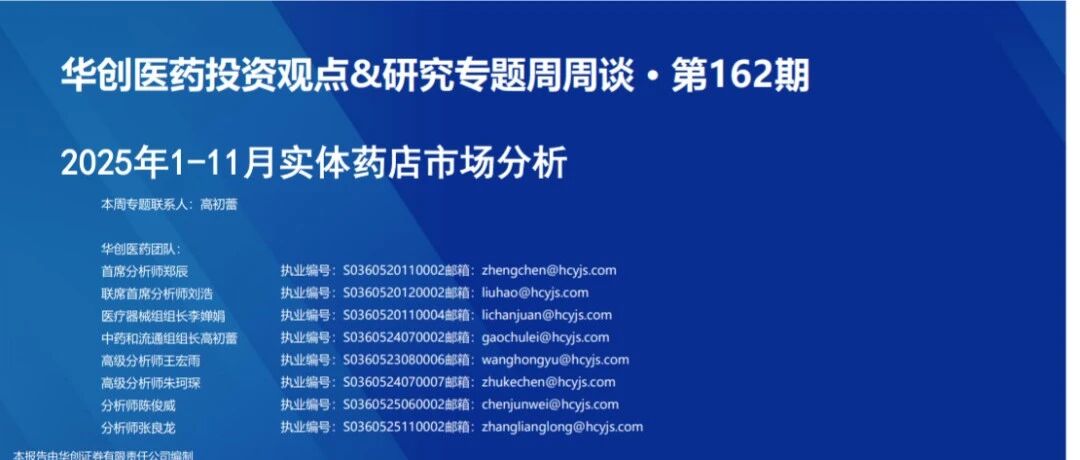
华创医药周观点:2025年1-11月实体药店市场分析 2026/02/07
华创医药组公众平台· 2026-02-07 14:58
Core Viewpoint - The pharmaceutical retail market is transitioning towards high-quality development, with significant growth opportunities anticipated in various segments, including traditional Chinese medicine, medical devices, and innovative drugs [17][22][46]. Market Overview - The retail scale of China's physical pharmacies for January to November 2025 is projected to reach 557.7 billion yuan, showing a slight year-on-year decline of 0.8%. However, the cumulative scale for October and November is expected to be 108.7 billion yuan, reflecting a year-on-year growth of 4.0% [22][30]. - The pharmaceutical retail market is experiencing a recovery phase, driven by ongoing healthcare reforms and the optimization of market structures, which are expected to enhance the industry's long-term growth prospects [22][30]. Category Analysis - **Pharmaceuticals**: The cumulative scale for pharmaceuticals from January to November 2025 is estimated at 453.4 billion yuan, with a year-on-year growth of 0.4%. The sales scale for October and November is projected to be 88 billion yuan, with a year-on-year increase of 5.5% [29]. - **Traditional Chinese Medicine (TCM)**: The cumulative scale for TCM from January to November 2025 is expected to be 42.9 billion yuan, reflecting a year-on-year decline of 4.2%. However, November shows a month-on-month growth of 12.5% [30]. - **Medical Devices**: The cumulative scale for medical devices is projected to be 26.1 billion yuan, with a slight year-on-year decline of 0.4%. The sales scale for October and November is expected to show a year-on-year growth of 6.3% [37]. - **Health Products**: The cumulative scale for health products is anticipated to be 21 billion yuan, with a year-on-year decline of 15.7%. However, November shows signs of recovery with a month-on-month growth of 5.3% [34]. Investment Opportunities - The pharmaceutical sector is expected to benefit from a low valuation environment, with public funds showing low allocation to the sector. The anticipated recovery in macroeconomic factors and the demand for major products are expected to drive growth in the industry [15]. - The innovative drug sector is transitioning from quantity to quality, with a focus on differentiated products and internationalization. Companies with strong pipelines and the ability to deliver profits are recommended for investment [15][46]. - The medical device market is witnessing a recovery in bidding volumes, with ongoing updates and international expansion opportunities. Companies focusing on innovation and product upgrades are expected to perform well [46]. Specific Product Trends - **Top Chemical Drugs**: In October and November 2025, the top 20 chemical drug categories accounted for 78.3% and 80.0% of the market share, respectively, with significant growth in categories such as anti-tumor drugs and systemic antiviral drugs [40][41]. - **Top Traditional Chinese Medicine Products**: The market share for TCM in November reached 86.4%, with notable growth in cold medications and cough remedies [44][45]. Conclusion - The pharmaceutical retail market is poised for a significant transformation, with various segments showing potential for growth. The ongoing reforms and market dynamics are expected to create a favorable environment for investment in the pharmaceutical and healthcare sectors [22][30][46].

美国医药调研反馈:肿瘤、代谢、自免、中枢神经系统赛道推荐更新
Haitong Securities International· 2026-02-06 11:33
Investment Rating - The report provides an "Outperform" rating for multiple companies in the healthcare sector, including BeiGene, JD Health, WuXi Biologics, and others, indicating a positive outlook for these stocks [1]. Core Insights - The macro and industry environment is improving due to the resolution of policy uncertainties, the release of significant clinical data, and a resurgence in global M&A activity, leading to a notable increase in investor sentiment towards innovative drugs for 2026 [4][11]. - In oncology, the PD-1/VEGF dual antibody approach is transitioning from "mechanism validation" to "clinical and industrial resonance," with multiple global Phase III trials underway, expected to catalyze approvals and data releases within the year [5][17]. - The metabolic sector is seeing growth in the cash-pay market for GLP-1 drugs, driven by limited insurance coverage and high out-of-pocket costs, prompting companies to enhance accessibility through direct sales and pricing adjustments [6][25]. - In the autoimmune space, there is a growing concentration risk among major products from multinational corporations (MNCs), with new antibody platforms expected to yield significant data in 2026, potentially leading to new business development opportunities [7]. - The central nervous system (CNS) investment focus remains on advancing Aβ monoclonal antibody treatments, with key data expected to open up early intervention market opportunities [9]. Summary by Sections Oncology - The PD-1/VEGF dual antibody's clinical and industrial certainty is strengthening, with major companies conducting multiple global Phase III trials across high-value indications [17]. - The Pan-RAS precision therapy is entering a realization phase, with key Phase III data expected in 2026 for pancreatic cancer and NSCLC [22]. Metabolic - The cash-pay market for GLP-1 drugs is expanding due to limited insurance coverage, with companies like Eli Lilly and Novo Nordisk adopting different direct-to-consumer strategies to enhance accessibility [25][26]. - Small nucleic acid therapies are expected to upgrade treatment paradigms, showing competitive data in weight loss and safety profiles when combined with GLP-1 [30]. Autoimmune - MNCs are increasingly reliant on a few blockbuster products, with structural opportunities arising from new antibody platforms expected to report data in 2026 [7]. - The trend towards oral formulations in autoimmune diseases is gaining traction, offering advantages in adherence and competitive differentiation [7]. CNS - The focus in CNS remains on Aβ monoclonal antibody treatments, with advancements expected to shift treatment towards earlier intervention populations [9]. - New delivery methods, such as systemic administration of small nucleic acids, are being explored as complementary approaches [9].


港股医药行业1月跑赢恒生指数:政策继续支持高品质创新药与高端医疗器械
ZHONGTAI INTERNATIONAL SECURITIES· 2026-02-06 10:30
Investment Rating - The report indicates a positive outlook for the pharmaceutical industry, with a recommendation for investment based on favorable fundamentals [17]. Core Insights - The Hong Kong pharmaceutical sector outperformed the Hang Seng Index in January, with the Hang Seng Healthcare Index rising by 8.6%, exceeding the index by 1.7 percentage points. This was driven by several factors, including profit warnings from CXO sector companies, advancements in internet healthcare, and supportive policies from the National Healthcare Security Administration (NHSA) for high-quality surgical robots [1][7]. - The NHSA has issued guidelines to support the pricing of high-quality surgical robots, allowing for premium pricing based on their advanced capabilities and precision in complex surgeries [3][15]. - The State Drug Administration continues to back the development of high-quality innovative drugs, emphasizing clinical value and providing market exclusivity for certain medications, including those for rare diseases and pediatric use [2][14]. Summary by Sections Industry Performance - The pharmaceutical industry in Hong Kong showed strong performance in January, with significant contributions from the CXO sector and internet healthcare companies like JD Health and Ark Health, which reported positive earnings forecasts [1][7]. Policy Support - Recent revisions to the Drug Administration Law emphasize support for innovative drug development, including streamlined approval processes and enhanced regulatory oversight to ensure drug safety and quality [2][14]. - The NHSA's new pricing guidelines for surgical robots aim to incentivize the use of advanced medical technologies, potentially leading to increased revenue for companies involved in this sector [3][15]. Company Recommendations - China Biologic Products (1177 HK) is expected to see double-digit sales growth by 2025, bolstered by its acquisition of Haogiya Biotech, which specializes in small nucleic acid drugs [4][16]. - WuXi AppTec (2359 HK) and WuXi Biologics (2269 HK) have also shown promising earnings forecasts, indicating a recovery in demand within the CXO sector [4][16]. - The report highlights the potential of leading medical AI platform companies, such as Insilico Medicine (3696 HK), which has secured multiple overseas licensing deals, reflecting high industry recognition for its capabilities in enhancing pharmaceutical R&D efficiency [4][16].
国产创新药,正在破局
3 6 Ke· 2026-02-05 11:26
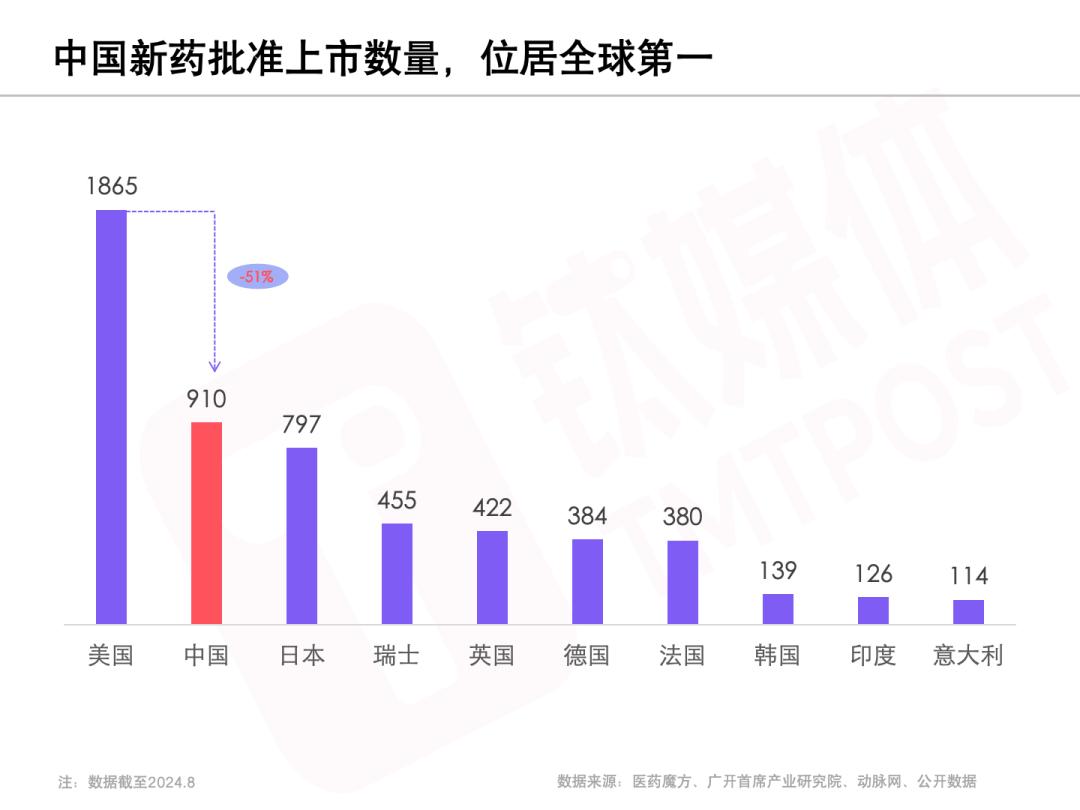
Core Viewpoint - The article discusses the significant progress in China's innovative drug development, highlighting the increase in the number of new drugs approved and the growing competitiveness of Chinese pharmaceutical companies in both domestic and international markets [4][16]. Group 1: Growth of Innovative Drugs - In 2024, the number of domestically developed Class 1 new drugs in China reached 40, a substantial increase from just 9 in 2018 [2][3][4]. - Since the beginning of the 14th Five-Year Plan, 113 innovative drugs have been approved, which is 2.8 times the number approved during the 13th Five-Year Plan [4]. - As of August 2024, there are 910 new drugs available in China, indicating a robust growth in the pharmaceutical market [6]. Group 2: Clinical Trials and Breakthroughs - In a head-to-head clinical trial, the drug Ivoris (依沃西单抗) developed by Kangfang Biopharma outperformed the global best-selling cancer drug, Pembrolizumab (K drug), marking a significant achievement for Chinese innovation [7][9]. - The global sales of Pembrolizumab reached $29.482 billion in 2024, underscoring the competitive landscape [8]. Group 3: Market Dynamics and International Expansion - Chinese innovative drugs are not only performing well domestically but are also gaining traction in international markets, with products like Sidakio (西达基奥仑赛) achieving $1.596 billion in cumulative sales since its launch [12][13]. - The total transaction scale of technology licensing by Chinese pharmaceutical companies exceeded $34 billion in 2024, indicating a shift towards international collaboration [14][15]. Group 4: R&D Landscape and Challenges - As of August 2024, there are 5,380 new drug candidates in development in China, accounting for over one-third of the global pipeline [18]. - The average cost of developing an innovative drug is around $1 billion, with a typical development timeline of 10 years [20][21]. - The efficiency of drug development in China is improving, with preclinical phases taking 12-20 months compared to 24-36 months internationally [23]. Group 5: Policy Support and Ecosystem - The Chinese government has implemented various policies since 2008 to support innovative drug development, including expedited approval processes and financial incentives [28][29]. - The combination of government support, industry collaboration, and technological advancements is creating a conducive environment for innovation in the pharmaceutical sector [41]. Group 6: Future Outlook - The article emphasizes that the development of innovative drugs in China has made significant strides over the past decade, transitioning from imitation to innovation [42]. - The government's continued support for innovative drugs is expected to enhance the industry's growth and provide hope for patients [42].



活动邀请 | 彭博制药业市场洞察会:领航全球管线——中国创新药的新估值
彭博Bloomberg· 2026-02-05 06:06
Core Insights - The article discusses the significant growth of China's innovative pharmaceuticals, projecting over $136 billion in cross-border transaction value by 2025, marking a shift from "single-point innovation" to "global value supply" [2] - The event aims to analyze the latest trends in cross-border licensing and M&A transactions, focusing on the ADC and oncology asset export logic, as well as the competitive landscape in the GLP-1 commercialization path [2] - The discussion will also cover the latest regulatory developments in the industry and the transformative potential of artificial intelligence in drug development, pipeline efficiency, and valuation frameworks [2] Event Details - The Bloomberg Pharmaceutical Market Insight Conference is scheduled for March 10, 2026, in Shanghai, featuring industry leaders and Bloomberg experts [2][3] - The agenda includes keynote speeches, panel discussions on future M&A technology routes, and interactive exchanges [3] Speakers - Notable speakers include executives from major companies such as China Biopharmaceutical Co., AbbVie China, and Bloomberg Industry Research, highlighting the expertise present at the event [4]

平安证券(香港)港股晨报-20260205



Ping An Securities Hongkong· 2026-02-05 02:59
Market Overview - The Hong Kong stock market showed mixed performance with the Hang Seng Index closing at 23,831 points, down 145 points or 0.61% [1] - The market turnover decreased to 82.799 billion [1] - The net inflow of funds through the Hong Kong Stock Connect was 484 million, with Shanghai Stock Connect contributing 283 million and Shenzhen Stock Connect 201 million [1] Sector Performance - Energy and real estate sectors performed well, with coal-related assets rising due to supply constraints from Indonesia, leading to Yanzhou Coal Mining increasing over 10% and China Shenhua Energy rising over 5% [1] - Domestic property stocks also saw gains, with Shimao Group up over 14%, Sunac China up over 8%, Vanke up over 6%, and Yuexiu Property up over 6% [1] - Conversely, chip and tech stocks declined, with Shanghai Fudan down over 5%, Hua Hong Semiconductor down nearly 5%, and Tencent Holdings down nearly 4% [1] US Market Performance - The US stock market had mixed results, with the Dow Jones up 0.53%, while the S&P 500 and Nasdaq fell by 0.51% and 1.51% respectively [2] - Notable gainers included Amgen, which rose over 8%, and Nike, which increased by over 5% [2] - The tech sector faced challenges, with the Nasdaq China Golden Dragon Index down 1.95% and major chip stocks like AMD dropping over 17% [2] Investment Opportunities - The report emphasizes the importance of "technological self-reliance" and AI applications as key themes for future growth in the Hong Kong stock market, suggesting that leading companies in these sectors may see medium to long-term development opportunities [3] - It is recommended to focus on sectors supported by policies aimed at expanding domestic consumption, such as sports apparel and non-essential services [3] - The report highlights the continued value of Hong Kong stocks centered around Chinese assets, particularly in technology, consumer sectors, and undervalued state-owned enterprises [3] Company Highlights - ZTE Corporation (0763.HK) is noted for its comprehensive communication manufacturing capabilities, with a projected revenue of 121.299 billion for 2024, despite a slight decline [10] - The company maintains a high gross margin of 37.91% and is expected to see significant growth in its server and storage revenue, particularly in the AI computing sector [10] - Analysts predict ZTE's net profits for 2025 and 2026 to be 7.98 billion and 8.81 billion RMB respectively, indicating a relatively low valuation compared to its earnings potential [10]
中泰国际每日晨讯-20260205
ZHONGTAI INTERNATIONAL SECURITIES· 2026-02-05 02:13
2026 年 2 月 5 日 星期四 昨日港股窄幅波动。恒生指数及国企指数分别收报 26,847 点及 9,048 点,前者上升 0.1%,后者下跌 0.1%。港股成交合共 2,854 亿港元,较前日的 3,352 亿港元,下跌 14.9%,或反映投资者观望情绪增加。分类指数方面,能源、地产建筑、原 材料业指数分别上升 3.0%、2.1%、1.4%;资讯科技、非必需性消费则分别下跌 3.4%、0.4%。蓝筹个股方面,信义玻璃 (868 HK)及中国神华(1088 HK)领涨,分别上升 5.9%及 5.7%;携程集团(9961 HK)及腾讯控股(700 HK)领跌,分别下跌 6.1%及 4.0%。 主要内房港股明显上升,例如华润置地(1109 HK)、中国海外发展(688 HK)、越秀地产(123 HK)、万科企业(2202 HK)上涨 3.9%-6.2%。近期部分投资机构预期政府在短中期未来将公布更积极推动房地产政策。至目前为止,房地产销售数字仍需 突围,存销比率也较高。我们盼望推动政策的力度可较大。 ➢ 每日大市点评 昨晚美股表现分化,科技股受到抛售,例如 AMD(AMD US)下跌 17.3%,光伏股则上 ...
政策持续支持医药产业,港股医药ETF(159718)交投活跃
Xin Lang Cai Jing· 2026-02-05 02:01
截至2026年2月5日 09:41,中证港股通医药卫生综合指数(930965)上涨0.32%,成分股银诺医药-B上涨 10.07%,药明康德上涨2.73%,海吉亚医疗上涨2.65%,再鼎医药上涨2.13%,四环医药上涨1.89%。港 股医药ETF(159718)下跌0.22%,最新报价0.92元。 消息面上,政策持续支持医药产业,国家药监局称,"十五五"期间将大力支持生物制造产业创新发展。 港股医药ETF紧密跟踪中证港股通医药卫生综合指数,中证港股通医药卫生综合指数从港股通范围内选 取50只流动性较好、市值较大的医疗卫生行业上市公司证券作为指数样本,以反映港股通范围内医药卫 生上市公司证券的整体表现。 数据显示,截至2026年1月30日,中证港股通医药卫生综合指数(930965)前十大权重股分别为药明生 物、百济神州、信达生物、康方生物、京东健康、石药集团、中国生物制药、翰森制药、药明康德、三 生制药,前十大权重股合计占比64.57%。 港股医药ETF(159718),场外联接(平安中证港股医药ETF联接A:019598;平安中证港股医药ETF联接 C:019599;平安中证港股医药ETF联接E:024544 ...

沉默的基因,百亿的战争:小核酸技术破壁敲开药物新世界大门丨黄金眼
Quan Jing Wang· 2026-02-05 01:42
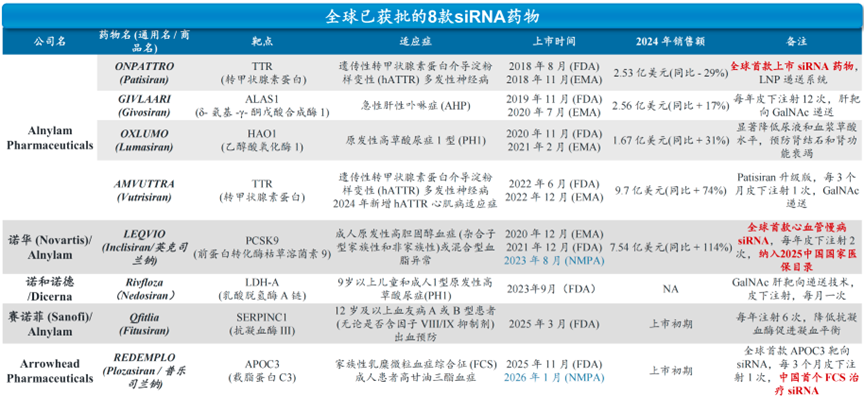
Group 1 - The "small nucleic acid" sector is gaining significant attention and investment, moving from laboratory research to the forefront of the industry [1] - Traditional drugs struggle with over 80% of disease-related targets being "undruggable," while small nucleic acid drugs offer a new approach by targeting the "blueprints" of disease-causing genes [2][3] - Small nucleic acid drugs, such as ASO and siRNA, can silence or regulate the expression of pathogenic genes, providing new treatment pathways for diseases like spinal muscular atrophy [4] Group 2 - The delivery system is a critical bottleneck for the development of small nucleic acid drugs, with recent advancements enabling targeting beyond the liver to other organs [5] - The FDA has approved 19 small nucleic acid drugs globally, with ASO and siRNA making up 38% and 32% of the development focus, respectively [5] - The pipeline for siRNA drugs is expanding into chronic diseases and CNS disorders, with significant applications in metabolic and cardiovascular diseases [6] Group 3 - The global market for small nucleic acid drugs is projected to grow from $2.7 billion in 2019 to $5.7 billion in 2024, with a compound annual growth rate (CAGR) of 16.2% [8] - The siRNA market share is expected to increase significantly, from $200 million in 2019 (7% share) to $2.4 billion in 2024 (44.5% share) [9] - Chinese companies are increasingly recognized for their innovation in small nucleic acids, with significant licensing deals and collaborations, marking a shift from following to competing in the global market [13] Group 4 - Notable acquisitions, such as Novartis's $12 billion purchase of Avidity, highlight the strategic importance of small nucleic acid platforms in drug delivery [8] - Companies like Be Better Med and Frontier Bio are developing diverse pipelines targeting various diseases, including hypertension and metabolic disorders [16][17] - The rise of small nucleic acids signifies a paradigm shift in drug discovery, moving from protein-based approaches to rational design based on genetic sequences [19]

智通港股沽空统计|2月5日
智通财经网· 2026-02-05 00:24
Group 1 - JD.com (SWR 89618) has the highest short-selling ratio at 85.52%, followed by AIA Group (R 81299) at 77.11% and Lenovo Group (R 80992) at 67.79% [1][2] - Tencent Holdings (00700) leads in short-selling amount with 2.709 billion yuan, followed by Pop Mart (09992) at 974 million yuan and Xiaomi Group (W 01810) at 793 million yuan [1][2] - Huatai Securities (06886) has the highest deviation value at 40.23%, followed by Tong Ren Tang Technologies (01666) at 35.46% and China Ship Leasing (03877) at 26.75% [1][2] Group 2 - The top ten short-selling ratios include JD.com at 85.52%, AIA Group at 77.11%, and Lenovo Group at 67.79% [2] - The top ten short-selling amounts show Tencent Holdings at 2.709 billion yuan, Pop Mart at 974 million yuan, and Xiaomi Group at 793 million yuan [2] - The top ten deviation values are led by Huatai Securities at 40.23%, followed by Tong Ren Tang Technologies at 35.46% and China Ship Leasing at 26.75% [2]