
地平线

Search documents
2025汽车行业年鉴 | 出海篇:时隔40年的历史呼应:中国汽车开启“技术换市场”时代
Jing Ji Guan Cha Wang· 2025-12-31 06:28
Core Insights - The Chinese automotive export sector has shown resilience and exceeded expectations in 2025, with a projected total export volume of 8 million vehicles, driven primarily by a 62% increase in new energy vehicle exports [2][4] - The export landscape is evolving, with a shift towards emerging markets and innovative export models, including local resource integration and technology transfer [2][4][6] Group 1: Export Performance - In the first eleven months of 2025, cumulative automotive exports reached 7.33 million units, marking a 25.7% year-on-year increase [2] - The strong performance in exports has prompted a reassessment of earlier predictions, which anticipated only a 10% growth rate due to geopolitical challenges and tariff pressures [2][4] Group 2: Market Dynamics - The export market is witnessing a reconfiguration, with Chinese automakers aggressively targeting Europe while simultaneously expanding into emerging markets such as Southeast Asia, Africa, and Latin America [4][5] - Mexico is emerging as a key overseas market for Chinese vehicles, with brands like BYD and Xpeng establishing a presence [4][5] Group 3: Strategic Shifts - The export strategy is transitioning from merely selling vehicles to a more integrated approach involving technology, standards, and supply chain collaboration [6] - Localized production is becoming a focal point, with several Chinese automakers establishing factories in Europe to enhance their market presence [5][6] Group 4: Future Challenges - The upcoming years will present significant challenges, particularly in navigating stringent European regulations and establishing brand credibility [7][8] - The 2026 landscape will see a focus on smart technology exports, with L3 autonomous driving expected to become commercially viable, further enhancing the value proposition of Chinese automotive brands [7][9] Group 5: Collaborative Approaches - Companies are exploring innovative models to mitigate risks associated with entering the European market, including partnerships with established suppliers and local entities [9] - The trend of "technology for market access" is resurfacing, as some European nations seek collaboration with Chinese firms in the face of their own technological challenges [9]

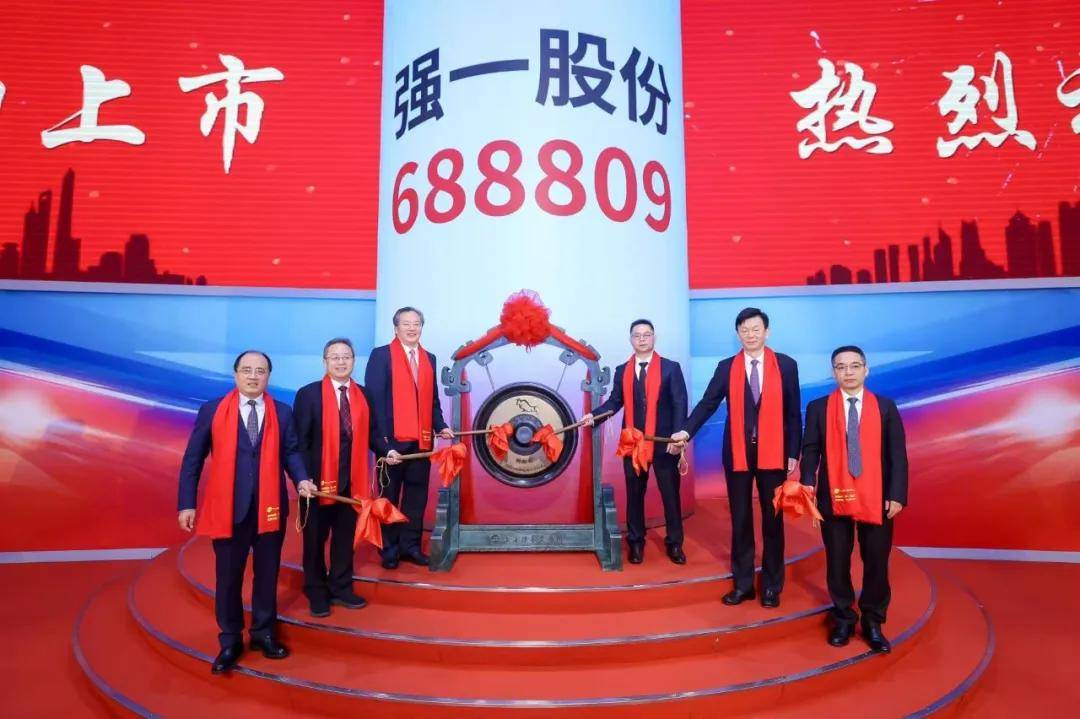
重磅!科创板第600个IPO诞生,苏州站上全国第一
Sou Hu Cai Jing· 2025-12-31 05:08
Core Insights - Strong One Semiconductor (苏州) officially listed on the Shanghai Stock Exchange's Sci-Tech Innovation Board, marking the 600th company to do so since its inception [2][3] - The company is recognized as the first domestic semiconductor probe card manufacturer in the A-share market, indicating a significant milestone in China's semiconductor industry [3][4] Company Overview - Strong One Semiconductor, founded in August 2015, specializes in the research, design, and manufacturing of high-end probe cards essential for integrated circuit wafer testing [3][6] - The probe card is a critical component in wafer testing, directly affecting chip yield and manufacturing costs, and has been dominated by international firms like FormFactor and Technoprobe [3][6] Market Position - On its first trading day, Strong One's stock opened at 265.60 CNY per share, a 212.14% increase from its issue price of 85.09 CNY, with a market capitalization exceeding 33 billion CNY [3] - The company has rapidly ascended in the global semiconductor probe card industry, ranking ninth in 2023 and sixth in 2024, making it the only domestic company to enter the top ten [9] Product and Revenue - The 2D MEMS probe card has become the company's flagship product, accounting for 88.37% of total sales revenue in the first half of 2025, with a gross margin of 68.99% [8] - Strong One's client base includes notable chip design firms and foundries, such as Zhaoyi Innovation and SMIC, indicating strong market penetration [8] Regional Impact - With the listing of Strong One, Suzhou has seen a total of 11 new domestic A-share companies in 2025, ranking first among major cities in China [5][11] - Suzhou's total number of listed companies has surpassed 283, with 228 being A-share companies, placing it fifth nationally [5][10] Industry Dynamics - The emergence of Strong One Semiconductor is expected to alter the competitive landscape of the semiconductor probe card market, which has been historically dominated by foreign companies [4][6] - The company's success is attributed to a robust local industrial foundation, with Suzhou housing multiple trillion-yuan industries and a strong focus on hard technology [12]
韬盛科技科创板IPO获受理 拟募资10.58亿加码半导体测试接口国产化
Ju Chao Zi Xun· 2025-12-30 15:33
Core Viewpoint - Shanghai Taosheng Electronics Technology Co., Ltd. has officially submitted its application for listing on the Sci-Tech Innovation Board, aiming to raise 1.058 billion yuan for the construction of a semiconductor testing interface and probe production base, R&D of wafer testing probe cards, and working capital supplementation, to strengthen its leading position in high-end chip testing hardware and accelerate the domestic substitution process [1] Group 1: Company Overview - Taosheng Technology is one of the earliest companies in China to independently develop chip testing interfaces and achieve large-scale production [1] - The company focuses on the semiconductor testing interface field, with products including chip testing interfaces and probe cards, which are critical for ensuring chip quality [1] - The company has developed over 4,000 chip testing interface technology solutions and possesses independent R&D and manufacturing capabilities for high-speed, high-frequency testing probes [2] Group 2: Market Position and Achievements - According to Yole, Taosheng Technology is projected to rank first in chip testing interface revenue in China and 11th globally in 2024 [2] - The company has built a broad customer ecosystem covering the entire semiconductor industry chain, serving over 700 clients, including leading companies in AI chips and autonomous driving [2] - Taosheng Technology has developed the first domestic DSA testing interface supporting parallel testing of 512 chips for Yangtze Memory Technologies, aiding the localization of the storage industry [2] Group 3: Technological Advancements - The company is expanding into the more technically challenging wafer testing probe card field, with its MEMS probe cards already commercialized for AI chip clients [3] - Taosheng Technology has achieved breakthroughs in the storage sector, with 2D MEMS products receiving orders and 2.5D MEMS products passing stringent certifications from Yangtze Memory Technologies [3] - The company is also conducting pre-research on 3D MEMS probe card technology to cover high-end storage testing scenarios [3] Group 4: Future Outlook - Taosheng Technology aims to focus on national strategic needs, pursuing high-end and large-scale development [3] - The company plans to increase R&D investment to tackle core key technologies in high-end testing interfaces, break overseas monopolies, and accelerate the domestic substitution process [3] - The goal is to further expand market share and solidify its leading position in the industry, aspiring to become a leading brand in the global semiconductor testing interface field [3]
水电站、芯片、机器人灵巧手... 宁德时代系统化“破圈”释放什么信号?
高工锂电· 2025-12-30 10:55
Core Viewpoint - CATL is redefining its position in the industry chain from a battery manufacturer to a system player focusing on "power assets, automotive intelligence entry, and physical AI coupling" through a series of seemingly scattered investments [4][17]. Investment in Hydropower Project - CATL has invested in a hydropower project in Sichuan, partnering with State Power Investment Corporation and Sichuan Tieneng Power Development Co., with a total installed capacity of 1.15 million kilowatts and a dynamic total investment of 15.273 billion yuan [4][6]. - The project is expected to yield an internal rate of return of approximately 5.95% based on certain assumptions, with CATL's direct investment estimated at around 458 million yuan [4][5]. Strategic Shift and Regulatory Support - The investment in the hydropower station is not merely a financial investment but aligns with the national policy encouraging private enterprises to invest in energy infrastructure, thus providing a clearer pathway for private capital in large energy projects [5]. - CATL signed a strategic cooperation agreement with the State Power Investment Corporation in 2021, covering various energy sectors including wind, solar, and hydropower [5]. Energy and Carbon Neutrality Goals - CATL aims to achieve core operational carbon neutrality by 2025 and value chain carbon neutrality by 2035, responding to the EU's new battery regulations that require digital battery passports for electric vehicle batteries starting February 18, 2027 [8]. - The investment in the hydropower project allows CATL to secure a more stable and traceable green electricity supply, which is crucial for meeting these sustainability requirements [8]. Expansion into Automotive Intelligence - CATL's recent investments extend beyond energy assets; it is also entering the automotive domain by investing in automotive domain control chip development through a partnership with Unisoc [9]. - This move positions CATL deeper into the automotive intelligence supply chain, betting on the second growth curve for car manufacturers beyond electrification [9]. Semiconductor and AI Investments - CATL has been actively investing in semiconductor and key chip sectors, including power semiconductor companies and chip design firms, to enhance its supply chain control and product definition capabilities [10][9]. - The company is also investing in AI-related technologies, such as a recent investment in a robotics company to enhance manufacturing efficiency and integrate AI into production processes [12][13]. Systematic Layout and Competitive Advantages - CATL's investments in hydropower, automotive chips, and AI reflect a systematic approach to building competitive advantages in energy control, automotive intelligence, and manufacturing efficiency [14][17]. - This strategy is similar to other industry players like Tesla and BYD, who are also focusing on integrating energy systems with advanced technologies [15][16].


界面新闻评选2025年度风光财经人物
Xin Lang Cai Jing· 2025-12-30 10:51
Core Insights - The article discusses the evolution of prominent figures in the Chinese business landscape, highlighting a shift from seeking quick profits to valuing deep expertise and innovation in 2025 [2][3][4]. Group 1: Business Evolution - The keyword for 2024 is "breakthrough," indicating a shift in focus from mere sales to creating substantial products [3]. - By 2025, the list of influential figures reflects a new era of "deep cultivators" rather than loud celebrities, emphasizing professionalism across various industries [3][4]. - The societal perception has shifted from valuing traditional authority figures to recognizing expertise and individual efficiency [6][7]. Group 2: Key Figures and Achievements - Liang Wenfeng's DeepSeek achieved a trillion valuation, marking a significant milestone in AI development, and he was recognized as one of the top scientists of the year [4][16]. - Zhang Jianzhong's company, Moer Thread, became the first domestic GPU stock with a market cap exceeding 300 billion, showcasing the potential of full-function GPUs [13][14]. - Chen Tian Shi's Cambrian Technologies reported a revenue of 28.81 billion, a year-on-year increase of 4347.82%, marking a significant turnaround from previous losses [20][22]. Group 3: Market Trends - The focus has shifted from merely competing on price to establishing standards and rules in the market, as seen with companies like Zero Run and their approach to automotive technology [9][10]. - The rise of new consumer brands, such as Lao Pu Gold, indicates a growing trend towards high-end, differentiated products in the luxury market [61][62]. - The new tea brand, Bawang Tea Ji, successfully listed on NASDAQ, reflecting the increasing acceptance of new beverage entrepreneurs in mainstream markets [63][66]. Group 4: Cultural Shifts - The younger generation is moving away from collective ideologies towards valuing individual expertise and practical achievements, as seen in the changing perceptions of business leaders [6][7]. - The narrative of success is now more about personal dedication and craftsmanship rather than grandiose promises, as exemplified by figures like director Jiaozi and his film achievements [49][52].

中国智能驾驶产业的算力巨变
3 6 Ke· 2025-12-30 10:36
Core Insights - In 2025, the Chinese smart driving industry is experiencing an unprecedented shift in computing power, driven by the evolution of software algorithms and the emergence of competing technical paradigms [1][2] - The differentiation in high-level intelligent driving commercial applications is evident, with a K-shaped market split between affordable and high-end models, leading to fragmentation in the industry [2] - The demand for computing power is increasingly recognized as a core element in the development of smart driving technologies, both at the vehicle and cloud levels [2] Group 1: Technological Evolution - The transition to an end-to-end framework in smart driving is marked by significant advancements, as seen in Tesla's FSD Beta V12 software, which utilizes a computing power standard of 144 TOPS [3][4] - Tesla's shift from HW3 to HW4 signifies a major milestone in its autonomous driving evolution, with the latter becoming the preferred platform for future software updates [5][6] - The upcoming FSD V14 version is expected to have ten times the parameters of its predecessor, indicating a substantial leap in the vehicle's ability to process complex environmental information [6] Group 2: Market Dynamics - Chinese smart driving players, including Xpeng, Li Auto, and NIO, are adopting end-to-end strategies but are initially relying on existing computing platforms, primarily NVIDIA's Orin-X [7][12] - By 2025, a clear division among smart driving companies has emerged, categorized into three main factions based on their computing power strategies: self-developed chips, NVIDIA-based solutions, and Huawei's offerings [12][13] - The self-developed chip faction includes NIO's NX9031 and Xpeng's Turing AI chip, while the NVIDIA faction is represented by the latest Thor platform, which is gaining traction in various models [13][14] Group 3: Cloud Computing and Future Prospects - The industry is witnessing a race for cloud computing power, which is essential for the evolution of smart driving algorithms and the transition from L2 to L4 capabilities [19][20] - The reliance on cloud computing is becoming increasingly critical, as it supports data processing, model training, and simulation necessary for addressing complex driving scenarios [23][24] - The ongoing competition for cloud resources is expected to intensify, with companies recognizing that enhanced cloud capabilities are vital for future advancements in autonomous driving technology [20][21]



界面新闻评选2025年度风光财经人物:从“崇拜英雄”走向“个体觉醒”
Xin Lang Cai Jing· 2025-12-30 08:49
Core Insights - The article discusses the evolution of China's business landscape, highlighting a shift from a focus on quick profits to a deeper appreciation for product quality and professional expertise in 2024 and beyond [1][2][4]. Group 1: Business Evolution - The keyword for 2024 is "breakthrough," indicating a transition from merely selling products to creating high-quality, innovative offerings [2]. - By 2025, the focus has shifted to "deep cultivators" who emphasize professionalism and expertise rather than flashy marketing [2][4]. - The emergence of figures like Zhang Jianzhong and Liang Wenfeng represents a new wave of entrepreneurs who prioritize product quality and technological advancement over traditional business practices [4][10]. Group 2: Industry Leaders - Zhang Jianzhong, founder of Moer Thread, has successfully launched a full-function GPU, achieving a market valuation exceeding 300 billion [14][15]. - Liang Wenfeng, founder of DeepSeek, has gained recognition for his contributions to AI, being named one of the top ten scientists by Nature magazine [20][21]. - Chen Tianshi of Cambrian has seen a remarkable revenue increase of 4347.82% in 2025, driven by the demand for AI computing power [23][24]. Group 3: Consumer Trends - The success of brands like Laopu Gold indicates a shift in consumer preferences, where quality and craftsmanship are prioritized over price [5][57]. - The rise of figures like Xu Gaoming, who leads Laopu Gold, reflects a broader trend of redefining luxury in the Chinese market [57]. Group 4: Corporate Strategies - Companies are increasingly focusing on global competitiveness, with leaders like Wang Xingxing of Yushun Technology emphasizing practical applications of robotics [25][26]. - The narrative of Alibaba's resurgence under leaders like Wu Yongming and Jiang Fan highlights a strategic pivot towards AI and e-commerce integration [29][30]. Group 5: Market Dynamics - The article notes a significant change in the perception of authority in business, with younger generations favoring expertise and innovation over traditional hierarchical structures [7][8]. - The competitive landscape is evolving, with companies like Zero Run Automotive focusing on cost efficiency and product quality to thrive in a challenging market [35][36].

孔辉科技:中国汽车产业链核心零部件突破的生动缩影
Zhong Guo Qi Che Bao Wang· 2025-12-30 06:53
Core Insights - Konghui Technology has been awarded the "Innovation Team Award (Components)" by the China Society of Automotive Engineers for 2025, marking a significant recognition of its achievements in the intelligent suspension field and its leadership in core component innovation [1][4][6]. Group 1: Award Significance - The "Innovation Team Award (Components)" was established in 2021 to address the urgent need for core technologies in the automotive industry's electrification and intelligence transformation, recognizing teams that have made significant technological breakthroughs in key components [4]. - This award is given annually to only one team, making it a prestigious honor in the automotive components sector, with previous winners including notable companies like BYD and Horizon Robotics [4]. Group 2: Technological Achievements - Konghui Technology's team has made continuous advancements in intelligent suspension technology, achieving several milestones such as the domestic debut of passenger car air suspension systems in 2021 and overcoming the localization challenges of dual-chamber air springs in 2023 [6]. - In 2025, the team achieved another milestone with the domestic debut of a 48V active stabilizer, enhancing vehicle stability and safety during high-speed cornering, which supports advanced intelligent driving [6]. Group 3: Market Performance - As of November 30, 2025, Konghui Technology has supplied 1.108 million sets of air springs, 199,000 controllers, and 274,000 valve pumps, with a market share of 41.3% for passenger car air spring products in 2024 [6]. - The company has entered the supply chain of a well-known German automotive brand, receiving an A Rating in calibration tests, indicating high international recognition of its quality and technology [6]. Group 4: Industry Impact - The recognition of Konghui Technology reflects the broader breakthroughs in China's automotive industry, particularly in core components, as intelligent suspension systems are crucial for enhancing vehicle handling and comfort [7]. - The company aims to become a pioneer in the global electric control suspension industry and a leader in suspension technology, contributing significantly to the high-quality development of the Chinese automotive sector [7].

摸底地平线HSD一段式端到端的方案设计
自动驾驶之心· 2025-12-30 00:28
Core Insights - The article discusses two core papers from Horizon Robotics: DiffusionDrive and ResAD, focusing on their contributions to end-to-end autonomous driving solutions [2][3]. DiffusionDrive - The overall architecture of DiffusionDrive consists of three parts: perception information, navigation information, and trajectory generation [6]. - Perception information includes dynamic/static obstacles, traffic lights, map elements, and drivable areas, emphasizing the need to convey perception tasks to planning tasks in an end-to-end manner [6]. - Navigation information is crucial for avoiding incorrect routes, especially in complex urban environments like Shanghai, where navigation challenges are significant [7]. - The core concept of trajectory generation is "Truncated Diffusion," which leverages fixed patterns in human driving behavior to reduce training convergence difficulty and inference noise [8][10]. - The article outlines a method for trajectory generation using K-Means clustering to describe common human driving behaviors, which simplifies the training process [9]. ResAD - ResAD introduces a residual design that predicts the difference between future trajectories and inertial extrapolated trajectories, rather than generating future trajectories directly [12]. - The residual regularization helps manage the increasing residuals over time, ensuring that the model focuses on the true diversity of driving behaviors [13][14]. - The design allows for different noise perturbations in the trajectory generation process, adjusting learning difficulty based on the direction of motion [15]. - ResAD also features a trajectory ranker that utilizes a transformer model to predict metric scores based on top-k trajectory predictions and environmental information [16]. Conclusion - Both papers from Horizon Robotics provide valuable insights and methodologies for enhancing autonomous driving systems, encouraging further exploration and development in the field [18].

华联股份(000882.SZ):目前公司不持有地平线的股份
Ge Long Hui· 2025-12-29 07:00
格隆汇12月29日丨华联股份(000882.SZ)在投资者互动平台表示,目前公司不持有地平线的股份。 ...
