
长江存储

Search documents
闪德资讯存储市场洞察报告 2025年5月
闪德资讯· 2026-01-20 08:45
Investment Rating - The report indicates a positive outlook for the storage industry, particularly in DRAM and NAND sectors, with expectations of price increases and demand recovery in the coming quarters [6][20][44]. Core Insights - The report highlights a significant transition in the memory market, with major manufacturers like Samsung, SK Hynix, and Micron phasing out DDR4 production in favor of DDR5 and HBM technologies, which is expected to tighten supply and drive prices up [6][23][24]. - DRAM prices have surged, leading to increased activity in the spot market, while NAND prices have stabilized after a period of volatility [6][47]. - The rise of AI PCs is anticipated to boost demand for high-performance memory solutions, with projections indicating a 37% penetration rate by 2025 [6][21][22]. - ODM manufacturers are cautious about demand in the second half of the year, anticipating a slowdown due to earlier stockpiling and market uncertainties [6][20]. - Ongoing geopolitical tensions and tariff adjustments are influencing supply chain dynamics and market stability, with potential long-term implications for pricing and availability [6][7][20]. Summary by Sections Macro Economy - In May, China's manufacturing PMI rose to 49.5%, indicating improved manufacturing activity, while the U.S. PMI remained below expansion levels at 48.5% [7][9]. - The report notes a 10.8% year-on-year growth in China's electronic information manufacturing sector from January to April [12][13]. Upstream Market - Global laptop shipments are expected to increase by 5.8% in Q2, driven by preemptive stockpiling and seasonal demand [20][21]. - Major manufacturers are transitioning away from DDR4, with supply constraints expected to impact pricing significantly [23][24]. Storage Market Dynamics - The report details a notable increase in DRAM prices, with DDR4 prices rising from $2.4 to $3.95, a 64% increase [23]. - NAND flash market dynamics are shifting, with Samsung's exit from the MLC market expected to create supply shortages and price increases [28][29]. Application Market - The PC market is experiencing fluctuations, with major manufacturers reporting mixed results in shipments and revenues due to seasonal effects and tariff uncertainties [71][72]. - AI server-related revenues are projected to grow significantly, while traditional PC demand remains uncertain [72][74].





闪德资讯存储市场洞察报告 2025年11月
闪德资讯· 2026-01-20 08:45
Investment Rating - The report indicates a bullish outlook for the storage industry, projecting a high prosperity cycle from 2025 to 2026, driven by strong demand from AI data centers and significant price increases in DRAM and NAND products [7][27][31]. Core Insights - The global manufacturing sector is under pressure, with PMI indices in major economies indicating contraction, while China's PMI shows slight improvement but remains below the threshold [7][8][9]. - The storage industry is entering a strong cycle characterized by technological upgrades and rising prices, with major players like Samsung and SK Hynix expanding production of advanced DRAM and NAND technologies [7][27][31]. - Supply chain dynamics are tightening, with rising costs for raw materials and significant demand for NAND and DRAM leading to extended delivery times and price increases across the board [7][27][31]. - The current market is experiencing a shortage of storage products, with prices for DRAM, NAND, and SSDs seeing substantial increases, driven by AI demand and supply constraints [7][27][31]. Summary by Sections Macroeconomic Overview - Global manufacturing is facing challenges, with most PMI indices in contraction territory, indicating weak demand and slowing orders [7][8][9]. - China's manufacturing PMI shows a slight increase but remains below the critical level, reflecting a weak economic environment [7][18][22]. Storage Supply Chain - Major manufacturers like Samsung and SK Hynix are ramping up production of advanced memory technologies, with significant price increases expected for HBM and DDR5 products [7][27][31]. - The supply chain is experiencing upward pressure on costs due to rising prices of copper and glass fiber, impacting the cost of electronic materials [7][42][43]. Market Dynamics - The report highlights a significant shortage in the storage market, with prices for various memory products experiencing dramatic increases, driven by AI-related demand [7][27][31]. - The current market conditions are leading to a shift in purchasing strategies, with long-term contracts becoming more common as companies seek to secure supply [7][37][39]. Company-Specific Developments - Samsung is actively expanding its production capabilities and has recently increased prices for DDR5 memory modules significantly [27][29][31]. - SK Hynix is also enhancing its product offerings and has confirmed price increases for HBM4, reflecting strong demand from AI applications [31][35][36]. - Western Digital reported strong performance driven by AI demand, with expectations for continued growth in revenue and market share [36][37].
闪德资讯存储市场洞察报告 2025年10月
闪德资讯· 2026-01-20 08:45
Investment Rating - The report indicates a positive outlook for the storage industry, driven by strong demand from AI and cloud computing sectors, leading to an overall bullish investment rating for the sector [6][7]. Core Insights - The global storage giants, including Samsung and SK Hynix, reported record earnings in Q3 2025, with significant growth in sales and profits attributed to increased demand for high-bandwidth memory (HBM) and server memory [7][29]. - The report highlights a structural shortage in the supply of DRAM and NAND flash memory, with prices expected to continue rising due to strong demand from AI servers and high-end mobile devices [7][30]. - The domestic storage industry in China is accelerating, with companies like Yangtze Memory Technologies and ChangXin Memory Technologies preparing for IPOs and ramping up production of HBM and LPDDR5X [7][42]. Summary by Sections Macroeconomic Overview - In October 2025, the global manufacturing PMI showed mixed signals, with the Eurozone returning to expansion while the US and Japan continued to contract, indicating a fragile recovery in manufacturing [7][8][20]. - China's manufacturing PMI fell to 49.0, reflecting a slowdown in production and demand, although the electronic information industry showed signs of recovery with strong export growth [7][20][26]. Supply Chain Dynamics - The storage and testing industry is experiencing a significant uptick, with companies like Powertech and Nanya increasing production capacity in response to rising orders for HBM and DDR5 products driven by AI server demand [7][29][46]. - The report notes that the supply of T-Glass, a critical material for advanced packaging, is expected to remain tight until 2027, impacting the PCB market [7][49]. Market Trends - The report indicates that the storage market is heating up, with DRAM and NAND prices rising across the board due to strong demand from AI servers and high-end mobile devices, leading to supply constraints [7][30][58]. - Companies are adopting aggressive pricing strategies, with Samsung and SK Hynix increasing prices by up to 30% for DRAM and NAND products in response to supply shortages [7][36][38]. Company Performance - Samsung Electronics reported a record Q3 2025 revenue of 86.1 trillion KRW, with a 15% quarter-over-quarter increase, driven by strong sales in HBM and server SSDs [7][29][30]. - SK Hynix also achieved record sales of 24.4489 trillion KRW in Q3 2025, with a significant increase in DRAM and NAND prices due to high demand [7][32][33]. Domestic Industry Developments - Yangtze Memory Technologies is planning an IPO with an estimated valuation of 200-300 billion RMB, aiming to enhance its production capabilities in HBM technology [7][42]. - ChangXin Memory Technologies is also preparing for an IPO, focusing on increasing its production of high-bandwidth memory chips [7][42].




NAND雪上加霜,巨头削减产能
半导体行业观察· 2026-01-20 02:02
Core Viewpoint - Samsung Electronics and SK Hynix are expected to reduce NAND flash production this year, which may lead to a supply shortage and price increases across various sectors, including AI, servers, personal computers, and mobile devices [1][2]. Group 1: NAND Flash Market Dynamics - Samsung Electronics has slightly lowered its NAND flash wafer production forecast from 4.9 million last year to 4.68 million this year, following a previous reduction due to anticipated declines in NAND profitability [1]. - SK Hynix's NAND flash production is also expected to decrease from 1.9 million wafers last year to 1.7 million this year [1]. - The demand for NAND flash is surging due to the rise of AI, with major suppliers' adjustments potentially exacerbating supply shortages across all sectors [2]. Group 2: Impact of AI on NAND Flash Demand - Nvidia's next-generation AI accelerator, Vera Rubin, is set to have a solid-state drive (SSD) capacity of 1152TB, significantly increasing demand for NAND flash [2]. - The expected shipment of Vera Rubin is 30,000 units this year and 100,000 units next year, which will create additional demand of 34.6 million TB and 115.2 million TB by 2026 and 2027, respectively [2]. Group 3: Production Strategy and Market Position - Samsung and SK Hynix are prioritizing DRAM investments over NAND flash due to lower profitability, leading to intentional production cuts [3]. - China's Yangtze Memory Technologies has been steadily increasing its NAND flash production, indicating a strengthening market position and a shift in focus towards server and enterprise applications [3]. Group 4: Price Predictions and Market Trends - TrendForce predicts that NAND flash contract prices will rise by 33% to 38% in the first quarter, reflecting a conservative production strategy from major suppliers [3]. - IDC forecasts a 17% growth in NAND flash supply this year, which is below the average growth rate in recent years [3]. Group 5: HBM Production Expansion - Samsung and SK Hynix are increasing their semiconductor production capacity to meet the demand for various chips, including HBM and DDR [4]. - Samsung's HBM capacity is expected to grow by 50% by 2026 to fulfill large orders from Nvidia [4]. Group 6: Investment in New Facilities - Samsung plans to invest 60 trillion KRW (approximately 41.5 billion USD) in a new factory in Pyeongtaek, which is expected to begin production in 2028 [5]. - SK Hynix is investing over 20 trillion KRW in the M15X factory, which will include two clean rooms for chip production [7].


存储-超级周期-跟踪调研-26年供需景气度将如何继续演绎
2026-01-20 01:50
Summary of Conference Call on Storage Industry Trends Industry Overview - The conference call focused on the storage industry, particularly the demand and supply dynamics for DRAM and NAND products through 2026 [1][2]. Key Insights Server Storage Demand - Server storage demand is expected to continue strong growth, with servers accounting for 30% of overall storage demand. This growth is driven by AI server markets and overbooking by major cloud service providers like Google, AWS, Meta, and Microsoft, indicating high future demand expectations [2][3]. Mobile Market Dynamics - The mobile market is projected to see sustained growth in the first and second quarters of 2026, driven by new product launches such as iPhone 17, Xiaomi 17, and Huawei Max 6. Increased single-device storage capacity is expected to offset declines in shipment volumes [1][5][16]. PC and Notebook Market - The PC and notebook markets are relatively weak, with DDR4 prices affected by factory shutdowns. This segment accounts for less than 30% of the overall storage market, limiting its impact on total demand [1][6]. Inventory Levels - Current inventory levels are not expected to rise excessively before the third quarter, with DRAM inventory at approximately 1.5-2 months and NAND inventory at 2-2.5 months, compared to a normal balance of 2.5-3 months [10][37]. Price Trends - In Q1 2026, DRAM prices increased by 52% and NAND prices by 47%, reflecting tight supply-demand conditions. Price increases are expected to continue into Q2, with projections of over 30% growth [3][22][34]. AI Applications - AI-related applications are experiencing robust growth, with no current concerns about entering a bubble phase. The demand for storage related to AI is expected to remain strong at least until 2027 [11][12]. Automotive Electronics - The automotive electronics sector, including smart cockpit and autonomous driving applications, is growing rapidly at a rate of about 20%, although it only represents 7-8% of the overall storage market [4]. Future Capacity and Supply - By the end of 2026, an additional 300,000 DRAM and 350,000 NAND units are expected to be added, but actual supply may only reach 1.9-2 million DRAM and 2.2 million NAND due to the release timeline of new capacities [3][27][28]. Additional Insights Consumer Electronics - Despite a slight decline in mobile shipments, the average storage capacity per device is increasing, contributing to overall demand growth [16][17]. Cost Management in Mobile Manufacturing - Mobile manufacturers are expected to manage rising costs by increasing product prices or optimizing material costs, ensuring they do not incur losses [19][20]. Market Share Dynamics - The server and mobile markets are expected to each account for about one-third of total demand, with servers increasing their share from 33% to 35% by 2026 [26]. Technological Upgrades - The storage chip industry is undergoing significant technological upgrades, transitioning to smaller process nodes and increasing layer counts, which will enhance capacity but may have limited overall growth due to previous upgrades [31][32]. Competitive Landscape - Companies like Longsys and Yangtze Memory Technologies are gaining market share in the mid-range product segment, but their impact on the high-end market remains limited due to technological gaps [33]. This summary encapsulates the key points discussed in the conference call, highlighting the trends and expectations for the storage industry through 2026.
日本经济学家:中国就算造出光刻机,也无法量产,因为缺乏真正的“核心材料
Sou Hu Cai Jing· 2026-01-18 21:49
Core Viewpoint - The statement from a Japanese economist regarding China's inability to mass-produce lithography machines due to a lack of "core materials" reflects a sense of superiority and outdated thinking about China's capabilities in the semiconductor industry [1][8]. Group 1: Market Dynamics - The global photoresist market has been dominated by Japanese companies such as JSR, Tokyo Ohka, and Shin-Etsu Chemical, particularly in high-end ArF and EUV photoresists [3]. - Chinese company Tongcheng New Materials has achieved certification for its ArF/ArFi photoresist products from domestic chip manufacturers and secured mass production orders, projecting nearly 200 million yuan in revenue for 2025, with a growth rate exceeding 50% [3][5]. - Tongcheng New Materials has captured over 40% market share in the KrF photoresist sector and won 35% of the annual orders from Yangtze Memory Technologies [5]. Group 2: Technological Advancements - Nanda Optoelectronics has also received certification for its ArF photoresist from Yangtze Memory Technologies, with domestic production rates increasing from less than 1% in 2023 to over 5% [6]. - Chinese companies like Lante Optics and Sunny Optical have made significant advancements in optical lens materials, establishing themselves as key players in automotive and consumer electronics, although they still lag behind in high-end lithography lenses [6]. Group 3: Structural Changes in Supply Chain - The Japanese economist's comments reveal a failure to recognize the structural changes occurring in the global semiconductor supply chain, particularly as the U.S., Japan, and the Netherlands impose technology restrictions on China [8]. - These restrictions have inadvertently accelerated the efforts of Chinese companies to overcome critical supply chain challenges, leading to a shift in market dynamics [8][11]. - The notion of "soul materials" being irreplaceable is challenged by historical precedents where technological monopolies have been disrupted [10]. Group 4: Future Outlook - The Japanese semiconductor industry's past dominance has been challenged by competitors from South Korea and Taiwan, suggesting that similar shifts could occur in the materials sector [10]. - While China still needs time to catch up in high-end photoresists and specialty optical materials, the assertion that it can "never mass-produce" is overly absolute and reflects emotional bias rather than technical analysis [10]. - The ongoing development of Shanghai Microelectronics' 28nm lithography machine and plans for EUV equipment delivery by 2026 indicate a synchronized advancement in both equipment and materials within the industry [10].
半导体设备厂商中科仪北交所IPO成功过会
Ju Chao Zi Xun· 2026-01-18 13:07
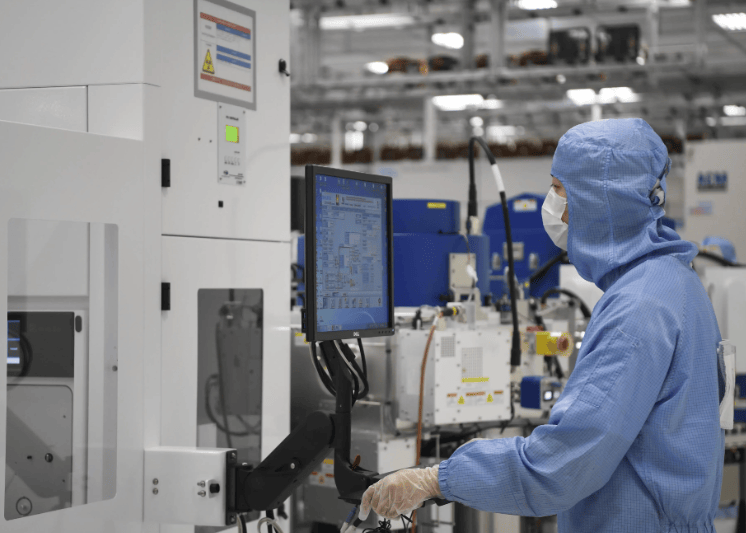
Core Viewpoint - China National Academy of Sciences Shenyang Instrument Co., Ltd. (referred to as Zhongke Instrument) has successfully passed the listing review by the Beijing Stock Exchange, marking its entry into the capital market and highlighting significant breakthroughs in independent innovation in high-end vacuum equipment [1] Group 1: Company Overview - Founded in 1958, Zhongke Instrument focuses on clean vacuum and ultra-high vacuum technology, serving national strategic needs and industrial upgrades [1] - The company specializes in the research, production, and sales of dry vacuum pumps and vacuum scientific instruments, with core products widely used in semiconductor fields such as integrated circuit wafer manufacturing and photovoltaic battery production [1] - Zhongke Instrument is one of the few domestic companies capable of competing with international giants in the high-end vacuum equipment sector [1] Group 2: Technological Innovation - Technological innovation is the core competitive advantage of Zhongke Instrument, supported by three national-level R&D platforms [2] - The company has won six national science and technology progress awards and has undertaken 13 national-level major research projects, including tasks related to national information industry security [2] - As of June 30, 2025, Zhongke Instrument holds 100 invention patents and has led or participated in the formulation of 13 national and industry standards [2] Group 3: Market Performance - As of the reporting period, Zhongke Instrument has shipped over 40,000 dry vacuum pumps, with more than 30,000 units in the integrated circuit sector [3] - The company holds a 12.72% market share in the domestic dry vacuum pump market for integrated circuits, ranking first among domestic manufacturers [3] - Zhongke Instrument has established a customer network that includes major domestic players and has passed strict certifications from international semiconductor manufacturers [3] Group 4: Financial Performance - From 2022 to 2024, Zhongke Instrument's revenue increased from 698 million to 1.082 billion, with a compound annual growth rate of 24.51% [3] - The net profit attributable to the parent company grew from 61.86 million to 87.88 million, with a compound annual growth rate of 19.19% [3] - The company expects its total revenue for 2025 to reach between 1.241 billion and 1.281 billion, indicating strong growth momentum [3] Group 5: IPO and Funding - In its IPO, Zhongke Instrument aims to raise 825 million for projects including the industrialization of dry vacuum pumps and the expansion of high-end semiconductor equipment [4] - The company is backed by strong shareholders, including the controlling shareholder, which ensures continuous access to research resources and technological guidance [4] - The involvement of the National Integrated Circuit Industry Investment Fund provides valuable resources for industry chain integration and support for industrialization [4]
中科院老牌企业中科仪过会!
是说芯语· 2026-01-17 00:18
Core Viewpoint - The semiconductor industry's focus on self-sufficiency has led to companies like China Academy of Sciences Shenyang Instrument Co., Ltd. (referred to as "Zhongke Instrument") accelerating their entry into the capital market, with successful listing on the Beijing Stock Exchange on January 16, 2026 [1]. Group 1: Business Overview - Zhongke Instrument focuses on two core sectors, achieving significant breakthroughs in critical areas. In the dry vacuum pump sector, the company has disrupted the long-standing market dominance of European, American, and Japanese firms, particularly in equipment required for advanced semiconductor processes [5]. - The company's products meet the needs of 14nm advanced logic chips and 128-layer and above 3D NAND memory processes, making it the largest domestic supplier of dry vacuum pumps in the integrated circuit field, covering both advanced processes and all process scenarios [5]. - Zhongke Instrument has established three national-level R&D platforms and has won six National Science and Technology Progress Awards, with 100 invention patents as of June 30, 2025 [5]. Group 2: Financial Performance - The company has shown steady revenue growth, achieving revenues of 698 million, 852 million, 1.082 billion, and 574 million respectively over the reporting periods, with net profits remaining stable between 60 million to 88 million [6]. - The IPO aims to raise 825 million, which will be fully invested in the industrialization of dry vacuum pumps, expansion of high-end semiconductor equipment, and the establishment of a new R&D center [7]. Group 3: Project Investment - The total investment for the projects is approximately 129.49 million, with 82.55 million planned to be funded through the IPO. The projects include dry vacuum pump industrialization, high-end semiconductor equipment expansion, and the development of a new generation of dry vacuum pumps [8].

2025年十大关键词盘点:技术融合与生态重构的关键一年
Xin Lang Cai Jing· 2026-01-16 13:38
Core Insights - The smartphone industry has transitioned into a new era focused on user experience, moving away from mere specifications [1] - The year 2025 is marked by significant technological advancements and the evolution of smartphones into smart terminals [1] Group 1: AI and Smart Assistants - DeepSeek has successfully transitioned from technology development to industrial application, optimizing model size and inference speed for mobile adaptation, thus enhancing AI service efficiency [3][28] - The launch of Doubao mobile assistant by ByteDance signifies a shift from voice assistants to intelligent secretaries, enabling complex cross-application operations with minimal user intervention [6][29] - The integration of DeepSeek's capabilities into developer tools and office applications has fostered a thriving developer ecosystem, promoting widespread AI technology adoption [5][28] Group 2: Hardware Innovations - The iPhone Air, launched by Apple, features an ultra-thin design with a thickness of under 6mm, utilizing flexible OLED and miniaturized components while maintaining structural integrity [31][33] - The introduction of eSIM technology has simplified mobile device design and altered user communication habits, allowing for multi-number switching and cross-device communication [10][34] - The widespread adoption of silicon-carbon anode batteries has increased energy density by over 30%, significantly enhancing smartphone battery capacity without adding weight [13][38] Group 3: Market Dynamics and Policies - The global storage chip market experienced a price surge, with DRAM and NAND Flash prices increasing by over 50%, impacting smartphone manufacturing costs [39] - The "mobile national subsidy" policy has effectively reduced consumer upgrade costs, leading to a 35% year-on-year increase in mid-to-high-end smartphone sales [16][39] - The rise of AI large models and intelligent agents has transformed smartphone functionality, enabling advanced features like real-time translation and document generation [40][42] Group 4: XR and Ecosystem Development - Mixed Reality (MR) devices have transitioned from niche products to mainstream consumer items, with applications expanding across various sectors [20][44] - The HarmonyOS 6 system by Huawei has achieved significant upgrades, with over 23 million devices deployed, enhancing multi-device collaboration and privacy protection [45][47] - The integration of AI and ecosystem development is expected to drive the next generation of smart terminals, emphasizing a more interconnected and intelligent user experience [48]
全球存储芯片超级牛市爆发,AI引爆涨价潮,国产替代机遇空前,这五大领域迎来黄金发展期!
Jin Rong Jie· 2026-01-16 11:12
Core Insights - The storage chip market is experiencing significant price increases driven by strong demand from AI and server applications, with projections indicating substantial price hikes for DRAM and NAND Flash products in the coming quarters [1][2]. Group 1: Storage Chip Design and Manufacturing - The storage chip design and manufacturing sector is the most direct beneficiary of the industry's favorable conditions, with companies in this space enjoying significant pricing power during price increase cycles [3]. - The transition of global DRAM manufacturing capacity towards advanced processes is intensifying supply constraints for conventional storage products, benefiting related manufacturing firms [3]. - Domestic manufacturers are making continuous investments in technology breakthroughs and capacity expansion, enhancing their position in the global supply chain [3]. Group 2: Storage Chip Packaging and Testing - The packaging and testing segment is experiencing a "golden period" with rising prices and increased order volumes due to upstream chip supply constraints [4]. - Major packaging firms have raised their service prices, reflecting the tight supply-demand dynamics across the entire storage industry [4]. - Advanced packaging technologies are becoming more prevalent, increasing the value of individual chips and benefiting leading packaging firms [4]. Group 3: Semiconductor Equipment and Materials - The semiconductor equipment sector is seeing strong demand driven by the storage industry's growth and the push for domestic production capabilities [5]. - Domestic equipment manufacturers are positioned to benefit from the scaling of local storage production, providing opportunities for technology validation and commercialization [5]. - The acceleration of domestic production of key semiconductor materials is creating a favorable environment for related companies [5]. Group 4: AI Computing and Server Industry - The explosion in demand for AI servers is a core driver of the current storage chip supercycle, creating a positive feedback loop between the AI and storage sectors [6]. - The value of enterprise SSDs in AI servers is significantly higher than in general servers, translating to increased revenue for companies in the supply chain [6]. - The demand for high bandwidth memory (HBM) is expected to grow substantially, further driving the hardware industry linked to AI computing [7]. Group 5: Consumer Electronics Brands - Despite a stable or slightly declining overall demand in consumer electronics, leading brands are expected to benefit from their ability to pass on rising costs to consumers [7]. - The shortage of storage chips and rising prices are prompting cautious procurement strategies in sectors like mobile and networking, leading to inventory optimization [7]. - Brands are adjusting product specifications and enhancing technical features to mitigate cost pressures, contributing to a trend towards higher-end consumer electronics [7].