海螺水泥

Search documents
中泰红利量化选股股票发起A:2025年第二季度利润6.93万元 净值增长率0.58%
Sou Hu Cai Jing· 2025-07-18 02:40
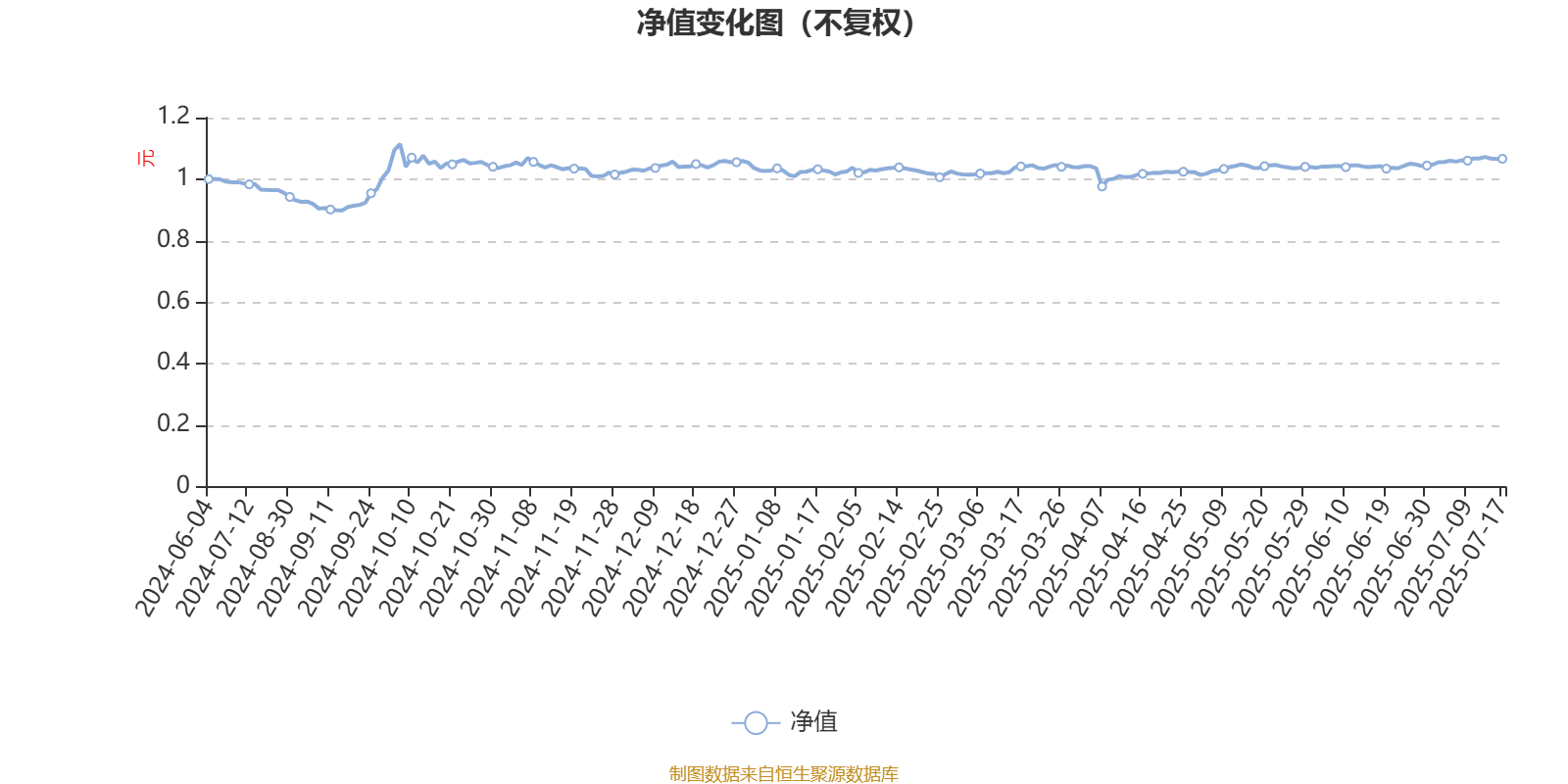
Core Viewpoint - The AI Fund Zhongtai Dividend Quantitative Stock Selection A (021167) reported a profit of 69,300 yuan in Q2 2025, with a net value growth rate of 0.58% for the period, and a total fund size of 12.2475 million yuan as of the end of Q2 2025 [3][16]. Fund Performance - As of July 17, the fund's unit net value was 1.066 yuan [3]. - The fund's performance over different periods includes a 4.66% growth rate over the last three months, 3.23% over the last six months, and 8.37% over the last year, ranking 93rd, 97th, and 92nd respectively among comparable funds [4]. Investment Strategy - The fund employs a quantitative investment strategy based on objective indicators, focusing on dividend yield, historical volatility, and stability of historical dividend yields when selecting stocks [3]. - The investment portfolio is constructed to minimize exposure to non-dividend-related factors such as scale and industry [3]. Portfolio Composition - As of Q2 2025, the fund's investment portfolio is heavily weighted in the industrial, financial, and consumer discretionary sectors [3]. - The top ten holdings include China National Offshore Oil Corporation, Agricultural Bank of China, China State Construction Engineering, Kweichow Moutai, China Merchants Bank, Anhui Conch Cement, Industrial and Commercial Bank of China, Gree Electric Appliances, Jiuli Special Materials, and Meihua Holdings [19]. Risk Metrics - The fund's Sharpe ratio since inception is 0.616 [9]. - The maximum drawdown since inception is 12.37%, with the largest quarterly drawdown occurring in Q2 2025 at 6.3% [11]. Fund Positioning - The average stock position since inception is 90.04%, compared to the industry average of 88.05%. The fund reached a peak stock position of 92.43% at the end of H1 2025 and a low of 85.08% at the end of Q3 2024 [14].





水泥概念下跌0.06%,10股主力资金净流出超千万元
Zheng Quan Shi Bao Wang· 2025-07-17 12:09
Market Performance - The cement sector experienced a slight decline of 0.06% as of the market close on July 17, ranking among the top decliners in concept sectors [1] - Notable declines within the sector included Sanhe Pile and China National Materials, while Tibet Tianlu, Jianfeng Group, and Hetai Electromechanical saw increases of 7.46%, 1.58%, and 1.28% respectively [1] Capital Flow - The cement sector faced a net outflow of 113 million yuan from major funds, with 22 stocks experiencing net outflows, and 10 stocks seeing outflows exceeding 10 million yuan [1] - China Energy Construction led the outflows with a net withdrawal of 21.996 million yuan, followed closely by Anhui Conch Cement and Sanhe Pile [1] - Conversely, the stocks with the highest net inflows included Tibet Tianlu, Anhui Wuhua, and Jinzhengda, with inflows of 47.9126 million yuan, 8.1617 million yuan, and 6.5611 million yuan respectively [1] Stock Performance - The top stocks with significant net outflows included: - China Energy Construction: -0.43% with a turnover rate of 0.68% and a net outflow of 21.996 million yuan - Anhui Conch Cement: +0.09% with a turnover rate of 0.51% and a net outflow of 21.985 million yuan - Sanhe Pile: -9.80% with a turnover rate of 13.59% and a net outflow of 17.8126 million yuan [2] - Stocks with notable gains included: - Tibet Tianlu: +7.46% with a turnover rate of 12.61% and a net inflow of 47.9126 million yuan - Jianfeng Group: +1.58% with a turnover rate of 5.10% and a net inflow of 2.9371 million yuan - Hetai Electromechanical: +1.28% with a turnover rate of 3.67% and a net inflow of 2.2363 million yuan [2]

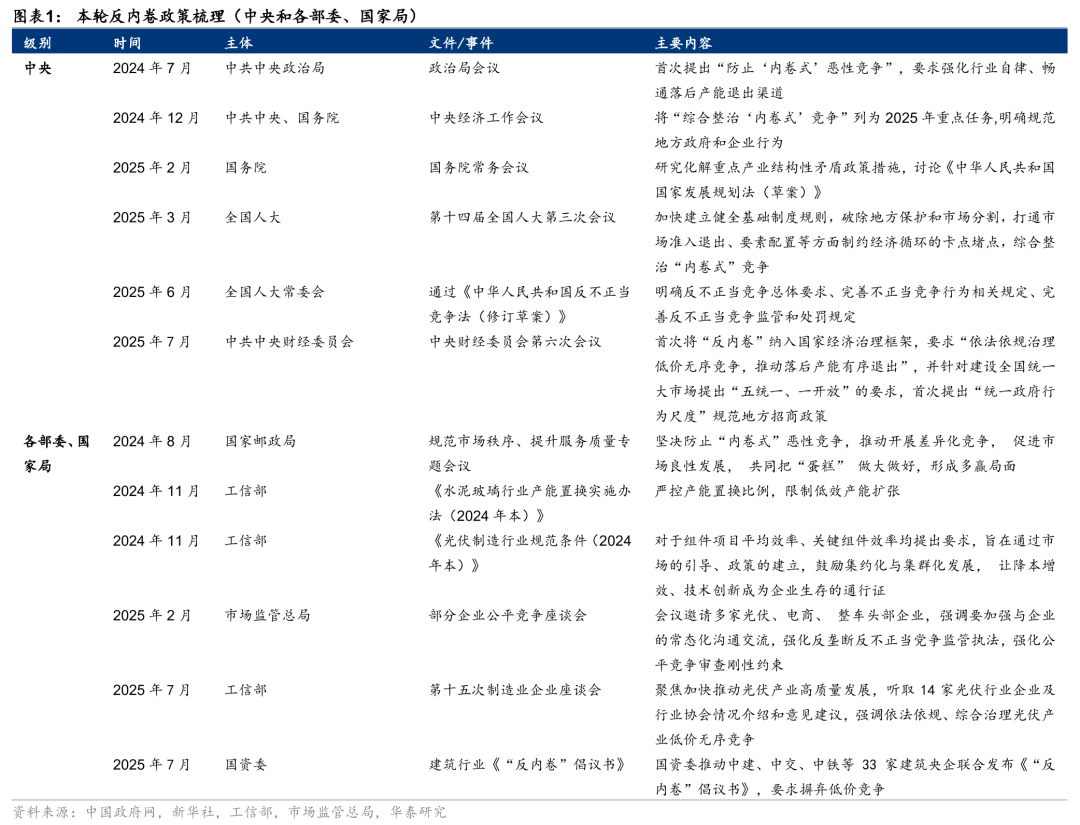
华泰证券:“反内卷”有望对PPI和企业盈利形成提振,行情启动信号通常为价格或ROE拐点
Sou Hu Cai Jing· 2025-07-17 00:17
Core Insights - The recent emphasis on "anti-involution" by the Central Financial Committee indicates a significant policy shift aimed at addressing issues in various sectors, including photovoltaic, steel, and construction materials [2][3] - The current "anti-involution" policy is expected to differ from the 2016 "supply-side reform" in terms of industry characteristics, causes, and policy intensity [4][15] Group 1: Policy Background and Timing - The current macroeconomic environment mirrors that of 2016, with global economic slowdown, weak domestic demand, and declining capacity utilization leading to negative PPI growth [4][15] - The sequence of policy implementation for "anti-involution" is expected to follow a similar pattern to that of the "supply-side reform," starting with policy definition, followed by top-level design, and then specific industry policies [21][46] Group 2: Industry Characteristics and Opportunities - The "anti-involution" initiative focuses on advanced manufacturing sectors, which have shorter capacity formation times and higher private enterprise participation compared to traditional industries targeted in the 2016 reforms [4][25] - Industries such as wind power, steel, certain chemicals, photovoltaic, and coal are identified as having "involution" pressures, with potential for policy support and market recognition [3][6] Group 3: Market Impact and Investment Opportunities - The "anti-involution" policy is anticipated to boost PPI and corporate profitability, contingent on appropriate timing, policy strength, and demand-side coordination [3][4] - Historical data suggests that the initiation of supply-side reforms led to significant improvements in industrial profits, commodity prices, and capacity utilization rates, indicating potential for similar outcomes under the current policy [47][50] Group 4: Sector-Specific Insights - In the construction materials sector, self-balancing supply capabilities are strong, particularly in cement and fiberglass, with a focus on eliminating disorderly competition [7] - The steel industry is expected to enter a recovery phase by Q3 2024, aided by voluntary production cuts and favorable pricing dynamics [7] - The chemical industry is projected to benefit from supply-side adjustments driven by self-discipline and environmental regulations, with a recovery anticipated in the latter half of 2025 [8] - The automotive sector is shifting from price competition to value competition, with the "anti-involution" policy expected to stabilize pricing dynamics [8] - The agricultural sector, particularly in pig farming, is seeing policy measures aimed at reducing production capacity and optimizing structure, which may lead to price stabilization [9]

中证香港300原材料指数报2311.34点,前十大权重包含山东黄金等
Jin Rong Jie· 2025-07-16 07:40
Core Viewpoint - The China Securities Hong Kong 300 Materials Index has shown significant growth, with a 41.40% increase year-to-date, indicating strong performance in the materials sector [1][2]. Group 1: Index Performance - The China Securities Hong Kong 300 Materials Index reported a value of 2311.34 points, with a 6.83% increase over the past month and a 23.83% increase over the past three months [1]. - The index is designed to reflect the overall performance of different industries in the Hong Kong market, classified according to the China Securities industry classification standards [1]. Group 2: Index Composition - The top ten holdings in the China Securities Hong Kong 300 Materials Index include Zijin Mining (26.28%), China Hongqiao (10.9%), and Zhaojin Mining (7.98%) among others [1]. - The index is fully composed of stocks listed on the Hong Kong Stock Exchange, with a 100% representation [1]. Group 3: Industry Breakdown - The industry composition of the index shows that non-ferrous metals account for 78.94%, non-metallic materials for 15.04%, chemicals for 4.62%, and paper and packaging for 1.41% [2]. - The index samples are adjusted biannually, with changes implemented on the next trading day following the second Friday of June and December [2].


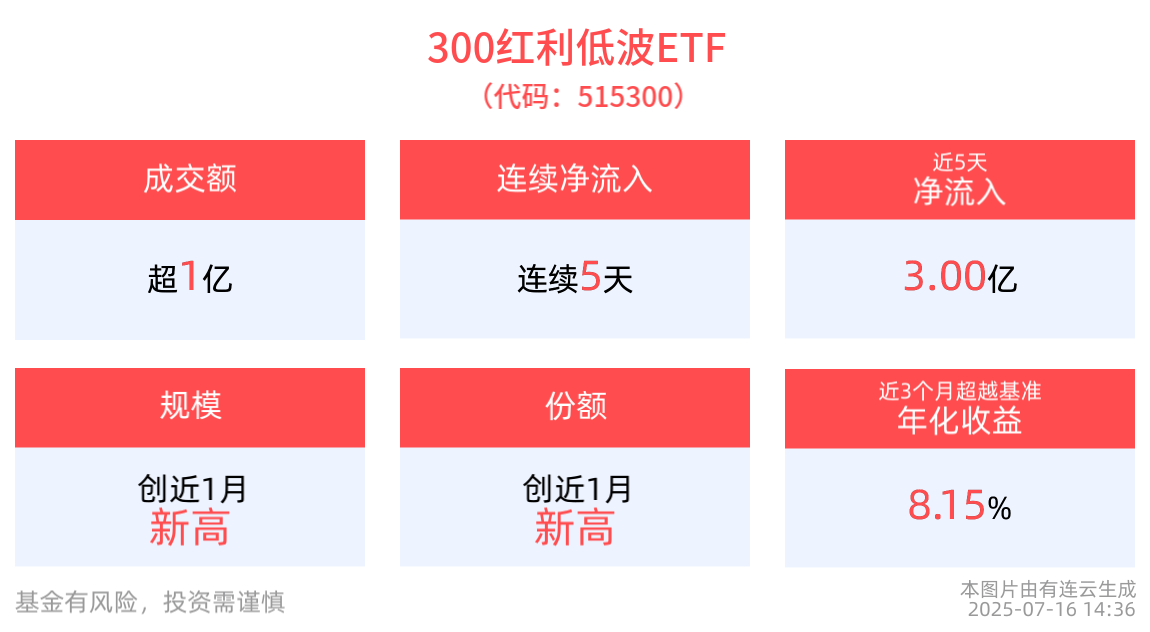
政策指引下高股息资产吸引力凸显,300红利低波ETF(515300)连续5天净流入
Sou Hu Cai Jing· 2025-07-16 07:06
Group 1: ETF Performance and Liquidity - The 300 Dividend Low Volatility ETF has a turnover rate of 2.24% during trading, with a transaction volume of 1.31 billion yuan [3] - As of July 15, the ETF's average daily trading volume over the past week is 1.67 billion yuan, and its latest scale reaches 5.886 billion yuan, marking a one-month high [3] - The ETF has seen continuous net inflows over the past five days, with a maximum single-day net inflow of 143 million yuan, totaling 300 million yuan [3] Group 2: Historical Returns and Rankings - Over the past five years, the net value of the 300 Dividend Low Volatility ETF has increased by 67.26%, ranking 46th out of 995 index equity funds, placing it in the top 4.62% [3] - The ETF's highest monthly return since inception is 13.89%, with the longest consecutive monthly gains being five months and the maximum gain during this period being 14.56% [3] - The ETF has outperformed its benchmark with an annualized return of 8.15% over the last three months as of July 15, 2025 [3] Group 3: Top Holdings and Sector Trends - As of June 30, 2025, the top ten weighted stocks in the ETF include China Shenhua, Gree Electric, Sinopec, and others, collectively accounting for 35.21% of the index [3] - Since the announcement by the National Financial Regulatory Administration regarding adjustments to the regulatory ratio of insurance funds in equity assets, high-dividend assets like bank stocks have gained attractiveness, with over 90% of funds labeled with "dividend" or "high dividend" yielding positive returns this year, averaging a net value increase of 7.2% [5] - The recent notice from the Ministry of Finance encouraging long-term stable investments by insurance funds is expected to create a favorable environment for long-term investments, aligning well with the characteristics of low volatility and high dividend strategies [6]
建材行业2024年报及2025年1季报总结
2025-07-16 06:13
Summary of Conference Call Records Industry Overview - The conference call primarily discusses the **consumption building materials industry** and its performance in 2024, highlighting a **7.2% year-on-year decline** in revenue for the sector [1] - The **real estate demand** remains weak, impacting the consumption building materials sector, which has seen continuous revenue pressure over the past few quarters [1] Key Points and Arguments - **Revenue Trends**: The revenue growth for the consumption building materials sector is expected to decline in 2024, with quarterly comparisons showing fluctuations: **0.2% growth**, **5.3% decline**, **10.7% decline**, **10.9% decline**, and **5.7% decline** from Q1 2024 to Q1 2025 [1] - **Profitability Issues**: The industry faces challenges such as **declining gross margins** due to reduced demand and increased expense ratios. Some companies have reported increased impairments on goodwill and assets [2] - **Improvement in Profitability**: In Q1 2024, some companies managed to stabilize and improve profitability through better gross margins and expense control, with half of the consumption building materials companies reporting year-on-year gross margin increases [2] - **Net Profit Performance**: Among 26 analyzed companies, **10 reported year-on-year net profit increases**, and **9 showed improvements in net profit margins** both year-on-year and quarter-on-quarter, particularly in waterproofing and coating sectors [3] - **Market Resilience**: Despite the downturn in new housing demand, the sector shows resilience supported by the high demand for second-hand housing, which could lead to revenue growth if new housing demand stabilizes [4] Additional Insights - **Future Growth Potential**: Companies with strong brand and channel capabilities are expected to have significant growth potential. Key players mentioned include **Sanhe Tree, Tubaobao, Beixing Building Materials, and others** [5] - **Cement Industry Outlook**: The cement sector is projected to see a bottoming out in Q1 2024, with expectations of gradual improvement in profitability throughout the year. The industry experienced a **35% year-on-year decline** in scale in 2024 [5] - **Price Trends**: Cement prices are expected to rise after a period of decline, with a **1.4% year-on-year drop** in demand noted in Q1 2024, but a recovery is anticipated post-Chinese New Year [6] - **Cost Management**: The decline in coal prices is expected to stabilize industry profitability, with a projected **6% year-on-year decline** in cement demand for 2025 [7] - **Investment and Dividends**: Companies with low cash flow and stable investment returns, such as **Tapai Group and Ningxia Building Materials**, are highlighted for their significant profit contributions [8] Conclusion - The consumption building materials and cement industries are navigating through challenging market conditions, with signs of potential recovery in profitability and demand stabilization. Key players are expected to leverage their market positions for future growth opportunities.


新城市工作会议推动地产回归健康发展轨道和行业供需新平衡
Dongxing Securities· 2025-07-16 03:11
Investment Rating - The report maintains a "Positive" investment rating for the building materials industry, indicating an expectation of performance that exceeds the market benchmark by more than 5% [2][19]. Core Insights - The recent Central Urban Work Conference has provided specific guidance for urban development, aiming to promote a new balance between supply and demand in the real estate sector, which is expected to lead to a long-term healthy development of the industry [4][5]. - The conference emphasizes the construction of modern urban clusters and the promotion of urban renewal, which will enhance the quality of urban infrastructure and housing supply, thereby supporting the recovery of building materials demand [5][6]. - The report highlights that the industry is currently experiencing a historical low in market sentiment, which is accelerating the process of industry consolidation and the elimination of outdated production capacity [6][11]. Summary by Sections Urban Development and Policy - The Central Urban Work Conference serves as a directive for urban modernization in China, with a focus on high-quality urban development and the enhancement of living conditions [4][5]. - The conference outlines the need for innovative, livable, and resilient cities, which will drive the demand for building materials as urban infrastructure is upgraded [5]. Industry Demand and Supply Dynamics - The report anticipates that the policies from the conference will stimulate demand in the real estate sector, leading to a stabilization of building materials demand over the next 3-6 months [6][11]. - The focus on urban renewal and infrastructure improvement is expected to create a new balance between supply and demand in the building materials industry, benefiting leading companies in the sector [11]. Market Performance and Outlook - The building materials industry is projected to see a recovery in demand as urbanization progresses and policies are implemented, with a particular emphasis on the renovation of urban villages and old city areas [11]. - The report suggests that leading companies in the sector will benefit the most from these developments, as they are better positioned for growth and valuation recovery [11].
城市工作会议联合解读电话会议
2025-07-16 00:55
Summary of Conference Call on Urban Development and Industry Insights Industry and Company Involved - **Industry**: Real Estate, Building Materials, Energy Drinks - **Companies Mentioned**: Dongpeng Beverage, Conch Cement, Taipai Group, Huaxin Cement, China Resources, Binjiang, Greentown, Jianfa Zhonghai Key Points and Arguments Urban Development and Real Estate Policy - The Central Urban Work Conference emphasizes a shift from large-scale expansion to improving existing urban stock, indicating a focus on urban renewal rather than large-scale stimulus, which benefits post-cycle industries like building materials and home appliances [1][2][3] - The policy aims to steadily advance the renovation of urban villages and dilapidated housing, avoiding a return to the monetization of shantytown renovations seen in 2015-2016, suggesting limited demand for incremental cyclical products [1][3][5] - The real estate market is transitioning from expansion to quality enhancement, focusing on improving existing housing quality and surrounding environments rather than new construction [1][6][7] Regional Market Performance - The real estate markets in first and second-tier core cities and their metropolitan areas are expected to outperform the national average, with regional developers like China Resources, Binjiang, Greentown, and Jianfa Zhonghai being noteworthy [1][8] Energy Drink Consumption Trends - Population movement significantly impacts energy drink consumption, with higher preferences in first and second-tier cities. As population density increases, energy drink consumption is expected to rise, making Dongpeng Beverage a recommended investment [1][9][10] - The consumption of energy drinks varies across provinces, with Guangdong leading in market share for Red Bull and Dongpeng, which is projected to maintain a 35% revenue growth rate [1][11] Building Materials Industry Insights - Urban renewal and village renovation will have limited demand pull for the building materials industry, with the consumption of building materials being most affected, particularly in segments like waterproofing, piping, and coatings [2][12][15] - The cement sector is expected to benefit from demand growth and supply-side reforms, with recommendations for Conch Cement, Taipai Group, and Huaxin Cement as investment targets due to their strong market positions and profitability [2][15][16] Market Outlook and Investment Strategy - The overall sentiment from the conference indicates a cautious approach to large-scale stimulus, with the market expected to remain within a relatively stable range [3][5] - Investment strategies should focus on a "barbell" approach, balancing technology and military sectors with dividend-paying assets like bank stocks and high-dividend service sector stocks [3] Conclusion - The conference highlights a significant policy shift in urban development and real estate, with implications for various industries. The focus on quality over quantity in housing and urban infrastructure suggests a need for investors to adapt their strategies accordingly, particularly in the building materials and consumer goods sectors.


水泥反内卷:复盘与进展
2025-07-16 00:55
Summary of Conference Call Records Industry Overview: Cement Industry Key Points on Industry Dynamics - The cement industry is experiencing a phase of "anti-involution," where leading companies have a competitive advantage. Despite a profit bottoming out in Q1 2024, the industry did not face overall losses, indicating strong risk resilience among leading firms like Conch Cement, whose gross profit per ton is comparable to that of Q3 2015 [1][3]. - Since Q3 2024, cement prices have increased due to enhanced staggered production and stricter capacity reduction policies, leading to multiple price hikes. The performance in H1 2025 is expected to be positive, with mid-year reports indicating an overall improvement in the sector [1][3]. - Market expectations for cement demand remain optimistic, driven by anticipated policy announcements in July and infrastructure investments. However, demand is expected to remain under pressure in the coming years, necessitating a collaborative supply-side approach to manage demand fluctuations [1][4][5]. Financial Projections and Market Valuation - Conch Cement's future balanced profit is projected to be between 10 billion to 15 billion CNY, with an estimated performance range for this year between 9 billion to 10 billion CNY, corresponding to a market capitalization range of 110 billion to 140 billion CNY, indicating that the current market valuation is relatively low [1][7]. - The Hong Kong stock market has reacted more positively to the anti-involution measures and interim performance compared to the A-share market, suggesting that investors in Hong Kong place greater emphasis on supply-side logic [1][8]. Production and Pricing Trends - Domestic cement production is expected to decline by approximately 4% year-on-year in H1 2025, with operating rates dropping to the lowest levels since 2020. Cement prices have fallen below last year's lows, indicating significant price pressure [1][19]. - The industry’s operating rate has fallen below 40%, marking the lowest level since 2020, with prices dropping from 400 CNY per ton to around 350 CNY since April 2025, indicating ongoing price pressures [1][19]. Company-Specific Insights: Huaxin Cement Growth and Market Position - Huaxin Cement has rapidly expanded its overseas business, with profits from international operations exceeding 40%. The company has significantly increased its production capacity in Africa through acquisitions, enhancing its pricing and gross profit per ton [2][22]. - The company has established a strong market presence in 13 countries, primarily in Africa, which helps mitigate risks associated with regional competition and currency fluctuations [23]. Competitive Advantages - Huaxin Cement benefits from a mixed ownership structure, allowing it to leverage both foreign and state-owned resources, particularly in overseas markets [23]. - The company has adopted a strategy of acquiring existing production capacities rather than building new ones, which accelerates market entry and enhances profitability through technological upgrades [23]. Future Outlook - The company is expected to continue its growth trajectory, with profits projected to increase by approximately 20% in 2026, driven by ongoing expansion in Nigeria and other markets [27][28]. - Huaxin Cement's focus on integrating its supply chain and enhancing operational efficiency positions it favorably in the current market environment, making it a recommended investment opportunity [28]. Conclusion - The cement industry is navigating a complex landscape characterized by price pressures and fluctuating demand, with leading companies like Conch Cement and Huaxin Cement demonstrating resilience and growth potential. The focus on supply-side reforms and strategic expansions, particularly in overseas markets, will be critical for sustaining profitability and market position in the coming years [1][28].
港股收评:午后强势拉升!科指大涨2.8%,稳定币、生物医药股走高





Ge Long Hui· 2025-07-15 08:41
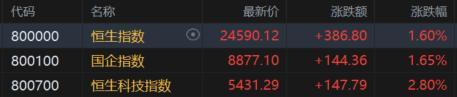
Group 1 - China's Q2 GDP growth reached 5.2%, exceeding expectations, leading to a rally in Hong Kong stocks [1] - The Hang Seng Technology Index surged by 2.8%, while the Hang Seng Index and the National Enterprises Index rose by 1.6% and 1.65% respectively [1][2] - Major technology stocks performed strongly, with Alibaba rising nearly 7%, Meituan and Baidu up over 4%, and Tencent increasing by 3.5% [2][4] Group 2 - The cryptocurrency sector faced challenges, with Bitcoin dropping below $117,000, leading to a decline in related stocks [2] - Real estate development investment in China fell by 11.2% year-on-year in the first half of the year, impacting domestic property stocks significantly [2][13] - The construction materials and cement stocks also saw declines, with major players like Jinyu Group and Anhui Conch Cement dropping over 6% and 4% respectively [11][12] Group 3 - The innovative drug sector showed strength, with companies like BeiGene and CSPC Pharmaceutical rising over 7% [7][8] - Stablecoin-related stocks performed well, with Yunfeng Financial increasing by 19.5% and Weishi Jiajie up by 11% [9][10] - The entertainment sector saw gains, with China Star Group rising over 10% and Tencent Music increasing by over 5% [15] Group 4 - Southbound funds recorded a net inflow of HKD 3.824 billion, indicating strong interest in Hong Kong stocks [18] - Analysts noted a shift in investor sentiment towards undervalued stocks, with some funds looking to capitalize on recent price corrections in major internet companies [17]